
A cataract is a clouding of the normally clear lens inside your eye. Cataracts usually develop slowly with age, gradually making vision blurry, dim, glare-prone, or less colorful. They are extremely common: by age 80, more than half of Americans either have a cataract or have already had cataract surgery [NEI, 2026].
Surgery is the only treatment that removes a cataract [NEI, 2026]. Brighter lighting and updated glasses help for a while, and some habits may lower your risk, but no food, supplement, eye drop, or eye exercise has been shown to dissolve a cataract that has already formed. The reassuring part: about 9 in 10 people see better after cataract surgery [NEI cataract surgery, 2024].
If you’ve just been diagnosed, most people don’t need to rush into surgery and can take time to decide with their eye doctor [NEI, 2026].
What Is a Cataract?
How Your Eye’s Natural Lens Works
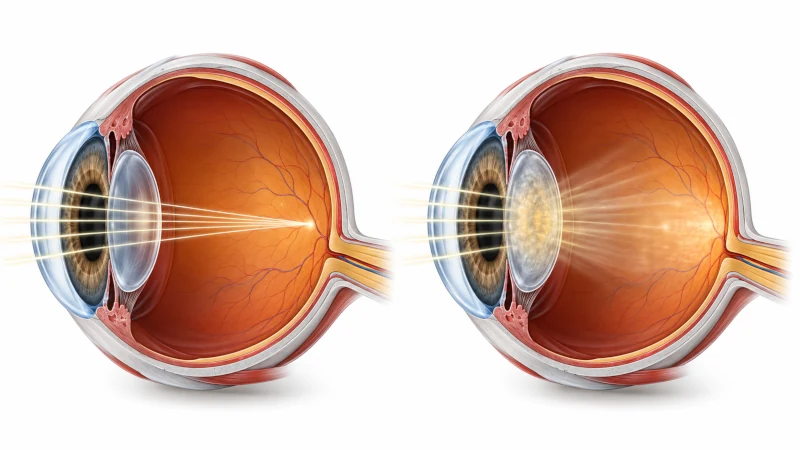
Behind the colored part of your eye (the iris) sits a small, clear lens. It focuses incoming light onto the retina, the light-sensing tissue at the back of the eye [Mayo Clinic, 2026].
The lens is made largely of proteins. Starting around age 40, some of those proteins begin to break down and clump together, creating a cloudy area [NEI, 2026]. That cloudy area is a cataract. Instead of passing cleanly through the lens, light is scattered and partly blocked, so the image that reaches the retina is blurred [Mayo Clinic, 2026]. Ophthalmologists often compare it to looking through a foggy or dusty car windshield [American Academy of Ophthalmology].
A cataract can form in one eye or both, often at different rates, but it does not spread from one eye to the other [MedlinePlus, 2025]. Over time the lens can also turn yellow or brown, which makes colors look duller [MedlinePlus, 2025].
Cataract Symptoms
Early cataracts usually cause no symptoms [NEI, 2026]. As the clouding spreads, you may notice [NEI, 2026] [Mayo Clinic, 2026]:
- Cloudy, blurry, hazy, or dim vision
- Colors that look faded or yellowed
- Glare: headlights, lamps, or sunlight seem too bright
- Halos or starbursts around lights, especially at night
- Trouble seeing at night, or needing more light to read
- Double vision in one eye
- Frequent changes to your glasses or contact lens prescription
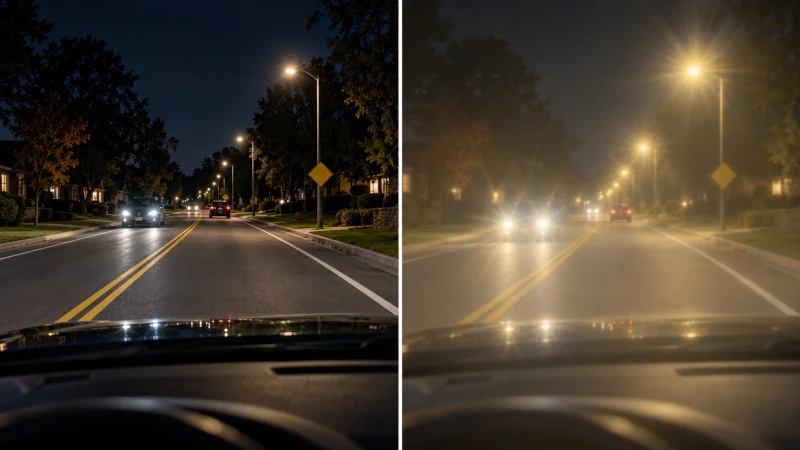
Night driving is where many of these symptoms come together. Cataracts aren’t the only reason vision worsens after dark; our guide to the causes of night blindness covers the others.
A cataract in the center of the lens (a nuclear cataract) can make close-up vision better for a while before overall vision worsens [Mayo Clinic, 2026]. If you suddenly need reading glasses less, get an eye exam rather than assuming your eyes are improving.
How Quickly Do Cataracts Progress?
Most age-related cataracts develop gradually, typically over years. Some progress faster, including cataracts in younger people and in people with diabetes, and doctors can’t predict exactly how quickly any one person’s cataract will change [American Academy of Ophthalmology]. Location matters too: posterior subcapsular cataracts, which form at the back of the lens, tend to grow faster than other types [Mayo Clinic, 2026].
What Causes Cataracts?
Aging is by far the most common cause. Many people over 60 have some lens clouding, although it may be years before it affects vision [American Academy of Ophthalmology].
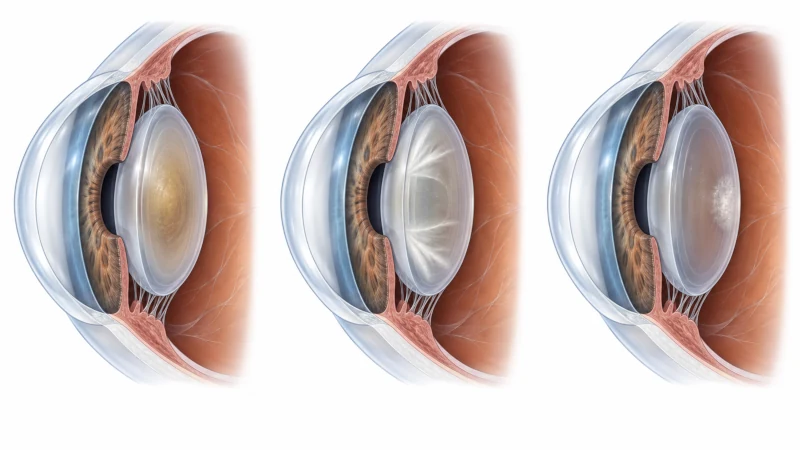
Cataracts are usually described by where they form in the lens [Mayo Clinic, 2026]:
- Nuclear cataracts form in the center. Distance vision usually blurs first, and colors may look yellowed.
- Cortical cataracts form in the layer surrounding the center and often cause glare in bright light.
- Posterior subcapsular cataracts form at the back of the lens, affect both near and distance vision, and tend to progress faster.
Less often, a cataract develops after an eye injury or after surgery for another eye problem such as glaucoma [NEI, 2026], or after radiation treatment to the upper body [American Academy of Ophthalmology]. Some babies are born with cataracts, and some children develop them because of a genetic condition, an infection during pregnancy, a childhood illness, or an injury [Mayo Clinic, 2026].
Cataract Risk Factors
Your risk rises with age. These factors are also linked to a higher chance of developing cataracts [NEI, 2026] [Mayo Clinic, 2026]:
| Risk factor | What to know |
| Diabetes | Cataracts can develop more quickly in people with diabetes [AAO]. |
| Smoking and other tobacco use | Ophthalmologists consider smoking a key cataract risk factor [AAO]. |
| Sun (UV) exposure | Risk is higher with a lot of time in the sun, especially without UV-blocking sunglasses [AAO]. |
| Corticosteroid medicines | Long-term use of steroid medicines is linked to cataracts, which may form earlier than usual [Mayo Clinic, 2026] [AAO]. Don’t stop a prescribed steroid on your own; talk with your prescriber. |
| Eye injury, eye surgery, or upper-body radiation | Each raises the chance of a cataract in the affected eye [NEI, 2026]. |
| Heavy alcohol use | Drinking excessive amounts of alcohol is a listed risk factor [NEI, 2026] [Mayo Clinic, 2026]. |
| Family history and obesity | Cataracts can run in families, and obesity is also associated with higher risk [NEI, 2026] [Mayo Clinic, 2026]. |
These are links seen in research, not guarantees. Age and family history can’t be changed; smoking and sun exposure can.
How Cataracts Are Diagnosed
An eye doctor (an optometrist or ophthalmologist) checks for cataracts during a comprehensive dilated eye exam. Eye drops widen your pupils so the doctor can see the lens and the back of the eye clearly [NEI, 2026]. The exam usually includes [American Academy of Ophthalmology]:
- A visual acuity test, reading letters of different sizes on a chart, one eye at a time
- A slit-lamp exam, a magnified look at the cornea, iris, and lens
- A retinal exam, which also checks the retina and optic nerve for problems such as glaucoma
The National Eye Institute recommends a dilated eye exam every 1 to 2 years from age 60 [NEI, 2026]. After a cataract diagnosis, the American Academy of Ophthalmology suggests yearly exams if you’re older than 65 [American Academy of Ophthalmology].
Checking the retina and optic nerve matters for a practical reason: cataract surgery won’t restore vision lost to other conditions such as macular degeneration, glaucoma, or diabetic retinopathy [AAO on cataract surgery].
Cataracts vs. Other Common Eye Problems
Several eye conditions can feel like a cataract, and more than one can be present at once. This table shows broad differences; it can’t replace an exam.
| Condition | Part of the eye | Typical clues |
| Cataract | Lens | Gradual, painless cloudy or dim vision; glare, halos, faded colors [NEI, 2026] |
| Dry eye | Tear film on the eye’s surface | Stinging, burning, or gritty feeling; blurred vision, especially when reading; sometimes watery eyes [AAO on dry eye] |
| Age-related macular degeneration (AMD) | Macula, the center of the retina | Blurry or blank areas in central vision; straight lines look wavy. AMD doesn’t cause complete blindness [NEI on AMD] |
| Glaucoma | Optic nerve | Often no early symptoms; side vision is lost first. A sudden attack (angle-closure glaucoma) causes intense eye pain, nausea, a red eye, and blurry vision [NEI on glaucoma, 2026] |
| Retinal detachment | Retina | Sudden burst of new floaters, flashes of light, or a shadow or curtain over your vision. This is an emergency [NEI on retinal detachment, 2025] |
If gritty, burning eyes are the main complaint, our guide to dry eye syndrome causes and relief explains what helps.
Living With Early Cataracts: What Helps for Now
If a cataract isn’t bothering you much, you don’t have to have it removed [American Academy of Ophthalmology]. These practical changes can make early cataracts easier to live with [NEI, 2026] [American Academy of Ophthalmology]:
- Update your glasses or contact lens prescription.
- Use brighter lights for reading and close work, and try a magnifying lens.
- Wear anti-glare sunglasses outdoors.
- Limit night driving once glare, halos, or poor night vision become a problem.
These steps improve comfort and function. They don’t slow or reverse the cataract, and as clouding increases they eventually stop being enough [MedlinePlus, 2025].
Cataract Surgery: The Definitive Treatment
When Is It Time for Surgery?
Eye doctors generally suggest surgery when cataracts start getting in the way of everyday activities like reading, driving, or watching TV [NEI cataract surgery, 2024]. Ask yourself whether you can work and drive safely, and whether your vision is affecting your independence [Mayo Clinic on cataract surgery, 2026].
Surgery is sometimes recommended even when the cataract isn’t the main problem, because a cloudy lens can block the doctor’s view of the back of the eye and make it harder to monitor conditions such as diabetic retinopathy or AMD [NEI cataract surgery, 2024].
Waiting usually won’t harm the eye or make surgery more difficult later [NEI, 2026], so you have time to decide. Diet changes, supplements, or home remedies aren’t a reason to put off surgery your doctor recommends.
What Happens During Cataract Surgery
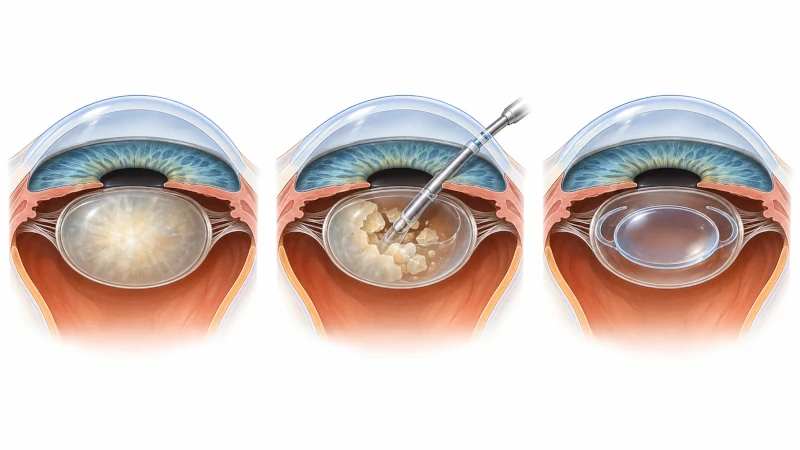
Cataract surgery is done on an outpatient basis, so you usually go home the same day [Mayo Clinic on cataract surgery, 2026]. Numbing drops or an injection keep the eye comfortable, and you’re typically awake, sometimes with medicine to help you relax [AAO on cataract surgery]. In the most common method, called phacoemulsification, the surgeon makes a tiny incision, uses an ultrasound probe to break up the cloudy lens, removes the pieces, and places a clear artificial lens inside the lens capsule where the natural lens used to sit [Mayo Clinic on cataract surgery, 2026]. The small incisions usually seal on their own without stitches [AAO on cataract surgery].
If both eyes need surgery, they’re done at separate times, usually about a month apart [NEI cataract surgery, 2024]. Give your eye doctor a full list of your medicines. Those that increase bleeding may need to be paused for a short time, and some medicines for prostate conditions can interfere with surgery [NEI cataract surgery, 2024] [Mayo Clinic on cataract surgery, 2026]. Stop a medicine only if your doctor says to.
Intraocular Lenses (IOLs)
The artificial lens, called an intraocular lens or IOL, becomes a permanent part of your eye and needs no care. Common types include [Mayo Clinic on cataract surgery, 2026]:
- Monofocal lenses, which focus at one distance, usually far. You’ll typically need reading glasses for close work.
- Multifocal or extended depth of focus lenses, designed to help at several distances, much like bifocal or progressive glasses.
- Toric lenses, which correct significant astigmatism.
Medicare and most private insurance plans generally cover cataract surgery when your vision meets certain criteria, but specialty lenses cost more and may not be fully covered [AAO on cataract surgery] [Mayo Clinic on cataract surgery, 2026].
Recovery and Realistic Expectations
Expect some itching, mild discomfort, and light sensitivity for a day or two. You’ll use prescribed eye drops, may wear a protective shield (especially while sleeping), and should avoid rubbing the eye, bending over, or heavy lifting for the period your doctor sets [NEI cataract surgery, 2024] [AAO on cataract surgery]. Vision usually starts improving within a few days, and complete healing often takes about eight weeks [Mayo Clinic on cataract surgery, 2026].
About 9 out of 10 people see better after surgery, and many notice that colors look brighter because the new lens has no yellow or brown tint [NEI cataract surgery, 2024]. Most people still need glasses at least some of the time; a final glasses prescription is usually done one to three months after surgery [Mayo Clinic on cataract surgery, 2026].
Risks and Possible Complications
Complications are not common, and most can be treated successfully [Mayo Clinic on cataract surgery, 2026]. Possible risks include [NEI cataract surgery, 2024] [AAO on cataract surgery]:
- Infection, bleeding, or swelling inside the eye, including swelling of the retina
- Unusual changes in eye pressure
- Retinal detachment
- An artificial lens that moves out of position
- Glare, halos, blurred vision, or vision loss
Your risk is higher if you have another eye disease or a serious medical condition [Mayo Clinic on cataract surgery, 2026].
Cloudy Again Later? Posterior Capsule Opacification
Weeks, months, or even years after surgery, vision can turn hazy again. This usually isn’t the cataract coming back. It’s clouding of the thin, clear capsule that holds the new lens, called posterior capsule opacification (PCO) or a “secondary cataract” [AAO on cataract surgery]. A quick, painless outpatient laser procedure, YAG laser capsulotomy, opens the cloudy capsule and gives light a clear path again [Mayo Clinic on cataract surgery, 2026].
Can Cataracts Be Prevented?
No method has been proven to prevent cataracts or slow their growth, though health professionals think several strategies may help [Mayo Clinic, 2026]. The American Academy of Ophthalmology is a bit more optimistic, saying you may be able to slow cataracts and naming sun protection as the best way to try [American Academy of Ophthalmology]. Both recommend the same low-risk steps.
Protect Your Eyes From UV Light

Outdoors, wear sunglasses that block at least 99% of UV rays, along with a brimmed hat [American Academy of Ophthalmology] [NEI, 2026]. Regular eyeglasses with a clear anti-UV coating are another option [American Academy of Ophthalmology].
Don’t Smoke, or Get Help Quitting
Smoking is a key risk factor for cataracts, and quitting is one of the steps ophthalmologists recommend [American Academy of Ophthalmology]. Free support is available at 1-800-QUIT-NOW (1-800-784-8669) [NEI, 2026].
Manage Diabetes, Limit Alcohol, and Guard Against Injury
If you have diabetes or another condition that raises cataract risk, follow your treatment plan [Mayo Clinic, 2026]. Drinking too much alcohol is linked to higher cataract risk [Mayo Clinic, 2026]. Wear protective eyewear when using power tools or playing sports where eye injuries are possible [NEI, 2026].
Nutrition and Antioxidants: What the Evidence Shows
The National Eye Institute recommends eating plenty of fruits, vegetables, leafy greens, nuts, and whole grains as part of protecting your eyes [NEI, 2026], and Mayo Clinic notes that these foods supply nutrients and antioxidants that may reduce cataract risk [Mayo Clinic, 2026]. That habit may lower risk over time, but it won’t treat an existing cataract. For food ideas, see our guide to the best foods for eye health.
Supplements have been tested directly, with disappointing results. A Cochrane systematic review of nine randomized trials involving 117,272 adults, followed for 2.1 to 12 years, found no evidence that beta-carotene, vitamin C, or vitamin E supplements prevent cataracts or slow their progression [Cochrane review, 2012]. In the large AREDS2 trial, adding lutein and zeaxanthin had no overall effect on the need for cataract surgery. A possible benefit showed up only among people whose diets were lowest in these nutrients, a subgroup finding that still needs confirmation [NCCIH, 2024]. No dietary supplement is recommended for treating cataracts [NCCIH, 2024].
High-dose supplements also carry risks. Beta-carotene supplements have been linked to a higher risk of lung cancer in current and former smokers, and large doses of vitamin E have raised safety concerns [NCCIH, 2024]. Ask your doctor or pharmacist before starting any supplement. Neither carrots nor vitamin A pills will clear a cataract; our article on vitamin A benefits and safe intake explains what vitamin A can and can’t do.
Products That Claim to Dissolve Cataracts
Because surgery is the only way to get rid of a cataract [NEI, 2026], drops, pills, or home remedies promising to dissolve or reverse one are not a substitute for an eye exam or for surgery when you need it. Never put homemade or non-sterile substances in your eyes.
When to See an Eye Doctor
Make an appointment if you notice any change in your vision [Mayo Clinic, 2026]. If you’ve already been diagnosed, tell your eye doctor when cataracts start interfering with daily activities [NEI, 2026].
| Symptoms That Need Prompt Care Cataracts change vision slowly and painlessly. These symptoms are not typical of ordinary cataract progression and need prompt care: Sudden vision changes, such as sudden double vision or flashes of light, sudden eye pain, or a sudden headache: see a health care professional right away [Mayo Clinic, 2026].A sudden burst of new floaters, flashes of light, or a shadow or curtain over part of your vision: go to your eye doctor or the emergency room right away [NEI on retinal detachment, 2025].Intense eye pain with nausea, a red eye, and blurry vision: go to your doctor or an emergency room now [NEI on glaucoma, 2026].Straight lines that suddenly look wavy or crooked: see your eye doctor right away [NEI on AMD].After cataract surgery: vision loss, pain that medicine doesn’t relieve, increasing redness, eyelid swelling, or new floaters or flashes: call your eye surgeon right away [NEI cataract surgery, 2024] [Mayo Clinic on cataract surgery, 2026]. |
If you can’t reach your eye doctor quickly for any of these, go to the nearest emergency room.
More guides are in our Eye & Vision health hub.
| Health Disclaimer: This article is for general education and is not a substitute for professional medical advice, diagnosis, or treatment. Do not start, stop, or change any prescription medicine, including corticosteroids, or begin a supplement based on this article; talk with your doctor or pharmacist first. Decisions about cataract surgery and lens choice should be made with your eye doctor. If you have sudden vision loss, eye pain, flashes of light, a burst of new floaters, or a shadow over your vision, seek emergency care. |
Frequently Asked Questions
What are the first signs of cataracts?
Early cataracts often cause no symptoms at all [NEI, 2026]. When signs appear, they commonly include cloudy or dim vision, glare from lights, halos at night, faded colors, needing more light to read, and frequent prescription changes [NEI, 2026] [Mayo Clinic, 2026].
Can cataracts go away without surgery?
No. Surgery is the only way to remove a cataract [NEI, 2026]. New glasses and brighter lighting can help in the early stages, but they don’t clear the lens [MedlinePlus, 2025].
Can cataracts be prevented?
No method is proven to prevent them [Mayo Clinic, 2026]. Wearing UV-blocking sunglasses, not smoking, managing diabetes, limiting alcohol, and eating a diet rich in fruits and vegetables may lower your risk. Antioxidant vitamin supplements haven’t been shown to prevent or slow cataracts [Cochrane review, 2012].
When should cataracts be removed?
Usually when vision loss gets in the way of everyday activities such as reading, driving, or watching TV [NEI cataract surgery, 2024]. There’s generally no need to rush, and waiting usually won’t harm your eye [NEI, 2026]. Your eye doctor can help you weigh the timing.
Can cataracts cause blindness?
Yes, if left untreated, cataracts can cause severe or even permanent vision loss [MedlinePlus, 2025]. Worldwide, they are the leading cause of correctable reduced vision [Cochrane review, 2012]. Surgery restores vision for most people [Mayo Clinic on cataract surgery, 2026].
How quickly do cataracts progress?
Most age-related cataracts change gradually over years. They can develop faster in younger people and in people with diabetes [American Academy of Ophthalmology], and posterior subcapsular cataracts tend to grow faster than other types [Mayo Clinic, 2026].
References
- National Eye Institute. “Cataracts.” National Institutes of Health. View source
- National Eye Institute. “Cataract Surgery.” National Institutes of Health. View source
- American Academy of Ophthalmology (Boyd K; reviewed by McKinney JK). “What Are Cataracts?” EyeSmart. View source
- American Academy of Ophthalmology. “Cataract Surgery” (What Is Cataract Surgery?). EyeSmart. View source
- MedlinePlus. “Cataract.” National Library of Medicine. Last updated November 25, 2025. View source
- Mayo Clinic Staff. “Cataracts: Symptoms and Causes.” Mayo Clinic. View source
- Mayo Clinic Staff. “Cataract Surgery.” Mayo Clinic. View source
- Mathew MC, Ervin A-M, Tao J, Davis RM. “Antioxidant Vitamin Supplementation for Preventing and Slowing the Progression of Age-Related Cataract.” Cochrane Database of Systematic Reviews. View source
- National Center for Complementary and Integrative Health. “Dietary Supplements for Eye Conditions: What the Science Says.” NCCIH Clinical Digest. View source
- National Eye Institute. “Age-Related Macular Degeneration (AMD).” View source
- National Eye Institute. “Glaucoma.” View source
- National Eye Institute. “Retinal Detachment.” View source
- American Academy of Ophthalmology. “What Is Dry Eye?” EyeSmart. View source


