
Red, watery, irritated eyes can come from an allergy or from an infection, and the two look alike at first glance. The most useful single clue in the eye allergies vs. pink eye question is itching. Strong itching in both eyes, especially with sneezing or an itchy nose, points toward allergies. A gritty eye that started on one side during a cold, or lids glued shut by thick discharge, points toward an infection [CDC, 2024] [JAMA review, 2013].
Those are tendencies, not rules; the types often can’t be told apart by appearance alone [JAMA review, 2013]. Use the patterns below to decide what to do next, and know which symptoms mean it’s time for an eye exam.
What “pink eye” actually means
Pink eye is the everyday name for conjunctivitis: inflammation of the conjunctiva, the thin, clear tissue that covers the white of the eye and lines the inside of the eyelids. When it swells, its blood vessels become more visible and the eye looks pink or red [CDC, 2024].
Viruses, bacteria, and allergens are the most common causes [CDC, 2024]. So allergic conjunctivitis is one kind of pink eye. The real question is allergic versus infectious, because that decides whether you need to protect the people around you and which treatments make sense.
The three types at a glance
Allergic conjunctivitis
Allergic conjunctivitis is the immune system’s reaction to something like pollen, dust mites, animal dander, or mold. It is not contagious [CDC, 2024]. Itching is its most consistent symptom [JAMA review, 2013]. It usually affects both eyes and can bring tearing, puffy lids, and clear, watery discharge, often along with an itchy nose, sneezing, a scratchy throat, or asthma symptoms [CDC, 2024] [ACAAI]. People who already have hay fever, asthma, or eczema get it more often [CDC, 2024].
Viral conjunctivitis
Viruses cause most infectious pink eye in adults [JAMA review, 2013]. The discharge is usually watery rather than thick. It often comes with a cold, the flu, or another respiratory infection, and it typically starts in one eye and spreads to the other within days [CDC, 2024]. The eye tends to feel gritty, sometimes with mild itching [AFP review, 2010]. Viral pink eye is very contagious [CDC, 2024].
Bacterial conjunctivitis
Bacterial pink eye tends to produce thick pus that can stick the eyelids together, and it sometimes shows up alongside an ear infection [CDC, 2024]. It accounts for most infectious pink eye in children [JAMA review, 2013]. Like the viral kind, it spreads easily from person to person [CDC, 2024].
Eye allergies vs. pink eye: side-by-side comparison
This table shows typical patterns. Any one case can break them.
| Feature | Allergic | Viral | Bacterial |
| Itching | Intense; the main symptom | Mild, if any; more gritty | Less likely, but possible |
| Discharge | Clear and watery, sometimes stringy | Watery | Thick pus; lids may stick together |
| Watery eyes | Common | Common | Less typical than pus |
| One eye or both | Usually both at once | Often one first, then the other within days | One or both |
| Allergy symptoms (sneezing, itchy nose) | Often present | Not expected | Not expected |
| Respiratory illness | Not part of it (allergic asthma can flare) | Often comes with a cold or flu | Sometimes with an ear infection |
| Contagious? | No | Yes, very | Yes, very |
| Seasonal pattern | Pollen seasons; year-round with indoor allergens | More common in summer | More common December–April |
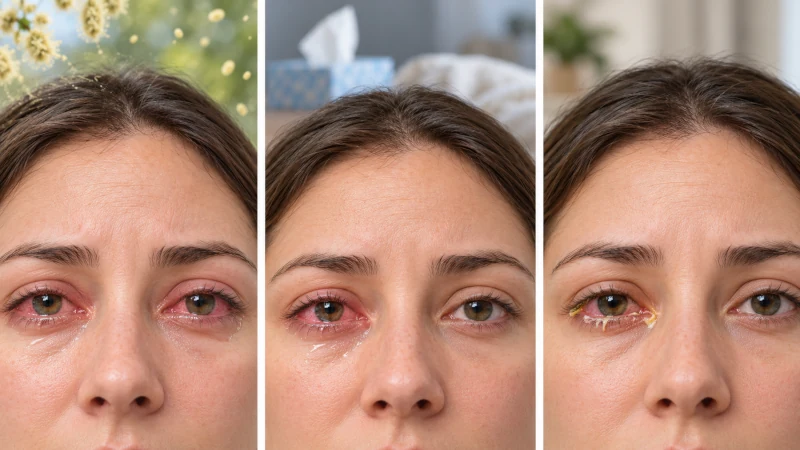
Sources: [CDC symptoms]; [CDC clinical overview]; [ACAAI]; [AFP review, 2010]; [JAMA review, 2013].
How to read the clues
Itching
Itching is the best pointer toward allergy. A large review calls it the most consistent sign of allergic conjunctivitis, and in one study, itching made a bacterial cause less likely [JAMA review, 2013]. It isn’t exclusive, though. In that same study, more than half of people with lab-confirmed bacterial conjunctivitis reported some itching [JAMA review, 2013].
Discharge and watery eyes
Clear, watery discharge fits allergies and viral pink eye. Thick pus that glues the lashes together leans bacterial, and waking with both eyes matted shut was one of the stronger predictors of bacteria in research on this question [CDC, 2024] [JAMA review, 2013].
The color or type of discharge alone still doesn’t settle it. About a third of people with confirmed bacterial infections in one study had watery discharge or none at all, and CDC notes that pink-eye discharge may be clear, yellow, white, or green [JAMA review, 2013] [CDC, 2024]. Some severe allergic eye conditions also produce thick mucus [ACAAI].
One eye or both
Allergies usually involve both eyes at the same time. Viral pink eye often begins in one eye and reaches the other within a few days, so two red eyes by day three doesn’t rule out an infection [CDC, 2024] [AFP review, 2010].
Nose, throat, and chest symptoms
Sneezing, an itchy nose, and a scratchy throat alongside itchy eyes fit allergies. A cold that began a few days earlier, or fever with a sore throat, makes viral pink eye more likely [CDC, 2024] [CDC, 2024]. A runny nose can come with either, so weigh it alongside the other clues.
Timing and triggers
Seasonal allergic conjunctivitis, the most common form, flares when tree, grass, or weed pollen is in the air. Depending on the plant, that can be spring, summer, or fall. A year-round version is driven by dust mites, mold, or pet dander [ACAAI]. Symptoms that return at the same time each year, or ease when you stay away from a pet or a dusty room, point toward allergy. Several people in a home or classroom developing red eyes in quick succession points toward something contagious [CDC, 2024].
When the symptoms overlap
Plenty of red eyes don’t fit one column. A child with a runny nose and itchy, watery eyes in April could have hay fever or a cold. Rubbing makes itchy eyes redder and may invite infection [ACAAI].
If you can’t tell, act as though it might be contagious until it settles or someone examines your eye: follow the hygiene steps below and leave contact lenses out.
Time also helps. Most viral pink eye clears in 7 to 14 days without treatment, though some cases take 2 to 3 weeks, and mild bacterial pink eye often clears in 2 to 5 days. Allergic pink eye usually improves once the allergen is removed [CDC, 2024]. A red eye that fits none of these patterns or keeps getting worse deserves an exam; some turn out to be other conditions commonly misdiagnosed as pink eye, including dry eye syndrome, which can make eyes water and burn.
Symptoms that call for more caution
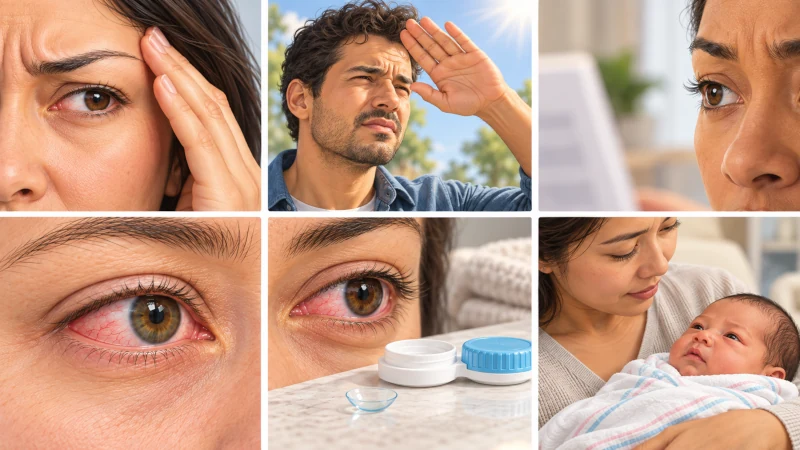
Allergic, viral, and bacterial conjunctivitis generally leave your vision intact and cause irritation rather than real pain [AFP review, 2010]. The symptoms below suggest something beyond surface inflammation and shouldn’t be watched at home. Contact an eye-care professional the same day if you notice [CDC, 2024] [JAMA review, 2013]:
- Moderate or severe eye pain, more than grittiness or itching
- Marked light sensitivity that makes you squint or avoid light
- A real change in vision, especially blurring that doesn’t clear when you blink or wipe away discharge
- Intense redness, or heavy pus that keeps returning
- Any red, irritated eye while you wear contact lenses
- A weakened immune system, or a newborn with any signs of pink eye (newborns should be seen right away)
Contact lenses raise the risk of keratitis, a sight-threatening infection of the cornea (the clear front window of the eye). With red, painful, light-sensitive eyes or sudden blurry vision, CDC advises removing your lenses and calling an eye doctor immediately [CDC, 2025], and lens wearers with bacterial conjunctivitis should be seen promptly by an ophthalmologist [CDC, 2024]. Don’t keep wearing lenses through an unexplained red eye. Our guide to corneal ulcers and contact lens risks explains what that complication looks like.
If you can’t reach an eye-care professional the same day for these symptoms, go to urgent care or an emergency room. A chemical splash or an injury to the eye needs emergency care [AFP review, 2010]; call 911 for a serious injury.
If you suspect infectious pink eye: hygiene basics

Viral and bacterial pink eye spread mainly through hand-to-eye contact and shared objects [CDC, 2024]. CDC recommends these steps [CDC, 2024]:
- Wash your hands often with soap and water for at least 20 seconds (or use sanitizer with at least 60% alcohol), and avoid touching or rubbing your eyes.
- Clean discharge with a clean, wet washcloth or a fresh cotton ball. Throw cotton balls away and wash used cloths in hot water and detergent.
- Don’t share pillows, towels, washcloths, eye drops, eye makeup, makeup brushes, contact lenses, lens cases, or glasses.
- Wash pillowcases, sheets, and towels often in hot water, and use separate eye-drop bottles for an infected and an uninfected eye.
- Stay out of swimming pools, and throw away disposable lenses and cases you used while infected.
CDC advises staying out of school or work while symptoms last if your activities involve close contact; returning may require a doctor’s approval [CDC, 2024]. Allergic conjunctivitis doesn’t call for keeping anyone home.
When allergy treatment makes sense
If the picture clearly fits allergies (itching in both eyes, clear watery discharge, normal vision, no pain, and a known trigger or season), allergy care is a reasonable first step. Reducing exposure comes first, since removing the allergen often helps [CDC, 2024]. The American College of Allergy, Asthma and Immunology (ACAAI) suggests closing windows during high-pollen periods, wearing glasses outdoors, and washing your hands after petting animals [ACAAI]. Cold compresses and artificial tears can ease irritation [CDC, 2024].

Common over-the-counter options
- Artificial tears (lubricating drops) rinse allergens from the eye surface and soothe irritation. Choose sterile products made for eyes, and check for recalls; FDA has warned against certain contaminated eye drops [ACAAI].
- Antihistamine eye drops relieve itching. Some combine an antihistamine with a mast cell stabilizer, such as ketotifen, which is sold without a prescription [AFP review, 2010] [ACAAI].
- Decongestant (“redness relief”) drops, alone or paired with an antihistamine, shrink blood vessels to reduce redness. ACAAI advises using them for no more than two to three days because longer use can cause rebound redness, and says people with glaucoma shouldn’t use them [ACAAI].
- Oral antihistamines can ease itching, but they may dry the eyes and make symptoms worse, and some cause drowsiness [ACAAI].
Check labels for age limits, and ask a pharmacist first if you take other medicines or are pregnant or breastfeeding. Some antihistamine and mast cell stabilizer drops are used from age 3, but discuss any treatment for a child with their doctor. If over-the-counter options fall short, prescription drops or an allergist may help [ACAAI].
Antibiotics work only against bacteria. They will not improve viral pink eye [CDC, 2024], and allergic conjunctivitis is an immune reaction rather than an infection, so there is nothing for an antibiotic to kill [CDC, 2024]. In viral conjunctivitis, antibiotic drops can irritate the eye, delay recognition of a different problem, and carry infection to the other eye on a contaminated dropper [JAMA review, 2013].
Even bacterial pink eye doesn’t always need them. At least 60% of cases clear on their own within one to two weeks [JAMA review, 2013]. A clinician may still prescribe antibiotics in certain situations, such as pus, a weakened immune system, contact lens wear, or a suspected sexually transmitted infection [CDC, 2024] [JAMA review, 2013]. Don’t reuse leftover prescription drops; combinations containing a steroid can worsen some eye infections, including herpes [JAMA review, 2013].
When to contact an eye-care professional
Call an optometrist, ophthalmologist, or your primary care clinician if [CDC, 2024] [JAMA review, 2013]:
- you have any of the caution symptoms listed above (same day)
- symptoms get worse, or haven’t improved after about a week
- bacterial pink eye hasn’t improved after 24 hours of prescribed antibiotics
- you’ve had a herpes infection of the eye before
- allergy symptoms keep coming back or don’t respond to over-the-counter care
If your red eye doesn’t seem to match allergies or infection, our overview of what can be mistaken for pink eye covers other causes, and our Eye & Vision guides cover related conditions.
| Health Disclaimer: This article is for general education and is not a substitute for professional medical advice, diagnosis, or treatment. Allergic and infectious pink eye can look alike, and only an examination can confirm the cause. Do not use this page to diagnose yourself or a child or to delay care. If you have eye pain, light sensitivity, a change in vision, or a red eye while wearing contact lenses, contact an eye-care professional promptly. Don’t start, stop, or change any prescription medicine or eye drop based on this article. See our full medical advice disclaimer. |
Frequently Asked Questions
Is itchy pink eye usually allergies?
Often, especially when both eyes itch strongly and you’re also sneezing. Itching is the most consistent allergy symptom, but infections can itch too [JAMA review, 2013].
Is allergic conjunctivitis contagious?
Allergies usually itch intensely in both eyes at once, often with hay fever. Viral pink eye tends to start in one eye, feel gritty, and arrive with a cold [CDC, 2024] [AFP review, 2010]. If unsure, use hygiene precautions.
Can allergies cause eye discharge?
Yes, usually clear and watery, sometimes stringy. Some severe allergic eye conditions produce thick mucus, so discharge alone can’t identify the cause [ACAAI] [AFP review, 2010].
When should a red eye be checked?
The same day for pain, marked light sensitivity, a change in vision, intense redness, or any red eye in a contact lens wearer, and right away for a newborn [CDC, 2024] [CDC, 2025]. Otherwise, get it checked if symptoms worsen or haven’t improved in about a week [JAMA review, 2013].
References
- Centers for Disease Control and Prevention. About Pink Eye. CDC; View source
- Centers for Disease Control and Prevention. Symptoms of Pink Eye. CDC; View source
- Centers for Disease Control and Prevention. How to Treat Pink Eye. CDC; View source
- Centers for Disease Control and Prevention. How to Prevent Pink Eye. CDC; View source
- Centers for Disease Control and Prevention. Clinical Overview of Pink Eye (Conjunctivitis). CDC; View source
- Centers for Disease Control and Prevention. What Causes Contact Lens-related Eye Infections. CDC; View source
- American College of Allergy, Asthma & Immunology. Eye Allergy. ACAAI; View source
- Cronau H, Kankanala RR, Mauger T. Diagnosis and Management of Red Eye in Primary Care. American Family Physician. View source
- Azari AA, Barney NP. Conjunctivitis: A Systematic Review of Diagnosis and Treatment. View source


