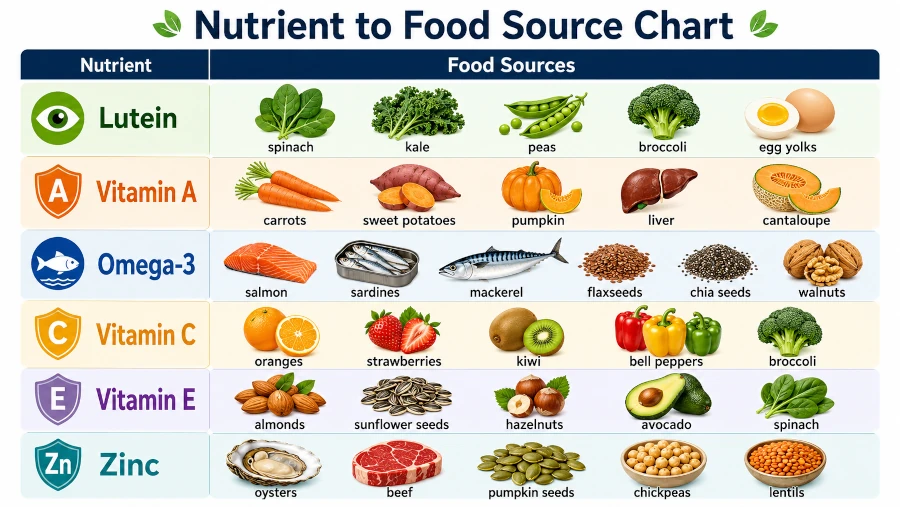
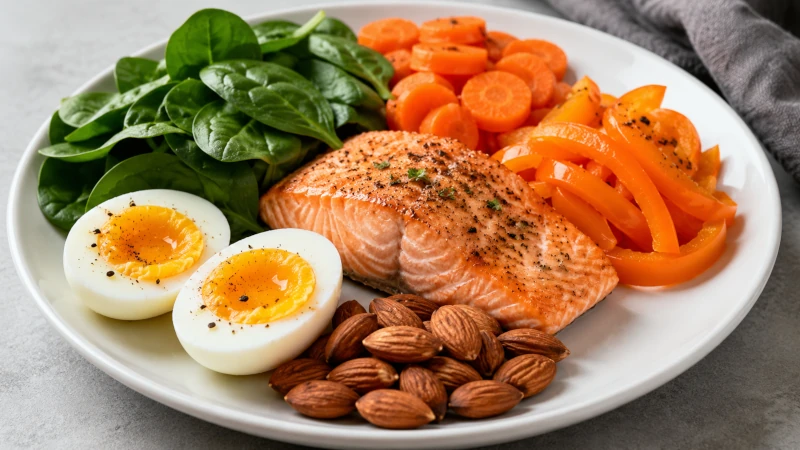
If you want to eat for your eyes, the short answer is this: fill your plate with leafy greens, brightly colored vegetables, oily fish, and eggs. These are among the best foods for eye health because they supply the specific nutrients your retina, lens, and tear film depend on — lutein, zeaxanthin, vitamin A, omega-3 fats, vitamin C, and zinc.
Here’s the part most articles skip. Food protects vision; it doesn’t rescue it. No carrot reverses macular degeneration, and no smoothie dissolves a cataract. What a good diet does — and the evidence for this is solid — is lower your risk over the years and keep the eyes you have working well. That’s worth doing, and it’s doable with groceries you already recognize.
What your eyes actually need from food
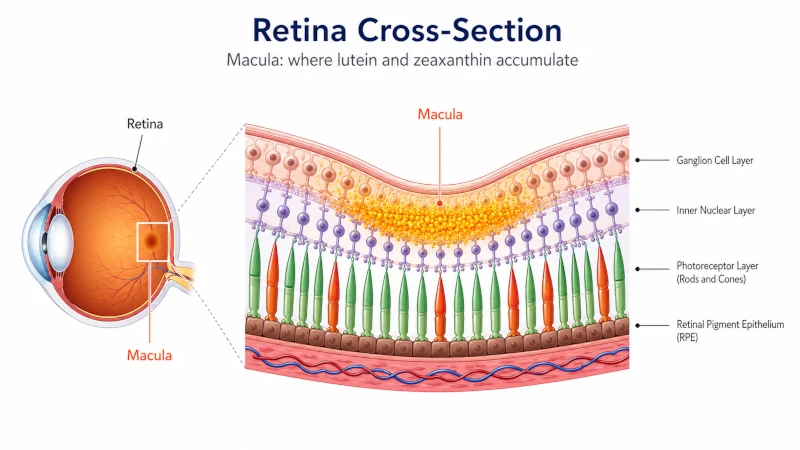
Your eyes are nutrient-hungry in a few very specific ways. The retina runs on vitamin A. The macula — the small central patch responsible for sharp, detailed vision — physically stockpiles two pigments called lutein and zeaxanthin, which act like internal sunglasses against damaging blue light. The lens stays clear partly thanks to antioxidants. And the oily layer of your tear film is influenced by the fats you eat.
The four nutrients that do the heavy lifting
Vitamin A is part of rhodopsin, the light-sensitive pigment that lets you see in dim conditions. Run low and the first thing to go is night vision; severe deficiency damages the surface of the eye and is still a leading cause of preventable blindness worldwide [NIH, 2022].
Lutein and zeaxanthin are the only dietary carotenoids that accumulate in the macula, and your body can’t make them — they have to come from food [Eisenhauer et al., 2017]. Higher dietary intake is linked to a lower risk of advanced age-related macular degeneration (AMD) [AAO, 2023].
Omega-3 fats (DHA) are a structural building block of the retina itself, found there in unusually high concentration [AHRQ, 2008].
Vitamin C, vitamin E, and zinc are antioxidants and cofactors the lens and retina use to manage everyday oxidative stress. Diets rich in them are associated with lower cataract risk — though, as you’ll see below, the pill versions tell a more complicated story [Mathew et al., 2012].
The 6 best foods for eye health
1. Leafy greens (spinach, kale, collards)
If you change one thing, make it this. Dark leafy greens are the richest common source of lutein and zeaxanthin — kale and spinach especially — and these are the pigments your macula actually absorbs and stores [AAO, 2023]. Population studies have consistently linked higher intake of these carotenoids with a lower risk of advanced AMD, the leading cause of vision loss in older adults.
One important caveat on the evidence: when the big AREDS2 trial tested lutein and zeaxanthin as supplements, they didn’t significantly slow AMD progression for the average participant [AREDS2 Research Group, 2013]. The protective signal is strongest for these nutrients from food, as part of an overall pattern of eating. A daily handful of spinach or a serving of cooked greens is a reasonable target.
2. Carrots, sweet potato, and apricots
The carrot’s reputation is half-earned. Orange and deep-yellow produce — carrots, sweet potato, butternut squash, apricots — are loaded with beta-carotene, which your body converts to vitamin A as needed [NIH, 2022]. That vitamin A keeps rhodopsin working and the surface of the eye healthy.
The honest version of the story: carrots prevent the night blindness and eye damage caused by vitamin A deficiency. If you’re already getting enough vitamin A, eating more carrots won’t sharpen otherwise normal eyesight. They’re still an excellent, eye-friendly food — just not magic.
3. Fatty fish (salmon, sardines)
Salmon, sardines, mackerel, and trout deliver DHA, the omega-3 fat concentrated in your retina. Diets higher in fish are associated with a lower risk of AMD and may help with dry eye comfort [AHRQ, 2008]. Two servings of oily fish a week is the commonly cited target, and it’s good for your heart at the same time.
Set expectations honestly here, because fish oil is heavily marketed: a large, rigorous trial (DREAM) found that omega-3 supplements worked no better than placebo for typical dry eye [NIH, 2018]. Whole fish as part of your diet is the better bet than reaching for capsules.
4. Eggs
Eggs are an underrated eye food. Yolks contain lutein and zeaxanthin in a fat-rich package that makes them especially easy for the body to absorb — more bioavailable, gram for gram, than the same pigments from vegetables [Eisenhauer et al., 2017]. Eggs also supply zinc, which helps move vitamin A from the liver to the retina. If you’ve been told to watch cholesterol, talk to your doctor about how many eggs fit your situation, but for most people an egg a day is reasonable.
5. Citrus and bell peppers
Oranges, grapefruit, strawberries, and — surprisingly — bell peppers are vitamin C standouts. (A raw red bell pepper has more vitamin C than an orange.) Vitamin C is concentrated in the fluid inside the eye, and diets high in it are associated with a lower risk of cataract [Mathew et al., 2012]. As a bonus, these foods make the meal more colorful, which usually means more eye-friendly antioxidants overall.
6. Nuts and seeds
Almonds, sunflower seeds, and hazelnuts are among the best food sources of vitamin E, a fat-soluble antioxidant that helps protect the fatty membranes of retinal cells. Like vitamin C, vitamin E from a varied diet is linked with lower cataract risk, even though high-dose vitamin E pills haven’t shown the same benefit [Mathew et al., 2012]. A small daily handful covers a lot of ground, and nuts bring healthy fats that help you absorb the carotenoids from the rest of this list.
How to get the most from these foods
A few practical habits noticeably improve how much eye-protective nutrition you actually absorb.
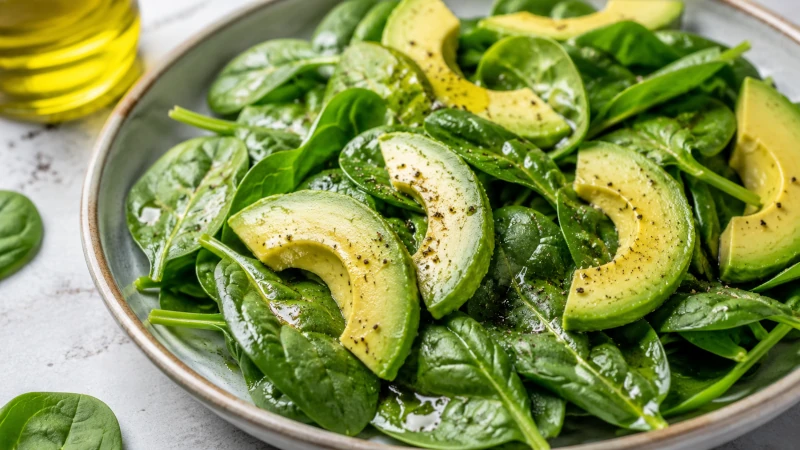
Eat your carotenoids with a little fat. Lutein, zeaxanthin, and beta-carotene are fat-soluble, so a drizzle of olive oil on your greens, avocado in the salad, or eggs alongside does real work. Light cooking helps too — lightly sautéed or steamed spinach releases more lutein than raw, even though raw salads feel “healthier.” And aim for variety and color across the week rather than chasing a single “superfood.” The strongest evidence in eye nutrition isn’t for any one item; it’s for an overall pattern. People who follow a Mediterranean-style diet — vegetables, fruit, fish, nuts, olive oil — show meaningfully lower rates of AMD progression in study after study [Zhang et al., 2024].
What food can’t do: safety and limits
A vegetable-forward, fish-friendly diet is safe for nearly everyone and good for far more than your eyes. The cautions are mostly about supplements, not food.
A note on supplements (and a real warning for smokers)
It’s tempting to skip the produce aisle and buy an “eye health” pill instead. Be careful. For people with intermediate or advanced AMD, the specific AREDS2 supplement formula is the one combination an eye doctor may actually recommend — but it’s a treatment for an existing condition, not a general-purpose vitamin for healthy eyes [AREDS2 Research Group, 2013].
The most important safety point on this whole page: high-dose beta-carotene supplements raise the risk of lung cancer in people who smoke or used to smoke. This is why beta-carotene was removed from the updated AREDS2 formula [AAO, 2023]. Beta-carotene from carrots and other foods does not carry this risk — the danger is specific to high-dose pills. If you smoke or recently quit, do not take a beta-carotene supplement without medical advice.
More broadly, fat-soluble vitamins (A and E especially) can build up to harmful levels from supplements in a way they essentially never do from food. If you’re pregnant, high-dose preformed vitamin A (retinol) supplements can harm the baby and should be avoided unless your clinician directs otherwise — though beta-carotene from food is fine. When in doubt, get your nutrients from the plate and treat any supplement as a medical decision worth running past a professional.
When to see an eye doctor
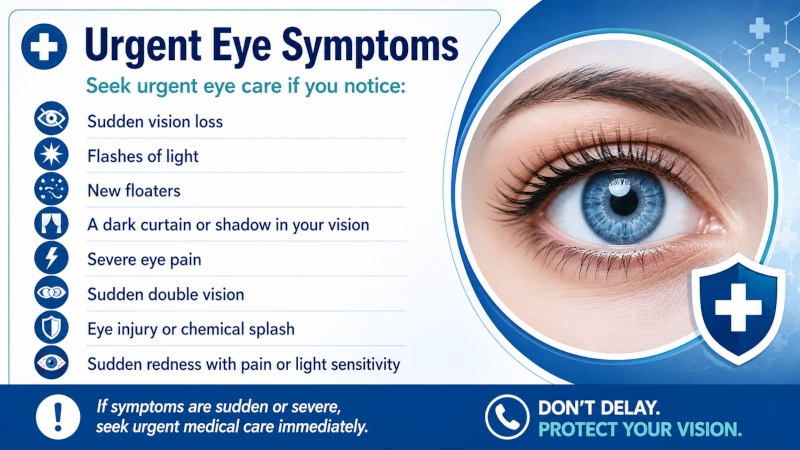
Diet is prevention, not treatment. Some symptoms need a professional now, not a salad. Seek prompt or emergency eye care if you notice:
- Sudden loss of vision, or a curtain or shadow moving across your sight
- A sudden burst of new floaters or flashing lights (possible retinal detachment)
- Eye pain, redness with light sensitivity, or sudden blurring
- Gradual loss of central or straight-line vision — straight edges looking wavy is a classic early AMD sign
And regardless of symptoms, adults should have regular eye exams; many serious eye diseases are silent until vision is already lost. Food supports the work your eye doctor does — it doesn’t replace it.
| Health Disclaimer This article is for educational purposes only and is not medical advice, diagnosis, or treatment. It is not a substitute for care from a qualified eye care professional. Nutrition can support eye health, but it does not cure, prevent, or reverse eye disease. Always talk with your doctor or an eye care provider before starting any supplement — especially if you are pregnant, breastfeeding, take medication, or have a diagnosed eye condition. If you have sudden vision changes, eye pain, or new flashes or floaters, seek medical care promptly. |
Frequently Asked Questions
Are carrots really good for your eyes?
Yes, but with a caveat. Carrots are rich in beta-carotene, which your body turns into vitamin A — essential for night vision and a healthy eye surface. They fix and prevent problems caused by vitamin A deficiency. If your vitamin A levels are already fine, more carrots won’t give you sharper-than-normal eyesight. The wartime “carrots give you night vision” story was, famously, propaganda.
What is the single best food for eye health?
If forced to pick one, dark leafy greens like spinach and kale. They’re the richest everyday source of lutein and zeaxanthin, the two pigments your macula stores to protect central vision, and higher dietary intake is linked with lower risk of macular degeneration.
Can the right diet prevent macular degeneration or cataracts?
It can lower your risk, not guarantee prevention. People eating a Mediterranean-style, plant-and-fish-forward diet show lower rates of AMD progression in multiple studies. Age, genetics, and smoking still matter a great deal — not smoking is one of the most powerful things you can do for your eyes.
Should I take an eye vitamin supplement instead?
For most people with healthy eyes, no — food is safer and works better. The AREDS2 supplement is a specific exception for people who already have intermediate or advanced AMD, and it should be used under an eye doctor’s guidance. Smokers and former smokers should specifically avoid beta-carotene supplements because of lung cancer risk.
Do I need to eat fish if I don’t like it?
Fish is the most direct source of the omega-3 DHA your retina uses, but it isn’t the only path. Walnuts, flaxseed, chia, and algae-based omega-3 supplements provide alternatives. Whole-food sources are generally preferable to capsules, and an eye-healthy diet has plenty of room to work around foods you dislike.
How long until eating better helps my eyes?
Think years, not days. The benefit of eating for your eyes is cumulative and protective — it lowers long-term risk rather than producing a noticeable change in how you see this week. The payoff is keeping your vision healthier as you age.
References
- National Institutes of Health, Office of Dietary Supplements. Vitamin A and Carotenoids — Health Professional Fact Sheet. 2022. View source
- American Academy of Ophthalmology. Diet, Nutrition, and Eye Health. 2023. View source
- AREDS2 Research Group. Lutein + Zeaxanthin and Omega-3 Fatty Acids for Age-Related Macular Degeneration (AREDS2). JAMA. 2013;309(19):2005–2015. View source
- National Eye Institute. Age-Related Eye Disease Studies (AREDS/AREDS2). View source
- National Institutes of Health. Omega-3s from fish oil supplements no better than placebo for dry eye (DREAM trial). 2018. View source
- Eisenhauer B, et al. Lutein and Zeaxanthin — Food Sources, Bioavailability and Dietary Variety in Age-Related Macular Degeneration Protection. Nutrients. 2017;9(2):120. View source
- Mathew MC, et al. Antioxidant vitamin supplementation for preventing and slowing the progression of age-related cataract. Cochrane Database Syst Rev. 2012. View source
- Agency for Healthcare Research and Quality (AHRQ). Effects of Omega-3 Fatty Acids on Eye Health: Summary. 2008. View source
- Zhang Y, et al. Mediterranean diet as a modifiable risk factor for age-related macular degeneration: a systematic review and meta-analysis. 2024. View source
