
Lists of cortisol-triggering foods tend to round up the same suspects: coffee, sugar, bread, sometimes even bananas. If you’ve been told your fatigue, belly fat, or restless sleep comes from one of them, the research tells a calmer and more useful story.
| What foods trigger cortisol? Caffeine and alcohol are the clearest dietary influences on cortisol, and going without food for a day or longer can raise it for a while. But no ordinary food has been shown to keep cortisol chronically high in everyone. Dose, timing, how often you consume something, sleep, stress, your health, and your overall diet matter far more than any single item. |
A short cortisol bump after coffee or a meal is how the body’s stress system normally works. It isn’t evidence of damage. The table below grades specific claims, not whole foods, because “caffeine can raise cortisol for a few hours” and “coffee causes high cortisol” are very different statements.
Evidence at a Glance
| Claim | Evidence | What the rating means here |
| Caffeine can raise cortisol for several hours, especially after a break from caffeine | Strong | Shown repeatedly in controlled human trials. The rise is temporary. |
| People who drink caffeine daily develop partial tolerance to that cortisol effect | Moderate | Clear in a well-designed crossover trial of 96 young adults; longer-term and older-adult data are thin. |
| Coffee causes chronically high cortisol or a cortisol disorder | Insufficient | No human study shows this. |
| Heavy drinking, alcohol dependence, and withdrawal disrupt cortisol regulation | Strong | Consistent across decades of human research. |
| A drink or two noticeably raises cortisol in most healthy adults | Limited | Rises are seen mainly at intoxicating doses; a small field study found no effect from moderate drinking. |
| Fasting for a day or longer raises cortisol temporarily | Moderate | A meta-analysis of 13 studies found a clear rise with fasting that faded over weeks. |
| Ordinary calorie-cutting diets raise cortisol | Limited | Studies conflict; less severe restriction showed no significant rise overall. |
| Sugar on its own “spikes” cortisol | Insufficient | In a controlled study, a large glucose drink did not raise cortisol by itself. |
| A very low-carbohydrate diet may increase cortisol excretion | Limited | One small, carefully controlled feeding study. |
| One everyday food keeps cortisol high in everyone | Insufficient | No evidence supports a universal list. |
| Cutting sugar, gluten, dairy, fruit, or carbs “resets” cortisol in the average person | Insufficient | Not tested or shown. Medical diets for diagnosed conditions are a separate matter. |
Ratings reflect the sources cited in each section below. Strong = consistent findings across good human studies or official guidance; Moderate = good evidence with real gaps; Limited = small, few, or conflicting studies; Insufficient = no meaningful human evidence for the claim as stated.
What “Cortisol-Triggering Food” Actually Means
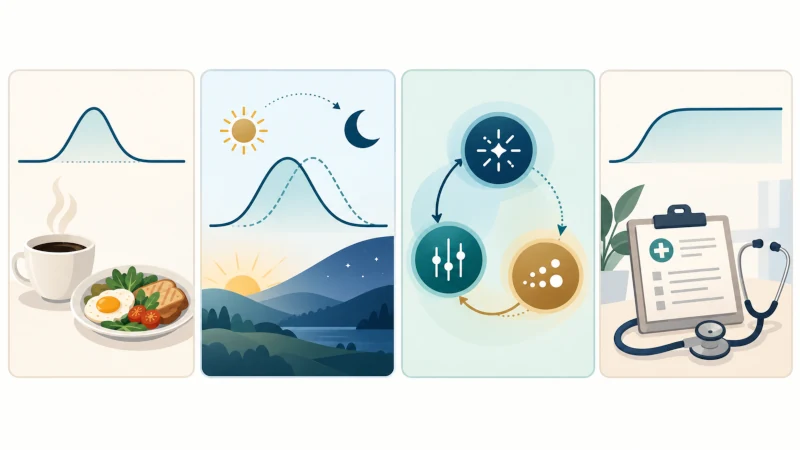
The phrase comes from wellness media, not medicine. When people use it, they may be describing any of four very different things:
- A temporary response. Cortisol rises for an hour or a few hours after something, then returns to its usual level. This is normal physiology.
- A shift in the daily rhythm. Something changes when cortisol peaks or dips across the day without necessarily raising the total.
- Long-term stress-system changes. Repeated, heavy exposures alter how the HPA axis—the hypothalamus, pituitary gland, and adrenal glands working together—responds over months or years.
- Medically abnormal cortisol. Levels stay too high or too low because of a disease or medicine, such as Cushing’s syndrome or adrenal insufficiency.
Most online lists blur all four together. A study showing a brief rise after a coffee or a meal belongs in the first category. It does not show that the food causes chronically high cortisol.
What Cortisol Does
Cortisol is a glucocorticoid hormone made by the adrenal glands, two small glands that sit above the kidneys. It helps your body respond to stress, control blood sugar and metabolism, reduce inflammation, and maintain blood pressure [MedlinePlus cortisol test guide, 2024].
Levels also change across the day. Blood cortisol is normally highest in the morning and much lower by late afternoon [MedlinePlus cortisol test guide, 2024]. That morning pulse is one reason blood pressure rises after waking, which our guide to the morning blood pressure surge explains.
Does Caffeine Raise Cortisol?
Yes—temporarily, and less so in people who drink it every day. In a double-blind crossover trial, 96 healthy adults with an average age of 28 took caffeine capsules at different daily doses for five days, then received three 250-milligram doses on a test day. After five days without caffeine, the test doses raised cortisol throughout the day. After five days at 300 mg a day (about three cups of brewed coffee), the morning dose no longer raised cortisol, though an afternoon rise still appeared. At 600 mg a day, tolerance was more complete. In every condition, cortisol returned to control levels by evening [Lovallo et al., Psychosomatic Medicine, 2005].

The authors concluded that daily use reduces but doesn’t eliminate caffeine’s cortisol effect. The study had real limits: it included only younger adults, the run-in periods lasted five days, and saliva sampling covered waking hours only [Lovallo et al., Psychosomatic Medicine, 2005]. In a smaller field study of everyday habits, coffee had no measurable effect on salivary cortisol [Garde et al., Scandinavian Journal of Clinical & Laboratory Investigation, 2009].
None of this shows that coffee causes a cortisol disorder. Caffeine isn’t “bad for cortisol.” A few situations deserve more attention:
- High intake. The FDA cites 400 mg a day—about two to three 12-ounce cups of coffee—as an amount not generally linked to negative effects for most adults, though sensitivity varies widely [FDA caffeine guidance, 2024].
- Caffeine during heavy stress. Researchers have raised the possibility that caffeine taken during stressful periods may add to the body’s stress-hormone and blood pressure responses [Lovallo et al., Psychosomatic Medicine, 2005].
- Late-day caffeine. Too much caffeine can cause insomnia, jitters, anxiety, and a racing heart [FDA caffeine guidance, 2024]. Poor sleep has its own effects on stress physiology, covered in our guide to how sleep affects blood pressure.
- Pregnancy, breastfeeding, certain conditions, or medicines. Ask your clinician whether you should limit caffeine [FDA caffeine guidance, 2024].
If you want to cut back, do it gradually; withdrawal isn’t dangerous but can be unpleasant [FDA caffeine guidance, 2024].
Alcohol and Cortisol: More Complicated Than a Simple Spike
Alcohol doesn’t have one effect on cortisol. It has several, depending on how much and how long someone drinks. In social drinkers, an intoxicating dose usually raises cortisol, particularly once blood alcohol exceeds 100 mg per deciliter (0.10%) [NIAAA review by Stephens and Wand, 2012]. A field study of 32 healthy employees found no effect on salivary cortisol from moderate drinking [Garde et al., Scandinavian Journal of Clinical & Laboratory Investigation, 2009].
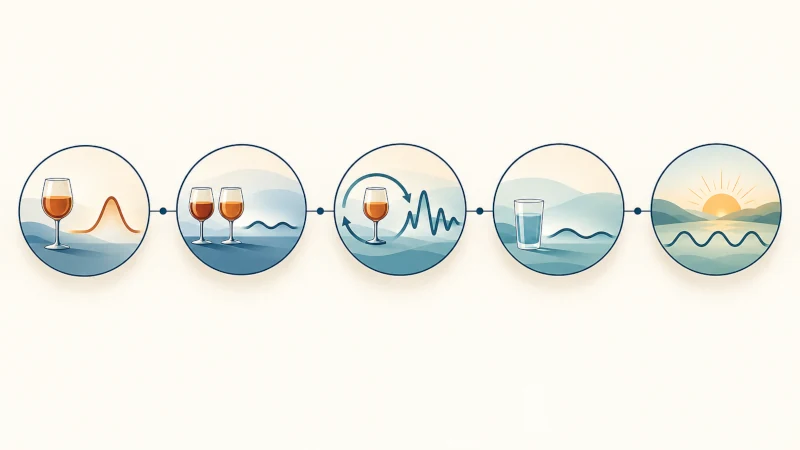
Heavy, repeated drinking is a different picture. Binge drinkers show a blunted cortisol response to alcohol. Alcohol dependence brings bouts of high cortisol as a person cycles through intoxication and withdrawal, while the response to everyday stress becomes dampened. In early abstinence, cortisol can fall low, and normal daily patterns generally return over the following weeks [NIAAA review by Stephens and Wand, 2012]. Alcohol use disorder is also one recognized cause of temporarily high cortisol that can mimic Cushing’s syndrome on lab tests [MedlinePlus cortisol test guide, 2024].
So alcohol isn’t simply a “cortisol-spiking drink.” Heavy use is the most clearly established dietary disruptor of the stress system. The current Dietary Guidelines advise everyone to drink less, and say some people should avoid alcohol completely, including pregnant women, people recovering from alcohol use disorder, and people taking medicines that interact with it [Dietary Guidelines for Americans, 2025–2030].
Does Sugar Raise Cortisol?
Sugar is the food most often accused, so the actual experiment is worth knowing. Researchers had healthy young men fast for 8 to 11 hours, then drink either 100 grams of glucose or water before a stressful public-speaking and math task. The glucose drink by itself did not raise cortisol. Men who had glucose showed a normal cortisol response to the stress test; men who had only water showed almost none, even though their heart rates rose just as much [Kirschbaum et al., Journal of Clinical Endocrinology & Metabolism, 1997].
The takeaway isn’t that sugar is calming or harmful. It’s that the stress system needs available energy to mount its normal response. That is very different from “sugar spikes cortisol.”
Very low blood sugar is another matter. Hypoglycemia is a physical stress that pushes the pituitary to signal the adrenal glands; doctors use insulin-induced low blood sugar as a supervised test of that system [NIDDK on adrenal insufficiency testing]. For a healthy person, a dessert followed by a normal dip in blood sugar has not been shown to cause a harmful cortisol surge.
There are good reasons to limit added sugar—just not this one. Drinking a lot of sugary beverages can contribute to weight gain [NIDDK on factors affecting weight], and the 2025–2030 Dietary Guidelines advise avoiding sugar-sweetened drinks [Dietary Guidelines for Americans, 2025–2030]. Poorly controlled diabetes and obesity can be associated with temporarily raised cortisol [MedlinePlus cortisol test guide, 2024], but that reflects the conditions, not a dessert.
Do Processed Foods Raise Cortisol?
Little direct human research tests whether ultra-processed foods raise cortisol, so claims that they “spike” it go beyond the evidence. What is better established is their effect on eating. In an NIH inpatient trial, 20 adults ate about 500 more calories a day and gained around 2 pounds over two weeks on an ultra-processed diet, compared with a minimally processed diet matched for calories, sugar, fat, and fiber on offer [NIH summary of Hall et al., Cell Metabolism, 2019].
That is a solid reason to build most meals from less-processed foods, as the Dietary Guidelines recommend [Dietary Guidelines for Americans, 2025–2030]. It isn’t proof of a cortisol effect.
Can Skipping Meals or Dieting Raise Cortisol?
Duration and severity make all the difference.
- Ordinary gaps and overnight fasting. A fast of 8 to 10 hours did not change baseline cortisol in healthy young men [Kirschbaum et al., Journal of Clinical Endocrinology & Metabolism, 1997]. Normal meal spacing isn’t a problem, and there’s no need to snack constantly to “keep cortisol down.”
- Intermittent fasting. In a meta-analysis of Ramadan fasting studies, morning cortisol tended to fall and evening cortisol tended to rise, suggesting a shift in timing rather than a higher total. The change in morning levels wasn’t statistically significant, and none of the studies had a non-fasting control group [Ramadan fasting meta-analysis, PLOS ONE, 2024].
- Fasting for a day or more. A meta-analysis of 13 studies with 357 participants found that fasting clearly raised blood cortisol, while very low-calorie and low-calorie diets did not produce significant increases. The rise appeared early and returned toward baseline after several weeks [Nakamura et al., meta-analysis in Stress, 2016].
- Calorie-cutting diets. In a three-week trial, 121 women assigned to eat 1,200 calories a day had higher total cortisol output in saliva, and those who tracked calories reported more stress [Tomiyama et al., Psychosomatic Medicine, 2010]. Other researchers questioned whether salivary measures reflect true adrenal output; the authors stood by their findings [Psychosomatic Medicine letter and authors’ reply, 2010]. Results across diet studies are mixed.
Extremely low intake, as in anorexia nervosa or starvation, is associated with elevated cortisol [Psychosomatic Medicine letter and authors’ reply, 2010]. That makes chronic under-fueling the scenario most worth avoiding. Intermittent fasting isn’t inherently harmful, but if you take medicine that lowers blood sugar, are pregnant or breastfeeding, or have a history of an eating disorder, talk with your clinician before fasting.
Carbohydrates and Cortisol
“Carbohydrates” covers everything from lentils to lollipops, which is far too broad to call a cortisol-triggering food. If anything, the evidence points the other way. In a controlled feeding study of 21 adults after weight loss, 24-hour urinary cortisol was lowest on a low-fat, higher-carbohydrate diet (50 micrograms a day) and highest on a very low-carbohydrate diet (71 micrograms a day), with a low-glycemic diet in between. The authors flagged the low-carb result as a possible downside, while noting that the 10%-carbohydrate diet was stricter than most people could sustain [Ebbeling et al., JAMA, 2012].
Another trial found that high-carbohydrate and high-protein meals produced similar cortisol responses and similar effects on mood, both at rest and under stress [Lemmens et al., PLOS ONE, 2011]. Fruit, whole grains, beans, and other fiber-rich carbohydrate foods remain part of the recommended American eating pattern [Dietary Guidelines for Americans, 2025–2030].
Eating Itself Changes Cortisol—and That’s Normal
Cortisol often rises modestly after a meal. In a field study, salivary cortisol was about 10% higher one hour after lunch, whether the meal was a vegetable salad or a protein-rich dish; exercise raised it far more, by about 80% [Garde et al., Scandinavian Journal of Clinical & Laboratory Investigation, 2009]. In a lab study, meals raised cortisol in men under every condition tested [Lemmens et al., PLOS ONE, 2011].
A measurable change in cortisol after eating is not evidence that a food is harmful. Many social-media claims rest on exactly this mistake.
Foods Often Blamed Without Good Evidence
There isn’t good evidence that any of these foods chronically raises cortisol in most people:
- Fruit, including bananas. Fruit is a recommended food group, and its naturally occurring sugars are not counted as added sugars [Dietary Guidelines for Americans, 2025–2030].
- Whole grains, oats, and other carbohydrate staples. See the carbohydrate research above.
- Dairy. Included in current US dietary guidance [Dietary Guidelines for Americans, 2025–2030]; avoid it only if you have an allergy or intolerance or a clinician advises it.
- Gluten, in people without celiac disease or another condition a clinician has diagnosed.
- Breakfast foods. Cortisol is naturally highest in the morning [MedlinePlus cortisol test guide, 2024]; there isn’t good evidence that eating breakfast pushes it into an unhealthy range.
Cutting these foods to “reset” cortisol has not been tested or shown to work, and needless restriction can make it harder to eat enough.
Cortisol-Triggering Foods and Drinks: What the Evidence Says
| Food or dietary factor | What research suggests | Evidence | Practical takeaway |
| Caffeine (coffee, tea, energy drinks) | Temporary cortisol rise; smaller in daily users but not gone | Strong (acute effect) | Keep intake moderate, avoid it late in the day, and notice how you respond |
| Alcohol | Intoxicating doses raise cortisol; heavy use and withdrawal disrupt regulation | Strong (heavy use); Limited (light use) | Drink less; heavy drinking is the clearest dietary concern |
| Prolonged fasting (a day or more) | Temporary rise that settles over weeks | Moderate | Get medical guidance first if you have a health condition, take blood-sugar-lowering medicine, or are pregnant |
| Severe or chronic under-eating | Can act as a physiological stressor; findings on moderate dieting conflict | Limited to moderate | Avoid crash diets and chronic under-fueling |
| Intermittent fasting / ordinary meal gaps | No clear overall rise; timing of the daily curve may shift | Limited | Fine for many people; no need to graze all day |
| Added sugar and sugary drinks | No direct evidence they keep cortisol high; good other reasons to limit them | Insufficient (for cortisol) | Limit for general metabolic health, not out of cortisol fear |
| Highly processed diets | Drive overeating and weight gain; cortisol not directly shown | Moderate (weight); Insufficient (cortisol) | Build meals mostly from less-processed foods |
| Very low-carbohydrate diets | One small study found higher urinary cortisol | Limited | No reason to cut carbs to “lower cortisol” |
| Fruit, whole grains, beans, dairy, other whole foods | Normal mealtime responses only | Insufficient (for harm) | Keep eating them unless a clinician advises otherwise |
What to Eat Instead
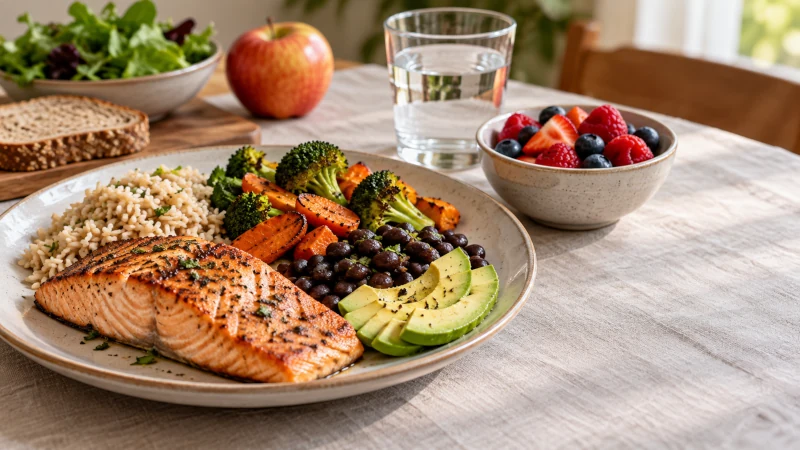
No specific food has been shown to lower cortisol directly. A steady, nutrient-dense eating pattern supports overall metabolic and stress-related health, and it is what US guidance recommends [Dietary Guidelines for Americans, 2025–2030]:
- Protein at meals from a mix of sources: fish and seafood, eggs, poultry, meat, beans, lentils, nuts, seeds, and soy.
- Vegetables and fruits through the day—about three servings of vegetables and two of fruit on a 2,000-calorie pattern.
- Fiber-rich whole grains in place of refined, packaged options.
- Healthy fats from foods such as nuts, seeds, olive oil, avocados, and omega-3–rich fish.
- Water or unsweetened drinks for hydration.
- Mostly home-prepared or minimally processed meals, with fewer sugary drinks and highly processed snacks.
Just as important: eat enough. Chronic under-eating is one of the few dietary habits with a plausible stress-hormone downside.
If you’re tempted to replace food rules with supplements, be cautious. The Endocrine Society warns that many products sold for adrenal health haven’t been tested for safety, and that taking adrenal hormone products you don’t need can suppress your own adrenal glands [Endocrine Society on adrenal fatigue, 2022]. Our review of ashwagandha and magnesium for stress and sleep covers what the evidence shows and who should avoid them.
Foods to Avoid If You Have High Cortisol
If a clinician has confirmed Cushing’s syndrome or another cause of cortisol excess, treatment depends on the cause and may include surgery, radiation, or cortisol-lowering medicines. When steroid medicine is the cause, the dose is reduced gradually under medical supervision [NIDDK on Cushing’s syndrome]. Diet does not cure these conditions, and nutrition advice should come from your care team.
If you’re worried about stress rather than diagnosed disease, focus on the exposures with clearer evidence instead of banning food groups:
- Keep caffeine moderate and earlier in the day.
- Drink less alcohol, and avoid heavy or binge drinking.
- Avoid crash diets and prolonged fasting unless a clinician supervises them.
- Limit sugary drinks and highly processed foods for general metabolic health.
Can Food Cause Chronically High Cortisol?
Everyday foods have not been shown to cause Cushing’s syndrome. The most common cause is long-term, high-dose use of glucocorticoid medicines such as those prescribed for asthma, arthritis, or lupus. When the body itself overproduces cortisol, the usual cause is a tumor, most often a noncancerous pituitary tumor; this form is rare, affecting roughly 40 to 70 people per million [NIDDK on Cushing’s syndrome].
Other conditions can raise cortisol on and off without Cushing’s syndrome, including depression, anxiety, alcohol use disorder, poorly controlled diabetes, and obesity. Stress, pregnancy, exercise, temperature extremes, and some medicines such as birth control pills can also affect results [MedlinePlus cortisol test guide, 2024]. Feeling stressed is not the same as having an endocrine disorder, and “adrenal fatigue” is not a recognized medical diagnosis [Endocrine Society on adrenal fatigue, 2022].
Do Cortisol-Triggering Foods Cause Belly Fat?
True cortisol excess can change where the body stores fat. In Cushing’s syndrome, weight gain usually comes with other signs: thin arms and legs, a rounder face, extra fat at the base of the neck or between the shoulders, easy bruising, wide purple stretch marks, and weak muscles [NIDDK on Cushing’s syndrome].
Ordinary abdominal weight gain has many common causes, including calorie intake, time spent sitting, short sleep, certain medicines (including corticosteroids), long-term stress, depression, and genes that affect where the body stores fat [NIDDK on factors affecting weight]. A larger waist doesn’t prove high cortisol, and eliminating supposed cortisol foods is not a proven way to target belly fat.
When Testing Makes More Sense Than Changing Your Diet

If you keep cutting foods because you suspect your cortisol is high, it’s time to stop experimenting and get an answer. A clinician can decide whether cortisol testing makes sense, which test fits the question, and how to time it. Symptoms worth raising include several Cushing-type signs developing together, or long-lasting fatigue with muscle weakness, appetite loss, weight loss, or belly pain, which can point to low cortisol [MedlinePlus cortisol test guide, 2024].
A single cortisol result can’t diagnose the cause of an abnormal level [MedlinePlus cortisol test guide, 2024], and tests marketed for “adrenal fatigue” are not supported by good scientific studies [Endocrine Society on adrenal fatigue, 2022]. Our guide to how cortisol levels are checked explains blood, saliva, and urine testing in detail.
If You’re Worried About Cortisol, Start Here
- Don’t fear individual foods. No ordinary food has been shown to keep cortisol high in everyone.
- Review caffeine amount and timing. Moderate amounts, earlier in the day, and attention to how you feel.
- Drink less alcohol. Heavy drinking is the clearest dietary disruptor of the stress system.
- Eat enough. Skip crash diets and chronic under-fueling.
- Follow a nutrient-dense pattern built on protein foods, vegetables, fruits, whole grains, and healthy fats.
- Protect your sleep with a consistent schedule.
- Stay physically active at a level that suits your health.
- Address ongoing stress through rest, support, or counseling when it feels unmanageable.
- See a clinician if your symptoms suggest a genuine cortisol problem, rather than restricting more foods.
When to See a Healthcare Professional
Make an appointment with your primary care clinician if you notice several changes developing together, such as easy bruising, wide purple stretch marks, weakness in the upper arms or thighs, or a rounder face [NIDDK on Cushing’s syndrome]. Also seek care for long-lasting fatigue with weight loss, appetite loss, or belly pain [MedlinePlus cortisol test guide, 2024], or if you take steroid medicine and want to reduce or stop it—never stop it on your own.
Fatigue, poor sleep, and anxiety on their own still deserve a visit. They have many treatable causes, including depression and sleep apnea [Endocrine Society on adrenal fatigue, 2022].
Call 911 or go to the nearest emergency room for possible adrenal crisis, especially if you have adrenal insufficiency or recently stopped long-term steroids: sudden, severe pain in the lower back, abdomen, or legs; vomiting and diarrhea; weakness; confusion; or loss of consciousness [NIDDK on adrenal crisis].
| Health Disclaimer: This article is for general education and is not medical advice, diagnosis, or treatment. Cortisol levels depend on timing, health conditions, and medicines, and abnormal results must be interpreted by a qualified healthcare professional. Do not start, stop, or change any prescription medicine—including corticosteroids, birth control, or blood-sugar-lowering drugs—without your prescriber. If you are pregnant or breastfeeding, have diabetes, an eating disorder history, or a known adrenal or pituitary condition, ask your clinician before changing your caffeine, alcohol, or eating pattern or starting a fast. If you have symptoms of adrenal crisis, call 911. |
Frequently Asked Questions
What foods raise cortisol the most?
Caffeine and alcohol have the clearest effects, and fasting for a day or longer can raise it temporarily [Lovallo et al., Psychosomatic Medicine, 2005; NIAAA review by Stephens and Wand, 2012; Nakamura et al., meta-analysis in Stress, 2016]. No ordinary food has been shown to keep cortisol high in everyone.
Does coffee increase cortisol?
It can for a few hours, especially if you don’t usually drink it. Daily drinkers develop partial tolerance, and levels return to normal by evening [Lovallo et al., Psychosomatic Medicine, 2005].
Does sugar raise cortisol?
Not by itself in controlled testing. A large glucose drink didn’t raise cortisol in fasted men, though it allowed a normal response to stress [Kirschbaum et al., Journal of Clinical Endocrinology & Metabolism, 1997]. Very low blood sugar is a different, real stressor [NIDDK on adrenal insufficiency testing].
Does alcohol raise cortisol?
Intoxicating amounts usually do, and heavy drinking and withdrawal disrupt cortisol regulation [NIAAA review by Stephens and Wand, 2012]. Light drinking showed no measurable effect in a small field study [Garde et al., Scandinavian Journal of Clinical & Laboratory Investigation, 2009].
Are there foods that lower cortisol?
No single food has been shown to lower cortisol directly. Eating enough, following a nutrient-dense pattern, moderating caffeine and alcohol, and sleeping well support overall stress-related health.
Can food cause Cushing’s syndrome?
No. Cushing’s syndrome is most often caused by long-term glucocorticoid medicines and, less often, by tumors [NIDDK on Cushing’s syndrome].
References
- National Library of Medicine (MedlinePlus). Cortisol Test. MedlinePlus Medical Tests. View source
- National Institute of Diabetes and Digestive and Kidney Diseases. Cushing’s Syndrome. NIDDK. View source
- National Institute of Diabetes and Digestive and Kidney Diseases. Diagnosis of Adrenal Insufficiency & Addison’s Disease. View source
- National Institute of Diabetes and Digestive and Kidney Diseases. Definition & Facts of Adrenal Insufficiency & Addison’s Disease. View source
- National Institute of Diabetes and Digestive and Kidney Diseases. Factors Affecting Weight & Health. View source
- Endocrine Society. Adrenal Fatigue. Endocrine Library (patient resource). View source
- U.S. Food and Drug Administration. Spilling the Beans: How Much Caffeine Is Too Much? View source
- U.S. Department of Health and Human Services; U.S. Department of Agriculture. Dietary Guidelines for Americans, 2025–2030. View source
- Lovallo WR, Whitsett TL, al’Absi M, Sung BH, Vincent AS, Wilson MF. Caffeine stimulation of cortisol secretion across the waking hours in relation to caffeine intake levels. Psychosomatic Medicine. View source
- Stephens MAC, Wand G. Stress and the HPA axis: role of glucocorticoids in alcohol dependence. Alcohol Research: Current Reviews. View source
- Kirschbaum C, Gonzalez Bono E, Rohleder N, Gessner C, Pirke KM, Salvador A, Hellhammer DH. Effects of fasting and glucose load on free cortisol responses to stress and nicotine. Journal of Clinical Endocrinology & Metabolism. View source
- Tomiyama AJ, Mann T, Vinas D, Hunger JM, Dejager J, Taylor SE. Low calorie dieting increases cortisol. Psychosomatic Medicine. View source
- Remer T, Shi L. Low-calorie dieting and dieters’ cortisol levels: don’t forget cortisone (letter); Tomiyama AJ, Dallman MF. The cortisol-cortisone shuttle in caloric restriction (reply). Psychosomatic Medicine. View source
- Nakamura Y, Walker BR, Ikuta T. Systematic review and meta-analysis reveals acutely elevated plasma cortisol following fasting but not less severe calorie restriction. Stress. View source
- Poursalehian M, Mohseni S, Shadman Z, et al. Impact of Ramadan fasting on serum levels of major endocrinology hormonal and biochemical parameters in healthy non-athlete adults: a systematic review and meta-analyses. View source
- Ebbeling CB, Swain JF, Feldman HA, Wong WW, Hachey DL, Garcia-Lago E, Ludwig DS. Effects of dietary composition on energy expenditure during weight-loss maintenance. View source
- Lemmens SG, Born JM, Martens EAP, Martens M, Westerterp-Plantenga MS. Influence of consumption of a high-protein vs. high-carbohydrate meal on the physiological cortisol and psychological mood response in men and women. View source
- Garde AH, Persson R, Hansen ÅM, Österberg K, Ørbæk P, Eek F, Karlson B. Effects of lifestyle factors on concentrations of salivary cortisol in healthy individuals. Scandinavian Journal of Clinical & Laboratory Investigation. View source
- National Institutes of Health. Eating highly processed foods linked to weight gain. NIH Research Matters. View source


