
If you want to eat for a healthier liver, the most useful thing you can do isn’t to add one miracle food — it’s to shift the overall pattern of what’s on your plate. Your liver is remarkably self-sufficient. It filters your blood, processes nutrients, stores energy, and breaks down toxins around the clock, and it does all of that without a juice cleanse or a detox tea.
What it does respond to, over months and years, is steady everyday eating: more whole plants and fiber, better fats, a famous cup or two of coffee, and less sugar, refined starch, and alcohol. With that in mind, here are the best foods for the liver — ten of them — ordered by how strong the evidence actually is rather than how impressive they sound.
One honest caveat before the list. No food on it will cure liver disease, reverse cirrhosis, or flush out toxins on demand — claims like that are marketing, not medicine. What good evidence supports is more modest and more useful: certain foods and eating patterns are linked to a lower risk of fatty liver disease and can help an already-healthy liver stay that way. If you’ve been diagnosed with a liver condition, treat these foods as support for a plan your doctor builds, not a replacement for it.
Most of the diet research here centers on what used to be called non-alcoholic fatty liver disease, renamed in 2023 to metabolic dysfunction-associated steatotic liver disease, or MASLD [MASLD nomenclature review, 2024]. It’s the most common chronic liver condition in the world, it’s tied closely to body weight and blood sugar, and it’s the area where food choices have been studied most carefully.
The 10 best foods for the liver
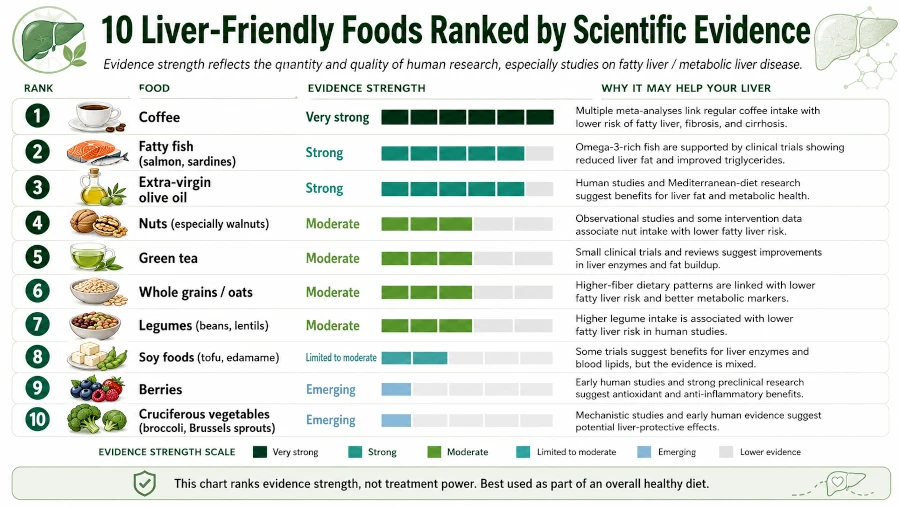
1. Coffee — the surprising standout
This is the food (well, drink) with the strongest evidence, and it isn’t close. Across large reviews of observational studies, regular coffee drinkers have lower rates of liver scarring (fibrosis) and cirrhosis than people who don’t drink it. A meta-analysis of sixteen studies found coffee drinkers were significantly less likely to develop cirrhosis, with the protective signal showing up clearly in people with alcohol-related and hepatitis C-related liver disease [Liu et al., 2015].
A separate review pooling cohort studies tied two or more cups a day to a meaningfully lower risk of cirrhosis [Kennedy et al., 2016]. And in people who already have fatty liver disease, higher coffee intake has been associated with roughly a third lower odds of significant fibrosis [Hayat et al., 2021].
Two caveats worth keeping. This is observational evidence, so it shows association rather than proof. And the benefit appears to come from coffee itself — caffeine plus compounds like chlorogenic acid — not from loading it with sugar and cream. Black or lightly sweetened, filtered or espresso, two to three cups a day is the range most studies point to. If caffeine disrupts your sleep or your doctor has told you to limit it, this isn’t a reason to start.
2. Fatty fish like salmon and sardines
Salmon, sardines, mackerel, and herring are rich in long-chain omega-3 fats (EPA and DHA), which help the body handle blood fats and may reduce the amount of fat stored in the liver. The evidence is moderate and a little mixed: pooled trials show omega-3s can improve liver fat seen on ultrasound and lower some liver-related blood markers, but the effect on more precise MRI measures and on biopsy findings has been inconsistent [omega-3 meta-analysis, 2025]. Two servings of oily fish a week is a sensible, well-tolerated target that fits almost any healthy diet. Capsules are a separate question — see the safety section.
3. Extra-virgin olive oil
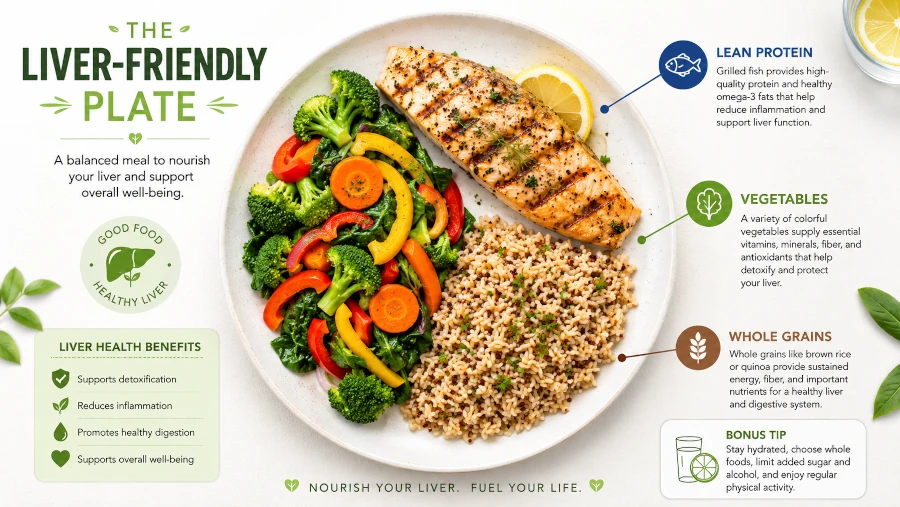
Olive oil is one reason the Mediterranean style of eating keeps surfacing in liver research. Used in place of butter and other saturated fats, extra-virgin olive oil is associated with less liver fat and better metabolic markers. In a 12-week randomized trial, a Mediterranean diet built around olive oil, vegetables, and fish reduced liver fat by roughly 39% [dietary review, 2025]. The oil isn’t doing that alone — it’s part of a pattern — but it’s a low-risk, high-flavor swap you can make today.
4. Leafy greens and cruciferous vegetables
Spinach, kale, broccoli, cauliflower, and Brussels sprouts bring fiber, antioxidants, and plant compounds that support healthy metabolism, and they anchor every eating pattern linked to better liver outcomes. Most of the direct human evidence is about vegetables as part of an overall diet rather than any single vegetable as a remedy. So the honest framing is simple: these belong on your plate most days, and the more they crowd out refined carbohydrates, the better for your liver.
5. Berries and grapes
Blueberries, raspberries, grapes, and other deeply colored fruits are high in polyphenols — antioxidant compounds that, in laboratory and animal studies, calm the oxidative stress and inflammation involved in fatty liver disease. The catch is that most of this evidence is early and preclinical; large human trials showing that eating berries changes liver outcomes don’t yet exist. They’re a genuinely good, fiber-rich way to satisfy a sweet craving without added sugar — just hold the expectation that they’re medicine.
6. Walnuts and other nuts
Walnuts, almonds, and other nuts supply unsaturated fats, fiber, and vitamin E, and they’re a fixture of the Mediterranean pattern tied to lower fatty-liver risk. Observational studies link regular nut eating with a lower chance of developing fatty liver disease. About an ounce (a small handful) most days is the amount that shows up in this research. Because nuts are calorie-dense, they work best replacing snacks like chips rather than piling on top of them.
7. Beans, lentils, and other legumes
Beans, lentils, and chickpeas are slow-digesting, high-fiber sources of plant protein. Swapping some red and processed meat for legumes lowers the saturated-fat and refined-carb load your liver has to manage, and steadier blood sugar is part of why high-legume, high-fiber patterns track with better liver health. They’re cheap, filling, and easy to build meals around.
8. Oats and whole grains
Refined carbohydrates — white bread, sugary cereal, pastries — prompt the liver to make and store more fat. Whole grains do the opposite: the fiber in oats, barley, brown rice, and whole wheat slows digestion and helps with blood sugar and weight, both of which matter for fatty liver. Oats in particular contain beta-glucan, a soluble fiber studied for its effects on cholesterol and metabolism. The practical move is straightforward — make most of your grains whole ones.
9. Green tea — helpful as a drink, risky as a pill
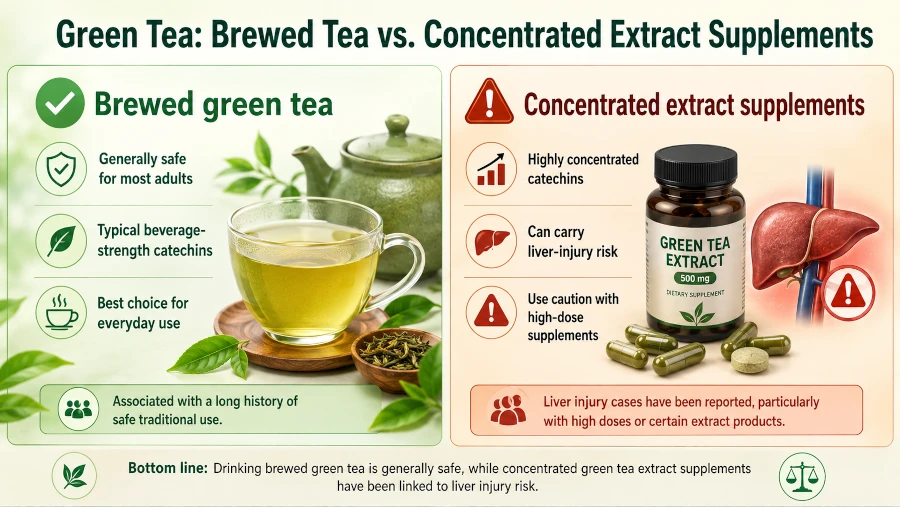
Brewed green tea is rich in catechins, and in people with fatty liver disease it has been associated with modest improvements in liver enzymes [Mahmoodi et al., 2020]. Interestingly, the same review found a small rise in liver enzymes among healthy people, so the effect seems to depend on where you start. A few cups of brewed tea is fine for most people. Concentrated green tea extract supplements are a different and more serious story: they’re a well-documented cause of liver injury, occasionally severe [NIH LiverTox, 2020]. Drink the tea; be cautious with the pills.
10. Artichoke
Artichoke is the one food on older liver lists with real clinical research behind it — with an important asterisk. The studies use concentrated artichoke leaf extract, not the steamed vegetable on your plate. In a randomized, double-blind trial, 600 mg of artichoke leaf extract daily for two months improved liver enzymes and ultrasound measures in people with fatty liver disease [Panahi et al., 2018], and a 2022 review of randomized trials found artichoke supplementation lowered the liver enzymes ALT and AST, especially in fatty liver disease [artichoke meta-analysis, 2022].
Eating artichokes is a healthy, fiber-rich choice — you can read more in our guide to the health benefits of artichokes — but the impressive numbers come from a supplement, and supplements carry their own cautions. The older claim that artichokes treat hepatitis or cirrhosis isn’t supported by controlled evidence, and I’ve left it out for that reason.
At a glance: the evidence behind each food
| Food | Evidence strength | How to use it |
| Coffee | Strong (large meta-analyses) | 2–3 cups/day, black or lightly sweetened |
| Fatty fish | Moderate / mixed | 2 servings of oily fish per week |
| Extra-virgin olive oil | Moderate (as part of a pattern) | Use in place of butter and other saturated fats |
| Leafy greens & cruciferous veg | Supportive (within diet patterns) | Aim for them most days |
| Berries & grapes | Limited / mostly early research | A fiber-rich swap for added sugar |
| Nuts (e.g. walnuts) | Moderate (observational) | About 1 oz most days, replacing snacks |
| Beans & legumes | Supportive | Use to replace some red/processed meat |
| Oats & whole grains | Supportive | Make most of your grains whole |
| Green tea (brewed) | Limited (avoid extract pills) | A few cups of brewed tea |
| Artichoke (leaf extract) | Limited–moderate (supplement, not the veg) | Discuss extract with your doctor first |
Evidence strength reflects the quality of human studies on that food and liver outcomes — not how nutritious it is overall.
What about apples, onions, and the other fruits on older liver lists?
If you arrived from a list that featured apples, onions, cherries, plums, or grapes as liver cures, here’s the honest version. These are healthy foods — fiber, vitamins, plant compounds — and there’s nothing wrong with eating them. Apples and onions in particular show up in our guides on apple health benefits and the benefits of eating onions for good general reasons. What the strong evidence doesn’t support is the specific claim that any of them treats hepatitis, reverses cirrhosis, or detoxifies the liver. Those ideas come largely from tradition and older naturopathic texts, not from controlled human trials. Enjoy them as part of the overall pattern; don’t lean on them as treatment.
Foods and habits that work against your liver
What you cut matters as much as what you add. The everyday culprits in fatty liver disease:
- Sugar-sweetened drinks and added sugar. Large amounts of fructose are processed in the liver and converted to fat.
- Refined carbohydrates. White bread, pastries, and sugary cereals push the liver toward fat storage.
- Alcohol. The clearest dietary driver of liver damage; if you have fatty liver, cutting back is one of the highest-value changes you can make.
- Ultra-processed foods. Typically high in refined starch, sugar, salt, and unhealthy fats — a combination that strains metabolism.
- Excess saturated fat from fatty and processed meats, eaten in place of unsaturated fats from fish, nuts, and olive oil.
If you take one thing from the research, take this: for fatty liver disease, losing even 5–10% of body weight does more than any single food, and the diets that achieve it — Mediterranean or a sensible lower-fat plan — work largely through that route [Mediterranean vs low-fat trial, 2025].
When food isn’t enough: liver warning signs and who needs extra care
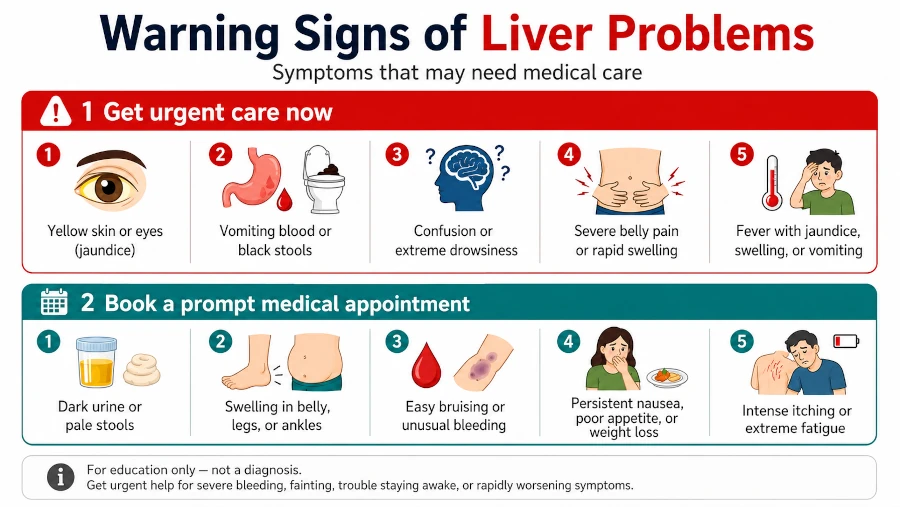
Diet supports a healthy liver, but it doesn’t replace medical care. Get medical attention promptly if you notice any of these:
- Yellowing of the skin or the whites of the eyes (jaundice)
- Swelling in your abdomen or in your legs and ankles
- Confusion, unusual drowsiness, or trouble concentrating
- Vomiting blood, or passing black, tarry stools
- Severe pain in the upper-right side of your abdomen
- Dark urine together with pale, clay-colored stools
These can signal serious liver problems and shouldn’t wait.
Who should be cautious — especially with supplements
“Natural” doesn’t mean harmless for the liver. Talk to your doctor or a registered dietitian before starting any herbal liver detox or high-dose supplement — including green tea extract and concentrated artichoke extract — particularly if you are pregnant or breastfeeding, take regular medications (many herbs change how drugs are processed), already have liver disease, or have surgery scheduled. You can browse our supplements and reviews section for general guidance, and our digestive health guides for related topics.
When to check in even without dramatic symptoms
Fatty liver disease is often silent. If you have ongoing fatigue, or risk factors like obesity, type 2 diabetes, high cholesterol, or heavier drinking, ask your doctor whether liver function tests make sense for you. Catching it early is when diet and weight changes do the most good.
| Health Disclaimer This article is for general education and information only. It is not medical advice and is not a substitute for diagnosis or treatment from a qualified healthcare professional. Foods and supplements can interact with medications and affect existing health conditions. If you are pregnant, breastfeeding, taking medication, or living with a liver condition or other medical concern, talk to your doctor before changing your diet or starting any herbal or natural product. If you have symptoms of serious liver trouble, seek medical care promptly. |
Frequently Asked Questions
What is the single best food for liver health?
Coffee has the strongest research behind it — regular drinking is linked to lower rates of fibrosis and cirrhosis. But no single food carries the day; the overall pattern of your diet, and your weight, matter more than any one item.
Can certain foods reverse fatty liver disease?
No single food reverses it. What can improve and sometimes reverse early fatty liver is losing weight through an overall healthier diet — Mediterranean-style eating is the best-studied approach. Think of the foods on this list as the building blocks of that pattern.
Are liver detox teas and cleanses good for your liver?
There’s no good evidence that detox teas or cleanses help, and some can hurt. Your liver detoxifies your body on its own. A few products marketed for liver detox — concentrated green tea extract is a notable example — have actually caused liver injury.
Is it safe to take artichoke extract for my liver?
Small randomized trials suggest artichoke leaf extract can improve liver enzymes in fatty liver disease, but it isn’t a treatment for serious liver disease, and supplements can interact with medications. Talk to your doctor before taking it, and don’t use it in place of prescribed care.
How much coffee is good for the liver?
Most studies point to about two to three cups a day, taken black or only lightly sweetened. The benefit seems to come from the coffee itself, so skip the syrup and heavy cream. If caffeine disturbs your sleep or you’ve been advised to limit it, this isn’t a reason to start drinking it.
Does green tea damage the liver?
Brewed green tea is fine for most people and may even help those with fatty liver. The concern is concentrated green tea extract supplements, which are a recognized cause of liver injury in some people. Choose the brewed drink over high-dose pills.
References
- Liu F, et al. Coffee Consumption Decreases Risks for Hepatic Fibrosis and Cirrhosis: A Meta-Analysis. PLOS One, 2015. View source
- Kennedy OJ, et al. Coffee consumption and the risk of cirrhosis: systematic review with meta-analysis. Aliment Pharmacol Ther, 2016. View source
- Hayat U, et al. Effect of Coffee Consumption on NAFLD Incidence, Prevalence and Risk of Significant Liver Fibrosis: Systematic Review with Meta-Analysis. 2021. View source
- Metabolic dysfunction-associated steatotic liver disease: evolution of the final terminology (review of the 2023 multi-society MASLD nomenclature). 2024. View source
- Dietary Interventions in Metabolic Dysfunction-Associated Steatotic Liver Disease: A Narrative Review (cites a 12-week Mediterranean-diet RCT reducing hepatic steatosis ~39%). 2025. View source
- Mediterranean and low-fat diets are equally effective in MASLD resolution at 12 weeks regardless of PNPLA3 genotype: a randomized controlled trial. 2025. View source
- Omega-3 polyunsaturated fatty acids and non-alcoholic fatty liver disease in adults: a meta-analysis of randomized controlled trials. Clinical Nutrition, 2025. View source
- Panahi Y, et al. Efficacy of artichoke leaf extract in non-alcoholic fatty liver disease: a pilot double-blind randomized controlled trial. Phytotherapy Research, 2018. View source
- Effects of Artichoke Supplementation on Liver Enzymes: a Systematic Review and Meta-Analysis of Randomized Controlled Trials. Clinical Nutrition Research, 2022. View source
- Mahmoodi M, et al. Effects of green tea or green tea catechin on liver enzymes in healthy individuals and people with NAFLD: a systematic review and meta-analysis of RCTs. 2020. View source
- NIH LiverTox: Green Tea (Camellia sinensis) — clinical and research information on drug-induced liver injury. National Institute of Diabetes and Digestive and Kidney Diseases, 2020. View source
