
The belladonna plant (Atropa belladonna, better known as deadly nightshade) is one of Europe’s most poisonous plants. It is also the original source of drugs that hospitals use every day. Both facts come from the same chemistry. Its leaves, roots and glossy black berries contain atropine, hyoscyamine and scopolamine [Berdai et al., 2012]. Purified and measured, these compounds can speed up a dangerously slow heart or widen a pupil for an eye exam. Swallowed straight from the plant, they can cause delirium, a racing heart and, in the worst cases, death [USDA Forest Service, n.d.].
If you’re wondering whether belladonna is a herbal remedy worth trying, the answer is no. If someone has just eaten part of the plant, stop reading and call Poison Help at 1-800-222-1222 (U.S.) or your local emergency number.
What the belladonna plant looks like
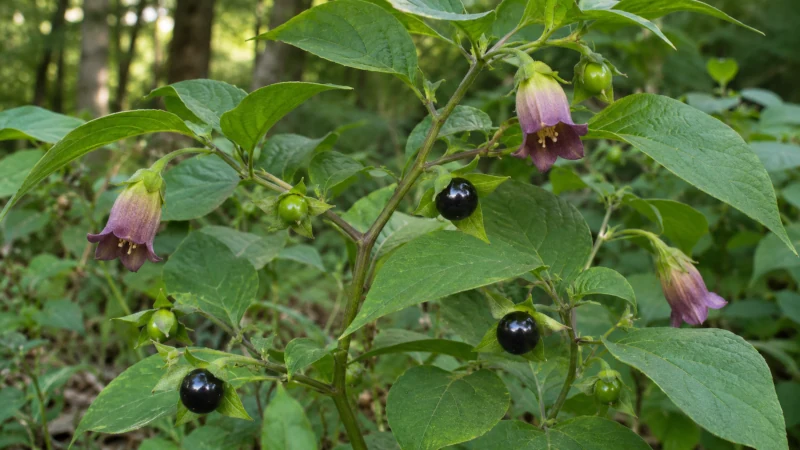
Deadly nightshade is a bushy perennial that grows up to about 1 meter (3 feet) tall [The Wildlife Trusts, n.d.]. The leaves are oval and pointed with smooth edges, and they alternate along the stems. From early summer it carries single, bell-shaped flowers in purple and green, about 2.5–3 cm long [Woodland Trust, n.d.].
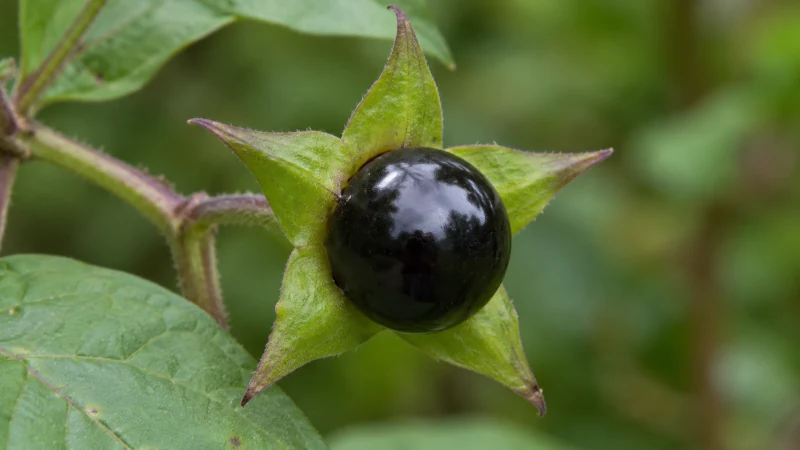
The berries are the danger. They start green, ripen to shiny black and look a little like cherries [The Wildlife Trusts, n.d.]. Each one sits on a star of five sepals where it joins the stem [Woodland Trust, n.d.]. They taste sweet, which is why children are the people most often poisoned [USDA Forest Service, n.d.].
Where it grows
The plant’s original range ran from southern Europe into Asia, and it has since naturalized in many parts of the world [USDA Forest Service, n.d.]. In Britain it favors chalky soil, scrub, woodland and path edges, and some northern populations are thought to be leftovers from old medicinal plantings [Woodland Trust, n.d.].
Look-alikes and other names
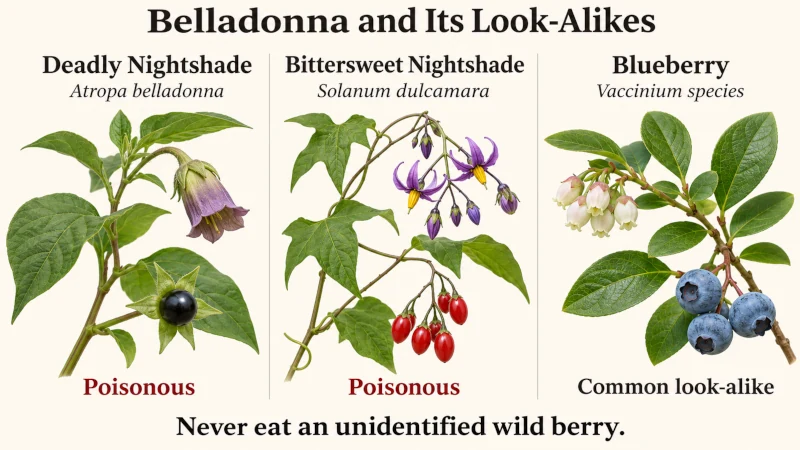
Children have mistaken the berries for blackcurrants or blueberries [Berdai et al., 2012]. In the wild, bittersweet (woody nightshade) has similar purple flowers, but its flowers have obvious yellow anthers and its berries ripen red. Those are poisonous too [Woodland Trust, n.d.]. If you can’t identify a dark berry with certainty, don’t eat it, and keep children away from it.
You may also see belladonna called deadly nightshade, devil’s cherries, dwale or dwayberry [Michigan Medicine/Multum, 2019].
How belladonna got its name
The scientific name is a two-part warning. Carl Linnaeus named the plant in 1753 [USDA Forest Service, n.d.]. Atropa comes from Atropos, the one of the three Fates in Greek mythology who cuts the thread of life. Belladonna is Italian for “beautiful woman,” a reference to Renaissance women using the plant to dilate their pupils so their eyes looked larger [RCPE, n.d.]. The U.S. Forest Service links the custom to Venetian court ladies [USDA Forest Service, n.d.].
Its record as a poison goes back further. Stories from Roman times name it as the weapon used against the emperor Augustus, though these are rumors rather than history. By the late 1700s it appeared regularly in pharmacopoeias, and the Royal College of Physicians of Edinburgh dates the isolation of atropine from the plant to 1813 [RCPE, n.d.].

What’s in belladonna and how it acts on the body
The plant’s active principles are tropane alkaloids, chiefly atropine, hyoscyamine and scopolamine (also called hyoscine) [Berdai et al., 2012; USDA Forest Service, n.d.]. They block acetylcholine at muscarinic receptors, the receptors the body’s “rest and digest” nervous system relies on [StatPearls: Atropine, 2023]. Block them and the effects are predictable [StatPearls: Anticholinergic Toxicity, n.d.]:
- Pupils widen and close-up vision blurs.
- Saliva and sweat dry up, and the skin flushes and heats up.
- The heart speeds up.
- The gut and bladder slow down, so urinating becomes difficult.
- At higher doses, the brain is affected: confusion, agitation and hallucinations.
Each of these can be a treatment in the right patient and a symptom of poisoning in the wrong one. The difference is dose. With the raw plant you can’t control the dose, and no safe or effective dose of the herb has been established [RxList, n.d.].
How belladonna’s compounds are used in medicine today
Modern medicine uses these alkaloids as purified, precisely dosed drugs, not as plant material.
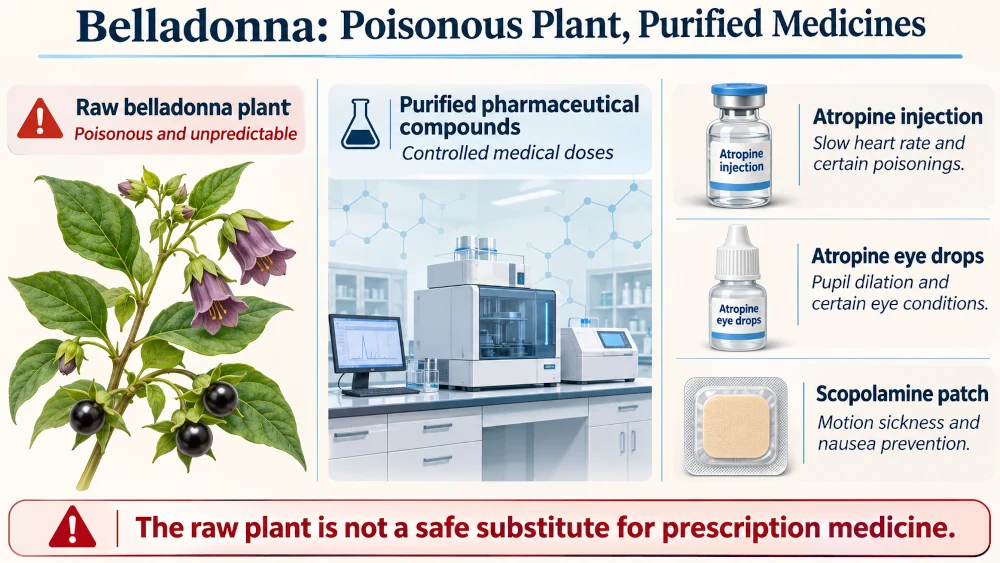
| Compound and form | Main medical uses | Source |
| Atropine (injection) | Symptomatic slow heart rate (bradycardia); reducing saliva and airway secretions; antidote for organophosphate pesticide and nerve-agent poisoning | [StatPearls: Atropine, 2023] |
| Atropine (eye drops) | Strong, long-acting pupil dilation; used in some cases of amblyopia and eye inflammation; very dilute drops for childhood myopia | [AAPOS, 2023] |
| Scopolamine (skin patch) | Preventing nausea and vomiting from motion sickness or from medicines given during surgery | [MedlinePlus, 2025a] |
Even these measured forms come with warnings. Full-strength atropine eye drops can last up to two weeks and may cause fever, dry mouth, a red face and a fast heartbeat [AAPOS, 2023]. That is what a carefully dosed drop can do. A berry or a leaf comes with no dose at all.
Does the belladonna plant have any health benefits?
Not as a home remedy. Belladonna preparations were once used widely. An Edinburgh physician described it for epilepsy, mania and melancholy in 1803, and over-the-counter “belladonna plasters” were sold for complaints from rheumatism to tuberculosis as late as the 1950s [RCPE, n.d.]. Purified drugs with known doses have replaced those uses.
Today there isn’t enough evidence to rate the herb for any condition it’s promoted for, including irritable bowel syndrome, asthma, colds, hay fever, hemorrhoids, motion sickness and nerve pain. Taken by mouth, it is rated likely unsafe for both adults and children [RxList, n.d.].
| Use | What the evidence shows | Evidence grade |
| Purified atropine for slow heart rate, organophosphate poisoning, secretions | FDA-approved indications [StatPearls: Atropine, 2023] | Strong (approved drug) |
| Atropine eye drops for dilation and certain eye conditions | Established ophthalmology use [AAPOS, 2023] | Strong (clinical standard) |
| Scopolamine patch for motion sickness | Prescription medicine [MedlinePlus, 2025a] | Strong (approved drug) |
| Belladonna herb, tea or tincture for asthma, IBS, colds, pain | Not enough evidence to rate; likely unsafe by mouth [RxList, n.d.] | Insufficient, with known harms |
| Homeopathic belladonna (e.g., teething tablets) | No proven benefit known to the FDA; inconsistent alkaloid content found [FDA, 2017; FDA, n.d.] | Insufficient, with documented harms |
| Historical uses (plasters, epilepsy, mania) | Historical practice only [RCPE, n.d.] | Traditional; not supported |
Homeopathic belladonna: why “diluted” didn’t mean safe
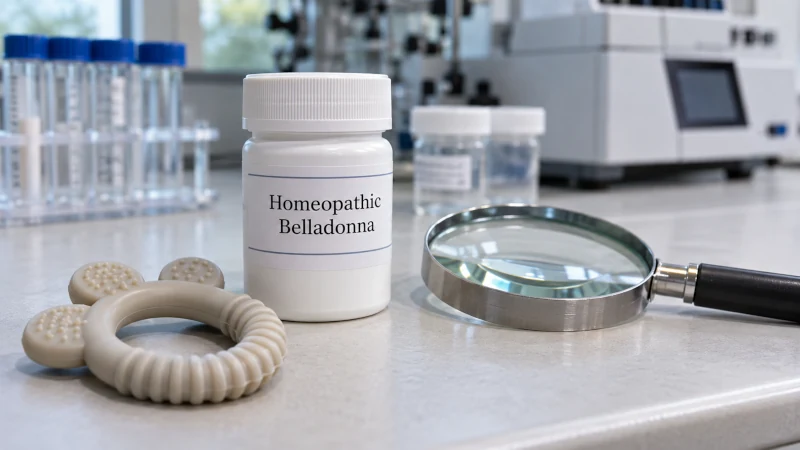
Homeopathic products often list belladonna on the label, on the basis that it’s diluted far enough to be harmless. That only holds if manufacturing is exact.
When the FDA tested homeopathic teething tablets sold by Hyland’s and CVS, the belladonna alkaloid content varied from tablet to tablet and in some cases far exceeded the label. At the labeled dilution, the agency said, its tests shouldn’t have detected any belladonna at all. The FDA called this an unnecessary risk to children under two [FDA, n.d.], and said in 2017 that it knew of no proven health benefit from these teething products [FDA, 2017]. Poison Control reports that 370 adverse-event cases, including 8 deaths, were reported in connection with the tablets between 2006 and 2016, and the product has since been removed from the market [Poison Control, n.d.-b].
Homeopathic products are not reviewed by the FDA for safety or effectiveness, and separate batches of the same product can differ widely [Poison Control, n.d.-b]. Teething babies don’t need belladonna. Your pediatrician can suggest safe ways to soothe sore gums.
Belladonna poisoning: symptoms, risk, and what to do
Symptoms
Clinicians use an old memory aid for this kind of poisoning: red as a beet, dry as a bone, blind as a bat, mad as a hatter, hot as a hare, full as a flask [StatPearls: Anticholinergic Toxicity, n.d.]. In plain terms, watch for:
- Flushed, hot, dry skin and a very dry mouth
- Wide pupils and blurred vision
- A fast heartbeat
- Confusion, agitation, hallucinations, or slurred or meaningless speech
- Trouble passing urine
- Seizures or unresponsiveness in severe cases
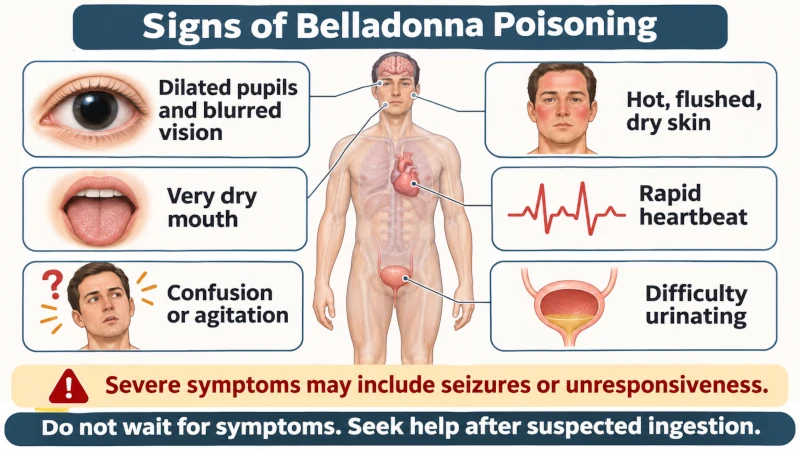
In two series of poisoned children from Turkey, flushing, a fast heartbeat and dilated pupils showed up in nearly every case [Caksen et al., 2003; Bektaş et al., 2021]. Swallowed anticholinergics usually act within about two hours, and the confusion can last more than eight hours, longer than the heart effects [StatPearls: Anticholinergic Toxicity, n.d.].
How much is dangerous
Less than most people expect. A 2012 case report repeats the commonly cited figures that about 10 berries can poison an adult and 2 to 3 can poison a child [Berdai et al., 2012]. The report doesn’t give a source for those numbers, so treat them as a rough warning, not a tested threshold, and never as a “safe” amount. The leaves and roots are poisonous too, and handling the plant can irritate the skin or let toxins through it [USDA Forest Service, n.d.].
There is some reassurance. With prompt hospital care, most people recover. In one series of 49 poisoned children, none died or needed a ventilator [Caksen et al., 2003]. In another of 108 children, 95% recovered without complications, and the five who needed intensive care also recovered [Bektaş et al., 2021]. Those outcomes depended on fast treatment.
If someone eats belladonna
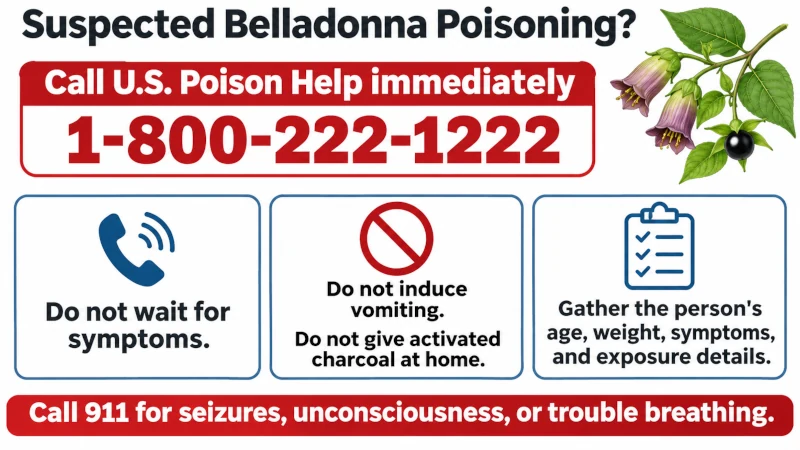
| If someone may have swallowed any part of a belladonna plant Call Poison Help at 1-800-222-1222 (U.S., free, 24/7) right away. If the person is unconscious, having a seizure or struggling to breathe, call 911 or your local emergency number [Poison Control, n.d.-a; MedlinePlus, 2025b].Don’t make them vomit unless poison control or a clinician tells you to [MedlinePlus, 2025b]. Some older herbal books recommend inducing vomiting or giving charcoal at home. Current guidance is against both: ipecac is no longer recommended, and activated charcoal is generally not for home use [Poison Control, n.d.-a].Have details ready: the person’s age, weight and condition, which part of the plant they ate, how much and when [MedlinePlus, 2025b]. Bring the plant or a photo.In hospital, care may include monitoring, activated charcoal when appropriate, sedatives for agitation and, in severe cases, the antidote physostigmine [StatPearls: Anticholinergic Toxicity, n.d.; MedlinePlus, 2025b]. |
Who should avoid belladonna
Nobody should take the plant or unregulated belladonna products. Some people face extra danger because the alkaloids can make their condition worse [Michigan Medicine/Multum, 2019; RxList, n.d.]:
- Narrow-angle glaucoma
- Enlarged prostate, bladder blockage or trouble urinating
- Bowel blockage, severe ulcerative colitis, chronic constipation, reflux, hiatal hernia or stomach ulcers
- Heart failure, fast heart rhythms or high blood pressure
- Myasthenia gravis
- Down syndrome, which may bring extra sensitivity
- Psychiatric conditions, or a fever (higher risk of overheating)
- Children, except under medical direction
Pregnancy and breastfeeding
Belladonna is considered likely unsafe during pregnancy and while breastfeeding. It passes into breast milk and can reduce milk supply [RxList, n.d.; Michigan Medicine/Multum, 2019].
Medication interactions
Belladonna adds to the effects of other anticholinergic (“drying”) medicines, raising the risk of a fast heartbeat, overheating, dizziness and other serious effects [RxList, n.d.]. Medicines to be careful with include [Michigan Medicine/Multum, 2019]:
- Allergy and cold medicines such as diphenhydramine (Benadryl)
- Some medicines for depression, anxiety, mood disorders or other mental illness
- Parkinson’s disease medicines
- Overactive bladder medicines
- Medicines for stomach problems, motion sickness or irritable bowel syndrome
- Bronchodilator asthma medicines
If you take any of these and have used a belladonna product, tell your doctor or pharmacist.
When to get help
Treat any suspected swallowing of the plant as an emergency, even if the person seems fine at first. Call a poison center too if a child develops unusual sleepiness, agitation, flushing, trouble breathing or a seizure after a homeopathic or herbal product, or if you notice dilated pupils or a racing heart after touching the plant. For questions about prescribed atropine or scopolamine, your prescriber or pharmacist is the right person to ask.
Safer ways to explore medicinal plants
If plant medicine interests you, start with herbs that have a real safety record and human research behind them. Our guides to valerian root and nervine tea lay out what the evidence supports and who should skip them, and you’ll find more in our herb guides. Belladonna’s useful chemistry is already available, measured and prescribed.
| HEALTH DISCLAIMER: This article is for general information and education. It is not a substitute for advice, diagnosis or treatment from a qualified health professional. Belladonna is poisonous; do not use the plant or any belladonna product without medical supervision. If you are pregnant, breastfeeding, giving a product to a child, taking prescription medicines or living with a health condition, talk to your doctor or pharmacist first. In a poisoning emergency in the U.S., call Poison Help at 1-800-222-1222 or 911. |
Frequently Asked Questions
Is belladonna the same as the nightshades we eat, like tomatoes and potatoes?
They belong to the same plant family, along with eggplant, peppers and tobacco, but they are different species [RCPE, n.d.]. Tomatoes and potatoes are everyday foods. Belladonna isn’t food in any form.
Is it dangerous to touch belladonna?
It can be. Handling the plant can let toxins absorb through the skin or cause a severe rash [USDA Forest Service, n.d.]. Wear gloves if you need to remove it, wash your hands afterward, and keep your hands away from your eyes.
Is belladonna poisonous to pets and livestock?
Yes. It is highly toxic to domestic animals [USDA Forest Service, n.d.]. If a pet may have eaten any part of the plant, call your veterinarian or an animal poison line right away.
Is atropine the same thing as belladonna?
No. Atropine is a single purified alkaloid, first obtained from the plant and named after it, and given in exact doses [StatPearls: Atropine, 2023]. Belladonna is the whole plant, with several alkaloids in unpredictable amounts.
Is homeopathic belladonna safe?
Should I remove belladonna from my garden?
If children or pets use the space, yes. The sweet black berries are what draw children in [USDA Forest Service, n.d.]. Wear gloves, bag the plant, and don’t burn it in an open fire or compost it where animals can reach it.
References
- American Association for Pediatric Ophthalmology and Strabismus (AAPOS). Dilating Eye Drops. View source
- Bektaş MS, Aktar F, Güneş A, Uluca Ü, Gülşen S, Karaman K. Atropa belladonna (Deadly Nightshade) Poisoning in Childhood. View source
- Berdai MA, Labib S, Chetouani K, Harandou M. Atropa belladonna intoxication: a case report. View source
- Caksen H, Odabaş D, Akbayram S, Cesur Y, Arslan S, Uner A, Oner AF. Deadly nightshade (Atropa belladonna) intoxication: View source
- U.S. Food and Drug Administration. Laboratory Analysis of Homeopathic Teething Tablets. View source
- U.S. Food and Drug Administration. FDA confirms elevated levels of belladonna in certain homeopathic teething products. View source
- Michigan Medicine Health Library (Cerner Multum). Belladonna. View source
- MedlinePlus Medical Encyclopedia. Black nightshade poisoning. View source
- MedlinePlus. Scopolamine Transdermal Patch. View source
- Poison Control (National Capital Poison Center). Ipecac: View source
- DeMarco K. Should I use a homeopathic medicine? Poison Control (National Capital Poison Center). View source
- Lauterjung I. Deadly Nightshade: A Botanical Biography. Royal College of Physicians of Edinburgh. View source
- RxList. Belladonna: Health Benefits, Side Effects, Uses, Dose & Precautions. View source
- StatPearls. Anticholinergic Toxicity. StatPearls Publishing. (point-of-care version) View source
- StatPearls. Atropine. StatPearls Publishing; NCBI Bookshelf NBK470551. View source
- The Wildlife Trusts. Deadly nightshade. View source
- Woodland Trust. Deadly nightshade (Atropa belladonna). View source
- USDA Forest Service, Celebrating Wildflowers. The Powerful Solanaceae: Belladonna. View source


