
A squeeze of lemon won’t detox your body, rebalance your pH, or melt away fat — so you can let go of any guilt about skipping the 6 a.m. lemon-water ritual. What lemons actually offer is more modest and far more reliable: a useful dose of vitamin C, a little citrate that may help certain people avoid kidney stones, and a bright, low-calorie way to make water and food more appealing. Those are the real lemon health benefits, and they’re worth understanding clearly — along with the two ways lemons can quietly cause harm if you use them the wrong way.
The vitamin C link is the oldest and least disputed part of the story. The 18th-century naval surgeon James Lind ran one of medicine’s first controlled trials in 1747 and found that citrus cured scurvy in sick sailors, decades before anyone knew vitamin C existed. That single fact — lemons carry vitamin C, and vitamin C keeps you alive — is solid ground. Most of the other claims you’ll read need a closer look.
What’s actually in a lemon
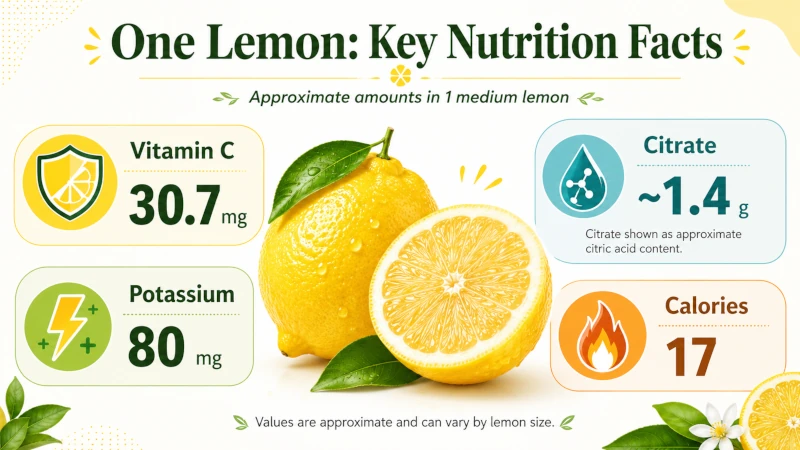
A medium lemon has only about 20 calories and is roughly 88–89% water. Its useful parts are vitamin C, citric acid (the source of the citrate that matters for kidney stones), small amounts of potassium, a little soluble fiber called pectin (mostly in the pulp and peel), and plant compounds known as flavonoids, including hesperidin [Healthline / USDA]. One important practical note: vitamin C breaks down with heat, air, and storage, so freshly squeezed juice generally delivers more than bottled, pasteurized juice [NIH ODS].
| Component | Roughly how much | Why it matters |
| Vitamin C | ~30 mg per medium lemon (≈30–40% of daily needs) | Prevents scurvy; aids collagen, immune function, iron absorption |
| Citric acid / citrate | High; ~5.9 g citric acid per 4 oz (½ cup) juice | Citrate can inhibit calcium kidney-stone formation |
| Potassium | Modest (~150 mg per 100 g) | A minor contribution to daily intake |
| Flavonoids (e.g., hesperidin) | Small amounts, more in pulp/peel | Studied for blood-vessel effects; not proven to treat disease |
| Calories | ~20 per medium lemon | Low-calorie way to flavor water and food |
The benefits that hold up
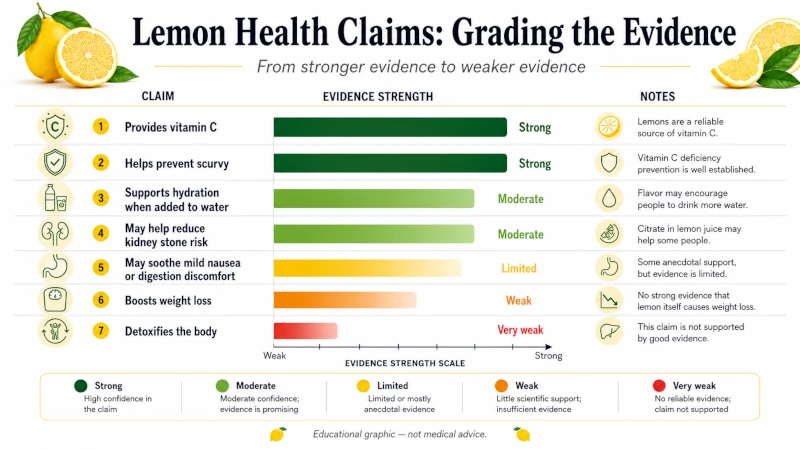
Vitamin C and scurvy — the part that’s beyond debate
Your body can’t make vitamin C, so you have to get it from food. Go without for long enough and you develop scurvy: fatigue, swollen and bleeding gums, easy bruising, poor wound healing, and — left untreated — it can be fatal [NIH ODS]. Outright scurvy is rare in the U.S. and Canada, but it still turns up in people with very limited diets. A lemon a day genuinely contributes to your vitamin C, though it’s not a megadose — a red bell pepper, broccoli, kiwi, or an orange each delivers more. Think of lemon as a helpful, tasty contributor, not your main source.
Better iron absorption from plant foods
This one is quietly useful. Vitamin C improves your absorption of non-heme iron — the kind found in plant foods like lentils, beans, and spinach [NIH ODS]. A practical move: squeeze lemon over a lentil stew or a spinach salad, or pair any vitamin-C food with a plant-based iron source. It’s a small, evidence-backed habit that can matter for vegetarians and others prone to iron-deficiency anemia. One caveat: if you have hemochromatosis or another iron-overload condition, be mindful, since vitamin C increases iron uptake [Mayo Clinic].
Kidney stones — the most promising claim, with real caveats
Here is where lemon moves from “pleasant flavor” toward something actually studied. Citrate is a known inhibitor of calcium stone formation, and lemon juice is one of the richest dietary sources of it. In small studies, “lemonade therapy” — about 4 ounces (½ cup) of lemon juice a day — raised urinary citrate and urine volume in people who form stones [Penniston, 2007]. But the evidence is mixed: other trials found no meaningful rise in urinary citrate, and a 2021 review noted that lemon juice raises citrate yet, unlike orange or grapefruit juice, doesn’t significantly make urine more alkaline [Citrus & KSD review, 2021].
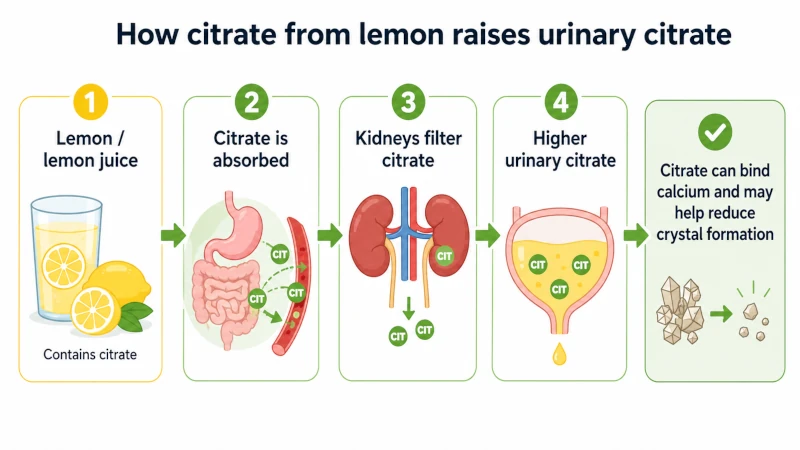
The honest takeaway: lemon may help as an add-on, especially for people with low urinary citrate, but it is not a substitute for prescribed potassium citrate, and a 2025 review made exactly that point [Citrus meta-analysis, 2025]. If you’ve had kidney stones, treat lemon as a conversation to have with your doctor, not a self-prescription — and beware sugary lemonade, since the sugar can work against you.
Hydration, and crowding out sugary drinks
No magic here, but a real effect. Lemon makes plain water more appealing, so people tend to drink more of it, and swapping soda or sweetened coffee for lemon water cuts sugar. Drinking more fluid is also, on its own, one of the simplest ways to lower kidney-stone risk. Modest, but it adds up.
Heart and blood vessels — interesting, not established
Citrus flavonoids such as hesperidin and diosmin have been studied for effects on blood vessels and cholesterol, and diets rich in fruit and vitamin C are linked to lower heart-disease risk [Healthline / USDA]. But that’s a long way from proof that lemons treat or prevent heart disease. Eat a varied, plant-rich diet for your heart; enjoy lemon as part of it, not as the cure. If blood pressure is your focus, the bigger levers are whole dietary patterns, not a citrus garnish.
The “detox” and “alkalizing” claims, straight
This is the big one to retire. The popular story goes: lemon is acidic, but it becomes “alkalizing” once metabolized, shifts your body’s pH, and detoxes you. The physiology doesn’t support it. Your blood pH is held in a narrow band of about 7.35–7.45 by your lungs and kidneys; food doesn’t move it, and if your blood pH actually did shift that far, you’d be in a medical emergency [Healthline review]. Diet can change the pH of your urine — but that’s your kidneys excreting waste, not your bloodstream changing, and it’s no measure of overall health. As for “detox,” your liver and kidneys already do that job continuously; lemon water doesn’t add to it.
Worth saying plainly: lemon water is fine. It’s pleasant, hydrating, and a nice way to get a little vitamin C. It just isn’t alkalizing your body or flushing out toxins, and it’s reasonable to stop expecting it to.
A few older folk claims deserve the same skepticism — that lemon leaves cure insomnia or asthma, that lemon “purifies the blood” or dissolves gout and arthritis, or that it treats infections. There’s no reliable human evidence for these, and treating a serious infection with lemon instead of medical care is genuinely dangerous, not just ineffective.
How to actually use lemon
You don’t need a regimen. The simplest approaches capture nearly all the benefit:
- Add the juice of half to a whole lemon to a glass of water, hot or cold. Fresh beats bottled for vitamin C.
- Squeeze it over food — fish, vegetables, lentils, salads — both for flavor and to help absorb plant iron.
- A little honey can make warm lemon water more soothing for a scratchy throat, a common comfort during colds and flu — comforting, though not a cure.
- If kidney-stone prevention is the goal, the amount studied is roughly 4 ounces of juice a day — but do this with a clinician, not on your own.
Whatever you choose, protect your teeth while you do it — which brings us to the part most lemon articles skip.
Safety, side effects, and who should be careful
Your teeth come first
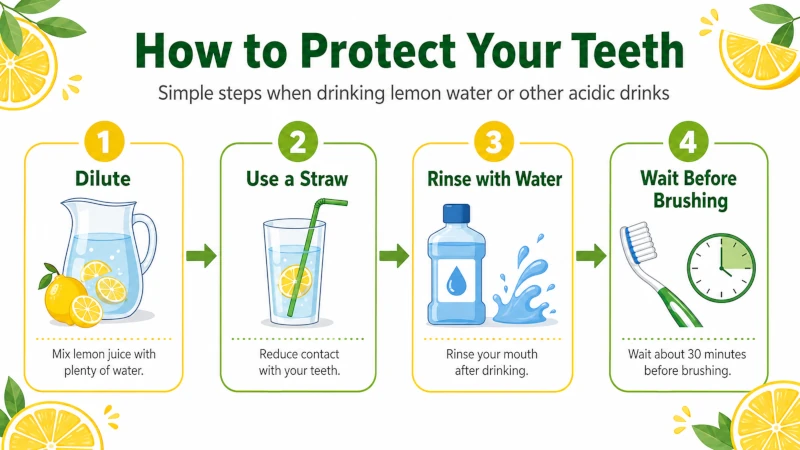
Lemon juice has a pH of about 2–3, and the American Dental Association lists it among the most erosive things you can drink. Repeated or all-day sipping wears away tooth enamel, and that loss is permanent [ADA]. You don’t have to give up lemon water — just use it well: dilute it, drink it in one sitting rather than nursing it for an hour, use a straw, rinse with plain water afterward, and wait 30–60 minutes before brushing so softened enamel can re-harden [ADA MouthHealthy].
Don’t rub lemon on your skin before sun
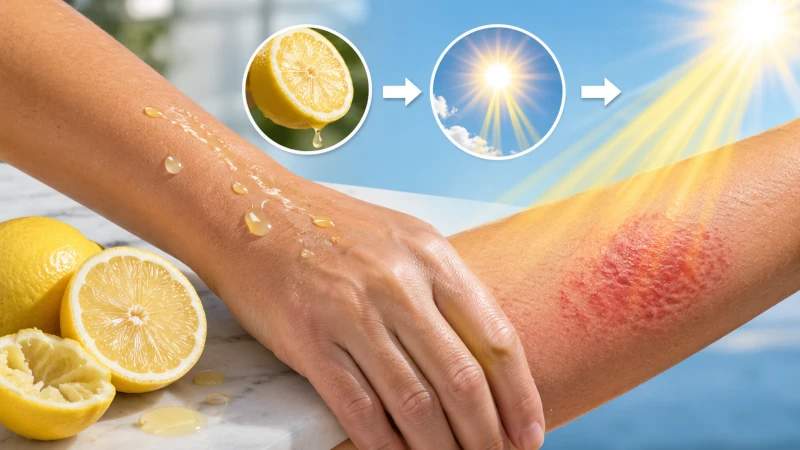
This corrects a common piece of old advice. Lemons and limes contain compounds called furocoumarins (psoralens). Get the juice on your skin, then step into sunlight, and you can develop phytophotodermatitis — the so-called “margarita burn” — with redness, blistering, and dark patches that can linger for weeks [Cleveland Clinic]. Skip the DIY lemon face masks, hair lighteners, and skin treatments. If juice does get on your skin, wash it off promptly and protect the area with sunscreen [Poison Control].
Reflux, mouth sores, and sensitive stomachs
Acidity that’s fine for most people can be a problem for some. Lemon can aggravate heartburn or acid reflux, sting canker sores, and, in large amounts, leave a sensitive stomach uncomfortable. If lemon water reliably triggers symptoms, that’s your signal to cut back.
Medications and iron overload
Lemon as food is generally fine, but vitamin C in supplement doses is a different matter: high doses can blunt the effect of the blood thinner warfarin and can be a concern in iron-overload conditions like hemochromatosis [Mayo Clinic]. If you take warfarin or have such a condition, talk to your clinician before adding any vitamin C supplement.
Pregnancy and breastfeeding
Lemon used as a food or flavoring in normal culinary amounts is considered safe during pregnancy and breastfeeding. What’s not supported is any high-dose “lemon cure” or therapeutic regimen — there’s no good evidence behind those, so skip them and check with your provider before starting any supplement or concentrated protocol.
When to see a doctor
Lemon is a food, not a treatment. Some symptoms need real medical attention rather than a home remedy:
- Seek urgent care for severe, one-sided flank or back pain, blood in your urine, or pain with fever — possible signs of a kidney stone or infection.
- See a clinician for bleeding gums, easy bruising, poor wound healing, or unusual fatigue, which have many causes and deserve a proper diagnosis.
- Get medical care for a spreading or severe blistering rash after citrus and sun exposure.
Persistent or worsening symptoms always warrant a professional opinion — self-care has limits, and knowing them is part of using lemon wisely.
| Health disclaimer This article is for general education and information only and is not a substitute for professional medical advice, diagnosis, or treatment. Always ask your physician, pharmacist, or another qualified health professional about your own situation before changing your diet or starting any supplement or remedy. If you are pregnant, breastfeeding, take medication (such as warfarin), or have a condition like kidney disease, reflux, or an iron-overload disorder, get personalized advice first. If you have severe symptoms — such as intense flank pain, blood in your urine, or a spreading rash — seek medical care promptly. |
Frequently Asked Questions
Is lemon water actually good for you?
Yes, in a modest way. It hydrates you, adds a little vitamin C, and helps some people drink more water or cut back on sugary drinks. It just won’t detox you, change your body’s pH, or cause weight loss on its own.
Does lemon water help you lose weight?
Not directly. Lemon has almost no calories, so swapping it in for soda or sweetened coffee can reduce sugar and calories — but the lemon itself isn’t a fat-burner, and the water you drink does most of the work.
Does lemon detox your liver or body?
No. Your liver and kidneys handle that continuously, and no food meaningfully changes your blood pH or “flushes toxins.” Lemon water is a fine drink; it just isn’t a detox.
Will lemon water damage my teeth?
It can, because it’s acidic enough to erode enamel over time. Reduce the risk by diluting it, drinking it in one sitting, using a straw, rinsing with water afterward, and waiting 30–60 minutes before brushing.
How much lemon is safe per day?
For most people, the juice of one to three lemons a day in water or on food is fine. The main limit is dental — frequent, all-day acid exposure is harder on enamel than the same amount in one sitting.
Is bottled lemon juice as good as fresh?
For flavor, it’s convenient. For vitamin C, fresh is better, because heat, air, and storage break the vitamin down. If you’re after the nutrient, squeeze it fresh.
References
- NIH Office of Dietary Supplements — Vitamin C (Consumer fact sheet). Vitamin C, scurvy, collagen, and iron absorption. View source
- NIH Office of Dietary Supplements — Vitamin C (Health Professional fact sheet). Requirements, upper limits, deficiency, and stability. View source
- Mayo Clinic — Vitamin C (drugs & supplements). Interactions including warfarin and hemochromatosis. View source
- Bhojani N, et al. Role of Citrus Fruit Juices in Prevention of Kidney Stone Disease: A Narrative Review (2021). Lemon raises urinary citrate but lacks a significant urine-alkalinizing effect. View source
- The role of citrus juice in reducing calcium kidney stone risk: systematic review and meta-analysis (African Journal of Urology, 2025). Citrus juice is a complement to, not a replacement for, potassium citrate. View source
- Penniston KL, et al. Lemonade Therapy Increases Urinary Citrate and Urine Volumes in Patients with Recurrent Calcium Oxalate Stone Formation (Urology, 2007). View source
- American Dental Association — Dental Erosion. Acidic beverages and enamel loss; protective steps. View source
- American Dental Association (MouthHealthy) — Dietary Acids and Your Teeth. Lemon juice among the most erosive drinks. View source
- Cleveland Clinic — Margarita Burn (phytophotodermatitis). Furocoumarins, sun exposure, and skin reactions. View source
- Poison Control — Lime Juice and Sun Can Cause Skin Rashes. Prevention and skin-washing guidance. View source
- Healthline (medically reviewed) — The Alkaline Diet: An Evidence-Based Review. Blood pH is tightly regulated; diet affects urine, not blood. View source
