
Most claims about ashwagandha benefits cluster around stress, sleep, energy, focus, and hormones — but only a couple of them hold up when you look at the actual trials. The herb turns up in capsules, gummies, powders, and sleep blends, usually wrapped in big promises. Some rest on reasonable human research. Others run well ahead of the evidence.
This guide sorts the two. You will find what ashwagandha is, where the science is strongest, where it is thin, the doses used in studies, and the safety issues worth knowing before you try it — including a real but uncommon risk to the liver.

What Is Ashwagandha?
Ashwagandha (Withania somnifera) is a small evergreen shrub grown across India, the Middle East, and parts of Africa. Its root — and sometimes its leaves — have been used for centuries in Ayurvedic and Unani medicine. It is also called Indian ginseng or winter cherry, though it is not related to true ginseng. [NIH ODS, 2024] Modern supplements usually sell it as a standardized root extract.
“Adaptogen,” in plain terms
In Ayurveda, ashwagandha is a rasayana — a herb used to support vitality and help the body handle everyday strain. Today it is marketed as an “adaptogen,” a loosely defined term for substances said to help the body resist physical or mental stress. [NIH ODS, 2024] That word is not a regulated medical category, and the evidence behind it differs from one herb to the next.
What is inside the root
Ashwagandha root contains compounds called withanolides, including withaferin A. Withanolide content is why many products are standardized to a set percentage and sold under trademarked names such as KSM-66, Sensoril, or Shoden. The catch: root and leaf differ chemically, and extracts use different plant parts and methods. [NIH ODS, 2024] That makes a clean comparison between studies harder than the labels suggest.
What People Take Ashwagandha For
Supplements are marketed for a long list: stress, sleep, anxiety, energy and athletic performance, focus and memory, male fertility and testosterone, and a vague idea of “hormone balance.” Research has touched most of these, but the amount and quality of evidence swings widely from one use to the next. The herb has been studied most carefully for stress and sleep. Everything else sits somewhere between promising and unproven.
Ashwagandha Benefits With the Strongest Evidence
Stress
Stress is the best-supported use. Several randomized, placebo-controlled trials have found that ashwagandha root extract can modestly lower self-reported stress and reduce cortisol, the hormone that climbs during sustained stress. In some studies, doses of 500 to 600 mg a day worked better than lower amounts. [NIH ODS, 2024] Most of these trials were small and ran 6 to 8 weeks.
That is the honest ceiling on the claim. The trials point the same direction, which is encouraging, but they used different extracts and doses, so there is no single proven product or protocol. [NIH ODS, 2024] If you want the ashwagandha benefit with the most data behind it, this is the one. Some people stack it with other calming supplements such as L-theanine or magnesium, though the evidence for combinations is thinner still.
Sleep
Sleep comes next. A 2021 systematic review and meta-analysis pooled five randomized trials with 400 adults and found a small but statistically significant improvement in sleep versus placebo (standardized mean difference −0.59). [Cheah et al., 2021] The effect was clearer in people diagnosed with insomnia, at doses of 600 mg a day or more, taken for at least eight weeks.
Plain version: ashwagandha is not a sleeping pill. But for some people — especially when stress is what is wrecking their sleep — it may help them fall asleep a bit faster and rest more soundly. [NIH ODS, 2024]
Promising, but Not Settled
Anxiety
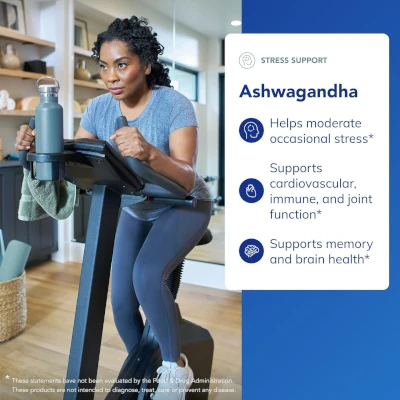
Anxiety sits in the middle. Some trials suggest ashwagandha may ease anxiety symptoms, but the evidence overall is limited and the studies used different measures, populations, and extracts. [NIH ODS, 2024] It is fair to say it may help some people. It is not a replacement for professional treatment.
Male fertility and testosterone
A handful of small studies report better sperm quality and modest testosterone increases in men taking ashwagandha for two to four months. NCCIH calls this limited but promising and says larger studies are still needed. [NCCIH, 2023] Many of these trials are small and tied to supplement-industry interests, so the popular “testosterone booster” framing outruns the data. If male vitality is your interest, our roundup of herbs for male stamina puts it in context.
Athletic performance, focus, and energy
Ashwagandha is sold hard for strength, stamina, VO₂ max, memory, and natural energy. A few studies hint at benefits, but results are inconsistent and the trials are small. NCCIH states plainly that there is not enough good evidence to say whether ashwagandha helps athletic performance, cognition, or most other conditions it is marketed for, including asthma and diabetes. [NCCIH, 2023]
Benefit by Benefit: What to Expect
Here is the same evidence at a glance, with a realistic read on what each use is likely to deliver.
| Claimed benefit | What the research suggests | What to realistically expect |
| Stress | Best-supported use. Several short randomized trials show small, consistent drops in perceived stress and cortisol. | A modest, noticeable easing of day-to-day stress for some people — not a dramatic change. |
| Sleep | Meta-analysis of five trials found a small but real improvement, strongest in people with insomnia at 600 mg/day or more. | Falling asleep a little faster and somewhat better sleep quality for some users. Not sedation. |
| Anxiety | Some positive trials, but the overall evidence is limited and inconsistent. | May help some people; results vary. Not a substitute for anxiety treatment. |
| Male fertility | A few small studies suggest improved sperm parameters over 2–4 months. | Limited evidence. Some men may see changes; not a reliable fertility treatment. |
| Testosterone | A small number of studies show modest increases in certain groups of men. | Any change is likely small. Not a dependable way to raise testosterone. |
| Athletic performance | Mixed results across small studies. | Too early to expect reliable strength, endurance, or recovery gains. |
| Focus & memory | Limited research with mixed findings. | Not enough evidence to expect meaningful improvement. |
| Blood sugar / thyroid | Small studies exist, but results are inconsistent and safety concerns apply. | Should not be used to manage thyroid or blood sugar without medical guidance. |
Forms: Capsules, Powders, Gummies, and Tinctures
Ashwagandha is sold in several formats. None has been proven better than the others for every use, and quality varies between brands.
- Capsules and tablets of standardized root extract are what most clinical studies used.
- Powders stir into warm milk, smoothies, or water. The taste is strongly earthy and bitter to some people.
- Gummies are convenient but often carry lower or less clearly labeled doses, plus added sugar (see our look at ashwagandha gummies).
- Liquid tinctures and drops allow flexible dosing but are harder to match to studied amounts.
- Branded extracts such as KSM-66, Sensoril, and Shoden appear often in research and on labels. These are standardized to specific withanolide content.
Because supplements are not reviewed by the FDA before sale, it helps to choose products carrying a third-party testing seal such as NSF or USP.
How Much Do Studies Use?
There is no officially recommended dose. In published trials, adult amounts have commonly ranged from about 250 to 600 mg a day of a standardized root extract, taken for 6 to 12 weeks; sleep benefits showed up mainly at 600 mg or more for at least eight weeks. [NIH ODS, 2024] [Cheah et al., 2021]
- More is not necessarily better. Most positive studies used moderate doses.
- Effects, if any, build over weeks, not within a single dose.
- Labels vary widely, so check whether a product states the extract type and withanolide content.
If you decide to try it, starting at the lower end of the studied range and watching how you respond is a sensible approach.
Side Effects and Safety
For most healthy adults, ashwagandha appears well tolerated for up to about three months. Beyond that, long-term safety is not well established. [NIH ODS, 2024]
Mild, common side effects include:
- upset stomach, loose stools, nausea, or diarrhea
- drowsiness
- headache
Two safety issues deserve a closer look.
Liver injury. LiverTox, a resource from the National Institute of Diabetes and Digestive and Kidney Diseases, lists ashwagandha as an uncommon but recognized cause of drug-induced liver injury. [LiverTox, 2024] Reported cases describe jaundice and raised liver enzymes. An Indian case series of single-ingredient ashwagandha injury found cholestatic hepatitis was the most common pattern; among the patients who already had chronic liver disease, three went on to liver failure and died. [Philips et al., 2023] In most reported cases without underlying liver disease, liver tests recovered after stopping. The overall risk looks rare, but it is real — and it is a reason to stop and seek care if you develop unusual fatigue, abdominal pain, dark urine, or yellowing of the skin or eyes.
Thyroid effects. Ashwagandha can raise thyroid hormone levels in some people. That may be a problem if you have a thyroid condition, and it can interfere with thyroid medication. [NIH ODS, 2024]
Who Should Avoid Ashwagandha (and Drug Interactions)
Ashwagandha interacts with several medications and conditions. Talk to a healthcare professional before using it if any of these apply:
- You are pregnant or breastfeeding. It is not considered safe in pregnancy and should be avoided; safety while breastfeeding is not well studied.
- You have a thyroid condition or take thyroid medication such as levothyroxine.
- You have an autoimmune condition such as lupus, rheumatoid arthritis, or multiple sclerosis. Ashwagandha may affect immune activity.
- You take sedatives, sleep medication, or alcohol regularly. Ashwagandha can add to drowsiness.
- You take diabetes or blood pressure medication. It may lower blood sugar or blood pressure, compounding those drugs.
- You have a hormone-sensitive condition such as prostate cancer. NCCIH notes ashwagandha may raise testosterone and should be avoided here. [NCCIH, 2023]
- You have liver disease or a history of liver problems.
- You are scheduled for surgery. Stop at least two weeks ahead because of possible effects on sedation and blood sugar.
- You are under 18. Safety in children and teenagers has not been established.
When to Talk to a Healthcare Professional
A short conversation with a doctor, pharmacist, or registered dietitian is worth having before you start, especially if you take any prescription drug or manage a chronic condition. Mention any supplement at routine checkups too, since supplements can shift lab results and interact with prescriptions in ways that are easy to miss.
Seek medical attention promptly if you notice signs of a liver problem (yellowing skin or eyes, dark urine, persistent abdominal pain, unusual tiredness), a possible thyroid change, or a severe allergic reaction while taking it.
If You Decide to Try It
Ashwagandha is not a miracle herb, and it is not snake oil. The fair summary: modest, reasonably well-supported help for stress and, to a smaller degree, sleep; promising-but-unsettled signals for anxiety; and limited evidence for testosterone, fertility, athletic performance, cognition, and most other marketed uses. Pick a clearly labeled, ideally third-party-tested product, start at a moderate dose, give it several weeks, and notice how you feel. The research supports a gentle nudge — not a transformation.
| Health Disclaimer This article is for general information only. It is not medical advice and is not a substitute for guidance from a qualified healthcare professional. Ashwagandha is a dietary supplement, not a treatment for any disease. Talk to your doctor, pharmacist, or another licensed clinician before starting it — especially if you are pregnant or breastfeeding, take prescription medication, or have a health condition such as a thyroid, liver, autoimmune, or hormone-sensitive disorder. Stop use and seek medical care if you develop symptoms such as yellowing skin or eyes, dark urine, abdominal pain, or unusual fatigue. |
Frequently Asked Questions
What is ashwagandha best known for?
Reducing stress. That is the use with the most research behind it: several short, placebo-controlled trials report modest drops in perceived stress and in the stress hormone cortisol.
How long does ashwagandha take to work?
Most studies that found a benefit ran it for at least 6 to 8 weeks. A few people notice subtle changes sooner, but it does not act like a fast-acting medication. A fair trial usually means taking it consistently for about two months.
Can ashwagandha help with sleep?
Possibly, modestly. A 2021 meta-analysis of five trials found a small but real effect on sleep, strongest in people with insomnia who took around 600 mg a day for at least eight weeks. It is not a sedative.
Is ashwagandha safe long term?
It appears well tolerated for up to about three months in healthy adults. Its safety over many months or years has not been well studied, and there are rare reports of liver injury, so longer use is worth discussing with a clinician.
Who should not take ashwagandha?
Anyone pregnant or breastfeeding; people with thyroid, liver, or autoimmune conditions or hormone-sensitive prostate cancer; and anyone taking sedatives, thyroid medication, or drugs for diabetes or blood pressure should avoid it or use it only under medical supervision. So should children, teens, and anyone scheduled for surgery within two weeks.
References
1. National Institutes of Health, Office of Dietary Supplements. Ashwagandha — Fact Sheet for Consumers. Updated 2024. → View source
2. National Institutes of Health, Office of Dietary Supplements. Ashwagandha: Is It Helpful for Stress, Anxiety, or Sleep? Health Professional Fact Sheet. Updated 2024. → View source
3. National Center for Complementary and Integrative Health. Ashwagandha: Usefulness and Safety. 2023. → View source
4. LiverTox: Clinical and Research Information on Drug-Induced Liver Injury. Ashwagandha. National Institute of Diabetes and Digestive and Kidney Diseases; updated December 3, 2024. → View source
5. Cheah KL, Norhayati MN, Husniati Yaacob L, Abdul Rahman R. Effect of Withania somnifera (ashwagandha) extract on sleep: a systematic review and meta-analysis. PLoS One. 2021;16(9):e0257843. → View source
6. Philips CA, Valsan A, Theruvath AH, et al. Ashwagandha-induced liver injury — a case series from India and literature review. Hepatol Commun. 2023;7(10):e0270. → View source
