
If you’re weighing lavender for stress, sleep, or a little calm at the end of the day, here’s the honest headline: the best-supported lavender benefits cluster around one thing — helping people feel less anxious. A specific oral lavender-oil preparation has decent trial evidence for anxiety, inhaled lavender shows a reasonable calming signal, and a scented wind-down is low-risk even where the science is thin. Most of the other claims you’ll see — that lavender treats colitis, gout, sciatica, or bronchitis — trace back to old herbal tradition, not to studies that would hold up today.
That distinction is the whole point of this guide. Lavender (Lavandula angustifolia) is genuinely useful and generally safe when used sensibly, and it’s worth knowing where the evidence is real, where it’s only promising, and where it runs out — plus the safety details, like drug interactions and pregnancy, that older lavender articles tend to skip.
What lavender actually is
Lavender is an aromatic Mediterranean shrub whose flower spikes and leaves hold a small amount of essential oil — roughly one to a few percent by weight — dominated by two compounds, linalool and linalyl acetate. That oil is what people are really after, whether it arrives as dried flowers in tea, a capsule, an essential oil for diffusing, or a diluted oil for the skin. Its very name comes from the Latin lavare, “to wash,” a nod to how long it’s been used in baths and soaps [NCCIH, 2025].
Lavender benefits, graded by the evidence
Anxiety and stress — the strongest case
This is where lavender has the most to show for itself. A large 2019 systematic review and meta-analysis pulled together dozens of randomized trials and found that inhaled lavender produced a moderate reduction in anxiety (a standardized effect of about −0.73), and that an oral lavender-oil capsule taken at 80 mg a day for at least six weeks lowered scores on the Hamilton Anxiety Scale by roughly 3 points versus placebo. Massage with lavender oil also helped, though the reviewers couldn’t tell how much of that was the lavender and how much was the massage [Donelli et al., 2019].
The oral capsule in most of those trials is a standardized product (sold in Europe as Silexan), not the essential oil in a diffuser and definitely not drops swallowed from a bottle. NCCIH’s read is consistent but appropriately cautious: an oral lavender-oil product “might be beneficial” for anxiety, including anxiety that comes with low mood — but the studies were often small, lacked diverse participants, and were mostly funded by the product’s maker rather than independent researchers [NCCIH, 2025]. The 2019 meta-analysis made the same core caveat in blunter terms: most of the trials it reviewed carried a high risk of bias, so the calming effect is real enough to take seriously but not yet nailed down [Donelli et al., 2019].
Practical translation: if everyday tension is your issue, inhaled lavender and a calming routine are cheap and low-risk, and a standardized oral capsule has the best trial support for more persistent anxiety. Neither is a substitute for treatment when anxiety is severe. If you’re comparing options, our guide to supplements that reduce anxiety and stress puts lavender next to ashwagandha, magnesium, and the rest.
Sleep — promising but preliminary
Lavender’s reputation as a sleep aid runs ahead of the data. Some small studies suggest inhaled lavender may improve self-reported sleep quality, but the trials are limited and larger, better-designed ones are still needed before anyone can call it a reliable sleep treatment [NCCIH, 2025]. The most sensible way to use it is as part of a wind-down ritual — a few drops on a tissue near the pillow, a warm bath — where the routine itself may be doing much of the work. For what actually moves the needle on sleep, see our evidence-ranked rundown of natural remedies for insomnia, where behavioral changes outrank every herb in the cabinet.
Low mood and depressive symptoms — early evidence
A few small studies hint that oral lavender capsules or lavender tea might ease depressive symptoms in some people, but the research is preliminary and shouldn’t be read as proof. Topical lavender, notably, does not appear to affect depression at all [NCCIH, 2025]. Lavender is best thought of as a possible small support for mood, not a stand-in for care — food and lifestyle have more behind them, as covered in 18 foods that help with depression.
Skin, minor burns, and wounds — limited and mostly traditional
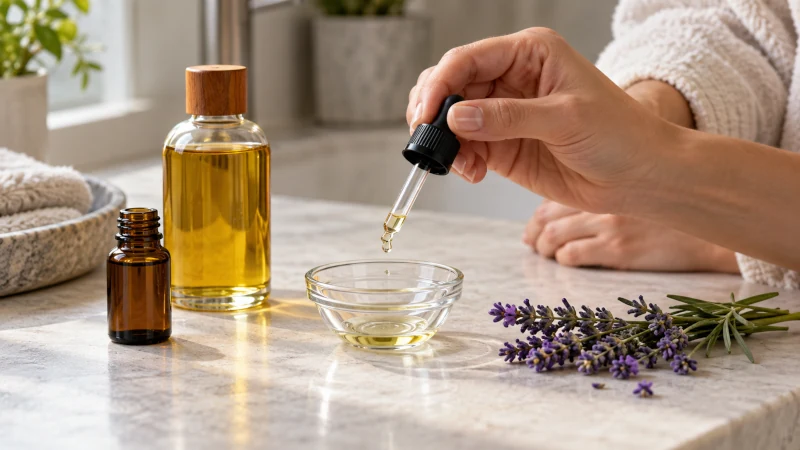
Diluted lavender has a long folk history of being dabbed on minor cuts, insect bites, and small burns, and lab work shows lavender oil has some antimicrobial activity. But high-quality human trials for wound healing or burns are sparse, so treat this as traditional use with weak clinical backing rather than an established benefit. For a scrape or a bite it’s low-stakes; for anything beyond the trivial, ordinary first-aid care is the right call.
Pain — mixed and study-dependent
You’ll find studies on lavender aromatherapy or massage for menstrual pain, labor, post-surgical discomfort, and headache. Some are positive, many are small or poorly controlled, and results don’t line up neatly — which is why NCCIH lists lavender’s effect on pain as unclear [NCCIH, 2025]. It may help some people relax around pain; it isn’t a dependable analgesic.
Lavender benefits at a glance
| Use | How strong is the evidence? | What it means for you |
| Anxiety (oral standardized capsule) | Moderate but limited (small, mostly industry-funded trials) | Best-supported use; about a 3-point drop on an anxiety scale at 80 mg/day |
| Anxiety (inhaled aromatherapy) | Suggestive; studies vary | Reasonable calming signal, low risk |
| Anxiety relief from massage with lavender oil | Suggestive | Helps, but the benefit may be the massage as much as the lavender |
| Sleep quality | Preliminary / mixed | May help as part of a wind-down; not a proven sleep treatment |
| Depressive symptoms | Preliminary (oral only) | Possible small support; topical shows no effect |
| Minor skin, bites, burns | Limited / traditional | Low-stakes folk use; weak clinical evidence |
| Pain | Mixed / unclear | Inconsistent; not a reliable pain reliever |
How people use lavender — and a dosing reality check
The common forms are dried flowers as a tea, capsules of standardized oil, essential oil for a diffuser or inhaler, and essential oil diluted in a carrier oil for the skin or massage.
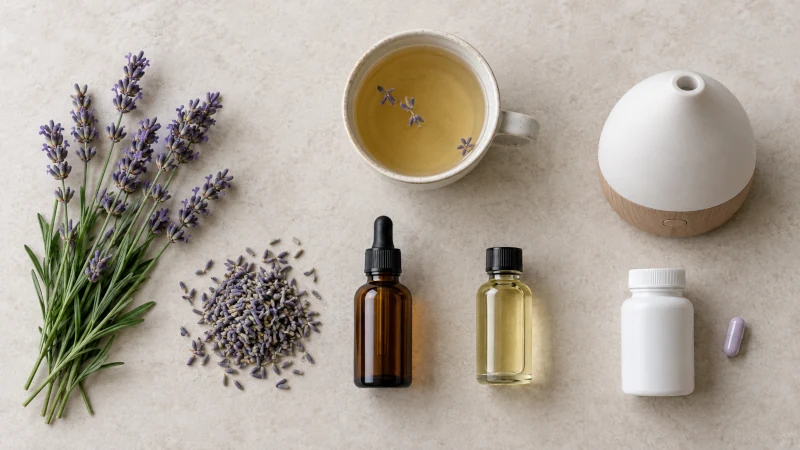
One honest correction from older lavender guides: the only oral dose with real trial support is the standardized 80 mg/day capsule used in anxiety studies [Donelli et al., 2019]. Traditional instructions to swallow “30 drops of fluid extract” or “3 to 5 drops of essence” several times a day aren’t backed by that kind of evidence, and — importantly — lavender essential oil should never be swallowed.
Ingesting essential oils can cause poisoning, and older herbals themselves warned that internal use of the essence in large amounts could trigger nervousness or even convulsions. For safety, this guide drops those internal-dosing recipes rather than repeating them. If you want the oral route, use a product formulated and labeled for oral use, at the studied dose, and clear it with a clinician first.
For the skin, dilute the essential oil in a carrier (a common range is a few drops per teaspoon of carrier oil) and patch-test first. For scent, a diffuser, a few drops on a tissue, or a warm bath all work without any of the risks of ingestion.
Side effects, interactions, and safety
Common side effects by form
Lavender is well tolerated for most people, but “natural” isn’t the same as “side-effect-free.” Oral lavender products can cause diarrhea, headache, nausea, or burping. Aromatherapy is considered possibly safe but can bring on a headache or coughing in some people. Applied to the skin, lavender can cause allergic reactions or irritation, which is why a patch test is worth the two minutes [NCCIH, 2025].
Drug interactions and surgery
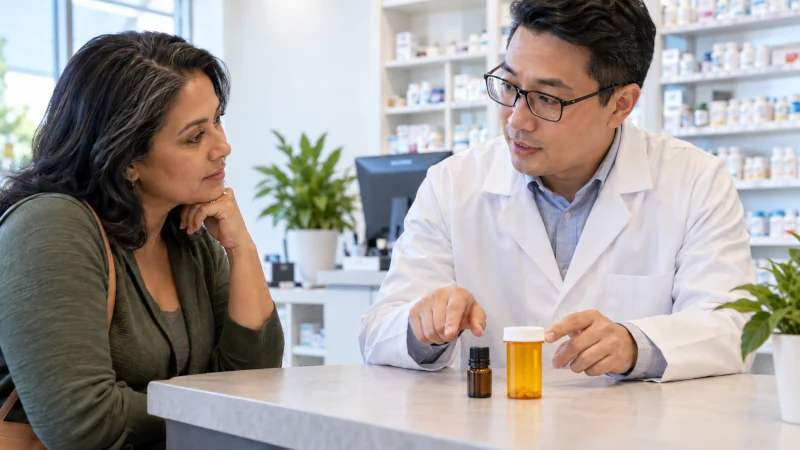
This is the part older lavender articles leave out entirely. There are theoretical grounds to think lavender may add to the effect of sedatives — prescription sleep or anti-anxiety medications, and other calming herbs — so stacking them can leave you more sedated than you intended. That matters especially before surgery, where sedative interactions are a real concern; tell your surgical team about any lavender product you use. As a blanket rule, if you take prescription medication, run lavender past a pharmacist or clinician first [NCCIH, 2025].
The lavender-and-children question
You may have read that lavender disrupts hormones in children. Here’s the balanced version. A handful of case reports have described breast-tissue growth in boys (prepubertal gynecomastia) and early breast development in girls that appeared to resolve after they stopped using lavender-containing products, and lab studies found some hormone-like activity in lavender oil components.
A later systematic review argued the clinical evidence for a real link is weak — though it’s worth knowing that review was funded by an integrative-health institute. Weighing it all, NCCIH’s position is that a few cases of breast swelling have been reported in children who used topical lavender products, but it remains unclear whether lavender was actually the cause, since this can have many causes [NCCIH, 2025]. Reasonable takeaway: the risk, if any, appears low, but caution with heavy or regular use of scented lavender products on young children is sensible until better studies settle it.
Pregnancy and breastfeeding
Simply put, there isn’t enough good data to call lavender safe during pregnancy or breastfeeding [NCCIH, 2025]. Occasional environmental scent is one thing; oral capsules or concentrated regular use is a conversation to have with your obstetric team first.
Who should be cautious or avoid it
- Anyone taking sedatives, sleep aids, or anti-anxiety medication (additive sedation).
- Anyone with an upcoming surgery (tell the team; consider stopping beforehand).
- People who are pregnant or breastfeeding (clinician first for anything beyond ambient scent).
- Young children, for heavy or repeated use of scented topical products.
- Anyone with a history of skin allergy to fragrances or essential oils (patch-test, or skip).
- Anyone on prescription medication generally — check for interactions before oral use.
Red flags: when to skip self-care and see a professional
Lavender is for the mild end of the spectrum. Seek proper care — not another bottle — if any of these apply:
- Anxiety, low mood, or insomnia that lasts more than two weeks or interferes with work, relationships, or safety.
- Panic attacks, or symptoms alongside chest pain, palpitations, tremor, or unexplained weight loss (these can have medical causes that mimic anxiety).
- Any thoughts of self-harm — in the U.S., call or text 988 for the Suicide and Crisis Lifeline, 24/7.
- A burn larger than a coin, blistering, or on the face, hands, or genitals; a wound that’s deep, dirty, or not healing; or any spreading redness, swelling, or pus.
- A skin reaction to lavender that spreads or involves swelling or trouble breathing (stop and seek care).
Standard treatments — therapy, well-studied medications, proper wound and burn care — outperform herbs when the problem is more than mild, and lavender works best alongside them, not instead of them.
| Health Disclaimer: This article is for general educational purposes only and is not a substitute for professional medical advice, diagnosis, or treatment. Lavender may support relaxation and mild anxiety for some people, but it does not cure, prevent, or treat any disease. “Natural” does not mean risk-free: essential oils can be toxic if swallowed, can irritate skin, and can interact with sedatives and other medications. Talk with a qualified healthcare provider — a physician, pharmacist, or registered dietitian — before using lavender if you are pregnant or breastfeeding, give it to a child, take prescription medication, have an upcoming surgery, or manage an ongoing health condition. If you may be in a mental health crisis, contact a professional or, in the U.S., call or text 988. |
Frequently Asked Questions
Do lavender benefits include curing anxiety?
No. Lavender can reduce anxiety symptoms for some people — a standardized oral capsule has the best trial evidence, and inhaled lavender shows a moderate calming effect — but the studies are limited and mostly funded by product makers, and none of this amounts to a cure. For persistent or severe anxiety, therapy and prescribed treatment work better [Donelli et al., 2019; NCCIH, 2025].
Does lavender actually help you sleep?
Possibly, modestly, and mainly as part of a calming routine. Some small studies suggest inhaled lavender improves self-reported sleep quality, but larger, higher-quality trials are still needed, so it isn’t a proven sleep treatment [NCCIH, 2025].
Can I drink lavender essential oil or put drops under my tongue?
No. Essential oil should never be swallowed — ingesting essential oils can cause poisoning. The oral evidence involves a specially formulated capsule at 80 mg/day, not drops from an essential-oil bottle [Donelli et al., 2019; NCCIH, 2025].
Is lavender safe during pregnancy?
There isn’t enough reliable evidence to say. Ambient scent is different from oral capsules or heavy topical use — check with your obstetric team before using lavender products in pregnancy or while breastfeeding [NCCIH, 2025].
Does lavender cause hormone problems in children?
The evidence is genuinely mixed. A few case reports linked lavender products to breast-tissue changes that resolved after stopping, and lab studies found some hormone-like activity, but a later review found the clinical evidence weak, and NCCIH says it’s unclear whether lavender was the cause. Being cautious with heavy, regular use on young children is reasonable while research catches up [NCCIH, 2025].
Can lavender interact with my medications?
It can add to the effect of sedatives, sleep aids, and anti-anxiety drugs, which matters especially before surgery. If you take prescription medication, check with a pharmacist or clinician before using oral lavender [NCCIH, 2025].
References
- National Center for Complementary and Integrative Health. Lavender: Usefulness and Safety. NCCIH; last updated February 2025. → View source
- Donelli D, Antonelli M, Bellinazzi C, et al. Effects of lavender on anxiety: a systematic review and meta-analysis. Phytomedicine. 2019;65:153099. PMID 31655395; DOI 10.1016/j.phymed.2019.153099. → View source


