
Most of the food you buy has been processed in some way, and most of that is fine. Frozen peas, canned beans, plain yogurt and pasteurized milk are all processed foods, and none of them belongs on a list of things to avoid. The processed foods worth cutting back on are the ultra-processed ones: industrial products like soda, packaged snack cakes, hot dogs and flavored chips, built mostly from refined ingredients and additives you wouldn’t find in a home kitchen.

That distinction matters because ultra-processed foods now supply more than half of what Americans eat. Between August 2021 and August 2023 they made up an average of 55% of daily calories for everyone aged 1 and older — about 53% for adults and 62% for children and teens [CDC NCHS, 2025]. Here is what the research on processed foods actually shows, which ones are most worth limiting, and how to eat fewer of them without turning grocery shopping into a chemistry exam.
Processed vs. ultra-processed foods: what’s the difference?
Researchers usually sort food using the NOVA system, which groups foods by how much, and why, they have been processed rather than by their nutrients [Monteiro, 2019]. There are four groups:
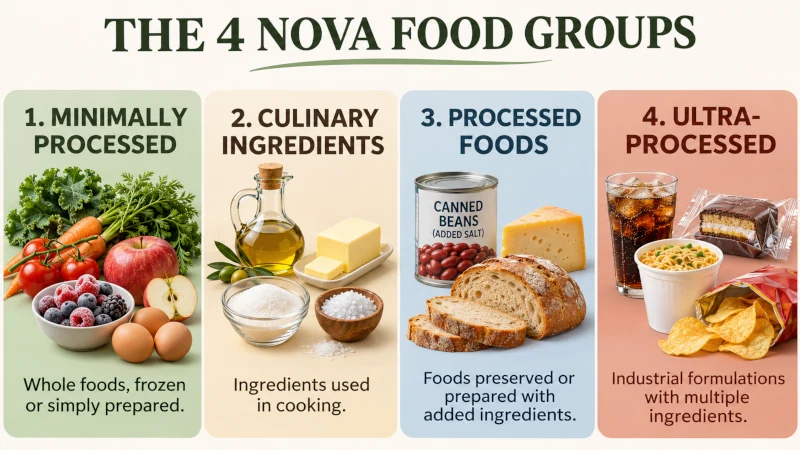
| NOVA group | What it means | Everyday examples |
| 1. Unprocessed or minimally processed | Whole foods that may be washed, frozen, dried, pasteurized or fermented, with nothing much added | Fresh or frozen fruit and vegetables, eggs, plain milk and yogurt, rolled oats, dried beans, fresh meat and fish |
| 2. Processed culinary ingredients | Ingredients pulled from foods and used to cook | Oils, butter, sugar, salt, flour |
| 3. Processed foods | Group 1 foods with salt, sugar or oil added | Canned vegetables or fish, cheese, simple bakery bread, salted nuts |
| 4. Ultra-processed foods | Industrial formulations that use ingredients rarely or never used at home | Soft drinks, packaged snacks and sweets, sweetened cereals, hot dogs and many deli meats, instant noodles, many frozen meals |
The quickest test is the ingredient list. If a product contains even one item you wouldn’t cook with — high-fructose corn syrup, hydrogenated or interesterified oils, hydrolyzed proteins — or additives used to make it look or taste more appealing, such as flavors, colors, emulsifiers, sweeteners and thickeners, it is probably ultra-processed [Monteiro, 2019].
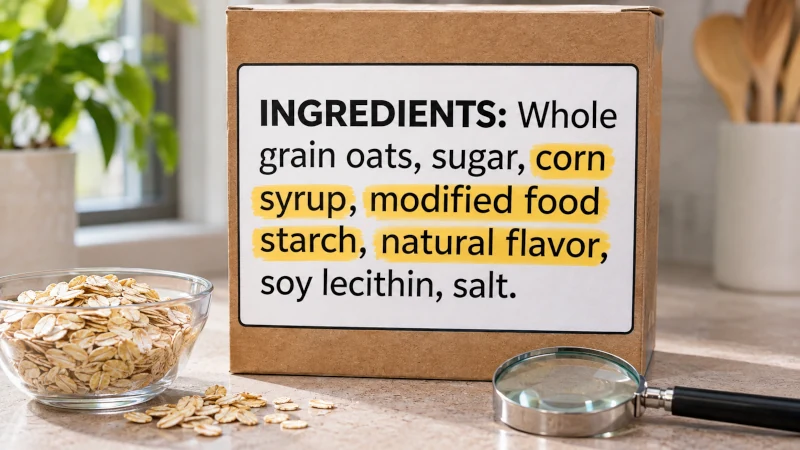
NOVA is a useful lens, not a verdict on every product. A mass-produced whole-grain bread and a can of soda can both land in group 4, and they are obviously not equal. Use the category to spot patterns in your diet, then use the label to judge the individual food.
What the research on ultra-processed foods shows
The biggest summary so far is a 2024 umbrella review in The BMJ that pooled 45 meta-analyses covering about 9.9 million people. Higher intake of ultra-processed foods was linked to a higher risk of 32 of the 45 health outcomes studied. The links rated “convincing” were death from cardiovascular disease (about 50% higher risk), anxiety and common mental disorders (roughly 48–53% higher odds), and type 2 diabetes (12% higher risk in dose-response analyses) [Lane, 2024].
Individual studies point the same way. In a French cohort of 105,159 adults, every 10-percentage-point rise in the share of ultra-processed food in the diet was associated with a 12% higher risk of cardiovascular disease [Srour, 2019]. In a Spanish cohort of 19,899 university graduates, people in the top quarter of intake had a 62% higher risk of dying during follow-up than those in the bottom quarter [Rico-Campà, 2019]. An earlier review of 43 studies found that 37 linked ultra-processed food to at least one poor health outcome [Elizabeth, 2020].
Those numbers come with an important limit: they are observational. People who eat the most ultra-processed food differ in many other ways, and the review authors say their findings cannot prove cause and effect. The certainty of the evidence was graded low or very low for several of the headline outcomes, including cardiovascular death, and a few subgroups of ultra-processed foods were actually linked to lower diabetes risk [Lane, 2024].
Controlled trials help fill that gap, though there are only a few. In a 2019 NIH study, 20 adults lived on a research ward and ate as much as they wanted from either an ultra-processed or an unprocessed menu for two weeks each. The menus offered matched calories, sugar, fat and fiber, yet people ate about 500 more calories a day on the ultra-processed diet and gained roughly 0.9 kg (2 lb), while losing about the same on the unprocessed diet [Hall, 2019].
A 2025 UK trial gave 55 adults eight weeks of each diet, with both versions built to meet national healthy-eating guidance. Both led to weight loss, but the minimally processed diet produced about twice as much (2.06% vs. 1.05% of body weight), mostly as fat, and better control of cravings. That trial was small, mostly women, and its ultra-processed menu used nutritionally improved products [Dicken, 2025]. If you are working on weight, our guide to foods that help with weight loss covers the filling, minimally processed foods that fit here.
How strong is the evidence?
| Claim | Strength of evidence |
| Processed meat causes colorectal cancer | Strong — IARC Group 1, “sufficient evidence” in humans |
| Too much sodium raises blood pressure; artificial trans fat raises LDL cholesterol | Strong — basis of FDA and federal guidance |
| Diets high in ultra-processed food are linked to heart disease, type 2 diabetes, depression/anxiety and earlier death | Consistent but observational — cannot prove cause |
| Ultra-processed diets lead people to eat more and gain weight | Promising — two small, short randomized trials |
| Which feature of ultra-processing is responsible (texture, eating speed, specific additives, energy density) | Unknown — still being studied |
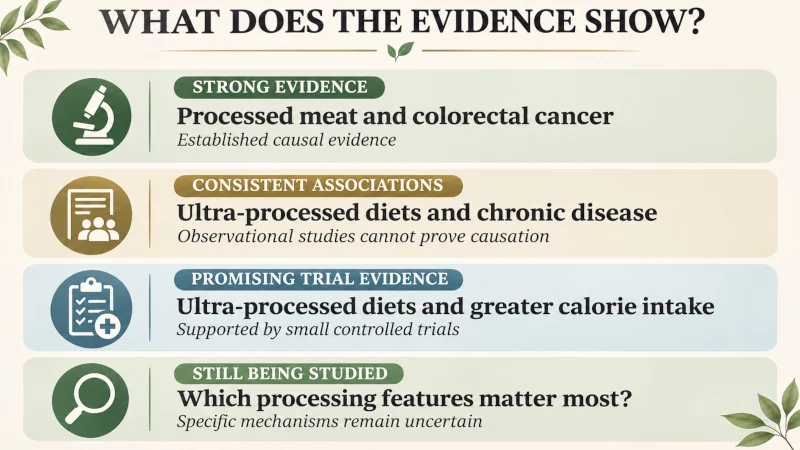
The fair reading: the case is strong enough to act on, and not strong enough to fear every package. The 2025–2030 Dietary Guidelines for Americans now advise significantly limiting highly processed foods and choosing home-prepared meals over packaged, ready-to-eat foods that are salty or sweet [USDA/HHS, 2026].
Processed foods worth limiting
Processed meats
Bacon, ham, hot dogs, sausages, salami, corned beef, jerky and most deli meats are preserved by salting, curing, fermenting or smoking. The World Health Organization’s cancer agency classifies processed meat as a Group 1 carcinogen because there is sufficient evidence that it causes colorectal cancer; each 50 g eaten daily is estimated to raise that risk by about 18% [IARC, 2015].
That label describes how certain the evidence is, not how big the danger is. Tobacco and processed meat share Group 1, but tobacco causes about 1 million cancer deaths a year worldwide versus an estimated 34,000 linked to diets high in processed meat. Compounds formed during processing, including N-nitroso compounds and polycyclic aromatic hydrocarbons, are known or suspected carcinogens, although exactly how they raise risk isn’t fully understood. IARC did not identify a safe amount; risk rises with how much you eat [IARC, 2015].
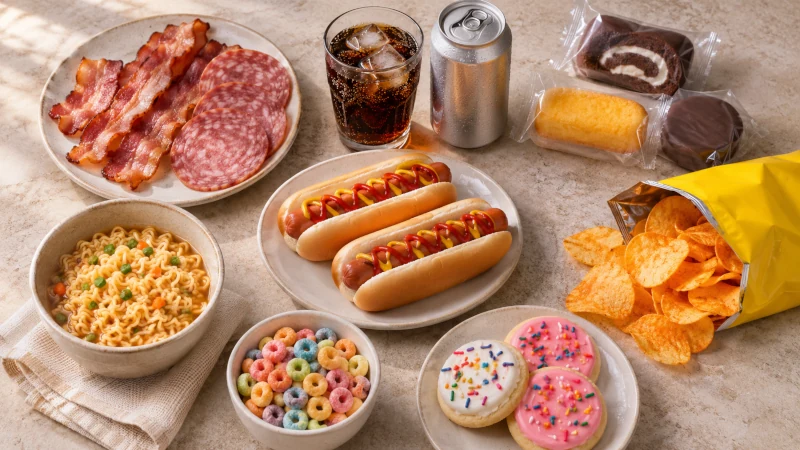
In practice: treat processed meat as an occasional food. For sandwiches, try leftover roast chicken or turkey, eggs, tuna or bean spreads. Our guide to foods linked with lower cancer risk covers what to build your plate around instead.
Sugary drinks (and what about diet soda?)
Soda, sweetened iced tea, fruit drinks and energy drinks are among the easiest ultra-processed foods to cut, and sweetened beverages are one of the top sources of ultra-processed calories for U.S. adults [CDC NCHS, 2025]. The new federal guidelines tell Americans to avoid sugar-sweetened beverages, state that no amount of added sugar is recommended, and suggest keeping any single meal under 10 grams of added sugar [USDA/HHS, 2026].
Diet soda swaps sugar for sweeteners, and the evidence there is genuinely mixed. In 2023, IARC labeled aspartame “possibly carcinogenic” based on limited evidence, while the WHO/FAO expert committee kept its acceptable daily intake at 40 mg per kg of body weight — a 70 kg adult would need more than 9 to 14 cans a day to exceed it [WHO, 2023a].
Separately, WHO advises against relying on non-sugar sweeteners for weight control, a conditional recommendation that does not apply to people who already have diabetes [WHO, 2023b]. A widely cited 2014 study linked sweeteners to glucose changes through gut bacteria, but most of that work was in mice, with a human test of just seven people [Suez, 2014]. For a closer look at one popular sweetener, see is Splenda bad for you?
Better everyday options: water, sparkling water with citrus, or unsweetened tea and coffee.
Frozen dinners, instant noodles and other salty convenience foods
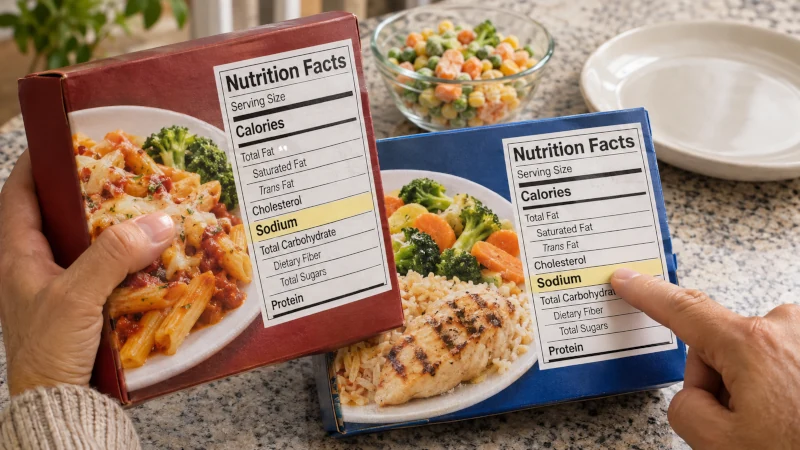
The main problem with most ready meals is sodium. Americans average about 3,400 mg a day against a recommended limit of under 2,300 mg, and more than 70% of it comes from packaged and prepared foods rather than the salt shaker. Higher sodium intake is linked to high blood pressure, a major driver of stroke and heart disease [FDA, Sodium]. Instant noodles get blamed for their MSG, but the seasoning packet’s salt load is the bigger concern (more on MSG below).
You don’t need to give these up entirely. Compare the % Daily Value for sodium between brands, use half the noodle seasoning packet, and bulk out a frozen meal with frozen vegetables or a side salad. If your blood pressure is already up, these blood-pressure-friendly nutrients are worth knowing.
A note on containers: some chemicals in plastics can migrate into food when it is heated, especially fatty food. Containers labeled “microwave safe” have been reviewed for that use; if you’d rather not take the chance, reheat in glass or ceramic, and don’t microwave takeout tubs, yogurt or margarine containers [Harvard Health, 2017].
Sweet bakery products are the second-largest source of ultra-processed calories for U.S. adults, after sandwiches and burgers [CDC NCHS, 2025]. Store-bought cakes, pastries, cookies and frosted cereals combine refined flour, added sugar and fat in a form that is easy to eat a lot of quickly. A bowl of plain rolled oats with fruit is a simple swap for sweetened cereal; here’s what the evidence says about oats.
Chips and flavored snacks
Flavored crisps and savory snacks are salty, calorie-dense and very easy to eat by the handful. In the NIH trial, people ate faster on the ultra-processed diet, which may be part of why they ate more [Hall, 2019]. Plain salted nuts or homemade popcorn give you crunch with fewer additives; portion out a serving instead of eating from the bag.
“Health-halo” bars, granola and fruit snacks
Granola bars, protein bars and fruit snacks are often sold as healthy, and some are reasonable. Many are closer to candy. Two quick checks: look at the “Added sugars” line on the Nutrition Facts label, and see whether a real food (oats, nuts, fruit) is the first ingredient or whether syrups and starches are.
Many “low-sugar” protein bars use sugar alcohols such as sorbitol, mannitol or maltitol. Large amounts can cause diarrhea — more than about 50 g of sorbitol or 20 g of mannitol a day — and products with these may carry a “laxative effect” warning [Univ. of Illinois Extension]. If your stomach is sensitive, start with half a bar.
Ingredients that get more blame than they deserve
MSG. The FDA considers added monosodium glutamate generally recognized as safe. In studies of people who believed they were sensitive, researchers could not consistently trigger reactions with MSG versus a placebo. Some sensitive people may get brief, mild symptoms such as headache or tingling after 3 grams or more taken without food, but a typical serving of a food with added MSG contains less than 0.5 grams. If you want to avoid it, it must be listed by name on the label [FDA, MSG].
Margarine. Older warnings were really about partially hydrogenated oils, once the main source of artificial trans fat, which raises LDL cholesterol. The FDA ruled in 2015 that these oils are no longer generally recognized as safe; manufacturers had to stop adding them for most uses by 2018, with a final compliance date of January 1, 2021 [FDA, Trans Fat]. Today’s U.S. margarine is still a processed fat to use sparingly, but it is no longer the trans-fat source it once was. Saturated fat from any source should stay under 10% of daily calories [USDA/HHS, 2026].
“If you can’t pronounce it, don’t eat it.” It’s catchy but unreliable: vitamins appear on labels as ascorbic acid or cyanocobalamin. The NOVA ingredient check above is a better filter [Monteiro, 2019].
How to eat fewer ultra-processed foods without overhauling your life
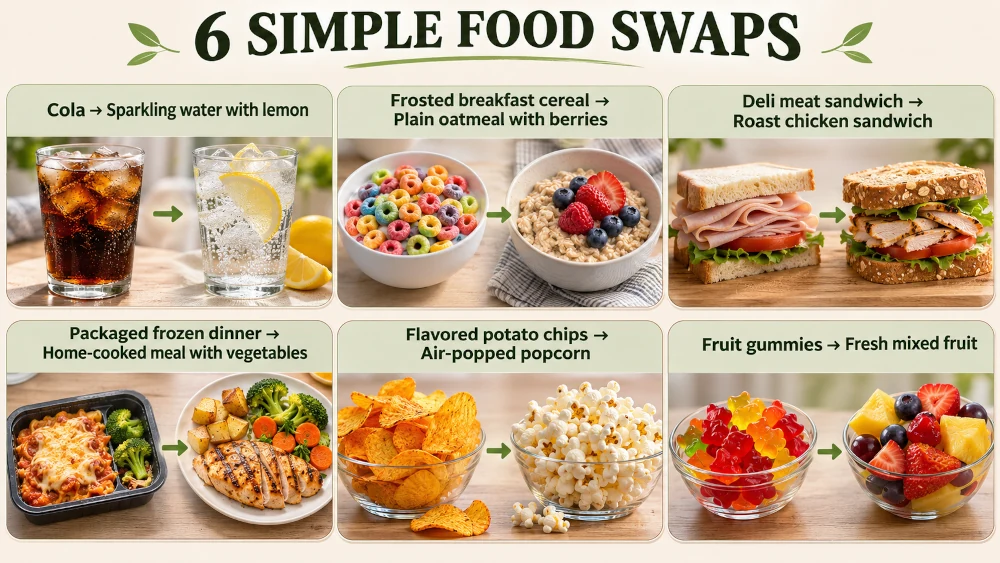
Aim for a shift, not a purge. Going from most of your calories to somewhat fewer is realistic and still worthwhile. Start with the foods you eat most often, since a daily soda or a lunchtime deli sandwich matters more than an occasional treat.
| Instead of… | Try… |
| Soda, sweet tea, energy drinks | Sparkling water with lemon or lime; unsweetened iced tea |
| Sweetened cereal or flavored instant oatmeal | Plain rolled oats with fruit and a few nuts |
| Deli meat sandwich | Leftover roast chicken, eggs, canned tuna, or hummus and vegetables |
| Frozen dinner most nights | Batch-cook twice a week and freeze portions; keep frozen vegetables on hand |
| Chips | A measured handful of nuts, or air-popped popcorn |
| Fruit snacks or gummies | Fresh, frozen or dried fruit with no added sugar |
Keep the processed foods that make healthy eating easier: canned beans and fish, frozen fruit and vegetables, plain yogurt and whole-grain bread with a short ingredient list. They fit comfortably into the home-cooked, whole-food pattern the Dietary Guidelines favor [USDA/HHS, 2026]. For a broader look at where modern eating habits go wrong, see modern diet problems and how to fix them.
Who should take extra care
- High blood pressure, heart disease or kidney disease: sodium is the priority. Uncontrolled high blood pressure raises the risk of heart attack, stroke, heart failure and kidney disease [FDA, Sodium]. Ask your clinician what sodium target is right for you.
- Pregnant people, adults 65 and older, and anyone with a weakened immune system: avoid unheated deli meat, cold cuts, hot dogs and dry sausages because of Listeria risk. Heat them to 165°F or until steaming hot [CDC, Listeria]. Newborns are also in the higher-risk group.
- People with diabetes: sweetened drinks, cereals and snack foods can push blood sugar up quickly. WHO’s advice against sweeteners for weight control does not cover people with existing diabetes [WHO, 2023b], so talk to your care team about whether sweeteners have a place in your plan.
- Sensitive digestion or IBS: go easy on sugar-free products made with sugar alcohols [Univ. of Illinois Extension].
- Children: kids get an even larger share of calories from ultra-processed foods than adults [CDC NCHS, 2025], and their sodium limits are lower — under 1,200 mg a day for ages 1–3, 1,500 mg for ages 4–8 and 1,800 mg for ages 9–13 [USDA/HHS, 2026].
When to talk to a healthcare professional
Talk to your doctor or a registered dietitian before making big diet changes if you have diabetes, heart or kidney disease, or take medicines for blood pressure or blood sugar, since dosing may need to be reviewed as your eating changes. A dietitian can also help if cost, time or family preferences make cutting back feel impossible.
See a doctor promptly, whatever your diet, if you notice blood in or on your stool, a lasting change in bowel habits, ongoing abdominal pain or cramping, or unexplained weight loss. These can have many causes, and only an exam can sort them out [CDC, Colorectal Cancer].
| HEALTH DISCLAIMER: This article is for general educational purposes and is not a substitute for advice, diagnosis or treatment from a qualified healthcare professional. Nutrition needs vary with age, health conditions, pregnancy and medications. If you are pregnant or breastfeeding, have a chronic condition such as diabetes, heart disease, high blood pressure or kidney disease, or take prescription medication, talk with your doctor or a registered dietitian before making significant changes to your diet. |
Frequently Asked Questions
Are all processed foods bad for you?
No. Frozen vegetables, canned beans, plain yogurt and pasteurized milk are processed and nutritious. The concern is mainly ultra-processed foods, which research links to higher risks of heart disease, type 2 diabetes and earlier death [Lane, 2024].
Is frozen food processed food?
Plain frozen fruit and vegetables are minimally processed and are a good, affordable option. Frozen ready meals are often ultra-processed and high in sodium, so check the label.
Is bread an ultra-processed food?
It depends on the recipe. Bread made from flour, water, yeast and salt is a processed food. Packaged breads with added emulsifiers, sweeteners or other additives fall into the ultra-processed group under NOVA [Monteiro, 2019].
How much processed meat is safe to eat?
No safe level has been established. Cancer risk rises with the amount eaten, and IARC estimates about an 18% higher colorectal cancer risk for each 50 g eaten daily [IARC, 2015]. Keeping it occasional is a sensible approach.
Is diet soda better than regular soda?
It cuts the added sugar, but it isn’t a health food. WHO advises against using non-sugar sweeteners to control weight [WHO, 2023b], and the federal guidelines don’t recommend any amount of non-nutritive sweeteners [USDA/HHS, 2026]. Water or unsweetened drinks are the best everyday choices.
References
- Centers for Disease Control and Prevention, National Center for Health Statistics. Williams AM, Couch CA, Emmerich SD, Ogburn DF. View source
- Monteiro CA, Cannon G, Levy RB, et al. Ultra-processed foods: what they are and how to identify them. View source
- Lane MM, Gamage E, Du S, et al. Ultra-processed food exposure and adverse health outcomes: View source
- Srour B, Fezeu LK, Kesse-Guyot E, et al. Ultra-processed food intake and risk of cardiovascular disease: View source
- Rico-Campà A, Martínez-González MA, Alvarez-Alvarez I, et al. View source
- Hall KD, Ayuketah A, Brychta R, et al. Ultra-processed diets cause excess calorie intake and weight gain: an inpatient randomized controlled trial of ad libitum food intake. Cell Metab. View source
- Dicken SJ, et al. Ultraprocessed or minimally processed diets following healthy dietary guidelines on weight and cardiometabolic health: a randomized, crossover trial. View source
- Elizabeth L, Machado P, Zinöcker M, Baker P, Lawrence M. Ultra-processed foods and health outcomes: a narrative review. View source
- Suez J, Korem T, Zeevi D, et al. Artificial sweeteners induce glucose intolerance by altering the gut microbiota. View source
- International Agency for Research on Cancer. View source
- U.S. Food and Drug Administration. Trans Fat. View source
- U.S. Food and Drug Administration. Questions and Answers on Monosodium Glutamate (MSG). View source
- U.S. Food and Drug Administration. Sodium in Your Diet. View source
- U.S. Department of Agriculture and U.S. Department of Health and Human Services. View source
- World Health Organization. Aspartame hazard and risk assessment results released. View source
- World Health Organization. WHO advises not to use non-sugar sweeteners for weight control in newly released guideline. View source
- Harvard Health Publishing. Microwaving food in plastic: Dangerous or not? View source
- University of Illinois Extension. Sugar Alcohols and Diabetes. View source
- Centers for Disease Control and Prevention. Preventing Listeria Infection. View source
- Centers for Disease Control and Prevention. Symptoms of Colorectal Cancer. View source


