
Healthy eating advice changes less than the headlines suggest. Eat mostly whole foods. Get enough protein. Fill up on vegetables, fruit and whole grains. Cut back hard on highly processed food, added sugar and salt. Drink water. The newest federal nutrition guidelines, the Dietary Guidelines for Americans, 2025–2030, released in January 2026, keep that core and change some important details [DGA, 2026].
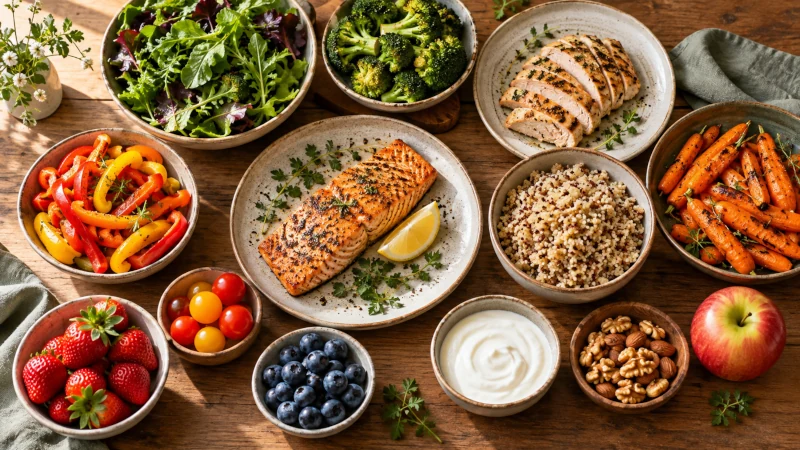
Some of those details are contested by major health organizations. Below are the current numbers in one place, an honest account of where experts disagree, and nine habits that turn the guidelines into meals you will actually eat.
The 2025–2030 Nutrition Guidelines at a Glance
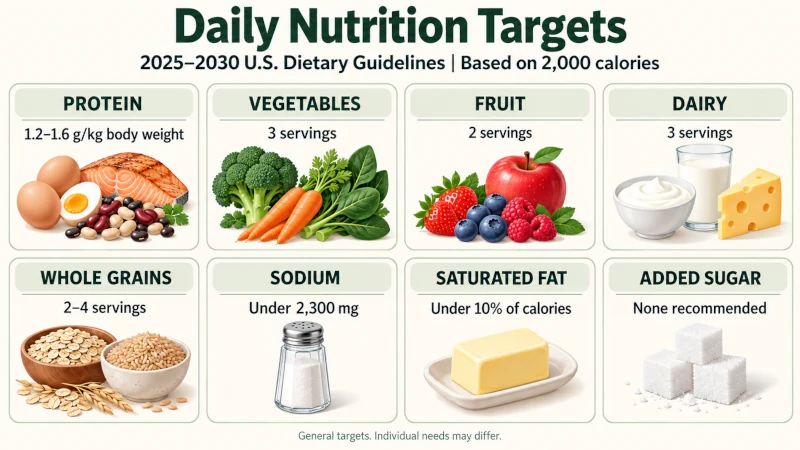
These targets assume a 2,000-calorie day. You may need more or less depending on your age, sex, size and activity level [DGA, 2026].
| Food or nutrient | Daily guideline | What it means in practice |
| Protein | 1.2–1.6 g per kg of body weight | For a 70 kg (154 lb) adult, that is about 84–112 g a day, from both animal and plant sources. |
| Dairy | 3 servings | Full-fat dairy with no added sugars is now preferred over low-fat. |
| Vegetables | 3 servings | Whole, colorful, in their original form. Frozen and canned count. |
| Fruit | 2 servings | Whole fruit. Keep 100% juice to small portions or dilute it with water. |
| Whole grains | 2–4 servings | Cut back on white bread, crackers, flour tortillas and packaged breakfast foods. |
| Saturated fat | Under 10% of calories | About 22 g on a 2,000-calorie day. |
| Added sugars | None recommended | If you have any, keep a single meal to 10 g or less (about 2½ teaspoons). |
| Sodium | Under 2,300 mg (ages 14+) | Lower limits for children. Very active people may need more to replace sweat losses. |
| Alcohol | Less is better | Avoid it completely if you are pregnant, in recovery or taking medicines that interact with it. |
| Drinks | Water first | Still or sparkling water and unsweetened drinks. Avoid soda, fruit drinks and energy drinks. |
Source: Dietary Guidelines for Americans, 2025–2030 [DGA, 2026]. Unit conversions calculated from the guideline figures.
The biggest new message is to avoid highly processed foods: salty or sweet packaged snacks, sugar-sweetened drinks, and foods with artificial flavors, petroleum-based dyes, artificial preservatives and low-calorie non-nutritive sweeteners. This is the first edition to say so directly [DGA, 2026]. Our guide to why processed foods are worth cutting back covers the practical side.
Where Experts Agree — and Where They Don’t
On most of the plate, there is broad agreement. The American Heart Association welcomed the push for more vegetables, fruit and whole grains and for less added sugar, saturated fat and highly processed food. It says those priorities reflect decades of evidence linking healthy eating patterns to lower cardiovascular risk [American Heart Association, 2026].
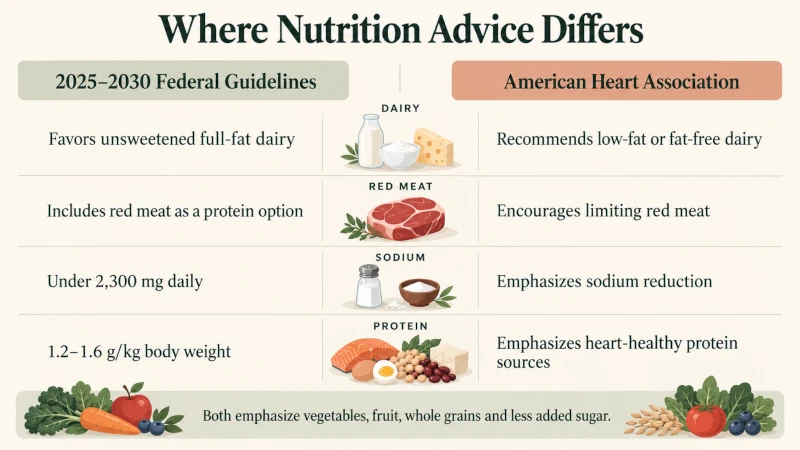
The disagreements are specific, and they matter if you have heart disease or are at risk of it:
- Dairy fat. The guidelines favor full-fat dairy. The Heart Association still recommends low-fat or fat-free dairy and moderation with butter and lard [American Heart Association, 2026].
- Red meat and salt. The Heart Association warns that the guidelines’ advice to flavor food with salt, along with their emphasis on red meat, could push some people over the sodium and saturated-fat limits [American Heart Association, 2026].
- Protein. The previous Recommended Dietary Allowance was 0.8 g per kg. The new 1.2–1.6 g target was not part of the 2025 scientific advisory committee’s report, according to cardiologists at Brown University Health [Aspry & Ramirez, Brown University Health, 2026].
- The process itself. The Center for Science in the Public Interest argues the final guidelines strayed from the advisory committee’s evidence review and has published its own alternative version [CSPI, 2026].
Note that the saturated-fat limit itself, under 10% of calories, did not change. The guidelines also acknowledge that “more high-quality research is needed to determine which types of dietary fats best support long-term health” [DGA, 2026]. In practice, if your cholesterol is high or you have heart disease, a cautious choice is lower-fat dairy, olive oil over butter, and the lower end of the red meat range. Check with your clinician.
Nine Habits That Put the Guidelines on Your Plate
1. Change One Thing at a Time
Overhauling your whole diet on a Monday is the surest way to be back on takeout by Thursday. Pick one change, such as a vegetable at lunch, and keep it for a couple of weeks before adding another. Small habits that survive a busy week matter more than a perfect plan you abandon.
If you have kidney disease, heart disease or diabetes, start with a clinician or dietitian. Some general advice, including the higher protein target and liberal use of salt, may not suit your condition. The guidelines themselves say people with chronic disease should check whether they need to adapt them [DGA, 2026].
2. Build Meals Around Protein and Plants
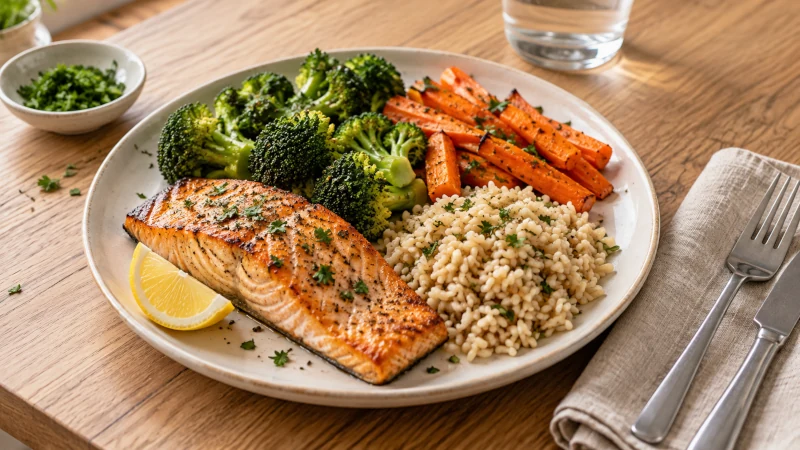
The guidelines ask for protein at every meal, from eggs, poultry, seafood and red meat as well as beans, lentils, nuts, seeds and soy [DGA, 2026]. Most people eat little protein at breakfast and a lot at dinner. Moving some of it earlier is an easy start. If you don’t eat meat, see our guide to protein-rich vegetarian foods.
Fill the rest of the plate with vegetables and fruit. Colorful variety is the point: leafy greens, carrots, tomatoes, and berries like strawberries. Fermented foods such as sauerkraut, kimchi, kefir and miso are named as supporting a diverse gut microbiome. The guidelines say that “may be beneficial,” a careful phrase rather than a proven benefit [DGA, 2026].
3. Trade Refined Grains for Whole Ones
Whole grains stay in. Refined ones get pushed out. The target is 2–4 servings of fiber-rich whole grains a day, with “significantly” less white bread, crackers, flour tortillas and packaged breakfast foods [DGA, 2026]. Oats, brown rice and true whole-wheat bread are easy swaps. Our list of carbohydrate foods sorts the better sources from the worse.
4. Cut Back on Highly Processed Food, Added Sugar, and Salt
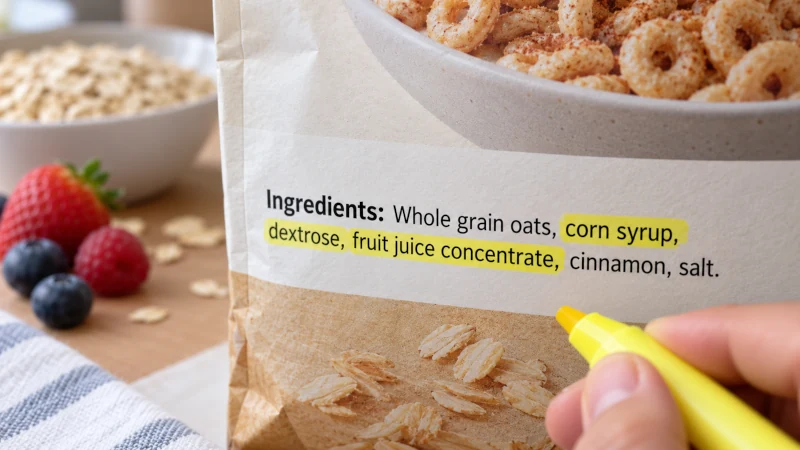
This habit does the most work. Packaged sweet and salty foods carry most of the added sugar and sodium in a typical diet. Reading labels helps: added sugar hides under names ending in “-ose” and words like “syrup,” as well as honey, agave and fruit juice concentrate [DGA, 2026].
You don’t have to give up flavor. Herbs, spices, citrus and vinegar do much of the work salt and sugar used to. Our guide on how to lower salt and sugar without making food bland has swaps that work.
5. Watch Portion Sizes, Too
Healthy food in large amounts is still a lot of food. The guidelines tell you to pay attention to portion sizes, especially for higher-calorie foods and drinks [DGA, 2026]. Some simple tactics: serve meals on a smaller plate, plate your food in the kitchen instead of eating from serving dishes, and when a restaurant portion is huge, box half before you start.
An occasional treat won’t undo a good pattern. What counts is what you eat most days. If weight loss is your goal, our guide to foods that make eating less easier explains which foods fill you up for the fewest calories.
6. Keep a Food Diary for a Week or Two
Most people misjudge what they eat. Writing it down for a week or two, in a notebook or an app, shows patterns you would otherwise miss: the afternoon vending machine run, the drinks that add up, the vegetables that never appear. Treat it as a short experiment, not a permanent chore.
If tracking starts to feel anxious or obsessive, stop. That is a signal to talk to a professional, not to track harder.
7. Eat Without a Screen

Distraction affects how much you eat. A meta-analysis of 24 studies found that people ate more when distracted during a meal. They also ate noticeably more at their next meal, possibly because they remembered less of what they had eaten [Robinson et al., 2013]. The studies were mostly short laboratory experiments, so the size of the effect in daily life is uncertain. The direction, though, was consistent.
So put the phone face-down, turn off the TV, and eat at a table when you can. Slowing down and noticing when you’re satisfied is the core of intuitive eating, an approach built around hunger and fullness cues rather than weight loss.
8. Pick a Meal Rhythm You Can Keep
You may have heard that skipping breakfast makes you gain weight. The evidence doesn’t support that. A BMJ meta-analysis of 13 randomized trials found breakfast eaters consumed about 260 more calories a day and weighed slightly more (0.44 kg) than people who skipped it. The authors rated the evidence as low quality, and most trials lasted only weeks [Sievert et al., 2019].

The fair conclusion is that breakfast is optional. Eat it if it keeps you from grazing on snacks by 11 a.m. Skip it if you aren’t hungry. If you’re curious about time-restricted eating, our beginner’s guide to intermittent fasting explains how it works and who should avoid it. That includes people with diabetes, a history of eating disorders, and anyone pregnant or breastfeeding. The federal guidelines don’t recommend any particular meal schedule.
9. Make Water Your Default Drink
The guidelines’ advice on drinks is simple: choose water, still or sparkling, and unsweetened drinks [DGA, 2026]. Water helps regulate body temperature, cushions joints, and removes waste through urine, sweat and bowel movements. Because it has no calories, swapping it for sugary drinks cuts calories without any effort [CDC, 2026].
There is no single number of glasses that suits everyone. Needs vary with age, sex, activity, heat, pregnancy and breastfeeding, and illness such as fever or vomiting. Not drinking enough can cause unclear thinking, mood changes, overheating, constipation and kidney stones [CDC, 2026]. Unsweetened coffee and tea are fine. The drinks to cut are soda, fruit drinks, energy drinks, and sweetened coffee and tea.

How the Guidelines Change Across Life Stages
The same core advice applies throughout life, but priorities shift [DGA, 2026]:
- Pregnancy and breastfeeding: Iron, folate and iodine become top priorities. Choose low-mercury seafood such as salmon, sardines and trout. Ask your clinician about a prenatal vitamin and whether you need other supplements while breastfeeding. Avoid alcohol completely during pregnancy.
- Children: No added sugar is recommended for children. Avoid added sugar in infancy and early childhood entirely, and avoid caffeinated drinks for school-age children. Sodium limits are lower: under 1,200 mg for ages 1–3, 1,500 mg for ages 4–8, and 1,800 mg for ages 9–13.
- Older adults: Some need fewer calories but the same or more protein, vitamin B12, vitamin D and calcium. That makes every meal’s nutrient density more important.
- Vegetarians and vegans: Watch for gaps, particularly in vitamin B12, vitamin D, iron, calcium and iodine, and have your levels checked periodically.
Needs also differ by sex. See our guides to vitamins and minerals for women’s health and the nutrients men most often fall short on.
When to Get Personalized Help
General guidelines are written for the general population. You’ll get more from tailored advice if you have a chronic condition, are pregnant, take medicines that interact with food or alcohol, or are cutting out whole food groups. The guidelines note that some people with chronic disease may do better on a lower-carbohydrate diet. That is a decision to make with your clinician, not on your own [DGA, 2026].
A registered dietitian nutritionist is the credential to look for. The Academy of Nutrition and Dietetics runs a searchable directory by location, specialty and insurance.
See a doctor rather than adjusting your diet alone if you’re losing weight without trying, have digestive symptoms that won’t settle, or feel that eating, or not eating, has become hard to control.
| HEALTH DISCLAIMER: This article is for general education. It is not medical advice, diagnosis or treatment, and no food or eating pattern described here treats, cures or prevents disease. Talk to your doctor or a registered dietitian before making major changes to your diet, especially if you are pregnant or breastfeeding, have kidney disease, heart disease, diabetes or another chronic condition, take regular medication, or have a history of disordered eating. |
Frequently Asked Questions
What are the current U.S. nutrition guidelines?
The Dietary Guidelines for Americans, 2025–2030, released in January 2026. In short: eat protein at every meal, about three servings of dairy, three of vegetables, two of fruit and two to four of whole grains a day, and avoid highly processed foods, added sugars and sugary drinks [DGA, 2026].
How much protein should I eat per day?
The new guideline is 1.2–1.6 grams per kilogram of body weight, adjusted for your calorie needs [DGA, 2026]. That is higher than the previous allowance of 0.8 g/kg, and some cardiologists note the increase was not part of the scientific advisory committee’s report [Aspry & Ramirez, Brown University Health, 2026]. If you have kidney disease, ask your doctor before raising your protein intake.
Is full-fat dairy healthy now?
The federal guidelines prefer full-fat dairy with no added sugar. The American Heart Association still recommends low-fat or fat-free dairy for heart health [American Heart Association, 2026]. Both keep saturated fat under 10% of calories. If your LDL cholesterol is high, lower-fat dairy is the cautious choice.
How much added sugar is OK?
The guidelines say no amount of added sugar is recommended. If you have some, keep any one meal to 10 grams or less [DGA, 2026], about 2½ teaspoons.
What happened to MyPlate?
Federal messaging for the 2025–2030 guidelines now centers on a “New Pyramid” at RealFood.gov rather than the MyPlate icon [RealFood.gov, 2026]. The basics of a healthy plate still apply: plenty of vegetables and fruit, enough protein, and whole grains.
References
- U.S. Department of Health and Human Services and U.S. Department of Agriculture. View source
- American Heart Association. “New U.S. nutrition guidance emphasizes importance of healthier eating.” View source
- Aspry KE, Ramirez V. “The 2025-2030 Dietary Guidelines and Heart Health: What to Know.” Brown University Health. View source
- Center for Science in the Public Interest. “Dietary Guidelines for Americans.” View source
- Sievert K, Hussain SM, Page MJ, et al. “Effect of breakfast on weight and energy intake: systematic review and meta-analysis of randomised controlled trials.” View source
- Robinson E, Aveyard P, Daley A, et al. “Eating attentively: a systematic review and meta-analysis of the effect of food intake memory and awareness on eating.” View source
- Centers for Disease Control and Prevention. “About Water and Healthier Drinks.” View source
- Academy of Nutrition and Dietetics. “Find a Nutrition Expert.” View source
- U.S. Department of Health and Human Services and U.S. Department of Agriculture. “Eat Real Food” (RealFood.gov). View source


