
You can lower salt and sugar more than you think without giving up the flavors you love, and the targets you need to hit are clearer than most food labels suggest. The U.S. Food and Drug Administration sets the Daily Value for sodium at less than 2,300 mg and for added sugars at less than 50 g per day [FDA, 2024].
Most American adults blow past the sodium target by about 50 percent, averaging more than 3,400 mg a day [CDC, 2026]. And it isn’t the saltshaker doing the damage. The American Heart Association reports that more than 70 percent of dietary sodium comes from processed foods and restaurant meals, not what you sprinkle on at the table [AHA, 2024].
This guide walks through how much salt and sugar to aim for, where the hidden sources are, and the specific food swaps that actually move the number on your nutrition label.
How much salt and sugar is too much?
Different agencies set slightly different targets, but they agree on the direction. The table below shows the numbers you’ll see on labels and in clinical advice.
Daily limits at a glance
| Nutrient | FDA Daily Value (label) | American Heart Association | World Health Organization |
| Sodium | Less than 2,300 mg | Ideal: 1,500 mg for most adults | Less than 2,000 mg |
| Added sugar | Less than 50 g (~12 tsp) | 25 g (6 tsp) women; 36 g (9 tsp) men | Under 10% of daily calories; under 5% is better |
A single teaspoon of table salt contains about 2,400 mg of sodium — already over the FDA Daily Value [CDC, 2026]. A 12-ounce can of regular soda contains roughly 10 teaspoons of added sugar, more than the AHA’s entire daily allowance for women [AHA, 2024].
Salt and sodium are not the same thing
Table salt is sodium chloride, which is about 40 percent sodium and 60 percent chloride by weight [CDC, 2026]. Nutrition Facts labels list sodium, not salt — that’s why one teaspoon of salt and 2,300 mg of sodium are close to the same amount.
Who should aim lower
Babies and young children, people with high blood pressure, heart failure, chronic kidney disease, or type 2 diabetes typically need stricter sodium targets — often 1,500 mg/day or less. If you’re in one of those groups, your clinician can give you a specific number.
Why cutting back matters
Excess sodium is the dietary factor most strongly linked to high blood pressure, and high blood pressure is the leading modifiable risk factor for stroke and heart disease worldwide. The World Health Organization estimates that excess sodium intake is associated with about 1.7 million deaths a year [WHO, 2025].
Added sugar is a different problem. Calories from added sugar displace nutrients in the diet and contribute to weight gain, insulin resistance, elevated blood sugar levels, fatty liver disease, and higher triglycerides. The AHA puts added sugar firmly among nutrients to limit because, unlike the sugar in whole fruit or plain dairy, added sugar comes with no fiber, no protein, and no vitamins to slow absorption [AHA, 2024].
Neither salt nor sugar is poison in normal amounts. Sodium is essential for nerve and muscle function. The issue is excess — and most Americans are in excess.
Where the salt is actually hiding
About 70 percent of U.S. sodium intake comes from packaged and prepared foods, not the saltshaker [AHA, 2024]. A few sources that surprise most people:
- Bread and rolls. Not salty-tasting, but eaten often enough to be the single biggest sodium contributor in the average American diet.
- Cold cuts and cured meats. Ham, turkey, salami, bacon, and bologna can run 400 to 700 mg per serving.
- Pizza, sandwiches, and burgers. A single fast-food meal can hit 1,500 mg or more.
- Canned soups, broths, and bouillon. A bowl of regular canned soup can top 800 mg.
- Rotisserie or ‘enhanced’ chicken. Check the label. If it’s been injected with up to a 15% solution, that’s mostly salt water — about 400 mg sodium per serving vs. 100 mg in plain fresh chicken.
- Cheese, especially aged and processed varieties.
- Condiments and dressings. Soy sauce, ketchup, BBQ sauce, salad dressing, pickles, salsa.
- Snack foods. Chips, pretzels, salted nuts, crackers.
The fix isn’t avoiding all of these. It’s reading the Nutrition Facts label and comparing brands — sodium can vary three- or four-fold between two products that look identical on the shelf [AHA, 2024].
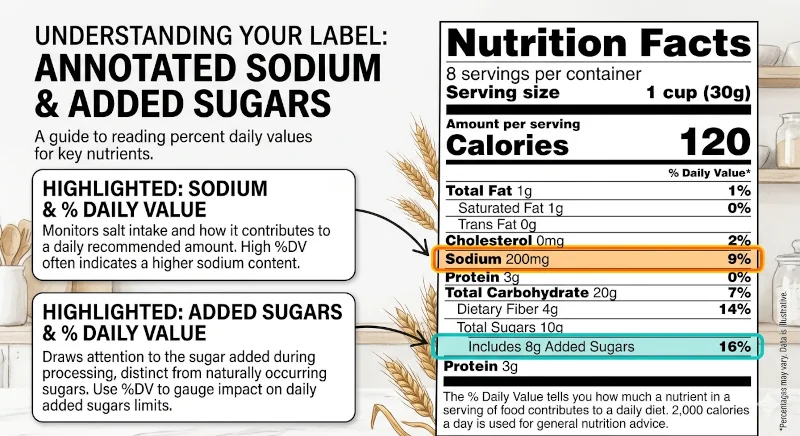
Where the added sugar is hiding
Added sugar is easier to spot since 2020, when the FDA began requiring it on the Nutrition Facts label as a separate line under ‘Total Sugars’ [FDA, 2024]. The top sources for U.S. adults:
- Sugar-sweetened beverages. Sodas, sweet tea, sports drinks, energy drinks, and flavored coffees — collectively the largest single source.
- Desserts and sweet snacks. Cookies, cakes, ice cream, pastries.
- Sweetened breakfast cereals and granola bars. Some bars marketed as ‘healthy’ carry 12 g of added sugar — close to half the AHA’s daily limit for women.
- Flavored yogurts. A 6 oz container can hold 12–18 g of added sugar.
- Sauces and condiments. Ketchup, barbecue sauce, sweetened pasta sauce.
- Bread. Many supermarket loaves contain 2 to 4 g of added sugar per slice.
On the ingredients list, added sugar can show up under more than 60 different names: high-fructose corn syrup, cane juice, agave nectar, fruit juice concentrate, dextrose, malt syrup, molasses, honey, and just about anything ending in ‘-ose.’ The Nutrition Facts panel solves this by lumping them all into one line: ‘Includes Xg Added Sugars.’
12 practical swaps that lower salt and sugar
These work because they target the foods that actually contribute the most — not the ones that taste salty or sweet on the tongue.
For sodium
- Buy ‘no salt added’ canned beans and vegetables, or drain and rinse regular ones. Draining and rinsing can cut sodium by about 40 percent [CDC, 2026].
- Compare brands of bread, cereal, and snack crackers side by side. Sodium per serving can vary three- or four-fold between near-identical products.
- Skip ‘enhanced’ or ‘self-basting’ poultry and brined meats. Look for fresh poultry under 100 mg of sodium per 4 oz.
- Use citrus, vinegar, garlic, and herbs instead of salt at the table. Lemon and pepper especially work well on fish, chicken, and vegetables [AHA, 2024].
- Cook pasta, rice, and oatmeal without salt — flavor lands in the sauce or topping anyway.
- Order sauces and dressings on the side at restaurants and use a quarter of what they bring.
For added sugar
- Drink water, unsweetened seltzer, or unsweetened tea instead of soda. For people who drink sugar-sweetened beverages daily, this single swap dwarfs every other change.
- Switch to plain yogurt and add fresh fruit, instead of buying flavored yogurt with 12–18 g of added sugar baked in.
- Read cereal labels. Aim for under 6 g of added sugar per serving, or look for ‘no added sugar’ options.
- Use whole fruit when you want something sweet. The fiber blunts the blood sugar spike and helps you stop sooner.
- Halve the sugar in baking recipes. Most desserts still work, especially with added cinnamon, vanilla, or citrus zest.
- Watch coffee drinks. A 16 oz flavored latte can carry 30 g or more of added sugar — over the men’s daily AHA limit in a single drink.
Your palate adjusts. Evidence summarized by the AHA suggests that within a few weeks of eating less salt, people start to prefer the lower-sodium version and find their old favorites too salty [AHA, 2024]. The same gradual shift works for sugar — and there’s a structured step-by-step guide to detoxing from sugar if you want a plan.

What about salt substitutes?
Potassium-based salt substitutes — sold as NoSalt, Nu-Salt, or ‘lower-sodium salt’ — replace some or all of the sodium with potassium chloride. For most healthy adults they’re an effective way to cut sodium without losing salty flavor. The WHO published a 2025 guideline supporting their use [WHO, 2025].
Potassium isn’t safe for everyone, though. People with chronic kidney disease, heart failure, adrenal insufficiency, or anyone on certain blood pressure medications (ACE inhibitors, ARBs, or potassium-sparing diuretics) can develop dangerously high potassium levels. Check with a clinician before using a salt substitute if any of those apply.
Children and reduced-salt or reduced-sugar diets
Kids form taste preferences early, and exposure to high-sodium and high-sugar foods in childhood predicts higher intake as adults. The Dietary Guidelines for Americans recommend that children under 2 avoid added sugar entirely [USDA/HHS, 2020]. For older children, the AHA suggests under 25 g of added sugar per day and a sodium ceiling that scales with age — typically 1,500 to 2,300 mg.
Practical low-effort wins for families: serve water as the default drink, swap flavored yogurt for plain, choose whole-grain bread with less added sugar, and pack fruit instead of fruit snacks. For more on building a family-friendly approach, see our broader nutrition guidelines.
When to talk to a doctor
Some people need more than general advice. Talk with a healthcare professional if you have:
- high blood pressure or are taking blood pressure medication
- heart failure, chronic kidney disease, or are on dialysis
- type 1 or type 2 diabetes
- a history of stroke or heart attack
- a child whose pediatrician has flagged weight or blood pressure concerns
Seek urgent care for symptoms that can signal a hypertensive emergency or stroke: a severe headache with blurred vision, chest pain, sudden weakness or trouble speaking, severe shortness of breath, or sudden severe back or abdominal pain.
Realistic expectations
Lowering salt and sugar isn’t a quick fix. Most people see modest blood pressure changes within 2 to 4 weeks of a real sodium reduction, and the AHA estimates that population-wide sodium reduction could prevent thousands of cardiovascular events a year [AHA, 2024]. For added sugar, the most measurable wins are usually weight, triglycerides, and dental health.
What it doesn’t do: it won’t reverse established heart disease or diabetes on its own. It works alongside, not instead of, the medications, exercise, and screening your clinician recommends.
| Health Disclaimer: This article is for general educational purposes and is not medical advice. The information here doesn’t replace evaluation, diagnosis, or treatment from a qualified healthcare professional. If you’re pregnant or breastfeeding, taking prescription medications, or managing a chronic condition such as chronic kidney disease, heart failure, or diabetes, talk with your doctor or a registered dietitian before making large changes to your sodium or added sugar intake. Don’t ignore or delay medical advice because of something you read here. |
Frequently Asked Questions
Is sea salt healthier than table salt?
By weight, sea salt contains roughly the same amount of sodium as table salt. The difference is in trace minerals and crystal size, not in cardiovascular impact.
Is honey or maple syrup a ‘healthier’ sweetener?
They count as added sugar on the Nutrition Facts label. They contain small amounts of antioxidants and minerals, but per teaspoon they raise blood sugar similarly to white sugar.
How quickly will my blood pressure drop if I cut salt?
Most people see measurable changes within 2 to 4 weeks of a meaningful reduction. The size of the drop tends to be larger in people who are salt-sensitive, including many older adults, Black adults, and people already on blood pressure medication.
Are artificial sweeteners a good substitute for sugar?
The evidence is mixed. The WHO has advised against using non-sugar sweeteners for long-term weight control, while the FDA considers them safe at typical intake levels. Water or unsweetened beverages are the cleaner swap.
Can I cut salt too much?
Yes, although it’s uncommon on a typical American diet. Symptoms of low sodium (hyponatremia) include nausea, headache, confusion, and muscle cramps. If you have heart failure or are an endurance athlete, talk to your doctor before going aggressively low-sodium.
References
- U.S. Food and Drug Administration. Daily Value on the Nutrition and Supplement Facts Labels. FDA, 2024. → View source
- U.S. Food and Drug Administration. How to Understand and Use the Nutrition Facts Label. FDA, 2024. → View source
- Centers for Disease Control and Prevention. About Sodium and Health. CDC, March 31, 2026. → View source
- Centers for Disease Control and Prevention. Tips for Reducing Sodium Intake. CDC, March 31, 2026. → View source
- Centers for Disease Control and Prevention. Effects of Sodium and Potassium. CDC, 2026. → View source
- American Heart Association. How to Reduce Sodium in Your Diet. AHA, January 5, 2024. → View source
- American Heart Association. Added Sugars. AHA, August 2, 2024. → View source
- American Heart Association. How Much Sodium Should I Eat Per Day? AHA, 2024. → View source
- American Heart Association. How Much Sugar Is Too Much? AHA, 2024. → View source
- World Health Organization. Sodium reduction. WHO, 2025. → View source
- World Health Organization. WHO guideline on the use of lower-sodium salt substitutes. WHO, 2025. → View source
- U.S. Department of Agriculture & U.S. Department of Health and Human Services. Dietary Guidelines for Americans, 2020–2025. 9th edition, December 2020. → View source
