
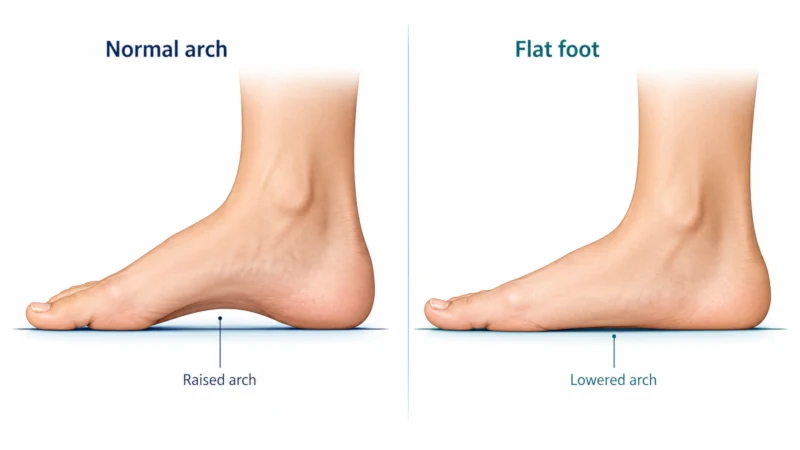
Flat feet symptoms in adults can be easy to brush off — an arch that aches after a long day, an inner ankle that feels sore, shoes that wear down faster along one edge. Most of the time, low arches cause no trouble at all. But when symptoms show up or slowly get worse, they can be the first sign that the structures holding up your arch are under strain.
The single most useful idea to hold onto is this: flat feet are common and often harmless, so the question that matters is not whether your arches are low but whether your feet are comfortable, stable, and staying that way. [NHS, 2025] [Cleveland Clinic, 2024]
Key takeaways
- Many adults with flat feet never get symptoms. Low arches are not automatically a problem. [NHS, 2025]
- The signs that matter most cluster around the inner arch and inner ankle — aching, tenderness, and sometimes swelling where the posterior tibial tendon runs. [AAOS, 2023]
- Symptoms that build gradually in adulthood, especially in one foot with a visibly flattening arch, deserve evaluation, because adult-acquired flatfoot tends to progress. [AAOS, 2023]
- A quick home check: if you cannot rise onto the toes of one foot without pain or weakness, that points to the tendon that supports your arch. [Cleveland Clinic, 2025]
Low arches don’t always cause symptoms
Here is the part many articles skip: having flat feet does not mean you are headed for pain. Plenty of adults have had low arches their whole lives and never feel a thing. The NHS describes flat feet as common, usually harmless, and rarely a sign of anything serious. [NHS, 2025] Cleveland Clinic makes the same point — many people with flat feet have no symptoms and need no treatment. [Cleveland Clinic, 2024]
What changes the picture is function. Symptoms tend to appear when the arch stops handling load well: the tendons and ligaments that support it work harder, the foot rolls inward more than it should, and the soft tissues fatigue. If you want the structural basics first, start with what flat feet actually are. The rest of this page is about the symptoms that follow when a flat foot becomes a painful or changing one.
The most noticeable flat feet symptoms in adults
Adult symptoms rarely arrive all at once. They build — usually with more standing, longer walks, or a jump in activity. A few patterns come up again and again.
Aching along the arch and inner foot
The most common complaint is a dull ache or tenderness along the inner edge of the midfoot, roughly where the arch sits. It often starts as end-of-day soreness and can turn into a deeper burning or tightness with prolonged standing or walking on hard floors, easing with rest. Tenderness when you press the arch points to soft-tissue strain rather than a passing ache.
Inner-ankle pain, tenderness, and swelling
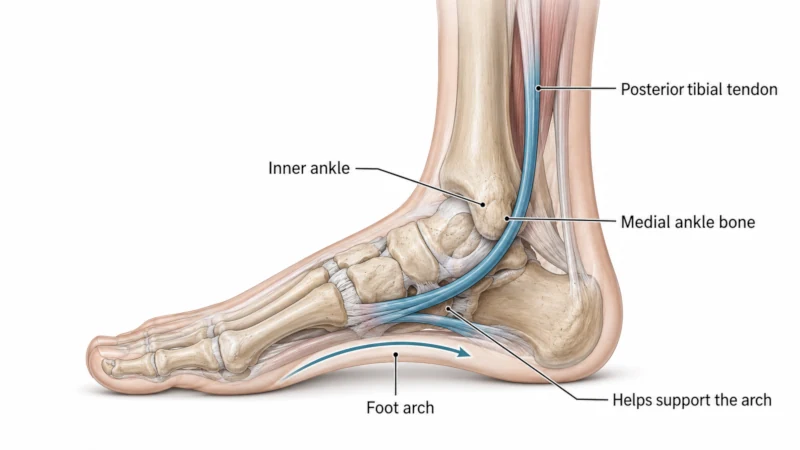
Pain on the inner side of the ankle is one of the more telling signs, because that is where the posterior tibial tendon runs — the tendon whose main job is to hold up the arch and steady the foot as you walk. [AAOS, 2023] When the arch drops, that tendon is overworked, and it can become inflamed, tender, and swollen just behind and below the bony bump on the inside of your ankle. Cleveland Clinic notes the tenderness is often most obvious when you flex the foot, and that swelling tends to track along the line of the tendon. [Cleveland Clinic, 2025] Inner-ankle pain and swelling that build gradually, especially without a clear injury, are worth a professional look.
Fatigue and pain that scale with activity
Adults with flat feet often describe feet and lower legs that tire faster than they should — a heavy, worn-out feeling after fairly ordinary standing or walking. The mechanics are straightforward: when the arch is not distributing force efficiently, muscles and tendons take up the slack and fatigue sooner. A useful tell is that the discomfort scales with activity. You may feel fine on a short walk and noticeably sore on a longer one, with arch ache, inner-ankle soreness, and general tiredness all worsening the further you go. [AAOS, 2023]
Signs in how you move and how your shoes wear
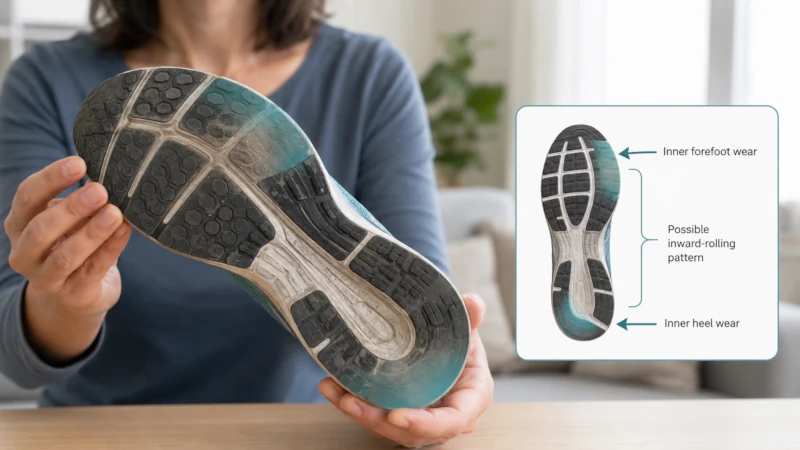
Some of the clearest clues are visible rather than felt. When the arch is low, the foot tends to roll inward through each step — a movement pattern called overpronation. You might catch it in a mirror, or someone may mention that your ankles look like they cave inward when you walk. [Cleveland Clinic, 2024] Flip your everyday shoes over: noticeably faster wear along the inner heel and the ball of the foot fits that inward-rolling pattern. Uneven wear alone does not confirm flat feet — other gait quirks cause it too — but it is a low-effort clue worth noticing.
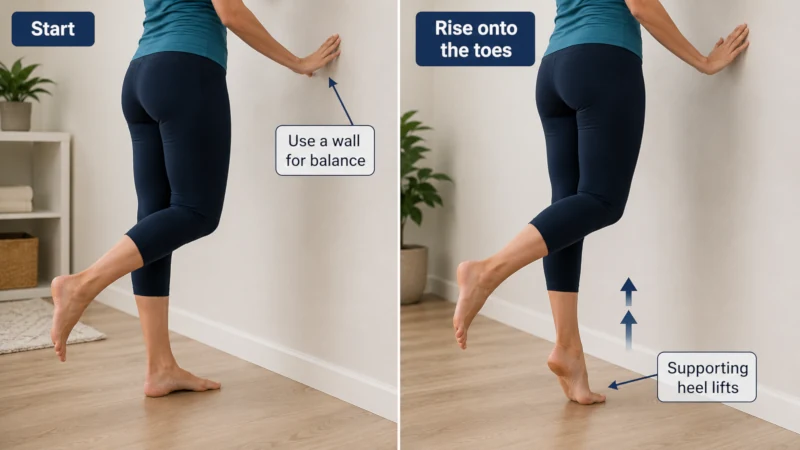
One home check stands out. Stand on one foot and try to rise onto your toes. Most adults can do this without much trouble. Pain, weakness, or simply not being able to lift the heel on one side is a recognized sign of trouble with the posterior tibial tendon, and clinicians use the same single-leg heel-rise test in the office. [AAOS, 2023] [Cleveland Clinic, 2025]
Aches that travel beyond the foot
Because a flat foot changes how force moves through the lower leg, symptoms do not always stay in the foot. Heel pain is common: flat feet are one of the factors clinicians weigh in plantar fasciitis, since the plantar fascia helps support the arch, and the classic sign is a sharp, stabbing heel pain with the first steps in the morning that eases after a few minutes of walking. [ACFAS]
Shin soreness can appear too, and over time Cleveland Clinic notes that altered alignment may contribute to knee, hip, or lower-back discomfort. [Cleveland Clinic, 2024] None of this means flat feet explain every ache up the chain — they are one possible factor in a larger movement pattern, not an automatic diagnosis.
A foot that’s changing shape
A visibly lower arch than you remember, or a foot that looks wider or more collapsed than its partner, is a meaningful symptom rather than a cosmetic one. Childhood flat feet are usually symmetric and stable; an arch that flattens in adulthood — often one side more than the other — is the pattern that tends to progress and is more likely to need attention. [AAOS, 2023]
Flat feet symptoms at a glance
| Symptom | What it tends to feel like | Why it happens |
| Arch / inner-foot pain | Dull ache or burning along the inner midfoot, worse with standing or hard floors | Soft tissues strain to support a low or dropping arch |
| Inner-ankle pain & swelling | Tenderness and puffiness behind and below the inner ankle bone | Overload of the posterior tibial tendon |
| Foot fatigue | Heavy, worn-out feeling that comes on faster than expected | Muscles and tendons compensate when force isn’t spread efficiently |
| Inward rolling / uneven wear | Ankles look like they cave in; inner sole wears faster | Overpronation that often accompanies a low arch |
| Single-leg tiptoe trouble | Pain or weakness rising onto the toes of one foot | Weak or damaged posterior tibial tendon |
| Heel pain | Sharp, stabbing pain at the base of the heel on first morning steps | Added strain on the plantar fascia |
| Changing foot shape | Arch looks lower or foot wider than before, often one side | Progressive collapse, typical of adult-acquired flatfoot |
When symptoms start in adulthood, the cause matters
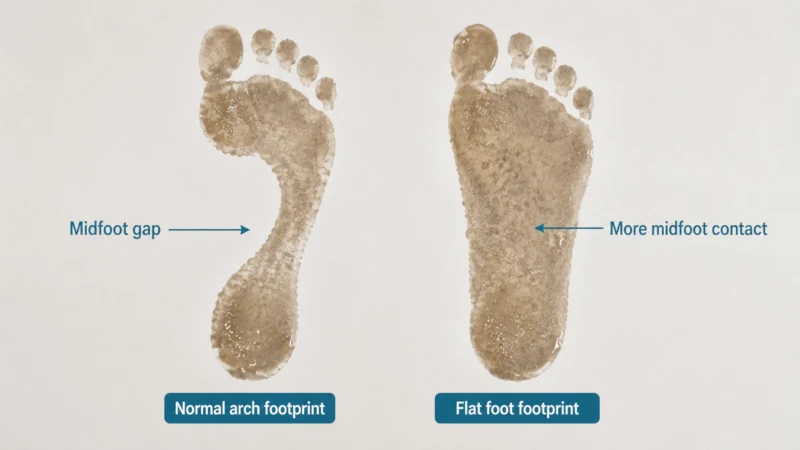
If you have always had flat feet and suddenly have symptoms, the usual explanation is that the support system is weakening — with age, weight, long hours on hard surfaces, or tendon changes. [NHS, 2025] The condition behind most adult cases has a name: posterior tibial tendon dysfunction (PTTD), which specialists now fold into progressive collapsing foot deformity, formerly called adult-acquired flatfoot. [AAOS, 2023] [Cleveland Clinic, 2025]
It helps to know who is most affected. AAOS notes that flatfoot from tendon dysfunction is more common in women and in people over 40, with obesity, diabetes, and high blood pressure raising the risk. [AAOS, 2023] It also tends to show up on one side and to worsen if left alone, which is why a changing, one-sided arch with inner-ankle pain earns more concern than a lifelong flat foot that has never bothered you.
Cleveland Clinic describes PTTD in stages, and the early ones are the ones to catch. In the first stage the tendon is inflamed but you can still rise onto your heel, perhaps with some pain; by the next stage that single-leg heel raise becomes impossible and the arch has visibly collapsed, though it is still flexible. [Cleveland Clinic, 2025] The encouraging part: caught early, most people improve with non-surgical care, and the usual first steps are supportive shoes, orthotics, targeted exercises, and physical therapy. [AAOS, 2023] For a fuller rundown of what actually helps flat feet and fallen arches, and the specific exercises that strengthen the muscles supporting your arches, the linked guides go deeper.
Symptoms that look like flat feet but aren’t only flat feet
Flat-foot symptoms rarely travel alone, and two neighbors cause the most confusion.
Overpronation describes movement — a foot rolling inward too far — while flat feet describe structure. The two often occur together, but you can have one without the other, which is exactly why flat feet and overpronation aren’t the same thing. [Cleveland Clinic, 2024]
Plantar fasciitis produces heel and arch pain that closely mirrors flat-foot discomfort, and the two frequently coexist; ACFAS notes that both overly flat and high-arched feet are more prone to it. [ACFAS] Because these conditions overlap, self-diagnosis is unreliable. A podiatrist or orthopedic specialist can check gait, foot structure, and tendon function and tell you what is actually driving the symptoms.
When to see a podiatrist or doctor
Painless flat feet generally need no treatment. Certain patterns, though, are worth getting checked:
- Foot or ankle pain that is persistent or getting worse despite rest
- Swelling on the inner ankle that did not follow a specific injury
- Feet that feel stiff, weak, or numb, or an ankle you keep turning
- One foot flattening or changing shape more than the other
- Inability to do a single-leg heel raise without pain or weakness
- Heel pain that is severe or has not eased after a few weeks
- Symptoms interfering with walking, balance, work, or exercise
Do not wait for things to become severe: PTTD in particular responds far better to early, conservative care than to late treatment. [Cleveland Clinic, 2025]
Seek prompt care for sudden, severe foot or ankle pain after a fall or twist, an inability to put weight on the foot, or a foot that looks deformed after an injury. Those situations should be assessed quickly rather than managed at home.
| Health Disclaimer: This article is for general information only and is not medical advice, diagnosis, or treatment. Flat feet and foot pain have many possible causes, and only a qualified clinician can assess your situation. If your symptoms are persistent, one-sided, worsening, or interfering with daily life — or if you have diabetes, nerve problems, or circulation issues affecting your feet — see a doctor or podiatrist. Never delay or avoid professional care because of something you read here. |
Frequently Asked Questions
Can flat feet suddenly start causing symptoms in adulthood even if I’ve had them my whole life?
Yes. Weight changes, long hours on hard surfaces, aging, and gradual weakening of the posterior tibial tendon can turn long-standing, painless flat feet into symptomatic ones.
How do I know if my ankle pain is from flat feet or something else?
Inner-ankle pain alongside arch fatigue, inward rolling, and trouble with a single-leg heel raise fits flat feet or tendon involvement. But ankle pain has many causes, so a podiatrist or orthopedic specialist should assess your gait, structure, and tendon function.
Is it normal to have symptoms in only one foot?
Adult-acquired flat feet often affect one side more than the other, unlike the symmetric flat feet many people have from childhood. One-sided flattening with inner-ankle pain is worth evaluating.
Can flat feet cause knee, hip, or back pain?
They can be one contributing factor, because inward rolling shifts alignment up the leg. But pain higher up the body usually needs a broader assessment rather than being pinned on the feet alone.
Do flat feet symptoms always need treatment?
No. Painless flat feet that are not affecting function usually need nothing. When symptoms appear, supportive shoes, orthotics, and exercises often help; more significant tendon involvement may need physical therapy, bracing, or medical care.
References
- NHS. Flat feet. Last reviewed June 2025. → View source
- American Academy of Orthopaedic Surgeons (OrthoInfo). Progressive Collapsing Foot Deformity (Flatfoot). Reviewed 2023. → View source
- Cleveland Clinic. Posterior Tibial Tendonitis and Posterior Tibial Tendon Dysfunction. Updated January 2025. → View source
- Cleveland Clinic. Flat Feet (Pes Planus): Types, Symptoms & Treatment. Updated November 2024. → View source
- American College of Foot and Ankle Surgeons (FootHealthFacts). Plantar Fasciitis. → View source
