
Essential oils for plantar fasciitis will not cure the condition, but used carefully they can be a reasonable add-on to the first-line treatments that actually heal it — stretching, rest, supportive footwear, and ice.
If you have woken up to that stabbing heel pain and want to know whether a diluted lavender or peppermint massage is worth the effort, this guide gives you the honest answer: what the current evidence supports, what it doesn’t, which oils are worth trying, which one you should probably avoid, and how to use them without irritating your skin or delaying real recovery.
Plantar fasciitis is the most common cause of heel pain, affecting roughly 2 million people a year in the United States alone [AAOS OrthoInfo, 2022]. More than 90% of people recover within about ten months using conservative, non-surgical care [AAOS OrthoInfo, 2022]. Essential oils are best understood as comfort tools that may ease the experience of pain during that recovery window — not as a shortcut around it.
The quick answer: can essential oils fix plantar fasciitis?
No. There are currently no high-quality randomized controlled trials (RCTs) testing essential oils specifically for plantar fasciitis. The evidence we do have comes from studies on related kinds of pain — post-surgical pain, knee osteoarthritis, menstrual cramps, and general musculoskeletal discomfort — where certain inhaled or topically applied oils (lavender in particular) have shown modest short-term pain-relieving effects [NCCIH, 2023].
Applied to the foot through gentle massage with a carrier oil, essential oils may help you relax, break the pain-tension cycle, and sleep more easily. That’s a real benefit. But the actual tissue healing comes from the mechanical work: stretching the plantar fascia and calves, unloading the heel, and giving the tissue time.
What to take away: use essential oils alongside evidence-based care, not instead of it. If your heel pain has lasted more than a few weeks, sees no improvement with self-care, or is severe, see a podiatrist or physical therapist.
What plantar fasciitis actually is
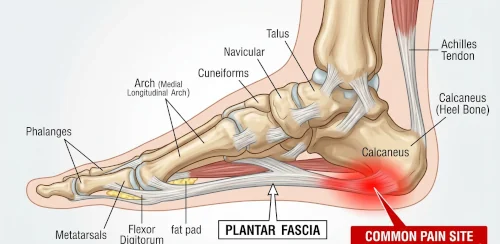
The plantar fascia is a thick, fibrous band of tissue that runs along the bottom of your foot from the heel bone to the base of the toes. It supports the arch and absorbs impact with every step. When this tissue is repeatedly overloaded — through running, long hours on your feet, poor footwear, tight calves, high arches, flat feet, or sudden weight gain — tiny tears form and the tissue becomes irritated [Mayo Clinic, 2023].
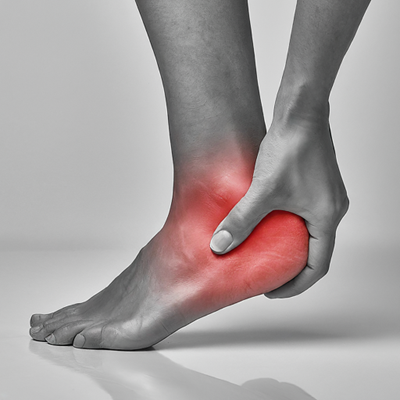
The classic sign is a stabbing pain in the heel with your first steps in the morning, or after sitting for a long time. The pain usually eases after a few minutes of walking, then can come back after prolonged standing or late in the day [Mayo Clinic, 2023].
Heel pain can have other causes too — Achilles tendinitis, a stress fracture of the heel bone, nerve entrapment, or inflammatory arthritis — which is why getting a proper diagnosis matters before committing to any home remedy [AAOS OrthoInfo, 2022].
What the research really says about essential oils for heel pain
It’s important to be upfront: the National Center for Complementary and Integrative Health (NCCIH), part of the NIH, states that aromatherapy and essential oils are being studied for a range of conditions but that the evidence for most uses remains limited [NCCIH, 2023]. For plantar fasciitis specifically, the major clinical guidelines from the American Academy of Orthopaedic Surgeons and the American Academy of Family Physicians do not include essential oils at all — their recommendations center on stretching, supportive footwear, ice, night splints, NSAIDs, and physical therapy [AAOS OrthoInfo, 2022][Trojian & Tucker, AAFP 2019].
Where the evidence is strongest: Lavender has been tested in several randomized controlled trials for acute pain in other contexts. A 2024 double-blind RCT in 100 women after cesarean delivery found that inhaled lavender essential oil reduced pain and anxiety compared with placebo [Abbasijahromi et al., 2024]. An earlier trial in people with knee osteoarthritis found lavender aromatherapy massage reduced pain scores more than massage with a neutral carrier oil alone [Nasiri et al., 2018]. NCCIH summarizes the broader picture as: it is still unclear whether lavender aromatherapy has durable benefits for most types of pain, though some people report improved quality of life with it [NCCIH, 2023].
Where the evidence is weakest: Direct evidence on peppermint, frankincense, ginger, or lemongrass essential oils for heel or foot pain is essentially absent. Some related findings exist — for example, a small placebo-controlled trial of topical frankincense (Boswellia serrata) extract reduced pain and improved function in knee osteoarthritis [Haghighi et al., 2023] — but extrapolating from a knee to a plantar fascia is a stretch, not a proof.
The honest bottom line: think of essential oils on your plantar fascia as a plausible comfort measure with limited direct evidence, not a proven treatment. That framing helps you use them sensibly and keeps expectations realistic.
Five essential oils worth considering for plantar fasciitis
The oils below were chosen because they have at least some supportive evidence for related kinds of pain, a reasonable safety profile when properly diluted, and a clear mechanism (aroma, menthol cooling, or anti-inflammatory action) that plausibly applies to a sore foot. You can use one alone or blend two or three.
1. Lavender (Lavandula angustifolia)
Evidence level: Moderate for pain in other conditions; limited for plantar fasciitis specifically.
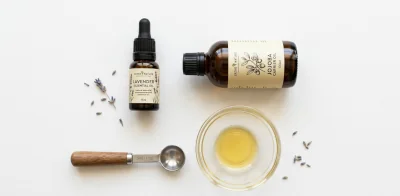
Lavender is the most-studied essential oil for pain and anxiety. Multiple RCTs show that inhaled lavender can modestly reduce acute pain (e.g., after cesarean delivery, inguinal hernia surgery, and during knee osteoarthritis massage) [Abbasijahromi et al., 2024][Nasiri et al., 2018]. Its main active compounds, linalool and linalyl acetate, have mild sedative and anti-anxiety effects that may help people relax into stretching or sleep through morning stiffness. Learn more about the plant’s broader traditional uses in our overview of lavender benefits.
Practical use: 3-6 drops per tablespoon of carrier oil for a 1-3% dilution; massage into the arch and heel before bed or after icing.
2. Peppermint (Mentha × piperita)
Evidence level: Limited for musculoskeletal pain; some evidence for topical tension headache relief.
Peppermint oil’s main active compound is menthol, which triggers cold-sensing receptors in the skin. That’s why it feels cooling — a sensation that can temporarily mask the dull ache of an inflamed fascia. NCCIH notes that peppermint oil applied topically may relieve tension headaches, though evidence for other pain uses is still small [NCCIH, 2025]. Read more in our guide to peppermint health benefits.
Practical use: peppermint is potent — stick to 1-2% dilution (3-6 drops per tablespoon of carrier). Do not use on infants or small children; inhaled menthol can cause serious breathing problems in that age group [NCCIH, 2025].
3. Frankincense (Boswellia serrata / Boswellia carterii)
Evidence level: Early but promising for joint pain; extrapolation needed for plantar fasciitis.
Frankincense resins contain boswellic acids, particularly AKBA, which inhibit 5-lipoxygenase and reduce pro-inflammatory signaling in laboratory studies. A 2023 randomized, double-blind, placebo-controlled trial in 70 patients with knee osteoarthritis found that a topical oily solution of frankincense extract reduced pain and improved function over four weeks [Haghighi et al., 2023]. This is suggestive — not definitive — for chronic inflammatory foot pain.
Practical use: 2-3% dilution (6-9 drops per tablespoon of carrier) worked into the heel once or twice daily.
4. Ginger (Zingiber officinale)
Evidence level: Moderate for oral ginger in osteoarthritis; limited for the topical essential oil.
Most ginger research has studied dried ginger powder or extract taken by mouth in knee osteoarthritis, not the essential oil applied to the foot. Still, the active compounds (gingerols and shogaols) have demonstrated anti-inflammatory activity in laboratory work, and some people find the warming sensation of a diluted ginger foot massage comforting. Consider it a reasonable option, not a proven one.
Practical use: 1-2% dilution; can be combined with lavender to soften the warming effect.
5. Lemongrass (Cymbopogon citratus)
Evidence level: Limited; largely traditional and laboratory-based.
Lemongrass contains citral and geraniol, which have demonstrated anti-inflammatory activity in cell and animal studies. Direct human evidence for musculoskeletal pain is sparse. Its bright, citrus-herbaceous scent blends well with lavender and can lift the sensory experience of a foot massage after a long day on your feet.
Practical use: 1-2% dilution. Lemongrass can cause skin irritation in sensitive people — always patch-test first.
Wintergreen oil: a safety warning, not a recommendation
Many online articles about essential oils for plantar fasciitis enthusiastically recommend wintergreen oil because it contains methyl salicylate, a natural aspirin-like compound. This advice needs a serious reality check.
Wintergreen oil is 85-99% methyl salicylate, one of the most toxic compounds found in any commonly sold essential oil. As little as a single teaspoon (about 5 mL) can cause fatal salicylate poisoning in a small child, and 4-8 mL has been reported as the toxic dose range in adults [MedlinePlus / A.D.A.M., 2023][Drugs.com monograph, 2026]. Methyl salicylate is also absorbed through intact skin, meaning over-application of topical products has caused serious salicylate poisoning and, in one widely reported case in 2007, the death of a teenage athlete [MedlinePlus / A.D.A.M., 2023].
The practical takeaway: wintergreen oil is not recommended for routine home use on plantar fasciitis. Other oils on this list have a much better safety profile and comparable comfort benefits. If you already use a commercial muscle rub containing methyl salicylate (such as some sports balms), follow label directions strictly, never layer it with heat, never use it on broken skin, and keep it well away from children and pets.
How to use essential oils safely on your feet
Essential oils are highly concentrated — a single drop can represent the extract from a large handful of plant material. Using them neat (undiluted) on the skin is the most common way people get rashes, burns, and lasting sensitization. Proper dilution in a carrier oil is non-negotiable [NAHA Safety Information][Tisserand Institute, 2024].
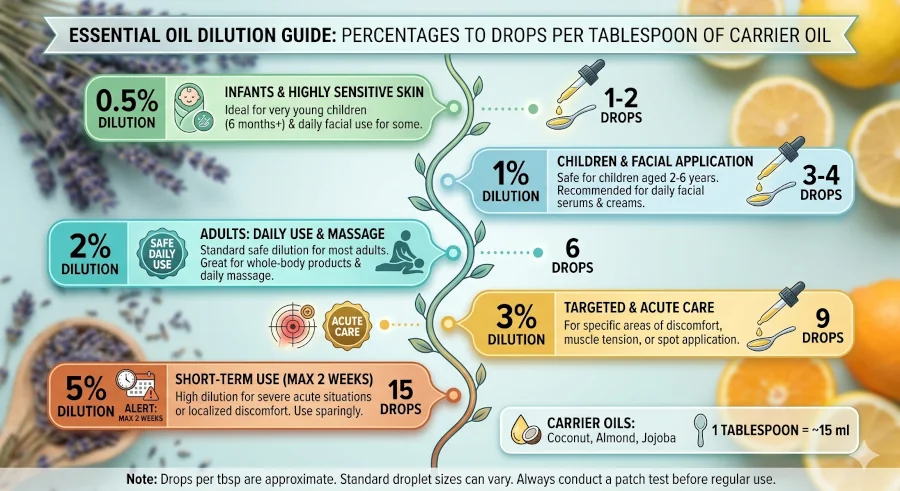
Dilution guide (per 1 tablespoon / 15 mL of carrier oil)
| Dilution | Who it’s for | Drops per 1 tbsp (15 mL) carrier oil |
| 0.5% | Elderly, frail skin, sensitive skin, chronic illness | 1-2 drops |
| 1% | First-time users, pregnant women (only after clinician OK), facial use | 3 drops |
| 2% | Standard adult daily use for body massage | 6 drops |
| 3% | Acute short-term use on a small area (e.g., painful heel) | 9 drops |
| 5% | Maximum for short-term, localized musculoskeletal pain in healthy adults | 15 drops |
Source: adapted from NAHA dilution guidelinesand Tisserand Institute dilution ranges.
Good carrier oils
Sweet almond, jojoba, fractionated coconut, and grapeseed oil all work well. Skip mineral oil and petroleum jelly — they sit on the skin rather than carrying the essential oil in. Warming the blend between your palms first helps it absorb faster.
Method 1: Gentle foot massage
Mix your diluted oil in a small glass bowl or rollerball bottle. Sit down, place the affected foot on your opposite knee, and use your thumbs to work the oil slowly into the arch, heel, and back toward the ankle for 5-10 minutes. This is often most useful before the first stretches of the morning or after icing in the evening. Regular massage therapy itself has evidence for musculoskeletal discomfort — see our overview of regular massage therapy and its benefits.
Method 2: Warm foot soak
Fill a basin with warm (not hot) water. Pre-dilute 5-8 drops of essential oil in a tablespoon of carrier oil or an unscented bubble bath, then add the mixture to the water — essential oils do not dissolve directly in water and can cling to skin as pure droplets if you skip this step. Soak for 15-20 minutes. This is a good ritual for evening wind-down, especially if you have been on your feet all day.
Method 3: Warm compress
Add 2-3 drops of essential oil to a tablespoon of carrier oil, apply to the heel, then cover with a warm (not hot) damp cloth for 15 minutes. Useful for the dull ache that lingers in the evening — but not for the first 48-72 hours of an acute flare-up, when ice is more helpful than heat.
Always patch-test first
Before any new oil or blend, put a small dab of the diluted mixture on the inside of your forearm. Wait 24 hours. If there is no redness, itching, or bumps, it’s reasonable to use on your foot. Stop immediately if irritation develops.
The first-line treatments that actually work
If you only do one set of things for plantar fasciitis, do these. More than 90% of people recover with basic conservative care within about ten months, and the core measures below are what clinical guidelines consistently recommend [AAOS OrthoInfo, 2022][Trojian & Tucker, AAFP 2019][StatPearls, 2024].
- Stretch your calves and the plantar fascia. Stretching is the single most effective self-care intervention. The plantar fascia stretch — pulling your toes back toward your shin, holding for 10 seconds, 20 times per foot — is best done before standing in the morning [AAOS OrthoInfo, 2022].
- Ice the heel. Roll your foot over a frozen water bottle for 15-20 minutes after activity, three to four times a day. This reduces inflammation and provides genuine, evidence-supported pain relief [AAOS OrthoInfo, 2022].
- Wear supportive shoes. Avoid going barefoot on hard floors. Choose shoes with a cushioned heel and firm arch support; replace worn-out athletic shoes. Over-the-counter heel cups and cushioned insoles help many people; custom orthotics are an option if those aren’t enough [AAOS OrthoInfo, 2022].
- Reduce pounding activities. Swap running and jumping for cycling, swimming, or the elliptical while the fascia heals.
- Consider a night splint. Because the fascia tightens overnight, a dorsiflexion splint that keeps the ankle neutral while you sleep can meaningfully reduce morning pain [AAOS OrthoInfo, 2022].
- Short courses of NSAIDs. Over-the-counter ibuprofen or naproxen can help with pain and inflammation in the short term. Do not use for more than one month without checking with your doctor [AAOS OrthoInfo, 2022].
- See a physical therapist. A PT can tailor a stretching and strengthening program, use manual therapy, and identify the specific movement patterns that keep the fascia irritated. A 2025 evidence-based review placed physical therapy and structured stretching among the highest-value early interventions [Comprehensive PF Review, 2025].
Essential oils slot in around these core measures — not in place of them. If you have a broader pattern of aches and pains alongside your heel, our guide on chronic pain management approaches and overview of musculoskeletal disorders cover the bigger picture.
Who should avoid essential oils on their feet
Essential oils are not risk-free, and some people should skip them or only use them under clinician guidance [NAHA Safety Information][NCCIH, 2023]:
- Pregnant or breastfeeding women. Many essential oils (including clary sage, rosemary, and wintergreen) are specifically cautioned against in pregnancy. Talk to your OB or midwife before using any oil topically or by inhalation.
- Infants and young children. Peppermint, eucalyptus, camphor, and wintergreen can trigger dangerous breathing reactions in children under 6. Keep all oils out of reach.
- People with asthma or severe allergies. Inhaled essential oils can trigger bronchospasm in sensitive airways. Start with a very small exposure and stop if you feel tightness or wheeze.
- People taking blood thinners, diabetes medication, or other prescription drugs — some topical oils (particularly methyl-salicylate-containing products like wintergreen) can interact with warfarin and other anticoagulants. Ask your pharmacist.
- Anyone with diabetes-related neuropathy, open wounds, athlete’s foot, or peripheral vascular disease affecting the feet — do not massage warming or irritating oils into tissue that cannot feel heat or a developing burn.
- People with known allergies to any plant in the oil’s family. Patch-test first, every time, with a new oil.
When to see a doctor (red-flag symptoms)
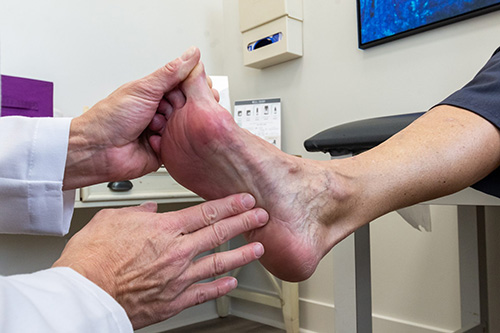
Most plantar fasciitis is benign and gets better with time and self-care, but heel pain can occasionally signal something more serious. Seek medical care promptly if you have any of the following:
- Severe pain that prevents you from bearing weight.
- Sudden onset of heel pain following a fall, a “pop” sensation, or an obvious injury (possible fracture or fascial rupture).
- Numbness, tingling, or burning in the foot (possible nerve entrapment or neuropathy).
- Swelling, redness, warmth, or fever in the foot (possible infection, deep vein thrombosis, or inflammatory arthritis).
- Pain that wakes you at night and is unrelated to position.
- Heel pain lasting more than 6-8 weeks despite consistent self-care.
- Diabetes, peripheral vascular disease, or a weakened immune system, paired with any new foot pain or skin change.
Your primary-care doctor can make the initial diagnosis and refer you to a podiatrist or physical therapist if needed. Imaging (X-ray, MRI, or ultrasound) is not routinely required but may be used to rule out other causes [AAOS OrthoInfo, 2022].
| Health Disclaimer: The information in this article is for educational purposes only and is not a substitute for professional medical advice, diagnosis, or treatment. Essential oils are not approved by the U.S. Food and Drug Administration to diagnose, treat, cure, or prevent any disease, including plantar fasciitis. Always talk with a qualified healthcare professional, such as your doctor, podiatrist, or physical therapist, before starting any new remedy — especially if you are pregnant, breastfeeding, have a chronic health condition, take prescription medication, or are considering using essential oils on a child. If your heel pain is severe, sudden, accompanied by swelling, numbness, fever, or follows an injury, seek medical care right away rather than self-treating. |
Frequently Asked Questions
Can I put essential oils directly on my heel without a carrier oil?
No. Applying undiluted essential oils — a practice sometimes called “neat” use — is the most common cause of essential-oil skin reactions, which can range from redness and burning to long-term sensitization. Always dilute in a carrier oil (sweet almond, jojoba, or fractionated coconut) at 1-3% for daily use. Wintergreen oil in particular should never be used neat because methyl salicylate absorbs through intact skin and can cause systemic toxicity [MedlinePlus, 2023].
How long before I notice any benefit from a lavender foot massage?
If it’s going to help, you’ll usually notice a modest easing of pain and tension within the first session — mostly through muscle relaxation and the calming effect of the scent. For any cumulative effect on recovery, you need to pair the massage with the mechanical basics (stretching, supportive shoes, reduced pounding). If you see no change at all after two weeks, the oil isn’t adding value for you.
Can I blend several essential oils together?
Yes, and a common heel-pain blend might be 2 drops lavender + 1 drop peppermint + 1 drop frankincense in a tablespoon of carrier oil (≈ 1.5% total dilution). Keep the total number of essential-oil drops within the dilution guide in this article. More oils do not mean more benefit — they mean more variables if you react.
Is a foot soak with Epsom salt better than one with essential oils?
They do different things. Warm Epsom salt soaks may ease muscle soreness via warmth and relaxation (the magnesium absorption claim is not well supported). Essential oil soaks add a sensory and possibly mild pain-relieving component. You can combine them: dissolve 1/2 cup Epsom salt in a warm foot bath, then add your pre-diluted essential-oil blend.
What about clove or cinnamon oil — they’re anti-inflammatory, right?
Both contain active compounds with anti-inflammatory activity in laboratory studies, but they’re also potent skin irritants. Clove is used in very low dilution (≤ 0.5%) for dental pain remedies, not broad foot massage. Cinnamon bark oil can cause significant skin burns. They are not good first-line choices for plantar fasciitis self-care.
If my heel feels better, can I stop stretching?
No — this is the most common reason plantar fasciitis recurs. Stretching tight calves and the plantar fascia addresses the underlying mechanical cause. Keep a short daily stretching routine going for at least 2-3 months after your last symptoms and indefinitely if you’re on your feet a lot or return to running.
References
- Drugs.com. Wintergreen — Uses, Benefits & Dosage (professional monograph). Updated 2026. → View source
- American Academy of Orthopaedic Surgeons (AAOS) OrthoInfo. Plantar Fasciitis and Bone Spurs. Updated 2022. → View source
- Mayo Clinic. Plantar Fasciitis — Symptoms and Causes. Last reviewed 2023. → View source
- Mayo Clinic. Plantar Fasciitis — Diagnosis and Treatment. Last reviewed 2023. → View source
- Trojian T, Tucker AK. Plantar Fasciitis. American Family Physician. 2019;99(12):744-750. → View source
- Buchanan BK, Sina RE, Kushner D. Plantar Fasciitis. In: StatPearls. Treasure Island (FL): StatPearls Publishing; updated 2024. → View source
- Hassan N, et al. Comprehensive Review and Evidence-Based Treatment Framework for Optimizing Plantar Fasciitis Diagnosis and Management. PMC. 2025. → View source
- National Center for Complementary and Integrative Health (NCCIH). Aromatherapy. Last updated 2023. → View source
- National Center for Complementary and Integrative Health (NCCIH). Lavender: Usefulness and Safety. Last updated 2024. → View source
- National Center for Complementary and Integrative Health (NCCIH). Peppermint Oil: Usefulness and Safety. Last updated May 2025. → View source
- National Cancer Institute (NCI). Aromatherapy With Essential Oils (PDQ) — Patient Version. → View source
- Abbasijahromi A, et al. Aromatherapy Using Lavender Oil Effectiveness on Pain and Anxiety After C-Section: A Randomized Controlled Trial. Journal of Epidemiology and Global Health. 2024. → View source
- Nasiri A, Mahmodi MA. Aromatherapy massage with lavender essential oil and the prevention of disability in ADL in patients with osteoarthritis of the knee: A randomized controlled clinical trial. Complementary Therapies in Clinical Practice. 2018;30:116-121. → View source
- Haghighi M, et al. Evaluation of the effectiveness of topical oily solution containing frankincense extract in the treatment of knee osteoarthritis: a randomized, double-blind, placebo-controlled clinical trial. BMC Research Notes. 2023. → View source
- National Association for Holistic Aromatherapy (NAHA). Safety Information. → View source
- Tisserand Institute. Dilution for Essential Oils. Updated 2024. → View source
- MedlinePlus / A.D.A.M. Methyl salicylate overdose. Last reviewed 2023. → View source
