
Nasturtium is a cheerful, peppery garden flower you can eat, and it does contain a compound that kills bacteria in a test tube. But it is not a replacement for antibiotics. The nasturtium plant has real research behind it for one narrow use, helping prevent repeat urinary tract infections, and almost all of that research tested a licensed tablet that combines nasturtium with horseradish root, not the leaves from your garden [WebMD/TRC, 2026] [Albrecht, 2007].
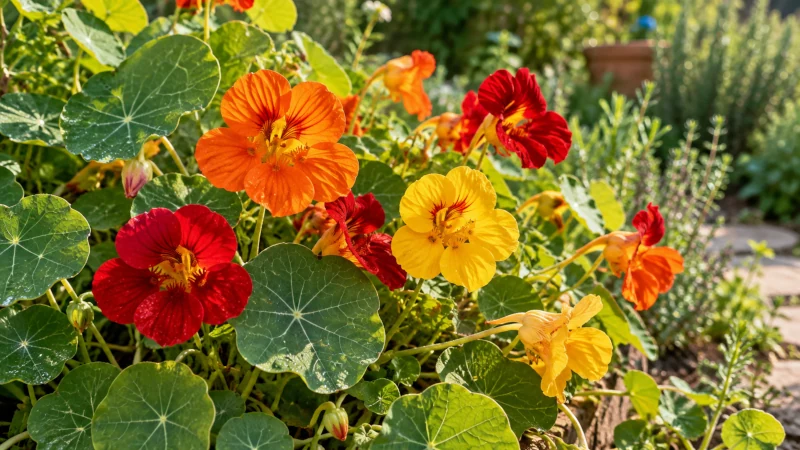
That still puts it ahead of most folk remedies, and as a salad green it earns its garden space on flavor alone.
What the nasturtium plant is
Garden nasturtium is Tropaeolum majus, an annual in the Tropaeolaceae family. Kew’s botanical database lists it as native to Peru and known mostly as a cultivated plant [Kew POWO, 2026]. It sits in the same broad plant order as cabbage and mustard, which explains its sharp, cress-like bite.
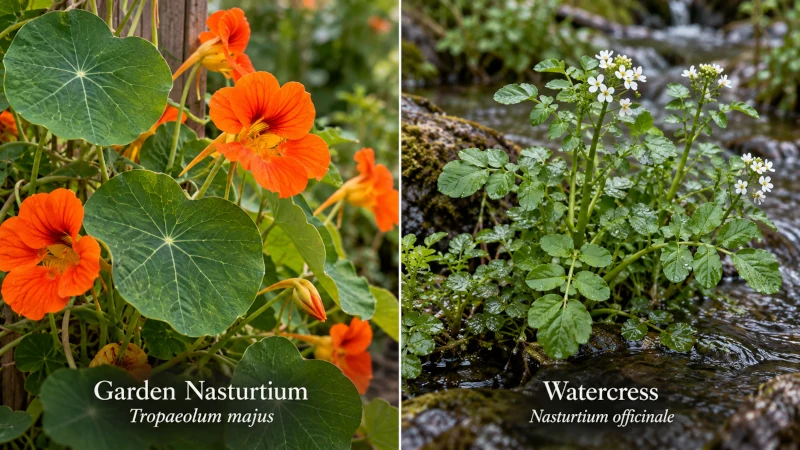
One naming trap catches a lot of people. The botanical genus Nasturtium is watercress (Nasturtium officinale), a completely different plant. If you are reading a label or a study, check the Latin name: you want Tropaeolum majus, sometimes sold as Indian cress or capuchina.
| Quick facts | |
| Scientific name | Tropaeolum majus L. |
| Other names | Indian cress, garden nasturtium; capucine (French), capuchina (Spanish) |
| Native range | Peru; grown worldwide as an ornamental [Kew POWO, 2026] |
| Edible parts | Leaves, flowers, and unripe green seeds [Aguilera-Angel, 2025] |
| Key active compound | Benzyl isothiocyanate (a mustard oil), released when the plant is cut or chewed |
Where the “natural antibiotic” idea comes from
Nasturtium stores a sulfur compound called benzyl glucosinolate (also known as glucotropaeolin). On its own, it does very little. When you chop or chew the leaves, a plant enzyme called myrosinase breaks it down into benzyl isothiocyanate, or BITC, the mustard oil that gives nasturtium its bite and most of its antibacterial activity [Aguilera-Angel, 2025].
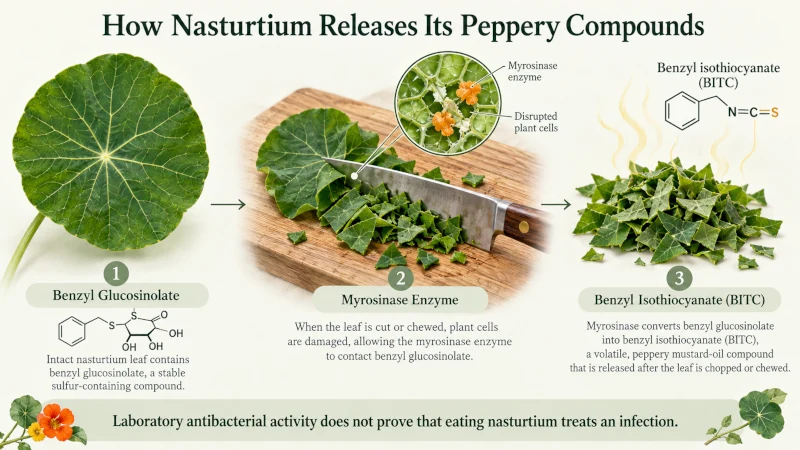
Lab work shows the effect depends on that enzyme step. In a 2025 study, a nasturtium leaf extract slowed the growth of E. coli, Salmonella, and Enterococcus faecalis in culture only after myrosinase was added back; without it, the extract did nothing [Aguilera-Angel, 2025]. The same researchers note that BITC breaks down readily with heat and long processing, which matters if you plan to cook with the plant.
Your body does absorb it. In a human feeding study, breakdown products of BITC showed up in blood and urine after people ate nasturtium, with urine levels peaking about four hours later [Platz, 2013]. That urinary route is why researchers became interested in bladder infections.
Here is the limit: killing bacteria in a dish, or finding a compound in urine, does not show that eating nasturtium cures an infection. Only human trials can answer that, and they are few.
What research on the nasturtium plant shows
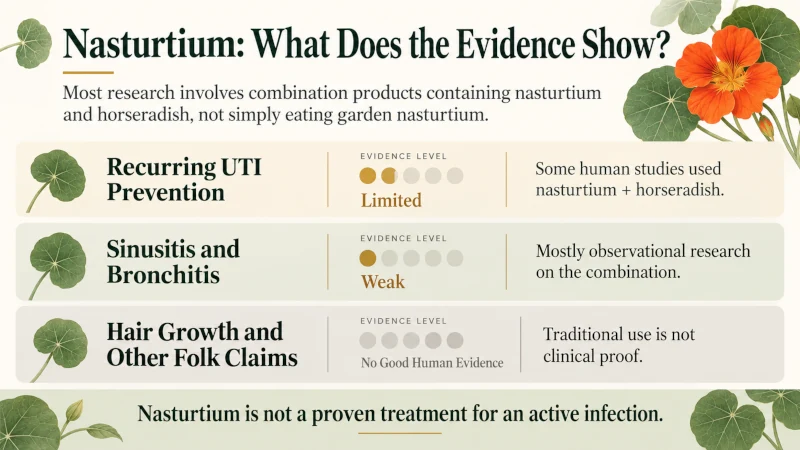
WebMD’s natural-medicines monograph, licensed from Therapeutic Research Center, rates every medical use of nasturtium as having insufficient evidence, while noting early research on a nasturtium and horseradish product for recurring UTIs and airway infections [WebMD/TRC, 2026].
Recurring urinary tract infections
This is the strongest part of the case. In a randomized, double-blind German trial, 174 adults with chronically recurring UTIs were enrolled and given either a nasturtium-horseradish tablet (Angocin Anti-Infekt N) or a placebo. Among people who completed the study as planned, the herbal group averaged 0.43 new infections over the study period versus 0.77 with placebo [Albrecht, 2007], a statistically significant difference [Kassner, 2024].
That result is encouraging, but it comes from one trial, and it was a per-protocol analysis, which counts only people who stuck with the plan and tends to make treatments look better than an all-comers analysis would.
Later studies point the same way but are weaker by design:
- A 2024 analysis of German medical records compared 2,277 people prescribed the tablet for a UTI with 11,385 matched people given antibiotics. The herbal group had fewer recurrences within a year (10.1% vs 14.3% for sporadic recurrence) [Kassner, 2024]. It was not randomized, had no urine-culture data, and was funded by the manufacturer, with three authors employed by the company [Kassner, 2024].
- A small 2024 study followed 43 people with nerve-related bladder dysfunction who took the product for at least a year. The share with three or more UTIs a year dropped from 58.1% to 23.3% [Bieri, 2024]. There was no comparison group, so some of that change could reflect other factors.
Where that leaves you: there is limited but real evidence that this specific combination product may lower the number of repeat infections. There is no good evidence that it treats an active infection as well as antibiotics, and none that eating nasturtium salads does either.
Urinary symptoms aren’t always infection, either. In older men, an enlarged prostate is a common cause of frequent urination, a separate problem our guide to stinging nettle and prostate-related urinary symptoms covers.
Sinusitis, bronchitis, and colds
The respiratory evidence is mostly observational. In a German study of 1,649 patients across 251 practices, people with acute sinusitis, acute bronchitis, or a UTI were treated either with the nasturtium-horseradish product or with standard antibiotics. Symptom improvement was comparable for sinusitis and bronchitis [Goos, 2006]. For UTIs, though, the herbal group did measurably worse: the confidence interval for the difference fell entirely on the side of antibiotics [Goos, 2006].
A follow-up study in 858 children and teens aged 4 to 18 reported similar symptom reductions with the herbal product and with antibiotics for all three conditions [Goos, 2007]. Neither study was randomized. Doctors chose who got which treatment, so sicker patients may have been steered toward antibiotics, which can make the herbal option look better than it is.
One placebo-controlled trial tested the combination for preventing respiratory infections [Fintelmann, 2012]; the WebMD/TRC review summarizes it as early evidence that infections may happen less often [WebMD/TRC, 2026]. We could not access the full abstract, so we are not quoting its figures.
Worth knowing: most acute sinusitis and bronchitis is viral and clears on its own, so “as good as antibiotics” can partly mean “neither did much.” If you want food-based support during a cold, our evidence-graded guide to foods for colds and flu is a better starting point than a nasturtium tea.
The catch: nearly every study used nasturtium plus horseradish
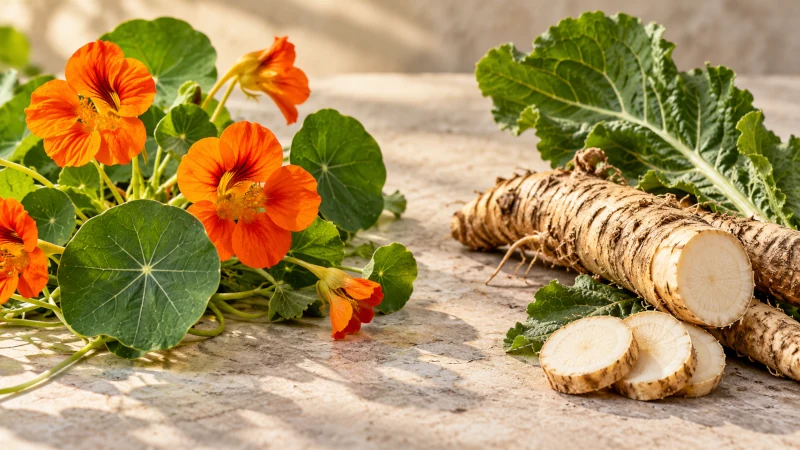
Horseradish root contains its own mustard oils, and the tablets studied contain both plants in fixed amounts. That means the trials can’t tell you how much of any benefit comes from nasturtium alone. It also means the results don’t transfer to homemade teas, tinctures, or salads, where the dose and the amount of active BITC are unknown and may be destroyed by heat [Aguilera-Angel, 2025].
Claims that don’t hold up
Older herbal books, and many websites that copy them, credit nasturtium with much more. We found no human evidence for any of these:
- “It has no side effects and causes no allergies.” Not true. Stomach upset, skin irritation, and allergic skin reactions are documented [WebMD/TRC, 2026] [Diamond, 1990] [PharmaWiki, 2026].
- Hair regrowth and wound healing. These rest on tradition and the plant’s sulfur content, not trials. If hair loss is your concern, our rosemary guide covers one of the few herbs with a human trial behind it.
- Regulating menstrual cycles or acting as an aphrodisiac. Folklore only. No studies support either.
Eating nasturtium: flavor, nutrition, and vitamin C
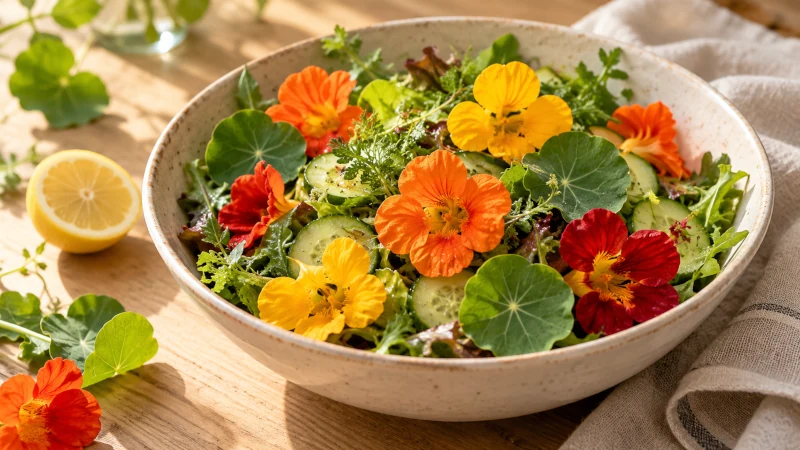
This is where the plant shines. The leaves, flowers, and green seeds are all edible and bring a peppery, mustard-like kick to salads and sauces [Aguilera-Angel, 2025]. Young leaves are milder; flowers are sweet at the base and spicy at the tip. Pickled green seed pods are a classic substitute for capers.
Nasturtium is often described as packed with vitamin C, but the numbers vary a lot by plant part and growing conditions. One study cited a value of about 71.5 mg per 100 g of flowers, while leaves measured by the same research group came in near 31 mg per 100 g (unpublished data) [Aguilera-Angel, 2025]. A handful of flowers in a salad adds a little vitamin C; it won’t replace fruits and vegetables like lemons, citrus, or peppers. The 285 mg per 100 g figure that circulates online could not be traced to a verifiable source.
A few practical tips:
- Pick from plants you grew or know were not sprayed. Florist and garden-center flowers are often treated with pesticides not meant for food.
- Use them raw or add at the end of cooking. Heat dulls both flavor and BITC [Aguilera-Angel, 2025].
- Toss leaves into a green salad with a lemony dressing, blend them into pesto, or float flowers on soup or a grain bowl.
How to use nasturtium sensibly
As food: normal culinary amounts are the lowest-risk way to enjoy the plant. As medicine: no safe dose of homemade nasturtium preparations has been established [WebMD/TRC, 2026]. In countries where the nasturtium-horseradish tablet is licensed, such as Germany and, since 2018, Switzerland [Kassner, 2024] [PharmaWiki, 2026], follow the package directions and your pharmacist’s advice. On skin: nasturtium can irritate, especially with repeated use [WebMD/TRC, 2026], so skip homemade scalp rubs and alcohol tinctures.
Most important: don’t use nasturtium to put off treatment for an active infection. If you get repeat UTIs and want to try a non-antibiotic prevention strategy, that is a good conversation to have with your doctor, who can confirm the diagnosis with a urine test and help you weigh the options.
Side effects, interactions, and who should avoid it
Taken by mouth, nasturtium is rated “possibly safe,” and the combination product has been used for up to three months. It can still cause stomach upset, and the WebMD/TRC monograph lists kidney damage as a possible side effect [WebMD/TRC, 2026]. Swiss pharmacist guidance adds nausea, heartburn, bloating, and diarrhea from mucous-membrane irritation, suggests taking products after meals with plenty of fluid, and notes rare allergic reactions [PharmaWiki, 2026]. On the skin, it can cause irritation and allergic contact dermatitis, particularly in people who handle the plant a lot [WebMD/TRC, 2026] [Diamond, 1990].

Skip medicinal nasturtium if you:
- have kidney disease, since it may make it worse [WebMD/TRC, 2026]
- have stomach or intestinal ulcers [WebMD/TRC, 2026]
- are pregnant or breastfeeding, because there is not enough safety information [WebMD/TRC, 2026]
- are buying for a child. WebMD/TRC rates oral nasturtium as likely unsafe for children, and PharmaWiki also says it is not suitable for them [WebMD/TRC, 2026] [PharmaWiki, 2026]. German studies did give the combination product to children aged 4 and up [Goos, 2007], so sources disagree; talk to your child’s doctor rather than deciding at home.
- have reacted to mustard, horseradish, or similar sharp-tasting plants
Interactions: WebMD/TRC reports no known drug interactions [WebMD/TRC, 2026], while PharmaWiki says the mustard oils may lower alcohol tolerance and advises not combining the products with alcohol [PharmaWiki, 2026]. “No known interactions” mostly reflects how little this has been studied, so tell your doctor or pharmacist if you take it alongside prescription medicines, especially antibiotics or drugs that affect the kidneys.
When to see a doctor instead
See a healthcare professional for any UTI symptoms: burning when you urinate, needing to go often, blood in your urine, or pressure in your lower belly. Get care promptly if you have fever and chills, pain in your side or lower back, or nausea and vomiting, since these can signal a kidney infection [CDC, 2026]. A baby under 3 months with a fever of 100.4°F (38°C) or higher needs medical attention right away [CDC, 2026].
For sinus symptoms, the CDC advises seeing a provider for severe headache or facial pain, symptoms that last more than 10 days without improving, symptoms that get worse after starting to get better, a fever lasting longer than 3 to 4 days, or several sinus infections in a year [CDC, 2026b].
If you are already on antibiotics, don’t stop them to switch to an herbal product.
| HEALTH DISCLAIMER: This article is for general education and is not a substitute for advice, diagnosis, or treatment from a qualified healthcare professional. Nasturtium is not a proven treatment for any infection. If you have symptoms of a urinary, sinus, or chest infection, are pregnant or breastfeeding, have kidney disease or ulcers, take prescription medicines, or are considering an herbal product for a child, talk with your doctor or pharmacist before using nasturtium medicinally. |
Frequently Asked Questions
Is the nasturtium plant safe to eat?
Yes, in ordinary food amounts the leaves, flowers, and green seeds are commonly eaten [Aguilera-Angel, 2025]. Eat only plants that haven’t been sprayed, and go easy at first if you have a sensitive stomach, since the mustard oils can irritate.
Can nasturtium cure a urinary tract infection?
No good evidence shows it can treat an active UTI as well as antibiotics; in one large comparison it did worse [Goos, 2006]. A nasturtium-horseradish tablet may help reduce repeat infections [Albrecht, 2007], but get a diagnosis first.
Is nasturtium the same as watercress?
No. Garden nasturtium is Tropaeolum majus. Watercress belongs to the genus Nasturtium (Nasturtium officinale). They taste similar because both contain mustard oils, but they are different plants.
Does nasturtium make hair grow?
There is no human research showing that. The claim comes from older herbal books. Nasturtium can also irritate skin, so homemade scalp rubs are not a good idea [WebMD/TRC, 2026].
Can I take nasturtium with antibiotics?
No interactions are formally documented, but the research is thin [WebMD/TRC, 2026]. Don’t replace a prescribed antibiotic with nasturtium, and check with your pharmacist before combining them.
Why does nasturtium taste peppery?
Cutting or chewing the plant releases benzyl isothiocyanate, a mustard oil related to the compounds in horseradish and mustard [Aguilera-Angel, 2025].
References
- Aguilera-Angel E-Y, Ballesteros-Vivas D, Vera-Bravo R, et al. Chemical profiling, antioxidant, and antibacterial properties of Tropaeolum majus L. extract as a functional food ingredient. Front Nutr. View source
- Albrecht U, Goos KH, Schneider B. A randomised, double-blind, placebo-controlled trial of a herbal medicinal product containing Tropaeoli majoris herba (Nasturtium) and Armoraciae rusticanae radix (Horseradish) for the prophylactic treatment of patients with chronically recurrent lower urinary tract infections. View source
- Bieri AM, Wöllner J, Pannek J, Krebs J. Effects of a prophylactic treatment with horseradish root and nasturtium herb on urinary tract infections in individuals with chronic neurogenic lower urinary tract dysfunction: View source
- Centers for Disease Control and Prevention. Urinary Tract Infection Basics. View source
- Centers for Disease Control and Prevention. Sinus Infection Basics. View source
- Diamond SP, Wiener SG, Marks JG. Allergic contact dermatitis to nasturtium. View source
- Fintelmann V, Albrecht U, Schmitz G, Schnitker J. Efficacy and safety of a combination herbal medicinal product containing Tropaeoli majoris herba and Armoraciae rusticanae radix for the prophylactic treatment of patients with respiratory tract diseases: a randomised, prospective, double-blind, placebo-controlled phase III trial. View source
- Goos KH, Albrecht U, Schneider B. Efficacy and safety profile of a herbal drug containing nasturtium herb and horseradish root in acute sinusitis, acute bronchitis and acute urinary tract infection in comparison with other treatments in the daily practice: View source
- Goos KH, Albrecht U, Schneider B. On-going investigations on efficacy and safety profile of a herbal drug containing nasturtium herb and horseradish root in acute sinusitis, acute bronchitis and acute urinary tract infection in children in comparison with other antibiotic treatments. View source
- Kassner N, Wonnemann M, Ziegler Y, Vahlensieck W, Kranz J, Kostev K. Effectiveness of a combination of nasturtium herb and horseradish root (Angocin Anti-Infekt N) compared to antibiotics in managing acute and recurrent urinary tract infections: a retrospective real-world cohort study. View source
- PharmaWiki. Kapuzinerkresse (Tropaeolum majus). [German] View source
- Platz S, Kühn C, Schiess S, et al. Determination of benzyl isothiocyanate metabolites in human plasma and urine by LC-ESI-MS/MS after ingestion of nasturtium (Tropaeolum majus L.). Anal Bioanal Chem. View source
- Royal Botanic Gardens, Kew. Tropaeolum majus L. Plants of the World Online. View source
- WebMD / Therapeutic Research Center. Nasturtium: Uses, Side Effects, and More. View source


