
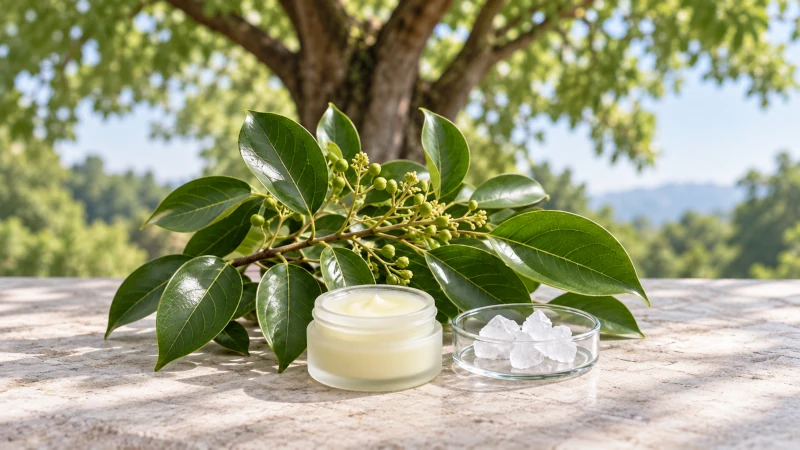
If you are here because a jar of chest rub or a muscle cream lists camphor, here is the short version: camphor, the aromatic compound distilled from the camphor tree, has a few modest but real roles when you rub it on the skin or inhale it — and one safety rule that matters more than any benefit. Never swallow it. Camphor is toxic when taken by mouth, and even small amounts can trigger seizures [WebMD, 2025]. Everything else worth knowing about the camphor tree sits on top of that fact.
This guide covers what camphor can and cannot do, how to use it without harming yourself or your children, and when a symptom means it is time to stop self-treating and get medical help.
What the camphor tree actually is
The camphor tree (Camphora officinarum, long classified as Cinnamomum camphora) is a large evergreen in the laurel family, native to warm parts of East Asia including China, Taiwan, Japan, and Korea. It grows to roughly 20–30 meters (about 65–100 feet), with glossy leaves that smell strongly of camphor when crushed, small white flowers, and clusters of black, pea-sized berries [Oregon State University]. If you live in Florida or parts of Australia, you may know it less as a medicine tree and more as a nuisance: it spreads aggressively and is listed as an invasive species in both places [UF/IFAS].
Camphor itself is a white, crystalline substance with a sharp, medicinal aroma, distilled from the tree’s wood and leaves — though most camphor sold today is made synthetically [WebMD, 2025]. That aroma, and the odd warm-then-cool sensation camphor produces on skin, is the whole basis of how it works.

How camphor works
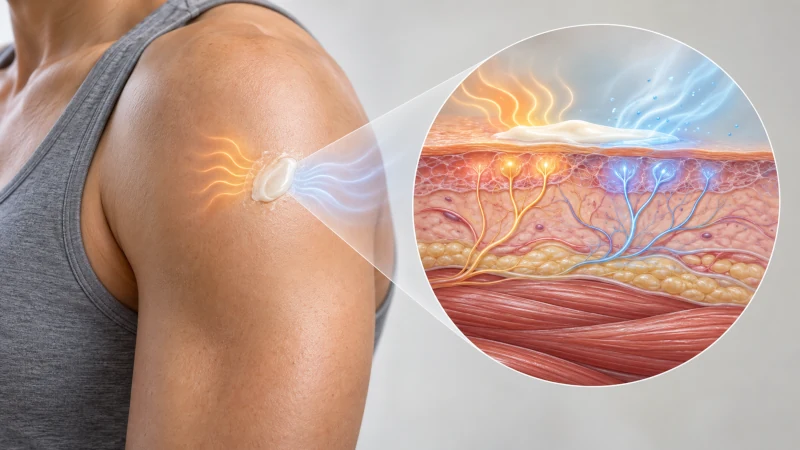
Camphor is what pharmacologists call a counterirritant. Rubbed on the skin, it stimulates nerve endings to produce a mild warming or cooling feeling, and that sensation competes with — and partly masks — the deeper ache underneath [Mayo Clinic, 2025]. It is not repairing the joint, muscle, or airway; it is changing what your nervous system pays attention to. Inhaled, camphor vapor creates a cooling sensation in the nose and throat that can make breathing feel easier and briefly quiet the cough reflex [WebMD, 2025].
Both effects are real, both are temporary, and neither treats an underlying disease. Keeping that distinction in view is the key to using camphor sensibly.
What camphor actually helps with
Here is where the common uses land once you grade them honestly against the evidence.
| Use | How camphor is used | Evidence | Bottom line |
| Nighttime cough & congestion from a cold | Rubbed on chest and throat, or as a medicated vapor | Limited | May help children over 2 cough less and sleep better for a night; based largely on one manufacturer-funded trial |
| Minor muscle & joint pain | Topical cream, gel, ointment or patch (often with menthol) | Limited | Feels soothing to many people; topical NSAIDs have stronger evidence for arthritis |
| Itching & minor skin discomfort | Low-concentration creams, balms, cold-sore products | Recognized OTC use | An FDA-recognized topical use; relief is modest |
| Curing infections, asthma, or heart conditions; taken by mouth | Marketed in older herbal texts as an internal remedy | None — and harmful | Not supported by evidence; swallowing camphor is toxic |
Coughs and colds, as a chest rub or vapor
The best-known use of camphor is in vapor rubs — the camphor, menthol, and eucalyptus ointments applied to the chest and throat at bedtime. The evidence here is limited but genuine. In a randomized trial of 138 children aged 2 to 11 with colds, a single bedtime application of vapor rub was rated by parents as better than petroleum jelly or no treatment for nighttime cough, congestion, and sleep [Paul et al., 2010]. Two caveats keep this honest: the study was funded by the product’s manufacturer, parents could usually tell which child received the strong-smelling rub, and skin irritation was more common in the rub group [Paul et al., 2010]. So treat it as encouraging rather than settled.

Apply it to the chest and throat only — never under the nose or in the nostrils, and never on a child under 2 [WebMD, 2025]. For food-based ways to support recovery while a cold runs its course, see our guide to the best foods for cold and flu.
Minor muscle and joint pain
Camphor is an FDA-recognized topical pain reliever and appears in many over-the-counter rubs — often paired with menthol or methyl salicylate — for sore muscles and aching joints [WebMD, 2025]. The honest caveat comes from Mayo Clinic: many people say these rubs help, but research does not consistently show they work well, and topical NSAIDs such as diclofenac gel have more and better evidence for arthritis pain [Mayo Clinic, 2025]. A camphor rub is reasonable to try for a stiff neck or sore knee; it is not a substitute for proper treatment if pain is persistent.
For a wider, evidence-graded look at what actually eases aches, see which herbs and natural approaches help musculoskeletal disorders; for the dietary side of inflammatory joint disease, see our rheumatoid arthritis diet guide.

Itching and minor skin discomfort
The FDA also recognizes low-concentration camphor as a topical anti-itch and mild anesthetic agent, which is why it appears in cold-sore treatments, anti-itch creams, and some lip balms [WebMD, 2025]. Expect modest, short-term relief rather than a cure for the underlying problem.
What camphor does not do
Older herbal writing credited camphor with far more than the evidence supports. Correcting the record matters here, because some of those claims can push people toward using camphor in genuinely dangerous ways.
- It is not a heart or circulation tonic to take internally. Camphor was once injected or swallowed as a “cardiac and respiratory stimulant,” but that practice was abandoned as its toxicity became clear. Modern regulators treat oral camphor as a poison, not a medicine [WebMD, 2025]; [Manoguerra et al., 2006].
- It does not cure bronchitis, pneumonia, or asthma. A chest rub may make a cough feel more bearable at night, but it does nothing to the infection or to the airway disease itself — and pneumonia and asthma need real medical care.
- Swallowing camphor powder is dangerous, not therapeutic. Some traditional sources (including an earlier version of this article) suggested taking up to half a gram of camphor by mouth daily. Do not do this. The next section explains why.
Using camphor safely
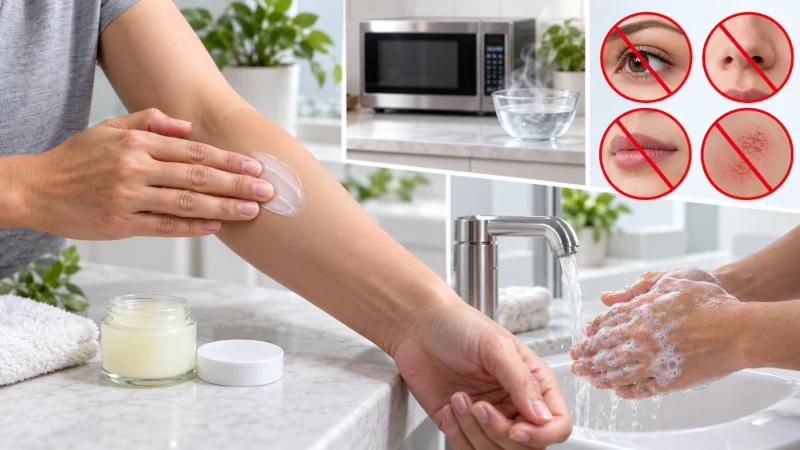
The single most important rule is that camphor products are for external use only [WebMD, 2025]. Within that rule, a few specifics keep it safe:
- Concentration. Over-the-counter topical products should contain no more than 11% camphor. Essential oils or liquids should be diluted before use, usually to about 0.5–5%, and creams for pain or itch typically use much less (around 0.1–3%) [WebMD, 2025]. The FDA banned products sold as “camphorated oil” because of past poisonings [Manoguerra et al., 2006].
- How to apply. Use a thin layer on intact skin, away from the eyes, mouth, and broken or irritated skin; for a cough, apply to the chest and throat, not under the nose. Wash your hands afterward, do not bandage the area tightly, and do not add camphor products to hot water or the microwave — heating can make them splatter and burn [WebMD, 2025].
- Keep it short-term. Camphor is for brief symptom relief. If symptoms last more than seven days, get worse, or keep coming back, stop and talk to a healthcare professional [WebMD, 2025].
Never swallow camphor — the safety issue that matters most
Camphor is absorbed rapidly from the gut, and serious poisoning can begin within minutes of swallowing it; a seizure is often the first sign [Manoguerra et al., 2006]. Most poisonings are accidental ingestions by children, which is why every camphor product should be stored well out of their reach [WebMD, 2025]. High-concentration products sold online without a Drug Facts label have caused seizures and burns and should be avoided entirely [WebMD, 2025].
If camphor is swallowed — by anyone — do not wait for symptoms. In the United States, call Poison Help at 1-800-222-1222, or call 911 if the person is having a seizure, is confused, or is struggling to breathe [WebMD, 2025].

Side effects
Used correctly on the skin, camphor’s most common side effects are mild tingling or irritation. Some people develop an allergic skin reaction (contact dermatitis), and pure or high-concentration camphor can cause rashes, blisters, or burns [WebMD, 2025].
Who should be cautious or avoid it
- Infants and young children, especially under age 2 — do not apply camphor to their skin, as they are at higher risk of serious effects [WebMD, 2025].
- Anyone with broken, cut, or irritated skin, and never near the eyes or mucous membranes.
- People who are pregnant or breastfeeding — camphor’s effects are not established; avoid applying it where an infant’s skin might contact it, wash your hands before touching an infant, and check with your provider first [WebMD, 2025].
- Anyone with a known camphor or menthol allergy.
Interactions
There are no well-documented food or drug interactions for topical camphor at normal concentrations, but it is still worth telling your pharmacist or provider about every product you use — particularly if you are layering several topical treatments on the same area or applying anything to broken skin [WebMD, 2025].
Red flags: when to stop self-treating and get help
- Any swallowed camphor — call Poison Help (1-800-222-1222) or 911 straight away [WebMD, 2025].
- A seizure, confusion, drowsiness, or trouble breathing after any camphor exposure — treat as an emergency.
- A cough that lasts more than seven days, keeps returning, or comes with a fever, rash, or persistent headache — see a healthcare professional [WebMD, 2025].
- Cough or breathing symptoms in infants, older adults, or anyone with chronic lung disease — a lower threshold to get checked is wise.
- A severe skin rash, blistering, or burning where you applied a product — stop using it and contact your provider.
| Health Disclaimer: This article is for general education and information only. It is not medical advice and is not a substitute for diagnosis or treatment from a qualified healthcare professional. Camphor is safe only when used as directed on the skin; it is toxic if swallowed. If you are pregnant, breastfeeding, have a medical condition, or are caring for a young child, talk to your doctor or pharmacist before using camphor. If camphor has been swallowed, contact Poison Help at 1-800-222-1222 (US) or call 911. If you have severe, persistent, or worsening symptoms, seek medical care. |
Frequently Asked Questions
Is camphor safe to use?
Yes, when used correctly on the skin at approved concentrations (no more than 11%). It is not safe to swallow — oral camphor is toxic and can cause seizures [WebMD, 2025].
Can you take camphor internally?
No. Camphor is rapidly absorbed and poisonous when swallowed, and serious symptoms such as seizures can start within minutes [Manoguerra et al., 2006]. Camphor products are for external use only.
Does camphor help a cough?
There is limited evidence that a camphor-menthol-eucalyptus chest rub can ease nighttime cough and congestion and improve sleep in children over 2, based mainly on one manufacturer-funded trial [Paul et al., 2010]. Apply it to the chest and throat, never under the nose.
Is camphor safe for babies and toddlers?
Do not use camphor on children under 2, who are at higher risk of serious effects, and be cautious with older children [WebMD, 2025]. Ask your pediatrician first.
Is camphor safe during pregnancy or breastfeeding?
Its effects in pregnancy and breastfeeding are not well established, so check with your provider before using it, and avoid applying it where an infant’s skin might make contact [WebMD, 2025].
Is the camphor tree poisonous?
The leaves and oil can be toxic if ingested in quantity, so the tree is not something to brew or eat [WebMD, 2025]. In Florida and parts of Australia it is also considered an invasive species [UF/IFAS].
References
- WebMD. “Camphor — Uses, Side Effects, and More.” Medically reviewed December 15, 2025. View source
- Mayo Clinic. “Arthritis pain: Treatments absorbed through your skin.” May 17, 2025. View source
- Paul IM, Beiler JS, King TS, et al. “Vapor Rub, Petrolatum, and No Treatment for Children with Nocturnal Cough and Cold Symptoms.” Pediatrics. 2010;126(6):1092–1099. PMID 21059712. View source
- Manoguerra AS, Erdman AR, Wax PM, et al. “Camphor Poisoning: an Evidence-Based Practice Guideline for Out-of-Hospital Management.” Clinical Toxicology. 2006;44(4):357–370. doi:10.1080/15563650600671696. View source
- Oregon State University. Landscape Plants: “Cinnamomum camphora.” View source
- University of Florida IFAS. Plant Directory: “Camphora officinarum (camphor tree).” View source


