
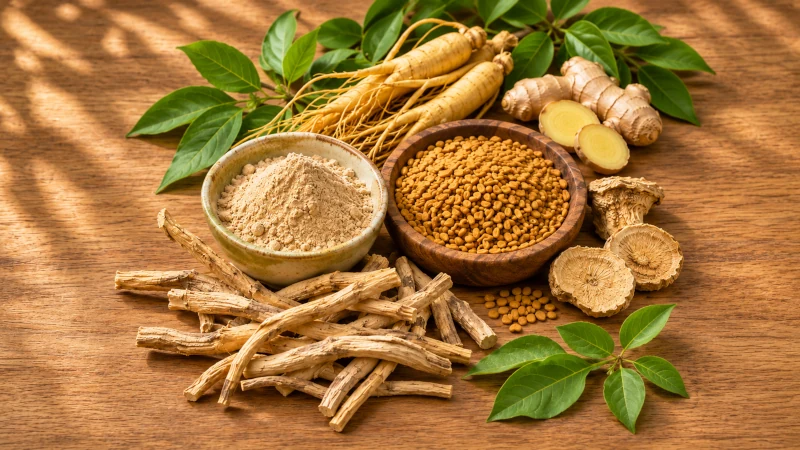
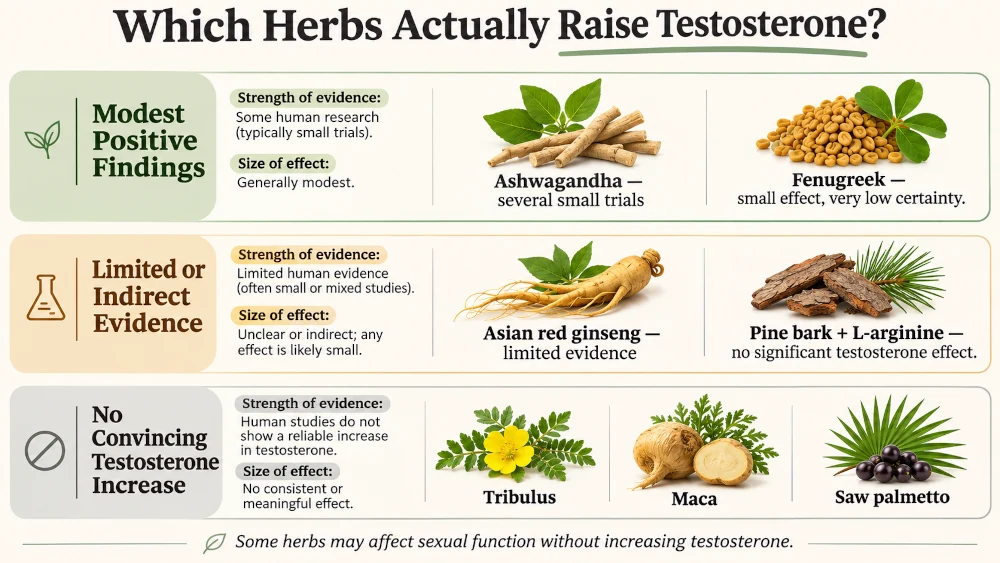
Most herbs sold to raise testosterone don’t change blood levels much. Two have reasonable, if modest, human evidence behind them: ashwagandha and fenugreek. Asian red ginseng has weaker support. The rest of the usual lineup of testosterone boosting herbs, including tribulus, maca, saw palmetto, horny goat weed, ginger and pine pollen, either failed to raise testosterone in controlled trials or hasn’t been properly tested in men [Smith et al., 2021].
That doesn’t make all of them useless. A few may help libido or erections without touching your hormones. But if you want a higher testosterone number, or relief from symptoms you suspect come from low testosterone, it pays to know which claims hold up, how big the effects really are, and where the risks sit.
Start with a blood test, not a supplement
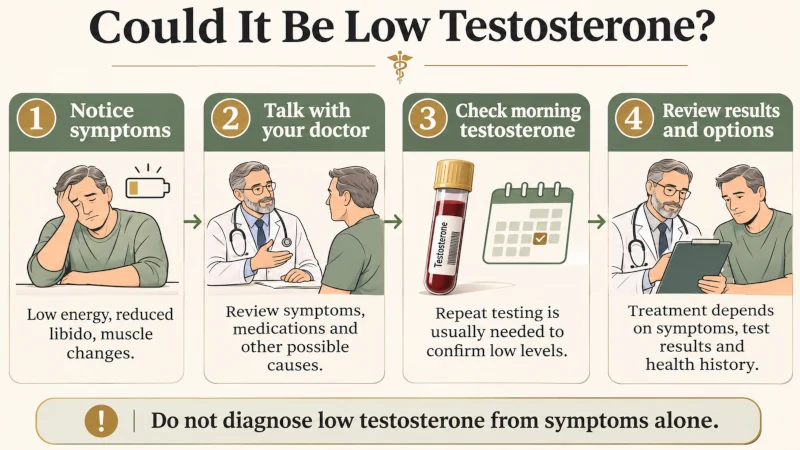
Low testosterone produces symptoms that overlap with a lot of other problems. Mayo Clinic lists reduced sex drive, fewer spontaneous erections, less muscle, more body fat, low energy, low mood and trouble concentrating. It also notes that sleep apnea, thyroid problems, diabetes, depression and medication side effects can cause the same picture, and that some of these conditions lower testosterone themselves, so treating them may raise your levels [Mayo Clinic, Testosterone].
Levels also drift down with age, by roughly 1% a year after 30 or 40 [Mayo Clinic, Testosterone]. The Endocrine Society recommends diagnosing low testosterone only when a man has symptoms and consistently, unequivocally low blood levels, and it recommends against routinely screening men in the general population [Endocrine Society, 2018]. Your doctor will usually measure it at least twice before calling it low [Mayo Clinic, Testosterone].
There’s a practical reason to test first, too. If you start an herb without knowing your baseline, you’ll never know whether it did anything.
Testosterone boosting herbs at a glance
This table summarizes what controlled human studies show. “Not shown” means trials found no effect or none have been done.
| Herb | Effect on testosterone in human trials | Other possible benefit | Main caution |
| Ashwagandha | Modest rise in several small, short trials | Stress and sleep | Rare liver injury; thyroid effects; avoid in pregnancy |
| Fenugreek | Small rise in total testosterone; very low certainty | Some favorable sexual-function findings | Low blood sugar; allergy; unsafe in pregnancy above food amounts |
| Asian red ginseng | Limited evidence | Trivial effect on erectile function | Insomnia; blood sugar; clotting |
| Pine bark extract + L-arginine | No significant change | Better erection scores in 3 small trials | Only studied as a combination |
| Tribulus | Not shown | Low-level evidence for mild ED | Small trials, many at high risk of bias |
| Maca | Not shown | Possible rise in sexual desire | Trials short (12 weeks) |
| Saw palmetto | Not shown | Not effective even for prostate symptoms | May be unsafe in pregnancy |
| Horny goat weed | No human data found | Traditional use only | Fast, irregular heartbeat; avoid with heart disease |
| Ginger, pine pollen | No human data found | None established for this use | Untested for this purpose |
The two herbs with the best evidence
Ashwagandha
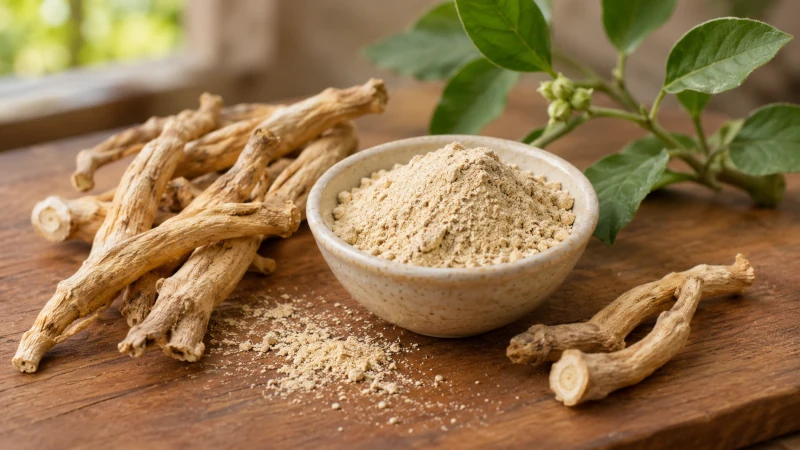
Ashwagandha (Withania somnifera) has the most consistent testosterone data of any herb. In a crossover trial of overweight men aged 40 to 70 with mild fatigue, an extract supplying 21 mg of withanolide glycosides a day produced a 14.7% greater rise in testosterone than placebo over eight weeks, and an 18% greater rise in DHEA-S. Fatigue and vigor scores didn’t differ, though, and only 43 of the 57 men who enrolled finished [Lopresti et al., 2019].
Younger men show a similar pattern. In men aged 18 to 50 starting a weight-training program, 300 mg of root extract twice daily for eight weeks led to bigger strength gains than placebo and a larger testosterone increase, about 96 ng/dL versus 18 ng/dL [Wankhede et al., 2015].
Keep the scale in mind: these are small, short studies, usually of branded extracts. The NIH Office of Dietary Supplements says ashwagandha appears well tolerated for up to about three months, but evidence on use over many months or years is lacking [NIH ODS, 2025]. Our guide to what the research supports about ashwagandha covers its other uses, and if stress is your real target, see our review of supplements marketed for cortisol.
Safety. Stomach upset, loose stools, nausea and drowsiness are the usual side effects. Less often, ashwagandha has been linked to liver injury, with symptoms such as jaundice appearing one week to four months after starting, and to changes in thyroid hormone levels. It may interact with thyroid medication, diabetes and blood pressure drugs, immunosuppressants and sedatives. Experts advise against it during pregnancy and for men with hormone-sensitive prostate cancer [NIH ODS, 2025].
Fenugreek
Fenugreek seed extract is the other herb with a positive signal. A 2020 meta-analysis of four trials found a significant effect on total testosterone [Mansoori et al., 2020]. A larger 2026 meta-analysis pooled six placebo-controlled trials with 385 men and also found a small favorable effect on total testosterone, but no reliable effect on free testosterone, and it rated the certainty of the evidence as very low [Yang et al., 2026]. Its authors concluded that the evidence doesn’t support clinical or commercial testosterone-boosting claims, and they noted that industry funding was common among the trials.
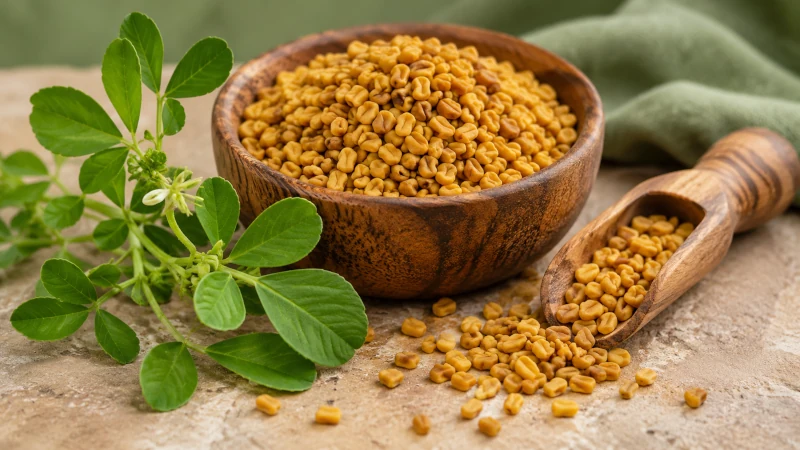
In plain terms, fenugreek may nudge total testosterone up a little. Don’t expect a change you’d notice.
Safety. Fenugreek can cause diarrhea, nausea and other digestive symptoms. Large amounts may push blood sugar too low, which matters if you take diabetes medicine, and some people have serious allergic reactions. NCCIH considers it not safe during pregnancy in amounts larger than those found in food [NCCIH, Fenugreek].
Herbs with weaker or indirect evidence
Asian red ginseng
A 2021 systematic review of herbal trials found some evidence for Asian red ginseng on testosterone, a step below ashwagandha and fenugreek [Smith et al., 2021]. Ginseng has been studied more for erections, and even there the benefit is small: a Cochrane review of nine trials in 587 men with mild to moderate erectile dysfunction concluded that ginseng may only have trivial effects on erectile function compared with placebo [Lee et al., 2021].
Insomnia is the most common side effect. Ginseng may lower blood sugar and interfere with blood clotting. Short-term use of up to six months appears safe for most people, and some experts recommend against it in pregnancy and breastfeeding [NCCIH, Asian Ginseng]. Our guide to ginseng’s health benefits goes into dosing and drug interactions.
Pine bark extract
Pine bark extract (sold as Pycnogenol) has been tested almost entirely in combination with the amino acid L-arginine. A 2023 meta-analysis of three small trials with 184 men found the combination improved erectile-function scores in men with mild to moderate erectile dysfunction, yet testosterone didn’t differ significantly from placebo [Tian et al., 2023]. The authors pointed to the small number of studies and the reliance on self-reported outcomes.
Popular herbs that don’t appear to raise testosterone
Tribulus
Tribulus terrestris shows up in a lot of “T booster” formulas, and it’s one of the most disappointing. In a randomized trial in young men, tribulus saponins showed no androgen-raising effect at all [Neychev & Mitev, 2005]. A 2014 systematic review suggested that any effect on sexual function more likely comes through nitric oxide than through testosterone [Qureshi et al., 2014].
The most recent review, from 2025, covered ten studies with 483 men. It found no robust evidence that tribulus raises testosterone; the only two studies reporting increases enrolled men with low starting levels and carried a high risk of bias. It did find low-level evidence that tribulus might help mild to moderate erectile dysfunction [Vilar Neto et al., 2025]. If erections or stamina are your main concern, our evidence review of herbs for male stamina covers that question directly.
Maca
Maca, a root vegetable from the Peruvian Andes, didn’t change testosterone or other reproductive hormones in a 12-week placebo-controlled trial at 1.5 or 3 grams a day [Gonzales et al., 2003]. A separate 12-week trial from the same research group reported a rise in sexual desire that had nothing to do with testosterone [Gonzales et al., 2002]. If maca helps libido, it isn’t by raising your testosterone.
Saw palmetto
Saw palmetto is sold for prostate health and often added to testosterone blends. It doesn’t do well even for its main use. NCCIH concludes it’s probably not helpful for symptoms of an enlarged prostate, based on a 2023 review of 27 studies and two NIH-funded trials [NCCIH, 2025], and a 2012 Cochrane review found it no better than placebo even at double and triple doses [Tacklind et al., 2012]. We found no trial showing that it raises testosterone.
It’s generally well tolerated, with occasional digestive upset, dizziness or headache, but it may be unsafe during pregnancy or breastfeeding [NCCIH, 2025]. Some product pages describe saw palmetto as having no side effects or drug interactions; that goes further than the evidence, so check with a pharmacist if you take regular medication.
Horny goat weed
Memorial Sloan Kettering describes horny goat weed (epimedium) as a traditional remedy for sexual problems, with no clinical trials of that use and little safety data. Reported side effects include flushing, sweating, a fast or irregular heartbeat and mood changes, and MSK advises people with heart disease or hormone-sensitive cancers to avoid it [Memorial Sloan Kettering, 2025]. We found no human trial measuring its effect on testosterone.
Ginger and pine pollen
Ginger is well studied for nausea, menstrual cramps and knee arthritis, but NCCIH’s summary of that research says nothing about hormones [NCCIH, Ginger], and we couldn’t find a controlled trial in men showing that ginger raises testosterone. Pine pollen is marketed as a source of plant “androgens”; we found no published human trial testing that claim. Treat both as untested for this purpose.
Zinc and vitamin D: helpful mainly if you’re low
Zinc
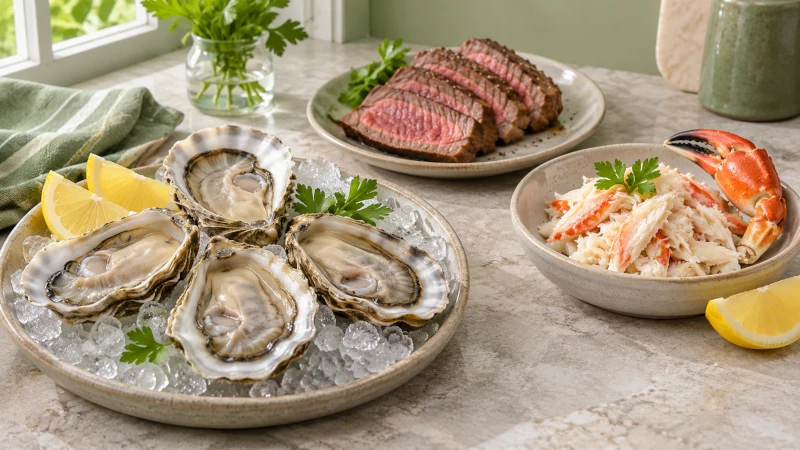
Zinc deficiency causes reproductive problems among its other effects [NIH ODS, 2026]. In one small study, testosterone dropped sharply in young men placed on a zinc-restricted diet, and rose from 8.3 to 16.0 nmol/L in nine marginally zinc-deficient older men who took zinc for three to six months [Prasad et al., 1996]. That supports correcting a deficiency, not taking extra when your levels are normal.
Adult men need 11 mg a day, and the upper limit for adults is 40 mg from food and supplements combined. Taking 50 mg or more for weeks can interfere with copper absorption, weaken immune function and lower HDL cholesterol. Zinc also reduces absorption of quinolone and tetracycline antibiotics and of penicillamine. Oysters are the richest food source, followed by beef, crab and other seafood [NIH ODS, 2026].
Watch for doubling up. An analysis of 50 testosterone booster products found many contained vitamins and minerals at doses well above needs, occasionally above the upper limit [Clemesha et al., 2020].
Vitamin D
The study most often quoted gave overweight men in a weight-loss program 3,332 IU of vitamin D a day for a year; their total testosterone rose from 10.7 to 13.4 nmol/L, with no change on placebo [Pilz et al., 2011]. Later trials haven’t backed that up. In men who already had low testosterone, 12 weeks of vitamin D made no difference, and the authors note that randomized trials have consistently shown no significant effect [Lerchbaum et al., 2019].
Adults aged 19 to 70 need 600 IU a day (800 IU after 70), and the upper limit is 4,000 IU. Too much raises blood calcium and can damage the heart, blood vessels and kidneys. Corticosteroids, orlistat, cholestyramine, phenobarbital and phenytoin all affect vitamin D [NIH ODS, Vitamin D]. If you think you’re low, a blood test is the sensible first step.
DHEA
DHEA is a hormone your body converts into testosterone and estrogen, not an herb. Mayo Clinic rates DHEA supplements as “avoid”: there’s little evidence for anti-aging claims, high doses or long-term use may raise the risk of hormone-sensitive cancers such as prostate cancer, and it may lower HDL cholesterol and trigger mania in people with mood disorders. Quality control is often poor, and the NCAA bans it [Mayo Clinic, DHEA].
What moves testosterone more reliably than herbs

Sleep is the clearest example. When ten healthy young men were limited to five hours a night for a week, their daytime testosterone fell by 10% to 15% [Leproult & Van Cauter, 2011]. Mayo Clinic points to weight loss and resistance exercise as natural ways to support testosterone, and to diagnosing and treating conditions such as sleep apnea, diabetes, thyroid disease and depression [Mayo Clinic, Testosterone].
- Protect your sleep, and get loud snoring or daytime sleepiness checked for sleep apnea.
- Lose excess weight if you carry it.
- Do resistance training a few times a week.
- Ask your doctor whether any of your medications could be affecting your hormones.
Side effects, interactions and who should avoid these herbs
Single herbs are only part of the risk, because most products sold as testosterone boosters are blends. In the analysis of 50 such products, 90% claimed to boost testosterone, but only 24.8% had data supporting that claim, and 10.1% contained ingredients with data suggesting they could lower it [Clemesha et al., 2020]. The FDA warns that many products marketed for sexual enhancement, male energy or stamina are likely contaminated with hidden drug ingredients, can cause severe health problems and hospitalization, and aren’t necessarily safe just because they’re missing from its warning lists [FDA].
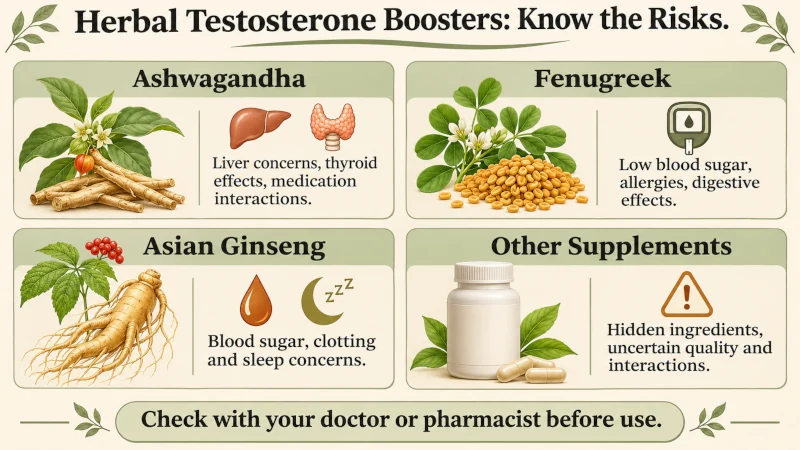
Talk to a doctor or pharmacist before using these herbs if you:
- Take medicine for diabetes, blood pressure, thyroid disease or seizures, or take blood thinners, sedatives or immunosuppressants [NIH ODS, 2025] [NCCIH, Asian Ginseng] [NCCIH, Fenugreek] [NIH ODS, Vitamin D]
- Have prostate cancer or another hormone-sensitive cancer (ashwagandha, DHEA, horny goat weed) [NIH ODS, 2025] [Mayo Clinic, DHEA] [Memorial Sloan Kettering, 2025]
- Have heart disease (horny goat weed) [Memorial Sloan Kettering, 2025]
- Have liver disease (ashwagandha) [NIH ODS, 2025]
- Have a mood disorder (DHEA) [Mayo Clinic, DHEA]
- Compete in a tested sport; the NCAA bans DHEA [Mayo Clinic, DHEA]
Pregnancy and breastfeeding. These products are marketed to men, but supplements get shared in households. Ashwagandha, fenugreek above food amounts, Asian ginseng and saw palmetto may be unsafe in pregnancy, and DHEA should be avoided during pregnancy and breastfeeding [NIH ODS, 2025] [NCCIH, Fenugreek] [NCCIH, Asian Ginseng] [NCCIH, 2025] [Mayo Clinic, DHEA].
When to see a doctor
Book an appointment if you have symptoms of low testosterone such as low sex drive, fatigue, loss of muscle, breast swelling or tenderness, or trouble conceiving [Mayo Clinic, Testosterone]. New erection problems deserve attention on their own: they can be a sign of a health condition that needs treatment and a risk factor for heart disease, which matters most if you already have diabetes or heart disease [Mayo Clinic, ED].
| Stop the supplement and get medical care promptly if you notice: Yellowing of the skin or eyes, a possible sign of liver injury [NIH ODS, 2025]A racing or irregular heartbeat [Memorial Sloan Kettering, 2025]Swelling of the face or throat, hives or trouble breathing, signs of a serious allergic reaction [NCCIH, Fenugreek]Chest pain or fainting. Call 911 or your local emergency number. |
| HEALTH DISCLAIMER: This article is for general education and isn’t medical advice. Herbs and supplements can cause side effects and interact with medicines, and the FDA doesn’t approve them for safety or effectiveness before they’re sold. Talk with a doctor, pharmacist or other qualified health professional before starting any supplement, especially if you take prescription medicine, have a long-term health condition, or are pregnant or breastfeeding. See our full medical advice disclaimer. |
Frequently Asked Questions
Which herb raises testosterone the most?
Ashwagandha has the most consistent human data, with modest increases in small eight-week trials [Lopresti et al., 2019] [Wankhede et al., 2015]. Fenugreek shows a smaller, less certain effect on total testosterone [Yang et al., 2026].
How long do testosterone boosting herbs take to work?
The trials that found effects ran for about eight to twelve weeks [Lopresti et al., 2019] [Wankhede et al., 2015]. There’s no good evidence that any herb works faster, so give a blood test a couple of months before judging the result.
Can herbs replace testosterone therapy?
No. Herbs have produced small changes in short trials. Men with confirmed low testosterone and symptoms are candidates for testosterone therapy after a discussion of its benefits and risks, according to the Endocrine Society [Endocrine Society, 2018].
Are over-the-counter testosterone booster supplements safe?
Not reliably. Most blends make claims their ingredients don’t support, some contain ingredients that may lower testosterone [Clemesha et al., 2020], and the FDA warns that many male enhancement products contain hidden drug ingredients [FDA].
Does saw palmetto raise testosterone?
There’s no trial evidence that it does. NCCIH’s review of saw palmetto doesn’t describe any testosterone effect, and it concludes the herb probably doesn’t help prostate symptoms either [NCCIH, 2025].
References
- Clemesha CG, Thaker H, Samplaski MK. ‘Testosterone boosting’ supplements composition and claims are not supported by the academic literature. World J Mens Health. View source
- Bhasin S, Brito JP, Cunningham GR, et al. Testosterone therapy in men with hypogonadism: an Endocrine Society clinical practice guideline. J Clin Endocrinol Metab. View source
- U.S. Food and Drug Administration. Tainted Sexual Enhancement Products. View source
- Gonzales GF, Cordova A, Vega K, et al. Effect of Lepidium meyenii (MACA) on sexual desire and its absent relationship with serum testosterone levels in adult healthy men. Andrologia. View source
- Gonzales GF, Cordova A, Vega K, et al. Effect of Lepidium meyenii (Maca), a root with aphrodisiac and fertility-enhancing properties, on serum reproductive hormone levels in adult healthy men. View source
- Lee HW, Lee MS, Kim TH, et al. Ginseng for erectile dysfunction. View source
- Leproult R, Van Cauter E. Effect of 1 week of sleep restriction on testosterone levels in young healthy men. View source
- Lerchbaum E, Trummer C, Theiler-Schwetz V, et al. Effects of vitamin D supplementation on androgens in men with low testosterone levels: a randomized controlled trial. View source
- Lopresti AL, et al. A randomized, double-blind, placebo-controlled, crossover study examining the hormonal and vitality effects of ashwagandha (Withania somnifera) in aging, overweight males. View source
- Mansoori A, Hosseini S, Zilaee M, Hormoznejad R, Fathi M. Effect of fenugreek extract supplement on testosterone levels in male: a meta-analysis of clinical trials. View source
- Mayo Clinic Staff. DHEA. Mayo Clinic. View source
- Mayo Clinic Staff. Erectile dysfunction: Symptoms and causes. Mayo Clinic. View source
- Mayo Clinic Staff. Testosterone therapy: Potential benefits and risks as you age. Mayo Clinic. View source
- Memorial Sloan Kettering Cancer Center. Epimedium (About Herbs). View source
- National Center for Complementary and Integrative Health. Saw Palmetto. View source
- National Center for Complementary and Integrative Health. Asian Ginseng. View source
- National Center for Complementary and Integrative Health. Fenugreek. View source
- National Center for Complementary and Integrative Health. Ginger. View source
- Neychev VK, Mitev VI. The aphrodisiac herb Tribulus terrestris does not influence the androgen production in young men. View source
- NIH Office of Dietary Supplements. Ashwagandha: Fact Sheet for Health Professionals. View source
- NIH Office of Dietary Supplements. Zinc: Fact Sheet for Health Professionals. View source
- NIH Office of Dietary Supplements. Vitamin D: Fact Sheet for Health Professionals. View source
- Pilz S, Frisch S, Koertke H, et al. Effect of vitamin D supplementation on testosterone levels in men. View source
- Prasad AS, et al. Zinc status and serum testosterone levels of healthy adults. Nutrition. View source
- Qureshi A, Naughton DP, Petroczi A. A systematic review on the herbal extract Tribulus terrestris and the roots of its putative aphrodisiac and performance enhancing effect. View source
- Smith SJ, Lopresti AL, Teo SYM, Fairchild TJ. Examining the effects of herbs on testosterone concentrations in men: a systematic review. View source
- Tacklind J, MacDonald R, Rutks I, Stanke JU, Wilt TJ. Serenoa repens for benign prostatic hyperplasia. View source
- Tian Y, Zhou Q, Li W, Liu M, Li Q, Chen Q. Efficacy of L-arginine and Pycnogenol in the treatment of male erectile dysfunction: a systematic review and meta-analysis. View source
- Vilar Neto JO, de Moraes WMAM, Pinto DV, et al. Effects of Tribulus (Tribulus terrestris L.) supplementation on erectile dysfunction and testosterone levels in men: a systematic review of clinical trials. View source
- Wankhede S, et al. Examining the effect of Withania somnifera supplementation on muscle strength and recovery: a randomized controlled trial. View source
- Yang P, Niu Z, Guo J, Huang T, Chang D, Huang X. Effects of oral fenugreek-derived preparations on testosterone-related outcomes in adult men: a systematic review and meta-analysis of randomized placebo-controlled trials. View source


