
Dry tear ducts can make your eyes feel gritty, burning, tired, or irritated, but the phrase can be misleading. In many cases, the problem is not that the tear ducts are “dry.” It is dry eye disease, poor tear quality, tear evaporation, eyelid gland problems, medication side effects, or irritation from wind, smoke, screens, or contact lenses.
A true blocked tear duct is different. When a tear duct is blocked, tears usually cannot drain normally, so the eye often becomes watery, crusty, irritated, or repeatedly infected [Mayo Clinic, n.d.]. Dry eye happens when tears do not lubricate the eye well enough, either because there are not enough tears or because the tear film is unstable [NEI, 2025] [Mayo Clinic, n.d.].
What people usually mean by “dry tear ducts”
Most people who search for dry tear ducts are describing one of these problems:
- Eyes that feel dry, gritty, sandy, or scratchy
- Burning, stinging, or tired eyes
- Blurry vision that comes and goes
- Watery eyes that still feel dry
- Crusting, mucus, or irritation near the inner corner of the eye
- Dryness that worsens with screens, wind, air conditioning, smoke, or contact lenses
Watery eyes can still happen with dry eye. When the eye surface is irritated, the body may produce reflex tears. Those tears may run down your face but still fail to keep the eye surface comfortable.
Dry tear ducts vs. blocked tear ducts
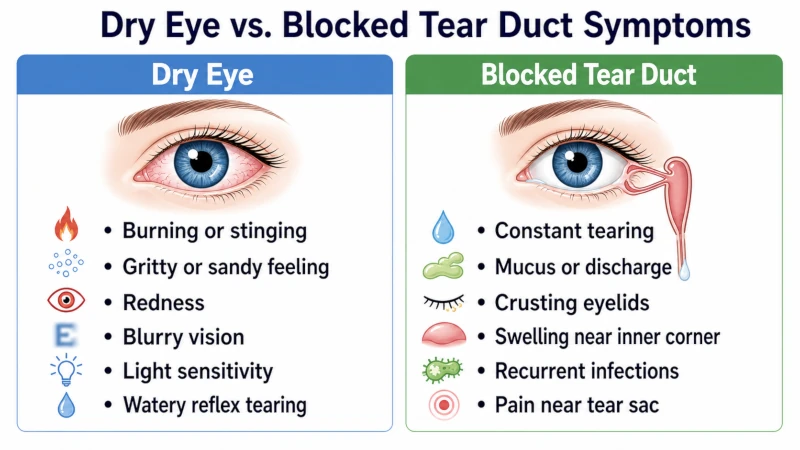
A simple way to separate the two:
| Problem | What usually happens | Common clues |
| Dry eye | Tears do not lubricate the eye well enough. | Burning, gritty feeling, fluctuating blurry vision, light sensitivity, symptoms worse with screens or dry air. |
| Blocked tear duct | Tears cannot drain normally. | Constant watering, crusting, mucus, recurrent eye infection, swelling or tenderness near the inner corner of the eye. |
| Tear duct infection | The lacrimal sac or duct becomes infected. | Painful swelling near the nose, redness, discharge, fever, worsening tenderness. |
A blocked tear duct can happen at any age. In newborns it often improves during the first year, but in adults it may be related to age-related narrowing, inflammation, infection, facial trauma, sinus or nasal problems, previous surgery, glaucoma eye drops, cancer treatment, or rarely a tumor [Mayo Clinic, n.d.].
If you have sinus inflammation or chronic nasal symptoms, it may be worth reading more about natural remedies for sinusitis, since nasal and sinus issues can affect nearby tear drainage pathways. That does not mean sinus remedies treat a blocked tear duct; it means the nose, sinuses, and tear drainage system are anatomically connected.
How tears are made and drained
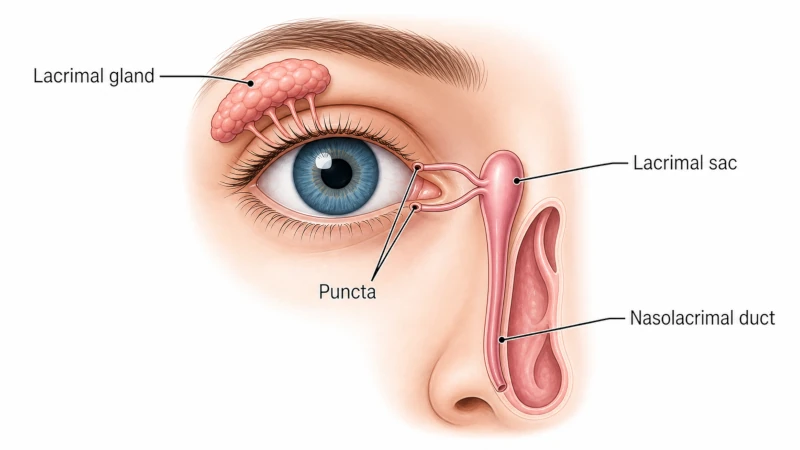
Tears are made mostly by the lacrimal glands, which sit above the outer part of each eye. With each blink, tears spread across the eye surface. Extra fluid drains through tiny openings called puncta at the inner corners of the eyelids. From there, tears move through small canals into the lacrimal sac, then down the nasolacrimal duct into the nose [Mayo Clinic, n.d.].
Dry eye can develop when this system becomes unbalanced. Some people do not make enough watery tears. Others make tears that evaporate too quickly because the oily layer of the tear film is weak. Some people have inflammation on the eye surface or eyelids. Others drain tears too quickly, which is why eye doctors sometimes use punctal plugs to help tears stay on the eye longer [NEI, 2025] [Mayo Clinic, n.d.].
Common causes of dry, irritated eyes
Dry eye disease
Dry eye disease occurs when tears are inadequate or unstable. Symptoms may worsen in air-conditioned rooms, on airplanes, while riding a bike, after computer use, or in dry, windy environments [Mayo Clinic, n.d.].
Dry eye can be mild and occasional, or it can become chronic. Severe untreated dry eye can sometimes damage the cornea, the clear front layer of the eye [NEI, 2025].
Meibomian gland dysfunction
The meibomian glands are tiny oil glands along the eyelid margins. Their oil helps slow tear evaporation. When these glands are clogged or inflamed, tears may evaporate too quickly. This can cause burning, gritty eyes, fluctuating blur, and eyelid irritation.
Warm compresses and lid hygiene are often used for this pattern of dry eye. They may help soften thickened oils and support better oil flow, but they are not a cure for every type of dry eye.
Aging and hormone changes
Dry eye becomes more common with age. Tear production, eyelid function, and tear film stability can change over time. Hormonal changes may also affect tear quality, which is one reason dry eye is common after menopause.
Medications and eye drops
Some medicines can worsen dry eye. NEI notes that if a medicine is contributing to dry eye, a doctor may suggest a different option when appropriate [NEI, 2025]. Mayo Clinic also notes that treatment depends on the cause, and some approaches focus on managing the underlying factor [Mayo Clinic, n.d.].
Common culprits may include:
- Antihistamines
- Decongestants
- Some antidepressants or anxiety medicines
- Some sleep medicines
- Some blood pressure medicines
- Long-term use of certain medicated eye drops
- Acne medicines related to vitamin A, such as isotretinoin
Do not stop a prescribed medicine on your own. Ask your clinician or pharmacist whether the medicine could be contributing and what alternatives may be safe.
Screen time, dry air, wind, and smoke
Screens can worsen dry eye because people tend to blink less often while looking at computers, tablets, and phones. NEI specifically lists screen time, smoke, wind, air conditioning, and dry indoor air as factors that can worsen dry eye symptoms [NEI, 2025].
Contact lenses and eye surgery
Contact lenses sit on the tear film. If your tear film is unstable, lenses can feel dry, scratchy, or uncomfortable. Previous eye, eyelid, nasal, or sinus surgery may also affect tear drainage or irritation patterns [Mayo Clinic, n.d.].
Tear duct blockage or narrowing
Blocked tear ducts do not usually cause simple “dryness.” They more often cause a watery eye, crusting, mucus, repeated irritation, blurred vision, or swelling near the inner corner of the eye [Mayo Clinic, n.d.].
In adults, a clinician may treat a narrowed punctum or partial blockage by widening the punctum and flushing the tear duct. Other treatments may include stenting, balloon catheter dilation, or surgery in selected cases [Mayo Clinic, n.d.].
Tear duct infection
A tear duct infection, called dacryocystitis, can cause pain, swelling, redness, discharge, and tenderness near the inner corner of the eye. Mild cases are often treated with warm compresses and oral antibiotics; severe cases may require IV antibiotics [Merck Manual, 2026].
This is not a situation to manage with supplements or home remedies alone.
Symptoms that help tell the difference
Dry eye symptoms often include:
- Burning or stinging
- Gritty or sandy feeling
- Redness
- Light sensitivity
- Blurry vision that improves after blinking
- Stringy mucus
- Discomfort with contact lenses
- Symptoms worse after screen use, wind, smoke, or dry air
Blocked tear duct symptoms often include:
- One eye watering constantly
- Crusting on the eyelids
- Mucus or pus-like discharge
- Recurrent eye infections
- Painful swelling near the inner corner of the eye
- Symptoms that worsen after a cold or sinus flare
Redness, discharge, and eye irritation can overlap with conjunctivitis, allergies, or infection. If the eye is red, sticky, painful, or contagious-looking, a related guide on natural remedies for conjunctivitis may help with general context, but persistent or painful symptoms still need professional care.
Safe home care for dry, irritated eyes
Home care can ease mild dry eye, but it should match the likely cause. The safest starting points are simple: lubricate the eye surface, reduce evaporation triggers, keep eyelids clean, and avoid irritating products.
Artificial tears
For occasional or mild dry eye, artificial tears are often enough. NEI and Mayo Clinic both describe over-the-counter artificial tears as a common first treatment for mild dry eye [NEI, 2025] [Mayo Clinic, n.d.].
Practical tips:
- Choose preservative-free drops if you need them more than a few times daily.
- Avoid “redness relief” drops unless your eye doctor recommends them.
- Use gels or ointments at night if drops do not last long enough, but expect temporary blurry vision.
- Ask an eye doctor if you need drops every day for more than a week or two.
Warm compresses and lid hygiene

A warm compress may help if your symptoms involve eyelid oil glands, crusting, or morning irritation.
How to do it safely:
- Wash your hands.
- Wet a clean washcloth with warm, not hot, water.
- Close your eyes and place the cloth over the eyelids for 5 to 10 minutes.
- Rewarm the cloth as needed.
- Gently clean the eyelid margins with a clean cloth or eyelid wipe if crusting is present.
Do not press hard on a painful, swollen tear duct. If there is pus, fever, significant swelling, or tenderness near the nose, call a clinician because infection may need antibiotics [Merck Manual, 2026].
Humidifier, screen breaks, and avoiding irritants
NEI recommends several lifestyle steps that may help dry eye, including avoiding smoke, wind, and air conditioning; using a humidifier; limiting screen time; taking screen breaks; wearing wraparound sunglasses outdoors; drinking enough water; and getting enough sleep [NEI, 2025].
A simple screen habit: every 20 minutes, look away from the screen and blink slowly several times. This is not a treatment by itself, but it may reduce evaporation-related irritation.
Contact lens adjustments
If lenses make symptoms worse, switch to glasses for a few days and use lubricating drops approved for contact lenses. Do not wear contacts if you have eye pain, discharge, light sensitivity, or a red eye. Those symptoms can signal infection or corneal irritation.
Food-based nutrition support
Vitamin A supports normal vision and the health of the conjunctiva and cornea [NIH ODS, 2025]. Foods such as sweet potatoes, carrots, spinach, eggs, dairy products, and fish can contribute vitamin A or provitamin A carotenoids [NIH ODS, 2025].
Food-based vitamin A support is reasonable for most people. High-dose vitamin A supplements are different and can be unsafe.

Supplements: what to know before taking vitamin A, omega-3s, zinc, or B vitamins
The older version of this article recommended vitamin A at 25,000 IU for several days. That is not a safe general recommendation.
For adults, the tolerable upper intake level for preformed vitamin A is 3,000 mcg RAE per day, equal to 10,000 IU of preformed vitamin A. NIH ODS advises pregnant people, people who might become pregnant, and lactating people not to take high-dose vitamin A supplements above that amount. Excess preformed vitamin A can cause liver problems and birth defects [NIH ODS, 2025].
Omega-3 supplements have mixed evidence for dry eye. A Cochrane review of 34 randomized controlled trials involving more than 4,300 adults found uncertain evidence: long-chain omega-3s may have little to no benefit for symptoms compared with placebo, though some clinical signs improved, and benefits appeared more likely when omega-3s were combined with standard dry eye care [Cochrane, 2019].
Supplement cautions:
- Vitamin A: Avoid high-dose preformed vitamin A unless prescribed. Extra caution is needed during pregnancy, breastfeeding, liver disease, and use of retinoid medications.
- Omega-3s: May cause stomach upset and may not help everyone. Ask a clinician first if you take blood thinners, have a bleeding disorder, or have surgery scheduled.
- Zinc: Too much zinc can cause nausea and interfere with copper status.
- B vitamins: Useful if you have a deficiency, but not a proven fix for dry eye or tear duct blockage.
Supplements should not delay care for pain, infection, vision changes, or persistent symptoms.
Medical treatments an eye doctor may recommend
If home care does not help, an eye doctor can check tear quantity, tear quality, eyelid glands, the cornea, and tear drainage.
Possible treatments may include:
- Prescription anti-inflammatory eye drops
- Prescription tear-stimulating drops
- Punctal plugs to keep tears on the eye longer
- Treatment for eyelid inflammation or meibomian gland dysfunction
- Tear duct irrigation if drainage is blocked
- Stenting, balloon dilation, or surgery for certain tear duct blockages
- Antibiotics for tear duct infection
NEI lists artificial tears, prescription medicines, lifestyle changes, tear duct plugs, and rarely surgery as dry eye treatment options, depending on the cause [NEI, 2025]. Mayo Clinic notes that punctal plugs can conserve natural and artificial tears by closing the punctal openings [Mayo Clinic, n.d.].
When to seek urgent care
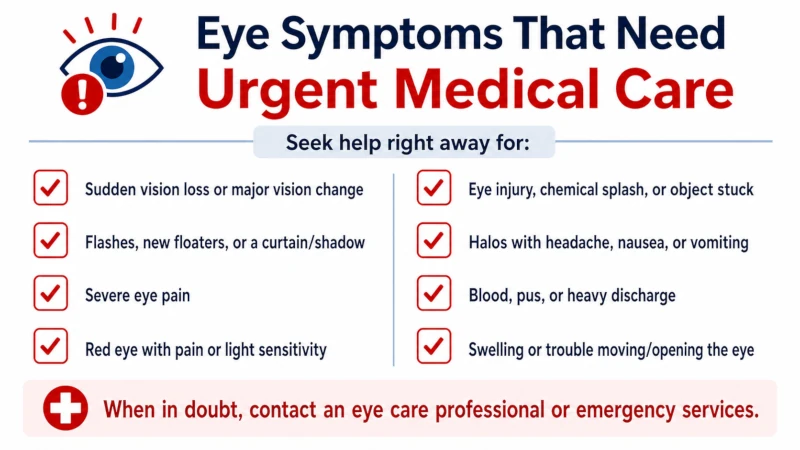
Get urgent medical care if you have:
- Sudden vision loss or new severe blurry vision
- Moderate to severe eye pain
- Light sensitivity with redness or pain
- Pus-like discharge
- Fever with swelling near the inner corner of the eye
- A swollen, red, tender area between the eye and nose
- Eye symptoms after injury, chemical exposure, or surgery
- A red, painful eye while wearing contact lenses
- One eye that waters constantly for several days or repeated eye infections
Mayo Clinic advises seeing a healthcare professional if the eye tears constantly for several days or if infections happen often, because a blocked tear duct may rarely be caused by a tumor pressing on the drainage system [Mayo Clinic, n.d.].
| Health Disclaimer This article is for educational purposes only and is not a substitute for professional medical advice, diagnosis, or treatment. Eye pain, vision changes, discharge, swelling, injury, or symptoms that do not improve should be evaluated by an eye care professional. Do not start high-dose supplements, stop prescribed medicine, or treat a suspected eye infection with home remedies alone without medical guidance. |
Frequently Asked Questions
Can dry tear ducts cause watery eyes?
Yes, but the wording can be confusing. Dry eye can trigger reflex tearing, which makes the eyes water even though the surface still feels dry. A blocked tear duct can also cause watery eyes because tears cannot drain normally [NEI, 2025] [Mayo Clinic, n.d.].
Is a blocked tear duct the same as dry eye?
No. Dry eye means the tear film does not lubricate the eye well enough. A blocked tear duct means tears cannot drain properly. Dry eye usually causes burning, gritty eyes, and fluctuating blur. Blocked tear ducts more often cause constant watering, crusting, mucus, swelling, or repeated infection.
Can warm compresses unclog tear ducts?
Warm compresses may ease eyelid gland problems and may provide comfort with some tear duct irritation. They do not reliably open a true adult tear duct blockage. If there is painful swelling, discharge, or fever, medical care is needed because tear duct infection often requires antibiotics [Merck Manual, 2026].
Are artificial tears safe to use every day?
Many people use artificial tears safely, but frequent daily use is a reason to ask an eye doctor what type is best. Preservative-free drops are often preferred when drops are needed several times per day. Persistent symptoms may need prescription treatment or evaluation for eyelid gland disease, inflammation, or tear drainage problems.
Should I take vitamin A for dry tear ducts?
Do not take high-dose vitamin A for dry tear ducts unless a clinician prescribes it. Vitamin A is needed for normal eye health, but deficiency is uncommon in many high-income countries, and excess preformed vitamin A can be harmful. Food sources are safer for most people than high-dose supplements [NIH ODS, 2025].
When should I see an eye doctor?
See an eye doctor if dryness lasts more than a couple of weeks, you need drops every day, symptoms affect reading or driving, one eye waters constantly, or you have crusting, mucus, swelling, pain, light sensitivity, or vision changes.
References
- National Eye Institute. “Dry Eye.” Last updated August 6, 2025. View source
- Mayo Clinic. “Dry Eyes: Symptoms & Causes.” View source
- Mayo Clinic. “Dry Eyes: Diagnosis & Treatment.” View source
- Mayo Clinic. “Blocked Tear Duct: Symptoms & Causes.” View source
- Mayo Clinic. “Blocked Tear Duct: Diagnosis & Treatment.” View source
- NIH Office of Dietary Supplements. “Vitamin A and Carotenoids: Health Professional Fact Sheet.” Updated March 10, 2025. View source
- Cochrane. “Omega-3 and omega-6 polyunsaturated fatty acid supplements for dry eye disease.” 2019. View source
- Merck Manual Professional Edition. “Dacryocystitis.” View source
