
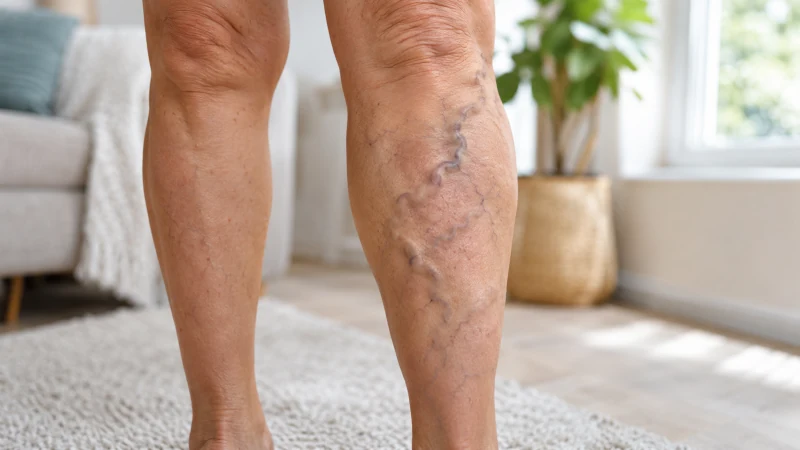
Varicose veins are swollen, twisted veins just under the skin, usually in the legs. They often show up as raised blue or purple cords [NHLBI, 2023]. That’s the short answer to “what are varicose veins?” For most people they’re common and not serious, though they can ache, itch and slowly get worse over several years [NHS, 2024]. One situation is an emergency: if a varicose vein is bleeding, call 911 [NHLBI, 2023].
How varicose veins form
The veins in your legs have a hard job. They carry blood back up to your heart, against gravity, every time you stand. Walking helps, because your calf muscles squeeze the veins and push blood upward. Small one-way valves inside the veins keep it from sliding back down.
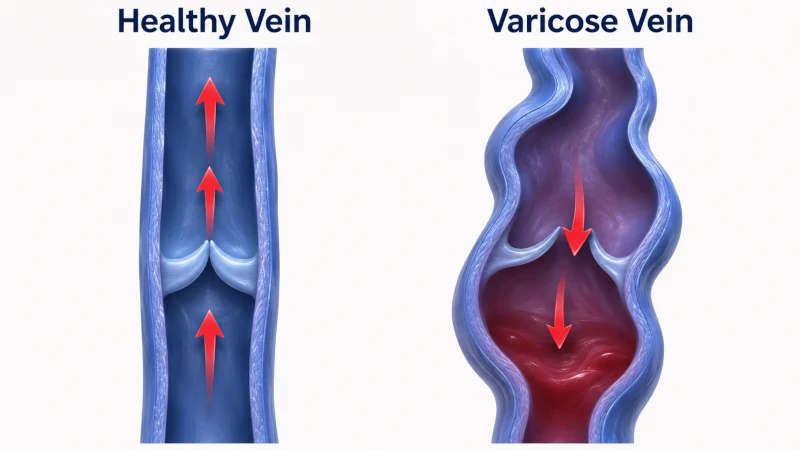
When those valves or the vein walls weaken, blood pools or flows backward. Doctors call this reflux. Pressure inside the vein rises, and over time the vein stretches, bulges and twists [NHLBI, 2023]. Researchers don’t think there is one single cause. Genes, hormones, body weight and daily habits all seem to play a part [Antani & Dattilo, 2023].
Varicose veins vs. spider veins
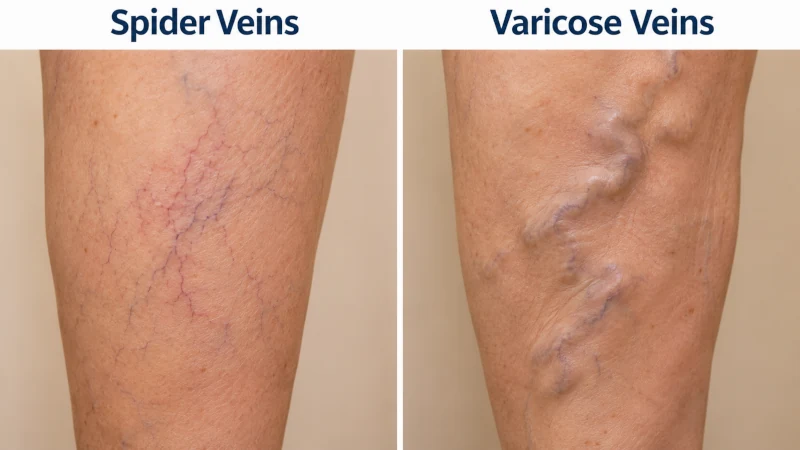
People often mix these up, but they’re different. Spider veins (telangiectasias) are tiny red, blue or purple threads in much smaller vessels near the skin’s surface [NHLBI, 2023]. They are a separate condition and usually harmless [NHS, 2024]. Varicose veins are larger, raised and ropey, and they are more likely to cause symptoms.
Varicose veins outside the legs
The same kind of vein swelling can happen elsewhere. Hemorrhoids are a type of varicose vein [MedlinePlus, 2025], and varicoceles are enlarged veins in the scrotum [NHLBI, 2023]. Most hemorrhoids don’t need surgery. Fiber, fluids, not straining and a short course of over-the-counter cream usually help. Office procedures or surgery are kept for hemorrhoids that don’t respond [NIDDK, 2016]. Our guide to herbs for hemorrhoids, ranked by the evidence covers the home-care side in more detail.
Esophageal varices are a different and more serious problem. They form in the lower esophagus, most often because liver scarring (cirrhosis) pushes extra blood into those veins. Many people have no symptoms until the veins bleed. Vomiting blood or passing black, tarry stools needs an emergency room right away [MedlinePlus Encyclopedia, 2025].
Who gets varicose veins
Varicose veins affect up to 30% of people. They become more common with age and are more common in women than men [Antani & Dattilo, 2023]. In the long-running Framingham Study, about 23% of men and 30% of women developed them over 16 years of follow-up [Antani & Dattilo, 2023].
Your risk is higher if you [NHLBI, 2023; NHS, 2024]:
- are older
- are a woman, or are pregnant
- are overweight
- sit or stand for long stretches, or aren’t very active
- have a parent or sibling with varicose veins
- have had a deep vein thrombosis (DVT), a clot in a deep vein
Pregnancy deserves its own note. Varicose veins that appear during pregnancy often improve after the baby is born [NHS, 2024].
Varicose vein symptoms
Some people have nothing beyond the look of the veins. Others notice [NHS, 2024; NHLBI, 2023]:
- aching, throbbing or a heavy feeling in the legs
- swollen feet and ankles
- itching or burning over the veins
- dry, scaly or discolored skin nearby
- leg cramps at night
One pattern is typical: symptoms get worse after you’ve been on your feet for a long time and ease when you lie down or raise your legs [NHS, 2024; NHLBI, 2023].
Are varicose veins dangerous?
Usually, no. Most varicose veins stay a nuisance rather than a threat. Without treatment they tend to worsen slowly over years [NHS, 2024].
A minority of people develop complications. These include bleeding from a vein, varicose eczema (itchy, inflamed skin over the veins), venous leg ulcers, superficial vein thrombosis (a clot with inflammation in a vein near the surface) and DVT [NHS, 2024]. Leg ulcers are the hardest of these to live with. They heal slowly and take a real toll on quality of life [Antani & Dattilo, 2023]. A large database study from Taiwan also linked varicose veins to higher DVT rates, though the authors of the review that reports it say more research is needed to confirm the link [Antani & Dattilo, 2023].
When to worry about varicose veins
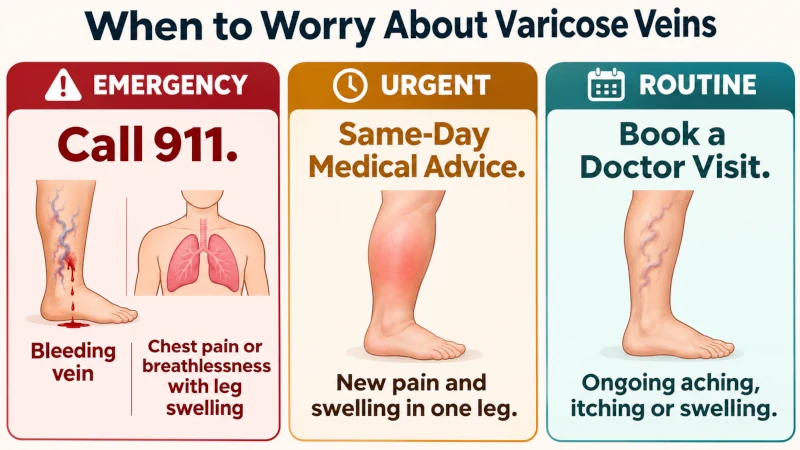
Use this as a guide to how fast you need help:
| If you notice… | What to do |
| A varicose vein that is bleeding | Call 911. This is an emergency [NHLBI, 2023]. |
| Pain and swelling in one leg, often the calf or thigh, with red or darkened skin, plus shortness of breath or chest pain | Call 911. These can be signs of a clot that has traveled to the lungs [NHS, 2026]. |
| Throbbing pain and swelling in one leg, without breathing problems | Get urgent same-day medical advice. It could be a DVT [NHS, 2026]. |
| Vomiting blood, or black, tarry stools | Go to an emergency room now [MedlinePlus Encyclopedia, 2025]. |
| Veins that suddenly get worse, or a new sore on the leg | Contact your doctor promptly [NHLBI, 2023]. |
| A leg sore that hasn’t healed after 2 weeks | Book an appointment [NHS, 2024]. |
| Aching, itching or swelling that bothers you, or veins that are slowly getting worse | See your doctor at a routine visit [NHS, 2024]. |
What helps at home
Self-care won’t make existing varicose veins disappear. It can ease symptoms and may keep them from getting worse [MedlinePlus, 2025]. These steps are low-risk and worth doing:
- Keep moving. Regular physical activity and a healthy weight are first-line advice [NHLBI, 2023; NHS, 2024]. Walking is the easiest way to work your calves. If balance is a concern, the calf raises and chair rises in our fall-prevention exercise guide are a safe way to build leg strength.
- Break up long stretches of sitting or standing, and raise your legs above heart level when you rest [NHS, 2024; MedlinePlus, 2025].
- Don’t cross your legs when sitting, and choose loose clothing over anything tight around the legs or waist [MedlinePlus, 2025]. NHLBI also suggests skipping high heels and restrictive shoes [NHLBI, 2023].
- Look after your skin. Moisturize dry, itchy skin over the veins and try not to knock or cut your legs [NHS, 2024]. Broken skin over a varicose vein can be slow to heal.
- Don’t smoke. Quitting is on both the NHS and NHLBI lists [NHS, 2024; NHLBI, 2023]. Our practical quit-smoking plan walks through the steps and the medicines that help.

Compression stockings
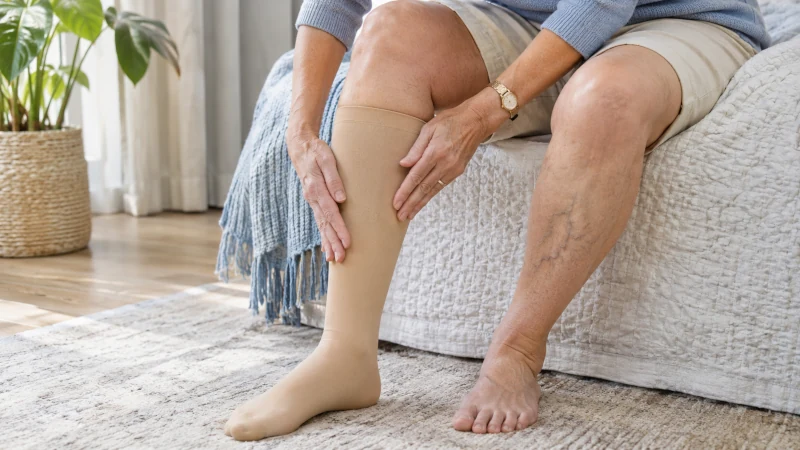
Compression stockings squeeze the leg most at the ankle and less higher up. Doctors often suggest them first. The evidence is weaker than you might expect, though. A 2021 Cochrane review pooled 13 trials with 1,021 people who had varicose veins but no ulcers. Most participants said their legs felt better, but the certainty of the evidence was low to very low. The reviewers couldn’t name a best length or pressure, and some people stopped wearing them because of itching, irritation or discomfort [Knight et al., 2021].
Two practical points. Stockings relieve symptoms but don’t fix the faulty valves underneath [NHLBI, 2023]. And they aren’t suitable for everyone. People with poor arterial blood flow in the legs shouldn’t wear them, so ask your doctor before buying high-pressure stockings [NHS, 2024].
Horse chestnut seed extract
Horse chestnut seed extract is the most studied herbal option for leg vein problems. Keep its limits in mind, though. The research is in chronic venous insufficiency, meaning poor blood flow back from the legs, which often goes along with varicose veins. No study has shown that it makes visible varicose veins shrink.
A Cochrane review of 17 randomized trials found that standardized extracts improved leg pain, swelling and itching over 2 to 16 weeks [Pittler & Ernst, 2012]. One study suggested it may work about as well as compression stockings [NCCIH, 2025]. A later grading of that evidence was more cautious. The extract probably reduces lower-leg volume (moderate certainty), but its effect on pain is uncertain because that evidence is very low quality [Underland et al., 2012].
Safety comes first with this herb:
- Never use the raw plant. Raw horse chestnut seeds, bark, flowers and leaves are toxic. Only extracts processed to remove the toxic part are considered likely safe, and only for short-term use. Studies ran up to 12 weeks [NCCIH, 2025].
- Side effects reported in trials include dizziness, digestive upset, nausea, headache and itching [NCCIH, 2025; Underland et al., 2012].
- Possible interactions. In theory, horse chestnut may raise bleeding risk, and animal studies suggest it may lower blood sugar [Underland et al., 2012]. NCCIH lists no specific drug interactions, but advises talking with a provider before using any herbal product [NCCIH, 2025]. Given that uncertainty, check with your doctor or pharmacist first if you take a blood thinner, aspirin or another antiplatelet drug, or diabetes medicine, or if you have a bleeding disorder.
- Pregnancy and breastfeeding. Little is known about safety, so avoid it unless your clinician says otherwise [NCCIH, 2025].
If you try it, treat it as a possible way to ease symptoms. It doesn’t replace a medical check, especially if one leg is suddenly swollen or painful.
Medical treatments for varicose veins
If your veins cause symptoms or complications, a specialist will usually scan your leg with a duplex ultrasound. This painless test shows which veins are leaking and which way the blood is flowing [NHLBI, 2023; NHS, 2024]. The main options are:
| Treatment | What it involves |
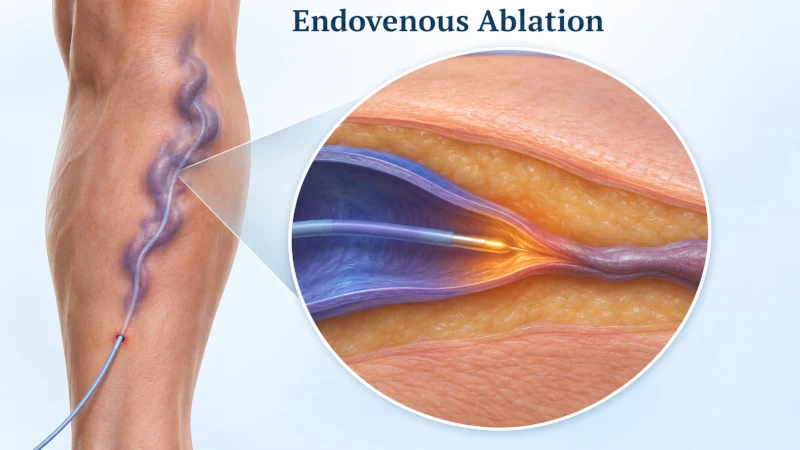
| Endothermal (endovenous) ablation | A thin catheter is passed into the faulty vein, and radiofrequency or laser heat seals it shut. It is done under local anesthetic and you go home the same day. The NHS calls it the usual first choice. Expect to wear compression stockings for about a week afterward [NHS, 2024]. |
| Foam sclerotherapy | A foam medicine is injected into the vein under ultrasound guidance, so the vein scars closed. It is used when ablation isn’t suitable [NHS, 2024]. One clinical review describes most complications as minor. Brownish skin staining and fine new surface veins are common but usually fade [Worthington-Kirsch, 2005]. |
| Ambulatory phlebectomy | Bulging surface veins are removed through tiny cuts in the skin [MedlinePlus, 2025; NHLBI, 2023]. |
| Ligation and stripping (surgery) | The vein is tied off and removed under general anesthetic. It is now used mainly when simpler procedures aren’t suitable. Most people go home the same day and take 1 to 2 weeks off work [NHS, 2024]. |
How do they compare? A 2021 Cochrane review of 24 randomized trials (5,135 participants) found that laser, radiofrequency, foam and surgery had broadly similar technical success in most comparisons. Complication rates were generally low. The certainty of the evidence ranged from low to moderate [Whing et al., 2021]. In practice, your vein anatomy, your health and the specialist’s experience matter as much as the technique.
Set expectations early. New varicose veins can form after any treatment, and some people need repeat sessions [NHLBI, 2023; Antani & Dattilo, 2023]. After some procedures you may be told to keep the treated skin out of the sun or use SPF 30+ sunscreen [NHLBI, 2023]. If your main concern is appearance, be aware that some health systems don’t cover cosmetic-only treatment. The NHS is one of them [NHS, 2024]. Check your insurance before booking.
Treatment during pregnancy
Procedures and surgery aren’t usually recommended while you’re pregnant. Compression stockings may help, and veins often improve after the birth [NHS, 2024]. Your clinician may also suggest pain relief that is safe in pregnancy [NHLBI, 2023].
| HEALTH DISCLAIMER: This article is for general education. It isn’t a substitute for diagnosis or treatment from a qualified health professional. Leg pain and swelling can have causes other than varicose veins, including blood clots. Talk to your doctor before starting compression therapy or any supplement, such as horse chestnut seed extract, especially if you are pregnant, breastfeeding, take blood thinners or diabetes medicine, or have a chronic health condition. If a vein is bleeding, or you have chest pain or trouble breathing, call 911. |
Frequently Asked Questions
Are varicose veins and spider veins the same thing?
No. Spider veins are tiny, flat threads in small vessels near the surface and are usually harmless. Varicose veins are larger, raised and twisted, and are more likely to ache or swell [NHLBI, 2023; NHS, 2024].
Can varicose veins go away on their own?
Do compression stockings cure varicose veins?
No. They can ease aching and swelling, but they don’t repair the faulty valves [NHLBI, 2023]. The research behind them is also less certain than many people assume [Knight et al., 2021].
Can varicose veins come back after treatment?
Yes. New varicose veins can develop after treatment, and repeat procedures are sometimes needed [NHLBI, 2023].
Is it safe to exercise with varicose veins?
Yes. Regular physical activity is part of standard self-care advice [NHLBI, 2023; NHS, 2024]. If one leg suddenly becomes painful, swollen and red, stop and get checked for a clot first [NHS, 2026].
References
- Antani MR, Dattilo JB. Varicose Veins. View source
- Knight (née Shingler) SL, Robertson L, Stewart M. Graduated compression stockings for the initial treatment of varicose veins in people without venous ulceration. View source
- MedlinePlus (National Library of Medicine). Varicose Veins. View source
- MedlinePlus Medical Encyclopedia. Bleeding esophageal varices. View source
- National Center for Complementary and Integrative Health (NCCIH). Horse Chestnut. View source
- National Heart, Lung, and Blood Institute (NHLBI). Varicose Veins. View source
- National Institute of Diabetes and Digestive and Kidney Diseases (NIDDK). Treatment of Hemorrhoids. View source
- NHS. Deep vein thrombosis (DVT). View source
- NHS. Varicose veins. View source
- Pittler MH, Ernst E. Horse chestnut seed extract for chronic venous insufficiency. View source
- Underland V, Sæterdal I, Nilsen ES. Cochrane summary of findings: horse chestnut seed extract for chronic venous insufficiency. View source
- Whing J, Nandhra S, Nesbitt C, Stansby G. Interventions for great saphenous vein incompetence. View source
- Worthington-Kirsch RL. Injection sclerotherapy. Semin Intervent Radiol. View source


