
Sixteen herbs get recommended for hemorrhoids, but they don’t all deserve equal billing. Below, the popular herbs for hemorrhoids are ranked from best-supported to least — so you can see at a glance which ones have real science behind them, which are soothing but traditional, and which one we’d actually steer you away from. A quick reality check before the list: most hemorrhoids ease up within a week or two with simple care, and the strongest performer here is humble fiber.
First, what hemorrhoids are — and why that shapes what helps
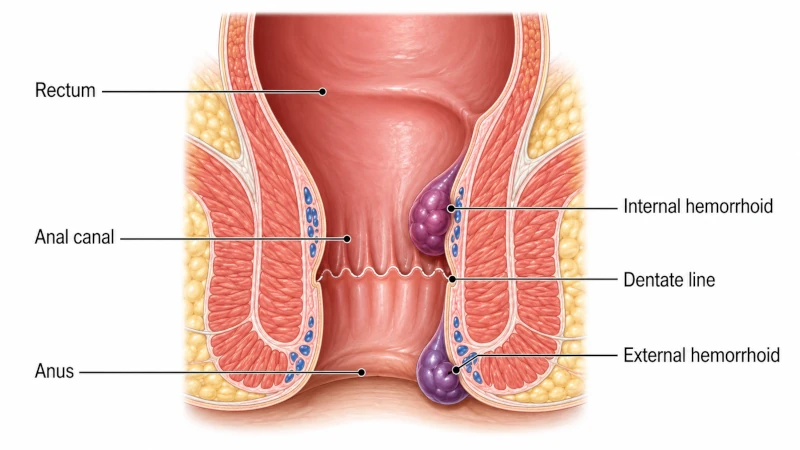
Hemorrhoids (piles) are swollen veins in and around the anus and lower rectum. They’re very common, and they flare when those veins come under pressure — straining, constipation, long sitting, pregnancy. [Cleveland Clinic, 2023] That’s why the remedies worth your time do one of two things: soften stool and reduce straining (the cause), or calm the inflamed tissue (the symptom). Any single plant promising to “cure” or permanently “shrink” hemorrhoids is overselling.
Do herbs for hemorrhoids really work? A quick evidence map
| Tier | What it means | Herbs in this guide |
| Strong | Supported by controlled trials | Psyllium (fiber) |
| Moderate | Real but limited or indirect evidence | Witch hazel, horse chestnut, citrus flavonoids |
| Traditional | Long folk use, little clinical data | Oak, yarrow, tormentil, silverweed, walnut, figwort, cypress, grapevine, cramp bark, blessed thistle, fenugreek |
| Avoid | Risk outweighs any benefit | Sweet clover (yellow melilot) |
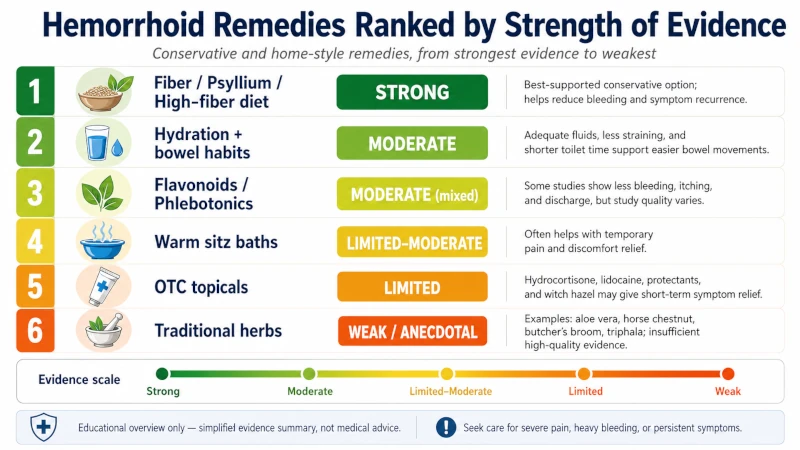
Here’s the full ranked list, strongest evidence first.
The 16 herbs, ranked by evidence
1. Psyllium — Strong evidence
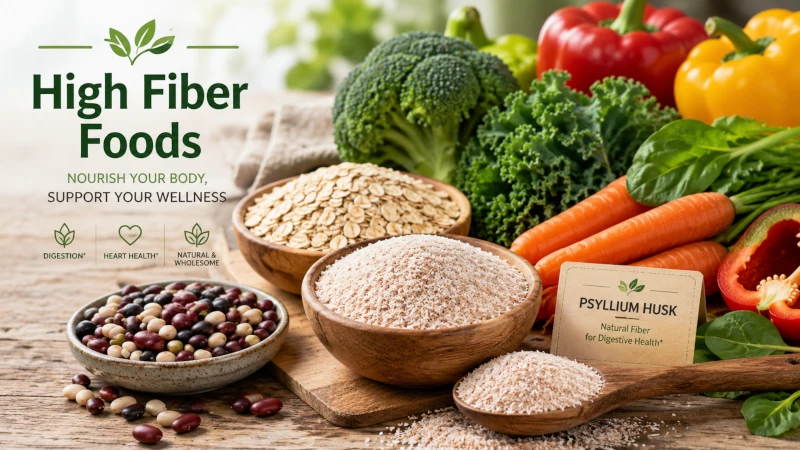
The best-studied remedy here, and the only one backed by a Cochrane review: fiber supplements roughly halved the risk of persistent symptoms and bleeding. [Cochrane, 2005] Psyllium husk absorbs water, softens stool, and cuts the straining that inflames the veins in the first place. Build the dose up slowly, always take it with a full glass of water, and give it a couple of weeks to work.
2. Witch hazel — Moderate evidence (topical relief)
Worth clearing up a common mix-up: the “hazel” traditionally dabbed on hemorrhoids is witch hazel (Hamamelis virginiana), not the edible hazelnut. It’s an astringent that calms itching, irritation, and minor surface bleeding, and it’s the topical herb most major medical sources actually endorse. [Cleveland Clinic, 2023] Think relief, not repair — and skip alcohol-heavy pads if they sting.
3. Horse chestnut — Moderate evidence (indirect)
Standardized horse chestnut seed extract has strong evidence for the leg pain and swelling of chronic venous insufficiency [Cochrane, 2012]; because hemorrhoids are also a vein problem, the rationale carries over, though it hasn’t been proven for them directly. One hard rule: raw horse chestnut seeds, bark, and leaves are poisonous (esculin) [NCCIH] — only processed, standardized extract is safe.
4. Lemon and citrus flavonoids — Moderate evidence (as a concentrated extract)
The kernel of truth in “eat lemons for piles”: citrus flavonoids like diosmin and hesperidin do strengthen vein walls, and a Cochrane review found these phlebotonics help bleeding and symptoms. [Cochrane, 2012] The catch is dose — the benefit comes from standardized oral preparations, not the trace amounts in fruit.
5. Oak bark — Traditional use, limited evidence
Oak is rich in tannins, so a cooled, well-strained decoction in a sitz bath or compress has a mild astringent, drying effect. Long folk history, no hemorrhoid-specific human trials.
6. Yarrow (milfoil) — Traditional use
Used topically in folk medicine for inflamed, itchy flare-ups thanks to its astringent and anti-inflammatory compounds. Fine as a soothing wash; the support is traditional rather than clinical.
7. Tormentil — Traditional use
One of the most tannin-dense herbs, traditionally chosen for bleeding and inflammation. That astringency is plausible for surface relief, but no trial data backs it for hemorrhoids.
8. Silverweed — Traditional use
Another tannin-containing astringent used in compresses to tighten and soothe irritated tissue. Same honest caveat: traditional use, little formal study.
9. Walnut leaf — Traditional use
A decoction of walnut leaves or green husk is an old topical astringent remedy. Reasonable as a wash; not something the clinical literature has tested here.
10. Figwort — Traditional use
A classic folk remedy for skin and anal complaints, applied externally. Evidence is limited, so treat it as soothing tradition rather than a proven treatment.
11. Cypress — Traditional venotonic
Valued in herbalism as a circulatory tonic for varicose veins and hemorrhoids, used in creams or sitz baths. The venotonic idea is reasonable; rigorous hemorrhoid evidence is missing.
12. Grapevine (red vine leaf) — Traditional, shared venotonic rationale
Grape leaves and their flavonoids belong to the same venotonic family as the citrus flavonoids above, and red vine leaf is a traditional remedy for tired, swollen legs. The rationale is sound, but it hasn’t been shown to work for hemorrhoids specifically.
13. Cramp bark — Traditional use
Used in folk practice to ease venous congestion, often paired with other vein-toning herbs. Gentle and low-risk, with mostly traditional support.
14. Blessed thistle (St. Benedict thistle) — Traditional use
Historically used as a wound-cleansing wash and applied to sores. The older claims about it killing specific bacteria aren’t well established, so treat it as a traditional topical, not a proven antiseptic.
15. Fenugreek — Traditional use, with cautions
A cold fenugreek compress or sitz bath is a traditional way to calm a swollen, irritated flare. Two cautions: it’s traditionally avoided in pregnancy, and it can trigger reactions in people allergic to legumes like peanuts and chickpeas.
16. Sweet clover (yellow melilot) — Not recommended
This one’s on the list because you’ll see it recommended elsewhere, including the earlier version of this page — but we’d steer you away from it. Sweet clover contains coumarin, which can convert to dicoumarol, a potent anticoagulant and the historical parent of the blood thinner warfarin. [Pharmacology refs] For a condition defined by bleeding, and especially if you take blood thinners or antiplatelet drugs, that’s the wrong direction [Herb–warfarin review, 2014]. Avoid it in pregnancy too. Skip it for hemorrhoids.
How to use herbal remedies without making things worse
The same ground rules apply to every herb above:
- Topical means topical. Use astringent herbs in sitz baths or compresses on intact skin — don’t insert plant preparations into the rectum.
- Patch-test first. Dab a small amount on nearby skin and wait a day to rule out a reaction.
- Mind your medications. Venotonic and “circulation” herbs can interact with blood thinners, blood-pressure drugs, or diabetes medication. A pharmacist can check your list for free.
- Choose standardized products. Supplements aren’t tightly regulated, so potency and purity vary; reputable, standardized brands are the safer bet.
- Be cautious in pregnancy and breastfeeding. Many herbs lack safety data here; check with your clinician first.
- Herbs complement the basics — they don’t replace them. Fiber, fluids, and not lingering on the toilet are what actually reduce recurrence.
When to stop self-treating and see a doctor
Hemorrhoids are usually harmless, but some symptoms overlap with conditions that aren’t, including inflammatory bowel disease and colorectal cancer. See a clinician promptly if you have:
- Rectal bleeding for the first time, or bleeding that changes or increases — don’t assume blood is “just hemorrhoids.”
- Black, tarry, or maroon stools, which can signal bleeding higher in the gut.
- Severe pain or a hard, tender lump (possibly a thrombosed hemorrhoid).
- Symptoms that don’t improve after about a week of diligent self-care, or that keep worsening.
- Dizziness, fatigue, or breathlessness, which can point to anemia from ongoing blood loss.
- New changes in bowel habits, especially over age 45 or with a family history of colorectal cancer.
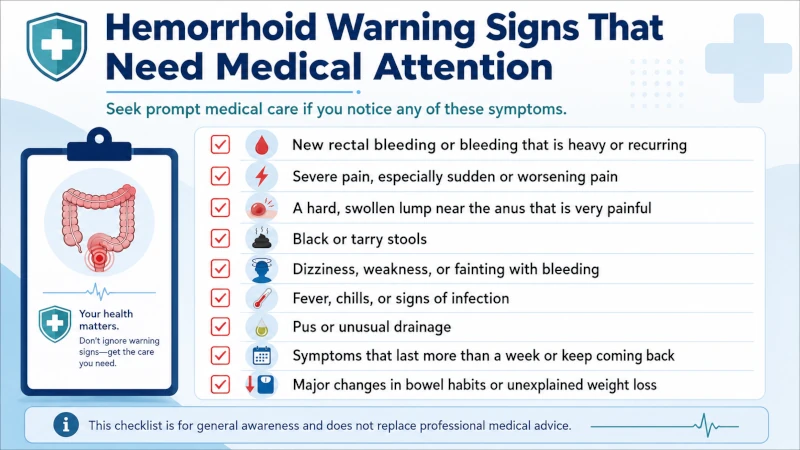
Getting checked isn’t a failure of home care — it’s how you rule out the serious causes and reach quick in-office treatments when herbs and fiber aren’t enough. [Cleveland Clinic, 2025]
| Health Disclaimer This article is for general education and information only. It is not a substitute for diagnosis, advice, or treatment from a qualified healthcare professional. Herbal and natural remedies can have side effects and can interact with medications. If you are pregnant or breastfeeding, take prescription drugs (especially blood thinners), or have an existing medical condition, talk to your doctor or pharmacist before using any herb or supplement mentioned here. Rectal bleeding should always be evaluated by a clinician. |
Frequently Asked Questions
What’s the best herb for hemorrhoids?
By the evidence, fiber — especially psyllium — is the strongest performer, because it treats the straining that drives hemorrhoids in the first place. For topical relief during a flare, witch hazel is the herb most major medical institutions actually recommend.
Can herbs cure hemorrhoids?
No remedy “cures” them. The useful ones ease symptoms and reduce flare-ups; lasting resolution comes from addressing the cause and, for stubborn cases, from in-office procedures.
Is witch hazel safe to use on hemorrhoids?
Yes, used topically on the skin around the anus. It can soothe itching and irritation. Watch out for alcohol-containing pads, and don’t use it internally.
How long do hemorrhoids take to go away?
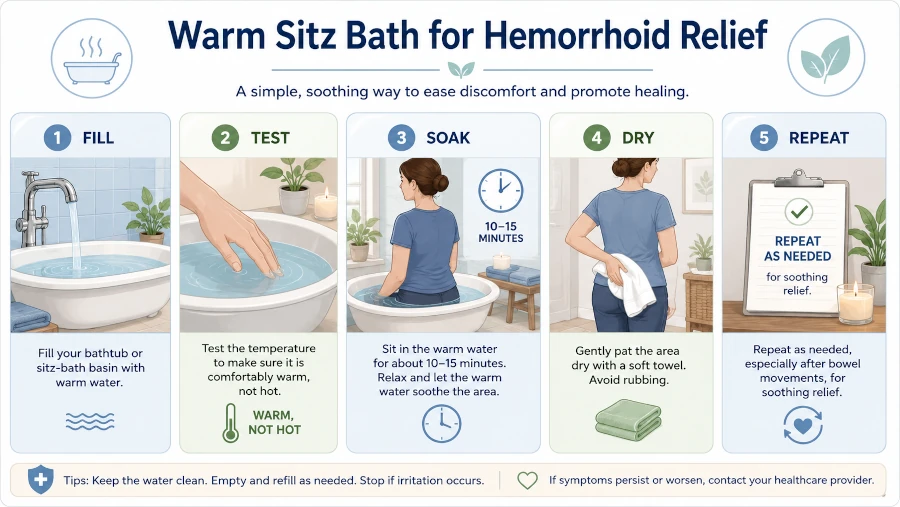
Smaller ones often improve within one to two weeks with fiber, fluids, and sitz baths. If yours haven’t improved after about a week, or symptoms are worsening, see a doctor.
Are there any herbs I should avoid for hemorrhoids?
Yes. Skip sweet clover (yellow melilot), which has anticoagulant potential that’s risky for a bleeding condition and dangerous with blood thinners. Never use raw horse chestnut, which is toxic — only standardized extract is safe. And be cautious with fenugreek in pregnancy.
When should I see a doctor instead of treating hemorrhoids at home?
Any new, changing, or heavy rectal bleeding; black or tarry stools; severe pain or a hard lump; symptoms lasting beyond a week; or signs of anemia like dizziness and fatigue all warrant a visit.
References
- Alonso-Coello P, et al. Laxatives for the treatment of hemorrhoids. Cochrane Database Syst Rev, 2005 (CD004649). View source
- Perera N, et al. Phlebotonics for haemorrhoids. Cochrane Database Syst Rev, 2012 (CD004322). View source
- Pittler MH, Ernst E. Horse chestnut seed extract for chronic venous insufficiency. Cochrane Database Syst Rev, 2012 (CD003230). View source
- Cochrane Complementary Medicine. Horse Chestnut Seed Extract for CVI (esculin toxicity summary). View source
- Cengiz TB, Gorgun E. Hemorrhoids: A range of treatments. Cleveland Clinic Journal of Medicine, 2019. View source
- Cleveland Clinic. Hemorrhoids: Symptoms, Causes & Treatment. View source
- Cleveland Clinic. Thrombosed Hemorrhoids. View source
- Harvard Health Publishing. Natural remedies for hemorrhoids, 2024. View source
- Micronized Purified Flavonoid Fraction in Hemorrhoid Disease: A Systematic Review and Meta-Analysis. Advances in Therapy, 2020. View source
- Risks of Oral Anticoagulants: Interactions with Drugs and Medicinal Plants (sweet clover / dicoumarol), 2025. View source
- Updates on the Clinical Evidenced Herb–Warfarin Interactions (melilot case reports), 2014. View source
- NIDDK. Hemorrhoids (canonical patient resource). View source
