
If you want to know how to lower triglycerides naturally, the short version is that the same habits that protect your heart — cutting sugar, moving more, losing extra weight, and easing off alcohol — also bring this blood fat down, often without medication. Triglycerides are the most common type of fat in your blood, and when they stay high they raise the risk of heart disease, stroke, and inflammation of the pancreas. [Mayo Clinic, 2026] [NHLBI, 2023]
How far you get without a prescription depends on your starting number. Borderline and moderately high levels often respond well to diet and lifestyle alone. Levels at or above 500 mg/dL are a different situation that usually needs medical treatment alongside those changes. What follows is what raises triglycerides, what the numbers mean, and which natural approaches actually hold up in human research — graded honestly, so a well-supported step is easy to tell apart from a hopeful one.
What Triglycerides Are, and Why a High Number Matters
Triglycerides are a fat your body burns for energy. Eat more calories than you use — especially from sugar and refined starch — and the surplus is converted to triglycerides and stored in fat cells until it’s needed. [Mayo Clinic, 2026]
They aren’t the same as cholesterol, though both show up on the same blood test. The problem is sustained elevation. High triglycerides help stiffen and thicken artery walls (arteriosclerosis), which raises the odds of a heart attack or stroke, and they tend to travel with belly fat, high blood sugar, and low HDL (“good”) cholesterol — the cluster known as metabolic syndrome. [Mayo Clinic, 2026] [NHLBI, 2023]
One level is closer to an emergency. Above 500 mg/dL, triglycerides can set off acute pancreatitis, a sudden and painful inflammation of the pancreas. [NHLBI, 2023] For how blood-fat problems connect to wider heart and lung health, see our guide to cardiovascular and pulmonary disease.
What Your Triglyceride Numbers Mean
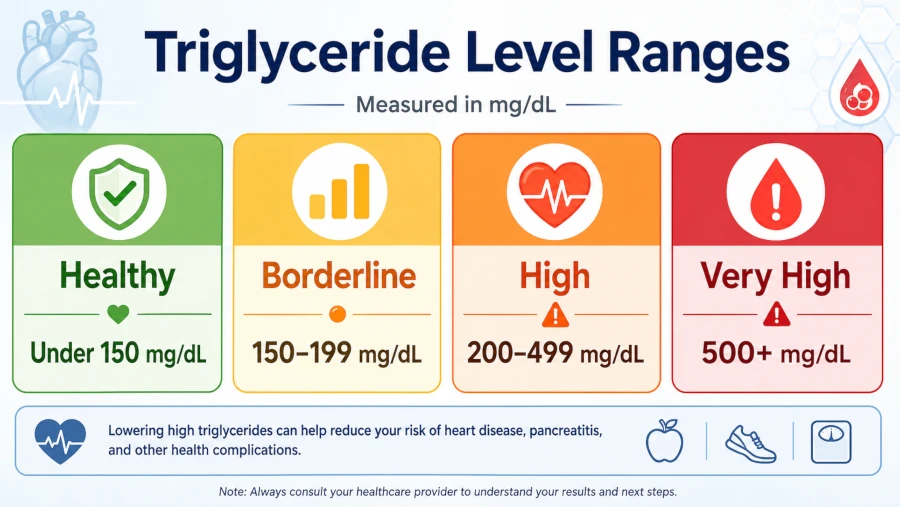
A lipid panel reports triglycerides in milligrams per deciliter (mg/dL). The standard ranges: [Mayo Clinic, 2026] [NHLBI, 2023]
| Category | Level (mg/dL) | What it means |
| Healthy | Below 150 | Lower risk; keep it here |
| Borderline high | 150–199 | Worth watching and trimming |
| High | 200–499 | Raised cardiovascular risk |
| Very high | 500 or above | Pancreatitis risk; needs medical care |
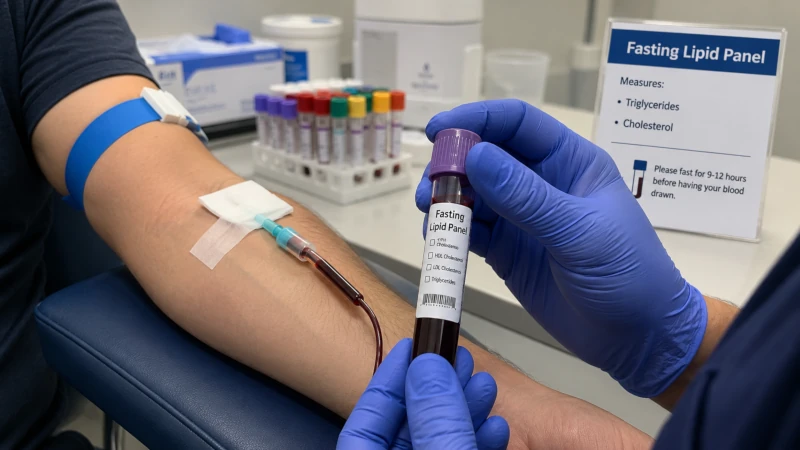
One detail moves your result more than people expect: fasting. Eating shortly before the draw can inflate the number, so labs usually ask you to fast 9 to 12 hours first. [Mayo Clinic, 2026] And a single reading is just a snapshot — your doctor weighs it against your HDL, LDL, blood pressure, and blood sugar before deciding what to do.
What Pushes Triglycerides Up
Knowing your own driver tells you where to aim. The usual causes: [Mayo Clinic, 2026] [NHLBI, 2023]
- Too many calories, especially from added sugar and refined carbs — soda, juice, pastries, white bread, and large pasta portions
- Regular alcohol, which strongly prompts the liver to make triglycerides
- Excess weight, particularly fat around the abdomen
- Too little physical activity
- Poorly controlled type 2 diabetes
- An underactive thyroid (hypothyroidism)
- Chronic kidney or liver disease
- Some medicines — diuretics, beta-blockers, steroids, estrogen, retinoids, and certain HIV drugs
- Rare inherited disorders of fat metabolism
If a medicine looks like the cause, your doctor can adjust the dose or switch you to an alternative. Don’t stop a prescription on your own.
How to Lower Triglycerides Naturally — Ranked by Evidence
These are ordered roughly by how strong the human evidence is. The first five are well established. The rest help, but expect smaller or less certain effects.
Cut added sugar and refined starch
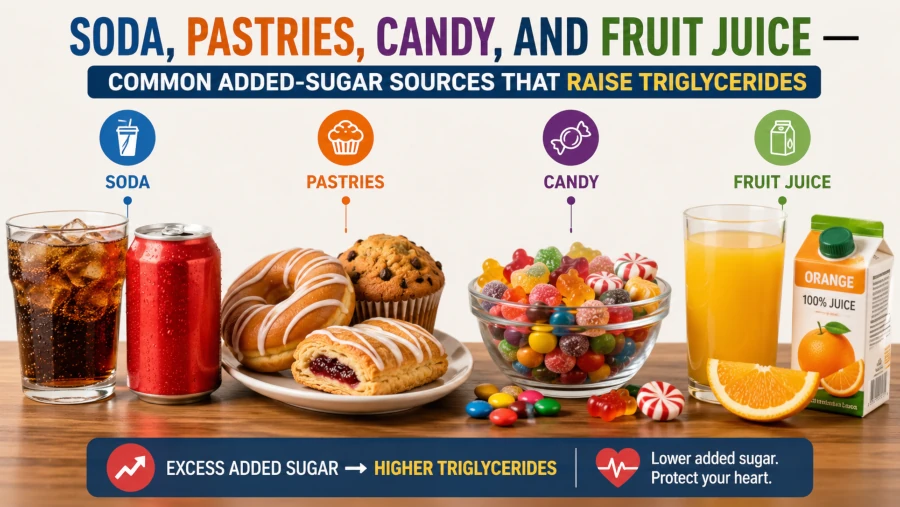
For most people this is the highest-yield change. Fructose especially is routed straight to the liver, which turns it into fat and ships it out as triglycerides. The American Heart Association suggests capping added sugar at roughly 25 g (6 teaspoons) a day for most women and 36 g (9 teaspoons) for most men. [AHA, 2024]
In practice, cut the liquid sugar first — soda, sweetened coffee, energy drinks, big glasses of juice — then pastries, candy, sweetened cereal, and sweetened yogurt. Large servings of white bread, white rice, and ordinary pasta count too. Trade them for beans, lentils, oats, barley, vegetables, and whole fruit, which raise blood sugar and triglycerides far more gently. For how sweeteners behave in the body, our guides to the dangers of excess sugar and the different types of sugar go deeper.
Eat oily fish, or take omega-3s
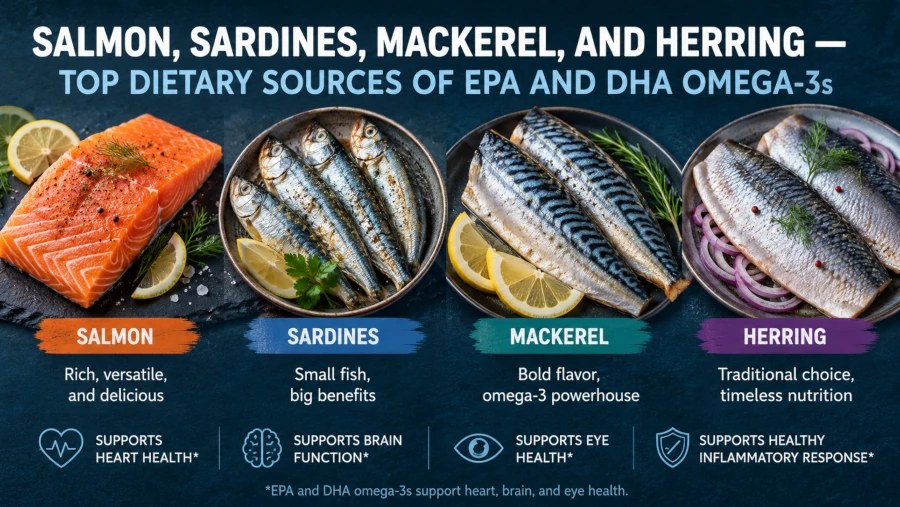
The EPA and DHA in oily fish have some of the strongest trial evidence of any dietary step for triglycerides. A 2023 dose-response meta-analysis pooling 90 randomized controlled trials and 72,598 people found triglycerides dropped in a near-straight line as omega-3 intake rose, with the clearest effect above 2 g a day in people with high lipids or excess weight. [Wang et al., 2023] The NIH Office of Dietary Supplements agrees that EPA and DHA reliably lower triglycerides, and prescription-strength omega-3 products are FDA-approved for very high levels. [NIH ODS, 2024]
The richest sources are salmon, mackerel, sardines, herring, and anchovies; two servings of about 3.5 ounces a week is the common target. [AHA, 2024] A caveat on supplements: over-the-counter fish oil varies widely in how much active EPA and DHA it contains, and trial doses are high. Because fish oil can thin the blood, clear high-dose supplements with your doctor first — especially if you already take a blood thinner. [Mayo Clinic, 2026]
Move most days
Aerobic exercise lowers triglycerides through several routes: it burns calories, curbs how much the liver produces, and helps the blood clear fat faster. It works even when the scale won’t budge, which makes it valuable when weight loss has stalled. [Mayo Clinic, 2026] Mayo Clinic and the NHLBI both point to about 30 minutes of moderate activity on most days — brisk walking, cycling, swimming, and dancing all count. If you’ve been inactive or have a heart condition, ask your doctor what’s safe before ramping up. [NHLBI, 2023]
Shed extra weight if you’re carrying it
Losing even a modest amount — often cited as 5 to 10% of body weight — can meaningfully lower triglycerides in people who are overweight. Abdominal fat is especially active, releasing fatty acids the liver repackages as triglycerides, so trimming it pays off out of proportion to its size. [Mayo Clinic, 2026]
Cut back on alcohol
Alcohol hits triglycerides hard. It’s calorie-dense, it crowds out better food, and it directly tells the liver to make more triglycerides — so even moderate drinking can raise levels in sensitive people. If your triglycerides are very high (above 500 mg/dL), guidelines generally advise dropping alcohol entirely. [Mayo Clinic, 2026] [NHLBI, 2023]
Quit smoking
Tobacco lowers HDL cholesterol and feeds the inflammation and oxidative stress that worsen a lipid profile. Stopping improves several heart-risk factors over time, and the NHLBI lists it among its core steps for managing high triglycerides. [NHLBI, 2023]
Lean on soluble fiber
Soluble fiber — the beta-glucan in oats, the pectin in apples and citrus, plus legumes and psyllium — slows sugar absorption and blunts the after-meal blood-sugar spike, leaving less sugar to be converted into triglycerides. The direct effect is modest next to omega-3s, but fiber also supports cholesterol and gut health, so it earns its place. [NHLBI, 2023] Whole-food carbs like beans, lentils, oats, and barley deliver fiber and slow-release energy at once.
Consider garlic — with realistic expectations
Garlic has a long folk reputation for heart health, and the data lean positive. A 2025 meta-analysis in Nutrition Reviews pooling 108 randomized trials and 7,137 participants found garlic supplementation cut triglycerides by about 6 mg/dL on average (weighted mean difference −5.82 mg/dL), with smaller improvements in total and LDL cholesterol. [Behrouz et al., 2025] Keep that in perspective: the effect is far smaller than diet, exercise, or omega-3s deliver, and earlier reviews were more mixed. Garlic supplements are generally safe at usual doses but can add to blood thinners such as warfarin and aspirin, so tell your doctor if you take them regularly.
Natural Strategies, Graded by Evidence
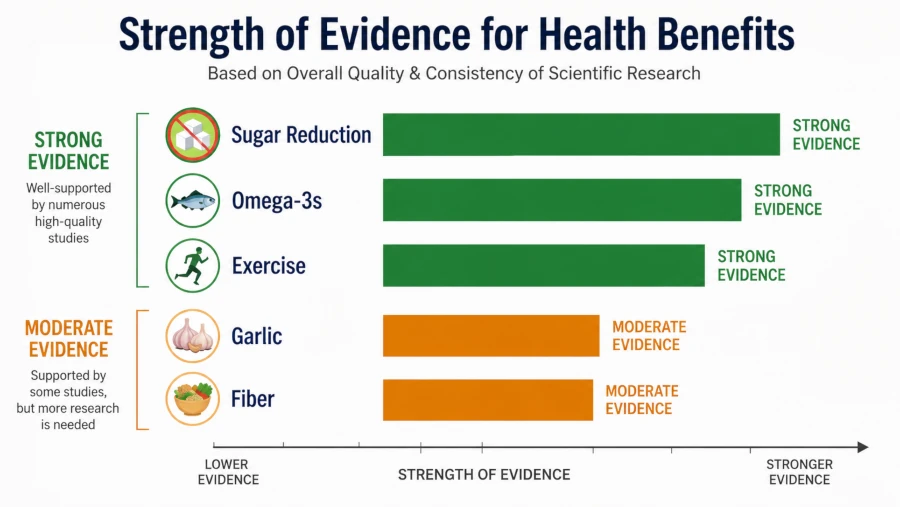
| Strategy | Strength of human evidence |
| Cut added sugar and refined starch | Strong — well established |
| Omega-3s (oily fish or supplements) | Strong — consistent trial evidence |
| Regular aerobic exercise | Strong — works even without weight loss |
| Lose excess weight | Strong — dose-dependent effect |
| Limit or cut alcohol | Strong — direct causal mechanism |
| Quit smoking | Moderate — indirect lipid benefit |
| Soluble fiber (oats, psyllium) | Moderate — supportive, smaller effect |
| Garlic supplements | Moderate — small but real average effect |
| Fenugreek, wild yam, reishi | Weak — limited human data |
Grades reflect the consistency of human clinical trials and systematic reviews, not animal or laboratory work.
Herbs and Supplements with Weaker Evidence
These come up often but don’t yet have the human evidence to earn a recommendation. They shouldn’t replace the proven steps above, and you should clear any of them with a healthcare professional first — especially alongside other medication.
- Fenugreek — small studies hint at lipid and blood-sugar benefits, but the trials are mostly low quality.
- Wild yam — traditional use for metabolic support, with very little controlled human data on triglycerides.
- Reishi mushroom — some animal and small human studies suggest lipid effects; stronger human trials are needed.
- Berberine — lowers lipids in some trials, with more evidence for cholesterol than triglycerides, and it interacts with several drugs. See our guide to supplements that help lower cholesterol.
- Carnitine — a few trials show a modest triglyceride drop, but results are inconsistent in otherwise healthy adults.
| Health Disclaimer This article is for general education and is not a substitute for professional medical advice, diagnosis, or treatment. High triglycerides are a medical condition that should be evaluated by a qualified healthcare provider. Do not start, stop, or change any medication or supplement without talking to your doctor first. If you are pregnant, breastfeeding, taking prescription drugs, or managing a chronic condition, check with your physician before changing your diet or adding supplements. Seek prompt medical care for severe abdominal pain, chest pain, or shortness of breath. |
When to See a Healthcare Professional
Lifestyle changes handle borderline and moderately high triglycerides well, but some situations need medical care:
- Your fasting triglycerides are 500 mg/dL or higher — get evaluated promptly because of the pancreatitis risk.
- Levels stay high (200+ mg/dL) after three to six months of genuine diet and lifestyle changes.
- You already have heart disease, diabetes, or metabolic syndrome — your targets and treatment options may differ.
- You develop sudden, severe abdominal pain — a possible sign of pancreatitis that needs emergency care.
- You’re pregnant — triglyceride management in pregnancy needs specialist oversight.
Prescription options include fibrates, high-dose prescription omega-3s, statins, and niacin. Your doctor picks the approach based on your numbers, history, and other risk factors. [Mayo Clinic, 2026]
Frequently Asked Questions
How fast can triglycerides drop with diet changes?
They respond quickly. Cutting sugar and alcohol can produce a measurable drop within two to four weeks. Bigger reductions tied to weight loss and exercise take longer — usually three to six months — but tend to last.
Can I lower triglycerides without medication?
Often, yes. For borderline or moderately high levels (150–499 mg/dL), consistent changes — less sugar, regular exercise, less alcohol, and weight loss if needed — are frequently enough to reach a healthy range. Very high levels (500+ mg/dL) almost always need medication too.
Which foods raise triglycerides the most?
Sugary drinks and large amounts of juice, refined grains (white bread, white rice, pastries), candy, and alcohol. Saturated fat from red meat and full-fat dairy can add to it, though its effect is smaller than sugar and alcohol.
Does lowering cholesterol also lower triglycerides?
Not always — they’re related but separate. A statin that lowers LDL well may do little for triglycerides, while omega-3s lower triglycerides strongly but do less for LDL. Your doctor can advise on the right combination for your full panel.
Can I test triglycerides at home?
Home lipid kits exist but are generally less accurate than a lab fasting panel. For a reliable number, get a standard lipid panel through your doctor after a 9–12 hour fast.
References
- Mayo Clinic Staff. (2026). Triglycerides: Why do they matter? Mayo Clinic. → View source
- National Heart, Lung, and Blood Institute. (2023). High Blood Triglycerides. NHLBI, NIH. → View source
- American Heart Association. (2024). Added Sugars. AHA. → View source
- Wang T, Zhang X, Zhou N, et al. (2023). Association Between Omega-3 Fatty Acid Intake and Dyslipidemia: A Continuous Dose-Response Meta-Analysis of RCTs. J Am Heart Assoc, 12(11):e029512. → View source
- National Institutes of Health, Office of Dietary Supplements. (2024). Omega-3 Fatty Acids: Health Professional Fact Sheet. NIH ODS. → View source
- Behrouz V, Zahroodi M, Clark CCT, et al. (2025). Effects of Garlic Supplementation on Cardiovascular Risk Factors in Adults: A Comprehensive Updated Systematic Review and Meta-Analysis of RCTs. Nutrition Reviews, 84(1):1–35. → View source
