If you came here looking for blood-cleansing herbs, the most useful thing I can tell you up front is that your blood is already being cleaned around the clock — by your liver, kidneys, and lungs — and no tea or capsule does that job better than they do [Medical News Today, 2019]. That’s not a brush-off. It means the smart question isn’t “which herb purifies my blood,” but “which foods and herbs actually change something measurable in my blood, and are they safe for me?” A few genuinely do. A few can also send you to the emergency room if you’re on the wrong medication. This page sorts one from the other.
What “blood cleansing” actually means
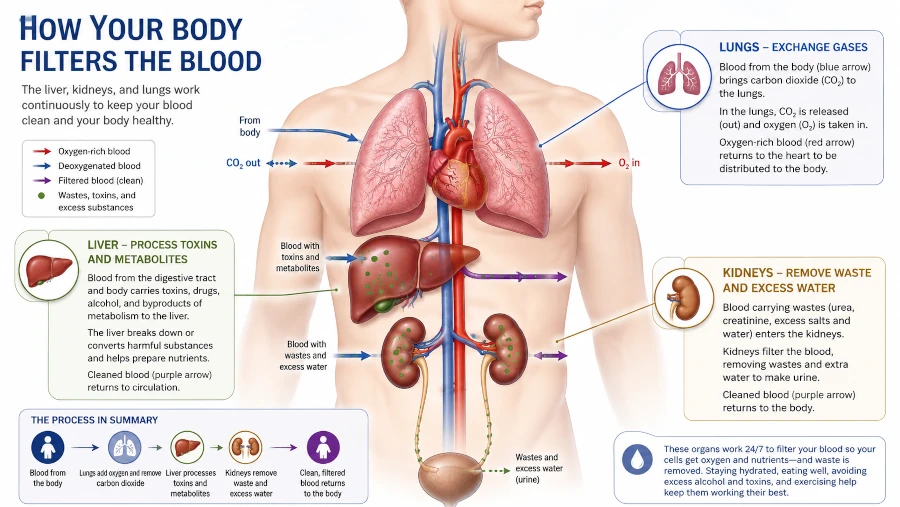
“Blood cleansing” and “blood detox” are marketing terms, not medical ones. Your liver filters toxins and breaks them down, your kidneys flush waste out through urine, and your lungs clear gases every time you exhale [Medical News Today, 2019]. When these organs are healthy, there’s nothing left over for a herb to “purify.”
What you can do is support those organs and give your body the raw materials it uses to build healthy blood — and that’s where a handful of foods and herbs earn their place. So for the rest of this page, forget “cleansing.” We’ll talk about three real things instead: helping your body make red blood cells, supporting your heart and vessels, and — the part most lists ignore — herbs that change how easily your blood clots.
Foods and herbs that genuinely help your blood
For low iron: plant iron plus vitamin C
If your blood work has shown low iron, this is the most evidence-based section on any “blood herb” page. Iron is the core of hemoglobin, the protein your red blood cells use to carry oxygen, and iron-deficiency anemia is the most common nutritional deficiency in the world [Mayo Clinic, 2025].
Two practical points the older herb lists get wrong.
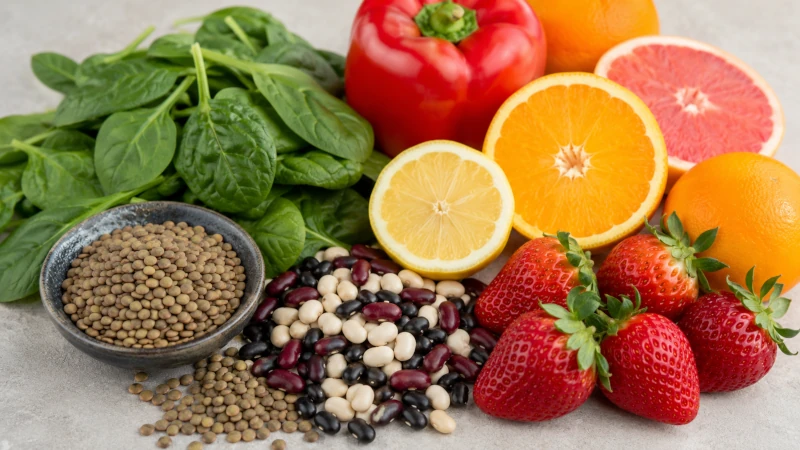
First, plant iron is not as readily absorbed as animal iron. The iron in meat (heme iron) is absorbed far more efficiently than the non-heme iron in plants, which is why a plant-forward eater has to be a bit more deliberate [Skolmowska & Głąbska, 2022]. That doesn’t make plants a bad source — beans, lentils, dark leafy greens, and iron-fortified foods all count — it just means pairing matters.
Second, vitamin C genuinely helps. It converts plant iron into a form your gut absorbs more easily, so eating something vitamin-C-rich alongside iron-rich food — citrus, bell pepper, strawberries, tomato — measurably improves uptake [Skolmowska & Głąbska, 2022]. (One large trial found that for people already treating diagnosed anemia with iron tablets, adding vitamin C didn’t speed recovery much, so think of vitamin C as a helpful everyday habit for food iron, not a cure on its own [Li et al., 2020].)
Herbs marketed as “antianemic” — nettle, spirulina, watercress — do contain iron and other nutrients, and they’re fine as part of a varied diet. But there’s no strong evidence that any of them treats anemia better than ordinary iron-rich foods, and none should replace a proper diagnosis. If you’re tired enough to be searching for blood herbs, get a blood test before you start dosing yourself with anything, including iron — too much iron is harmful and can damage the liver [Mayo Clinic, 2025].
Garlic and the heart-and-vessels crowd
Garlic is the one item on the classic list with a real body of human evidence behind it. Pooled analyses of randomized trials show garlic supplements modestly lower blood pressure in people with hypertension — on the order of a few millimeters of mercury — and nudge cholesterol in a helpful direction [Ried, 2015]. “Modest” is the honest word; this is a supporting habit, not a substitute for prescribed blood-pressure medication. Onion and other allium vegetables sit in the same general category: reasonable as food, oversold as medicine.
Notice what garlic does not do: it doesn’t “cleanse” anything. Its benefits are cardiovascular, and — as you’ll see in a moment — its effect on platelets is exactly why it shows up on a very different kind of list.
The “antianemic” herbs you’ll see on most lists
The long tables of alfalfa, sorrel, knotweed, smartweed, and the rest come largely from traditional herbal encyclopedias rather than clinical research. Traditional use is interesting and sometimes points somewhere real, but it isn’t the same as evidence that a herb does what the table claims. Treat those lists as folklore worth respecting, not as a treatment plan, and don’t read a herb’s appearance on one as proof it’s both effective and safe for you.
The part those lists skip: herbs that change how your blood clots
Here’s the section that should be at the top of every “blood herb” article and almost never is.
“Natural blood thinners” are mostly a safety story
It’s true that several common herbs and foods reduce the blood’s tendency to clot — garlic, ginger, ginkgo, turmeric, and others can interfere with platelets or clotting [NCCIH] [Tsai et al., 2013]. The older version of this page framed that as a benefit: take these to prevent clots in your brain and heart. That framing is the problem.
If you actually need your blood thinned — because of atrial fibrillation, a previous clot, or a stent — you need a prescription anticoagulant or antiplatelet drug, dosed and monitored by a clinician. Herbs are too variable and unmeasured to do that job. And if you don’t need thinning, casually adding clot-reducing herbs mostly adds bleeding risk for no clear benefit. Either way, “natural blood thinner” is the wrong goal to chase on your own.
If you take a blood thinner or other daily medication
This is the genuinely important warning. Combining clot-affecting herbs with prescription blood thinners can cause serious, even fatal, bleeding. Taking ginkgo with warfarin is linked to a higher risk of major bleeding [NCCIH]. A systematic review found that danshen, dong quai, ginger, ginkgo, licorice, and turmeric can add to the effect of anticoagulant and antiplatelet drugs, mostly raising bleeding risk [Tsai et al., 2013]. There’s even a published case of a man on a newer anticoagulant (dabigatran) who died of gastrointestinal bleeding days after starting a homemade ginger-and-cinnamon brew [Stöllberger & Finsterer, 2019].
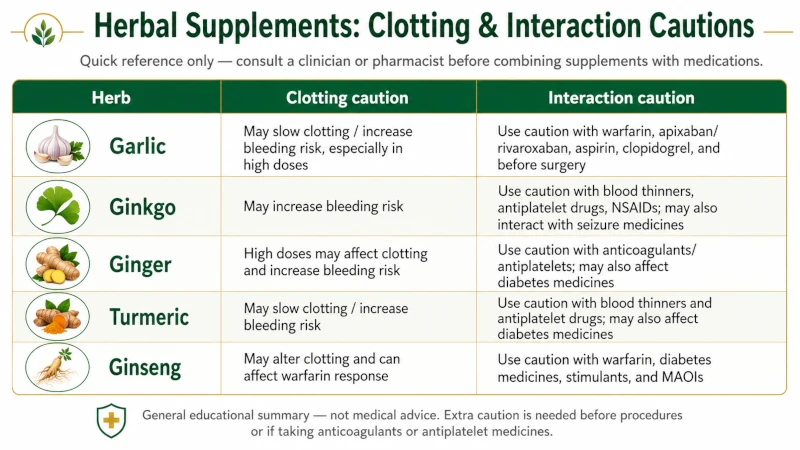
The herb–drug problem runs both directions: St. John’s wort, for instance, can weaken anticoagulants and other drugs, raising clot risk instead [NCCIH]. The practical rule is simple: if you take any prescription medication — especially a blood thinner, but also drugs for diabetes, blood pressure, or seizures — tell your doctor or pharmacist before adding any herb or supplement. “Natural” does not mean “no interactions.”
A quick reference for the herbs that come up most often:
| Herb | What it can do to blood / clotting | Main caution |
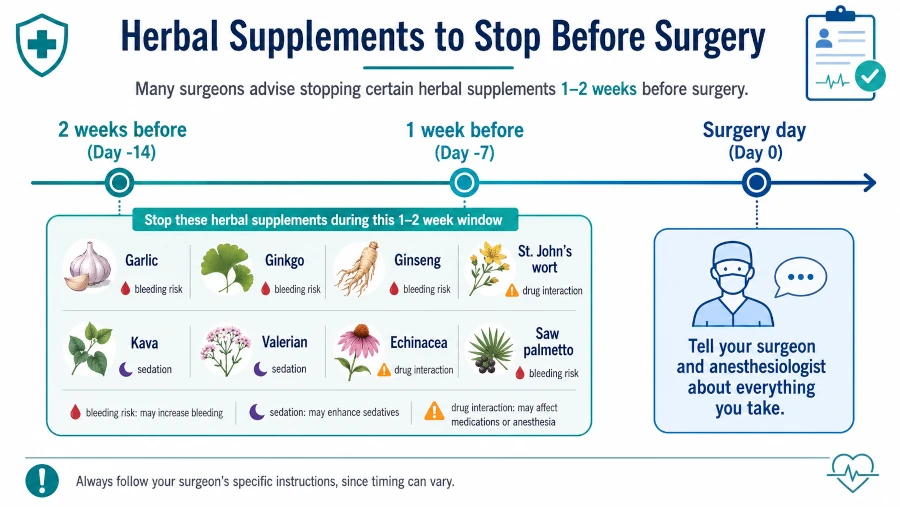
| Garlic | May reduce platelet stickiness; modestly lowers blood pressure | Strong evidence for surgical bleeding; pause ~2 weeks before surgery; caution with blood thinners |
| Ginkgo | May reduce clotting | Higher major-bleeding risk when combined with warfarin; stop before surgery |
| Ginger | May reduce platelet aggregation | Can add to anticoagulant effects; a published case linked a ginger–cinnamon brew to fatal bleeding on dabigatran |
| Turmeric | May affect clotting | Linked to raised bleeding/INR in people on anticoagulants |
| Ginseng | Variable effects on platelets | Often held ~2 weeks before surgery; interaction data are mixed |
| St. John’s wort | Speeds drug metabolism | Can weaken warfarin and many medications, which may raise clot risk |
Sources: NCCIH; Tsai et al., 2013; SPAQI / Mayo Clinic Proceedings, 2021; NIH/PMC review on supplements and bleeding.
Before any surgery or dental procedure
Tell your surgeon and anesthesiologist about every supplement you take. Major anesthesiology and perioperative groups advise stopping many herbs one to two weeks before surgery, because they can increase bleeding or interfere with anesthesia [ASA, via URMC] [SPAQI / Mayo Clinic Proceedings, 2021]. Garlic and ginkgo are repeatedly flagged for bleeding, and one expert consensus lists garlic, ginger, ginkgo, ginseng, turmeric, and others among supplements to hold for two weeks beforehand [SPAQI / Mayo Clinic Proceedings, 2021]. This matters most for procedures where bleeding is dangerous, like brain or spine surgery.
Herbs to “stop bleeding” — please don’t
Older lists also promote “hemostatic” herbs to stop bleeding, internally and externally. Skip this idea entirely. Abnormal or unexplained bleeding — heavy periods, blood in stool or urine, frequent nosebleeds, bruising you can’t explain — is a reason to see a clinician, not to brew a tea. It can signal anything from a treatable iron-loss problem to something serious, and a herb that masks it can delay the diagnosis you actually need [Mayo Clinic, 2025].
Who should be extra careful, and who should skip these
- Anyone on a blood thinner or antiplatelet drug (warfarin, apixaban, rivaroxaban, dabigatran, clopidogrel, daily aspirin): treat clot-affecting herbs as off-limits unless your clinician says otherwise.
- People who are pregnant or breastfeeding: many herbs aren’t well studied in pregnancy, and some — ginkgo, for example — may be unsafe, with a risk of extra bleeding near delivery [NCCIH]. Clear any herb with your obstetric provider first.
- People with a bleeding disorder or a clotting disorder, or anyone with upcoming surgery.
- People with liver or kidney disease, since those are the organs doing the real filtering.
- Anyone whose “I think I’m anemic” hasn’t been confirmed by a blood test. Self-dosing iron or “blood-building” herbs without a diagnosis can hide the real cause and cause iron overload [Mayo Clinic, 2025].
When to stop reading lists and see a doctor
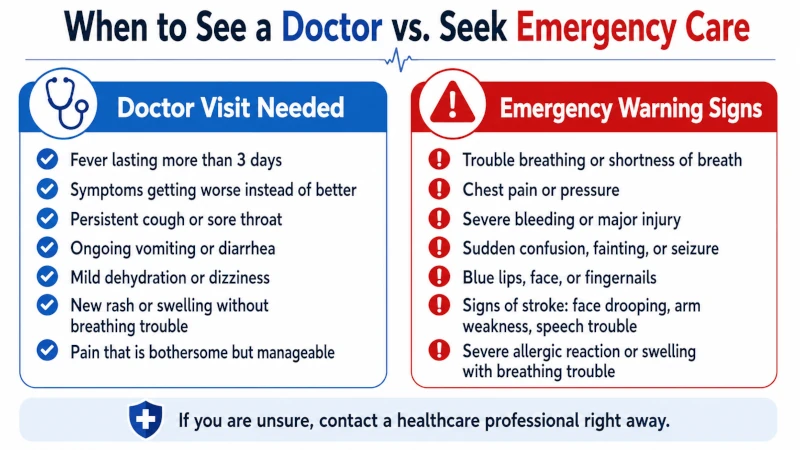
See a healthcare professional rather than self-treating if you have ongoing fatigue, shortness of breath, a fast or irregular heartbeat, dizziness, pale skin, or unusual cravings for things like ice — these can be signs of anemia that needs a diagnosis, not a guess [Mayo Clinic, 2025] [Cleveland Clinic, 2026].
Seek urgent care for chest pain, sudden severe shortness of breath, a swollen, hot, painful leg (a possible clot), signs of a stroke (face drooping, arm weakness, slurred speech), or bleeding you can’t stop. Those are emergencies. No herb on any list is the answer to them.
| A quick, honest disclaimer Please read this part. This article is for general education, not medical advice, and it isn’t a substitute for diagnosis or treatment from a qualified professional. Herbs and supplements can interact with medications and aren’t suitable for everyone. If you’re pregnant or breastfeeding, take any prescription medication (especially a blood thinner), have a bleeding or clotting condition, or have surgery coming up, talk to your doctor or pharmacist before using any herbal or “blood-cleansing” product. If you have symptoms that worry you, get them checked rather than self-treating. |
Frequently Asked Questions
Do blood-cleansing herbs actually detox your blood?
Not in the way the term suggests. Your liver, kidneys, and lungs continuously filter and clear your blood on their own, and “blood cleanser” products have little scientific support [Medical News Today, 2019]. Eating well and staying active supports those organs; no herb does their job for them.
What’s the safest “natural blood thinner”?
The safest approach is not to treat any herb as a blood thinner. If you have a medical reason to thin your blood, you need a monitored prescription drug. If you don’t, adding clot-affecting herbs like ginkgo, garlic, or ginger mostly adds bleeding risk — and can be dangerous if you’re already on medication [NCCIH] [Tsai et al., 2013].
I’m tired all the time — should I take iron or a blood-building herb?
Get a blood test first. Fatigue has many causes, and taking iron without a diagnosis can be harmful, since excess iron damages the liver and other organs [Mayo Clinic, 2025]. If you are low in iron, iron-rich foods paired with vitamin C help, but let a clinician guide treatment.
Can I take these herbs with my blood pressure or blood thinner medication?
Don’t assume so. Several common herbs interact with anticoagulants, antiplatelets, and other drugs, sometimes seriously [NCCIH] [Tsai et al., 2013]. Run any herb or supplement past your doctor or pharmacist before combining it with prescription medication.
Do I really need to stop herbs before surgery?
Often, yes. Anesthesiology and perioperative experts advise stopping many herbs one to two weeks before surgery because of bleeding and anesthesia risks, and they specifically flag garlic, ginkgo, ginger, and ginseng [ASA, via URMC] [SPAQI / Mayo Clinic Proceedings, 2021]. Always tell your surgical team everything you take.
Is garlic good for my blood?
Garlic has modest, real evidence for lowering blood pressure and improving cholesterol in people with hypertension — helpful as a habit, not a replacement for prescribed treatment [Ried, 2015]. Just note that the same platelet effect means it’s one of the herbs to pause before surgery and to clear with your doctor if you’re on a blood thinner.
References
- Medical News Today. “Blood cleansers: Do they work?” (2019). View source
- National Center for Complementary and Integrative Health (NCCIH), NIH. “Herb–Drug Interactions: What the Science Says.” View source
- Tsai H-H, et al. “A review of potential harmful interactions between anticoagulant/antiplatelet agents and Chinese herbal medicines.” PLOS ONE (2013). View source
- Review: “Dietary supplements and bleeding.” NIH/PMC. View source
- SPAQI consensus. “Preoperative Management of Surgical Patients Using Dietary Supplements.” Mayo Clinic Proceedings (2021). View source
- University of Rochester Medical Center (citing American Society of Anesthesiologists). “What to Know About Herbs and Surgery.” View source
- Ried K, et al. Garlic and blood pressure meta-analysis. J Clin Hypertens (2015). View source
- Mayo Clinic. “Iron deficiency anemia — Symptoms & causes.” (updated 2025). View source
- Cleveland Clinic. “Iron-Deficiency Anemia.” View source
- Li N, et al. “Efficacy and Safety of Vitamin C for Iron Supplementation in Adults With Iron Deficiency Anemia: A Randomized Clinical Trial.” JAMA Network Open (2020). View source
- Skolmowska D, Głąbska D. “Effectiveness of Dietary Intervention with Iron and Vitamin C.” Int J Environ Res Public Health (2022). View source
- Stöllberger C, Finsterer J. (case report) “Adding herbal products to direct-acting oral anticoagulants can be fatal.” PMC (2019). View source
