
Cardiovascular and pulmonary disease is a shorthand for conditions affecting the heart, the lungs, or both — and the reason the two get grouped together is that they run on the same loop. The right side of your heart pushes blood into your lungs to pick up oxygen; the lungs depend on steady blood flow to do that job. When one side of that partnership struggles, the other usually feels it. A failing heart can leave the lungs congested and breathless. A diseased lung can force the heart to work harder until it, too, starts to fail.
That overlap is the whole point of this guide. “Cardiovascular and pulmonary disease” is not a single diagnosis you’ll find on a chart. It’s a useful way to describe how heart and lung problems travel together, share the same risk factors, and often produce the same first symptom: shortness of breath. Understanding the connection helps you read your own symptoms more accurately, ask sharper questions, and work with your care team instead of guessing.
The aim here is to inform, not to frighten. Many of these conditions are manageable for years — sometimes decades — with early evaluation and consistent follow-up, and the everyday habits that protect the heart tend to protect the lungs at the same time.
What Cardiovascular and Pulmonary Disease Actually Means
Cardiovascular disease (CVD) is an umbrella term for problems of the heart and blood vessels: coronary artery disease, heart failure, arrhythmias, heart valve disease, stroke, and peripheral artery disease among them. Globally, CVD is the leading cause of death, and most of it traces back to a handful of modifiable risk factors [WHO, 2024].
Pulmonary disease covers disorders of the lungs and airways — chronic obstructive pulmonary disease (COPD), asthma, interstitial lung disease, pulmonary embolism, and lung infections such as pneumonia.
Some clinicians use the word cardiopulmonary when a condition sits squarely across both systems — pulmonary hypertension that drags the right side of the heart down with it is the classic example [NHLBI, 2023]. You don’t need a formal “cardiopulmonary” label to be affected by the overlap. A person with heart disease often has lung-related symptoms, and someone with long-standing lung disease carries a higher risk of heart trouble [Rabe, 2018].
How the Heart and Lungs Work as One System
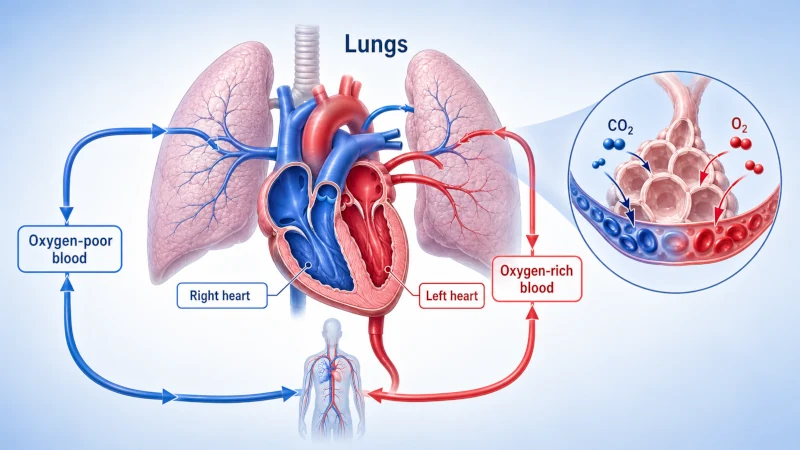
Picture a single continuous circuit:
- Oxygen-poor blood returns from the body to the right side of the heart.
- The right ventricle pumps it into the lungs.
- In roughly 300 million tiny air sacs (alveoli), the blood drops off carbon dioxide and picks up oxygen [NHLBI, 2022].
- Oxygen-rich blood returns to the left side of the heart, which pumps it back out to the body.
This is cardiopulmonary circulation, and it explains why trouble spreads. When the lungs can’t oxygenate blood well — in advanced COPD or pulmonary fibrosis, say — the right side of the heart has to push against higher pressure. Over time it can enlarge and weaken, a condition called cor pulmonale: right-sided heart failure driven by lung disease [NHLBI, 2023]. Run the same logic the other way. When the left side of the heart weakens, blood backs up behind it into the lungs, so fluid seeps into the air sacs and you feel short of breath, especially lying flat [CDC, 2024].
The practical takeaway: heart problems can mimic lung problems, and lung problems can mimic heart problems. Untangling which is which is one of the main jobs of diagnosis — and a big reason cardiologists and pulmonologists often end up in the same room.
Common Cardiovascular Conditions
Coronary artery disease (CAD). The arteries feeding the heart narrow, usually from cholesterol-rich plaque (atherosclerosis). CAD is the most common form of heart disease. It can cause chest pain on exertion (angina), and if a plaque ruptures and a clot blocks the artery, a heart attack [CDC, 2024].
Heart failure. The heart doesn’t pump as efficiently as it should — it hasn’t stopped, it’s struggling to keep up. Left-sided heart failure is a leading cause of breathlessness, particularly when lying down, because pressure backs up into the lungs [CDC, 2024]. For an older-adult walk-through of the quiet early signs, see our guide to heart disease after 65.
Arrhythmias. Abnormal heart rhythms, of which atrial fibrillation (AFib) is the most common. AFib raises stroke risk and turns up more often in people with chronic lung disease [Somers, 2008].
Pulmonary hypertension (PH). High blood pressure specifically in the arteries of the lungs. It has several causes — lung disease and low oxygen, left-sided heart disease, or blood clots among them — and whatever the trigger, it forces the right side of the heart to work harder and can eventually damage it [NHLBI, 2023]. In the United States, the most common form is PH caused by left-sided heart disease.
Common Pulmonary Conditions
Chronic obstructive pulmonary disease (COPD). A progressive narrowing and obstruction of the airways, usually from years of smoking or exposure to lung irritants. The daily reality is a chronic cough, mucus, and breathlessness that worsens with activity. COPD deserves attention in any heart discussion: people with COPD carry a higher risk of cardiovascular disease, and when the two coexist, outcomes are worse than either alone [Rabe, 2018].
Asthma. A chronic airway disease that flares into wheezing, coughing, chest tightness, and shortness of breath, typically in response to triggers like allergens, exercise, or cold air, and often worse at night or early morning [NHLBI, 2024]. Asthma is usually well controlled with the right plan; our companion piece on what actually helps asthma grades the non-drug options by evidence.
Interstitial lung disease (ILD). A group of conditions that scar and inflame the lung tissue itself, stiffening it and making oxygen transfer harder. The hallmark is slowly progressive breathlessness, and some people eventually need supplemental oxygen.
Pulmonary embolism (PE). A blood clot — usually broken loose from a deep vein in the leg — travels to the lungs and blocks an artery. PE is a medical emergency. Symptoms can appear within minutes: sudden shortness of breath, chest pain, and dropping oxygen levels [NHLBI, 2024]. Older adults, people with pneumonia-prone lung disease, and those recently immobilized are among those at higher risk.
Pulmonary hypertension, described above, straddles both lists — it frequently begins with lung disease and ends as a strain on the heart.
Heart and lung disease keep showing up together partly because they’re fed by the same things. Address one risk factor and you often protect both systems at once [WHO, 2024]; [CDC, 2024].
- Smoking and secondhand smoke — the leading cause of COPD and a major accelerant of atherosclerosis. Quitting is the single highest-yield change most people can make.
- Air pollution — long-term exposure raises the risk of heart disease, stroke, and lung disease [WHO, 2024].
- High blood pressure — a major driver of heart attack, stroke, and heart failure [CDC, 2024].
- Diabetes — roughly doubles cardiovascular risk and can worsen respiratory outcomes [CDC, 2024].
- Obesity — linked to heart disease, sleep apnea, and reduced lung volumes.
- Physical inactivity — lowers cardiorespiratory fitness and raises cardiovascular risk [CDC, 2024].
- Sleep apnea — strongly associated with hypertension, atrial fibrillation, heart failure, and pulmonary hypertension; it’s underdiagnosed precisely because it happens while you’re asleep [Somers, 2008]. More in our guide to sleep apnea and blood pressure.
- Age and family history — you can’t change these, but they matter for how aggressively everything else should be managed [CDC, 2024].
- Occupational exposures — dust, silica, asbestos, and certain fumes can damage the lungs and may affect the heart.
Symptoms to Watch For
Many of these signs are non-specific — they have plenty of innocent causes — but a new or worsening one is worth a conversation with a clinician.
Common symptoms: shortness of breath with activity or at rest; a persistent cough; wheezing; chest discomfort or tightness; fatigue, especially on exertion; swelling in the legs or ankles; and a shrinking ability to exercise.
Signs that may point to combined heart–lung involvement: breathlessness when lying flat (orthopnea); waking at night gasping for air; persistently low oxygen; an unexplained rapid or irregular heartbeat paired with breathlessness; or a bluish tint to the lips or fingertips (cyanosis).
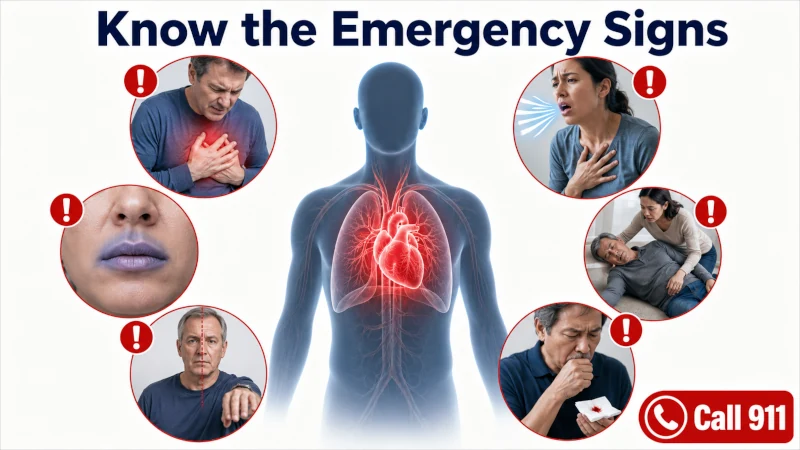
Emergency warning signs — call 911 or go to the nearest emergency department:
- Sudden, severe chest pain or pressure [AHA, 2024]
- Severe or sudden shortness of breath
- Bluish lips or face
- Fainting or near-fainting
- Sudden weakness on one side, facial drooping, or trouble speaking (possible stroke)
- Coughing up significant amounts of blood
These can signal a heart attack, pulmonary embolism, stroke, or acute heart or lung failure. When you’re unsure, treat it as urgent — the downside of an unnecessary ER visit is far smaller than the downside of waiting out a heart attack.
How Doctors Tell Heart and Lung Problems Apart
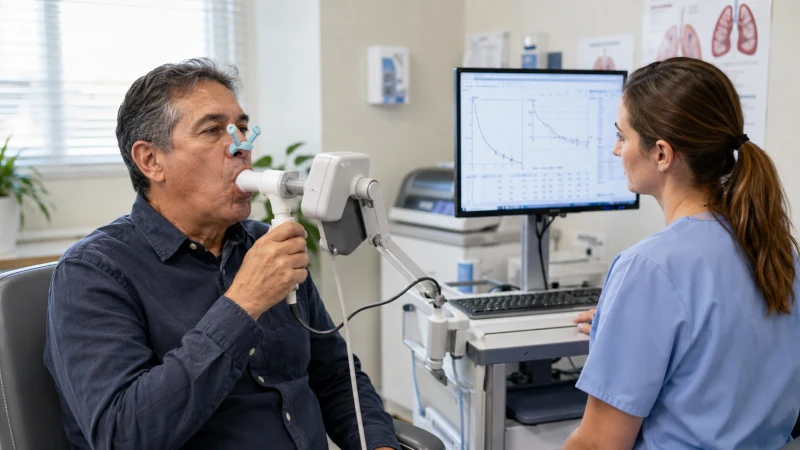
Because the symptoms overlap so much, clinicians rarely rely on a single test. They assemble a picture:
- History and physical exam — listening to the heart and lungs, checking pulses, assessing swelling.
- Blood pressure and pulse oximetry — fast checks that flag low oxygen or high pressure.
- Electrocardiogram (ECG) — records the heart’s electrical rhythm.
- Echocardiogram — an ultrasound showing how well the heart pumps and whether the valves work.
- Chest X-ray — screens for lung disease, an enlarged heart, or fluid.
- CT scan — detailed lung imaging, and the main test for pulmonary embolism [NHLBI, 2024].
- Pulmonary function tests (PFTs) — measure how well the lungs move and exchange air; central to diagnosing asthma, COPD, and ILD.
- Blood tests — including natriuretic peptides (BNP/NT-proBNP) for heart failure and D-dimer when a clot is suspected [NHLBI, 2024].
- Stress testing — shows how the heart responds to exertion.
- Right heart catheterization — the definitive test when pulmonary hypertension is suspected; a thin catheter measures pressures inside the right heart directly.
Diagnosis is a process, not a single verdict — and the collaboration between cardiology and pulmonology is often where the answer comes from.
Treatment Options
Treatment always depends on the exact diagnosis and has to be individualized by a qualified clinician. The categories below are what that toolkit usually contains.
Lifestyle. Quitting smoking (the highest-impact step by a wide margin); regular aerobic activity as your care team clears; a heart-healthy eating pattern such as Mediterranean or DASH; weight management; and limiting alcohol.
Medications (as prescribed). Blood-pressure drugs (ACE inhibitors, ARBs, beta-blockers, diuretics); statins for cholesterol; antiplatelets or anticoagulants when indicated; bronchodilators and inhaled corticosteroids for asthma or COPD; and specific medications for pulmonary arterial hypertension. A note that matters for the heart–lung crowd specifically: several supplements interact with anticoagulants and blood-pressure drugs, so run anything new — “natural” included — past your prescriber or pharmacist first.
Oxygen therapy. Supplemental oxygen is used when blood oxygen runs chronically low, particularly in advanced COPD or ILD.
Rehabilitation. This is one of the most underused high-value options. Cardiac rehabilitation — supervised exercise, education, and counseling after a heart event or surgery — and pulmonary rehabilitation for chronic lung disease both help. The evidence for pulmonary rehab is strong: a Cochrane systematic review found it reliably improves quality of life and exercise capacity and eases breathlessness compared with usual care [Cochrane, 2015].
Procedures or surgery. Depending on the condition: angioplasty with stenting, coronary bypass, valve repair or replacement, catheter ablation for arrhythmias, or lung-directed procedures such as bronchoscopy or, in selected cases, lung volume reduction or transplant.
Managing the underlying risk factors. Controlling blood pressure, cholesterol, diabetes, and sleep apnea is often the quiet center of treatment for both heart and lung disease [Somers, 2008].
Prevention and Long-Term Management

Many of these conditions are at least partly preventable, and the prevention list barely changes from the heart to the lungs [WHO, 2024]; [CDC, 2024]:
- Don’t smoke, and steer clear of secondhand smoke.
- Stay current on recommended vaccines. Flu, in particular, raises the risk of heart attack and stroke, and vaccination matters most for people who already have heart or lung disease [CDC, 2024]. Ask your clinician about influenza, pneumococcal, COVID-19, and RSV vaccines based on your age and conditions.
- Move regularly, tailored to your medical status.
- Do cardiac or pulmonary rehab when it’s offered [Cochrane, 2015].
- Keep blood pressure, cholesterol, and blood sugar in range — including checking your blood pressure at home the right way.
- Take prescribed therapy consistently, inhalers included.
- Keep your follow-up appointments with primary care and specialists.
- Reduce environmental exposures, indoor and outdoor.
People with both heart and lung disease tend to do best with coordinated care — primary care, cardiology, pulmonology, nursing, dietitians, and rehab specialists pulling in the same direction. If your lungs are the bigger concern and you’re older, our overview of respiratory disease in later life covers the changes and protections in more depth.
Prognosis and When to Seek Care
Outlook varies enormously. Well-controlled asthma or stable coronary disease can be lived with for decades at a good quality of life. Advanced heart failure or severe interstitial lung disease is more serious. What tips the balance is the exact diagnosis, its severity, how early it’s caught, what other conditions are present, and how consistently treatment is followed.
Contact your doctor (non-emergency) for:
- New or worsening cough, wheeze, or breathlessness
- A gradual drop in exercise tolerance
- New swelling in the legs or ankles
- Unexplained fatigue
- Blood pressure or blood sugar that’s consistently out of range
Seek emergency care for:
- Chest pain or pressure lasting more than a few minutes [AHA, 2024]
- Severe or sudden shortness of breath
- Fainting
- Bluish lips or face
- Stroke signs — face drooping, arm weakness, speech difficulty
- Coughing up significant blood
When in doubt, it is safer to be evaluated than to wait.
| Medical Disclaimer This article is for education and general information only. It is not a substitute for professional medical advice, diagnosis, or treatment, and it cannot account for your personal history, medications, or risk. Always talk with a qualified healthcare provider about any questions regarding a medical condition, and before starting or changing any medication, supplement, diet, or exercise plan — especially if you have heart disease, lung disease, high blood pressure, or diabetes, or if you are pregnant or breastfeeding. If you have symptoms of a medical emergency — severe chest pain, sudden shortness of breath, fainting, bluish lips, or stroke-like symptoms — call 911 or go to the nearest emergency department immediately. |
Cardiovascular vs. Pulmonary Disease
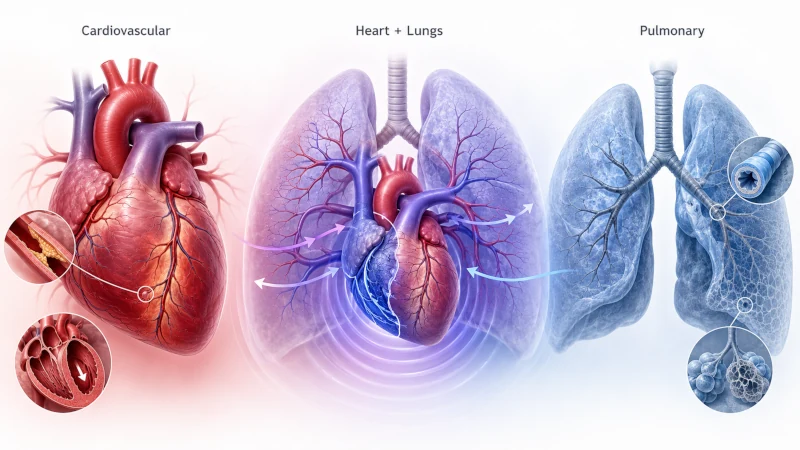
| Category | Main organs | Common examples | Typical symptoms | Common tests |
| Cardiovascular disease | Heart, arteries, veins | Coronary artery disease, heart failure, arrhythmias, stroke | Chest pain, breathlessness, fatigue, palpitations, leg swelling | ECG, echocardiogram, stress test, blood tests (BNP, troponin) |
| Pulmonary disease | Lungs, airways | COPD, asthma, interstitial lung disease, pulmonary embolism | Cough, wheezing, breathlessness, sputum, low oxygen | PFTs, chest X-ray, CT scan, pulse oximetry |
| Cardiopulmonary overlap | Heart + lungs | Pulmonary hypertension, cor pulmonale, heart failure with lung congestion | Breathlessness, exercise intolerance, swelling, cyanosis | Echocardiogram, CT, PFTs, right heart catheterization |
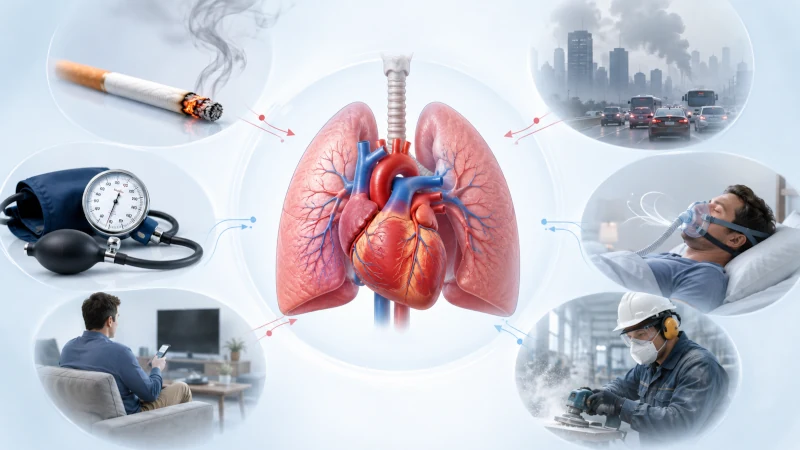
| Risk factor | Effect on the heart | Effect on the lungs | Modifiable? |
| Smoking | Accelerates atherosclerosis; raises heart-attack and stroke risk | Leading cause of COPD and lung cancer | Yes |
| Air pollution | Raises heart-disease and stroke risk | Worsens asthma, COPD, lung function | Partly (reduce exposure) |
| High blood pressure | Strains the heart; raises stroke and heart-failure risk | Can contribute to pulmonary hypertension when severe | Yes |
| Diabetes | Raises risk of CAD, heart failure, stroke | May worsen respiratory infections | Often, with treatment |
| Obesity | Raises heart-disease, hypertension, AFib risk | Linked to sleep apnea, reduced lung volumes | Often, with support |
| Physical inactivity | Lowers cardiovascular fitness | Reduces respiratory endurance | Yes |
| Sleep apnea | Linked to hypertension, AFib, heart failure | Contributes to low nighttime oxygen, PH | Yes, with treatment |
| Age / family history | Risk rises with age and heredity | Risk rises with age and heredity | No |
| Occupational exposures | May add to cardiovascular risk | Can cause occupational lung disease | Partly (with protection) |
Warning Signs and What to Do
| Sign | Possible concern | Action |
| Sudden severe chest pain or pressure | Heart attack, pulmonary embolism | Emergency — call 911 |
| Sudden severe shortness of breath | PE, heart-failure flare, severe asthma attack | Emergency |
| Bluish lips or face | Low blood oxygen | Emergency |
| Fainting or near-fainting | Arrhythmia, low blood pressure, PE | Emergency |
| Stroke signs (face droop, arm weakness, speech trouble) | Stroke | Emergency |
| Coughing up significant blood | Serious lung or heart condition | Emergency |
| Breathlessness worsening over weeks | Heart failure, COPD progression, ILD | Urgent or prompt visit |
| New persistent cough | Asthma, COPD, infection, other | Routine or urgent |
| New leg swelling | Heart failure, blood clot | Urgent |
| New mild breathlessness on exertion | Early heart or lung disease | Routine |
| Stable, known symptoms on a treatment plan | Known condition | Routine follow-up |
Frequently Asked Questions
What’s the difference between cardiovascular and pulmonary disease?
Cardiovascular disease involves the heart and blood vessels; pulmonary disease involves the lungs and airways. They’re separate categories that interact constantly, because the heart and lungs run on one shared circuit [CDC, 2024]; [NHLBI, 2022].
Can lung disease actually damage the heart?
Yes. Chronic lung diseases like COPD or ILD can raise pressure in the lung arteries (pulmonary hypertension), which strains the right side of the heart and, over time, can lead to right-sided heart failure — cor pulmonale [NHLBI, 2023].
Why does heart disease make me short of breath?
In left-sided heart failure, blood backs up behind the weakened left ventricle into the lungs, so fluid interferes with breathing — worst when lying flat or during exertion [CDC, 2024].
Is COPD a heart or a lung disease?
COPD is a lung disease. But people with COPD have a higher risk of cardiovascular conditions including heart disease, AFib, and pulmonary hypertension, and the two together carry worse outcomes than either alone [Rabe, 2018].
Can you have heart and lung disease at the same time?
Often, yes. Shared risk factors — smoking, aging, high blood pressure, obesity — mean many people carry conditions in both systems, which is why coordinated cardiology–pulmonology care helps [Rabe, 2018].
When should I go to the ER?
For severe chest pain or pressure, sudden severe shortness of breath, fainting, bluish lips, stroke signs, or coughing up significant blood — call 911 [AHA, 2024]; [NHLBI, 2024].
References
- CDC. About Heart Disease. 2024. (CAD as most common type; left-sided heart failure and lung congestion.) View source
- CDC. Heart Disease Risk Factors. Updated Dec 2, 2024. (Shared modifiable risk factors.) View source
- CDC. Flu & People with Heart Disease or History of Stroke. 2024. (Vaccination; flu linked to heart-attack/stroke risk.) View source
- NHLBI. How the Lungs Work — The Lungs. Updated Mar 24, 2022. (Gas exchange.) View source
- NHLBI. Pulmonary Hypertension. Updated May 1, 2023. (PH groups; heart strain; cor pulmonale.) View source
- NHLBI. Asthma — Symptoms. (Triggers and symptoms.) View source
- NHLBI. Pulmonary Embolism (VTE). (Clot from leg travels to lungs; diagnosis.) View source
- WHO. Cardiovascular diseases (CVDs) — Fact sheet. (Leading cause of death; shared preventable risk factors.) View source
- AHA. Warning Signs of a Heart Attack. Reviewed Dec 12, 2024. View source
- Rabe KF, Hurst JR, Suissa S. Cardiovascular disease and COPD: dangerous liaisons? Eur Respir Rev. 2018;27(149):180057. DOI 10.1183/16000617.0057-2018. PMID 30282634. View source
- McCarthy B, Casey D, Devane D, Murphy K, Murphy E, Lacasse Y. Pulmonary rehabilitation for COPD. Cochrane Database Syst Rev. 2015;(2):CD003793. DOI 10.1002/14651858.CD003793.pub3. PMID 25705944. View source
- Somers VK, White DP, Amin R, et al. Sleep apnea and cardiovascular disease: AHA/ACCF Scientific Statement. Circulation. 2008;118(10):1080-1111. PMID 18725495. View source
