Heart disease in seniors is the leading cause of death and disability in adults 65 and older, yet it is not a fixed part of getting older [NIA, 2024]. The heart and blood vessels do change with age — arteries stiffen, the heart wall thickens, valves grow less flexible — and those shifts raise the odds of coronary artery disease, heart failure, and atrial fibrillation [MedlinePlus, 2024].
Here is the part that often gets buried: most of the biggest risks stay modifiable well past 65. Lowering blood pressure, treating cholesterol, staying active, and quitting smoking still cut heart attacks and strokes in older adults, often by a wide margin [AHA, 2024].
This guide covers what the disease actually looks like after 65 — including the quiet symptoms that get missed — which conditions matter most, the red flags that mean call 911, and the steps that move the needle. Along the way you will find links to deeper articles on natural approaches to lowering blood pressure, supplements studied for cholesterol, and stroke warning signs and prevention.
Why Heart Disease After 65 Looks Different
People 65 and older develop heart disease far more often than younger adults, and it behaves differently once it shows up [NIA, 2024]. A few things set older age apart.
Symptoms are often quiet. The crushing chest pain from television is only one version. Many older adults — especially women and people with diabetes — instead feel breathless, wiped out, or simply “off,” or notice pain in the jaw, neck, or upper back [AHA, 2024].
Conditions cluster. Heart trouble rarely shows up alone after 65. High blood pressure, high blood sugar, high cholesterol, kidney disease, and sleep apnea tend to travel together and worsen one another.
Recovery takes longer. Frailty, several medications at once, and other chronic illnesses can complicate treatment and slow healing after a cardiac event [MedlinePlus, 2024].
The encouraging part: treatment still works. The risk reductions from quitting smoking, controlling blood pressure, and moving more stay large into the 70s and 80s.
How Aging Changes the Heart and Blood Vessels
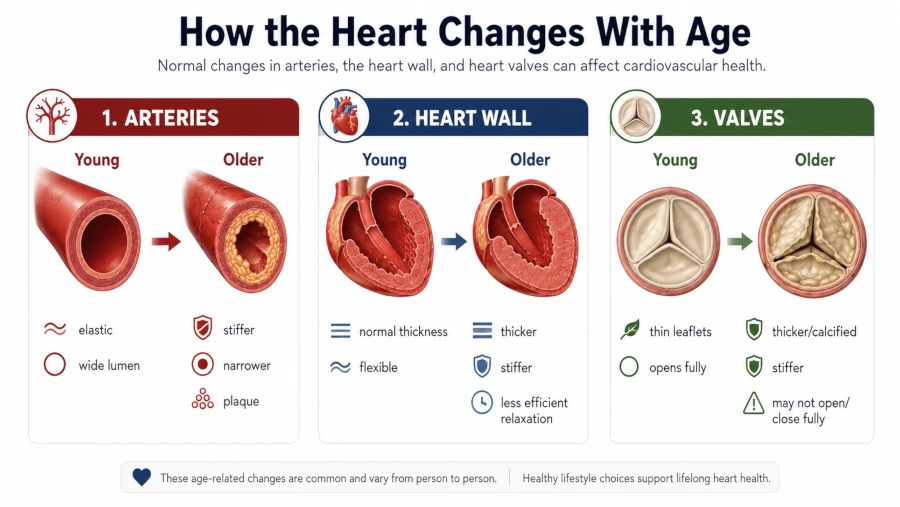
Some of the changes below are ordinary aging. Others cross into disease. Telling the two apart is one of the main reasons to keep regular check-ups after 65.
- Arteries stiffen. The large arteries, including the aorta, lose elasticity, which tends to push blood pressure up [NIA, 2024].
- Plaque builds up. Atherosclerosis — the slow accumulation of cholesterol-rich plaque inside artery walls — is common in older adults but is not a required part of aging [NIA, 2024]. It narrows the arteries feeding the heart, brain, and legs.
- The heart wall thickens. Chambers may hold slightly less blood per beat, and the heart cannot speed up during exertion the way it once did [MedlinePlus, 2024].
- Valves get stiffer. Thickened valves can limit flow or leak; aortic stenosis is the most common valve problem in older adults [MedlinePlus, 2024].
- The electrical system drifts. Rhythm problems such as atrial fibrillation grow more common and raise stroke risk [NIA, 2024].
Resting heart rate usually holds steady with age. An occasional skipped beat is rarely a problem. Persistent fluttering, racing, or pounding is worth checking [NIA, 2024].
The Heart Conditions That Matter Most After 65
Coronary heart disease
Coronary heart disease — also called coronary artery disease — is the most common form of heart disease and the leading cause of death in the United States [NHLBI, 2024]. Plaque narrows the arteries that supply the heart muscle. A plaque that cracks can trigger a clot and cause a heart attack; steady narrowing can cause angina (chest discomfort on exertion) or quiet damage you never feel.
High blood pressure
Hypertension is extremely common after 65 and is a major driver of stroke, heart failure, and kidney disease. Treating it pays off even in older adults, though the right target depends on your other conditions and is worth setting with a clinician. Lifestyle and natural approaches to lowering blood pressure belong alongside medical treatment, not in place of it.
Heart failure
Heart failure means the heart cannot pump enough blood to keep up with the body. It climbs steeply with age and is the most common reason adults over 65 are hospitalized [MedlinePlus, 2024]. Watch for breathlessness (especially lying flat), swelling in the legs and ankles, and fatigue that builds over weeks. It does not mean the heart has stopped — it means the heart needs help working efficiently [NIA, 2024].
Atrial fibrillation and other rhythm problems
Atrial fibrillation is the most common serious rhythm problem in older adults. It can feel like fluttering or a racing pulse, or cause nothing you would notice. Left untreated, it sharply raises stroke risk because blood can pool and clot in the upper chambers [NIA, 2024].
Heart valve disease
Valve problems, aortic stenosis in particular, can cause breathlessness, chest discomfort, or fainting. Often the first clue is a new or louder murmur picked up on a routine exam.
Stroke
Stroke is not a heart disease, but it shares most of the same risk factors and frequently has a cardiac cause, such as atrial fibrillation or a clot thrown from plaque in a neck artery [NIDDK, 2025]. For the warning signs and prevention steps, see our guide to stroke warning signs and prevention.
Broken-heart syndrome (takotsubo cardiomyopathy)
This one is easy to overlook in older women. A sudden emotional or physical shock can briefly stun the heart’s main pumping chamber and mimic a heart attack. More than 90% of reported cases occur in women, most often between ages 58 and 75, and the majority recover within weeks [Harvard Health, 2026]. But it is impossible to tell apart from a heart attack without imaging, so it still demands emergency evaluation.
Warning Signs Older Adults Should Never Ignore
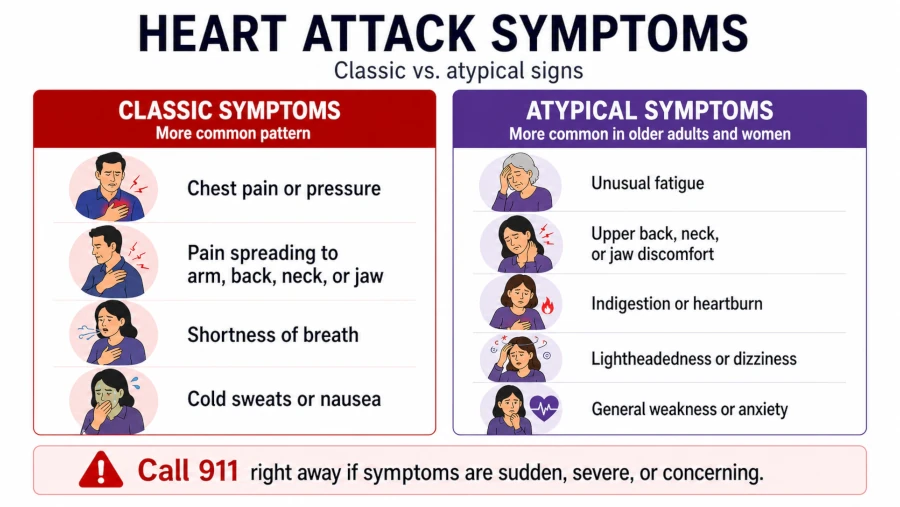
Early heart disease often causes no symptoms at all, which is exactly why check-ups matter. When symptoms do appear in older adults, they tend to be subtler than the textbook version.
Symptoms worth a doctor’s visit soon
- Chest pressure, tightness, or squeezing, especially with exertion or stress
- Pain or odd sensations in the shoulders, either arm, neck, jaw, upper back, or upper abdomen
- New or worsening shortness of breath, with or without chest discomfort
- Unusual fatigue or weakness that activity and sleep do not explain
- Lightheadedness, dizziness, or feeling faint
- Cold sweats, nausea, or vomiting
- Swelling in the legs, ankles, feet, or abdomen
- A fluttering, racing, pounding, or clearly irregular heartbeat
- Trouble with everyday tasks that used to feel easy
Heart attack symptoms in older women often look nothing like the chest-clutching scene on screen. Shortness of breath, upper-back pressure, anxiety, an upset stomach, and unusual tiredness are all recognized presentations [AHA, 2024]. People with diabetes can have blunted chest pain from nerve damage, so any new symptom on this list deserves attention [CDC, 2024].
Call 911 right away for:
- Chest pain, pressure, or tightness lasting more than a few minutes — or that fades and returns
- Shortness of breath, with or without chest pain
- Sudden weakness or numbness in the face, arm, or leg, especially on one side (possible stroke)
- Trouble speaking, understanding speech, or sudden severe confusion
- A sudden severe headache with no clear cause, or sudden loss of vision or balance
- Fainting or near-fainting
Do not drive yourself. Paramedics can start treatment on the way to the hospital, and that head start matters.
The Risk Factors That Matter Most After 65
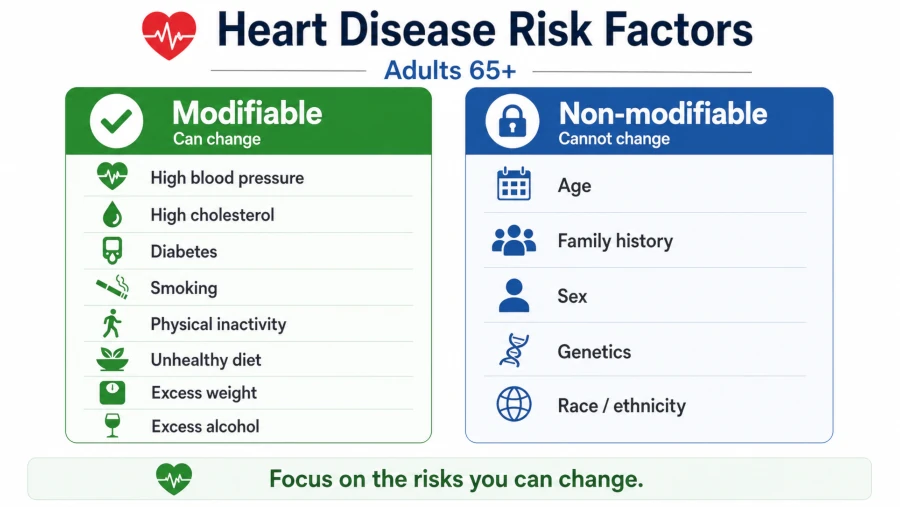
A few risk factors cannot be changed — age itself, family history, and being male among them. Most of the rest are modifiable, and that is where the real prevention sits [AHA, 2024].
- High blood pressure — the single biggest modifiable driver of heart attack and stroke in older adults.
- High LDL cholesterol — still worth treating after 65, through diet, activity, and prescription medication when needed [AHA, 2026].
- Type 2 diabetes or prediabetes — roughly doubles heart disease risk and tends to bring it on earlier [NIDDK, 2025]. See our companion piece on type 2 diabetes concerns for seniors.
- Smoking — quitting helps at any age, and fast. Within a year or two of the last cigarette, heart-attack risk drops sharply; within a few years, the added risk of coronary heart disease falls by about half [CDC, 2024].
- Excess weight and inactivity — both push up blood pressure, blood sugar, and inflammation.
- Poor sleep and untreated sleep apnea — tied to high blood pressure, atrial fibrillation, and heart failure.
- Chronic stress and isolation — both linked to worse cardiovascular outcomes in older adults.
- Heavy alcohol use — raises blood pressure and can set off rhythm problems.
What Actually Prevents and Manages Heart Disease in Seniors
No single habit reverses heart disease on its own. The combination below is where the strongest human evidence sits.
Treat blood pressure, cholesterol, and blood sugar — for real
If you have any of these, the highest-value move is to actually treat them, with your clinician, using the right mix of lifestyle and medication. Skipping prescribed statins, blood-pressure drugs, or diabetes medication to “do it naturally” is a common and costly mistake. Use natural approaches with medical treatment, not instead of it. Our resources on natural approaches to lowering blood pressure, supplements studied for cholesterol, and keeping blood sugar in range are meant to sit alongside your care.
Move most days — after a check with your doctor
The American Heart Association points to about 150 minutes of moderate aerobic activity a week (brisk walking counts) plus muscle-strengthening twice a week [AHA, 2024]. Older adults with existing heart disease, balance problems, or recent surgery should get a clinician’s sign-off first, and many do best starting in a supervised cardiac rehabilitation program.
Eat the way your heart needs
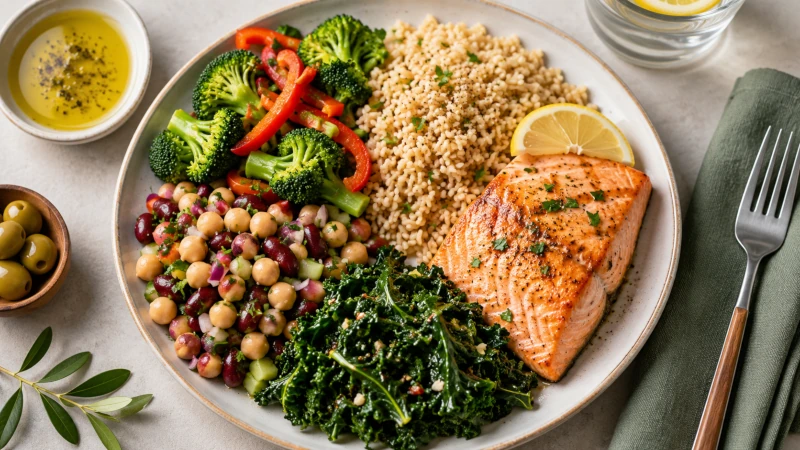
There is no single “heart diet,” but the two patterns with the strongest evidence — Mediterranean-style and DASH — share a core: plenty of vegetables, fruit, whole grains, legumes, nuts, fish, and olive oil, with less red and processed meat, refined grains, sugary drinks, and ultra-processed food. Keep sodium moderate and alcohol limited [AHA, 2026]. As you age, the body holds onto salt more readily, which can nudge blood pressure up [NIA, 2024].
Stop smoking — it still pays off
Quitting is the single highest-yield change most smokers can make, and the benefit shows up quickly even later in life [CDC, 2024]. If you are planning a quit attempt, see our piece on foods that can support a quit attempt.
Keep alcohol light
Older adults are more sensitive to alcohol’s effect on blood pressure, sleep, balance, and medication. If you drink, keeping it light is reasonable. If you do not, there is no heart-related reason to start [NIA, 2024].
Protect sleep and manage stress
Aim for 7 to 9 hours of reasonably steady sleep. If you snore heavily, stop breathing during sleep, or wake unrested despite enough hours in bed, ask about sleep apnea screening — it is common, treatable, and closely tied to blood pressure and atrial fibrillation. For stress, use what genuinely helps you: time with people you like, time outdoors, breathwork, prayer or meditation, or a professional to talk to [NIA, 2024].
Supplements and Natural Approaches: What the Evidence Shows
Readers ask about herbs and supplements constantly, so here is an honest read.
Garlic, omega-3s, soluble fiber, and certain B vitamins have at least modest evidence for small improvements in blood pressure or cholesterol in some people. They can complement a medical plan, but they will not replace statins or blood-pressure medication for someone who needs them.
Niacin, red yeast rice, and berberine have been studied for cholesterol, but their interactions with statins and other drugs are common and occasionally serious. Run them past a clinician before combining.
CoQ10 gets suggested for statin-related muscle aches and for heart failure; the trial evidence is mixed and uneven in quality.
“Natural” does not mean risk-free. Supplements can interact with blood thinners (warfarin, apixaban), blood-pressure drugs, and diabetes medication, and many over-the-counter cold and pain products raise blood pressure on their own.
The American Heart Association does not recommend dietary supplements as a primary treatment for high cholesterol, and specifically advises checking with your healthcare team because some interact with prescription medications [AHA, 2026].
A useful way to picture it: food, movement, sleep, stress, and not smoking are the foundation for everyone, and a well-chosen supplement is at most an add-on — never a substitute once a condition has crossed into disease.
Who Should Be Cautious With Herbs and Supplements
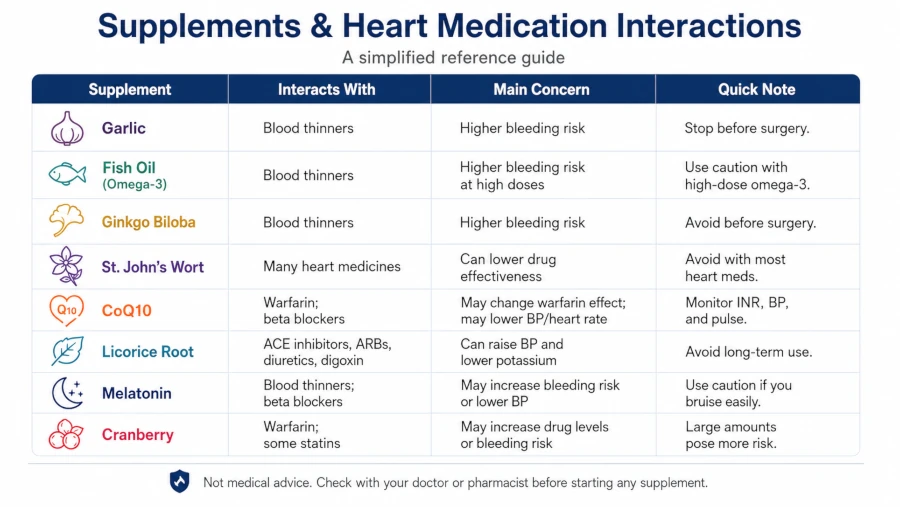
Be especially careful, and talk to a clinician first, if you:
- Take anticoagulants (warfarin, apixaban, rivaroxaban) or antiplatelets (aspirin, clopidogrel) — garlic, ginkgo, high-dose fish oil, and several herbs raise bleeding risk
- Take blood-pressure medication — some supplements and licorice-containing products interfere with it
- Have heart failure — high-sodium herbal products and some stimulant herbs can destabilize it
- Have advanced kidney or liver disease — your body clears both drugs and supplements more slowly
- Have atrial fibrillation — stimulants, including high-dose caffeine, yohimbine, and some “energy” blends, can worsen it
- Are preparing for surgery — many supplements need to stop one to two weeks beforehand; ask the surgical team
- Are pregnant or breastfeeding — not a typical older-adult situation, but worth flagging if you are caring across generations
When to Talk to Your Doctor — and When to Get Emergency Care
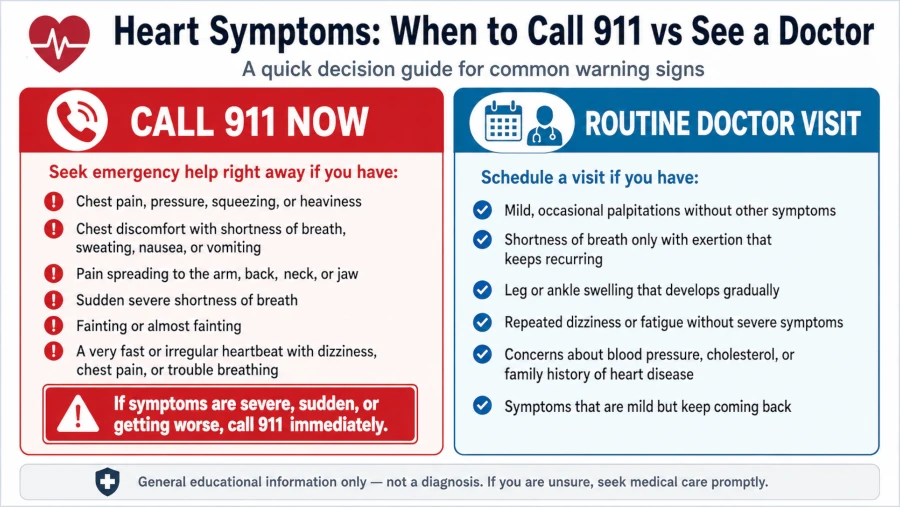
Book a non-urgent visit for:
- New or worsening shortness of breath, swelling, or fatigue
- A heartbeat that flutters, races, or feels irregular more than occasionally
- Home blood-pressure readings consistently at or above 140/90
- A strong family history of heart disease, especially early heart attacks
- Diabetes or prediabetes that is not well controlled
- Snoring with breathing pauses, or daytime sleepiness
- Any questions about supplements, especially alongside prescription medication
Get emergency care or call 911 for:
- Chest pain, pressure, or tightness lasting more than a few minutes
- Severe shortness of breath
- Stroke signs — face drooping, arm weakness, speech difficulty (time to call)
- Fainting or near-fainting
- A racing heartbeat you cannot slow, especially with chest pain or lightheadedness
| HEALTH DISCLAIMER This article is for educational and informational purposes only and is not medical advice. Heart disease can be serious and life-threatening. Nothing here should replace evaluation, diagnosis, or treatment from a qualified healthcare professional. If you are an older adult with existing heart disease, high blood pressure, diabetes, or any chronic condition — or if you take prescription medications — talk to your doctor before starting a new diet, exercise plan, supplement, or herbal remedy. If you think you are having a heart attack or stroke, call 911 immediately. |
Frequently Asked Questions
Is heart disease in seniors always caused by aging?
No. Age is a risk factor and the heart does change over time, but heart disease itself is driven mostly by factors you can influence — blood pressure, cholesterol, blood sugar, smoking, activity, and diet [NIA, 2024]. Some people reach their 90s with minimal plaque; others develop significant disease in their 50s.
Can heart disease be reversed after 65?
Some of it can be partly reversed or stabilized. Plaque can shrink modestly with aggressive risk-factor control (statins especially), blood pressure usually responds well to treatment, and early heart failure can improve with guideline-directed therapy. Full reversal is unusual, but meaningful improvement and lower event rates are well documented in older adults.
What is a normal blood pressure for a 70-year-old?
Targets are individual and depend on your other conditions, but current guidelines generally aim for systolic pressure under about 130 mm Hg for most older adults who tolerate it, with looser targets for people who are frail or fall-prone. Set your specific number with your clinician, and see our guide to natural approaches to lowering blood pressure.
Are heart attack symptoms really different in older women?
Often, yes. The classic crushing chest pain still happens, but older women more often report shortness of breath, upper-back pressure, unusual fatigue, anxiety, nausea, and shoulder or jaw discomfort — sometimes with no obvious chest pain [AHA, 2024]. Any of these, if new and unexplained, is worth a 911 call.
Is it safe to start exercising in my 70s if I already have heart disease?
For most people, yes, and it is one of the most effective things you can do — but start with your doctor. Cardiac rehabilitation programs are built for exactly this, and walking is a safe starting point for most stable patients. Stop and seek care for chest pain, severe shortness of breath, or dizziness during activity.
Do heart-healthy supplements actually work?
A few have modest evidence (omega-3s, soluble fiber, some B vitamins), but none replace blood-pressure, cholesterol, or diabetes medication when those are indicated. The American Heart Association does not recommend supplements as cholesterol treatment and flags interaction risks with prescription drugs [AHA, 2026]. Run any product, “natural” ones included, past a clinician who knows your medication list.
References
- National Institute on Aging. (2024). Heart Health and Aging. → View source
- MedlinePlus / U.S. National Library of Medicine. (2024). Aging changes in the heart and blood vessels. → View source
- National Heart, Lung, and Blood Institute. (2024). What Is Coronary Heart Disease? → View source
- American Heart Association. (2024). How to Help Prevent Heart Disease At Any Age. → View source
- American Heart Association. (2024). Heart Attack Symptoms in Women. → View source
- American Heart Association. (2026). Prevention and Treatment of High Cholesterol (Hyperlipidemia). → View source
- Centers for Disease Control and Prevention. (2024). Diabetes and Your Heart. → View source
- National Institute of Diabetes and Digestive and Kidney Diseases. (2025). Diabetes, Heart Disease, & Stroke. → View source
- Centers for Disease Control and Prevention. (2024). Health Effects of Cigarettes: Cardiovascular Disease. → View source
- Harvard Health Publishing. (2026). Takotsubo cardiomyopathy (broken-heart syndrome). → View source
