
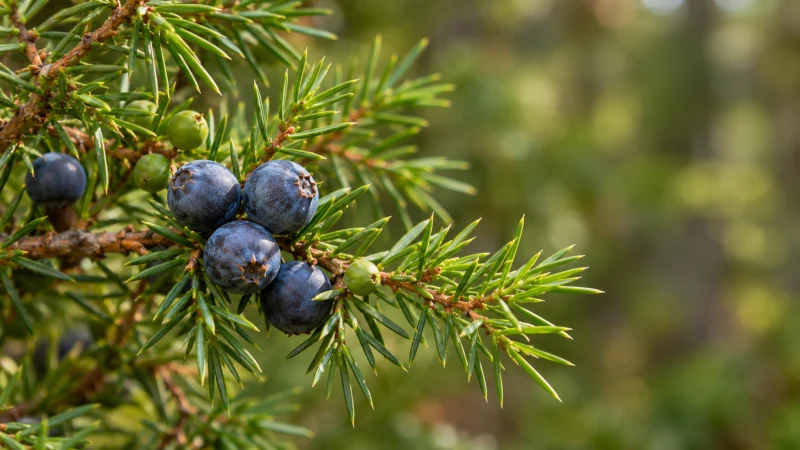
Juniper berries are the small blue-black cones that give gin its sharp, piney flavor, and people have cooked with them and brewed them into folk remedies for centuries. If you want to know whether they do anything for your health, the honest answer is narrower than most of the internet suggests. European regulators recognize two traditional uses for juniper berries: easing mild indigestion and gas, and increasing urine flow to flush the urinary tract during minor complaints [EMA, 2023]. There are no clinical trials in people for any health benefit [EMA assessment report, 2023].
Everything else you’ve read, from antioxidant power to blood-sugar control, comes from test tubes and lab animals. That doesn’t make juniper useless. It means using it the way it has traditionally been used, in modest amounts for short stretches, and knowing who should skip it entirely.
What are juniper berries?
Despite the name, they aren’t berries. Juniper “berries” are the female seed cones of the juniper shrub, with fleshy scales fused so tightly they pass for fruit, and they take about 18 months to mature [Jojić et al., 2024]. The species used in food and herbal medicine is common juniper, Juniperus communis, an evergreen shrub or small tree in the cypress family [Bais et al., 2014].
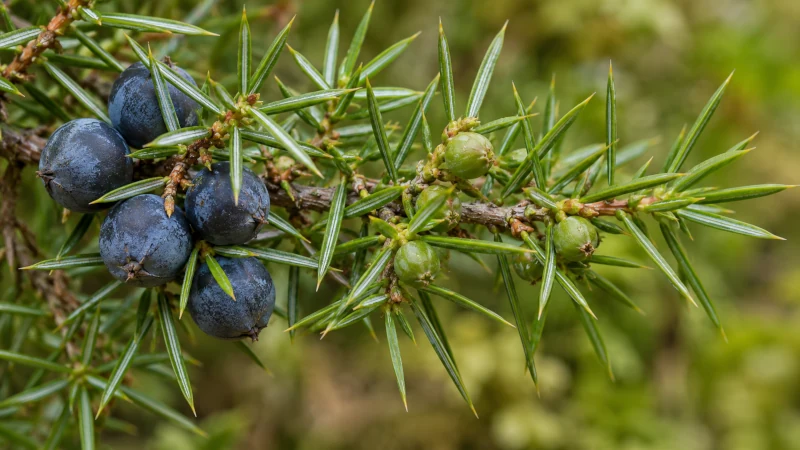
The flavor comes from the essential oil. In one analysis of juniper berry oil from Bulgaria, about half was alpha-pinene, the compound behind the smell of pine needles [Höferl et al., 2014].
Not every juniper is safe to eat
There are dozens of juniper species, and they aren’t interchangeable. Not all are edible, and J. communis is the one most commonly used in food [Healthline, 2024]. Savin (Juniperus sabina), a juniper native to Europe and Asia and also grown ornamentally, is rated unsafe to take by mouth; small amounts of its oil can be fatal, and it can cause miscarriage [TRC Natural Medicines, 2026]. Buy berries labeled Juniperus communis, and don’t forage juniper unless you can identify the species with certainty.
How juniper berries are used in food and drink
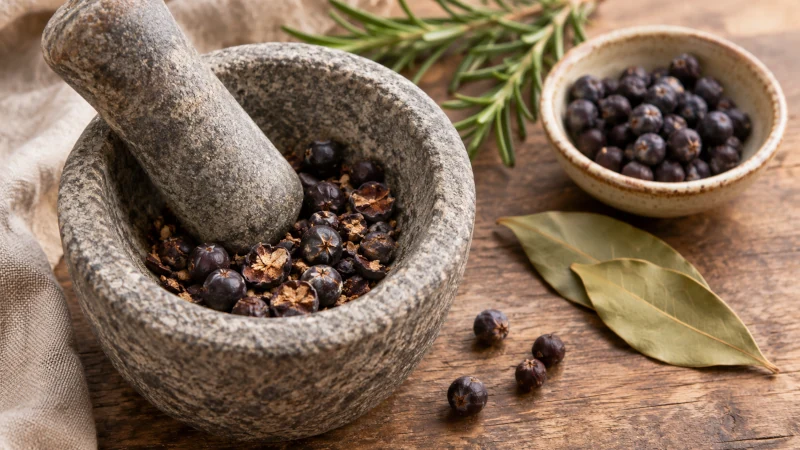
Gin is the famous one. In the United States, a spirit can only be called gin if its main characteristic flavor comes from juniper berries [TTB, 27 CFR 5.144]. Juniper berry oils and extracts are also on the FDA’s list of flavorings generally recognized as safe [FDA, 21 CFR 182.20].
In the kitchen, a few berries go a long way. Cooks use them in sauerkraut, pickling brines, marinades for venison and other game, pork dishes, and braised red cabbage. Crush them lightly just before using to release the oils, and treat them a bit like bay leaves: they season the dish, and you can remove them before serving. The few berries in a pot of stew are a much smaller amount than the medicinal doses below.
Juniper berries health benefits: what the evidence supports
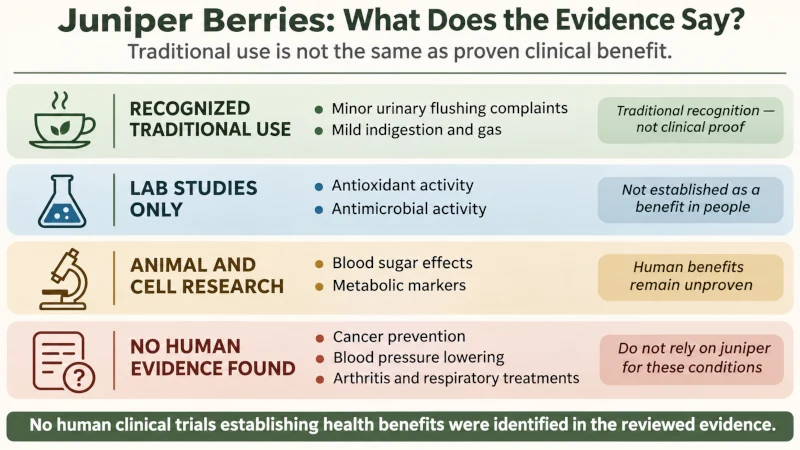
Here is how the common claims stack up. “Traditional use” is a formal European category: it means long-standing, plausible use, not proof from clinical trials.
| Claim | Best evidence available | What it means for you |
| Flushing the urinary tract in minor complaints | Recognized traditional use (EMA); no clinical trials | Reasonable short-term aid; not a UTI treatment |
| Mild indigestion, bloating, gas | Recognized traditional use (EMA); no clinical trials | Reasonable to try short-term |
| Antioxidant effects | Test-tube assays and yeast cells | Doesn’t show a benefit in people |
| Antibacterial and antifungal | Lab studies of the essential oil | Doesn’t mean juniper treats infections |
| Blood sugar and cholesterol | Rat and cell studies | Unproven; one reference warns of the opposite effect |
| Cancer, heart disease, blood pressure, arthritis, respiratory or skin conditions | No human evidence found | Don’t use juniper for these |
Urinary flushing: a traditional use, not an infection treatment
The European Medicines Agency’s herbal committee accepts juniper berries as a traditional herbal medicine to increase urine output and flush the urinary tract in minor urinary complaints [EMA, 2023]. Its review found no published clinical studies of juniper berries at all [EMA assessment report, 2023].
Juniper is not an antibiotic [WebMD]. The EMA monograph itself says to see a doctor if you develop fever, painful urination, cramps, or blood in your urine while using it [EMA, 2023]. Our guide to urinary system diseases and when they need a doctor covers the warning signs of a kidney infection, and our review of herbal remedies for the urinary system compares juniper with options that have human trials behind them, such as cranberry for preventing UTIs.
Indigestion and gas
The second recognized traditional use is relief of digestive complaints such as dyspepsia (that heavy, uncomfortable feeling after eating) and flatulence [EMA, 2023]. Again, the support is long use rather than trials. If bloating is your main problem, fennel has a somewhat stronger research base.
Indigestion that keeps coming back is worth a doctor’s visit, and so is indigestion with severe pain, unintended weight loss, trouble swallowing, repeated vomiting, or blood in your vomit or stool [NHS].
Antioxidant and antimicrobial effects: lab results only
Juniper berry oil scavenged free radicals in test-tube assays and protected yeast cells from oxidative damage in one study [Höferl et al., 2014]. In another lab study, the oil killed a range of bacteria and was especially strong against yeasts such as Candida and against skin-infecting fungi [Pepeljnjak et al., 2005].
Those results help explain juniper’s old reputation as an antiseptic. They don’t show that eating the berries or drinking the tea protects you from disease or infection. What happens to oil in a lab dish is a long way from what reaches your tissues after a cup of tea.
Blood sugar and cholesterol: animal research, with a warning
A juniper berry decoction lowered blood sugar in diabetic rats over 24 days in a 1994 study [Sánchez de Medina et al., 1994]. A 2023 study found a berry extract acted on metabolic receptors and improved glucose uptake in cell and animal experiments [Chae et al., 2023]. Nobody has tested this in people [EMA assessment report, 2023].
The sources also disagree about direction. The animal work points toward lower blood sugar, yet the Drugs.com professional monograph warns juniper may raise blood glucose in people with diabetes, and WebMD notes some researchers advise against juniper supplements for that reason [Drugs.com, 2025; WebMD]. With signals both ways and no human data, don’t use juniper to manage diabetes. If you have diabetes and use it anyway, check your glucose more often and tell your care team.
Claims without support
Juniper berries get promoted for preventing cancer and heart disease, lowering blood pressure, easing arthritis, and treating pneumonia, bronchitis, acne, and eczema. We found no human evidence for any of these. For rheumatoid arthritis, the EMA’s review turned up only anecdotal case reports from the 1960s [EMA assessment report, 2023]. On the skin, juniper oil can cause irritation, and it shouldn’t be used on wounds [WebMD].
For more on the plant’s history and the research behind each traditional use, see our guide to juniper plant benefits.
How much juniper is used as an herbal remedy
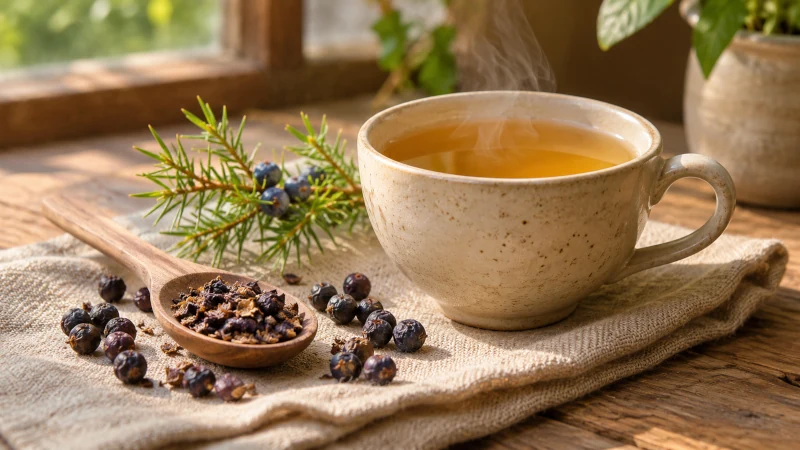
If you choose to use juniper medicinally, the EMA monograph lists these traditional amounts for adults [EMA, 2023]:
| Preparation | Single dose | How often | Daily total |
| Tea, for urinary flushing | 2–2.5 g crushed berries in 150 ml boiling water | 1–3 times a day | 2.5–6 g |
| Tea, for indigestion | 2–2.5 g crushed berries in 150 ml boiling water | 1–4 times a day | 2.5–10 g |
| Liquid extract (1:1, 25% alcohol), urinary use | 2–4 ml | 3 times a day | 6–12 ml |
| Tincture (1:5, 45% alcohol), urinary use | 1–2 ml | 3 times a day | 3–6 ml |
A few rules come with those numbers. They’re for adults only, because use under 18 hasn’t been established. When using juniper to flush the urinary tract, drink enough fluid, and don’t use it at all if a doctor has told you to limit fluids. If symptoms last more than two weeks or get worse, stop and see a doctor [EMA, 2023].
Don’t swallow juniper essential oil. Professional references list oral oil doses measured in fractions of a milliliter [Drugs.com, 2025], which is easy to overshoot with a dropper, and consumer guidance is not to ingest essential oils at all [Healthline, 2024].
Juniper berries side effects, interactions, and who should avoid them
The cautions below are about medicinal doses, concentrated supplements, and the oil, not the few berries in a recipe.
Kidneys: the sources genuinely disagree
Many herbal books warn that juniper damages the kidneys. Drugs.com still says excessive use may cause kidney inflammation and damage and advises avoiding juniper with kidney impairment, and WebMD notes kidney irritation at high doses in animal studies [Drugs.com, 2025; WebMD].
The EMA’s 2023 assessment is more skeptical. It found these warnings rest mostly on interpretation rather than clinical data, notes that toxicology studies did not confirm kidney toxicity from juniper oil or its compound terpinen-4-ol, and suggests some old claims may have been borrowed from turpentine oil [EMA assessment report, 2023]. Even so, the EMA advises against using juniper for urinary flushing if you have severe kidney disease [EMA, 2023].
So: if you have any kidney disease, leave juniper alone unless your kidney specialist agrees.
Pregnancy and breastfeeding
Don’t use juniper medicinally if you’re pregnant, trying to conceive, or breastfeeding. In rat studies, juniper extracts reduced embryo implantation, and the EMA concluded that antifertility or abortion-inducing effects can’t be ruled out [EMA assessment report, 2023]. Safety in pregnancy and breastfeeding has not been established [EMA, 2023].
Medication interactions
Interaction data are thin. The EMA monograph lists no known interactions [EMA, 2023], and Drugs.com says none are well documented [Drugs.com, 2025]. But the EMA’s assessment describes one reported case in which a person on the blood thinner phenprocoumon, a relative of warfarin, had a drop in INR (a clotting measure) while taking juniper berries [EMA assessment report, 2023]. Healthline also flags possible interactions with diuretics and some psychiatric medicines [Healthline, 2024].
Ask a pharmacist before using juniper if you take a blood thinner, diabetes medicine, a diuretic (“water pill”), or a psychiatric medicine.
Allergies
Junipers, cedars, and cypresses are highly allergenic and often cross-react [Drugs.com, 2025]. If you react to juniper or related plants, don’t use it [EMA, 2023].
Who should avoid juniper berries
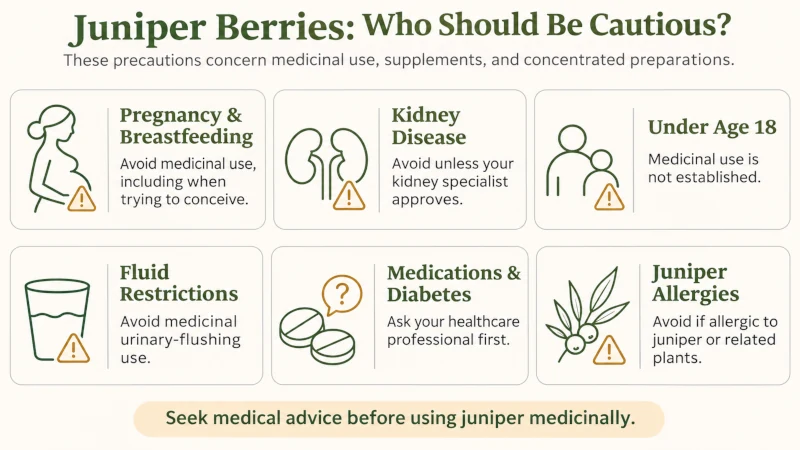
- People who are pregnant, trying to conceive, or breastfeeding
- Children and teenagers under 18
- Anyone with kidney disease, unless a specialist approves
- People who’ve been told to restrict fluids
- People with diabetes, unless their care team agrees and glucose is monitored
- People taking blood thinners
- Anyone allergic to juniper, cedar, cypress, or related plants
When to stop and see a doctor
- Fever, painful urination, cramps, or blood in your urine [EMA, 2023]
- Fever or chills with back or side pain, nausea, or vomiting, which can signal a kidney infection that needs prompt treatment (see urinary warning signs)
- Symptoms lasting more than two weeks, or getting worse [EMA, 2023]
- Indigestion with severe pain, unintended weight loss, trouble swallowing, repeated vomiting, or blood in vomit or stool [NHS]
- Swelling of the face, lips, or throat, or trouble breathing after using juniper: call emergency services
Buying and storing juniper berries
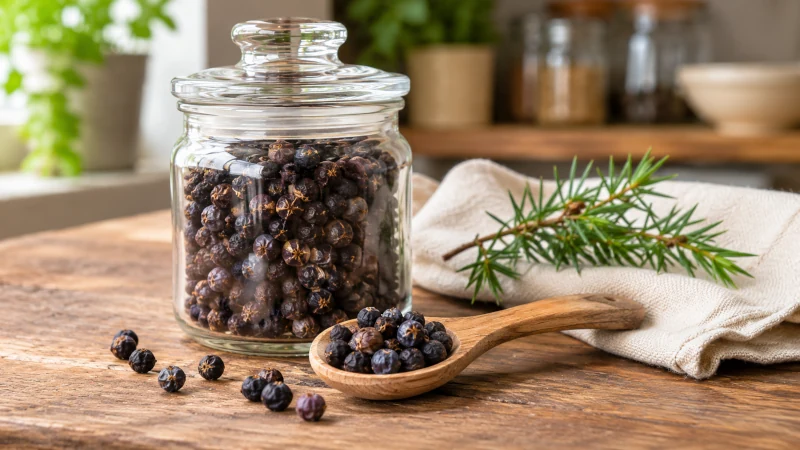
Look for whole dried berries labeled Juniperus communis from a spice or herb supplier. Whole berries keep their flavor longer than ground ones, so crush them only when you need them, and store them in an airtight jar away from heat and light. If you’re buying a juniper supplement or tincture, check the species and the strength on the label so you can compare it with the amounts above.
| HEALTH DISCLAIMER: This article is for general education and isn’t a substitute for advice from a doctor, pharmacist, or other qualified professional. Juniper berries aren’t proven to treat, cure, or prevent any disease. Talk to a healthcare professional before using juniper or any herbal remedy, especially if you are pregnant or breastfeeding, have kidney disease or diabetes, or take prescription medicines. If you have symptoms of an infection or any warning sign listed above, get medical care rather than treating yourself at home. |
Frequently Asked Questions
Are juniper berries safe to eat?
In cooking amounts, berries from common juniper (Juniperus communis) are a standard spice, and juniper berry extracts are on the FDA’s list of flavorings generally recognized as safe [FDA, 21 CFR 182.20]. Other juniper species can be toxic, so buy berries labeled with the species rather than foraging.
Can juniper berries cure a urinary tract infection?
No. Juniper is traditionally used to increase urine flow in minor urinary complaints, but it isn’t an antibiotic [EMA, 2023; WebMD]. A suspected UTI needs a diagnosis, and fever, back pain, or blood in the urine needs prompt care.
Is juniper berry tea good for your kidneys?
There’s no evidence it improves kidney health. Sources disagree about whether it harms the kidneys: older references warn of irritation, while the EMA found those warnings poorly supported [Drugs.com, 2025; EMA assessment report, 2023]. Either way, people with kidney disease should avoid it unless their specialist agrees.
How long can I take juniper?
The EMA guidance is to see a doctor if symptoms last more than two weeks [EMA, 2023]. Juniper is meant for short-term use, not as a daily supplement.
Can I use juniper berries while pregnant?
Not medicinally. Animal studies suggest possible effects on implantation and pregnancy, and safety in pregnancy and breastfeeding hasn’t been established [EMA assessment report, 2023].
Does drinking gin give you the benefits of juniper berries?
No study has tested that, and there are no human trials of juniper for any benefit [EMA assessment report, 2023]. Gin is flavored with juniper; it isn’t a way to take an herbal remedy.
References
- Bais S, Gill NS, Rana N, Shandil S. A phytopharmacological review on a medicinal plant: Juniperus communis. View source
- Chae HS, Dale O, Mir TM, et al. Juniper berries regulate diabetes and obesity markers through modulating PPARα, PPARγ, and LXR: in vitro and in vivo effects. View source
- Drugs.com. Juniper (professional natural product monograph). View source
- European Medicines Agency, HMPC. European Union herbal monograph on Juniperus communis L., galbulus (pseudo-fructus), View source
- European Medicines Agency, HMPC. Assessment report on Juniperus communis L., galbulus (pseudo-fructus), View source
- Healthline. Kubala J. 5 emerging benefits of juniper berries. Medically reviewed by Soliman M. View source
- Höferl M, Stoilova I, Schmidt E, et al. Chemical composition and antioxidant properties of juniper berry (Juniperus communis L.) essential oil. Antioxidants (Basel). View source
- Jojić AA, Liga S, Uţu D, et al. Beyond essential oils: diterpenes, lignans, and biflavonoids from Juniperus communis L. as a source of multi-target lead compounds. Plants (Basel). View source
- NHS. Indigestion. View source
- Pepeljnjak S, Kosalec I, Kalođera Z, Blažević N. Antimicrobial activity of juniper berry essential oil (Juniperus communis L., Cupressaceae). View source
- Sánchez de Medina F, Gámez MJ, Jiménez I, et al. Hypoglycemic activity of juniper “berries”. Planta Med. View source
- TRC Natural Medicines (licensed via vital.ly). Savin tops. View source
- US Alcohol and Tobacco Tax and Trade Bureau. View source
- US Food and Drug Administration. Essential oils, oleoresins, and natural extractives. View source
- WebMD. Juniper – uses, side effects, and more. View source


