
Flat feet vs overpronation gets used as if the two are the same thing. They aren’t. One describes the shape of your foot. The other describes how your foot moves when you walk or run. They often appear together, but each can exist without the other — and the difference matters when you’re picking shoes, deciding whether to bother with arch support, or trying to understand where foot, heel, or knee pain is actually coming from.
Key Takeaways
- Flat feet is a structural term — it describes the shape of your arch when you’re standing.
- Overpronation is a movement term — it describes how your foot rolls inward during the gait cycle.
- Many people with flat feet overpronate. Many don’t.
- Plenty of people overpronate without having especially flat feet.
- A static look at your arch is not the same as watching your foot in motion.
- Shoes and orthotics should match symptoms and function, not just arch height.

What Are Flat Feet?
Flat feet — clinically called pes planus — is a structural description. The arch on the inside of the foot is low or absent when you stand. In a typical foot, the inner sole curves clearly off the ground. In a flat foot, that arch sits closer to the floor, or fully against it, when you bear weight. [NHS, 2025]
Two related terms get used loosely: flat feet and fallen arches. The distinction matters. Flat feet can be lifelong — present from childhood, simply part of how a person’s feet developed, and often causing no problems at all. Fallen arches points more specifically to an arch that was once there and has dropped over time, usually in adulthood, often due to posterior tibial tendon weakness, prior injury, or age-related changes. The American Academy of Orthopaedic Surgeons now calls this acquired form progressive collapsing foot deformity, formerly known as adult-acquired flatfoot. [AAOS, 2024]
For a fuller breakdown of the types and causes, see What Are Flat Feet? Causes, Types, and Common Symptoms.
A low arch on its own is not a diagnosis. Many people with flat feet — lifelong or acquired — never have pain or functional limits. [NHS, 2025]
What Is Overpronation?
Pronation is a normal, necessary part of walking and running. As your heel strikes the ground, your foot rolls slightly inward and the arch flattens a bit. That motion spreads load and absorbs impact across the foot. Cleveland Clinic describes pronation as the body’s built-in shock absorber during the gait cycle. [Cleveland Clinic, 2022]
Overpronation is what happens when that inward roll goes further than is mechanically efficient. Instead of rolling in a modest amount and rebounding, the foot keeps rolling and the ankle tilts excessively inward through the stride. The foot doesn’t transition smoothly from heel strike to toe-off, and the arch flattens more than it should. [Cleveland Clinic, 2022]
That excess inward rotation adds stress to the arch and ankle, and can travel up the chain to the knee, hip, and lower back. Cleveland Clinic links overpronation to a list of related problems: plantar fasciitis, Achilles tendinitis, bunions, shin splints, IT band syndrome, and knee, hip, or back pain. [Cleveland Clinic, 2022]
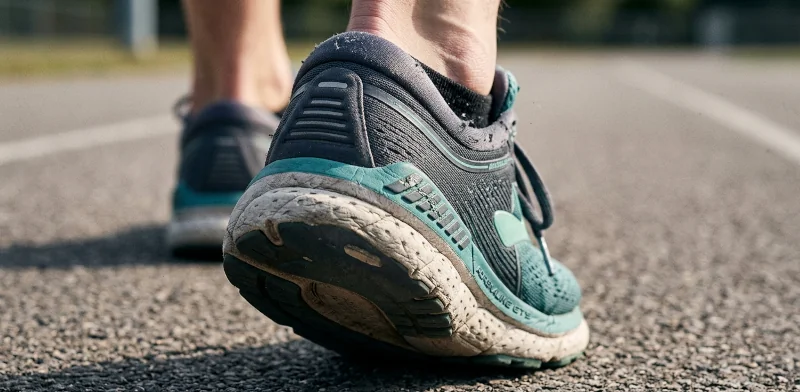
Important point: overpronation is a movement pattern, not a fixed anatomical diagnosis. You can sometimes infer it from shoe wear — more wear along the inner edge of the heel and forefoot — but a reliable assessment requires watching someone walk or run, ideally with a gait analysis.
Flat Feet vs Overpronation at a Glance
| Topic | Flat Feet | Overpronation |
| What it describes | Foot structure — the shape of the arch | Foot movement — how the foot rolls during gait |
| Main issue | Low or absent arch when standing | Excessive inward rolling during walking or running |
| Common signs | Flat inner sole, arch touches ground when standing | Ankle rolling inward, inner-edge shoe wear, knee tracking inward |
| Can exist without the other? | Yes — asymptomatic flat feet are common | Yes — can occur with moderate or even higher arches |
| What may worsen it | Weight gain, aging, tendon weakness, pregnancy | Hip and core weakness, poor footwear, fatigue |
| Type of support that may help | Arch cushioning and load distribution | Motion-control or stability shoes and orthotics |
| When it matters clinically | When causing pain, fatigue, or limited function | When contributing to pain in the foot, knee, hip, or back |
Can You Have One Without the Other?
Yes — and that’s the point most people miss.
Flat feet without significant overpronation. Some people have a low arch but walk with reasonable biomechanical alignment. Their flat feet are simply how their feet are built, and they cause little or no functional problem. The NHS makes the same point: flat feet are common, usually nothing to worry about, and often need no treatment at all. [NHS, 2025]
Overpronation without flat feet. It’s also possible to have a moderate or even higher arch and still overpronate during movement. Pronation depends on how muscles, tendons, and joints work during gait, not just on the resting height of the arch. A controlled study of 15 healthy women by Snyder and colleagues found that six weeks of closed-chain hip strengthening produced measurable changes in rearfoot eversion — a key pronation measure — during running, supporting the idea that hip strength influences foot motion regardless of arch shape. [Snyder et al., 2009]
Both together. Plenty of people do have flat feet and overpronate, and in those cases the two can reinforce each other. A very low arch reduces the foot’s ability to control inward movement, which increases the likelihood and degree of overpronation. AAOS describes this loss of arch control as part of how progressive collapsing foot deformity develops. [AAOS, 2024]
This is why a gait assessment — not just a static look at your arch — gives a more complete picture of what’s actually happening when you move.
Where the Symptoms Overlap
Both conditions can produce overlapping symptoms, which is part of why people confuse them. But the patterns differ.
Symptoms more typical of flat feet include aching or fatigue along the inner foot and arch — especially after long periods of standing — swelling near the inside of the ankle, and feet that tire quickly during walking. The NHS notes that shoes may also wear out unusually fast. [NHS, 2025]
Symptoms more typical of overpronation include heel or inner-arch pain of the type seen in plantar fasciitis, shin splints, inner knee pain during activity, and a sense of ankle instability. Cleveland Clinic links overpronation to plantar fasciitis, Achilles tendinitis, bunions, shin splints, and pain that may radiate to the knee, hip, or back. [Cleveland Clinic, 2022]
Symptoms that can come from either or both include general foot fatigue, pain that worsens with prolonged activity, and discomfort that eases with rest but returns with use.
None of these confirms a specific diagnosis on its own. Persistent or worsening symptoms deserve a proper evaluation, not self-diagnosis from a symptom list.
Why the Distinction Matters
It can sound like a technicality — structure versus movement. But the difference has direct, practical consequences for how you choose shoes and support.
Footwear
Motion-control and stability shoes are designed to limit inward rolling during the stride. They’re typically recommended when overpronation is contributing to symptoms. Choosing them just because you have flat feet — without confirmed overpronation — isn’t necessarily helpful. A shoe with general arch cushioning may be enough for someone with flat feet and mild fatigue who doesn’t significantly overpronate. [Cleveland Clinic, 2022]
Orthotics and Arch Support
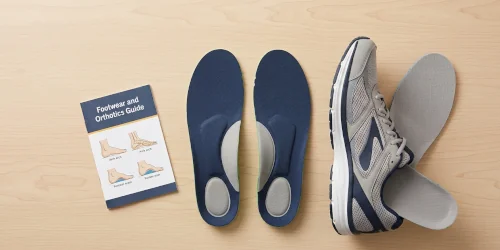
Orthotics for flat feet primarily aim to reduce strain on the arch and redistribute load across the foot. Orthotics for overpronation focus more on controlling foot motion through the gait cycle, often with a firmer heel cup or a medial wedge. Knowing which issue is present — or whether both are — helps make sure the support addresses the real problem, not just the label. AAOS notes that over-the-counter inserts can be enough for mild flatfoot, while custom orthotics tend to be reserved for moderate-to-severe cases. [AAOS, 2024]
Exercise
Strengthening helps both conditions, but the focus differs. Flat feet typically respond to exercises that build arch and intrinsic foot strength — towel curls, short-foot exercises, heel raises. Overpronation often also needs hip and glute work, given how the whole lower-limb chain interacts. For a practical starting point, see Best Exercises for Flat Feet in Adults.
When to See a Podiatrist or Doctor
Many people with flat feet or mild overpronation never need treatment. Consider a professional evaluation if you notice any of the following:
- Foot, heel, or arch pain that is persistent or getting worse
- New or increasing knee, hip, or lower-back pain that tracks with walking or activity
- A visible change in arch shape as an adult
- One foot becoming flatter than the other
- Difficulty standing on tiptoe on one foot, or pain when you try
- Swelling along the inner ankle
- Over-the-counter footwear or insoles that haven’t helped after a fair trial (often 4–6 weeks)
- Plans to start a running program and a desire for a baseline gait assessment
A podiatrist or sports-medicine clinician can assess your foot structure and watch you walk, and base their recommendations on what’s actually driving symptoms rather than a structural label alone. For a broader look at causes and management, see Flat Feet and Fallen Arches: Causes, Symptoms, and What Helps.
| Health Disclaimer This article is for general information only. It is not medical advice, diagnosis, or treatment, and it is not a substitute for evaluation by a qualified clinician. If foot, ankle, knee, hip, or back pain is persistent, worsening, or affecting how you walk, see a podiatrist, physical therapist, or doctor. Do not rely on a static look at your arch — or on online articles — to rule in or rule out a problem. |
Frequently Asked Questions
Are flat feet and overpronation the same thing?
No. Flat feet refers to the structure of your foot — specifically a low or absent arch when standing. Overpronation refers to a movement pattern — excessive inward rolling of the foot during walking or running. The two often occur together, but they are defined differently and can exist independently. [NHS, 2025; Cleveland Clinic, 2022]
Can you overpronate without having flat feet?
Yes. Pronation is influenced by how the hip, knee, and ankle work together — not just the resting shape of your arch. Hip and core weakness, for example, can contribute to overpronation even in people with moderate or higher arches. [Snyder et al., 2009]
Do flat feet always cause overpronation?
No. Plenty of people with flat feet walk with reasonably normal biomechanics and experience no significant overpronation or related symptoms. The NHS describes flat feet as common and usually nothing to worry about. [NHS, 2025]
Does overpronation always cause pain?
Not necessarily. Mild overpronation may not cause any symptoms. It becomes a clinical concern when it contributes to pain in the foot, heel, knee, hip, or back — particularly with activity — or when it’s linked to specific overuse injuries like plantar fasciitis or shin splints. [Cleveland Clinic, 2022]
What kind of shoe is best — for flat feet or for overpronation?
The right shoe depends on symptoms, not just foot shape. Stability or motion-control shoes are typically recommended when overpronation is contributing to symptoms. General arch support may be enough for flat feet without significant overpronation. A gait assessment from a podiatrist or specialty running fitter gives the most accurate starting point.
Can a flat-footed runner just train hip strength and avoid orthotics?
Sometimes — and the evidence supports trying it. Snyder and colleagues found that six weeks of closed-chain hip-rotator strengthening changed lower-extremity mechanics, including rearfoot eversion, during running. That doesn’t mean orthotics are never useful, but it’s a reason to take hip and core work seriously rather than relying on footwear alone. [Snyder et al., 2009]
References
- Snyder KR, Earl JE, O’Connor KM, Ebersole KT. Resistance training is accompanied by increases in hip strength and changes in lower extremity biomechanics during running. Clin Biomech (Bristol). 2009;24(1):26–34. doi:10.1016/j.clinbiomech.2008.09.009. → View source
- NHS. Flat feet. National Health Service (UK); last reviewed 24 June 2025. → View source
- Cleveland Clinic. Overpronation: What It Is, Causes & Treatment. Cleveland Clinic Health Library; medically reviewed 01 March 2022. → View source
- American Academy of Orthopaedic Surgeons (OrthoInfo). Progressive Collapsing Foot Deformity (Flatfoot) — formerly Adult Acquired Flatfoot. AAOS, 2024. → View source
