
The claimed avocado leaves benefits range from lower blood pressure to steadier blood sugar — but almost all of that evidence comes from test tubes and lab animals, not from people. That doesn’t make the leaves worthless. It means the honest answer is more interesting, and more cautious, than most “10 amazing benefits” lists admit.
Avocado leaves (the foliage of Persea americana) have a real place in Mexican cooking, where dried leaves called hoja de aguacate flavor beans, moles, and tamales with a faint anise or licorice note. Researchers have also picked them apart in the lab and found a genuinely interesting mix of plant compounds [Scientific Reports, 2025]. The catch: the same leaves carry a natural toxin, and the safe way to use them is narrower than the internet suggests.
Here’s what the research actually supports — and where the real cautions are.
What’s actually in avocado leaves
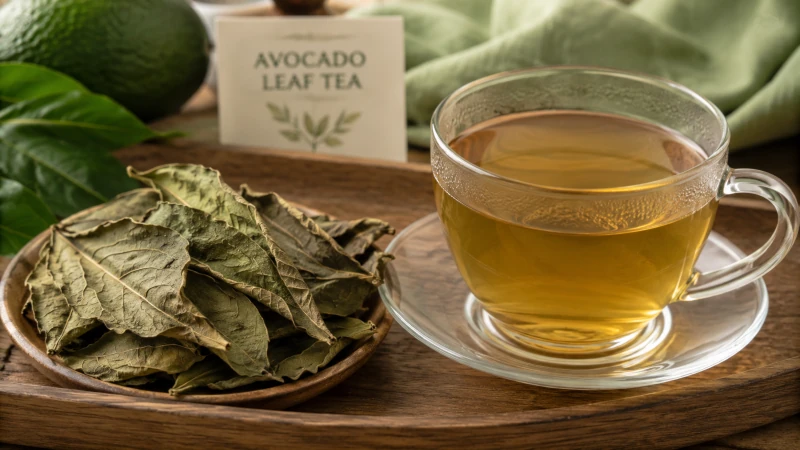
Chemical analyses consistently find that avocado leaves are dense in plant polyphenols. The standouts are flavonoids such as quercetin, phenolic acids led by chlorogenic acid, and terpenoids, plus small amounts of aromatic essential-oil compounds [Scientific Reports, 2025]. A 2019 analysis of seven Mexican avocado varieties found the leaves carried more of these phenolic antioxidants than the seeds did [Molecules, 2019].
Those compounds are why the leaves score well on laboratory antioxidant tests — they neutralize reactive molecules in a dish [J. Basic Clin. Physiol. Pharmacol., 2016]. The leaves also contain minerals like calcium, magnesium, and potassium. But keep the dose in perspective: steep a couple of dried leaves in hot water and only a fraction of those nutrients ends up in your cup. Avocado leaf tea is a source of flavor and plant compounds, not a meaningful supply of vitamins or minerals. If magnesium is what you’re after, food does far more — start with magnesium-rich foods.
The avocado leaves benefits, graded by evidence
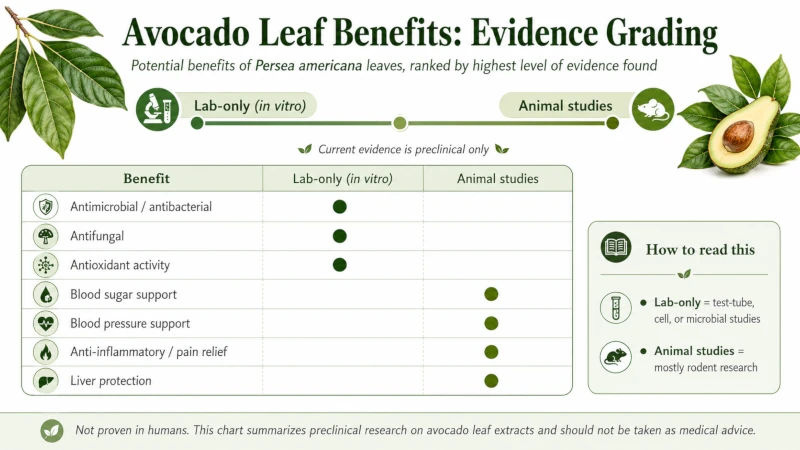
Most articles list a dozen benefits as if they were settled. They aren’t. Nearly every promising finding comes from cell cultures or rodents — a normal early step in research, but a long way from proof that a cup of tea helps a person. Here’s where things stand.
| Claim | What was tested | Evidence level |
| Antioxidant activity | Test-tube assays | Consistent — but lab-only |
| Lower blood pressure | Rats; ACE-enzyme inhibition | Early, animal-only |
| Better blood sugar | Rodents; enzyme studies | Early, animal-only |
| Lower cholesterol | Rodents | Early, animal-only |
| Reduced inflammation | Rodents; cell studies | Early, animal-only |
| Antimicrobial | Test-tube cultures | Lab-only |
| Wound healing | Topical gel in mice | Early, animal-only |
| Anticancer | Cancer cells in a dish | Very early; safety caveat below |
| Fewer wrinkles / skin elasticity | No human leaf trials found | Not supported for the leaf |
Blood pressure. In salt-loaded rats, avocado leaf extract blocked ACE — the same enzyme several blood-pressure drugs target — and lowered blood-pressure readings [Sutiningsih et al., 2023]. That’s a plausible mechanism, but it hasn’t been shown to work, or to be safe at any particular dose, in humans. If high blood pressure is your concern, the proven steps are diet, exercise, prescribed medication, and tracking your numbers with a home blood pressure monitor.
Blood sugar and cholesterol. Animal studies report lower fasting glucose and improved cholesterol after leaf extracts, often credited to quercetin and other phenolics. Encouraging for researchers; not a reason to swap out your medication or your plate. Diet does the heavy lifting here — these diabetic-friendly foods have far stronger human evidence, and for cholesterol specifically some people also try home approaches like certain essential oils, though the proof there is mixed.
Immune and anti-inflammatory effects. Lab and rodent work shows the leaf’s antioxidants can lower markers of inflammation. Whether that becomes a stronger immune system in people is unknown. The basics with real support — sleep, nutrition, movement — still matter most for supporting your immune system.
Anticancer claims need a hard caveat. Persin, the compound concentrated in the leaves, can kill some cancer cells in a dish. But the same in-vitro studies show it can also damage the DNA of normal cells. A compound being toxic to cells is not the same as a safe, selective cancer treatment, and there are no human trials. Treat “avocado leaves fight cancer” as a lab curiosity, not a therapy.
The skin claim is the weakest. Some sites say avocado leaves reduce wrinkles in human studies. No credible human trial of avocado leaf for skin turns up in the literature. That benefit appears borrowed from research on avocado oil or fruit and pinned onto the leaf.
The safety catch most articles skip
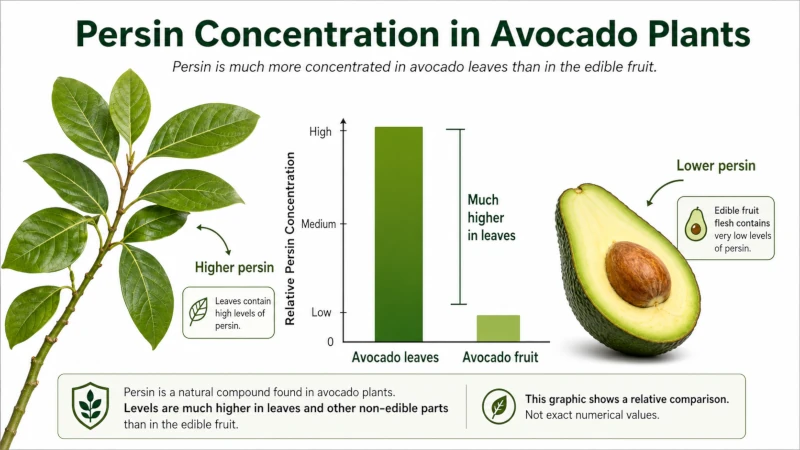
This rarely makes the “benefits” lists. The leaf is the part of the avocado plant with the highest concentration of persin, a natural fungicidal toxin — leaves run roughly 0.9–1% persin, far more than the fruit [Oelrichs et al., 1995].
Persin is well documented as toxic to animals. In cattle, goats, horses, birds, rabbits, dogs, and other species, eating avocado leaves can cause heart damage, breathing trouble, and — in nursing animals — mammary-gland damage and dropped milk production [Merck Veterinary Manual]. Never give avocado leaves to pets, and don’t let livestock graze on them.
So why do people use them at all? Two reasons: the amount of persin in a light culinary infusion is small, and the variety of tree matters a great deal.
Variety matters: Mexican versus other types
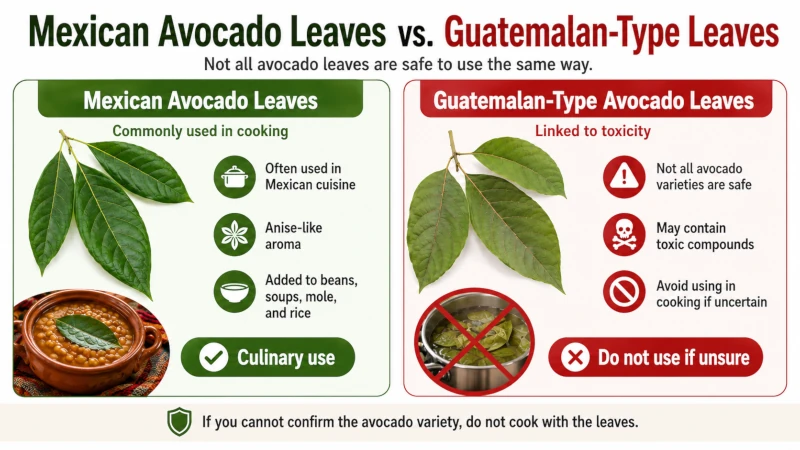
The leaves traditionally used in Mexican kitchens come from the Mexican avocado, Persea americana var. drymifolia — the anise-scented type sold dried as hoja de aguacate. When researchers fed avocado leaves to goats, the toxic effects traced back to Guatemalan-type leaves; the Mexican-variety leaves didn’t cause the same harm. Hass and many ornamental backyard trees descend from Guatemalan stock. The practical rule is simple: use only leaves grown and sold for cooking, ideally labeled as the Mexican variety. Don’t pluck and brew leaves from an unknown backyard tree.
The estragole question
The same anise aroma that makes these leaves appealing comes partly from estragole and anethole. The European Medicines Agency classifies estragole as a genotoxic carcinogen and advises keeping exposure as low as practical, with extra caution for children and during pregnancy and breastfeeding [EMA, 2021]. The traditional pattern — a few leaves to flavor a pot of beans now and then — keeps that exposure low. Drinking strong avocado leaf tea every day is a different, larger, and unstudied exposure. There is no established safe daily dose for medicinal use.
Who should avoid avocado leaves
Skip avocado leaves, or use only the occasional culinary pinch after talking to your doctor, if you fall into any of these groups:
- Pregnant or breastfeeding — avoid medicinal amounts; the estragole concern and animal data on reduced milk supply both point the same way.
- Young children — keep concentrated teas and extracts away from them.
- Anyone on blood-pressure or blood-sugar medication — because the leaf may push these in the same direction as your drugs, check with your prescriber before regular use so your readings don’t drop too low.
- People with liver problems — estragole is processed by the liver and flagged for caution there.
- Pets and livestock — never.
Realistic expectations
Used the traditional way, avocado leaves are a flavoring herb with some interesting compounds — not a remedy. They won’t lower your blood pressure on their own, reverse diabetes, or treat disease. If a product page promises those things, that’s marketing, not evidence.
How avocado leaves are used
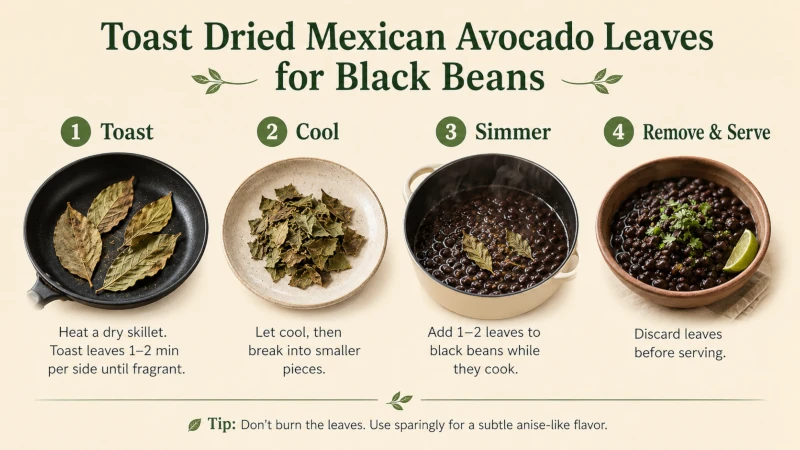
In Mexican cooking, dried Mexican-variety leaves are toasted on a hot, dry pan for a few seconds to wake up the aroma, then added whole to black beans, broths, moles, or tamales and removed before serving — much like bay leaves. As a tea, people steep one or two dried leaves in hot water for about 5 to 10 minutes.
If you want to try the tea, the lower-risk approach is: occasional use rather than daily; light infusions rather than strong concentrates; leaves bought for culinary use rather than foraged; and a conversation with your doctor first if you take regular medication or manage a health condition.
| Health Disclaimer This article is for general education and information only. It is not medical advice and is not a substitute for diagnosis or treatment from a qualified healthcare professional. Avocado leaves have not been proven safe or effective for treating any medical condition in humans. Do not start, stop, or change any medication or treatment based on this page. If you are pregnant, breastfeeding, have a medical condition, or take prescription medicine, talk to your doctor before using avocado leaves or any herbal remedy. Keep avocado leaves away from pets and livestock. |
When to talk to a healthcare professional
Check with a clinician before using avocado leaves regularly if you are pregnant or breastfeeding, take prescription medicine (especially for blood pressure or diabetes), have liver or kidney disease, or manage a chronic condition. Seek prompt medical care if you notice signs of an allergic reaction such as rash, swelling, or trouble breathing, or if you develop persistent stomach pain, vomiting, or dizziness and faintness that could signal blood pressure or blood sugar dropping too low. Home remedies don’t replace evaluation for symptoms that are new, severe, or not improving.
Frequently Asked Questions
Are avocado leaves safe to drink as tea?
An occasional, light infusion of culinary Mexican-variety leaves is the traditional, lower-risk pattern. Strong daily tea is a larger, unstudied exposure to compounds like estragole, and there’s no established safe medicinal dose. If you take medication, are pregnant or breastfeeding, or have a health condition, ask your doctor first.
Which avocado leaves are safe to use?
The Mexican avocado (Persea americana var. drymifolia), sold dried as hoja de aguacate, is the type traditionally used in cooking and didn’t cause the toxicity seen with Guatemalan-type leaves in animal studies. Buy leaves labeled for culinary use rather than foraging from an unknown tree.
Do avocado leaves lower blood pressure?
Only animal evidence supports this. Avocado leaf extract lowered blood pressure in rats by blocking the ACE enzyme, but it hasn’t been tested for effectiveness or safety in people. It is not a replacement for proven treatment.
Can I use leaves from my Hass avocado tree?
Better not to. Hass descends from Guatemalan stock, the type linked to toxicity in animal studies, and persin is most concentrated in the leaves. Use leaves sold for cooking, ideally identified as the Mexican variety.
Are avocado leaves safe during pregnancy or breastfeeding?
Avoid medicinal amounts. Estragole in the leaves is one reason regulators advise minimizing exposure during pregnancy and breastfeeding, and Guatemalan-variety leaves reduced milk production in animals. Occasional culinary use should be cleared with your doctor.
Can pets eat avocado leaves?
No. Persin in avocado leaves is toxic to dogs, birds, rabbits, horses, and livestock and can cause heart and breathing problems. Keep the leaves and any tea out of reach of animals.
References
- Phytochemical characterization of ethanolic and ethyl acetate extracts of avocado (Persea americana) leaves by FT-IR and GC-MS (2025). Scientific Reports, 15. → View source
- Polyphenolic profile and antioxidant activity of leaf hydroalcoholic extracts from seven Mexican Persea americana cultivars (2019). Molecules, 24(1), 173. → View source
- Aqueous extracts of avocado pear (Persea americana Mill.) leaves and seeds exhibit anti-cholinesterase and antioxidant activities in vitro (2016). Journal of Basic and Clinical Physiology and Pharmacology (PMID 26812783). → View source
- Sutiningsih, D. et al. (2023). Effectiveness of avocado leaf extract (Persea americana Mill.) as antihypertensive. F1000Research, 11, 1100. doi:10.12688/f1000research.124643.2 → View source
- Oelrichs, P. B. et al. (1995). Isolation and identification of a compound from avocado (Persea americana) leaves which causes necrosis of the acinar epithelium of the lactating mammary gland and the myocardium. Natural Toxins, 3(5), 344–349. doi:10.1002/nt.2620030504 → View source
- Merck Veterinary Manual. Avocado (Persea spp) Toxicosis in Animals. Merck & Co. → View source
- European Medicines Agency, Committee on Herbal Medicinal Products (HMPC). Public statement on the use of herbal medicinal products containing estragole. → View source
