

Sweet briar rose is a wild European rose whose bright red hips are genuinely rich in vitamin C — a single cup of wild rose hips holds several times what an adult needs in a day [USDA SR28 via NIH ODS, 2015; NIH ODS, 2021]. Past that, the evidence gets thin quickly. Rose hip powder has modest, early support for osteoarthritis pain, but those trials used a different species, and most of the traditional claims made for sweet briar rose have never been properly tested. Here’s what the plant can realistically do for you, how to prepare the hips so they don’t irritate your gut, and who should leave it alone.
What is sweet briar rose?
Sweet briar rose, also called eglantine, is Rosa rubiginosa (sometimes listed as Rosa eglanteria). It’s a vigorous, arching shrub about 2 to 3 meters tall, with hooked prickles, pink five-petaled flowers, and leaves that give off an apple scent. The hips ripen to scarlet-red and measure roughly 1 to 2 cm. It is native to Europe and western Asia, and it has spread far enough in parts of North America that Washington State keeps it on its noxious weed monitor list [Washington State Noxious Weed Control Board, n.d.].
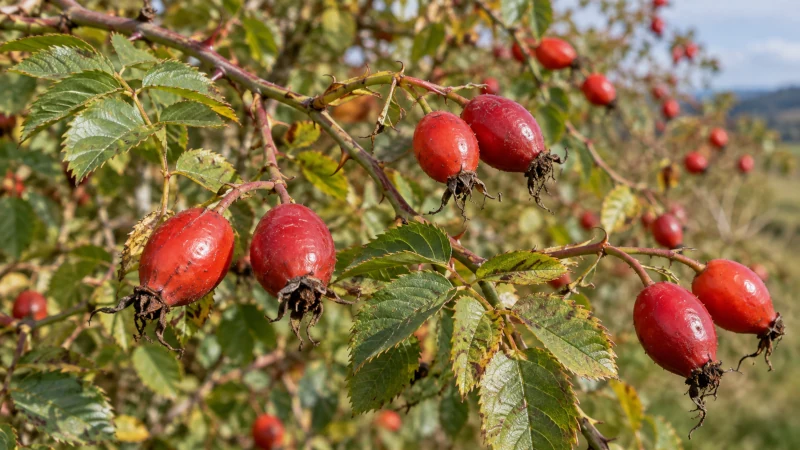
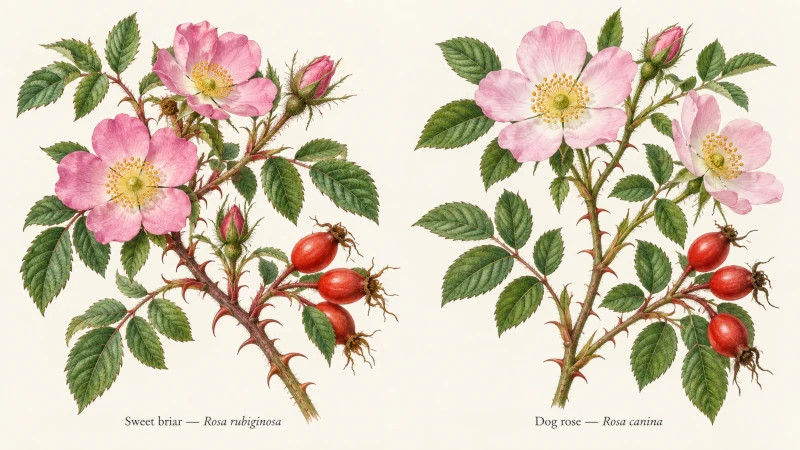
One thing worth clearing up: sweet briar is not the same plant as dog rose (Rosa canina), though both get called “wild rose” or “briar.” The difference matters. Most commercial rose hip products are made from dog rose [WebMD, 2026], and so was the powder tested in the joint-pain trials below [Christensen et al., 2008]. Results from one species don’t automatically carry over to another. If dog rose is what you’re after, see our Rosa canina (dog rose) guide.
If you forage, be certain of your identification, and skip plants along busy roads or anywhere that may have been sprayed.
Sweet briar rose hips and vitamin C
This is where rose hips earn their reputation. In USDA data, one cup of wild rose hips (127 g) contains 541 mg of vitamin C, or about 426 mg per 100 g [USDA SR28 via NIH ODS, 2015]. For comparison, adult men need 90 mg a day and women 75 mg [NIH ODS, 2021].
| Food (raw) | Vitamin C per 100 g |
| Acerola (West Indian cherry) | ≈1,680 mg |
| Rose hips, wild | ≈426 mg |
| Black currants | ≈181 mg |
| Kiwifruit, green | ≈93 mg |
| Oranges | ≈53 mg |
| Lemons, without peel | ≈53 mg |
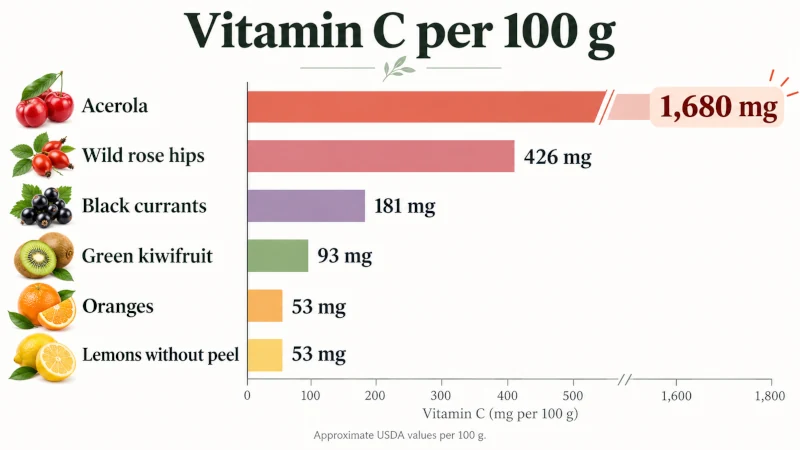
Values calculated from USDA household-measure data [USDA SR28 via NIH ODS, 2015]. The USDA rose hip entry is for wild hips gathered in the Northern Plains, not sweet briar specifically, so treat it as a ballpark figure.
Why tea and dried products deliver much less
Vitamin C is fragile. Storage and cooking reduce it [NIH ODS, 2021], and drying and processing destroy most of the vitamin C in rose hips. The same reference notes that some “natural” rose hip vitamin C products are boosted with lab-made vitamin C, and the label doesn’t always say so [RxList, n.d.]. So rose hip tea is a pleasant, caffeine-free drink — not a dependable vitamin C dose. Plenty of everyday produce does the job too; see our list of vitamin C–rich foods.
What the evidence says about sweet briar rose benefits
Osteoarthritis pain: promising, but limited
This is the best-studied use of rose hip — just not of sweet briar itself. A 2008 meta-analysis pooled three randomized, placebo-controlled trials of a standardized dog rose powder in people with osteoarthritis, most of them with knee arthritis [Christensen et al., 2008]. Participants took 5 g a day for about three months. Pain eased more than with placebo, a small-to-moderate effect, and about one extra person in six responded to treatment [CRD, 2009].
The caveats are real. The pooled trials included only 306 people, all three were sponsored by the manufacturer, and all were run in Denmark and Norway. Independent reviewers warned that, for those reasons, the positive conclusion may not be reliable [CRD, 2009]. A broader Cochrane review of oral herbal products for osteoarthritis could pool results for only two remedies and judged the evidence for the rest too limited to draw conclusions; it also found no herbal product other than one had even been tested for effects on joint structure [Cameron & Chrubasik, 2014]. The RxList monograph rates rose hip “possibly effective” for osteoarthritis, based mainly on one specific product, and calls the evidence for rheumatoid arthritis early [RxList, n.d.].
What that means for you: rose hip powder is a reasonable thing to raise with your doctor if you have osteoarthritis, as long as you expect a modest easing of pain over weeks to months. It isn’t a substitute for exercise, weight management, or the treatment you’ve been prescribed, and there’s no evidence it repairs cartilage. Our guide to anti-inflammatory supplements compares it with other options people try for arthritis.
Colds and immunity
The old line that sweet briar rose prevents colds and flu runs well ahead of the evidence. There are no good trials of rose hips for colds, and colds, infections, and immune support are all listed as having insufficient evidence [RxList, n.d.]. What we do know comes from vitamin C research: supplements don’t lower most people’s chance of catching a cold. Taken regularly, they may make colds slightly shorter or milder, and starting after symptoms appear doesn’t seem to help [NIH ODS, 2021]. Our vitamin C guide covers that research in more depth.
Skin: rose hip seed oil
Rose hip seed oil, pressed from the seeds rather than the fruit, is common in skin care. A review of topically applied plant oils included rose hip oil among those studied for anti-inflammatory and skin-barrier effects [Lin et al., 2017]. Some research suggests it may improve the appearance of scars, but it isn’t clear that it works better than other oils used the same way [WebMD, 2026].
Traditional uses that haven’t held up
Herbal tradition credits sweet briar with a lot: a mild diuretic and “blood cleanser” for gout and fluid retention, a leaf-and-root tea for diarrhea, and whole hips eaten to drive out intestinal worms. None of these has solid support in people; diarrhea and a long list of other traditional uses sit in the insufficient-evidence category [RxList, n.d.].
One tradition is worth actively avoiding: washing your eyes with homemade rose water for pink eye. It isn’t a tested treatment, and rose hips themselves can irritate the eye — a published case report described eye inflammation linked to rose hip [Venkatesh et al., 2005]. For pink eye, the CDC suggests cold compresses and artificial tears for comfort, and seeing a healthcare provider for eye pain, light sensitivity, blurred vision that doesn’t clear, intense redness, or symptoms that worsen [CDC, 2024].
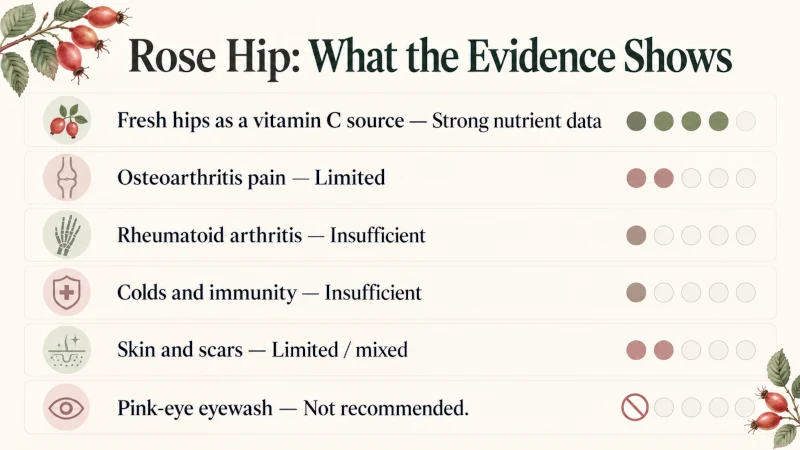
Evidence at a glance
| Use | What the research shows | Evidence strength |
| Vitamin C source (fresh hips) | High vitamin C in USDA data; much of it lost with drying and processing [USDA SR28 via NIH ODS, 2015; RxList, n.d.] | Strong (nutrient data) |
| Osteoarthritis pain | Small-to-moderate pain relief in three small, manufacturer-funded trials of dog rose powder [CRD, 2009] | Limited |
| Rheumatoid arthritis | Early research on one rose hip product [RxList, n.d.] | Insufficient |
| Colds and immunity | No rose hip trials; vitamin C supplements don’t prevent colds [NIH ODS, 2021] | Insufficient |
| Scars and skin (seed oil) | Some supportive research; unclear advantage over other oils [WebMD, 2026] | Limited / mixed |
| Diuretic, gout, diarrhea, worms | Traditional use only [RxList, n.d.] | Traditional; not established |
| Eyewash for pink eye | Untested; not recommended [CDC, 2024] | Not recommended |
How to use sweet briar rose hips
Fresh hips
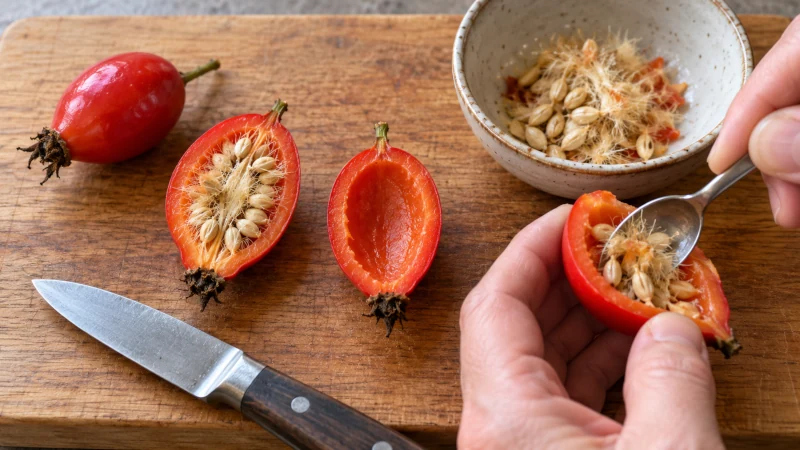
Pick fully ripe, deep red hips. Split each one, scrape out the seeds and the fine hairs packed around them, and rinse well — those hairs are what make carelessly prepared hips itchy on the way through. Wash your hands afterward and keep your fingers away from your eyes while you work. There’s no benefit to eating the seeds, so discard them.
Cleaned hips can go into yogurt or oatmeal, or be cooked into jam or syrup. Cooking does lower the vitamin C [NIH ODS, 2021], and jam brings a lot of sugar with it. A traditional raw “marmalade” — cleaned hips mashed with an equal weight of sugar and kept in the fridge for a few days — tastes lovely, but think of it as a treat, not a remedy.
Rose hip tea
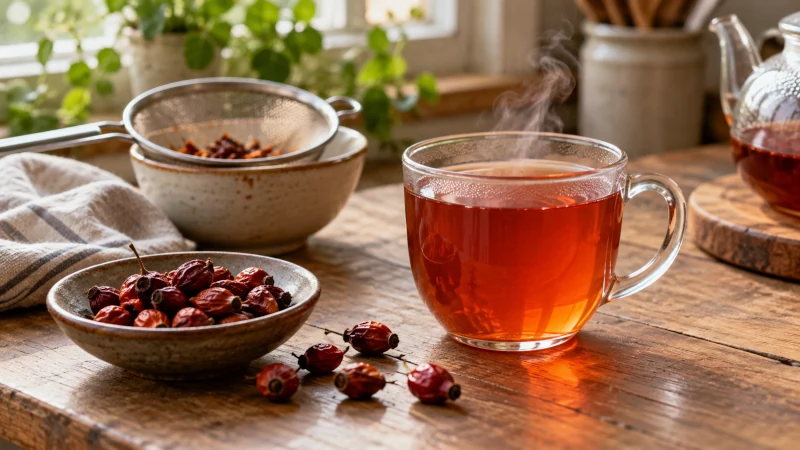
Simmer cleaned fresh or dried hips in water, then strain through a fine cloth or paper coffee filter to catch any stray hairs. Enjoy it for the flavor, not as a vitamin C supplement [RxList, n.d.].
Supplements
The osteoarthritis trials used 5 g a day of a standardized dog rose powder for about three months [CRD, 2009]. That was a study dose for a particular product, not an established dose for rose hip in general — there isn’t enough information to set a dosing range [RxList, n.d.]. The FDA doesn’t test rose hip products to confirm what’s on the label, though some brands are checked by independent third-party testers [WebMD, 2026]. Follow the label, and count vitamin C from rose hip products toward the adult upper limit of 2,000 mg a day from all sources [NIH ODS, 2021].
Side effects, interactions, and who should avoid sweet briar rose
Side effects
Taken by mouth in appropriate amounts, rose hip is considered likely safe for adults [RxList, n.d.]. The most common problems are digestive: diarrhea, heartburn, nausea, and stomach cramps [WebMD, 2026]. Vomiting, constipation, fatigue, headache, and trouble sleeping have also been reported, and breathing in rose hip dust can set off allergies in some people [RxList, n.d.]. In the osteoarthritis trials, mild stomach upset and acid reflux turned up in both the rose hip and placebo groups [CRD, 2009]. Serious allergic reactions are possible; the warning signs are listed below.
Medication interactions: the references don’t fully agree
Research on rose hip and medications is incomplete, and two widely used drug references emphasize different risks. WebMD’s pharmacist-reviewed monograph flags statins and chemotherapy and says interactions aren’t fully understood [WebMD, 2026]. The Natural Medicines-based monograph on RxList lists these moderate interactions instead [RxList, n.d.]:
- Blood thinners and antiplatelet drugs, such as warfarin, clopidogrel, heparin, and aspirin.
- Lithium — rose hip may act like a mild diuretic and slow how the body clears lithium.
- Estrogen-containing medicines, such as estradiol or ethinyl estradiol — vitamin C may increase how much estrogen is absorbed.
- Fluphenazine, an antipsychotic.
- Aluminum-containing antacids — take rose hip 2 hours before or 4 hours after.
Most of these are theoretical, based on rose hip’s vitamin C content or on rugosin E, a compound studied in a different species, Rosa rugosa [RxList, n.d.]. The warfarin concern even points in two directions — vitamin C might weaken warfarin while rugosin E might add to bleeding risk — which is exactly why anyone on a blood thinner should talk to their prescriber first. Separately, NIH notes that vitamin C supplements may interfere with chemotherapy and radiation, and that an antioxidant combination blunted the benefit of a statin-plus-niacin regimen [NIH ODS, 2021].
Pregnancy and breastfeeding
There isn’t enough reliable safety information on rose hip during pregnancy or breastfeeding, so stay with amounts normally found in food [RxList, n.d.]. Vitamin C passes into breast milk [WebMD, 2026]. Vitamin C needs rise only modestly — to 85 mg a day in pregnancy and 120 mg while breastfeeding — and most people get enough from food [NIH ODS, 2021].
Who should talk to a doctor before using rose hip
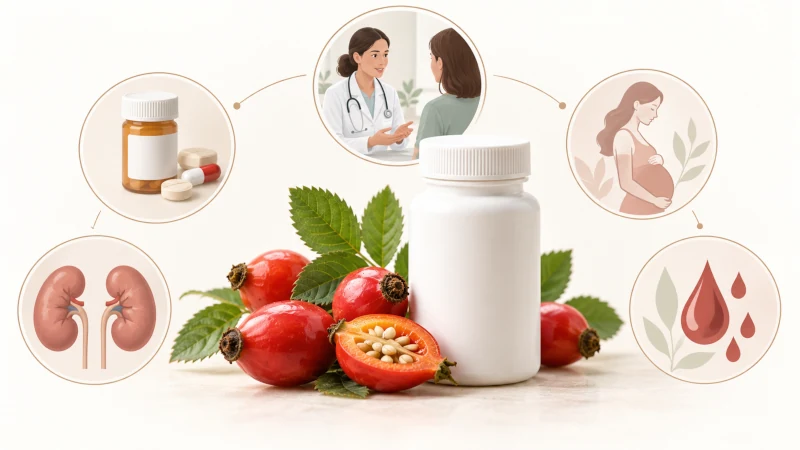
- People with kidney stones or other kidney problems, including anyone on dialysis [WebMD, 2026; RxList, n.d.].
- People with iron overload, such as hemochromatosis, or with thalassemia — vitamin C increases iron absorption [RxList, n.d.; NIH ODS, 2021].
- People with G6PD deficiency or sickle cell disease [RxList, n.d.].
- Anyone with a bleeding disorder or scheduled surgery; stop rose hip at least 2 weeks beforehand [RxList, n.d.].
- People with diabetes — vitamin C might affect blood sugar control, though experts disagree [RxList, n.d.].
- Anyone receiving cancer treatment [WebMD, 2026; NIH ODS, 2021].
- Anyone allergic to rose hip [WebMD, 2026]. Children also have much lower vitamin C upper limits than adults — 400 mg a day at ages 1 to 3 [NIH ODS, 2021] — so keep supplements out of reach.
When to get medical help
- Signs of a severe allergic reaction after using rose hip — wheezing or trouble breathing; swelling of the face, lips, tongue, or throat; hives; a racing heart; or dizziness or fainting. Stop using it and get help right away. If someone has taken too much, contact Poison Control at 800-222-1222 [WebMD, 2026].
- Eye symptoms such as pain, light sensitivity, blurred vision that doesn’t clear, intense redness, or pink eye that’s getting worse. Newborns with eye symptoms need a doctor right away [CDC, 2024].
- A joint that suddenly becomes severely painful, hot, swollen, or discolored, that you can’t move or put weight on, or joint pain with fever or chills. Seek urgent care the same day; this can be a joint infection rather than arthritis [NHS, 2026].
| Health Disclaimer: This article is for general education and is not medical advice. It isn’t intended to diagnose, treat, cure, or prevent any disease. Rose hip products can interact with medications and health conditions, and research on sweet briar rose specifically is very limited. Talk with a doctor, pharmacist, or registered dietitian before using rose hip supplements, especially if you are pregnant or breastfeeding, take prescription medicines, or manage a chronic condition. If you think you are having a medical emergency, call 911 or your local emergency number. |
Frequently Asked Questions
Is sweet briar rose the same as rose hip?
Not quite. A rose hip is the fruit of any rose. Sweet briar (Rosa rubiginosa) is one species that produces hips [Washington State Noxious Weed Control Board, n.d.], while most commercial rose hip products come from dog rose, Rosa canina [WebMD, 2026].
Can you eat sweet briar rose hips raw?
Yes, once you’ve removed the seeds and the irritating hairs inside. Rose hip taken by mouth is considered likely safe for adults, though it can upset some people’s stomachs [RxList, n.d.; WebMD, 2026].
How much vitamin C is in rose hip tea?
There’s no reliable figure. Fresh wild rose hips are high in vitamin C [USDA SR28 via NIH ODS, 2015], but drying and processing destroy most of it [RxList, n.d.], so tea is a poor vitamin C source.
Does rose hip help arthritis?
A standardized dog rose powder produced small-to-moderate pain relief for osteoarthritis in three small, manufacturer-funded trials [CRD, 2009]. Sweet briar hasn’t been tested, and no study shows rose hip repairs joints.
Who shouldn’t take rose hip supplements?
Check with a doctor first if you’re pregnant or breastfeeding, take blood thinners, lithium, or estrogen, or have kidney stones, iron overload, G6PD deficiency, sickle cell disease, a bleeding disorder, or upcoming surgery [RxList, n.d.; WebMD, 2026].
References
- Washington State Noxious Weed Control Board. Sweetbriar rose (Rosa rubiginosa). Accessed September 17, 2026. View source
- U.S. Department of Agriculture. National Nutrient Database for Standard Reference, Release 28: Vitamin C content of foods (report run October 20, 2015), hosted by NIH Office of Dietary Supplements. View source
- NIH Office of Dietary Supplements. Vitamin C: Fact Sheet for Consumers. Updated March 22, 2021. View source
- Christensen R, Bartels EM, Altman RD, Astrup A, Bliddal H. Does the hip powder of Rosa canina (rosehip) reduce pain in osteoarthritis patients? A meta-analysis of randomized controlled trials. Osteoarthritis Cartilage. 2008;16(9):965–972. doi:10.1016/j.joca.2008.03.001. PMID: 18407528. View source
- Centre for Reviews and Dissemination. Critical abstract of Christensen et al. (2008). Database of Abstracts of Reviews of Effects (DARE). Entry date 2009. NBK75292. View source
- Cameron M, Chrubasik S. Oral herbal therapies for treating osteoarthritis. Cochrane Database Syst Rev. 2014;(5):CD002947. doi:10.1002/14651858.CD002947.pub2. View source
- RxList. Rose Hip: Health Benefits, Side Effects, Uses, Dose & Precautions (Natural Medicines Comprehensive Database content). Accessed September 17, 2026. View source
- McIntyre C; reviewed by Johnston B. Rose Hip – Uses, Side Effects, and More. WebMD. Reviewed March 16, 2026. View source
- Lin TK, Zhong L, Santiago JL. Anti-inflammatory and skin barrier repair effects of topical application of some plant oils. Int J Mol Sci. 2017;19(1):70. doi:10.3390/ijms19010070. PMID: 29280987; PMCID: PMC5796020. View source
- Venkatesh RP, Ramaesh K, Browne B. Rose-hip keratitis. Eye (Lond). 2005;19(5):595–596. doi:10.1038/sj.eye.6701536. PMID: 15467705. View source
- Centers for Disease Control and Prevention. How to Treat Pink Eye. April 15, 2024. View source
- NHS. Septic arthritis. Page last reviewed September 3, 2026. View source


