
If your joints ache, or you’ve read that inflammation quietly drives everything from heart disease to age-related decline, it’s easy to see the appeal of an anti-inflammatory supplement. Walk down any supplement aisle and you’ll find turmeric, fish oil, bromelain, and a dozen other ingredients promising to calm your body’s inflammatory response.
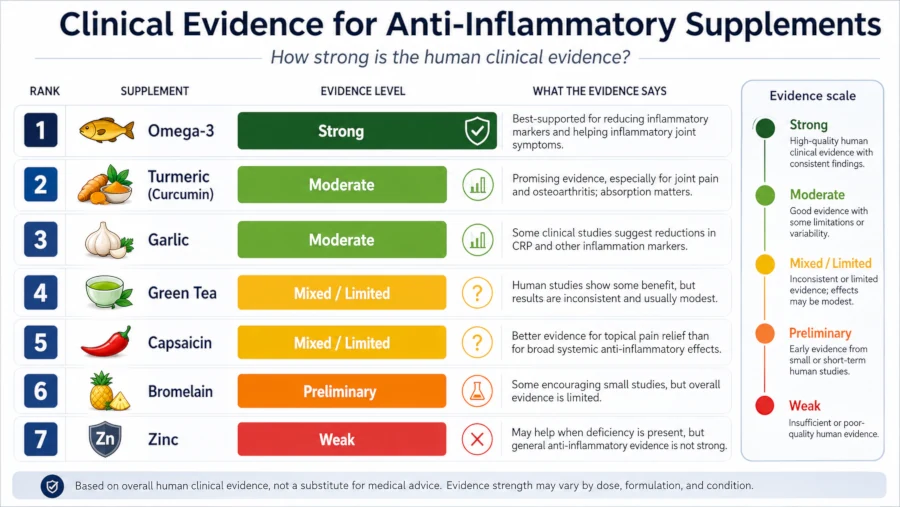
Some of that promise is real. Turmeric and fish oil, for example, have actual clinical research behind them for specific conditions like osteoarthritis and rheumatoid arthritis. Other popular options — bromelain and garlic among them — have much thinner evidence than their marketing suggests, at least for inflammation specifically. A supplement can be well studied for one thing and barely studied for another; “anti-inflammatory” gets used as a catch-all label even when the research doesn’t support that breadth.
Here’s what current research shows about the most common anti-inflammatory supplements — including the side effects, drug interactions, and situations where a supplement isn’t the right tool at all.
Acute Inflammation vs. Chronic Inflammation
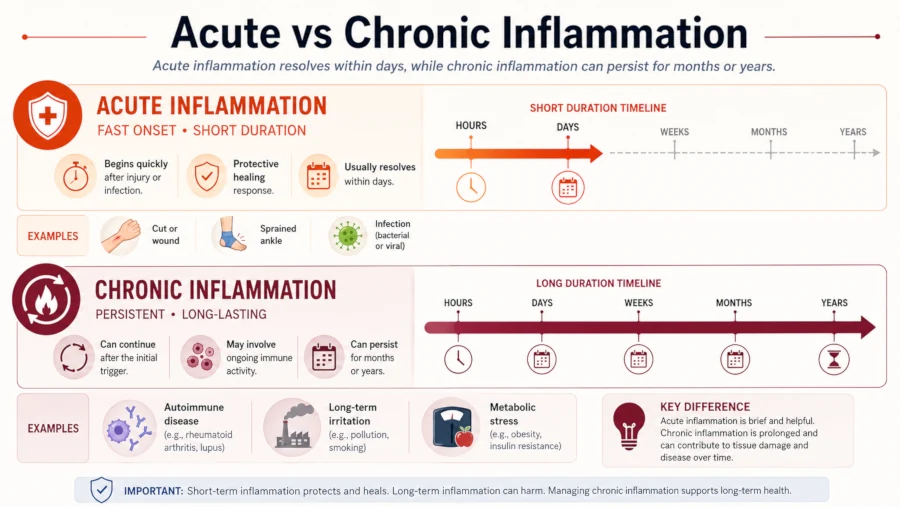
Inflammation isn’t a single problem with a single fix. Acute inflammation is the fast, short-lived kind: the swelling around a sprained ankle, the redness after a cut gets infected. It typically resolves within days as your immune system does its job [StatPearls review of inflammation, 2023].
Chronic inflammation is different — a slower, lower-grade process that can persist for months or years. It’s linked to age, excess body fat, smoking, poor sleep, and diets high in refined carbohydrates and trans fats, and it’s associated with conditions including heart disease, type 2 diabetes, and some autoimmune disorders [StatPearls, chronic inflammation risk factors, 2023].
That distinction matters here. Most of the supplements below have been studied for specific chronic conditions, particularly osteoarthritis and rheumatoid arthritis, not as general-purpose fixes for “inflammation” as a vague, whole-body complaint.
What the Evidence Shows for Popular Anti-Inflammatory Supplements
Evidence quality varies a lot from one ingredient to the next, so treat each of these as its own case rather than one big category.
Turmeric and Curcumin
Turmeric owes its reputation to curcumin, the compound that gives it its color. Curcumin has been studied fairly extensively for osteoarthritis, and the results are genuinely encouraging, if not conclusive: several meta-analyses point to improvements in knee pain and stiffness, though researchers note that higher-quality trials are still needed before firm conclusions can be drawn [NCCIH guidance on turmeric, 2025]. Evidence for other uses people commonly cite — cholesterol, liver fat, mouth sores from cancer treatment — is more preliminary.
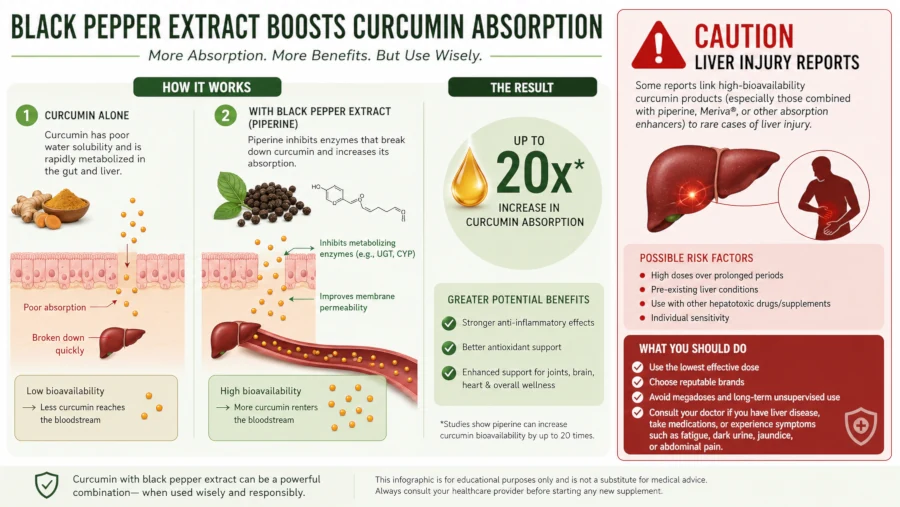
One detail matters more than most marketing mentions: plain curcumin absorbs poorly, which is why many products pair it with black pepper extract (piperine) to boost absorption [NCCIH on curcumin bioavailability, 2025]. But higher-bioavailability formulations carry their own risk — a number of liver injury cases have been reported specifically in people using these enhanced-absorption curcumin products, not turmeric used as a cooking spice [NCCIH turmeric safety information, 2025]. Watch for fatigue, nausea, poor appetite, dark urine, or yellowing skin, and stop the supplement and call a doctor if any of these appear.
At the amounts used in research, turmeric is generally considered likely safe for up to two or three months, though it can cause nausea, acid reflux, or diarrhea. Its safety in pregnancy hasn’t been established, and it can interact with blood-thinning medications, so check with a doctor first if you take any prescription drugs [NCCIH guidance on turmeric, 2025].
Omega-3 Fatty Acids (Fish Oil)
Omega-3s — mainly EPA and DHA, found in fatty fish and fish oil supplements — have some of the more solid research behind them of any supplement on this list, though the size of the benefit is usually modest. For rheumatoid arthritis specifically, some clinical trials show that omega-3 supplements, taken alongside standard RA medication, can reduce how much pain-relief medication people need — though it isn’t clear that omega-3s reduce joint swelling or stiffness on their own [NIH Office of Dietary Supplements on omega-3s and RA, 2022]. That’s a genuinely useful finding, but it’s an add-on to treatment, not a replacement for it.
For heart health, the American Heart Association recommends one to two servings of fatty fish a week for most people, and about 1 gram per day of combined EPA and DHA — ideally from food — for people who already have heart disease. The AHA does not recommend omega-3 supplements for people without elevated cardiovascular risk [NIH ODS summary of AHA omega-3 guidance, 2022]. Larger reviews of omega-3 supplementation have found only slight reductions in coronary events overall, which is worth keeping in mind before expecting dramatic results [NCCIH review of omega-3 supplement research, 2024].
Side effects are usually mild: a fishy aftertaste, bad breath, heartburn, or loose stools. The bigger safety issue is bleeding risk — high-dose omega-3s can increase bleeding when combined with warfarin or other blood thinners, so tell a doctor if that applies. The FDA advises against exceeding 5 grams a day of combined EPA and DHA from supplements [NIH ODS omega-3 safety and interactions, 2022].
Green Tea and EGCG
Green tea‘s reputation as an anti-inflammatory rests mainly on its catechins, particularly EGCG, along with caffeine and other polyphenols. As a beverage, green tea has no notable safety concerns for most adults [NCCIH guidance on green tea, 2025]. The research picture for concentrated extracts is more mixed: results on cancer risk are inconsistent, and evidence for weight loss and cholesterol is modest at best [NCCIH on green tea research findings, 2025].
Concentrated green tea extract supplements — as opposed to brewed tea — carry a real, if uncommon, risk of liver injury, and people with a specific, fairly common genetic variant appear more susceptible [NCCIH green tea safety information, 2025]. Green tea extract can also interact with medications, including the blood pressure drug nadolol, the cholesterol drug atorvastatin, and the osteoporosis drug raloxifene. Because it contains caffeine, pregnant women should ask a doctor how much is appropriate, and heavy caffeine intake while breastfeeding can affect an infant’s sleep patterns [NCCIH on green tea interactions and pregnancy, 2025].
Bromelain (Pineapple Enzyme)
Bromelain, the protein-digesting enzyme in pineapple stems and fruit, is often marketed as a natural alternative to NSAIDs for joint pain. The evidence doesn’t back that up as strongly as the marketing implies: for osteoarthritis, either very little research exists, or the available studies tested bromelain mixed with other ingredients, which makes it hard to isolate what bromelain alone is doing [NCCIH guidance on bromelain, 2024].
The better-supported uses are narrower — some studies suggest oral bromelain may ease swelling and pain after wisdom tooth removal, and a topical form is FDA-approved for debriding severe burns in a clinical setting, which is a very different use from taking a capsule for achy knees [NCCIH on what bromelain research shows, 2024].
Oral bromelain seems generally well tolerated, with stomach upset and diarrhea the most common complaints. Because it’s an enzyme that affects protein breakdown in the body, check with a doctor before combining it with other medications, and note that its safety in pregnancy and breastfeeding hasn’t been established [NCCIH bromelain safety information, 2024].
Capsaicin (Topical, from Chili Peppers)
Capsaicin — the compound that makes hot peppers hot — works differently from everything else here: it’s typically applied to the skin as a cream or patch rather than swallowed, and it acts on nerve signaling rather than functioning as a classic anti-inflammatory. A 2024 systematic review and meta-analysis of eight clinical trials found that topical capsaicin modestly reduced osteoarthritis pain compared with placebo, though the researchers rated the certainty of that evidence as low to very low, and burning or stinging at the application site was a common side effect [Tshering et al., Phytotherapy Research, 2024].
That makes capsaicin cream a reasonable thing to try for localized joint pain, with modest expectations. It’s for external use only — keep it away from eyes, broken skin, and mucous membranes, wash hands thoroughly after applying it, and stop if irritation becomes severe.
Garlic
Garlic’s sulfur compounds, including allicin, are frequently credited with anti-inflammatory and immune-boosting effects. The research base is large, but it’s concentrated almost entirely on cardiovascular markers, not inflammation directly: garlic supplements produce a small reduction in total and LDL cholesterol, a small reduction in blood pressure, and a modest drop in blood sugar for people with diabetes [NCCIH guidance on garlic, 2025]. The immune-boosting claim so often attached to garlic is much less supported — a 2022 review found only two small, weak studies suggesting any benefit for cold or flu prevention [NCCIH on garlic and immune function, 2025].
Garlic taken by mouth has a long track record of safety, including in studies lasting up to seven years, but it commonly causes breath and body odor, an upset stomach, and gas. More importantly, garlic supplements can increase bleeding risk — relevant if you take blood thinners or aspirin, or have surgery scheduled — and high oral doses may not be safe during pregnancy or breastfeeding [NCCIH garlic safety information, 2025].
Zinc
Zinc is essential for a properly functioning immune system, and a genuine deficiency does impair immune function and slow healing [NIH Office of Dietary Supplements on zinc, 2022]. That’s different from claiming that extra zinc, on top of an already-adequate diet, reduces inflammation or prevents illness. The clearest evidence is for the common cold: zinc lozenges or syrup, started right when symptoms begin, may shorten how long a cold lasts, though they don’t appear to reduce how severe it is [NIH ODS on zinc and the common cold, 2022].
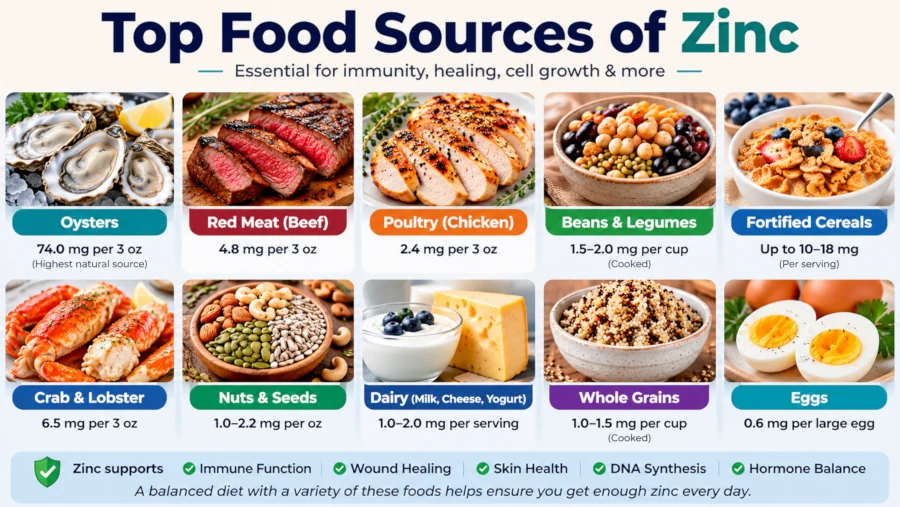
Most adults in the U.S. get enough zinc through diet — oysters, red meat, poultry, beans, and fortified cereals are all good sources. More isn’t automatically better: taking too much zinc for too long can impair immune function and lower HDL (“good”) cholesterol, and it commonly causes nausea and stomach upset. The upper limit for adults is 40 mg per day from all sources combined, including food [NIH ODS zinc upper intake limits, 2022]. Zinc can also interact with certain antibiotics and with penicillamine, a rheumatoid arthritis medication, so timing matters [NIH ODS on zinc drug interactions, 2022].
Safety, Interactions, and Who Should Be Cautious
A few safety points apply across nearly every supplement on this list. Dietary supplements aren’t reviewed by the FDA for safety or effectiveness before they reach store shelves the way medications are — manufacturers are responsible for that themselves, and the FDA generally steps in only after problems surface [NCCIH on federal regulation of herbal products, 2025]. That doesn’t make these products unsafe; it means more of the burden of caution falls on you and your healthcare provider than it would with a prescription.
Several supplements here — garlic, omega-3s, and to some degree turmeric — can increase bleeding risk, which matters if you take blood thinners, have surgery scheduled, or have a bleeding disorder. If you’re pregnant or breastfeeding, treat every supplement in this article as something to discuss with a doctor first rather than something to start on your own; safety data for pregnancy is thin or missing for most of them. And if you take any prescription medication, tell your doctor or pharmacist about every supplement you use — several of the interactions above (blood thinners, blood pressure medication, cholesterol drugs, antibiotics) aren’t obvious from a product label.
When to See a Doctor
Supplements are not a substitute for medical evaluation, and some symptoms that look like ordinary inflammation deserve prompt attention. Seek care the same day, or urgently, if you have:
- A joint that’s suddenly hot, swollen, and too painful to bear weight on, especially with fever — this can signal a joint infection, which is a medical emergency.
- Chest pain, pressure, or shortness of breath, which can point to a heart problem rather than muscle or joint inflammation.
- Redness and swelling that’s spreading rapidly, especially with fever or red streaking — possible signs of a serious skin or soft-tissue infection.
- Swelling with no clear cause that doesn’t improve over a couple of weeks, unexplained weight loss, or persistent fatigue alongside joint pain — these warrant a workup for an underlying inflammatory or autoimmune condition.
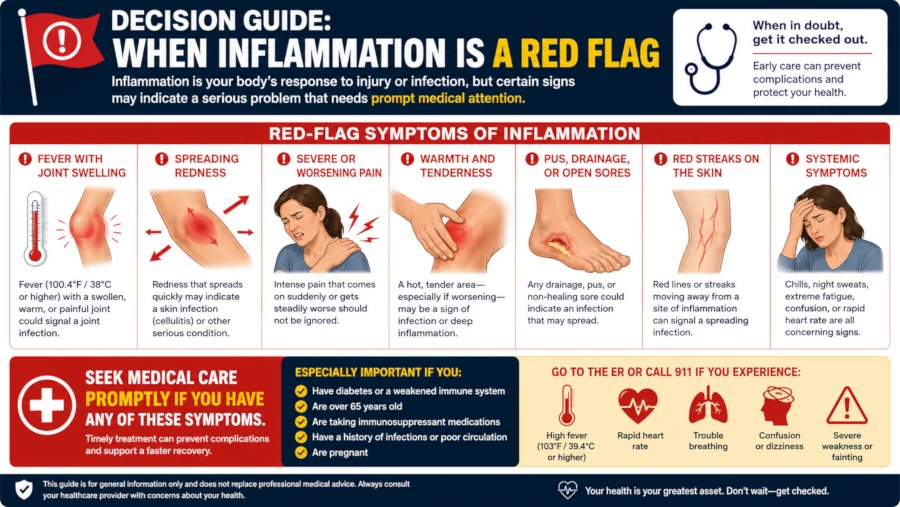
None of the supplements discussed here are appropriate as first-line treatment for any of these situations.
| Health Disclaimer: This article is for general educational purposes and isn’t a substitute for individualized medical advice, diagnosis, or treatment. Supplements can interact with medications and health conditions in ways that aren’t obvious from a label. Talk with a doctor, pharmacist, or registered dietitian before starting any new supplement — especially if you’re pregnant, breastfeeding, managing a chronic condition, or taking prescription medication, including blood thinners. |
Frequently Asked Questions
Do anti-inflammatory supplements work as well as ibuprofen or other NSAIDs?
Generally, no. Most of the supplements here show smaller, less consistent effects than NSAIDs in clinical trials. Turmeric and omega-3s have the most supportive research, and mainly as an add-on to standard treatment rather than a replacement for it.
How long does it take for anti-inflammatory supplements to work?
It varies, but most of the clinical trials behind these supplements ran for eight to twelve weeks before showing measurable effects. Improvement in the research tends to be gradual, not sudden — so a week or two isn’t usually enough to judge whether something is working.
Can I take turmeric and fish oil together?
There’s no known dangerous interaction between the two, but both can mildly raise bleeding risk on their own, and that risk may add up if combined — worth mentioning to a doctor, especially if you’re also on a blood thinner.
Are anti-inflammatory supplements safe to take every day, long-term?
It depends on the supplement. Turmeric has mostly been studied over two to three months; garlic has a safety record extending to seven years in some studies; zinc becomes a problem at high doses taken long-term. There’s no single answer — it’s worth checking in with a doctor periodically rather than assuming indefinite daily use is fine.
What’s the best anti-inflammatory supplement for arthritis?
There isn’t one “best” option. Turmeric/curcumin has the most research specific to osteoarthritis, omega-3s have research specific to rheumatoid arthritis (as an add-on to medication), and topical capsaicin can help with localized joint pain. Which fits depends on the type of arthritis and what else you’re taking.
Do I need a blood test to know if I have chronic inflammation?
There’s no single perfect test. Markers like C-reactive protein and fibrinogen are commonly used but imperfect, and they’re typically ordered and interpreted by a doctor alongside your symptoms and history — not something to order and self-treat off of.
References
- National Center for Complementary and Integrative Health. Turmeric: Usefulness and Safety. NIH. Updated April 2025. View source
- National Center for Complementary and Integrative Health. Omega-3 Supplements: What You Need To Know. NIH. Updated November 2024. View source
- NIH Office of Dietary Supplements. Omega-3 Fatty Acids — Fact Sheet for Consumers. Updated July 2022. View source
- National Center for Complementary and Integrative Health. Green Tea: Usefulness and Safety. NIH. Updated February 2025. View source
- National Center for Complementary and Integrative Health. Bromelain: Usefulness and Safety. NIH. Updated November 2024. View source
- Tshering G, Posadzki P, Kongkaew C. Efficacy and safety of topical capsaicin in the treatment of osteoarthritis pain: A systematic review and meta-analysis. Phytotherapy Research. 2024;38(7):3695–3705. PMID: 38761115. DOI: 10.1002/ptr.8223. View source
- National Center for Complementary and Integrative Health. Garlic: Usefulness and Safety. NIH. Updated February 2025. View source
- NIH Office of Dietary Supplements. Zinc — Fact Sheet for Consumers. Updated October 2022. View source
- Pahwa R, Goyal A, Jialal I. Chronic Inflammation. StatPearls [Internet]. NCBI Bookshelf. Updated August 2023. PMID: 29630225. View source
