
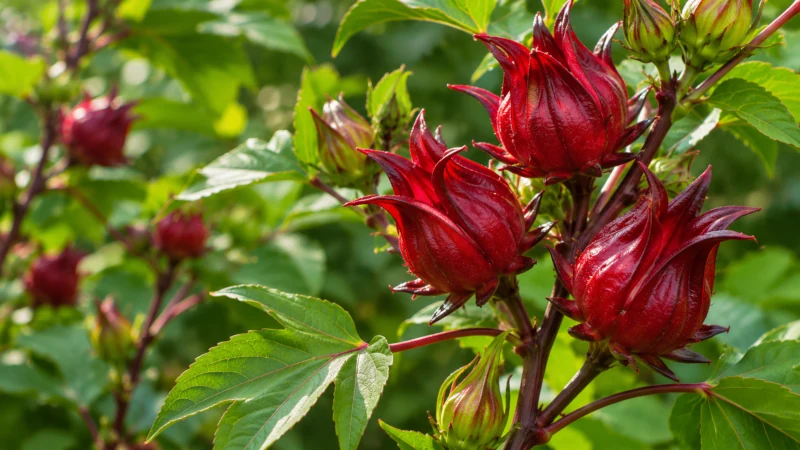
Roselle is the tart, ruby-red flower behind hibiscus tea, agua de Jamaica, sorrel and zobo. The short version: the roselle plant’s best-supported benefit is a modest drop in blood pressure, a few points rather than a medication-sized effect, and even that evidence is weaker than it first looks. Most other claims made for it rest on animal studies, small trials or tradition. Here’s what the research shows, how people use it, and who should be careful.
What is the roselle plant?
Roselle (Hibiscus sabdariffa) is an annual, bushy plant in the mallow family, Malvaceae [Ellis et al., 2021]. Depending on where you live, you may know it as Jamaica sorrel, red sorrel, karkade, rosa de Jamaica, sour tea, red tea or zobo [Drugs.com, 2026].
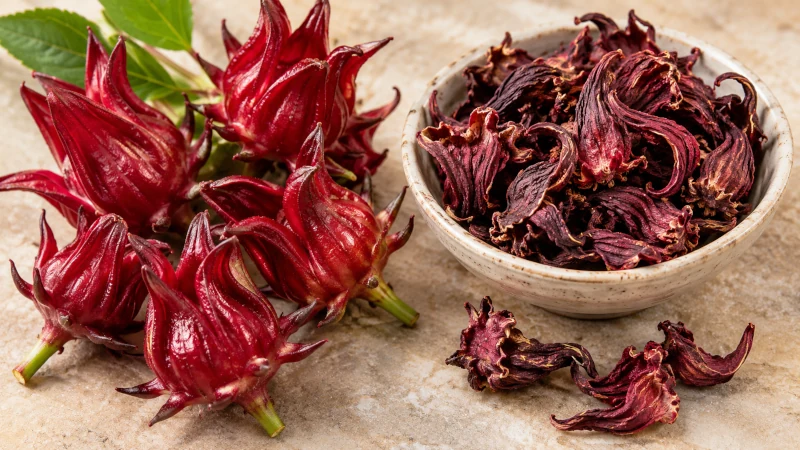
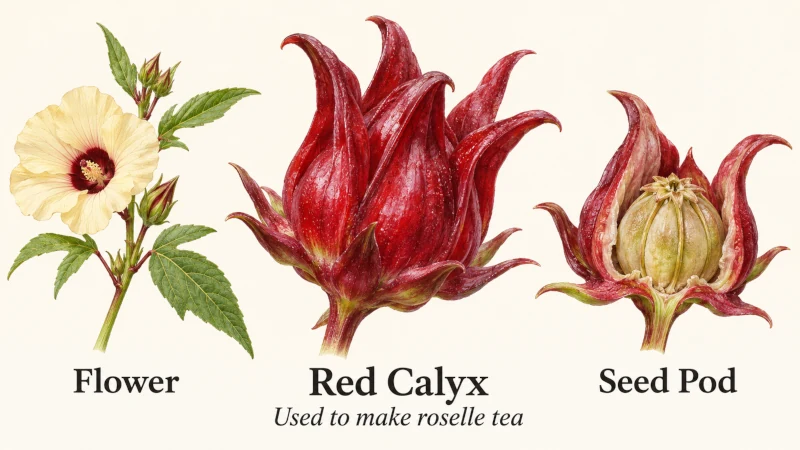
The part you drink isn’t really the flower petal. It’s the calyx, the fleshy red cup that wraps around the seed pod. Dried calyces brew into a sharply sour, deep-red drink. That sourness comes from organic acids; the colour comes from anthocyanins. The calyces also contain other polyphenols and polysaccharides [Serban et al., 2015], along with proanthocyanidins and flavonols [LactMed, 2024].
One practical note: other hibiscus species are also used in folk medicine [LactMed, 2024], but the human research below is on H. sabdariffa. A hibiscus from a garden centre is not a substitute.
Roselle plant benefits, graded by evidence
| Claim | What the research shows | Strength of evidence |
| Lowers blood pressure | Short trials show systolic drops of roughly 4–8 mmHg, mostly in people with mildly raised readings. A Cochrane review found too little rigorous evidence to be sure. | Promising but limited; reviews disagree |
| Lowers LDL cholesterol | Pooled trials show a borderline drop of about 7 mg/dL. | Mixed |
| Lowers blood sugar | Pooled trials show a fasting-glucose drop of about 3.7 mg/dL. | Limited |
| Mild diuretic | Increased urine output in animal studies. | Animal data and tradition |
| Laxative or digestive aid | Described in older herbal texts; no good human trials found. | Traditional only |
| Calming or sedative | No human studies found. | Insufficient |
Blood pressure: the strongest case, and it’s modest
This is where roselle earned its reputation, and the evidence is real but thinner than headlines suggest.
The best-known trial, run at Tufts University, randomly assigned 65 adults aged 30 to 70 with prehypertension or mild hypertension, none of them on blood pressure medication. They drank either three 240 mL (8 oz) servings of brewed hibiscus tea a day or a placebo drink for six weeks [McKay et al., 2010]. Systolic pressure, the top number, fell about 7.2 mmHg with the tea versus 1.3 mmHg with placebo. Diastolic pressure also dipped, but not by significantly more than placebo.
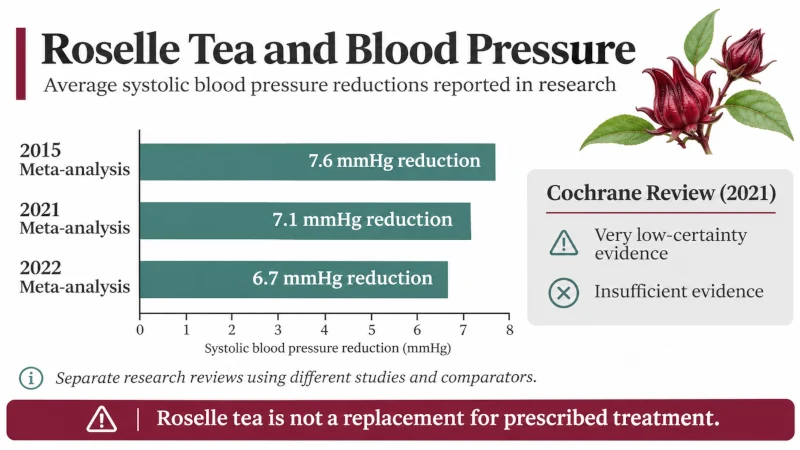
Pooled studies point the same way. A 2015 meta-analysis of five randomised trials (390 people) found average drops of about 7.6 mmHg systolic and 3.5 mmHg diastolic, with bigger effects in people whose pressure started higher [Serban et al., 2015]. A 2022 analysis of 13 trials (1,205 people) reported about 6.7 and 4.4 mmHg drops against placebo in mild-to-moderate hypertension. It found no clear effect in people whose high blood pressure came with metabolic syndrome [Abdelmonem et al., 2022].
A 2021 review of 17 trials found a systolic drop of about 7 mmHg versus placebo. In trials that compared hibiscus with blood pressure drugs, the difference wasn’t statistically significant [Ellis et al., 2021]. Be careful with that second finding. The trials were small and wildly inconsistent with one another (heterogeneity above 90%), and “no significant difference” in that setting doesn’t prove a tea works as well as a drug.
Then there’s the counterweight. Cochrane set a stricter bar: placebo-controlled trials in adults with diagnosed hypertension. Its 2021 update found only one eligible trial, of 60 people with type 2 diabetes and hypertension. That trial showed no clear effect, and the reviewers rated the evidence very low certainty, concluding there isn’t enough to say whether roselle lowers blood pressure [Pattanittum et al., 2021].
How do those fit together? Most of the trials are small and short, from about two to six weeks [Serban et al., 2015], and they used different preparations and doses. Several compared roselle with another drink or a drug rather than a placebo. The fair reading is that roselle tea probably nudges blood pressure down a few points in people with mildly raised readings who aren’t on medication. That’s worth something alongside the basics, such as less salt, more movement and prescribed treatment if you need it. It isn’t a replacement for any of them.
Cholesterol and blood sugar: small, uncertain signals
In the 2021 review, hibiscus lowered LDL (“bad”) cholesterol by about 6.8 mg/dL compared with other teas or placebo, a result that only just reached statistical significance [Ellis et al., 2021]. A 2020 meta-analysis of seven trials (362 people) found fasting blood sugar fell by about 3.7 mg/dL [Najafpour Boushehri et al., 2020]. Both changes are small and come from short studies. Don’t use roselle to manage cholesterol or diabetes, and if you have diabetes, tell your care team before adding it regularly.
Diuretic and laxative effects: mostly tradition and animal data
Older herbal references describe roselle as a mild diuretic and a gentle laxative. The diuretic evidence comes mainly from animals. In one rat study, hibiscus extract given alongside the diuretic drug hydrochlorothiazide increased urine output and raised blood levels of the drug [Ndu et al., PMID 21480802]. That finding matters more as an interaction warning than as a benefit. We found no good human trials testing roselle as a laxative.
What roselle has not been shown to do
You’ll still see roselle described as a sedative, a weight-loss aid or a treatment for heart disease. We couldn’t find human evidence that supports any of these. If you’re reading about roselle alongside other herbs traditionally used for heart concerns, keep the same rule in mind: heart conditions need a diagnosis and a treatment plan from a clinician, and herbs belong in that conversation, not in place of it.
How to use roselle
Most of the research used plain tea, which is also the simplest way to try it.
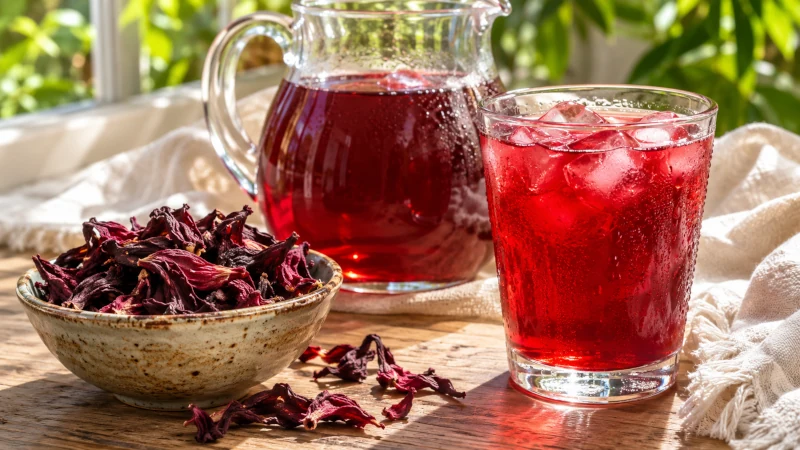
- Amounts used in studies: three 8 oz (240 mL) cups a day for six weeks in the Tufts trial [McKay et al., 2010]. Another trial used an infusion made from 10 g of dried calyx daily for four weeks [Drugs.com, 2026].
- To brew: steep dried calyces or a hibiscus tea bag in just-boiled water for several minutes, strain, and drink hot or chilled. Agua de Jamaica is the same idea made by the jug, usually sweetened. If blood pressure is your reason for drinking it, keep added sugar low.
- Extracts and capsules: doses vary widely between products and studies, and researchers say the effective dose and duration still need to be worked out [Ellis et al., 2021]. In the US, dietary supplements don’t need to prove safety or effectiveness before they’re sold [LactMed, 2024], so quality varies too.
- Track it: if you’re trying roselle for blood pressure, take home readings for a week before you start and again after a few weeks, and share them with your clinician.
Side effects and safety
As a drink, roselle appears to be well tolerated for most people. The US Food and Drug Administration lists hibiscus as “generally recognized as safe” as a food [LactMed, 2024]. Trials have reported few side effects, though there’s little published information on adverse reactions, and many studies didn’t track safety closely [Drugs.com, 2026][Pattanittum et al., 2021].
Allergic reactions are possible, including cross-reactions with other plants in the mallow family, such as marshmallow [LactMed, 2024]. In rats, very high daily doses over 12 weeks damaged testicular tissue and lowered sperm counts [Drugs.com, 2026]. Nobody knows whether that applies to people drinking tea, but it’s one reason concentrated extracts deserve more caution than a cup of tea.
Medication interactions
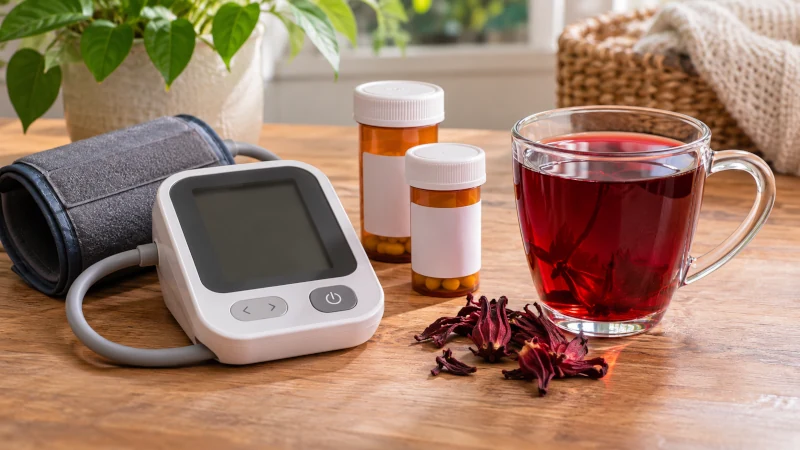
This is the safety issue most people overlook. Sources disagree on how much it matters: one review concludes that at normal doses roselle has minimal clinically important drug interactions [Hashmi et al., 2020], while the Drugs.com professional monograph lists several worth monitoring [Drugs.com, 2026]. The ones to know:
- Blood pressure medicines, including diuretics: roselle may add to their effect [Drugs.com, 2026]. Animal work also suggests it can raise blood levels of hydrochlorothiazide [Ndu et al., PMID 21480802]. Too large a combined drop can leave you dizzy or lightheaded.
- Chloroquine (used for malaria and some autoimmune conditions): roselle may lower its blood levels [Drugs.com, 2026].
- Acetaminophen (paracetamol) and diclofenac: studies in healthy volunteers showed roselle changed how the body handles these drugs; whether that matters in practice hasn’t been tested [Drugs.com, 2026].
- Erlotinib (a cancer drug): roselle may increase its side effects, based partly on a case report [Drugs.com, 2026].
- Digoxin blood tests: hibiscus tea can cause a false-positive result with one type of test [Drugs.com, 2026].
Roselle isn’t unique here; stinging nettle’s mild diuretic effect raises similar questions with blood pressure drugs. If you take any regular medication, ask your pharmacist before drinking roselle daily.
Pregnancy and breastfeeding
There isn’t enough safety information on roselle in pregnancy or breastfeeding, and the Drugs.com monograph advises avoiding it [Drugs.com, 2026]. There are no data on whether its compounds pass into breast milk or how they might affect a nursing infant [LactMed, 2024]. You’ll also find claims online that roselle can trigger miscarriage. We couldn’t find human evidence either way, which is exactly why the cautious choice is to skip medicinal amounts and ask your midwife or doctor about the occasional glass.
Who should skip it or check first
- People who are pregnant, trying to conceive or breastfeeding
- Anyone taking blood pressure medicine or a diuretic
- People taking chloroquine or erlotinib, or having digoxin levels monitored
- Anyone with low blood pressure or who gets dizzy on standing
- People with diabetes, since roselle may slightly lower blood sugar [Najafpour Boushehri et al., 2020]
- Anyone allergic to marshmallow or other mallow-family plants [LactMed, 2024]
When to get medical help
Roselle is not a treatment for a blood pressure emergency. The American Heart Association advises the following [American Heart Association, n.d.]:
- Call 911 if your blood pressure is higher than 180/120 and you have chest pain, shortness of breath, back pain, numbness, weakness, a change in vision or difficulty speaking. Don’t wait to see if it comes down.
- Contact your clinician promptly if a reading is higher than 180/120 without those symptoms. Wait about five minutes and recheck first.
See a doctor as well if your home readings stay above the target you’ve been given, if you feel faint or dizzy after starting roselle with blood pressure medication, or if you notice a rash, swelling or trouble breathing after drinking it.
| HEALTH DISCLAIMER: This article is for general education and isn’t a substitute for advice, diagnosis or treatment from a qualified healthcare professional. Roselle can interact with medicines and isn’t a replacement for prescribed blood pressure treatment. Talk to your doctor or pharmacist before using roselle regularly, especially if you’re pregnant, breastfeeding, take any medication or have a long-term health condition. Never stop or change a prescribed medicine on your own. |
Frequently Asked Questions
Is roselle the same as hibiscus?
Roselle is one species of hibiscus, Hibiscus sabdariffa. Most “hibiscus tea” is made from its dried calyces, and that’s the species the health research focuses on. Ornamental garden hibiscus is a different plant.
How much roselle tea is it reasonable to drink?
The best-known trial used three 8 oz cups a day for six weeks [McKay et al., 2010]. Longer-term use at that level hasn’t been well studied, so if you plan to drink it daily for months, mention it to your clinician.
Can roselle tea replace my blood pressure medication?
No. The effect in trials was a few points, the evidence is uncertain [Pattanittum et al., 2021], and roselle may add to your medication’s effect [Drugs.com, 2026]. Keep taking your prescription and talk to your doctor before adding roselle.
Is roselle safe during pregnancy?
Safety in pregnancy hasn’t been established, and professional references advise avoiding it [Drugs.com, 2026]. Ask your midwife or doctor before drinking it.
REFERENCES
- Abdelmonem M, Ebada MA, Diab S, et al. Efficacy of Hibiscus sabdariffa on reducing blood pressure in patients with mild-to-moderate hypertension: a systematic review and meta-analysis of published randomized controlled trials. View source
- American Heart Association. When to call 911 about high blood pressure (hypertensive crisis). View source
- Drugs.com. Hibiscus (professional natural product monograph). View source
- Ellis LR, Zulfiqar S, Holmes M, Marshall L, Dye L, Boesch C. A systematic review and meta-analysis of the effects of Hibiscus sabdariffa on blood pressure and cardiometabolic markers. View source
- Hashmi T, Zidan M, Khudadad H, Hashmi Y. A review and update on the use of Hibiscus sabdariffa (karkadeh) in the treatment of essential hypertension. View source
- Drugs and Lactation Database (LactMed). Hibiscus. National Library of Medicine. View source
- McKay DL, Chen CYO, Saltzman E, Blumberg JB. Hibiscus sabdariffa L. tea (tisane) lowers blood pressure in prehypertensive and mildly hypertensive adults. View source
- Najafpour Boushehri S, Karimbeiki R, Ghasempour S, et al. The efficacy of sour tea (Hibiscus sabdariffa L.) on selected cardiovascular disease risk factors: a systematic review and meta-analysis of randomized clinical trials. View source
- Ndu OO, Nworu CS, Ehiemere CO, et al. Herb–drug interaction between the extract of Hibiscus sabdariffa L. and hydrochlorothiazide in experimental animals. View source
- Pattanittum P, Ngamjarus C, Buttramee F, Somboonporn C. Roselle for hypertension in adults. View source
- Serban C, Sahebkar A, Ursoniu S, Andrica F, Banach M. Effect of sour tea (Hibiscus sabdariffa L.) on arterial hypertension: a systematic review and meta-analysis of randomized controlled trials. View source


