If you’re wondering whether hibiscus tea for high blood pressure is a thing, here’s the honest answer: for some people it nudges the numbers in the right direction, but the effect is modest and the research is genuinely mixed. Hibiscus tea is a tart, ruby-red, caffeine-free drink that several studies link to small reductions in blood pressure — most clearly in people whose pressure is only mildly elevated. What it is not is a treatment for hypertension, and it’s not a reason to stop or skip medication a doctor has prescribed.
So it’s worth a place in your cup if you enjoy it. Just keep your expectations realistic, and read the safety section before you make it a daily habit — especially if you take any regular medication or you’re pregnant.
What hibiscus tea actually is
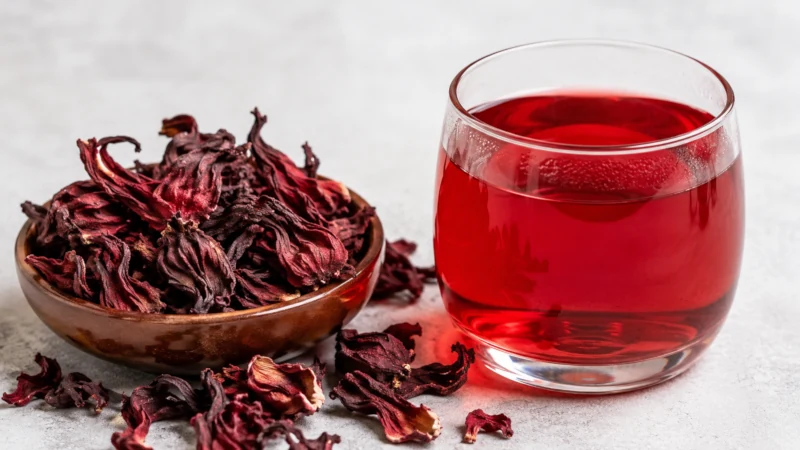
Hibiscus tea is brewed from the dried calyces (the fleshy red parts around the flower) of Hibiscus sabdariffa, a plant also known as roselle or sour tea. If you’d like the botanical background, our overview of the roselle plant and its traditional uses covers where it grows and how it’s been used. The flavor is sharp and cranberry-like, which is why people often add a little honey or lemon.
The compounds researchers find most interesting are anthocyanins — the same class of plant pigments that give berries and red cabbage their color. These are thought to be behind whatever cardiovascular effect hibiscus has [Drugs.com hibiscus monograph, 2026].
Hibiscus tea for high blood pressure? What the research shows
This is where honesty matters more than enthusiasm, because the evidence genuinely points in two directions depending on how strictly you look at it.
The case for a modest effect
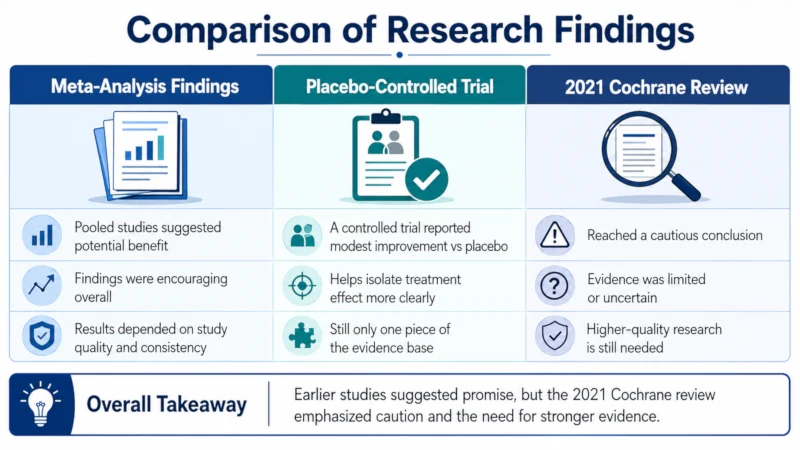
Several human trials and pooled analyses have found real, if small, reductions. A 2015 systematic review and meta-analysis combined five randomized controlled trials (390 participants) and reported that hibiscus lowered systolic pressure by about 7.6 mmHg and diastolic by about 3.5 mmHg on average, with a larger effect in people whose blood pressure started higher [Serban meta-analysis, 2015].
In one well-known randomized, placebo-controlled trial, adults with prehypertension or mild hypertension who drank three cups of hibiscus tea a day for six weeks saw their systolic pressure fall about 7 mmHg, compared with roughly 1 mmHg in the placebo group — again, with the biggest drops among those who started with the highest readings [McKay RCT, 2010].
Those are meaningful-sounding numbers for a drink. But they come mostly from small, short studies, and averages hide a lot of variation between people.
Why the most rigorous review is more cautious
Here’s the part most articles leave out. When the Cochrane collaboration — which sets a very high bar for study quality — reviewed the evidence in 2021, it applied strict criteria and found only one qualifying randomized trial, involving 60 people who all had type 2 diabetes. That single study didn’t show a clear blood-pressure benefit, and the reviewers rated the certainty of the evidence as “very low.” Their conclusion was blunt: the evidence is currently insufficient to say whether hibiscus lowers blood pressure in people with hypertension, and better trials are needed [Cochrane review, 2021].
Both things are true at once. Broader meta-analyses that pool more varied studies find a modest reduction; the strictest review, looking only at the highest-quality trials, doesn’t find enough solid evidence to be sure. That’s not a reason to dismiss hibiscus — it’s a reason to treat it as a promising, low-risk extra rather than a proven remedy.
How it compares with a real blood pressure drug
One trial put a standardized hibiscus extract head-to-head against lisinopril, a common prescription ACE inhibitor. Over four weeks, the hibiscus product did lower blood pressure — by roughly 17/12 mmHg — and was well tolerated. But it worked less well than the drug: the reduction and the share of patients who reached their target were both significantly lower with hibiscus than with lisinopril [Herrera-Arellano lisinopril trial, 2007]. That’s a useful reality check. Hibiscus is not a natural stand-in for medication.
Why hibiscus might affect blood pressure at all
Researchers have proposed a few overlapping mechanisms: hibiscus appears to have a mild diuretic (fluid-releasing) effect, its anthocyanins may help blood vessels relax, and it seems to modestly inhibit angiotensin-converting enzyme (ACE) — the same pathway some blood pressure drugs target. In the lisinopril trial, hibiscus measurably reduced ACE activity in the blood [Herrera-Arellano lisinopril trial, 2007]. These mechanisms are plausible and partly supported in humans, but they don’t turn a cup of tea into a prescription-strength intervention.
How much of a difference can you realistically expect?
Realistically, a few points — and mainly if your numbers are only slightly high to begin with. In the studies that did show a benefit, the effect landed in the range of a few mmHg on average, and the people who responded most were those with higher starting pressure [Serban meta-analysis, 2015][McKay RCT, 2010].
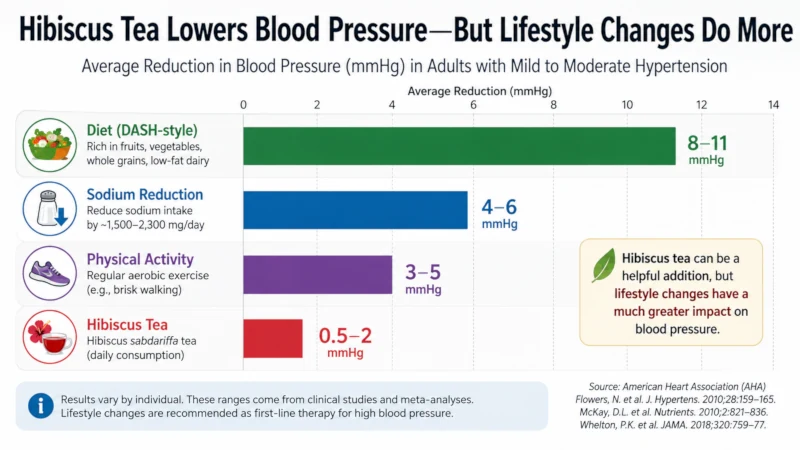
That kind of change matters most as one small piece of a bigger picture. The habits with the strongest evidence for blood pressure are a DASH-style eating pattern, cutting sodium, getting enough potassium from food, regular movement, and limiting alcohol — the everyday changes covered in our guide to foods that lower blood pressure. Hibiscus tea can ride along with those; it can’t replace them. If your blood pressure is already high enough to need treatment, the tea is a complement to that plan, not an alternative to it.
How to make hibiscus tea
Trials that saw a benefit typically used around three cups a day, or roughly 10 grams of dried calyx daily [Drugs.com hibiscus monograph, 2026]. There’s no established “dose” for tea, so start modestly and see how you feel — and talk to your clinician first if you take blood pressure or diabetes medication.
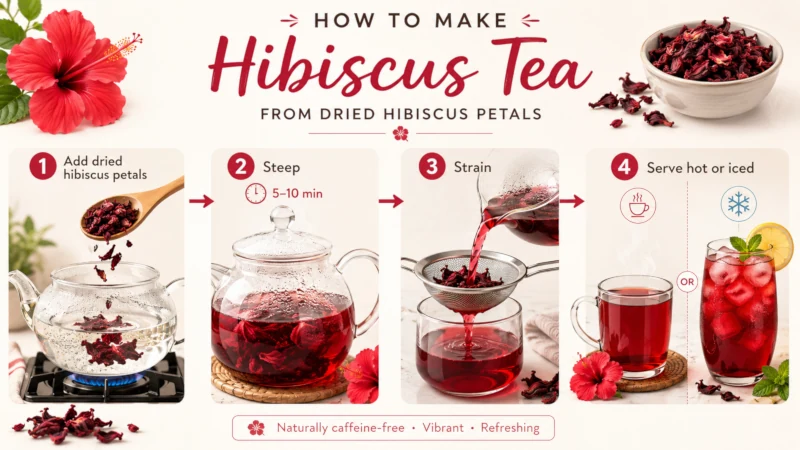
Traditional hot hibiscus tea
You’ll need about 2 tablespoons of dried hibiscus petals and 2 cups of water. Bring the water to a boil, pour it over the petals in a teapot or heatproof jug, cover, and steep for 5 to 10 minutes. Strain into cups. Add lemon or a little honey if the tartness is too sharp for you.
Cold-brew hibiscus tea
For a refreshing version, add 2 tablespoons of dried petals to a pitcher with 2 cups of cold water. Refrigerate for at least an hour, ideally overnight, then strain and serve over ice. Cold brewing gives a smoother, less sharp flavor.
Hibiscus ginger tea
Combine 2 tablespoons of dried petals with a thinly sliced 1-inch piece of fresh ginger in a teapot. Pour over 2 cups of boiling water, cover, and steep for 10 to 15 minutes. Strain and serve. The ginger adds a warm, spicy note that balances the tartness.
Safety, side effects, and who should be careful
Hibiscus tea is generally well tolerated. In the clinical trials that studied it, side effects were minimal and the preparations were described as well tolerated [Drugs.com hibiscus monograph, 2026]. For most healthy adults, a few cups a day is unlikely to cause problems. Because the tea is quite acidic, some people find it can bother a sensitive stomach, and adding sweetener changes the calorie and sugar picture.
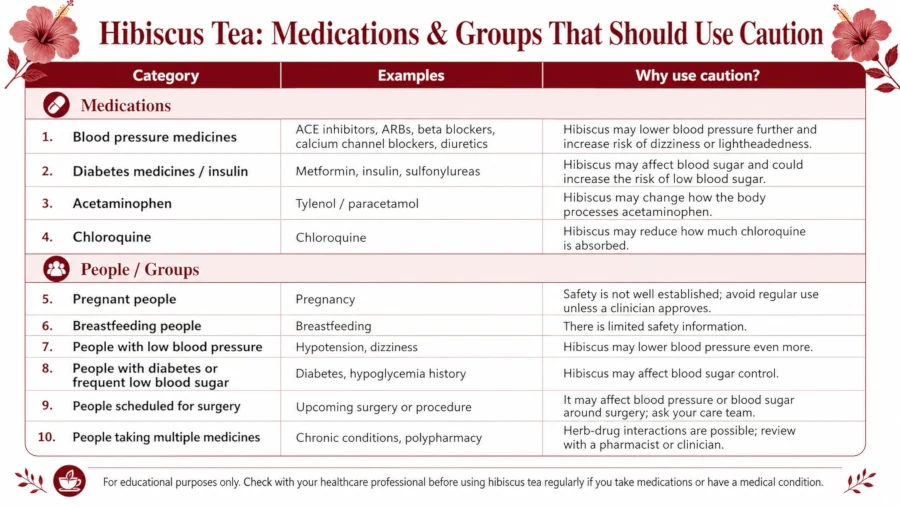
The bigger considerations aren’t about the tea alone — they’re about how it interacts with medications and certain life stages.
Medication and other interactions
Because hibiscus can lower blood pressure, drinking it alongside prescription blood-pressure medicines (or other herbs with a blood-pressure-lowering effect) could add up and push your pressure lower than intended, so this combination is worth monitoring with your clinician [Drugs.com hibiscus monograph, 2026]. Studies in people have also shown that hibiscus can change how the body handles several drugs: it may reduce blood levels of chloroquine (used for malaria) and simvastatin (a cholesterol drug), alter the handling of acetaminophen (paracetamol) and diclofenac, increase caffeine levels, and may worsen skin side effects of the cancer drug erlotinib. One quirk worth knowing: hibiscus tea can cause a false-positive result on certain digoxin blood tests, so tell your lab or clinician if you drink it [Drugs.com hibiscus monograph, 2026].
Some analyses also suggest hibiscus can modestly lower fasting blood sugar [Drugs.com hibiscus monograph, 2026]. If you take medication for diabetes, that’s another reason to keep an eye on your numbers and check with your prescriber before making hibiscus a daily habit.
Pregnancy, breastfeeding, and who should avoid it
If you’re pregnant or breastfeeding, the standard advice is to avoid hibiscus, because there isn’t enough safety data, and laboratory and animal studies raise questions about effects on the uterus and reproduction [Drugs.com hibiscus monograph, 2026]. Beyond pregnancy, take extra care and talk to a clinician first if you already run low blood pressure, take any of the medications above, are on antihypertensive or diabetes drugs, or have surgery coming up.
None of this makes hibiscus tea dangerous for the average person. It simply means “natural” doesn’t mean “interacts with nothing” — and a quick conversation with a pharmacist or doctor is worth it if you’re on regular medication.
When high blood pressure needs a doctor — or an emergency room
Here’s the part no herbal remedy changes. High blood pressure usually causes no symptoms at all, which is why it’s often called the “silent killer” — the damage builds quietly over years [American Heart Association, 2025]. That’s exactly why you can’t feel your way through it and shouldn’t rely on how you feel to judge whether it’s controlled.
Get in touch with a healthcare professional if your readings are consistently at or above 130/80 mmHg, or if your pressure stays high despite lifestyle changes. Needing medication isn’t a failure — it’s a tool for lowering your risk of stroke, heart attack, and kidney damage while everything else does its part. Our look at what the evidence says about popular natural blood-pressure approaches explains why guideline-based care and lifestyle usually work best together.
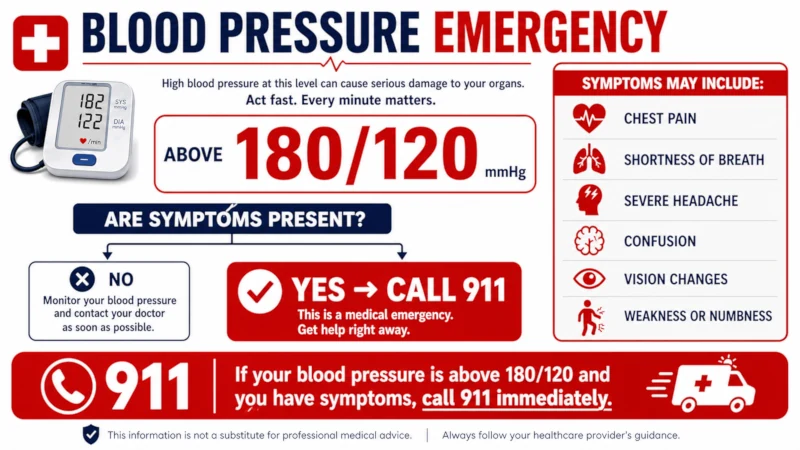
Treat it as an emergency if a reading is higher than 180/120 mmHg. If it’s that high and comes with chest pain, shortness of breath, back pain, numbness or weakness, vision changes, or trouble speaking, call 911 — this is a medical emergency, and it’s not the moment to wait and see whether a cup of tea helps [American Heart Association, 2025]. If the reading is that high without symptoms, wait a minute, take it again, and contact your clinician right away if it’s still elevated.
| Health Disclaimer: This article is for general education and information only. It is not medical advice and is not a substitute for diagnosis, treatment, or guidance from a qualified healthcare professional. High blood pressure can be dangerous even when you feel fine. Do not start, stop, or change any medication based on this page, and do not replace prescribed treatment with hibiscus tea or any other remedy. If you are pregnant or breastfeeding, have a medical condition, or take any prescription medication, talk with your doctor or pharmacist before using hibiscus regularly. If you think you’re having a medical emergency, call your local emergency number right away. |
Frequently Asked Questions
Does hibiscus tea really lower blood pressure?
It may, modestly. Pooled trials suggest small average reductions, mainly in people with mildly elevated pressure [Serban meta-analysis, 2015][McKay RCT, 2010]. But the strictest review found the overall evidence insufficient to be certain [Cochrane review, 2021]. Think of it as a low-risk extra, not a treatment.
How much hibiscus tea should I drink for blood pressure?
Studies that found an effect generally used about three cups a day, or roughly 10 grams of dried calyx daily [Drugs.com hibiscus monograph, 2026]. There’s no official dose, so start small — and check with your clinician first if you take blood pressure or diabetes medication.
Can I drink hibiscus tea if I take blood pressure medication?
Ask your doctor or pharmacist first. Hibiscus can add to the effect of blood-pressure drugs and can also change how the body handles several other medications [Drugs.com hibiscus monograph, 2026]. It’s usually a matter of monitoring rather than a hard “no,” but it’s worth checking.
Is hibiscus tea safe during pregnancy?
The general guidance is to avoid it while pregnant or breastfeeding, because safety data are lacking and some lab and animal studies raise concerns [Drugs.com hibiscus monograph, 2026]. Check with your provider.
How long before I see a change in my readings?
In the trials that showed a benefit, changes were measured over several weeks, not days [McKay RCT, 2010]. If you try it, keep a simple log of home readings and give any new habit a few weeks before judging it.
Can hibiscus tea replace my blood pressure medicine?
No. Even in a head-to-head trial, a standardized hibiscus extract lowered blood pressure less than the prescription drug lisinopril [Herrera-Arellano lisinopril trial, 2007]. Never stop prescribed medication on your own.
References
- Serban C, Sahebkar A, Ursoniu S, Andrica F, Banach M. Effect of sour tea (Hibiscus sabdariffa L.) on arterial hypertension: a systematic review and meta-analysis of randomized controlled trials. Journal of Hypertension. 2015;33(6):1119-1127. PMID 25875025; DOI 10.1097/HJH.0000000000000585. View source
- McKay DL, Chen C-YO, Saltzman E, Blumberg JB. Hibiscus sabdariffa L. tea (tisane) lowers blood pressure in prehypertensive and mildly hypertensive adults. The Journal of Nutrition. 2010;140(2):298-303. PMID 20018807; DOI 10.3945/jn.109.115097. View source
- Pattanittum P, Ngamjarus C, Buttramee F, Somboonporn C. Roselle for hypertension in adults. Cochrane Database of Systematic Reviews. 2021;(11):CD007894. PMID 34837382; DOI 10.1002/14651858.CD007894.pub3. View source
- Herrera-Arellano A, Miranda-Sánchez J, Ávila-Castro P, et al. Clinical effects produced by a standardized herbal medicinal product of Hibiscus sabdariffa on patients with hypertension. A randomized, double-blind, lisinopril-controlled clinical trial. Planta Medica. 2007;73(1):6-12. PMID 17315307; DOI 10.1055/s-2006-957065. View source
- Drugs.com. Hibiscus: Uses, Benefits & Dosage (medically reviewed; updated May 22, 2026; Wolters Kluwer). View source
- American Heart Association. When to Call 911 About High Blood Pressure (reviewed 2025). View source
