
If you’ve ever had chickenpox, the virus that causes shingles is already living quietly in your body. About 1 in 3 people in the United States will get shingles at some point [CDC, 2025a], and the risk of getting it, and of serious complications, climbs sharply after age 50 [CDC, 2024b].
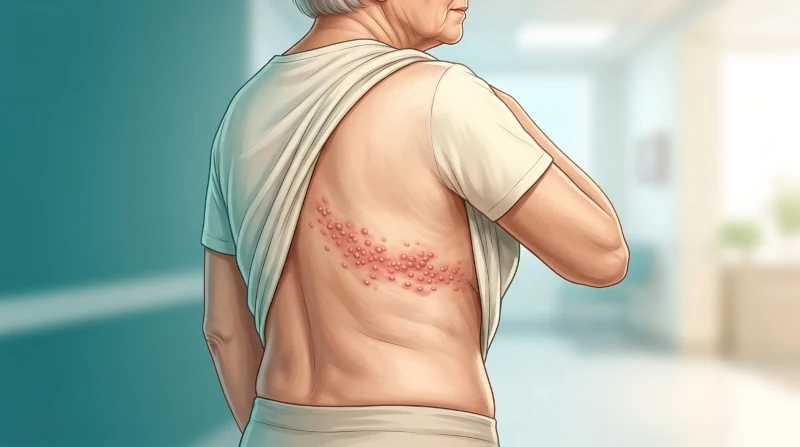
Two facts matter more than anything else on this page. Antiviral medicine works best when it’s started early, so call your doctor the day you suspect shingles [CDC, 2024b]. And the two-dose Shingrix vaccine is more than 90% effective at preventing shingles in healthy adults 50 and older [CDC, 2025b].
What Causes Shingles — and Why the Risk Rises With Age
Shingles is caused by the varicella-zoster virus, the same virus behind chickenpox. After chickenpox clears, the virus never fully leaves. It settles into nerve tissue, stays inactive for years, and can later reactivate and travel along a nerve to the skin [Mayo Clinic, 2022a].
That’s why almost every older adult is a candidate. More than 99% of Americans born before 1980 had chickenpox, even if they don’t remember it [CDC, 2025a].
Exactly what wakes the virus up isn’t well understood. What is known is that risk rises as a specific branch of the immune system, called cell-mediated immunity, loses its grip on the virus with age, illness, or certain medicines [CDC, 2024b]. Your risk is higher if you:
- Are 50 or older
- Have a condition that weakens the immune system, such as leukemia, lymphoma, or HIV
- Take medicines that suppress the immune system, including long-term steroids like prednisone or anti-rejection drugs after an organ transplant
- Are having radiation or chemotherapy for cancer [CDC, 2025a; Mayo Clinic, 2022a]
Not everyone who had chickenpox gets shingles. Most people who do get it only once, though it can come back [CDC, 2025a].
Shingles Symptoms: What to Watch For
The early warning signs come first
Shingles often starts before you can see anything. Pain, itching, or tingling can show up in one patch of skin several days before a rash, sometimes with a fever [CDC, 2024a]. The pain can be intense. Depending on where it is, it can be mistaken for a heart, lung, or kidney problem, and some people get the pain without ever developing a rash [Mayo Clinic, 2022a].
The rash
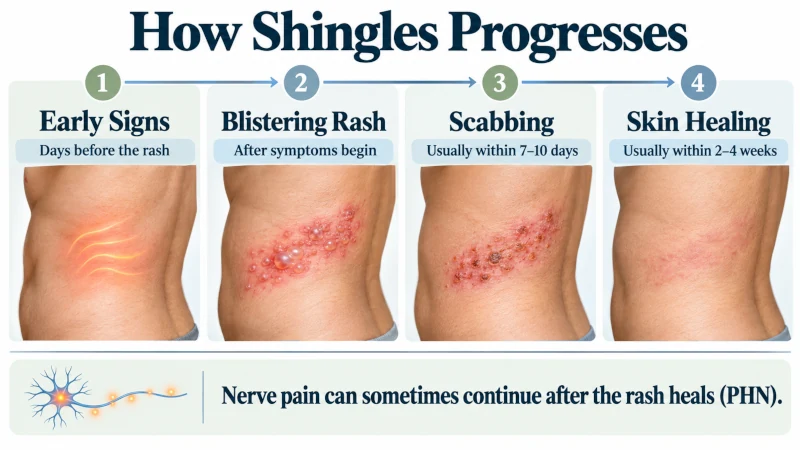
The rash usually appears as a single stripe of blisters wrapping around the left or right side of the torso. It can also show up on one side of the face, including around an eye [CDC, 2024a; Mayo Clinic, 2022a]. Along with it, you may notice:
- Burning pain and sensitivity to touch, sometimes so strong that clothing brushing the skin hurts
- Itching
- Fever, chills, and headache
- Upset stomach
- Fatigue and sensitivity to light [CDC, 2024a; Mayo Clinic, 2022a]
The blisters typically scab over in 7 to 10 days, and the rash clears within 2 to 4 weeks [CDC, 2024a]. If fever leaves you with no appetite, our guide to what to eat and drink when you have a fever covers how to stay hydrated and nourished.
When to Call a Doctor
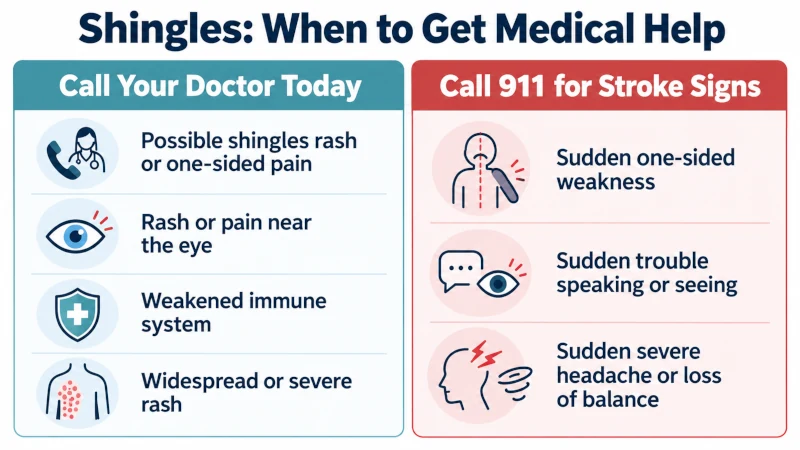
| Call your doctor today if you think you have shingles — especially if: The pain or rash is near your eye. Untreated, it can cause permanent eye damage.You’re 50 or older.You, or someone in your household, has a weakened immune system.The rash is widespread and painful. [Mayo Clinic, 2022a] Call 911 right away for possible stroke signs: Sudden numbness or weakness in the face, arm, or leg, especially on one sideSudden confusion, trouble speaking, or trouble understanding speechSudden trouble seeing, dizziness, loss of balance, or a severe headache with no known cause [CDC, 2026] |
Not every headache with shingles is an emergency, but a sudden, severe, or unusual one deserves attention. This overview of headache warning signs explains which ones shouldn’t wait.
Why Shingles Is Harder on Older Adults
Shingles itself is rarely life-threatening, but it can be very painful [Mayo Clinic, 2022a]. Age changes the picture in three ways.
Long-lasting nerve pain (postherpetic neuralgia)
The most common complication is postherpetic neuralgia, or PHN: burning, jabbing, or deep aching pain in the area of the rash that lasts three months or longer after the skin heals. It happens when the outbreak damages nerve fibers, which then send confused, exaggerated pain signals to the brain [Mayo Clinic, 2026].
About 10% to 18% of people with shingles develop PHN. An older adult is more likely to get it than a younger person, and more likely to have pain that is severe and long-lasting; PHN is rare before age 40 [CDC, 2024a]. Other things that raise the odds include diabetes or long-term heart or lung conditions, a rash on the face or torso, a severe rash, and not starting antiviral medicine within 72 hours [Mayo Clinic, 2026].
PHN can last months or even years [CDC, 2024a]. Long-term pain tends to bring company: poor sleep, tiredness, low appetite, and depression [Mayo Clinic, 2026]. If your mood is slipping along with your sleep, tell your doctor. Depression in older adults is common and easy to overlook, and it is treatable. There is no cure for PHN, but treatment can ease it, and for many people it improves with time [Mayo Clinic, 2026].
Eye, ear, and nerve complications
Shingles on the face can affect the eye and cause vision loss. Less often, it leads to facial paralysis, hearing or balance problems, or inflammation of the brain (encephalitis), and the blisters can become infected with bacteria [Mayo Clinic, 2022a; CDC, 2024a]. Very rarely, shingles causes pneumonia or death [CDC, 2024a]; nearly all of those deaths occur in older adults or people with weakened immune systems [CDC, 2024b].
A short-term rise in stroke risk
Shingles is also linked to a temporary increase in stroke risk. A 2017 meta-analysis pooling nine observational studies found stroke risk was about 78% higher than usual in the first month after shingles, about 43% higher over the first three months, and about 20% higher over the first year. Beyond three years, the increase was no longer statistically clear. The rise was larger when shingles involved the eye area [Marra et al., 2017].
Keep two things in mind. These are relative increases over your usual risk, not a high chance of stroke for any one person. And because the studies were observational, they show a link rather than proof that shingles causes strokes. The authors still urged vaccination for people with high cardiovascular risk [Marra et al., 2017], which makes the stroke warning signs above worth knowing in the weeks after an outbreak.
Shingles Treatment: What Actually Helps
There’s no cure for shingles, but early treatment can speed healing and lower the chance of complications [Mayo Clinic, 2022b].
Three antivirals are standard: acyclovir, valacyclovir, and famciclovir. They shorten the illness and make it less severe, and they work best when you start them as soon as the rash appears [CDC, 2025a]. CDC advises clinicians that treatment is most effective within 72 hours of symptoms starting [CDC, 2024b], and starting within 72 hours of the rash is linked to a lower risk of PHN [Mayo Clinic, 2026]. Practically, that means calling the day you notice a suspicious rash or one-sided pain, not waiting until after the weekend.
Pain relief, and a caution for older adults
Over-the-counter or prescription pain relievers can help [CDC, 2025a]. For stronger or nerve-type pain, doctors may prescribe a capsaicin skin patch, numbing medicine such as lidocaine (cream, gel, spray, or patch), an anticonvulsant such as gabapentin, a tricyclic antidepressant such as amitriptyline, or an injection combining a corticosteroid and a local anesthetic [Mayo Clinic, 2022b].
Some of these call for extra care as you age. The American Geriatrics Society’s Health in Aging Foundation advises older adults to use NSAIDs such as ibuprofen and naproxen with caution and to avoid regular, long-term use. NSAIDs can raise the risk of bleeding stomach ulcers, raise blood pressure, affect the kidneys, and worsen heart failure. The bleeding risk is higher in people over 75 and in anyone taking oral steroids or blood thinners such as warfarin, apixaban, clopidogrel, or aspirin [AGS Health in Aging Foundation, 2023].
The same group lists amitriptyline among drugs older adults should generally avoid, because it can cause confusion, constipation, dry mouth, and blurry vision [AGS Health in Aging Foundation, 2023], even though it remains a recognized option for shingles pain [Mayo Clinic, 2022b]. That’s a real trade-off rather than a contradiction. Ask your doctor or pharmacist which option fits your age, kidneys, heart, and other medicines, and bring a list of everything you take, including vitamins and supplements [Mayo Clinic, 2022b].
Comfort measures at home

- Cool, wet compresses on the blisters, or a cool bath [Mayo Clinic, 2022b]
- Calamine lotion or a warm oatmeal bath to calm itching [CDC, 2025a]
- Loose, soft clothing over the area, since even fabric touching the skin can hurt
- Keeping the rash covered and not scratching, which also protects other people [CDC, 2025a]
- Lowering stress where you can [Mayo Clinic, 2022b]
Food can’t treat the virus, but eating well helps your body recover. Our guide to eating to support normal immune function takes a realistic, food-first approach.
What about supplements and natural remedies?
This is a natural-health site, so here is a direct answer. None of the medical sources reviewed for this article, including CDC and Mayo Clinic, recommend a supplement or herb as a treatment for shingles. The treatments they name are antiviral medicine, pain relief, and simple comfort measures [CDC, 2025a; Mayo Clinic, 2022b]. If you want to use a complementary approach alongside medical care, tell your doctor or pharmacist what you’re taking [Mayo Clinic, 2022b], and don’t let it delay antivirals during that early window.
Is Shingles Contagious?
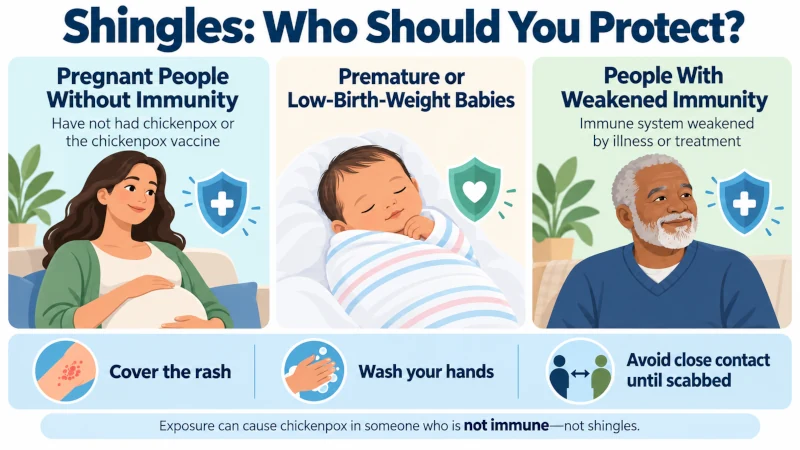
You can’t catch shingles from another person. But someone with shingles can pass the virus to a person who has never had chickenpox or the chickenpox vaccine, and that person would develop chickenpox, not shingles. The virus spreads through direct contact with fluid from the blisters or by breathing in virus particles from them. It can’t spread before the blisters appear or after the rash scabs over [CDC, 2025a].
Until your rash has scabbed [CDC, 2025a]:
- Keep it covered, and try not to touch or scratch it.
- Wash your hands often for at least 20 seconds.
- Avoid contact with pregnant women who have never had chickenpox or the vaccine, premature or low-birth-weight babies, and anyone with a weakened immune system.
For grandparents, that last point may mean postponing a visit with a new baby until the blisters have crusted over.
The Shingles Vaccine: Your Best Protection
Vaccination is the only way to protect yourself from shingles. CDC recommends two doses of Shingrix for all adults 50 and older, given 2 to 6 months apart, and for adults 19 and older whose immune systems are weakened by disease or treatment. There is no upper age limit [CDC, 2025b].
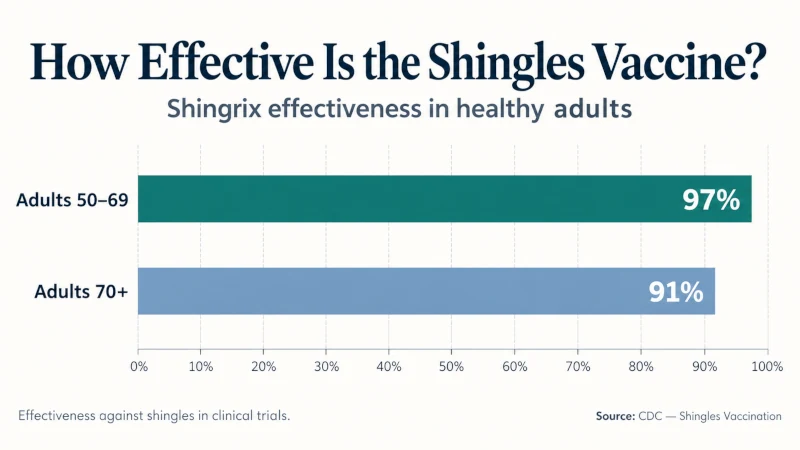
Here is how well it worked in clinical trials [CDC, 2025b]:
| Group | Prevented shingles | Prevented PHN |
| Healthy adults 50–69 | 97% | 91% (all adults 50+) |
| Healthy adults 70 and older | 91% | 89% |
| Adults with weakened immune systems | 68%–91%, depending on the condition | Not reported on the CDC page |
Protection also holds up. In people 70 and older with healthy immune systems, immunity stayed high for at least seven years after vaccination [CDC, 2025b].
Get Shingrix even if you’ve already had shingles, received the older Zostavax vaccine, or had the chickenpox vaccine. If you’ve had shingles, wait until the rash is gone. Zostavax hasn’t been available in the U.S. since November 2020 [CDC, 2025b].
Side effects, and who should wait
Shingrix triggers a strong immune response, so a sore arm, redness or swelling, tiredness, muscle aches, headache, shivering, fever, stomach pain, or nausea are common. They usually pass in 2 to 3 days and were more common in younger people. Get the second dose even if the first one left you feeling rough for a day or two [CDC, 2025b].
Guillain-Barré syndrome, a serious nerve disorder, has been reported very rarely after Shingrix. There is also a very small increased risk of it after shingles itself [CDC, 2025b].
Hold off if you currently have shingles, are pregnant, have had a severe allergic reaction to the vaccine or its ingredients, or are moderately or severely ill. A mild cold is not a reason to wait [CDC, 2025b].
Cost and Medicare
Since 2023, people with Medicare Part D pay nothing out of pocket for Shingrix. Medicaid coverage varies, and many private plans cover it, possibly with some cost to you, so check with your insurer. You can get it at doctors’ offices and pharmacies [CDC, 2025b].
An intriguing but early finding on dementia
In 2025, researchers studied a vaccine rollout in Wales where eligibility for the older live shingles vaccine depended on exact date of birth. People who received the vaccine had about a 20% lower relative rate of new dementia diagnoses over seven years, with a stronger effect in women [Eyting et al., 2025]. The design is clever, but it’s one study, it involved Zostavax rather than Shingrix, and it isn’t a reason on its own to get vaccinated. The reason to get vaccinated is still shingles.
| HEALTH DISCLAIMER: This article is for general education and is not a substitute for advice, diagnosis, or treatment from your own doctor or pharmacist. If you think you have shingles, contact a healthcare professional promptly, because antiviral treatment works best when it starts early. Call 911 for stroke warning signs, and seek urgent care for a rash near the eye. Talk with your doctor before starting or stopping any medicine, supplement, or natural remedy, especially if you take prescription drugs, have kidney or heart disease, or are pregnant or breastfeeding. |
Frequently Asked Questions
Can you get shingles more than once?
Yes. Most people have shingles only once, but it can come back [CDC, 2025a]. Getting Shingrix after the rash has cleared can help prevent future episodes [CDC, 2025b].
Can you have shingles without a rash?
Occasionally, yes. Some people have the nerve pain without ever developing a rash [Mayo Clinic, 2022a], which makes it harder to diagnose [CDC, 2024b]. Tell your doctor about burning or tingling pain on one side of your body even if your skin looks normal.
How long does shingles last?
The blisters usually scab over in 7 to 10 days and clear within 2 to 4 weeks [CDC, 2024a]. Pain that continues three months or more after the skin heals is postherpetic neuralgia [Mayo Clinic, 2026].
I already had shingles. Do I still need the vaccine?
Yes. CDC recommends Shingrix even if you’ve had shingles. There’s no set waiting period, but the rash should be gone before you’re vaccinated [CDC, 2025b].
Does Medicare cover the shingles vaccine?
If you have Medicare Part D, you’ve paid nothing out of pocket for Shingrix since 2023. Medicaid and private coverage vary, so check with your plan [CDC, 2025b].
References
- Centers for Disease Control and Prevention. “About Shingles (Herpes Zoster).” View source
- Centers for Disease Control and Prevention. “Clinical Overview of Shingles (Herpes Zoster).” For health care providers. View source
- Centers for Disease Control and Prevention. “Shingles Vaccination.” View source
- Mayo Clinic Staff. “Shingles — Symptoms and causes.” View source
- Centers for Disease Control and Prevention. “Shingles Symptoms and Complications.” View source
- Centers for Disease Control and Prevention. “Signs and Symptoms of Stroke.” View source
- Mayo Clinic Staff. “Postherpetic neuralgia — Symptoms and causes.” View source
- Marra F, Ruckenstein J, Richardson K. “A meta-analysis of stroke risk following herpes zoster infection.” BMC Infectious Diseases. View source
- Mayo Clinic Staff. “Shingles — Diagnosis and treatment.” View source
- American Geriatrics Society Health in Aging Foundation. “Learn More: Ten Medications Older Adults Should Avoid or Use with Caution.” View source
- Eyting M, Xie M, Michalik F, Heß S, Chung S, Geldsetzer P. “A natural experiment on the effect of herpes zoster vaccination on dementia.” View source


