
A fever is one of the body’s most recognizable signals — a temporary rise in temperature that usually means the immune system is working against an infection. While over-the-counter medications can ease the discomfort and medical care is sometimes necessary, what you eat and drink during a fever has a real effect on recovery: staying hydrated, giving the immune system the nutrients it needs, and replacing minerals lost through sweating all matter.
Knowing which foods to eat when you have a fever — and which to avoid — can make the difference between a slow, depleting recovery and one where the body gets the support it actually needs. This article covers 14 evidence-informed choices, organized by how they help, along with red-flag symptoms that mean it’s time to see a doctor rather than manage at home. For a broader look at foods that help with cold and flu and foods that fight infection, NHM has dedicated guides on both topics.
What Is a Fever?
Mayo Clinic defines a fever as an oral temperature of 100°F (37.8°C) or higher [Mayo Clinic, 2025]. Fever is triggered when the hypothalamus — the brain’s thermostat — resets the body’s temperature set point upward in response to infection or inflammation. The accompanying symptoms — sweating, chills, headache, muscle aches, loss of appetite, and general weakness — are part of this immune response, not separate from it.
The most common causes of fever are viral and bacterial infections, including influenza, common cold, COVID-19, urinary tract infections, and pneumonia. Less commonly, fever can accompany inflammatory conditions, certain medications, or immunizations.
Why What You Eat Matters During a Fever
Three things happen during fever that make food and fluid choices more important than usual:
- Dehydration risk increases. Sweating, and sometimes vomiting or diarrhea, can cause fluid and electrolyte losses that exceed normal intake. Replacing fluids is the single most critical nutritional priority during fever.
- Appetite drops. The immune response suppresses appetite. Light, easy-to-digest foods and fluids are better tolerated than heavy meals.
- Nutrient demands may rise. The immune system uses proteins, vitamin C, zinc, and other micronutrients at an accelerated rate during active infection. Even partial replenishment through food supports the body’s defenses.
The 14 foods to eat when you have a fever below address all three of these needs. They are organized from most universally recommended to most traditionally specific.
Hydration Essentials
1. Water
Evidence: Strong
Water needs no special introduction here — but it deserves the top spot on any fever food list. Fluid replacement is the most universally recommended intervention during fever across all medical traditions and evidence-based guidelines. Water maintains blood volume, supports kidney filtration of metabolic waste, compensates for sweat losses, and helps the body regulate its temperature.
Adults with fever should drink more fluids than usual, in small, frequent amounts if nausea is present. Cold water or ice chips can feel especially soothing when a fever runs high. Plain water is always the baseline; other beverages on this list build on it.
2. Fruit Juices and Electrolyte Drinks
Evidence: Strong for hydration; Limited for specific immune claims
Freshly squeezed juices from citrus fruits and berries supply water, natural sugars for energy, and electrolytes — particularly potassium. Their vitamin C content supports immune function through multiple established pathways [Carr AC & Maggini S, Nutrients, 2017].
A practical note: many commercial juices contain added sugar. Fresh-squeezed or 100% juice, diluted with water if needed, is preferable to high-sugar products. For anyone losing fluids through vomiting or diarrhea alongside a fever, oral rehydration solutions (ORS) — available over the counter — replace electrolytes more effectively than juice and should be the first choice in those situations.
3. Melon
Evidence: Moderate (nutritional and hydration evidence
Melon is approximately 90% water, making it one of the most hydrating foods available as a solid food. It is also a source of potassium and magnesium — electrolytes lost through perspiration. The NHM muskmelon health benefits page specifically notes that melon is useful for “dehydration accompanied by mineral loss, as it occurs in diarrhea, excessive perspiration, or fever crises.”

Melon is easy on the stomach, mildly sweet without being acidic, and easy to eat even when appetite is poor. Chilled melon cubes can also feel soothing during high fever.
Vitamin C–Rich Fruits
4. Citrus Fruits
Evidence: Strong for vitamin C content and immune support; Limited for direct fever-shortening
Oranges, tangerines, and grapefruits are among the most reliable sources of vitamin C. The NHM orange benefits page explains that vitamin C from oranges increases the disease-fighting activity and longevity of white blood cells, may slow viral replication within cells, and increases production of interferon — an antiviral protein. The NHM tangerine page specifically notes tangerines’ traditional use during childhood fevers and their ability to replace minerals lost through perspiration.
Adults need 75–90 mg of vitamin C per day (more for smokers) [NIH ODS, 2021]. One medium orange provides approximately 70 mg — close to a full day’s requirement in a single piece of fruit. What vitamin C does not do is prevent viral infections or cure a fever. Its value is in supporting immune function while the body works through the illness.
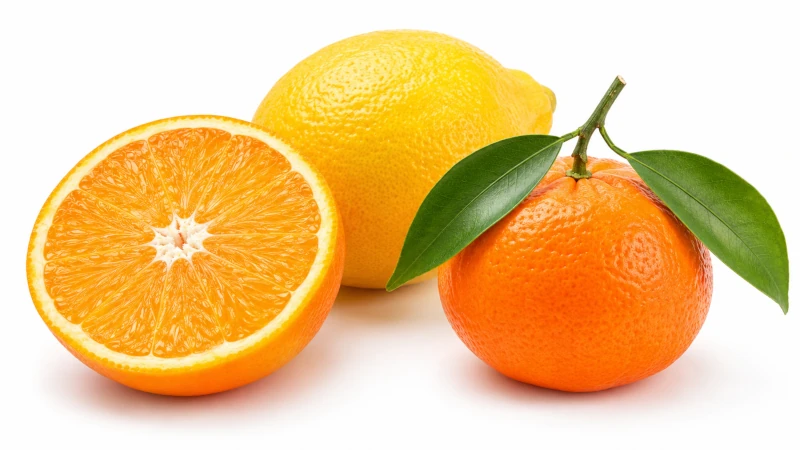
5. Lemons
Evidence: Moderate (traditional use + nutritional support
Lemon has a long traditional history as a fever food, and there is more behind it than folk medicine. The NHM lemon health benefits page confirms that lemon has a “febrifuge effect” — that is, it is traditionally recognized as fever-reducing — and that the lemon rind has been used to decrease fever. Lemons provide approximately 50 mg of vitamin C per 100 g. Their essential oil compounds, including limonene and terpenes, have demonstrated antimicrobial activity in laboratory settings.
Practically, warm lemon water is one of the oldest home preparations for fever and sore throat. It encourages fluid intake, soothes the throat, and the warmth may help with mild congestion. The evidence that lemon specifically shortens fever duration is traditional rather than from controlled trials, but its nutritional contribution is established.
6. Raspberries
Evidence: Limited to Moderate
Raspberries provide about 32 mg of vitamin C per cup — roughly 35% of the daily value — along with 8 grams of fiber and significant polyphenols including anthocyanins and ellagitannins [USDA FoodData Central, 2022]. The NHM raspberry health benefits page notes that older herbal traditions credited raspberries with treating fevers, while modern research focuses primarily on their cardiometabolic and anti-inflammatory effects.

During a fever, raspberries’ combination of vitamin C, hydrating content, gentle sweetness, and soft texture makes them easy to eat even with a poor appetite. Frozen raspberries retain essentially the same nutritional profile as fresh and are often more practical to have on hand.
Soothing Foods and Beverages
7. Barley Water
Evidence: Traditional
Barley water — made by simmering pearl barley in water and straining the liquid — is a classic convalescent drink across European, Asian, and Middle Eastern traditions. It provides easily digestible carbohydrates for energy, B vitamins, and a mild demulcent quality that can soothe the digestive tract. Barley is well established as one of the top foods for intestinal health because of its soluble fiber content.
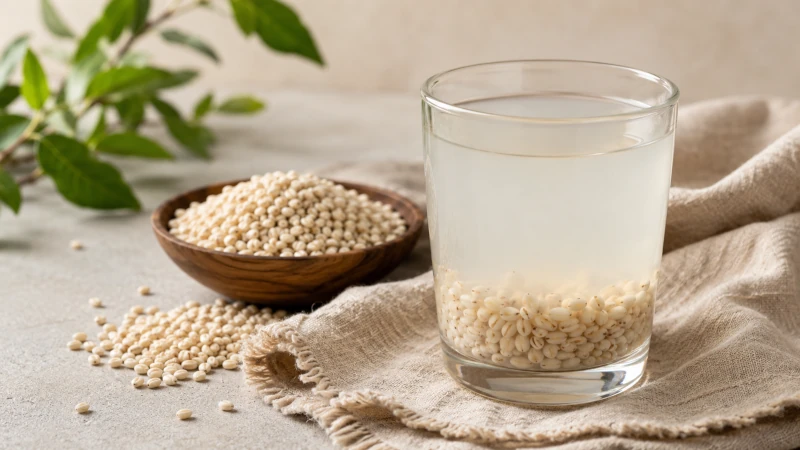
During fever, when digestion slows and appetite disappears, barley water provides gentle nourishment without taxing the gut. Clinical evidence specifically demonstrating that barley water shortens fever duration does not exist, but as a hydrating, nutritious, easily tolerated convalescent beverage, its place on this list is well-earned.
8. Depurant Broth (Vegetable Broth)
Evidence: Traditional; plausible nutritional basis
A depurant broth — a light vegetable broth prepared with antioxidant-rich vegetables such as artichoke, onion, celery, and green beans — has long served as the quintessential sick-day food across many cultures. It provides potassium, magnesium, and gentle flavoring without the heaviness of a full meal.
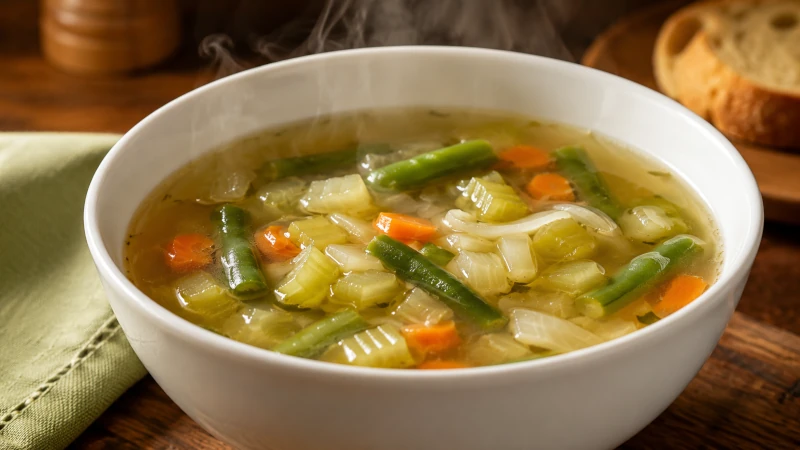
The concept is practical: warmth soothes the respiratory tract, fluids replace losses, electrolytes help with rehydration, and the light nutrition supports the body without demanding much from a sluggish digestive system. Incorporating some of the fever-supportive vegetables from this list into a broth — onion, garlic, radish — concentrates their benefits into an easy-to-consume form.
9. Borage
Evidence: Traditional; supporting ethnobotanical evidence
Borage (Borago officinalis) is a flowering herb whose leaves are used as a tea in traditional medicine. The NHM health benefits of borage page confirms its traditional use as a sudorific (promoting sweating) and diuretic, specifically recommended for “viral infections accompanied by fever (measles, German measles, etc.)” because it “facilitates the elimination of blood impurities through urine and perspiration, aids rehydration, provides mineral salts, and helps reduce fever.”

The mechanism is traditional: promoting perspiration may support the fever process, and the diuretic and rehydrating effects are plausible. Borage also appears in the 5 Foods That Fight Infection article for viral infections and upper respiratory infections. The evidence is ethnobotanical and traditional rather than from controlled human trials.
Safety note: Borage leaves contain pyrrolizidine alkaloids (PAs) that may be harmful with large doses or prolonged use. Borage tea should be consumed only occasionally and in moderate amounts. It should be avoided by pregnant women and people with liver conditions. Do not take borage extract capsules without medical guidance.
Traditional Antimicrobial Plants
None of these foods operates the way a pharmaceutical antibiotic does. Laboratory studies confirm that each contains biologically active antimicrobial compounds. But in vitro (test tube) findings do not automatically translate into effective infection treatment in humans. The NHM garlic page, citing the National Center for Complementary and Integrative Health, explicitly states that garlic has not been proven to treat infections in controlled human trials [NCCIH, 2025]. The same honest caveat applies to the others.
Eating these foods as part of a fever diet is reasonable and can be nourishing. Relying on them as substitutes for medical care — or counting on them to “kill” an infection the way antibiotics do — is not supported by current evidence.
10. Garlic
Evidence: Traditional; insufficient human evidence for treating infections
Garlic’s sulfur compounds — formed when a clove is crushed or chopped — have demonstrated antimicrobial activity in laboratory studies. There is modest clinical evidence that garlic supplements may slightly lower blood pressure and cholesterol in some people. However, a Cochrane review found insufficient clinical trial evidence that garlic prevents or treats the common cold [NCCIH, 2025]. NCCIH is clear that garlic has not been proven to treat bacterial infections, parasites, or most immune conditions studied.
Garlic is still a reasonable food to eat during illness. It adds flavor to broths and soups, may encourage appetite, and has centuries of traditional use in fever and respiratory illness management across many cultures. The NHM garlic benefits page has a thorough evidence review. The practical advice: use it in cooking as a flavorful, nourishing ingredient — but don’t count on it as a treatment.
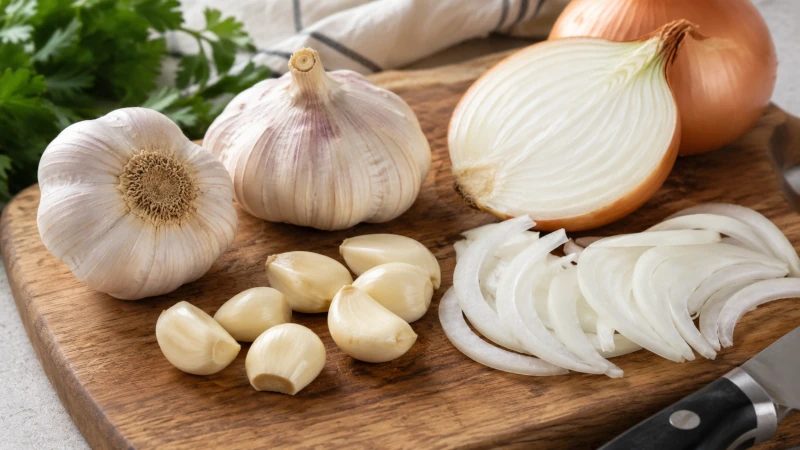
11. Onion
Evidence: Traditional; limited human evidence
Onion contains sulfur compounds — particularly allyl propyl disulfide and thiosulfinates — that give it expectorant, mucolytic, and traditional antimicrobial properties. Research from Ludwig Maximilian University in Munich found that thiosulfinate from onion can inhibit bronchial allergic reactions and produce bronchodilation, supporting onion’s long traditional use for respiratory infections [cited in NHM benefits of eating onions]. Onion syrup with honey remains a widely used home remedy for coughs and respiratory infections that often accompany fevers.
Onion also appears in the NHM 7 top foods for lung health as a food that “resists bronchitis” and helps break up mucus. These are plausible mechanisms backed by centuries of traditional use. The human RCT evidence base is thin, but onion is a nourishing, widely available food that fits naturally into fever-time soups and broths.
12. Cabbage
Evidence: Traditional; modest nutritional evidence
Cabbage provides roughly 28 mg of vitamin C per cup — a meaningful contribution to daily intake. As a cruciferous vegetable, it contains glucosinolates that break down into isothiocyanates and indoles with documented antimicrobial and anti-inflammatory properties in laboratory studies [NCI, 2012]. The NHM health benefits of cabbage page notes that cabbage is a nutritious food that fits healthy eating patterns, while being careful not to overstate its disease-treatment claims.
During a fever, light cabbage soup or broth provides some vitamins and minerals in an easy-to-digest form. Its vitamin C contribution is real; its antimicrobial benefit in the specific context of treating a fever is traditional rather than clinically proven.
13. Radish
Evidence: Traditional
Radish — particularly black radish (Raphanus sativus var. nigra) — contains glucoraphanin, which converts enzymatically to raphanol, a compound to which choleretic (bile-stimulating), mucolytic, expectorant, and traditional antimicrobial properties are attributed. The NHM radish health benefits page lists radish as recommended for “bronchial catarrh, bronchitis, and laryngitis, especially sinusitis.” The lung health guide confirms radish’s “mucus-softening properties” making it useful for sinusitis and bronchitis.
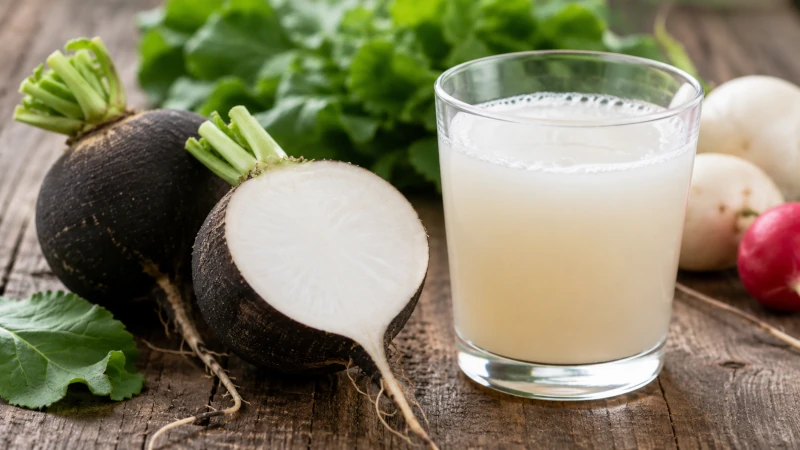
When fever comes with respiratory symptoms — the most common scenario in viral illness — radish may support respiratory comfort as part of a varied fever diet. The evidence is traditional and ethnobotanical. Radish works well raw in salads or as fresh juice mixed with honey.
14. European Cranberry
Evidence: Moderate for urinary support; Traditional for fever
The “European cranberry” in traditional fever literature refers to plants of the Vaccinium family — closely related to the North American cranberry (Vaccinium macrocarpon). The connection to fever is traditionally via its role in urinary tract infections (UTIs), which can themselves cause fever. NCCIH confirms that cranberry products may reduce the risk of symptomatic recurrent UTIs in women by approximately 25–30%, through proanthocyanidins (PACs) that prevent bacteria from adhering to the bladder wall — not by killing bacteria [NCCIH, 2024].
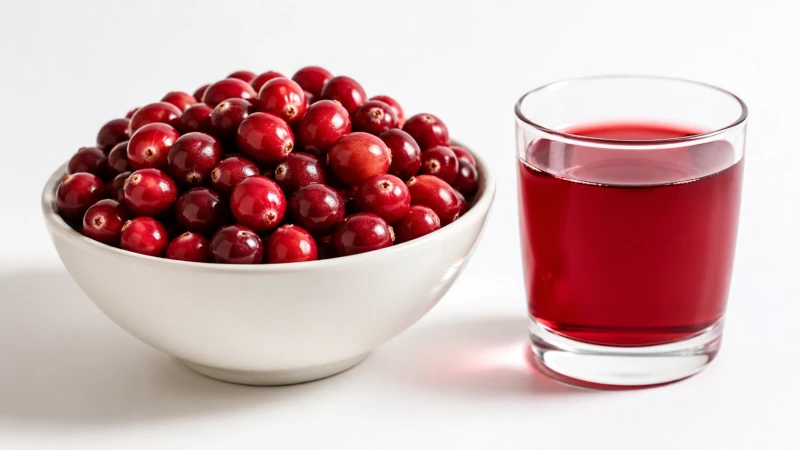
Cranberry is not recommended as treatment for an existing UTI. People who think they have a UTI should see a healthcare provider — especially if fever is present — because E. coli and other bacteria that cause UTIs require appropriate evaluation and, when indicated, antibiotics.
As a fever-time food more broadly, cranberry juice provides vitamin C, antioxidant polyphenols, and hydration. Choose unsweetened juice or diluted juice to avoid excess sugar.
Frequently Asked Questions
Should I eat if I have a fever but no appetite?
Not eating is common during fever and generally safe for a day or two in healthy adults. Hydration is far more critical than food during the acute phase. As appetite begins to return, small amounts of easy-to-digest foods — broths, melon, toast, soft fruit — are better than forcing a full meal. The body signals when it’s ready for more food.
What should I avoid eating during a fever?
Heavy, fatty meals divert energy from immune function and are hard to digest when the body is fighting an infection. Alcohol should be avoided — it promotes dehydration and impairs immune function. Very sugary drinks add empty calories without meaningful micronutrients. Large amounts of caffeine have a mild diuretic effect that can worsen dehydration.
Does eating citrus actually help?
Citrus provides vitamin C, which plays a well-established role in supporting immune cell function, collagen synthesis, and antioxidant defense [Carr AC & Maggini S, 2017]. Vitamin C does not prevent viral infections or cure fever, but it contributes to the body’s immune response. The hydration from citrus juice is also directly useful. Citrus is a supportive food, not a treatment.
When is it safe to manage a fever at home with food and fluids alone?
In healthy adults, fevers below 103°F (39.4°C) with no alarming symptoms can often be managed at home with rest, fluids, and over-the-counter fever reducers as needed. The moment you notice any red-flag symptom from the list at the top of this article — stiff neck, rash, confusion, difficulty breathing, chest pain, or seizure — seek medical care promptly [Mayo Clinic, 2025].
Can children eat these foods during a fever?
Most of these foods are appropriate for older children and adolescents. For infants, any fever requires medical guidance before home management. For young children with fever, the priority is fluid replacement: water, diluted juice, oral rehydration solutions, and broths as tolerated. Always follow age-specific guidance for when to call a doctor, summarized in the When to See a Doctor section above.
How much vitamin C do I need during an illness?
The NIH Office of Dietary Supplements sets the daily requirement for vitamin C at 90 mg for adult men and 75 mg for adult women (add 35 mg for smokers) [NIH ODS, 2021]. During acute illness, some researchers advocate higher intake, but the safe upper limit for supplemental vitamin C is 2,000 mg/day — amounts beyond that can cause gastrointestinal distress. Getting vitamin C from whole foods — citrus, raspberries, cabbage — is the most practical approach.
Is bone broth better than vegetable broth for fever?
Both are useful. Bone broth provides collagen proteins, glycine, and minerals in addition to fluid and electrolytes. Vegetable broth is lighter, lower in calories, and allows for a wide range of fever-supportive vegetables. Neither has been shown in clinical trials to shorten fever duration, but both are hydrating, soothing, and easily tolerated. Choose based on preference and what you have available.
| Health Disclaimer The information on this page is for educational purposes only and is not a substitute for professional medical advice, diagnosis, or treatment. None of the foods described below is a fever treatment or a replacement for medical care. Always consult a qualified healthcare provider if you are concerned about a fever — particularly for infants, young children, older adults, or anyone with a temperature above 103°F (39.4°C) or symptoms listed in the Red Flags section below. Do not delay seeking care based on dietary choices. |
When to See a Doctor — Red Flag Symptoms
Food and fluids support comfort and recovery during mild fever. But some situations require immediate medical attention. Call your doctor or seek emergency care if any of the following apply [Mayo Clinic, 2025]:
Adults — seek care promptly if temperature is 103°F (39.4°C) or higher, or if fever at any level is accompanied by:
- Severe headache, stiff neck, or sensitivity to bright light
- A rash appearing alongside a fever
- Mental confusion, unusual behavior, or difficulty speaking
- Difficulty breathing or chest pain
- Persistent vomiting
- Abdominal pain, or pain when urinating
- Convulsions or seizures
Infants and children:
- Any fever in an infant under 3 months old (rectal temp ≥ 100.4°F / 38°C) — call your provider immediately
- Children 3–6 months: temperature above 102°F (38.9°C), or lower with unusual irritability or lethargy
- Any child with a fever that lasts more than three days, or accompanied by severe symptoms
- A child who has had a seizure associated with fever — call 911 if the seizure lasts more than five minutes
Fevers below 104°F (40°C) from common viral infections are generally not dangerous in healthy adults and may even assist immune function [Mayo Clinic, 2025]. Monitoring symptoms is the key habit.
References
- Mayo Clinic. “Fever — Symptoms & Causes.” Last reviewed December 24, 2025. View source
- National Center for Complementary and Integrative Health (NCCIH). “Cranberry.” Last updated November 2024. View source
- National Center for Complementary and Integrative Health (NCCIH). “Garlic.” Updated February 2025. View source
- National Institutes of Health, Office of Dietary Supplements. “Vitamin C — Health Professional Fact Sheet.” Updated March 2021. View source
- Carr AC, Maggini S. “Vitamin C and Immune Function.” Nutrients. 2017;9(11):1211. doi:10.3390/nu9111211. View source
- U.S. Department of Agriculture, Agricultural Research Service. FoodData Central: Raspberries, raw. FDC ID 2346410. Updated 2022. View source
- U.S. Department of Agriculture, SNAP-Ed. “Cabbage” and “Raspberries.” Seasonal Produce Guide. View source
- National Cancer Institute. “Cruciferous Vegetables and Cancer Prevention.” Last reviewed June 7, 2012. View source
- Centers for Disease Control and Prevention. “E. coli (Escherichia coli).” Accessed June 2026. View source
- Williams G, Hahn D, Stephens JH, et al. “Cranberries for preventing urinary tract infections (review).” Cochrane Database of Systematic Reviews. 2023;4(4):CD001321. View source
- Lissiman E, Bhasale AL, Cohen M. “Garlic for the common cold.” Cochrane Database of Systematic Reviews. 2014;11:CD006206. View source
