
If you’ve seen chlorine listed among the minerals your body needs, here’s the short version: the thing doing the work isn’t the chlorine you smell at a swimming pool. It’s chloride — the calm, dissolved form of that element — and it’s one of the most important electrolytes you have. Chloride helps make stomach acid, keeps your body fluids and blood pH in balance, and lets your nerves and muscles fire. So the real “chlorine benefits” people search for are, more precisely, chloride’s benefits. The good news is you almost certainly get enough, mostly from ordinary salt.
That one-letter difference — chlorine versus chloride — is worth two minutes, because it clears up most of the confusion (and most of the internet myths) about this mineral.
Chlorine vs. chloride: the difference that changes everything
Chlorine is a halogen element. On its own it’s a reactive, greenish gas used to disinfect water and pools. Chloride is what you get when that element gains an electron and settles down as a stable, dissolved ion (Cl⁻). In your body, essentially all of it exists as chloride, paired with cations like sodium and potassium [EFSA reference values for chloride, 2019]. When nutrition labels or mineral guides say “chlorine,” they almost always mean dietary chloride.
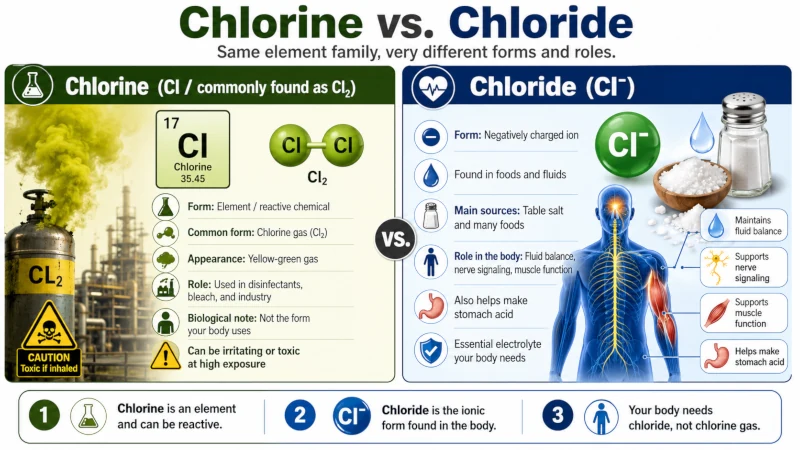
Here’s the concrete link most people miss: table salt is sodium chloride. One gram of salt provides about 0.4 g of sodium and 0.6 g of chloride [EFSA reference values for chloride, 2019]. Every time you salt your food, you’re eating chloride. That’s why a true dietary deficiency is rare, and why the alarming “chlorine” claims aimed at your tap water are a separate topic from the mineral your body runs on.
What chloride actually does in your body
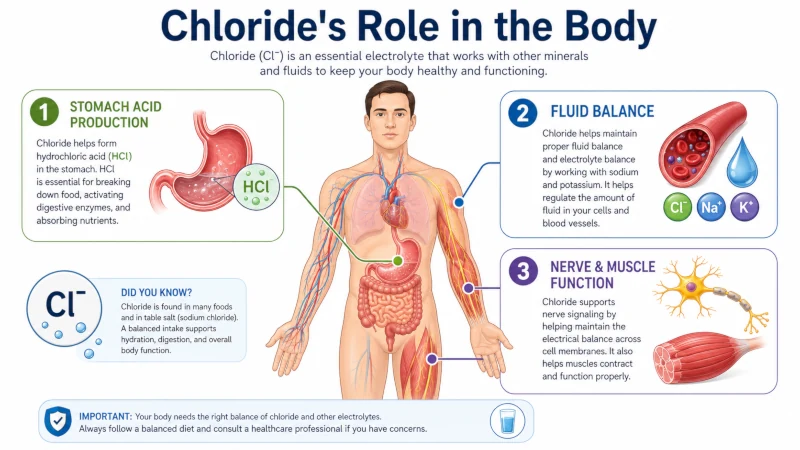
Chloride carries a negative charge, which makes it an electrolyte alongside sodium and potassium. It helps regulate how much fluid and how many nutrients move in and out of your cells, keeps your pH steady, supports stomach acid, and helps nerve and muscle cells do their jobs [Harvard T.H. Chan School of Public Health, 2023]. A few of these deserve a closer look.
It makes stomach acid for digestion
Chloride is a building block of hydrochloric acid (HCl), the strong acid your stomach uses to break down food. Specialized cells in the stomach lining secrete chloride to produce that acid [EFSA reference values for chloride, 2019]. Without adequate stomach acid, protein digestion and the absorption of some minerals suffer — which is the accurate version of the old (and overstated) claim that “without chloride, nothing digests.”
It balances your fluids and blood pH
Chloride is the main negatively charged ion in the fluid outside your cells. It moves with sodium and potassium to control osmotic pressure — the push and pull that keeps water distributed correctly between your blood, tissues, and cells [EFSA reference values for chloride, 2019]. It also works with bicarbonate to hold your blood’s acid–base balance in a narrow, healthy range. This is real, established physiology, not a wellness talking point.
It helps nerves, muscles, and oxygen transport
Chloride channels sit in cell membranes throughout the body and help generate the electrical signals that make nerves and muscles work [EFSA reference values for chloride, 2019]. In red blood cells, a chloride-for-bicarbonate swap known as the “chloride shift” helps you load and unload oxygen and carbon dioxide as blood cycles between your lungs and tissues. Chloride is also used by immune cells to make hypochlorous acid, part of how your body kills invading microbes.
What chloride does not have is a long list of proven stand-alone health perks. Reputable reviews note there simply isn’t research linking chloride intake by itself to specific diseases — its effects are tightly bound up with sodium and potassium, and it’s hard to study in isolation [Harvard T.H. Chan School of Public Health, 2023]. So be skeptical of any page promising that chloride “detoxifies,” reverses conditions, or keeps joints “youthful.” Those claims aren’t supported.
How much chloride do you need?
There’s no Recommended Dietary Allowance (RDA) for chloride, because there isn’t enough balance-study evidence to set one. Instead, health authorities set an Adequate Intake (AI). In the United States, the AI is 2.3 grams per day for people ages 14–50 (including during pregnancy and breastfeeding), 2 grams for ages 51–70, and 1.8 grams for 71 and older [Harvard T.H. Chan School of Public Health, 2023]. European authorities set very similar “safe and adequate” values — essentially matched to sodium intake — landing at 3.1 g/day for adults [EFSA reference values for chloride, 2019].
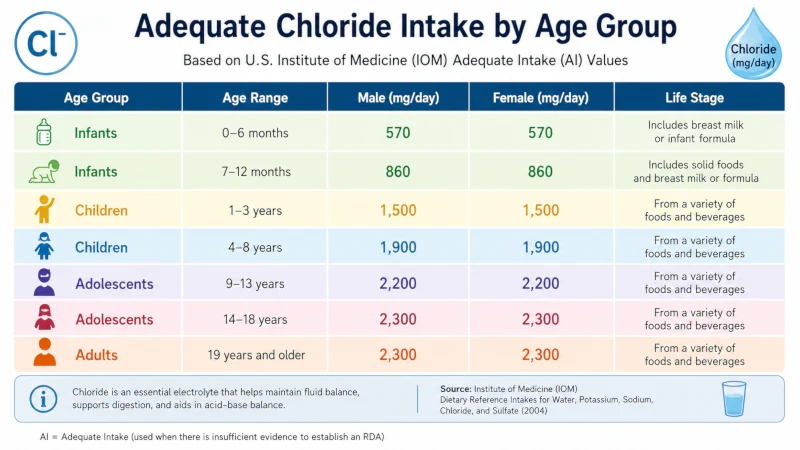
Most adults comfortably reach these amounts without trying, because chloride rides along with the sodium in a normal diet. If anything, the typical Western problem is getting too much salt, not too little chloride.
Where chloride comes from in food
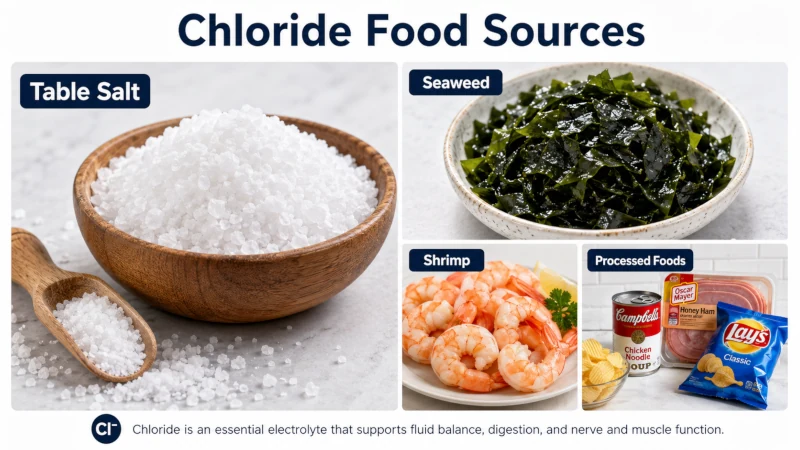
Chloride occurs naturally in many foods, but the overwhelming dietary source is sodium chloride — table salt, and the salt added to processed and restaurant food [Harvard T.H. Chan School of Public Health, 2023]. The most reliable contributors are:
- Table salt, sea salt, and kosher salt
- Seaweed (such as kelp and dulse)
- Shrimp and other seafood
- Higher-sodium processed foods — deli meats, hot dogs, cheese, and salty snacks
- Salty condiments — soy sauce, Worcestershire sauce, ketchup
Unprocessed fruits and vegetables contain some chloride too, but at low levels; they’re not where most people get theirs [EFSA reference values for chloride, 2019]. (The original version of this article leaned heavily on a produce list. It’s not wrong that those foods contain traces — it’s just not the real picture of how you get chloride.)
Chloride deficiency: rare, but real
For a healthy person eating a normal diet, chloride deficiency essentially doesn’t happen [Harvard T.H. Chan School of Public Health, 2023]. When low chloride (hypochloremia) does occur, it almost always rides along with fluid and sodium loss — think prolonged vomiting, diarrhea, or heavy sweating, or the use of diuretic (“water pill”) medications [Harvard T.H. Chan School of Public Health, 2023]. Because vomiting empties chloride-rich stomach acid, it’s a particularly efficient way to lose chloride.
The condition is well documented in one striking historical setting: infants. In the past, babies fed chloride-deficient formula or unusually chloride-poor breast milk developed growth failure, lethargy, irritability, poor feeding, weakness, and a metabolic imbalance called hypokalemic metabolic alkalosis [EFSA reference values for chloride, 2019]. That episode is exactly why infant formula chloride content is now regulated.
For everyday adults, the practical takeaway isn’t “eat more salt for chloride.” It’s this: if you’re losing a lot of fluid through a stomach bug, replacing water and electrolytes matters. An oral rehydration solution is designed to replace the sodium, potassium, and chloride you lose — which plain water can’t do on its own — and it’s the standard approach for that situation [Natural Health Message guide to fluids for stomach flu, 2026].
Can you get too much chloride?
From food, excess chloride is uncommon in healthy people. High blood chloride (hyperchloremia) is usually a sign of something else — significant dehydration, severe diarrhea that strips bicarbonate, or kidney and metabolic problems — rather than diet alone [Harvard T.H. Chan School of Public Health, 2023].
The more relevant caution is indirect. Because chloride comes packaged with sodium as salt, a high-salt diet means a high sodium-chloride intake, and that’s associated with elevated blood pressure and, over time, greater cardiovascular and kidney risk [EFSA reference values for chloride, 2019]. There’s even some evidence that chloride contributes to salt’s blood-pressure effect, not just sodium — though a clear independent mechanism hasn’t been established [EFSA reference values for chloride, 2019]. Either way, the health advice lands in the familiar place: watch total salt, not chloride specifically.
What about the chlorine in tap water?
This is where the mineral gets tangled up with a different question. Water utilities add small amounts of chlorine (or chloramine) to kill germs like Salmonella, Campylobacter, and norovirus as water travels to your tap. The CDC considers levels up to 4 milligrams per liter safe, and at those levels it’s unlikely to make people sick [CDC on water disinfection, 2024]. Chlorination has been used in U.S. drinking water since 1908 and is regarded as a major public-health advance.
There’s a real, measured trade-off worth knowing: when chlorine reacts with organic matter in water, it can form disinfection byproducts, which at high enough levels over long exposure can pose health risks — which is why the EPA regulates them [CDC on water disinfection, 2024]. That’s a legitimate reason for water utilities to monitor treatment, not a reason to fear a glass of tap water.
The older worry that chlorinated water “destroys your gut bacteria” hasn’t held up in the strongest test. In a randomized study of children published in Nature Microbiology, chlorinated drinking water did not reduce the richness or diversity of gut bacteria and showed no negative effect on the developing microbiome — in fact, some beneficial bacteria were more abundant [UC Berkeley Engineering / Nature Microbiology, 2022]. And the amount of chloride you’d absorb from tap water is tiny compared with food [EFSA reference values for chloride, 2019]. If you dislike the taste or smell, a filter is a reasonable preference — just not a medical necessity for most people.
Do you need a chloride supplement?
For nearly everyone, no. Because chloride travels with the salt already in your diet, standalone chloride supplements aren’t something the average person needs, and there’s no established benefit to taking extra [Harvard T.H. Chan School of Public Health, 2023]. The situations where chloride replacement matters — significant dehydration, certain medications, specific medical conditions — are ones a clinician should be guiding, not a supplement bottle.
Safety, medications, and who should be cautious
Chloride from food is safe for healthy people. The cautions below are mostly about the salt it rides with, and about situations where fluid balance is already fragile.
- If you’re managing blood pressure, heart, or kidney disease: the relevant lever is total sodium/salt intake, which your care team may ask you to limit. Chloride tracks with it.
- If you take diuretics, lithium, or certain blood-pressure medications: these can shift sodium, potassium, and chloride levels. During an illness with vomiting or diarrhea, ask a pharmacist or doctor about timing and hydration.
- Pregnancy and breastfeeding: authorities set the same chloride intake for pregnant and breastfeeding people as for other adults — there’s no evidence a higher intake is needed. As with anyone, get medical advice before starting any electrolyte or mineral supplement.
- Infants: never improvise infant feeding or give supplements without pediatric guidance; chloride balance in babies is genuinely delicate.
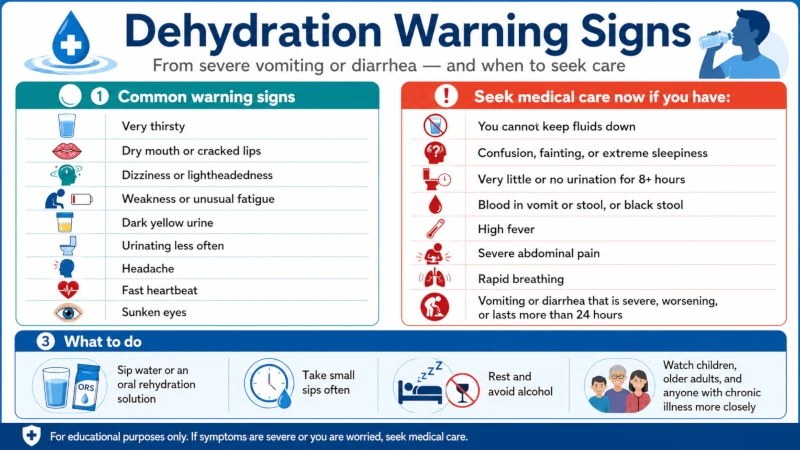
Red flags — when this stops being a nutrition question and becomes a medical one. Seek prompt care for severe or persistent vomiting or diarrhea, an inability to keep fluids down for 24 hours, or signs of significant dehydration such as very little urine, dark urine, dizziness, confusion, or extreme weakness. These point to fluid-and-electrolyte loss that self-care may not fix — and in older adults, young children, and people who are pregnant or chronically ill, they warrant a faster call to a professional.
| Health Disclaimer This article is for general educational purposes only and is not a substitute for individual medical advice, diagnosis, or treatment. It does not diagnose, treat, cure, or prevent any disease. Do not start or stop any supplement, medication, or diet — including changing your salt or electrolyte intake — based solely on what you read here, especially if you are pregnant or breastfeeding, care for an infant, take diuretics or blood-pressure or kidney medications, or manage a heart, kidney, or metabolic condition. If you have severe or lasting vomiting, diarrhea, or signs of dehydration, contact a qualified healthcare professional or seek urgent care. |
Frequently Asked Questions
Is chlorine and chloride the same thing?
No. Chlorine is the reactive element used to disinfect water; chloride is its stable, dissolved form (Cl⁻) and the version your body uses as an electrolyte. Dietary “chlorine” almost always means chloride [EFSA reference values for chloride, 2019].
What are the main benefits of chloride?
It helps make stomach acid for digestion, maintains fluid balance and blood pH, and supports nerve and muscle signaling and oxygen transport [Harvard T.H. Chan School of Public Health, 2023]. It doesn’t have proven stand-alone disease-fighting powers.
What foods are highest in chloride?
Table salt is by far the biggest source, followed by seaweed, seafood like shrimp, and salty processed foods and condiments [Harvard T.H. Chan School of Public Health, 2023].
How much chloride do I need per day?
There’s no RDA. The U.S. Adequate Intake is 2.3 g/day for ages 14–50, 2 g for 51–70, and 1.8 g for 71+ [Harvard T.H. Chan School of Public Health, 2023]. Most people meet this easily through salt.
Can chloride deficiency happen?
It’s rare and usually tied to heavy fluid loss from vomiting, diarrhea, sweating, or diuretics — not from eating too little [Harvard T.H. Chan School of Public Health, 2023]. Historically it appeared in infants on chloride-deficient formula [EFSA reference values for chloride, 2019].
Is the chlorine in tap water bad for me?
At the low levels utilities use (up to 4 mg/L), the CDC considers it safe, and a randomized study found chlorinated water didn’t harm gut bacteria [CDC on water disinfection, 2024]; [UC Berkeley Engineering / Nature Microbiology, 2022]. Disinfection byproducts are the monitored trade-off, which is why treatment is regulated.
References
- Harvard T.H. Chan School of Public Health, The Nutrition Source. Chloride. View source
- EFSA Panel on Nutrition, Novel Foods and Food Allergens (NDA). Dietary reference values for chloride. EFSA Journal. 2019;17(9):e05779. DOI 10.2903/j.efsa.2019.5779; PMID 32626426; PMCID PMC7009052. View source
- Centers for Disease Control and Prevention. About Water Disinfection with Chlorine and Chloramine. View source
- Nadimpalli ML, et al., reported by UC Berkeley College of Engineering. Examining the effects of chlorinated drinking water on the gut microbiome (Nature Microbiology, 2022). View source
- Natural Health Message. Foods to Eat With Stomach Flu: An Evidence-Based Guide. View source
