The clearest selenium benefits are not the dramatic ones you see on supplement labels — they are quieter and more biological. Selenium is built into 25 proteins in your body called selenoproteins, which help protect cells from damage, convert thyroid hormone to its active form, and support normal immune function and reproduction. [NIH ODS, 2025]
Selenium is a trace mineral, meaning you only need a tiny amount, but you cannot make it yourself. Almost everyone in the United States already gets enough from food. This guide covers what selenium actually does, how much you need, the best sources, where the health claims hold up, and how to use a supplement safely if you take one.
What Selenium Does in the Body
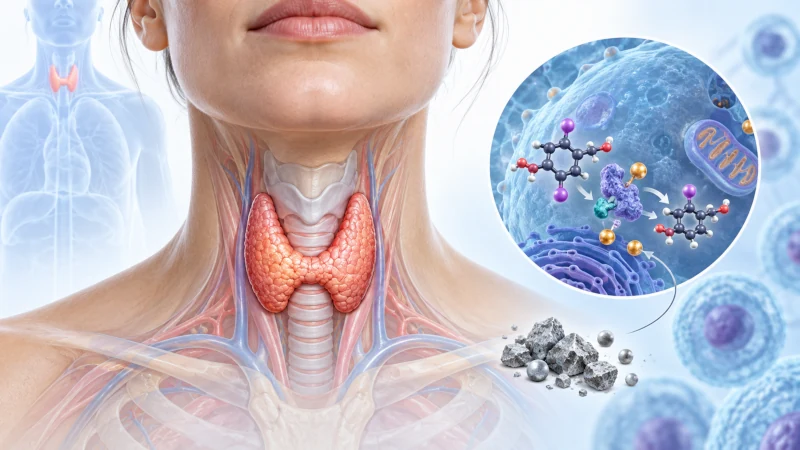
Selenium works by becoming part of 25 selenoproteins that drive specific tasks. The most studied are the glutathione peroxidases, which neutralize hydrogen peroxide and other reactive molecules; the iodothyronine deiodinases, which convert thyroxine (T4) into the active thyroid hormone T3; and selenoprotein P, which carries selenium through the blood and acts as a back-up antioxidant. [NIH ODS, 2025]

Through these proteins, selenium plays a role in:
- Protecting cells and DNA from oxidative damage
- Converting thyroid hormone from its storage form (T4) to its active form (T3)
- Normal immune cell function
- Sperm formation and male reproductive health
- Selenium homeostasis in the brain and other tissues
About 28% to 46% of the body’s total selenium sits in skeletal muscle. The rest is spread across the kidneys, liver, blood, and — at the highest concentration of any organ — the thyroid gland. [NIH ODS, 2025]
Selenium Benefits: How Much You Need
The Recommended Dietary Allowance (RDA) — the amount that covers nearly all healthy people — is set by the National Academies of Sciences, Engineering, and Medicine. For most adolescents and adults, it is 55 mcg a day, with small increases during pregnancy and breastfeeding. [NIH ODS, 2025]
| Age | Male | Female | Pregnancy | Lactation |
| 0–6 months* | 15 mcg | 15 mcg | — | — |
| 7–12 months* | 20 mcg | 20 mcg | — | — |
| 1–3 years | 20 mcg | 20 mcg | — | — |
| 4–8 years | 30 mcg | 30 mcg | — | — |
| 9–13 years | 40 mcg | 40 mcg | — | — |
| 14–18 years | 55 mcg | 55 mcg | 60 mcg | 70 mcg |
| 19–50 years | 55 mcg | 55 mcg | 60 mcg | 70 mcg |
| 51+ years | 55 mcg | 55 mcg | — | — |
*For infants 0–12 months, the value is an Adequate Intake. The safe upper limit (UL) for adults from food and supplements combined is 400 mcg/day. [NIH ODS, 2025] The European Food Safety Authority set a stricter limit of 255 mcg/day for adults in 2023. [EFSA, 2023]
Average daily intake in the U.S. from food alone is about 108 mcg, and 116 mcg when supplements are included — well above the RDA for most people. [NIH ODS, 2025]
Best Food Sources of Selenium
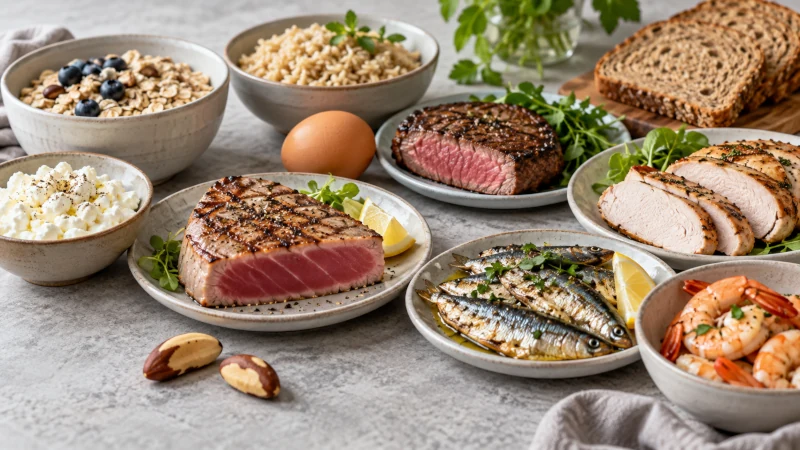
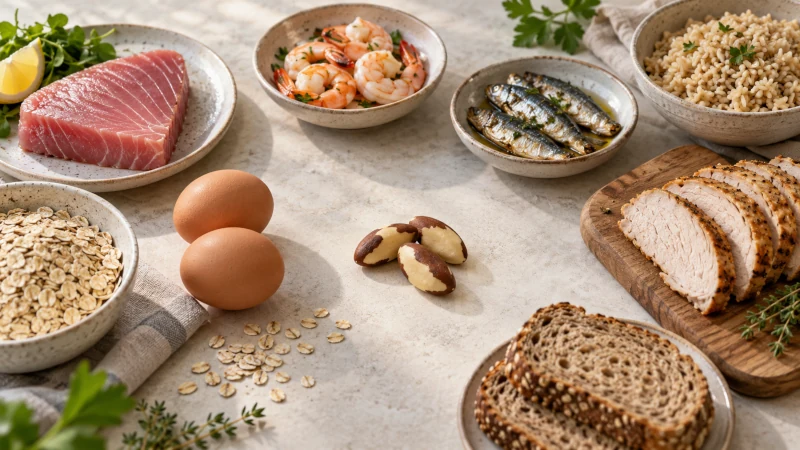
High-protein animal foods are the strongest sources, and Brazil nuts are a category of their own. The amount of selenium in plant foods depends heavily on the soil where they were grown.
| Food (typical serving) | Selenium (approx.) | % Daily Value |
| Brazil nuts, 1 oz (6–8 nuts) | 544 mcg | 989% |
| Yellowfin tuna, cooked, 3 oz | 92 mcg | 167% |
| Sardines, canned, 3 oz | 45 mcg | 82% |
| Shrimp, cooked, 3 oz | 42 mcg | 76% |
| Pork chop, broiled, 3 oz | 37 mcg | 67% |
| Beef, roasted, 3 oz | 37 mcg | 67% |
| Cooked spaghetti, 1 cup | 33 mcg | 60% |
| Beef liver, 3 oz | 28 mcg | 51% |
| Turkey, roasted, 3 oz | 26 mcg | 47% |
| Cod, cooked, 3 oz | 24 mcg | 44% |
| Chicken (light meat), 3 oz | 22 mcg | 40% |
| Cottage cheese, 1 cup | 20 mcg | 36% |
| Hard-boiled egg, 1 large | 15 mcg | 27% |
| Oatmeal, cooked, 1 cup | 13 mcg | 24% |
| Brown rice, cooked, 1 cup | 12 mcg | 22% |
| Whole-wheat bread, 1 slice | 8 mcg | 15% |
Percent Daily Value is based on 55 mcg. Source: USDA FoodData Central, via NIH ODS.
Brazil nuts are the standout — one nut contains roughly 68 to 91 mcg of selenium, more than the entire daily requirement. A small handful can easily push you past the upper limit, so they are best eaten occasionally, not by the bowlful. [NIH ODS, 2025]
Signs You Might Be Low

Selenium deficiency is rare in the United States and Canada because most produce, grain, and meat in the food supply comes from areas with adequate soil selenium, and the rest is trucked in from elsewhere. [NIH ODS, 2025] When deficiency does occur, the signs are often vague — fatigue, poor immune function, hair changes, and difficulty maintaining muscle mass.
Two distinct diseases are tied to severe, sustained deficiency, both in low-selenium regions of inland Asia:
- Keshan disease is a cardiomyopathy first identified in selenium-poor regions of China where intakes were under 10 mcg/day. Selenium supplementation programs in those areas reduced cases sharply. [Shi et al., 2021]
- Kashin-Beck disease is an osteoarthropathy that begins in childhood, found in selenium- and iodine-deficient parts of China, Tibet, and Siberia. [NIH ODS, 2025]
You are more likely to have low selenium if you live in a low-selenium region of the world (rare in North America), are on long-term hemodialysis, are living with HIV with poor nutrition, or follow a strict vegan diet in a region with selenium-poor soil. [NIH ODS, 2025] More on the symptoms and risk factors is covered in this guide on selenium deficiency.
Where the Health Claims Hold Up

Selenium has been studied for a long list of conditions. The honest picture is mixed — strong for a few uses, limited or null for others. Here is where the evidence actually lands.
Thyroid function (limited, condition-specific)
Selenium is essential for thyroid hormone metabolism, and the thyroid stores more selenium than any other organ. [NIH ODS, 2025] In Hashimoto’s thyroiditis, several controlled trials and a 2016 meta-analysis of 16 trials in 1,494 adults found that 80 to 200 mcg/day of selenium can lower thyroid peroxidase antibody (TPOAb) levels. [Wichman et al., 2016] But a separate systematic review of 9 trials in 679 patients found no clear effect on thyroid function tests, ultrasound findings, or quality of life. [Winther et al., 2017]
For pregnant women who test positive for thyroid antibodies, the 2017 American Thyroid Association guidelines recommend against routine selenium supplementation, because the data are mixed and the benefit is uncertain. [Alexander et al., 2017] Selenium and iodine work together — if you are concerned about your thyroid, the broader picture in our iodine benefits guide is worth reading.
Cancer prevention (mixed; do not rely on it)
This is the most-studied use, and the evidence is sobering. Early observational data and the Nutritional Prevention of Cancer (NPC) trial in 1996 — which gave 200 mcg/day of selenium yeast to 1,312 U.S. adults — suggested a possible drop in prostate cancer in men with the lowest baseline selenium. [Clark et al., 1996] That finding did not hold up.
The much larger Selenium and Vitamin E Cancer Prevention Trial (SELECT) randomized 35,533 men age 50 and older to 200 mcg/day of selenomethionine, vitamin E, both, or placebo. After 5.5 years, selenium did not reduce prostate cancer risk. [Lippman et al., 2009] A follow-up analysis found that men with higher baseline selenium who took the supplement had an increased risk of high-grade prostate cancer. [Kristal et al., 2014]
A 2018 Cochrane Review of 10 randomized trials including 27,232 people concluded that selenium supplements of 200 to 500 mcg/day for 2 to 10 years did not reduce overall cancer risk or the risk of prostate, colorectal, lung, bladder, breast, or non-melanoma skin cancers. [Vinceti et al., 2018] If lowering cancer risk is the goal, the evidence supports a dietary pattern, not pills — see our guide on a cancer-preventing diet.
Cardiovascular disease (no clear benefit from supplements)
Some observational studies have linked higher selenium status to lower coronary heart disease risk, but randomized trials of supplementation have not shown a reduction in cardiovascular events or deaths. A 2013 Cochrane Review of 12 trials in 19,715 adults found no protective effect. [Rees et al., 2013] One meta-analysis suggested that antioxidant formulas containing selenium might lower cardiovascular mortality, but selenium alone does not. [Jenkins et al., 2020]
Selenium has been claimed to lower blood pressure, but the human trial data are limited and inconsistent — selenium is not part of mainstream blood pressure management. Some readers may find our guide on decreasing blood pressure useful for the nutrients and lifestyle steps that have stronger evidence.
Male fertility (mixed, modest)
A small 1998 Scottish trial in 69 men with low selenium and reduced sperm motility found that 100 mcg/day of selenomethionine for 3 months improved sperm motility and conception odds. [Scott et al., 1998] But a 48-week U.S. trial in 54 healthy men found no change at 300 mcg/day. [Hawkes et al., 2009] Selenium is part of mature sperm structure, but routine supplementation is not currently recommended for fertility unless a deficiency is confirmed.
Cognitive decline and Alzheimer’s (no clear effect)
Selenium concentrations in the brain decline with age, and some observational studies have linked lower blood selenium to worse cognitive performance. The PREADVISE trial in 7,540 men age 60 and older, however, found no difference in dementia incidence after 5.4 years of taking 200 mcg/day. [Kryscio et al., 2017] A 2022 meta-analysis of 11 trials in older adults with mild cognitive impairment or Alzheimer’s found no improvement in cognitive scores. [Pereira et al., 2022]
What the older claims really mean
Older sources sometimes credit selenium with treating eczema, psoriasis, rheumatoid arthritis, cataracts, or preventing sudden infant death syndrome. Human clinical evidence to support any of those uses is weak or absent, and they are not endorsed by the NIH Office of Dietary Supplements or the major medical societies. [NIH ODS, 2025]
Supplement Forms
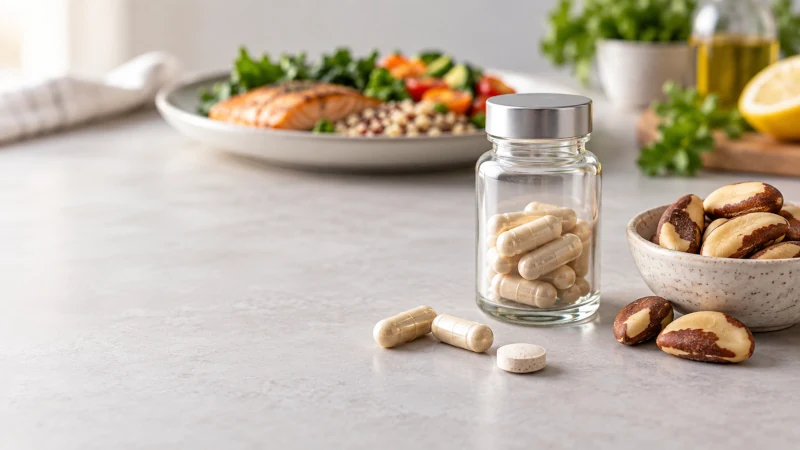
Selenium supplements come in two main types: organic (selenomethionine and selenium-enriched yeast) and inorganic (sodium selenite and sodium selenate). The body absorbs about 90% of selenium from each of these forms, but the organic forms are stored longer and tend to raise plasma selenium more efficiently. [NIH ODS, 2025] Multivitamins usually contain around 55 mcg per dose; standalone selenium supplements typically contain 100 to 400 mcg, which is closer to a research dose than a maintenance dose for someone who already eats well.
How Much Is Too Much
The Tolerable Upper Intake Level for adults is 400 mcg/day from food, beverages, and supplements combined. [NIH ODS, 2025] Chronic intakes above that can lead to selenosis. The earliest signs are a garlic-like odor on the breath and a metallic taste in the mouth. With longer exposure, you may see hair loss, brittle or splitting nails, a skin rash, nausea, diarrhea, fatigue, irritability, and changes in nervous system function.
Acute selenium toxicity is rarer but serious. In one well-documented 2008 incident, 201 people developed severe reactions after taking a liquid supplement that contained 200 times the labeled selenium amount — including hair loss, gastrointestinal and neurological symptoms, and in a few cases acute respiratory distress and kidney or cardiac problems. [NIH ODS, 2025]
Two practical points: a habit of eating multiple Brazil nuts a day can push you past the upper limit on its own, and stacking a multivitamin (often 55 mcg) on top of a standalone selenium pill (often 200 mcg) plus a high-selenium diet can do the same.
Medications and Interactions Worth Knowing
- Cisplatin (a platinum chemotherapy drug used for ovarian, bladder, lung, and other cancers) can lower selenium levels in serum and hair. The Cochrane review found insufficient evidence that selenium supplementation reduces chemotherapy side effects, so any use should be guided by an oncology team. [NIH ODS, 2025]
- Anticoagulants and antiplatelet drugs. Selenium has antiplatelet activity at high doses, and combining high-dose selenium with warfarin, clopidogrel, or aspirin theoretically raises bleeding risk; flag any selenium supplement to your prescriber.
- Other antioxidant supplements. Selenium with vitamin E was studied together in SELECT and PREADVISE — neither combination helped, and high-dose vitamin E was linked to a small increase in prostate cancer risk. Combining several antioxidant pills at high doses is not a free choice.
Heavy metals (mercury, cadmium, lead), very high doses of vitamin C taken at the same time as inorganic selenium, and high intakes of zinc can reduce selenium absorption or activity. Most people get enough selenium without thinking about these interactions; they matter mainly if you are on a therapeutic dose under medical supervision.
When to Talk to a Healthcare Professional
Check with a doctor, pharmacist, or registered dietitian before starting a selenium supplement if you are pregnant or breastfeeding, take warfarin or another anticoagulant, are receiving chemotherapy, have Hashimoto’s or Graves’ disease, are on hemodialysis, or are considering doses near or above 200 mcg a day.
See a clinician promptly if you develop hair loss, brittle or shedding nails, a persistent garlic-like breath odor or metallic taste, unexplained nausea or diarrhea, or a new skin rash while taking selenium — these can be signs of selenosis. Severe symptoms after a high single dose (vomiting, breathing trouble, chest pain) need urgent care.
| Health Disclaimer: This article is for general education only. It is not medical advice and does not replace care from a qualified healthcare professional. Selenium is not a treatment, cure, or prevention for any disease, including cancer, cardiovascular disease, or Alzheimer’s. Talk to your doctor, pharmacist, or a registered dietitian before starting selenium — especially if you are pregnant or breastfeeding, take prescription medication (including anticoagulants, chemotherapy, or thyroid medication), or have a condition that affects nutrient absorption. Do not exceed 400 mcg of selenium a day from food and supplements combined unless directed by a clinician. |
Frequently Asked Questions
How much selenium should I take per day?
For most adults, the recommended amount is 55 mcg a day (60 mcg during pregnancy, 70 mcg while breastfeeding). Most people in the United States already meet this through food. The safe upper limit from food and supplements combined is 400 mcg a day for adults.
What are the early signs of too much selenium?
A persistent garlic-like odor on the breath and a metallic taste in the mouth are the earliest signals. Hair loss, brittle nails, nausea, diarrhea, skin rash, and fatigue can follow with continued excess intake.
Are Brazil nuts a good way to get selenium?
A single Brazil nut contains about 68 to 91 mcg of selenium — more than a day’s worth. One or two on most days is plenty. Eating a handful every day can push you past the safe upper limit, so they are best treated as a small, occasional source rather than a daily habit.
Does selenium prevent cancer?
Current evidence does not support that. The large SELECT trial in 35,533 men found no reduction in prostate cancer risk and a possible increase in high-grade prostate cancer in men with already-high baseline selenium. A 2018 Cochrane Review of 10 randomized trials covering 27,232 people found no overall cancer-prevention benefit from selenium supplements.
Should I take selenium for Hashimoto’s thyroiditis?
Selenium can lower thyroid antibody levels in Hashimoto’s, but it does not clearly improve thyroid function, ultrasound findings, or quality of life. The American Thyroid Association recommends against routine selenium supplementation in pregnant women with thyroid antibodies. If you have Hashimoto’s, discuss it with your endocrinologist rather than self-treating.
Is selenomethionine better than sodium selenite?
The body absorbs about 90% of selenium from both forms. Organic selenomethionine and selenium-enriched yeast tend to raise blood selenium more efficiently and are stored in tissues longer. Inorganic sodium selenite is less efficiently absorbed in the presence of high-dose vitamin C and is more variable in research outcomes.
References
- National Institutes of Health, Office of Dietary Supplements. Selenium — Fact Sheet for Health Professionals. Updated September 4, 2025. → View source
- National Institutes of Health, Office of Dietary Supplements. Selenium — Fact Sheet for Consumers. Updated 2025. → View source
- European Food Safety Authority (EFSA) Panel on Nutrition, Novel Foods and Food Allergens. Scientific opinion on the tolerable upper intake level for selenium. EFSA Journal. 2023. → View source
- Lippman SM, Klein EA, Goodman PJ, et al. Effect of selenium and vitamin E on risk of prostate cancer and other cancers: the Selenium and Vitamin E Cancer Prevention Trial (SELECT). JAMA. 2009;301(1):39-51. → View source
- Clark LC, Combs GF Jr, Turnbull BW, et al. Effects of selenium supplementation for cancer prevention in patients with carcinoma of the skin. A randomized controlled trial. Nutritional Prevention of Cancer Study Group. JAMA. 1996;276(24):1957-1963. → View source
- Kristal AR, Darke AK, Morris JS, et al. Baseline selenium status and effects of selenium and vitamin E supplementation on prostate cancer risk. J Natl Cancer Inst. 2014;106(3):djt456. → View source
- Vinceti M, Filippini T, Del Giovane C, et al. Selenium for preventing cancer. Cochrane Database Syst Rev. 2018;1(1):CD005195. → View source
- Rees K, Hartley L, Day C, Flowers N, Clarke A, Stranges S. Selenium supplementation for the primary prevention of cardiovascular disease. Cochrane Database Syst Rev. 2013;2013(1):CD009671. → View source
- Jenkins DJA, Kitts D, Giovannucci EL, et al. Selenium, antioxidants, cardiovascular disease, and all-cause mortality: a systematic review and meta-analysis of randomized controlled trials. Am J Clin Nutr. 2020;112(6):1642-1652. → View source
- Wichman J, Winther KH, Bonnema SJ, Hegedüs L. Selenium Supplementation Significantly Reduces Thyroid Autoantibody Levels in Patients with Chronic Autoimmune Thyroiditis: A Systematic Review and Meta-Analysis. Thyroid. 2016;26(12):1681-1692. → View source
- Winther KH, Wichman JEM, Bonnema SJ, Hegedüs L. Insufficient documentation for clinical efficacy of selenium supplementation in chronic autoimmune thyroiditis, based on a systematic review and meta-analysis. Endocrine. 2017;55(2):376-385. → View source
- Alexander EK, Pearce EN, Brent GA, et al. 2017 Guidelines of the American Thyroid Association for the Diagnosis and Management of Thyroid Disease During Pregnancy and the Postpartum. Thyroid. 2017;27(3):315-389. → View source
- Scott R, MacPherson A, Yates RW, Hussain B, Dixon J. The effect of oral selenium supplementation on human sperm motility. Br J Urol. 1998;82(1):76-80. → View source
- Hawkes WC, Alkan Z, Wong K. Selenium supplementation does not affect testicular selenium status or semen quality in North American men. J Androl. 2009;30(5):525-533. → View source
- Kryscio RJ, Abner EL, Caban-Holt A, et al. Association of Antioxidant Supplement Use and Dementia in the Prevention of Alzheimer’s Disease by Vitamin E and Selenium Trial (PREADViSE). JAMA Neurol. 2017;74(5):567-573. → View source
- Pereira ME, Souza JV, Galiciolli MEA, et al. Effects of Selenium Supplementation in Patients with Mild Cognitive Impairment or Alzheimer’s Disease: A Systematic Review and Meta-Analysis. Nutrients. 2022;14(15):3205. → View source
- Shi Y, Yang W, Tang X, Yan Q, Cai X, Wu F. Keshan Disease: A Potentially Fatal Endemic Cardiomyopathy in Remote Mountains of China. Front Pediatr. 2021;9:576916. → View source
