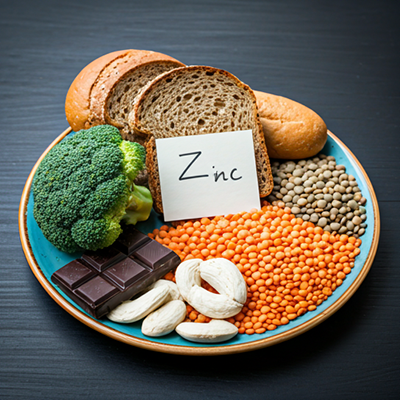
The clearest zinc benefits are the everyday ones: zinc keeps your immune system working, helps wounds close, supports normal growth, and lets your body build proteins and DNA. It is an essential mineral, which means your body cannot make it — you have to get it from food or supplements. [NIH ODS, 2025]
Most people in the United States get enough from a normal diet, so a supplement is not something everyone needs. This guide covers what zinc does, how much you actually need, the best food sources, how to spot a shortfall, where the health claims hold up and where they don’t, and the doses and drug interactions that matter for safety.
What Zinc Does in the Body
Zinc is a workhorse mineral. It is needed for the activity of hundreds of enzymes and takes part in immune function, protein and DNA synthesis, wound healing, and cell division. [NIH ODS, 2025] It also supports normal growth during pregnancy, infancy, childhood, and adolescence, and it is part of how you taste and smell. An adult body holds only about 1.5 to 2.5 grams of zinc in total, most of it stored in skeletal muscle and bone. [NIH ODS, 2025]
Zinc also matters for reproduction. It is involved in the production of testosterone and sperm and in normal prostate function, which is why it features in many men’s essential vitamins and minerals. A shortfall can disrupt these systems, but more zinc than you need does not push them higher.
How Much Zinc You Need
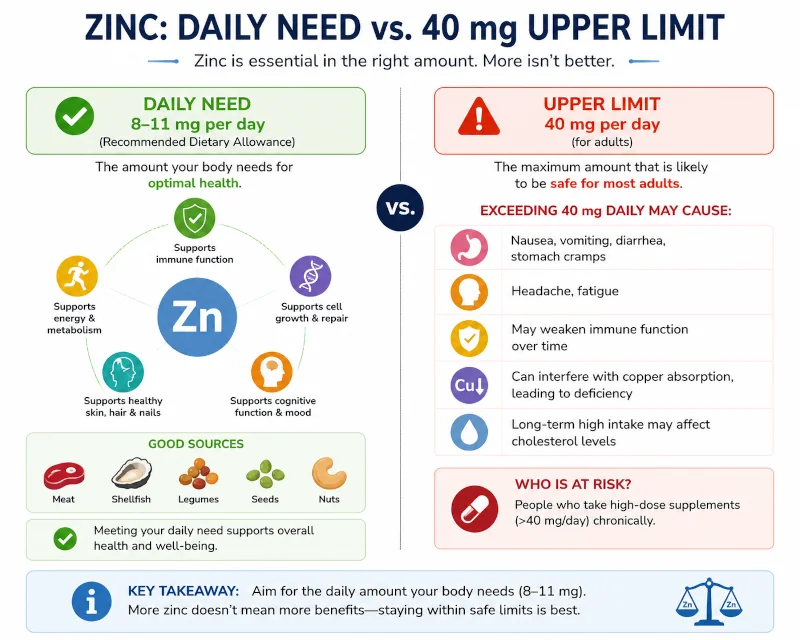
The Recommended Dietary Allowance — the amount that covers nearly all healthy people — is set by the National Academies and varies by age and life stage. [NIH ODS, 2025] For most adults it lands at 11 mg a day for men and 8 mg for women.
| Age | Male | Female | Pregnancy | Lactation |
| 0–6 months* | 2 mg | 2 mg | — | — |
| 7 months–3 years | 3 mg | 3 mg | — | — |
| 4–8 years | 5 mg | 5 mg | — | — |
| 9–13 years | 8 mg | 8 mg | — | — |
| 14–18 years | 11 mg | 9 mg | 12 mg | 13 mg |
| 19 years and older | 11 mg | 8 mg | 11 mg | 12 mg |
*For infants 0–6 months, the value shown is an Adequate Intake. The safe upper limit for adults from food plus supplements is 40 mg a day.
Best Food Sources of Zinc
Animal foods are the strongest sources, and your body absorbs zinc from them more easily. Oysters contain more zinc per serving than any other food, and beef is the single biggest contributor to zinc intake in the U.S. diet simply because people eat a lot of it. [NIH ODS, 2025]
| Food (typical serving) | Zinc (approx.) | % Daily Value |
| Oysters, cooked, 3 oz | 28–32 mg | 250%+ |
| Beef, cooked, 3 oz | ~5 mg | ~45% |
| Crab, Alaska king, cooked, 3 oz | ~6.5 mg | ~59% |
| Fortified breakfast cereal, 1 serving | ~3.8 mg | ~35% |
| Pumpkin seeds, 1 oz | ~2.2 mg | ~20% |
| Baked beans, canned, ½ cup | ~2.9 mg | ~26% |
| Chicken, dark meat, 3 oz | ~2.4 mg | ~22% |
| Cashews, 1 oz | ~1.6 mg | ~15% |
| Chickpeas, ½ cup | ~1.3 mg | ~12% |
Percent Daily Value is based on 11 mg. Amounts are approximate and vary by cut, brand, and preparation.
Beans, nuts, seeds, and whole grains contain zinc too, but it is harder to absorb from plants. These foods are high in phytates — a storage form of phosphorus that binds zinc in the gut and blocks some of it from being taken up. [NIH ODS, 2025] Soaking, sprouting, fermenting (as in leavened bread), and pairing plant foods with a little animal protein all improve how much zinc you actually get. Fruits and vegetables carry very little. That is why people who eat mostly plant-based may need somewhat more zinc than the headline numbers suggest.
Signs You Might Be Low
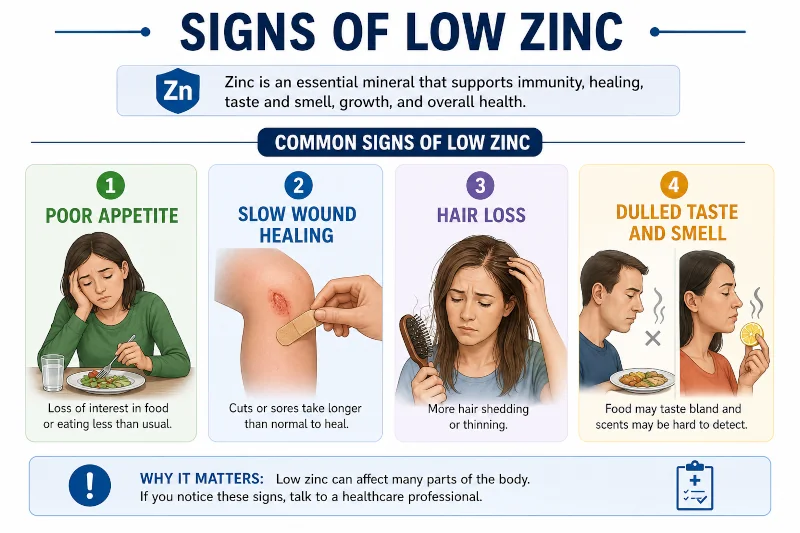
Mild zinc deficiency is easy to miss because the early signs are vague — a smaller appetite, slower-healing cuts, and catching infections more often. A clearer or longer shortfall can bring hair loss, diarrhea, skin and eye lesions, and a flattened sense of taste or smell. [NIH ODS, 2025] In children it can slow growth and delay sexual development; in older adults it can blunt wound healing and affect thinking and memory. Because vitamin and mineral shortfalls overlap, some vision symptoms such as night blindness usually point to vitamin A rather than zinc, so it is worth getting the cause confirmed rather than guessing.
Some people are more likely to run low and may want to raise the topic with a clinician:
- People with digestive disorders that impair absorption, such as Crohn’s disease, ulcerative colitis, or after weight-loss (bariatric) surgery
- Vegetarians and vegans, because plant zinc is less available
- Pregnant and breastfeeding women, who have higher needs
- Older infants who are exclusively breastfed beyond about 6 months
- People with alcohol use disorder, which lowers absorption and increases losses
- People with sickle cell disease
Blood tests for zinc exist but are imprecise — levels shift with the time of day, recent meals, infection, and other factors — so doctors weigh your symptoms and risk factors alongside any test. [NIH ODS, 2025]
Where the Health Claims Hold Up
Zinc is marketed for a long list of conditions. Here is an honest read on the main ones, sorted by how solid the evidence is.
Childhood diarrhea (strong, in specific settings)
This is the best-established use. In lower-income settings where deficiency is common, zinc supplements shorten and ease bouts of diarrhea in young children, and the World Health Organization recommends them for that purpose. [NIH ODS, 2025] This is a treatment guided by clinicians, not a reason for well-nourished children to take zinc routinely.
Common cold (modest, timing-dependent)
Zinc lozenges taken within about 24 hours of the first symptoms may shorten a cold for some people. [Mayo Clinic, 2025] The catch is the form: zinc placed inside the nose has been linked to loss of smell that can be long-lasting or permanent, so skip nasal zinc entirely.
Wound healing (helps mainly if you’re low)
People with wounds or skin ulcers who also have low zinc may heal better with supplementation. If your zinc is already adequate, extra zinc has not been shown to speed healing. [Mayo Clinic, 2025]
In the large AREDS trials, a high-dose combination that included 80 mg of zinc with antioxidant vitamins and copper slowed progression in people who already had intermediate or advanced age-related macular degeneration. [NIH ODS, 2025] That is a specific, clinician-monitored regimen far above the daily requirement — not evidence that everyday zinc prevents eye disease. If vision is your concern, foods that support eye health are a sensible starting point, and anyone with AMD should talk to an eye doctor before taking high-dose formulas.
Wilson disease (an actual medical treatment)
Wilson disease is a rare inherited disorder in which copper builds up in the body. Zinc acetate is an approved maintenance therapy for it, used under specialist care because it blocks copper absorption. This is prescribed, not a do-it-yourself use.
Blood sugar and acne (limited or mixed)
Some trials suggest zinc supplements can modestly improve blood sugar markers in people with type 2 diabetes, and oral or topical zinc is sometimes used for acne, but the evidence is still limited and mixed. [NIH ODS, 2025] Neither is a reason to self-treat with high doses. Claims that zinc treats Alzheimer’s disease, on the other hand, are not supported by good evidence.
How Much Is Too Much
Zinc is safe within normal limits, but it is not harmless in excess. The upper limit for adults is 40 mg a day from food and supplements combined. [NIH ODS, 2025] Taking 50 mg or more for weeks can interfere with copper absorption, weaken immune function, and lower “good” HDL cholesterol. Sustained excess can cause a copper deficiency that leads to anemia and nerve problems.
Very high single doses bring on nausea, vomiting, stomach cramps, and diarrhea — the body’s quick way of shedding the excess. Taking zinc, especially zinc sulfate, on an empty stomach also tends to cause nausea, so take it with food. [Mayo Clinic, 2025] One more safety point worth repeating: zinc sprays and gels meant for the nose have been tied to lasting loss of smell and should be avoided.
Medications That Interact With Zinc
Contrary to a common claim, zinc does interact with several medications. If you take any of these, ask your pharmacist about timing or whether zinc is appropriate at all:
- Quinolone and tetracycline antibiotics (such as ciprofloxacin or doxycycline) — zinc can reduce absorption of both the drug and the mineral. Take the antibiotic at least 2 hours before, or 4 to 6 hours after, zinc.
- Penicillamine (used for rheumatoid arthritis and Wilson disease) — zinc lowers how much the drug your body absorbs; separate the doses by at least 1 to 2 hours.
- Thiazide diuretics (such as hydrochlorothiazide) — these increase zinc loss in urine, and long-term use can lower body zinc.
High doses of other minerals — particularly calcium and iron — can also reduce how much zinc you absorb, so spacing supplements apart helps. [NIH ODS, 2025]
When to Talk to a Healthcare Professional
Check with a doctor, pharmacist, or registered dietitian before starting zinc if you are pregnant or breastfeeding, take any of the medications above, have a digestive condition that affects absorption, or are considering doses near or above 40 mg a day. Mention any supplement at routine visits, since it can interact with prescriptions and affect lab results.
Get prompt medical advice if you have ongoing diarrhea, poor wound healing, repeated infections, or a fading sense of taste or smell, or if you develop numbness, tingling, or unusual fatigue while taking zinc long term — the last group can signal copper deficiency.
| Health Disclaimer This article is for general education only. It is not medical advice and does not replace care from a qualified healthcare professional. Zinc supplements are not a treatment for any disease. Talk to your doctor, pharmacist, or a registered dietitian before starting zinc — especially if you are pregnant or breastfeeding, take prescription medication (including antibiotics, penicillamine, or a diuretic), or have a condition that affects nutrient absorption. Do not exceed 40 mg of zinc a day from food and supplements combined unless a clinician directs it, and never use zinc products placed inside the nose. |
Frequently Asked Questions
How much zinc should an adult take a day?
The recommended daily amount is 11 mg for men and 8 mg for women, rising to 11–12 mg in pregnancy and breastfeeding. Most people in the United States reach this through food. The safe upper limit from food and supplements combined is 40 mg a day for adults.
What are the signs of low zinc?
Early signs are non-specific: poor appetite, slower wound healing, and more frequent infections. Longer or more severe shortfalls can cause hair loss, diarrhea, skin or eye lesions, and a dulled sense of taste or smell. These overlap with many other conditions, so a clinician should confirm it — usually with your symptoms and history, since blood zinc tests have real limits.
Does zinc help with colds?
Possibly, modestly. Zinc lozenges started within about 24 hours of the first symptoms may shorten a cold for some people. Zinc placed inside the nose is a different story — it has been linked to loss of smell that can be permanent, so avoid nasal zinc products.
Can you take too much zinc?
Yes. Above 40 mg a day over time, zinc can block copper absorption, which can lead to anemia and nerve problems, and can lower “good” HDL cholesterol. Very high single doses cause nausea, vomiting, and cramping. More is not better.
Is one form of zinc better than another?
There is no clear winner. Zinc gluconate, sulfate, acetate, citrate, and picolinate are all sold, and research has not shown that one is reliably better absorbed than the others. Zinc sulfate on an empty stomach is the most likely to cause nausea, so taking zinc with food helps.
References
1. National Institutes of Health, Office of Dietary Supplements. Zinc — Fact Sheet for Consumers. Updated 2025. → View source
2. National Institutes of Health, Office of Dietary Supplements. Zinc — Fact Sheet for Health Professionals. Updated 2025. → View source
3. Mayo Clinic. Zinc — Drugs and Supplements. Reviewed 2025. → View source
4. Merck Manual, Consumer Version. Zinc Deficiency. Reviewed 2025. → View source
