
Manganese earns its keep quietly. It acts as a cofactor for enzymes that build bone and cartilage, protect your mitochondria from oxidative damage, and keep glucose, cholesterol, and amino acid metabolism running [NIH Office of Dietary Supplements, 2021]. That is the honest account of the benefits of manganese: real, essential, and almost certainly already covered by what you ate this week. Human deficiency is rare enough that the Food and Nutrition Board could not find sufficient evidence to set a Recommended Dietary Allowance and settled for an Adequate Intake instead [NIH Office of Dietary Supplements, 2021]. For most people, the useful question about manganese benefits is not how to get more. It is how much is too much.
Manganese benefits: What manganese does in the body
Your body holds only about 10 to 20 mg of manganese at any given moment, and roughly a quarter to 40% of that sits in bone [NIH Office of Dietary Supplements, 2021]. Small as that pool is, several enzymes stop working without it.
Manganese superoxide dismutase, usually shortened to MnSOD, is the main antioxidant enzyme inside mitochondria. Mitochondria consume more than 90% of the oxygen your cells use, which leaves them especially exposed to oxidative stress. MnSOD converts superoxide radicals into hydrogen peroxide, which other antioxidant enzymes then reduce to water [Linus Pauling Institute, 2021].
Other manganese-dependent and manganese-activated enzymes handle narrower jobs. Pyruvate carboxylase and phosphoenolpyruvate carboxykinase are central to gluconeogenesis, the process that makes glucose from non-carbohydrate precursors. Arginase runs the liver’s urea cycle, clearing the ammonia generated when you break down amino acids. In the brain, glutamine synthetase converts glutamate to glutamine [Linus Pauling Institute, 2021].
Bone and cartilage depend on manganese through a family of enzymes called glycosyltransferases, which build the proteoglycans that healthy cartilage and bone are made from. Wound repair depends on it too: manganese activates prolidase, the enzyme that supplies proline for collagen formation in skin cells [Linus Pauling Institute, 2021]. Manganese also contributes to blood clotting alongside vitamin K [NIH Office of Dietary Supplements, 2021].
Those functions are settled science. Whether taking extra manganese improves any of them is a separate question, and the answer is mostly that nobody knows yet.
How much manganese you need
| Age group | Male | Female | Pregnancy | Breastfeeding |
| 7–12 months | 0.6 mg | 0.6 mg | — | — |
| 1–3 years | 1.2 mg | 1.2 mg | — | — |
| 4–8 years | 1.5 mg | 1.5 mg | — | — |
| 9–13 years | 1.9 mg | 1.6 mg | — | — |
| 14–18 years | 2.2 mg | 1.6 mg | 2.0 mg | 2.6 mg |
| 19 years and older | 2.3 mg | 1.8 mg | 2.0 mg | 2.6 mg |
Adequate Intakes for manganese, set by the Food and Nutrition Board [NIH Office of Dietary Supplements, 2021].
These figures are not requirements in the way an RDA is. Because the evidence was too thin to derive an Estimated Average Requirement, the board based the Adequate Intakes on what healthy populations were already eating [NIH Office of Dietary Supplements, 2021]. The FDA’s Daily Value used on supplement labels is 2.3 mg for adults and children age 4 and older [NIH Office of Dietary Supplements, 2021].
Absorption is low and largely self-regulating. Humans take up only about 1% to 5% of the manganese in food, absorption efficiency rises when intake is low and falls when intake is high, and more than 90% of what you do absorb leaves through bile into stool [NIH Office of Dietary Supplements, 2021].
The upper limit matters more than the target
| Age group | Tolerable Upper Intake Level (all sources combined) |
| 1–3 years | 2 mg/day |
| 4–8 years | 3 mg/day |
| 9–13 years | 6 mg/day |
| 14–18 years (including pregnancy and breastfeeding) | 9 mg/day |
| 19 years and older (including pregnancy and breastfeeding) | 11 mg/day |
The board set these limits conservatively because of the risk of manganese neurotoxicity [Linus Pauling Institute, 2021]. They do not apply to people taking supplemental manganese under medical supervision [NIH Office of Dietary Supplements, 2021]. For infants, breast milk, formula, and food should be the only sources [NIH Office of Dietary Supplements, 2021].
Foods high in manganese
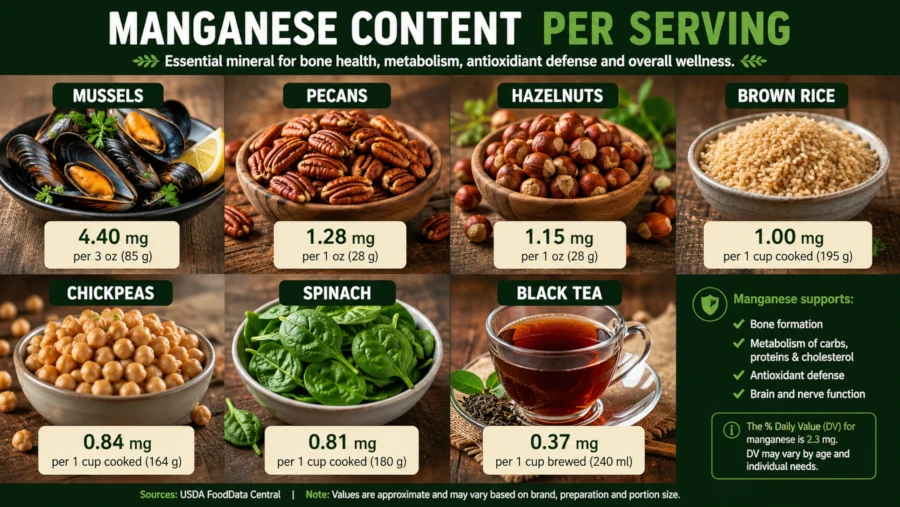
| Food | Serving | Manganese | % Daily Value |
| Mussels, blue, cooked | 3 ounces | 4.40 mg | 252% |
| Hazelnuts, dry roasted | 1 ounce | 1.15 mg | 70% |
| Pecans, dry roasted | 1 ounce | 1.28 mg | 48% |
| Brown rice, medium grain, cooked | ½ cup | 1.00 mg | 48% |
| Oysters, Pacific, cooked | 3 ounces | 1.0 mg | 43% |
| Chickpeas, cooked | ½ cup | 0.84 mg | 39% |
| Spinach, boiled | ½ cup | 0.81 mg | 35% |
| Pineapple, raw, chunks | ½ cup | 0.8 mg | 35% |
| Oatmeal, cooked | ½ cup | 0.7 mg | 30% |
| Whole wheat bread | 1 slice | 0.7 mg | 30% |
| Black tea, brewed | 1 cup | 0.37 mg | 22% |
| Lentils, cooked | ½ cup | 0.5 mg | 22% |
| Blueberries, raw | ½ cup | 0.3 mg | 13% |
Manganese content of selected foods [NIH Office of Dietary Supplements, 2021].
Grain products, tea, and vegetables are the top three sources in the diets of US adults [NIH Office of Dietary Supplements, 2021]. People eating vegetarian diets have been recorded taking in up to about 7 mg a day [Linus Pauling Institute, 2021]. Phytic acid in beans, seeds, nuts, and whole grains, oxalic acid in cabbage, spinach, and sweet potatoes, and the tannins in tea all reduce manganese absorption somewhat [Linus Pauling Institute, 2021] — not a reason to eat less of any of them.
Iron and manganese compete. Higher dietary iron and higher iron stores are both associated with reduced manganese absorption, and in one study, iron supplementation at 60 mg a day for four months lowered blood manganese and MnSOD activity in white blood cells [Linus Pauling Institute, 2021]. Supplemental calcium at 500 mg a day and supplemental magnesium at 200 mg a day each slightly reduced manganese bioavailability in healthy adults [Linus Pauling Institute, 2021]. None of that is a reason to stop taking a mineral you need; it is a reason not to assume your manganese intake is the number on a label.
Foods often assumed to be manganese sources sometimes contribute almost none. Eggs, milk, plain yogurt, roasted chicken breast, ground beef, cooked shrimp, and canned tuna each supply essentially zero [NIH Office of Dietary Supplements, 2021].
Is manganese deficiency something to worry about?
For nearly everyone, no. Manganese deficiency is very rare in humans, the signs and symptoms have never been firmly established, and no group of people is known to be likely to have inadequate intakes [NIH Office of Dietary Supplements, 2021].
The limited human evidence that exists comes from tightly controlled feeding studies. Young men fed a manganese-deficient diet developed lower serum cholesterol and a temporary skin rash. Young women fed a manganese-poor diet showed mildly abnormal glucose tolerance in response to intravenous glucose [Linus Pauling Institute, 2021]. Federal reviewers also list bone demineralization and poor growth in children, hair depigmentation, and altered mood with increased premenstrual pain in women, all flagged as very limited evidence [NIH Office of Dietary Supplements, 2021].
There is no routine test to check. Manganese status is difficult to assess and is not measured in ordinary clinical practice; blood concentrations vary widely and do not correlate well with typical intakes [NIH Office of Dietary Supplements, 2021]. If someone offers to sell you a manganese status test alongside a manganese product, that is worth a second thought.
What the evidence actually supports
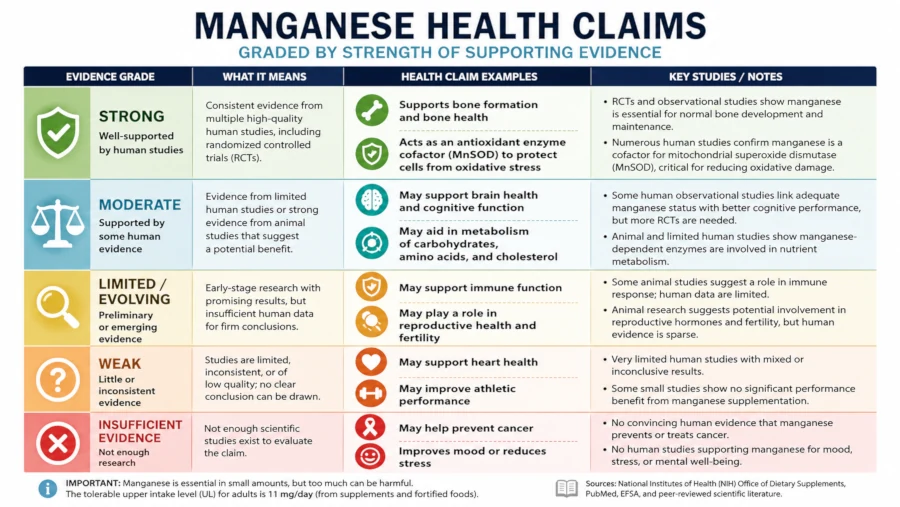
| Claim | Strength of evidence |
| Manganese is essential; it is a cofactor for MnSOD, arginase, pyruvate carboxylase and glycosyltransferases | Well established |
| Adequate manganese is needed for normal bone and cartilage formation | Well established mechanism; human outcome data limited |
| Manganese supplements improve bone mineral density in people | Insufficient — no trial has tested manganese alone |
| A manganese-rich diet is associated with lower type 2 diabetes risk | Mixed — cohort studies lean protective, biomarker studies conflict |
| Manganese supplements improve blood sugar control | Not supported |
| Manganese treats or prevents epilepsy | Not supported in humans |
| Manganese treats sprains, strains, or inflammation | Insufficient — no verified human evidence |
| High manganese exposure can damage the nervous system | Well established |
Bone health
In animals, manganese deficiency impairs bone formation and reduces bone mineral density, and supplementation increases both [NIH Office of Dietary Supplements, 2021]. Human studies are small and inconsistent. One study found 10 women with osteoporosis had lower serum manganese than 20 women without it; another, in 40 postmenopausal women, found serum manganese positively associated with bone mineral density. But a study of 77 postmenopausal women with osteoporosis and 61 without found no difference in red blood cell or plasma manganese, and no association turned up in 90 men aged 50 to 80 [NIH Office of Dietary Supplements, 2021].
No clinical trial has ever tested manganese supplementation alone on bone health [NIH Office of Dietary Supplements, 2021]. The trial people cite gave 59 healthy postmenopausal women 1,000 mg of calcium plus 5 mg manganese, 15 mg zinc, and 2.5 mg copper for two years and improved spinal bone density compared with placebo — with no way to tell which mineral was responsible [NIH Office of Dietary Supplements, 2021].
The relationship also runs both ways. A 2024 review in the Journal of Clinical Medicine reports that higher manganese exposure has been linked to lower bone mineral density in adolescent girls and to increased osteoporosis risk among heavily exposed retired women workers, and notes that much of the supplementation evidence in its own clinical section comes from livestock rather than people [Taskozhina et al., Journal of Clinical Medicine, 2024]. More is not automatically better for bone.
Blood sugar and type 2 diabetes
This one is honestly mixed, and it is worth seeing why. Studies of dietary manganese intake lean protective: higher intake was associated with lower type 2 diabetes risk in 71,270 French women in the E3N-EPIC cohort, in two prospective Chinese cohorts, and in women (but not men) in the Japan Collaborative Cohort Study [Linus Pauling Institute, 2021].
Studies using blood manganese as the measure point in every direction — higher, lower, or no different in people with diabetes compared with controls [Linus Pauling Institute, 2021]. A case-control study of 3,228 Chinese adults found a U-shaped relationship, with both the lowest and the highest plasma manganese tertiles more likely to have type 2 diabetes than the middle [NIH Office of Dietary Supplements, 2021]. And when researchers gave an acute oral dose of 15 mg or 30 mg of manganese alongside a glucose challenge, glucose tolerance did not improve in people with or without diabetes [Linus Pauling Institute, 2021].
A reasonable reading: eating the whole grains, legumes, and vegetables that carry manganese is sensible for blood sugar. Taking manganese tablets to manage blood sugar is not supported, and it is not a substitute for anything your clinician has prescribed.
Epilepsy
Manganese-deficient rats are more prone to seizures, and some subgroups of people with epilepsy have lower whole blood manganese than controls [Linus Pauling Institute, 2021]. That association has been known for decades and has not turned into a treatment. Manganese deficiency does not appear to cause epilepsy in humans, and no verified evidence supports manganese supplements for controlling seizures [Linus Pauling Institute, 2021]. Seizure disorders need a neurologist, not a mineral.
Sprains, strains, and joint pain
Two trials found that a combination of glucosamine hydrochloride, chondroitin sulfate, and manganese ascorbate relieved pain from mild to moderate knee osteoarthritis better than placebo, delivering 30 mg of elemental manganese daily for eight weeks in one study and 40 mg daily for six months in the other [Linus Pauling Institute, 2021]. Neither trial compared that combination against the same product without manganese, so manganese’s own contribution is unknown — and both doses sit far above the 11 mg upper limit for adults [Linus Pauling Institute, 2021]. No source verified for this article supports manganese for sprains or strains at any dose.
Should you take a manganese supplement?
Set expectations first: if you eat a varied diet, a manganese supplement is unlikely to change how you feel or any outcome you can measure. Intake data are limited, but what exists suggests most people already get adequate amounts [NIH Office of Dietary Supplements, 2021].
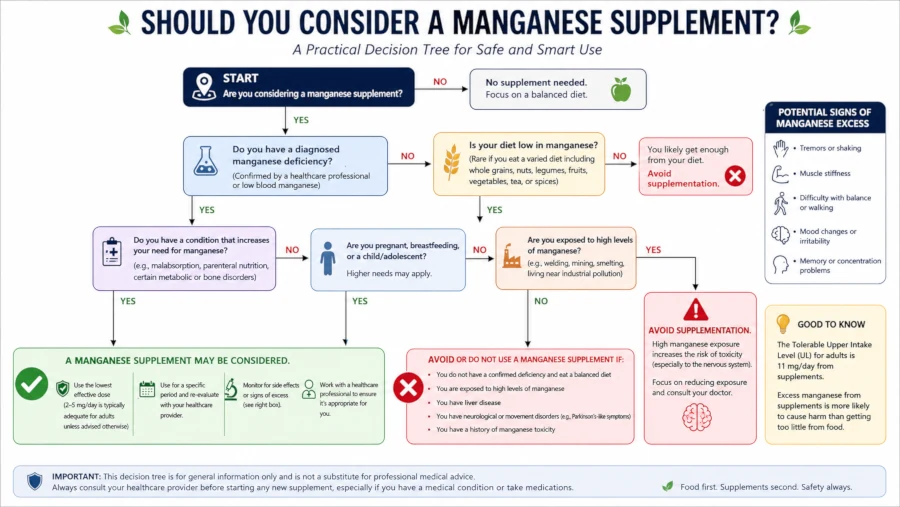
The Linus Pauling Institute’s position is direct: because of the potential for toxicity and the absence of information about benefit, supplementing beyond 100% of the Daily Value (2.3 mg a day) is not recommended [Linus Pauling Institute, 2021].
Doses stack more easily than people expect. Multivitamin and mineral products that contain manganese typically supply 1.0 to 4.5 mg, while standalone manganese products usually contain 5 to 20 mg [NIH Office of Dietary Supplements, 2021]. A multivitamin, a bone or joint formula, and a mineral-rich diet can carry you past 11 mg without any single label looking alarming. Add up every product you take.
On forms, be skeptical of marketing. No data are available on the relative bioavailability of the different supplemental forms — gluconate, picolinate, sulfate, citrate, chloride, and amino acid chelates among them [NIH Office of Dietary Supplements, 2021]. Any claim that one form absorbs meaningfully better than another is not backed by published head-to-head comparisons. Labels declare elemental manganese, so that is the number to compare.
Safety, side effects, and who should be careful
Manganese toxicity from food alone has not been reported in humans, even on vegetarian diets supplying up to roughly 20 mg a day [Linus Pauling Institute, 2021]. The real risk sits elsewhere: inhaled dust, contaminated water, high-dose supplements, intravenous nutrition, and impaired clearance.
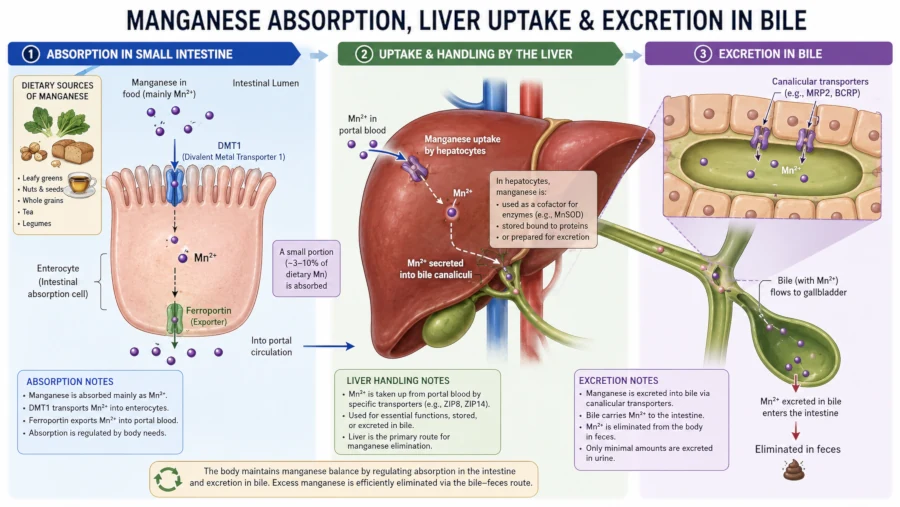
Manganese toxicity mainly affects the central nervous system. Reported effects include tremors, muscle spasms, tinnitus, hearing loss, and unsteadiness on the feet, along with mania, insomnia, depression, delusions, loss of appetite, headaches, irritability, weakness in the legs, changes in mood and short-term memory, altered reaction times, and reduced hand-eye coordination [NIH Office of Dietary Supplements, 2021]. In severe cases these progress to Parkinson-like changes in gait, balance, tremor, and rigidity — a syndrome called manganism [NIH Office of Dietary Supplements, 2021]; [ATSDR ToxFAQs on manganese, 2012].
Who should be especially careful
- People with chronic liver disease or cirrhosis. Manganese leaves the body mainly in bile, so impaired liver function reduces clearance and raises susceptibility to neurotoxicity [NIH Office of Dietary Supplements, 2021]; [Linus Pauling Institute, 2021].
- People with iron deficiency. Iron deficiency increases manganese absorption and can worsen symptoms of manganese toxicity [NIH Office of Dietary Supplements, 2021]. Low iron is a reason for more caution with manganese, not less.
- Infants and children. They absorb more manganese and excrete less of it in bile, which makes them more vulnerable to neurotoxic effects [Linus Pauling Institute, 2021]. A child on a low-iron diet absorbs more still [ATSDR ToxFAQs on manganese, 2012].
- Welders, miners, and smelters. Inhaled manganese bypasses the liver and travels to the brain, and occupational exposure is the classic route to manganism [ATSDR ToxFAQs on manganese, 2012]; [Linus Pauling Institute, 2021].
- Anyone receiving intravenous or parenteral nutrition. Manganese neurotoxicity has occurred both from manganese added to solutions and from contamination, and newborns are especially vulnerable [Linus Pauling Institute, 2021].
- Households on private wells. The EPA has determined that lifetime exposure to 0.3 mg/L in drinking water is not expected to cause adverse effects, and the FDA limit for bottled water is 0.05 mg/L [ATSDR ToxFAQs on manganese, 2012]. Well water is not tested for you.
Pregnancy and breastfeeding
The Adequate Intake rises modestly to 2.0 mg in pregnancy and 2.6 mg while breastfeeding, and the upper limit stays at 11 mg [NIH Office of Dietary Supplements, 2021]. Food plus a standard prenatal vitamin will normally cover that. Adding a standalone manganese supplement on top is not something to do without talking to your obstetrician, midwife, or pharmacist first, particularly since higher manganese exposure during pregnancy has been associated with cognitive and motor deficits in young children [Linus Pauling Institute, 2021].
Medication interactions: the sources disagree
This is a case where two reputable references say different things, and flattening that would be dishonest. The NIH Office of Dietary Supplements states plainly that manganese is not known to have any clinically relevant interactions with medications [NIH Office of Dietary Supplements, 2021]. The Linus Pauling Institute, drawing on the PDR for Nutritional Supplements, notes that magnesium-containing antacids and laxatives and the antibiotic tetracycline may decrease manganese absorption when taken at the same time as manganese-containing foods or supplements [Linus Pauling Institute, 2021].
Both can be true: an absorption-timing effect can be real and still not be clinically important for someone whose intake is adequate. Separating doses by a couple of hours costs nothing. If you take tetracycline or regular magnesium-based antacids, ask your pharmacist rather than guessing.
When to talk to a healthcare professional
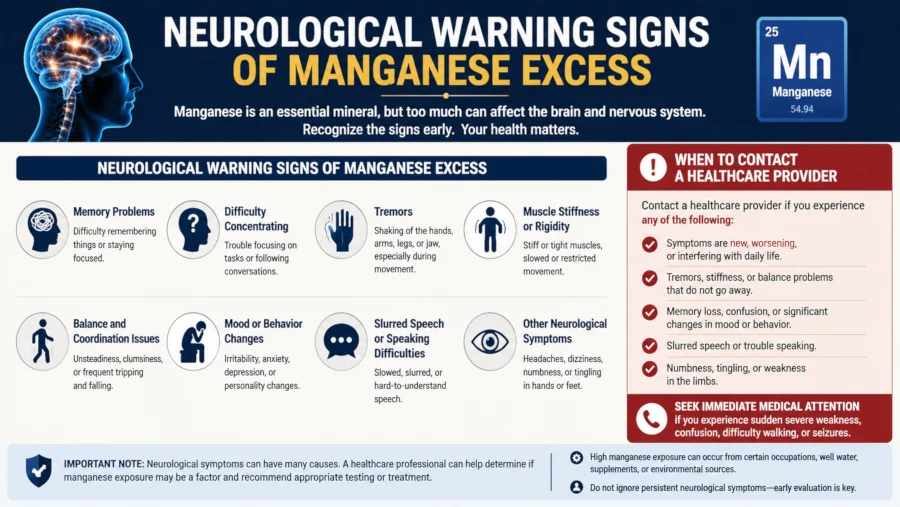
- New or worsening tremor, stiffness, slowed movement, clumsiness, or unsteady walking — especially if you weld, work with metals, or take high-dose supplements. Get this evaluated promptly rather than waiting.
- New irritability, hallucinations, marked mood change, or memory trouble occurring alongside any of the above.
- Any liver condition, if you take or are considering a supplement containing manganese.
- Well water that looks discolored, stains fixtures, or tastes metallic — have it tested.
- Any plan that would take you above 11 mg a day from all sources combined.
Sudden severe neurological symptoms — trouble speaking, weakness on one side, sudden confusion, or a seizure — are an emergency. Call 911 or go to the nearest emergency room. Do not wait to sort out whether a supplement is involved.
| HEALTH DISCLAIMER: This article is general health education, not medical advice, diagnosis, or treatment, and it cannot account for your individual situation. Manganese is an essential nutrient with a narrow margin between adequate and excessive intake, and the upper limit for adults is 11 mg a day from all sources combined. Talk with a physician, pharmacist, or registered dietitian before starting any manganese supplement — particularly if you are pregnant or breastfeeding, have liver disease or iron deficiency, are giving supplements to a child, or take prescription medication. If you are experiencing new neurological symptoms, contact your healthcare provider promptly; for sudden severe symptoms, call 911. |
Frequently Asked Questions
How much manganese is safe per day?
For adults 19 and older, including during pregnancy and breastfeeding, the tolerable upper intake level is 11 mg a day from food, water, and supplements combined [NIH Office of Dietary Supplements, 2021]. Limits are lower for children: 2 mg for ages 1 to 3, 3 mg for 4 to 8, 6 mg for 9 to 13, and 9 mg for 14 to 18 [NIH Office of Dietary Supplements, 2021].
What are the signs of too much manganese?
Excess manganese affects the nervous system first. Reported effects include tremor, muscle spasms, tinnitus, hearing loss, unsteadiness, irritability, mood and memory changes, slowed reactions, and reduced hand-eye coordination, progressing in severe cases to Parkinson-like rigidity and gait problems [NIH Office of Dietary Supplements, 2021]; [ATSDR ToxFAQs on manganese, 2012]. Most documented cases involve inhaled dust at work or heavily contaminated water rather than diet.
Which foods have the most manganese?
Cooked blue mussels are unusually high at about 5.8 mg per 3-ounce serving. After that, hazelnuts and pecans (roughly 1.1 to 1.6 mg per ounce), brown rice, oysters, chickpeas, spinach, pineapple, oatmeal, whole wheat bread, lentils, and black tea are all meaningful contributors [NIH Office of Dietary Supplements, 2021]. Across US adult diets as a whole, grain products, tea, and vegetables supply the most [NIH Office of Dietary Supplements, 2021].
Can manganese help with blood sugar or diabetes?
The evidence is genuinely mixed and does not support supplementing. Several cohort studies link higher dietary manganese intake with lower type 2 diabetes risk, but studies measuring blood manganese have found levels higher, lower, and no different in people with diabetes, and one large case-control study found a U-shaped pattern in which both low and high levels carried more risk [Linus Pauling Institute, 2021]; [NIH Office of Dietary Supplements, 2021]. A 15 mg or 30 mg oral dose given with a glucose challenge did not improve glucose tolerance [Linus Pauling Institute, 2021].
Do I need a manganese supplement if I eat mostly plants?
Almost certainly not, and the opposite concern is more relevant. Vegetarian diets have been recorded supplying up to about 7 mg of manganese a day, well above the Adequate Intake of 1.8 to 2.3 mg [Linus Pauling Institute, 2021]. No group of people is known to be likely to have inadequate manganese intakes [NIH Office of Dietary Supplements, 2021].
Does the form of manganese in a supplement matter?
There is no published evidence that it does. No data are available on the relative bioavailability of gluconate, picolinate, sulfate, citrate, chloride, or amino acid chelate forms [NIH Office of Dietary Supplements, 2021]. Compare the elemental manganese figure on the Supplement Facts panel and ignore claims about superior absorption.
References
- National Institutes of Health, Office of Dietary Supplements. “Manganese — Fact Sheet for Health Professionals.” NIH Office of Dietary Supplements, updated March 29, 2021. View source
- Linus Pauling Institute Micronutrient Information Center. “Manganese.” Oregon State University; written 2001, updated April 2021, reviewed May 2021 by Michael Aschner, PhD. View source
- Agency for Toxic Substances and Disease Registry. “Manganese — ToxFAQs (CAS #7439-96-5).” US Department of Health and Human Services, October 2012. View source
- Taskozhina G, Batyrova G, Umarova G, Issanguzhina Z, Kereyeva N. “The Manganese–Bone Connection: Investigating the Role of Manganese in Bone Health.” Journal of Clinical Medicine, 2024;13(16):4679. DOI 10.3390/jcm13164679; PMID 39200820; PMCID PMC11355939. View source
- CDC / NIOSH manganese topic page
