
Here’s the short version: lion’s mane is one of the more interesting mushrooms on the supplement shelf, and the gummy is one of the weaker ways to take it. The research on the mushroom is real but early — small trials, short durations, results that don’t all point the same way. Lion’s mane gummies add a problem capsules don’t have. It’s hard to get a research-level dose out of a chewable candy without also eating a meaningful amount of sugar.
That doesn’t make them pointless. It makes them a product to buy with your eyes open.
What’s actually in a lion’s mane gummy
Lion’s mane is Hericium erinaceus — the shaggy white mushroom that looks like a frozen waterfall. It’s edible, it’s been used in Chinese and Japanese medicine for a long time, and it contains two families of compounds that drive most of the scientific interest.
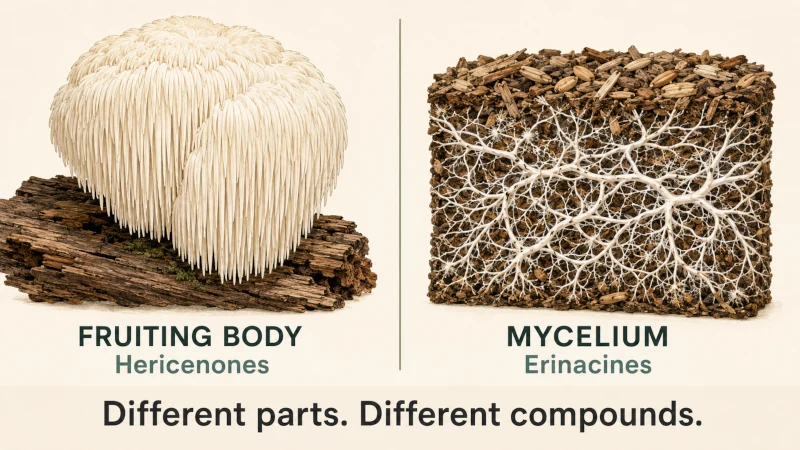
Hericenones come from the fruiting body, the part you’d recognize as a mushroom. Erinacines come from the mycelium, the root-like network the mushroom grows from. They aren’t interchangeable. A 2023 review in Journal of Fungi describes erinacine A as the compound most consistently linked to nootropic effects in lab work, while the role of hericenones is “still controversial” Journal of Fungi review on Hericium erinaceus, 2023]. Memorial Sloan Kettering notes that both are thought to cross the blood-brain barrier and promote nerve growth factor Memorial Sloan Kettering, lion’s mane mushroom].
A gummy is that mushroom material suspended in a base of sugar, pectin or gelatin, flavoring and color. So the questions worth asking are how much mushroom material is in there, which part of the mushroom it came from, and whether it was extracted at all. Labels use very different words for very different things — “fruiting body extract,” “mushroom powder,” “mycelial biomass.” The Alzheimer’s Drug Discovery Foundation puts the problem plainly: lion’s mane supplements “are prepared using various methods of processing and extraction, which can yield extracts with variable levels of individual bioactive compounds” Alzheimer’s Drug Discovery Foundation, Cognitive Vitality].
Two products with the same milligram number on the front can contain quite different amounts of the compounds anyone is actually studying.
What the human research shows
Memory and thinking
The trial everyone cites is a small Japanese study from 2009. Thirty adults aged 50 to 80 with mild cognitive impairment took 3 grams a day of dried lion’s mane powder, delivered as four 250 mg tablets three times daily, for 16 weeks. Scores on a dementia screening scale rose significantly compared with placebo — and then fell again after participants stopped Mori et al., Phytotherapy Research, 2009].
That last detail matters, and it’s usually left out. Whatever the effect was, it didn’t stick.
Since then the picture has gotten more complicated rather than clearer. The Alzheimer’s Drug Discovery Foundation reviewed seven randomized controlled trials and found the results split. Healthy adults over 50 improved on one of three cognitive tests. Healthy young adults showed no cognitive improvement in two trials, and in a third they “resulted in worse performance (fewer words recalled)” on a word-recall task. A 49-week trial in people with Alzheimer’s disease improved daily-living scores but showed “no significant improvements in cognitive function compared to the placebo group” Alzheimer’s Drug Discovery Foundation, Cognitive Vitality].
Two more recent trials tell the same mixed story. A 2023 pilot study gave 41 healthy adults aged 18 to 45 either 1.8 g daily of lion’s mane extract or placebo for 28 days. One reaction-time task got faster an hour after the first dose, subjective stress showed a non-significant trend after four weeks, and immediate word recall got worse after the acute dose Docherty et al., Nutrients, 2023]. A 2025 crossover study in 18 young adults given a single 3 g dose found improvement on a manual dexterity task, no change on the global cognitive or mood measures, and worse performance on one attention task Surendran et al., Frontiers in Nutrition, 2025].
A 2025 systematic review pooling 26 studies reported a weighted mean improvement of 1.17 points on the Mini-Mental State Examination in intervention groups Menon et al., Frontiers in Nutrition systematic review, 2025]. The MMSE runs to 30 points. That is a small shift, drawn from studies the same authors describe as heterogeneous and mostly tiny — human trials in the review ranged from 13 to 77 participants.
Where that leaves you: the most encouraging signal is in older adults who already have some cognitive decline, and even there it’s one small trial whose effect faded. If you’re a healthy 30-year-old expecting sharper focus, the trials that tested exactly that mostly found nothing, and occasionally found the opposite. Anyone worried about memory changes should read what’s normal aging and what isn’t before reaching for a supplement.
Mood, stress and sleep
This is where the evidence is thinner than the marketing suggests, but not empty.
A 2010 Japanese study gave 30 women cookies containing lion’s mane or placebo cookies for four weeks. Depression scores and a general-complaints index dropped significantly compared with baseline Nagano et al., Biomedical Research, 2010]. The 2025 systematic review found reported reductions in depression, anxiety, binge-eating and sleep-disorder symptoms across its included studies, with brain-derived neurotrophic factor proposed as the mechanism Menon et al., Frontiers in Nutrition systematic review, 2025].
Against that, the 2023 four-week trial in young adults missed statistical significance on its stress measure (p = 0.051) and found no treatment effect on a validated perceived-stress scale Docherty et al., Nutrients, 2023].
Small studies, short follow-up, subjective outcomes. Interesting, not established. If sleep is the reason you’re shopping, the interventions with actual weight behind them are covered in our guide to natural remedies for insomnia, and lion’s mane is not among the front-runners.
The nerve growth story
You’ll see it claimed that lion’s mane repairs nerve damage or reverses Alzheimer’s and Parkinson’s disease. That claim is running well ahead of the evidence.
The nerve growth factor research is real, and it’s mostly in cell cultures and animals. Memorial Sloan Kettering describes hericenones and erinacines as promoting NGF synthesis and secretion, while noting that clinical data in humans are limited Memorial Sloan Kettering, lion’s mane mushroom]. A 2025 narrative review in Nutrition Research Reviews looking specifically at Alzheimer’s disease identified only three human clinical trials and concluded that “continued research is necessary” before the relationship can be considered significant Cornford & Charnley, Nutrition Research Reviews, 2025].
No human trial has shown lion’s mane regenerating damaged nerves or reversing a neurodegenerative disease. A promising mechanism in a petri dish is a reason to keep studying something. It is not a reason to skip treatment.
Immune support and gut health
Lion’s mane contains beta-glucans, a class of fiber with documented effects on immune signaling, and that’s the basis for most immune claims you’ll read. The honest status: no human trial has shown that taking lion’s mane means fewer infections or shorter illnesses.
The gut findings are slightly firmer. The 2025 systematic review reported increased gut microbiota diversity and more short-chain-fatty-acid-producing bacteria Menon et al., Frontiers in Nutrition systematic review, 2025], and an 8-week trial in 33 adults found a significant increase in microbiota diversity alongside its cognitive measures Bizjak et al., Journal of Functional Foods, 2024].
Greater microbial diversity is generally considered favorable. It is not the same as treating a condition. Lion’s mane gummies are not a treatment for gastritis, ulcerative colitis, or intestinal permeability — if you have inflammatory bowel disease, dietary changes belong alongside your medical treatment, not instead of it, and our ulcerative colitis diet guide covers what the evidence supports. For general digestive support, the options with better human data are in our roundup of digestive supplements.
Evidence at a glance
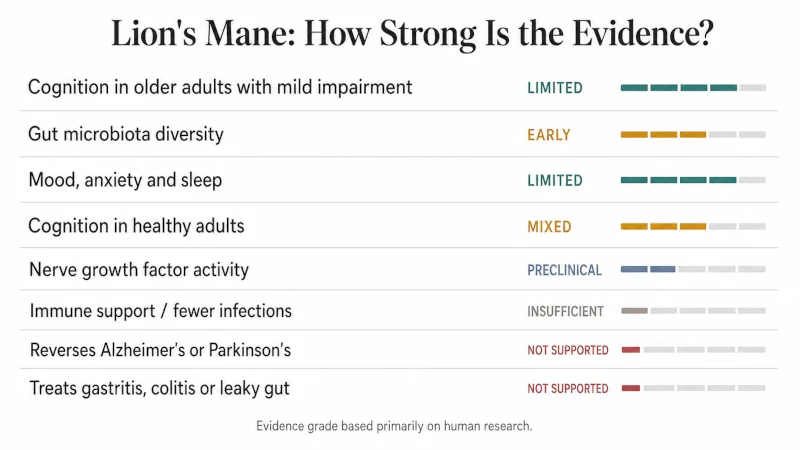
| Claim | Evidence strength | What that means |
| Improves cognition in older adults with mild impairment | Limited | One 30-person, 16-week trial with benefits that faded after stopping |
| Improves cognition in healthy adults | Mixed to negative | Several trials found no benefit; two found worse performance on a recall or attention task |
| Reduces depression, anxiety or improves sleep | Limited | Small short trials with subjective outcomes; one trial missed significance |
| Increases gut microbiota diversity | Early but consistent | Seen in a systematic review and an 8-week human trial |
| Stimulates nerve growth factor | Preclinical | Cell and animal work; not demonstrated in humans |
| Boosts immunity / prevents illness | Insufficient | Plausible mechanism, no human outcome trials |
| Reverses Alzheimer’s or Parkinson’s | Not supported | No human trial shows this |
| Treats gastritis, colitis or leaky gut | Not supported | No human trial shows this |
The gummy problem: dose, sugar, and what’s on the label
This is the part most articles on lion’s mane gummies skip, and it’s the part that decides whether the product can plausibly do anything.
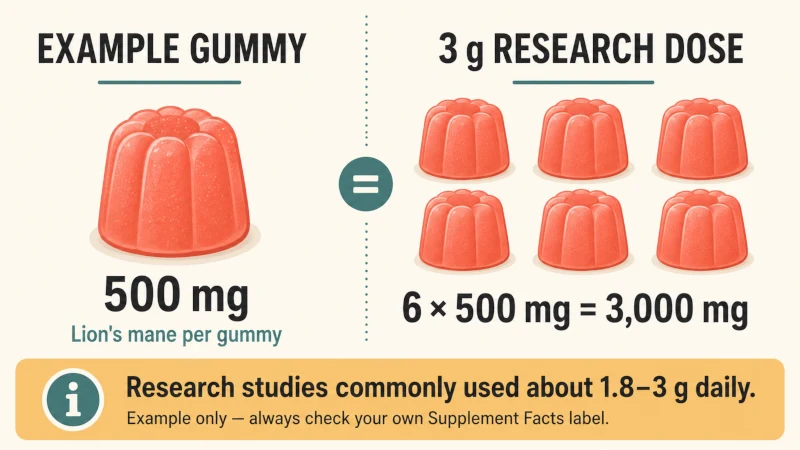
The doses used in research are large. Across the human trials in the 2025 systematic review, daily amounts ranged from 0.8 g to 10 g, with the commonly cited studies clustering around 1.8 to 3 g per day Menon et al., Frontiers in Nutrition systematic review, 2025]. The Mori trial used 3 g daily for 16 weeks. Now pick up a gummy bottle and read the Supplement Facts panel. If a serving delivers 500 mg, matching a 3 g research dose means six gummies a day. At 1,000 mg per serving, three. Do that arithmetic before you buy, because the front of the bottle rarely does it for you.
Then add the sugar. Gummies need sugar to work as gummies. If each one carries 2 to 3 grams of added sugar and you’re taking four to six a day, you’re spending a real fraction of your daily allowance on a supplement — the American Heart Association recommends no more than 25 grams of added sugar per day for women and 36 grams for men American Heart Association on added sugars]. Sugar-free versions use sugar alcohols, which can cause gas and loose stools in sensitive people.
And the label may not be accurate. The FDA does not approve dietary supplements before they’re sold; manufacturers “have initial responsibility for ensuring that their dietary supplements meet the safety standards” FDA questions and answers on dietary supplements]. How badly can that go in gummy form specifically? A 2023 JAMA analysis of 25 melatonin gummy products found actual content ranging from 74% to 347% of the labeled amount, with 22 of 25 inaccurately labeled Cohen et al., JAMA, 2023]. That study tested melatonin, not lion’s mane — but it tested the same product format, made by the same kind of manufacturer, under the same regulatory framework.
Consumer Reports’ guidance is worth following here: look for third-party verification such as a U.S. Pharmacopeia seal, buy from the manufacturer rather than a marketplace reseller to avoid counterfeits, and expect to pay more for brands that fund testing Consumer Reports on lion’s mane mushroom].
Reading the Supplement Facts panel
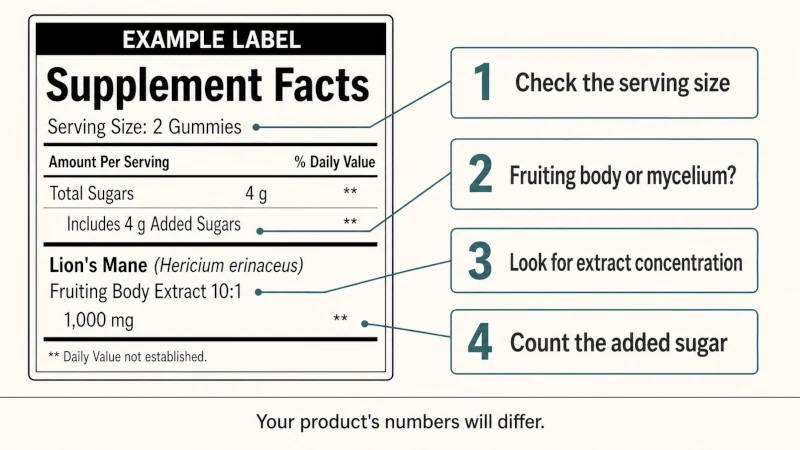
| What you see | What to check |
| “Lion’s mane 1,000 mg” | Per serving or per gummy? A serving is often two or three gummies. |
| “Fruiting body extract” | The part studied for hericenones. Usually the better signal. |
| “Mycelial biomass” or “mycelium on grain” | May include the growing substrate. Ask the brand for the beta-glucan content. |
| “10:1 extract” | Concentrated. 1 g of 10:1 extract is derived from roughly 10 g of raw mushroom. |
| Added sugars line | Multiply by the number of gummies you’d take daily. |
| Third-party seal (USP, NSF) | Verifies identity and quantity. Absence isn’t proof of a problem, but presence is real reassurance. |
Gummies versus other forms
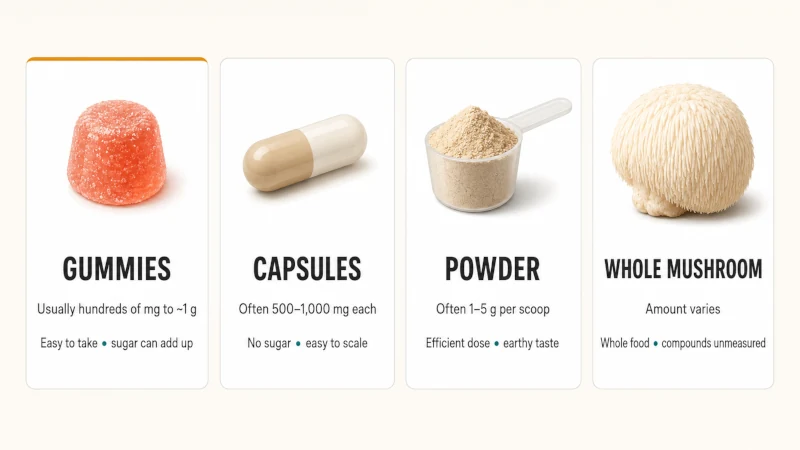
| Form | Realistic dose per serving | Trade-off |
| Gummies | Often a few hundred mg to ~1 g | Easiest to take consistently; sugar adds up; you may need several |
| Capsules | 500–1,000 mg each | No sugar, easy to scale to trial doses; you have to swallow pills |
| Powder | 1–5 g per scoop | Cheapest per gram, easiest to hit research doses; earthy taste |
| Whole mushroom | Varies widely | It’s food, and good food; compound content is unmeasured |
If the reason you chose gummies is that you’ll actually remember to take them, that’s a legitimate reason — an inconsistent 3 g dose does nothing. Just check the arithmetic and the sugar.
What to realistically expect
Nothing dramatic, and nothing fast. The trials that found effects found small ones, over weeks, on specific tests — not a noticeable change in how sharp your day feels.
If you want to try it, run it like an experiment rather than a hope:
- Give it 8 to 12 weeks. Most trials that measured anything ran at least four weeks, and the cognitive trial that found benefit ran 16.
- Change one thing at a time. If you start lion’s mane, a new sleep schedule, and creatine in the same week, you’ll learn nothing.
- Decide in advance what you’re tracking — mood on a 1-to-10 scale, hours slept, whether you finish tasks you’d normally abandon — and write it down before you start.
- Remember the fade. In the trial where cognitive scores improved, they dropped again once people stopped taking it.
If nothing shifts in three months, that’s your answer.
Side effects, interactions, and who should skip lion’s mane gummies
Lion’s mane is generally well tolerated in the trials that have been done. “Generally well tolerated” is not the same as “risk-free,” and a few of these are worth knowing before you start.
Common side effects
Clinical trials have reported abdominal discomfort, nausea and skin rash Memorial Sloan Kettering, lion’s mane mushroom]. The 2025 systematic review adds headache and allergic reactions to that list Menon et al., Frontiers in Nutrition systematic review, 2025]. Stomach upset is the most frequent complaint and is more likely at higher doses. If a gummy leaves your stomach unsettled, try it with food or drop the dose before giving up on it entirely — though persistent stomach pain deserves a look from a doctor rather than a workaround, especially if you already deal with gastritis.
On the liver, the news is reassuring. The NIH’s LiverTox database assigns lion’s mane a likelihood score of E — unlikely to cause clinically apparent liver injury — and reports “no case reports of clinically apparent liver injury attributed to lion’s mane” in the medical literature LiverTox, National Institutes of Health, 2024].
Bleeding and surgery — where sources disagree
This is the interaction most worth understanding, and it’s genuinely unsettled.
In the laboratory, hericenone B from lion’s mane inhibits collagen-induced platelet aggregation in both rabbit and human platelets Mori et al., Phytomedicine, 2010; PMID 20637576]. A 2026 case report described a 62-year-old man who bled at a surgical anastomosis nine days after colon surgery, having drunk a mushroom-coffee blend containing lion’s mane daily for two months beforehand Alataa et al., Gastrointestinal Disorders, 2026].
How much should that worry you? Sources land in different places. Consumer Reports quotes mycologist Paul Stamets advising people to stop lion’s mane at least two weeks before surgery Consumer Reports on lion’s mane mushroom]. WebMD’s monograph says only that “interactions between lion’s mane mushroom and medicines are not fully understood” WebMD lion’s mane monograph]. Memorial Sloan Kettering lists no specific drug interaction while advising patients to raise supplements with their care team Memorial Sloan Kettering, lion’s mane mushroom]. The case report involved a blend of six mushrooms in a man with several medical conditions, so it can’t be pinned on lion’s mane alone.
The practical read: the signal is lab-level and single-case, not established. But the cost of pausing a supplement before surgery is zero. If you take warfarin, a direct oral anticoagulant, clopidogrel, or daily aspirin, or you have surgery or a dental extraction scheduled, tell your doctor or pharmacist that you’re taking lion’s mane and let them make the call.
Allergies and asthma
Anyone with a mushroom allergy should avoid lion’s mane entirely, in any form. There is a published case of acute respiratory distress associated with a lion’s mane extract, noted in both the 2025 systematic review and the Alzheimer’s Drug Discovery Foundation’s assessment Menon et al., Frontiers in Nutrition systematic review, 2025; Alzheimer’s Drug Discovery Foundation]. Rare, but it’s the reason difficulty breathing after taking any supplement is a 911 situation rather than a wait-and-see one.
Pregnancy and breastfeeding
There isn’t enough information. It is not known whether lion’s mane affects pregnancy or a fetus, or whether it passes into breast milk WebMD lion’s mane monograph]. With no safety data, the reasonable choice is to skip it while pregnant or nursing unless your doctor says otherwise.
Who should talk to a doctor first
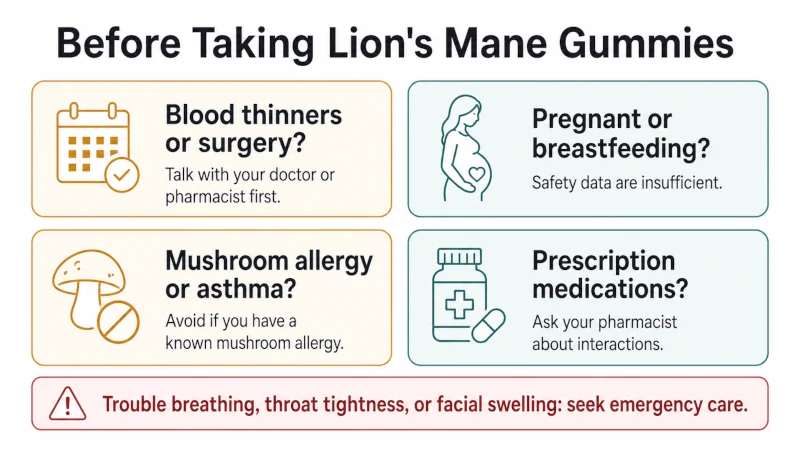
- Anyone taking blood thinners or antiplatelet medication, or scheduled for surgery
- Anyone with a diagnosed mushroom or mold allergy, or asthma
- People with diabetes, particularly on insulin or other glucose-lowering drugs — effects on blood sugar in humans haven’t been established, and your pharmacist is the right person to check with
- People with autoimmune conditions or on immunosuppressants
- Anyone taking prescription medication for a mental health condition — lion’s mane is not a substitute, and adding anything alongside psychiatric medication is a conversation to have with your prescriber
- Children. Gummies look like candy and haven’t been studied in kids. Keep them where children can’t reach them.
When a supplement isn’t the answer
Some symptoms need a medical evaluation, not a shopping decision:
- Memory or thinking changes that interfere with daily life — getting lost somewhere familiar, trouble managing money or medications, personality changes
- Sudden confusion, trouble speaking, face drooping, or weakness on one side — call 911, these are stroke signs
- Numbness, tingling or weakness that’s spreading or worsening
- Persistent abdominal pain, vomiting, or blood in your stool
- Trouble breathing, throat tightness, or swelling of the face or lips after taking any supplement — call 911
- Low mood, hopelessness, or anxiety that’s affecting your work, sleep or relationships
| Health Disclaimer: This article is for general information and education. It is not medical advice, and it is not a substitute for a conversation with a qualified healthcare professional who knows your history. Dietary supplements are not intended to diagnose, treat, cure, or prevent any disease. Talk with your doctor, pharmacist, or a registered dietitian before starting lion’s mane — particularly if you are pregnant or breastfeeding, take prescription medication, have a scheduled procedure, or manage a chronic condition. If you are having a medical emergency, call 911. |
Frequently Asked Questions
Do lion’s mane gummies actually work?
For memory and thinking in healthy adults, the trials that tested exactly that mostly found no benefit, and a couple found worse performance on individual tasks. The most encouraging result came from a small 16-week trial in older adults who already had mild cognitive impairment, and those gains disappeared after they stopped. Anyone telling you the answer is a clean yes is ahead of the evidence.
How many lion’s mane gummies should I take a day?
There’s no established dose. Human trials have mostly used 1.8 to 3 grams of lion’s mane daily. Read your product’s Supplement Facts panel and divide — many gummies would require four to six per day to reach that range, which is also four to six servings of added sugar. Don’t exceed the label’s stated serving without talking to a doctor or pharmacist.
How long before I notice anything?
If anything happens, it’s gradual. Trials measured effects over 4 to 16 weeks, and the changes they found were small and test-specific rather than obvious in daily life. Give it 8 to 12 weeks before deciding.
Are gummies as good as capsules or powder?
For getting the compound into you, no — capsules and powders reach research-level doses more easily, without sugar. Gummies win on one thing that matters more than people admit: you’ll actually take them. A dose you take every day beats a better dose sitting unopened in a cupboard.
Can I take lion’s mane with my medications?
Ask your pharmacist, especially if you take blood thinners or antiplatelet drugs. Lab work shows a compound in lion’s mane can inhibit platelet clumping, and there’s one published case of post-surgical bleeding in someone drinking a mushroom blend containing it. The evidence is thin, but a two-minute conversation costs nothing.
Is lion’s mane safe long-term?
Nobody knows. The longest human trial ran 49 weeks. Reassuringly, the NIH’s liver-injury database has no reported cases linked to lion’s mane. But long-term safety data in the sense of years of use simply doesn’t exist yet.
References
- Mori K, Inatomi S, Ouchi K, Azumi Y, Tuchida T. *Improving effects of the mushroom Yamabushitake (Hericium erinaceus) on mild cognitive impairment: a double-blind placebo-controlled clinical trial. Phytotherapy Research.* 2009;23(3):367–372. DOI 10.1002/ptr.2634. — View source
- Menon A, Jalal A, Arshad Z, Nawaz FA, Kashyap R. *Benefits, side effects, and uses of Hericium erinaceus as a supplement: a systematic review. Frontiers in Nutrition.* 2025;12:1641246. DOI 10.3389/fnut.2025.1641246. — View source
- Docherty S, Doughty FL, Smith EF. The acute and chronic effects of lion’s mane mushroom supplementation on cognitive function, stress and mood in young adults: a double-blind, parallel groups, pilot study. Nutrients. 2023;15(22):4842. DOI 10.3390/nu15224842. — View source
- Surendran S, et al. *Acute effects of a standardised extract of Hericium erinaceus (Lion’s Mane mushroom) on cognition and mood in healthy younger adults: a double-blind randomised placebo-controlled study. Frontiers in Nutrition.* 2025. DOI 10.3389/fnut.2025.1405796. — View source
- Nagano M, Shimizu K, Kondo R, Hayashi C, Sato D, Kitagawa K, Ohnuki K. *Reduction of depression and anxiety by 4 weeks Hericium erinaceus intake. Biomedical Research.* 2010;31(4):231–237. DOI 10.2220/biomedres.31.231. — View source
- Bizjak MČ, Pražnikar ZJ, Kenig S, Hladnik M, Bandelj D, Gregori A, Kranjc K. *Effect of erinacine A-enriched Hericium erinaceus supplementation on cognition: a randomized, double-blind, placebo-controlled pilot study. Journal of Functional Foods.* 2024;115:106120. — View source
- Brandalise F, Roda E, Ratto D, et al. Hericium erinaceus in neurodegenerative diseases: from bench to bedside and beyond, how far from the shoreline? Journal of Fungi. 2023;9(5):551. DOI 10.3390/jof9050551. — View source
- Cornford N, Charnley M. Hericium erinaceus: a possible future therapeutic treatment for the prevention and delayed progression of Alzheimer’s disease? A narrative review. Nutrition Research Reviews. 2025;38(2). DOI 10.1017/S0954422425000058. — View source
- Mori K, Kikuchi H, Obara Y, et al. *Inhibitory effect of hericenone B from Hericium erinaceus on collagen-induced platelet aggregation. Phytomedicine.* 2010;17(14). PMID 20637576. — View source
- Alataa R, Farag M, Lajara Hallal P, Harish P. Unrecognized antiplatelet effect of mushroom coffee: a case of postoperative bleeding following colonic surgery. Gastrointestinal Disorders. 2026;8(1):3. DOI 10.3390/gidisord8010003. — View source
- Cohen PA, Avula B, Wang Y-H, Katragunta K, Khan I. Quantity of melatonin and CBD in melatonin gummies sold in the US. JAMA. 2023;329(16):1401. DOI 10.1001/jama.2023.2296. — View source
- Memorial Sloan Kettering Cancer Center. Lion’s Mane Mushroom. Integrative Medicine herb database. — View source
- National Institutes of Health. Lion’s Mane. LiverTox: Clinical and Research Information on Drug-Induced Liver Injury. Last updated January 5, 2024. — View source
- Alzheimer’s Drug Discovery Foundation. Lion’s Mane. Cognitive Vitality ratings. — View source
- U.S. Food and Drug Administration. Questions and Answers on Dietary Supplements. — View source
- American Heart Association. How Much Sugar Is Too Much? — View source
- Consumer Reports. Lion’s Mane Mushroom FAQ. — View source
- WebMD. Lion’s Mane Mushroom (vitamins and supplements monograph). — View source
