
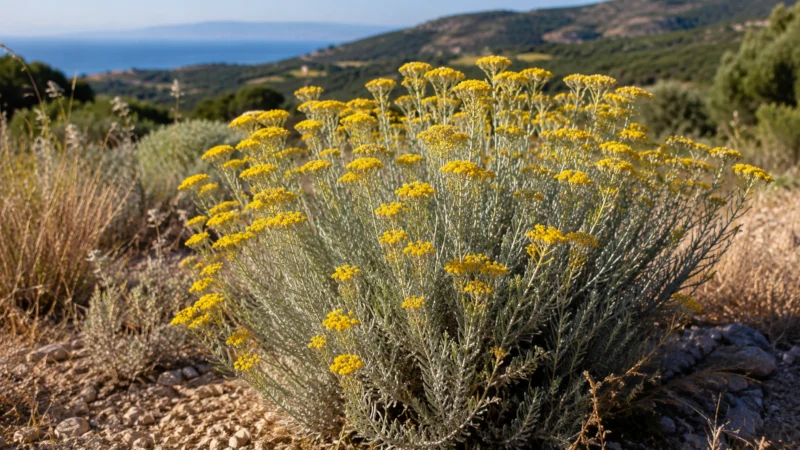
Helichrysum oil comes from Helichrysum italicum, a wiry, yellow-flowered Mediterranean shrub sometimes called the curry plant or immortelle. It shows up constantly in natural skincare and aromatherapy circles, usually with a long list of claims attached — liver support, anemia relief, fever-fighting, detox. Almost none of that list holds up.
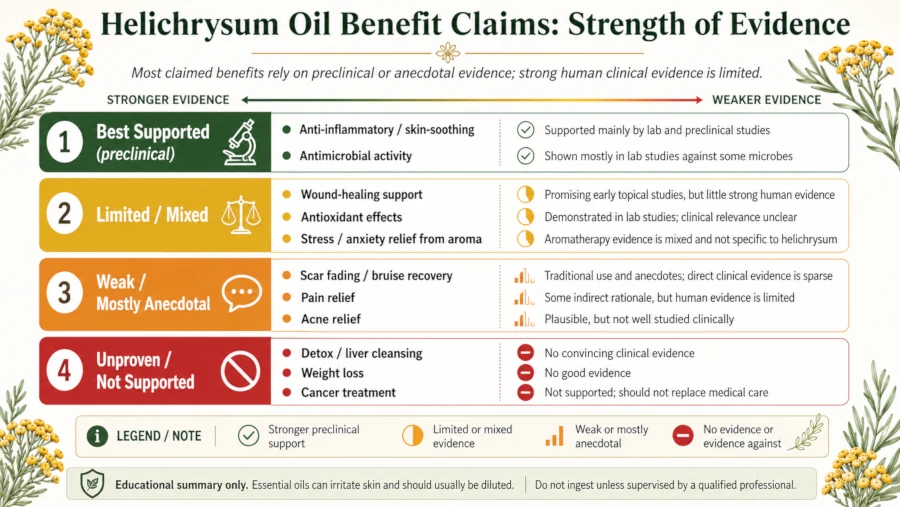
Here’s what does: the benefits of helichrysum oil has real, lab-confirmed anti-inflammatory, antimicrobial, and antioxidant activity, and a small but genuine body of research — mostly in animals and lab dishes, with a couple of promising small human studies — supports its traditional use for skin healing, scar care, and topical relief of achy muscles and joints [Furlan & Bren, Foods, 2023]. It has not been shown to treat liver disease, anemia, or fever, and — like any essential oil — it should never be swallowed [NCI PDQ, Aromatherapy With Essential Oils].
What Helichrysum Oil Actually Is
The oil is steam-distilled from the flowering tops of H. italicum, which grows wild across the Mediterranean and is cultivated in Corsica, Croatia, and parts of Italy. Its low yield — under half a percent of the plant’s weight — is why a small bottle costs what it does [Furlan & Bren, Foods, 2023].
“Helichrysum” is also the name of a genus with more than 600 species, and their chemistry varies a lot. Almost everything below applies specifically to H. italicum, so it’s worth checking that a bottle labeled “helichrysum oil” actually names that species on the label.
Benefits of helichrysum oil: Skin Healing and Scars
This is where helichrysum oil has the most going for it, though “most” still means limited.
A 2021 study induced diabetic wounds in rats and treated them with an ointment and gel made with 0.5% helichrysum essential oil. Over seven days, the treated wounds contracted significantly faster than untreated ones, with higher collagen (hydroxyproline) content in the healing tissue [Andjić et al., Pharmaceuticals, 2021]. That’s animal data, not a guarantee it works the same way on a person’s skin — but it’s a real, controlled study, not folklore.
On the human side, a small clinical observation followed patients using a 10% helichrysum dilution on post-surgical scars for two to three months and reported less local inflammation, swelling, and bruising [Furlan & Bren, Foods, 2023]. It wasn’t a large randomized trial, so treat it as encouraging rather than proven — but it’s a genuine data point, which is more than most “helichrysum heals scars” claims online can offer.
Anti-Inflammatory and Antioxidant Effects
The oil’s anti-inflammatory reputation traces largely to a compound called arzanol, along with related terpenes. In rodent studies, extracts rich in these compounds reduced swelling in standard inflammation models by meaningful margins, and lab assays consistently show the oil neutralizing free radicals [Furlan & Bren, Foods, 2023]. This is the mechanism behind most of the oil’s other claimed benefits — skin, joints, mood — so it’s worth understanding that it’s real but still mostly animal- and lab-based, not confirmed in large human trials.
Antimicrobial and Antifungal Activity — Real in the Lab, Unproven in People
In test-tube studies, helichrysum oil slows or stops the growth of several bacteria, including Staphylococcus aureus, and shows activity against Candida albicans, the yeast behind most vaginal and oral yeast infections [Furlan & Bren, Foods, 2023; Healthline, 2026]. That’s worth knowing as background for traditional wound-care use — it is not a reason to treat an active skin or fungal infection with essential oil instead of seeing a doctor. Lab-dish activity against a pathogen doesn’t reliably predict what happens on real skin, and essential oils lack quality human trials for candida specifically.
Skin Aging and Complexion
Lab studies on human skin cells found that helichrysum oil compounds inhibit collagenase and elastase — the enzymes that break down collagen and elastin as skin ages — which is the standard mechanism cosmetic companies point to for “anti-aging” essential oils [Furlan & Bren, Foods, 2023]. This is in-vitro evidence only. It’s a reasonable basis for including the oil in a skincare routine; it is not evidence that it will visibly reduce wrinkles.
Muscle and Joint Discomfort
Helichrysum oil’s anti-inflammatory activity is the same mechanism people rely on for topical joint and muscle relief with other essential oils, but there’s no study testing helichrysum specifically for arthritis or muscle soreness in people. If joint pain is what brought you here, it’s reasonable to try it diluted and massaged into the area, alongside — not instead of — the approaches with more direct evidence, and to talk to a doctor if pain is persistent or severe.
Stress, Mood, and Mental Fatigue
A small 2013 study gave 14 people either a placebo or a blend of basil, peppermint, and helichrysum oils and tracked feelings of mental exhaustion and burnout. Both groups improved, but the essential-oil group improved more [Medical News Today, 2024]. Fourteen people is a small sample, and it tested a blend, not helichrysum alone, so it’s suggestive at best.
More broadly, inhaled aromatherapy has decent evidence for easing anxiety and improving mood in some settings, independent of which specific oil is used [NCI PDQ]. If you’re drawn to helichrysum for stress relief, that general aromatherapy evidence — plus the one small blend study — is the honest basis for it. There’s no evidence it “protects” the nervous system or prevents age-related nerve conditions, despite that claim circulating widely. If you’re looking into herbal approaches to stress and nervous-system support more broadly, this rundown of nervous-system herbs is a reasonable next stop.
Claims That Aren’t Backed by Evidence
A few claims attached to helichrysum oil turn up constantly and don’t hold up:
Liver health. Helichrysum is used traditionally in parts of Europe for liver complaints, but there’s no scientific evidence it treats liver disease [Healthline, 2026]. One review did note a lab finding that helichrysum compounds may inhibit liver enzymes involved in drug metabolism — that’s a caution about drug interactions, covered below, not a liver benefit.
- Anemia and spleen support. No study of any kind supports this. It appears to be an unsourced claim copied across wellness sites.
- Detox, urination, and blood pressure. No research backs a diuretic or blood-pressure effect for this oil.
- Fever and internal infection. The oil’s antimicrobial activity is a lab finding about topical and in-vitro use, not evidence it can treat a fever or systemic infection. A fever that doesn’t resolve, or one with other concerning symptoms, needs medical attention.
- Insomnia and acne. Both are traditional uses with no clinical evidence behind them.
How to Use Helichrysum Oil Safely
Dilution and patch testing
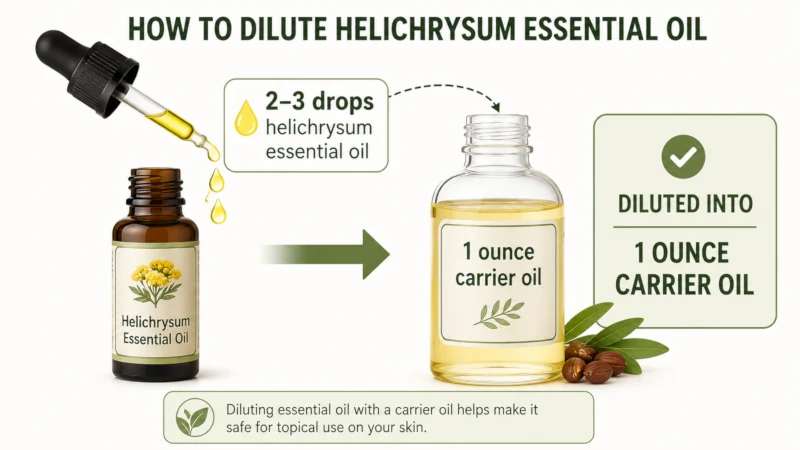
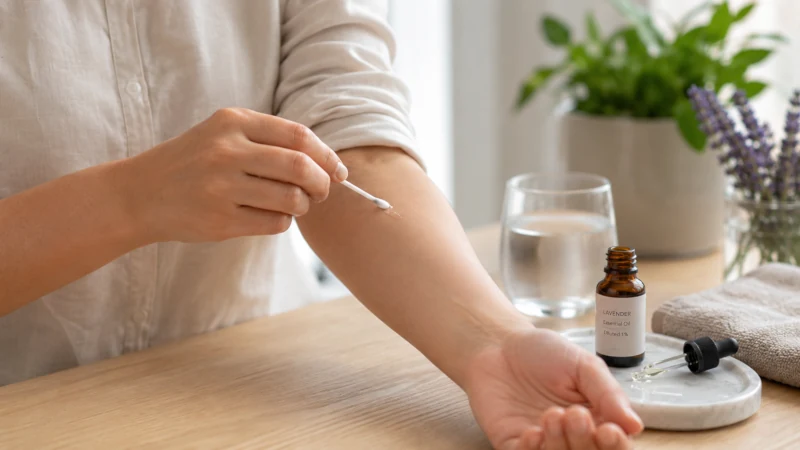
Never apply helichrysum oil undiluted. A common starting ratio is 2 to 3 drops of essential oil per ounce of carrier oil, such as sweet almond or jojoba [Healthline, 2026]. Before using it on a larger area, patch-test it first — a small dab on your forearm, checked after 24 hours.
Aromatherapy use
A few drops in a diffuser, or inhaled from a bowl of hot water, is the lower-risk way to use any essential oil. Take breaks rather than diffusing continuously, and keep children and pets out of the room while diffusing [NCI PDQ].
Never ingest it
Essential oils, helichrysum included, are not meant to be swallowed. This is worth repeating because “helichrysum tea” and “helichrysum oil” get confused online — the traditional herbal tea (an infusion of the dried plant) is a different product from the concentrated essential oil, and even the tea’s evidence is limited to one recent small study on gut markers. Swallowing the essential oil itself is not something any source here recommends or has tested for safety.
Side Effects, Interactions, and Who Should Be Careful
Helichrysum oil is generally well tolerated, but it isn’t risk-free:
Allergic contact dermatitis has been reported in at least one documented case, and patch testing is the standard precaution [Furlan & Bren, 2023; Healthline, 2026].
Possible drug interactions. Lab studies suggest helichrysum compounds may inhibit liver enzymes (cytochrome P450) involved in metabolizing certain medications [Healthline, 2026]. If you take prescription medication, especially anything processed by the liver, talk to a pharmacist or doctor before regular use.
- Pregnancy and breastfeeding. There’s no dedicated safety research on helichrysum oil in pregnancy. The standard advice applies: avoid during the first trimester, use only diluted topical or diffused amounts later on, and check with your OB or midwife first.
- Children and pets. Keep essential oils out of reach, and don’t diffuse around infants or animals without guidance from a pediatrician or vet.
- Not FDA-regulated. Like all essential oils, helichrysum oil doesn’t require FDA approval, and purity varies by brand.
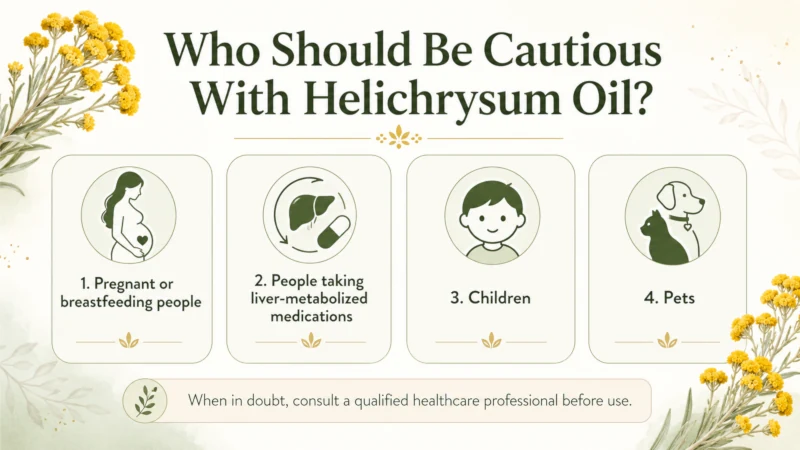
| Health Disclaimer: This article is for educational purposes only and isn’t a substitute for professional medical advice. It doesn’t diagnose, treat, cure, or prevent any disease. Talk to a doctor or pharmacist before using helichrysum oil if you’re pregnant, breastfeeding, on prescription medication, or managing a chronic condition, and stop use if you notice any skin reaction. |
Frequently Asked Questions
Is helichrysum oil safe to use on skin?
For most people, yes, when properly diluted in a carrier oil and patch-tested first. Undiluted application can irritate skin, and a small number of people have reported allergic contact dermatitis.
Can you take helichrysum oil internally?
No. Essential oils, including this one, aren’t meant to be swallowed. If you’re interested in an ingestible form, that’s a different product — dried helichrysum used as a tea — with its own separate and much thinner evidence base.
Does helichrysum oil actually reduce scarring?
It’s the most promising claim about this oil, backed by a small human study on post-surgical scars and animal wound-healing research, but it hasn’t been tested in a large controlled trial. Reasonable to try; not a guarantee.
Is helichrysum oil safe during pregnancy?
There’s no dedicated research on this specific oil in pregnancy. Standard essential-oil caution applies — avoid in the first trimester, use diluted amounts only later, and check with your provider.
What’s the difference between helichrysum oil and helichrysum tea?
The oil is a concentrated essential oil for topical or aromatherapy use only. The tea is an infusion of the dried plant, meant to be drunk, with its own separate research (much of it limited to one recent small study). Don’t substitute one for the other.
How do you dilute helichrysum oil for topical use?
A common starting point is 2 to 3 drops of essential oil per ounce of carrier oil like almond or jojoba oil. Patch-test on your forearm and wait 24 hours before wider use.
References
- Furlan V, Bren U. Helichrysum italicum: From Extraction, Distillation, and Encapsulation Techniques to Beneficial Health Effects. Foods. 2023;12(4):802. DOI: 10.3390/foods12040802. View Source
- Andjić M, Božin B, Draginić N, et al. Formulation and Evaluation of Helichrysum italicum Essential Oil-Based Topical Formulations for Wound Healing in Diabetic Rats. Pharmaceuticals (Basel). 2021;14(8):813. DOI: 10.3390/ph14080813. PMID: 34451910. View Source
- National Cancer Institute. Aromatherapy With Essential Oils (PDQ®) – Patient Version. Updated September 11, 2023. View Source
- Hersh E (medically reviewed by Sullivan D). Helichrysum Essential Oil: Benefits, Uses, and Precautions. Healthline. Updated April 20, 2026. View Source
- Dresden D (medically reviewed by Cobb C). Helichrysum essential oil: Possible benefits and how to use. Medical News Today. Updated October 16, 2024. View Source
