
A Ulike handset can thin out dark body hair and slow its regrowth at home, as long as your skin and hair are a suitable match and you keep using it. Ulike laser hair removal for women and men is the name most people search for, but the devices are not lasers. They use intense pulsed light (IPL), a related technology that works at lower energy. That difference shapes everything else: how fast you see results, how long they last, and who can use the device safely.
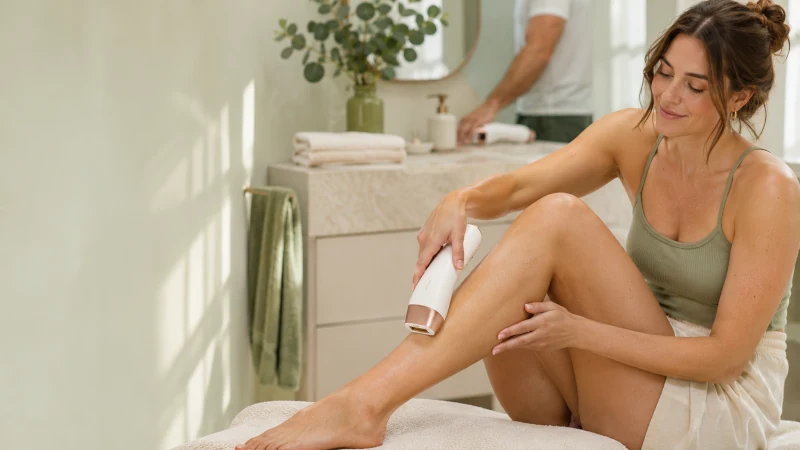
Home IPL has reasonable short-term evidence behind it. It also has real limits. Results fade without upkeep, it does little for light hair, and on the wrong skin, over a tattoo, or near your eyes it can cause burns or injury.
How Ulike IPL works, and why it isn’t a laser
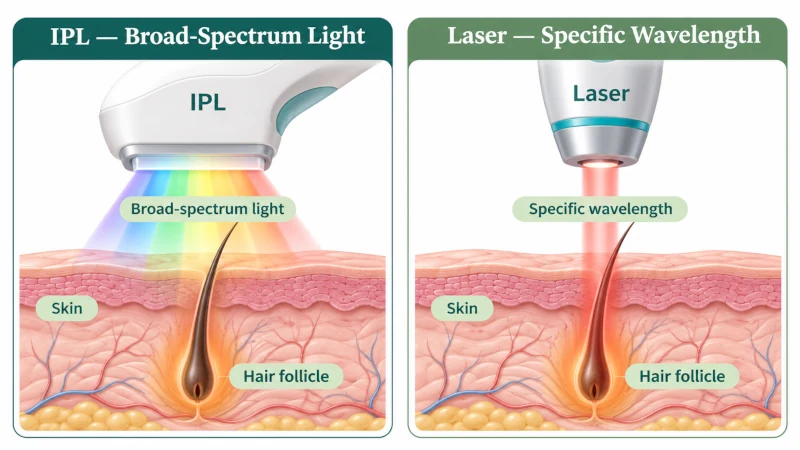
A laser emits one wavelength of light. IPL fires a broad flash across many wavelengths; the Air 10 manual lists 550 to 1200 nm [Ulike, n.d.-a]. Both rely on the same idea. Pigment (melanin) in the hair absorbs the light, the light turns to heat, and the heat damages the follicle enough to slow future growth [Mayo Clinic, 2026].
Because the target is pigment, the light needs contrast: dark hair against lighter skin. Where skin and hair are close in colour, the skin absorbs more of the energy, and that is how burns happen.
Home devices are deliberately less powerful than clinic machines [Cleveland Clinic, 2019]. That makes them safer to use unsupervised, and it is also why you need many more sessions and regular top-ups to hold your results [AAD, 2023].
Ulike builds in two safeguards. A contact sensor only allows a flash when the window sits flat against skin, and a skin-tone sensor reads your skin before each flash and holds back energy when the tone is outside its range [Ulike, n.d.-c]. These lower the risk. They do not replace the rules in the manual.
Who Ulike laser hair removal for women and men suits
Skin tone and hair color
| Your skin and hair | What to expect |
| Light to medium-brown skin with black or brown hair | Best match. Ulike says the Air 10 is built for skin tones I to V with black to brown hair [Ulike, n.d.-c]. |
| Red, grey, blonde or very light hair | Poor match. The manual says the device is not effective on these colours [Ulike, n.d.-a]. |
| Deep brown or black skin | Higher risk. More melanin in the skin raises the chance of burns and lasting colour changes [Mayo Clinic, 2026]. The manual asks for extra caution at type V and a physician’s advice if you are unsure whether you are type V or VI [Ulike, n.d.-a]. |
| Tanned or sunburnt skin (any tone) | Wait. Recent tanning, natural or artificial, is a listed reason not to treat [Ulike, n.d.-a]. |
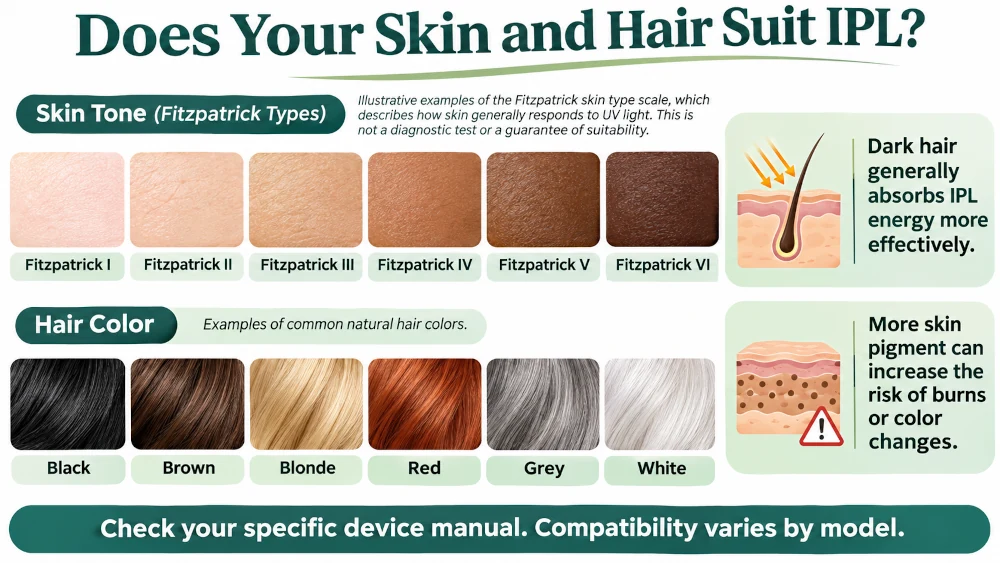
Skin-tone ranges differ between Ulike models, so check the chart printed in your own manual. If your skin is darker than the chart allows, a clinic is the safer route: dermatologists can choose lasers suited to dark skin, and the American Academy of Dermatology says people of all skin tones can be treated by an operator experienced with theirs [AAD, 2023].
Body areas for women and for men
The physics is the same for everyone. What differs is where the hair is. The manual lists underarms, bikini line, arms and legs as ideal areas and includes the chest and upper lip [Ulike, n.d.-a]. On the face, Ulike allows treatment only below the cheekbones [Ulike, n.d.-b].
Genitals, testicles and nipples are off limits for all users [Ulike, n.d.-a]. The bikini line is fine [Cleveland Clinic, 2019]. Men thinking about the beard area or neck should read the section on thicker regrowth below before starting, because that side effect clusters on the face and neck.
Hormonal conditions matter too. Polycystic ovary syndrome (PCOS; Mayo Clinic’s page uses the newer name PMOS) can keep producing new hair, so treatment may need to continue indefinitely [Mayo Clinic, 2026].
What results to expect, and when
What the trials show
Reasonably well supported: short-term reduction. A 2022 systematic review of home dermatology devices gave home IPL its top grade of recommendation for hair removal. In the trials it summarised, hair counts fell by 53.6% at six months after three treatments two weeks apart, by 64% at three months in a second trial of the same device, and by 87% in the underarms at six months in a study of 10 people [Cohen et al., 2022]. A 2012 review of seven mostly uncontrolled studies found a much wider spread, from 6% to 72% [Thaysen-Petersen et al., 2012].
Limited: long-term results. Most studies followed people for months, not years, and the reviewers themselves point to the shortage of blinded trials and long-term data [Cohen et al., 2022].
Not tested: Ulike specifically. The trials in these reviews used other manufacturers’ devices. Ulike’s US clearance appears in the FDA database as a 510(k) for its “Ice Cooling IPL Hair Removal Device,” found substantially equivalent in June 2024 [FDA, 2024a]. A 510(k) is a premarket notification that lets the FDA judge whether a device is equivalent to one already on the market [FDA, 2024b]. It means the device is legally cleared for sale. It is not a published trial of how much hair a Ulike removes.
Don’t count on permanent. Even after clinic laser treatment, most people see some regrowth, usually finer and lighter, and may need maintenance sessions [AAD, n.d.]. Ulike’s own stated purpose is a long-lasting reduction in hair regrowth, measured 6, 9 and 12 months after a course [Ulike, n.d.-a].
The treatment schedule
The Air 10 manual calls for three sessions a week, every other day, for the first four weeks, then one every two weeks or once a month depending on regrowth. Slow responders may need up to three months [Ulike, n.d.-a]. Ulike’s how-to page tapers a little differently: two to three sessions a week for four weeks, weekly through week eight, every two weeks through week twelve, then once or twice a month [Ulike, n.d.-b]. Follow the schedule that came with your model.
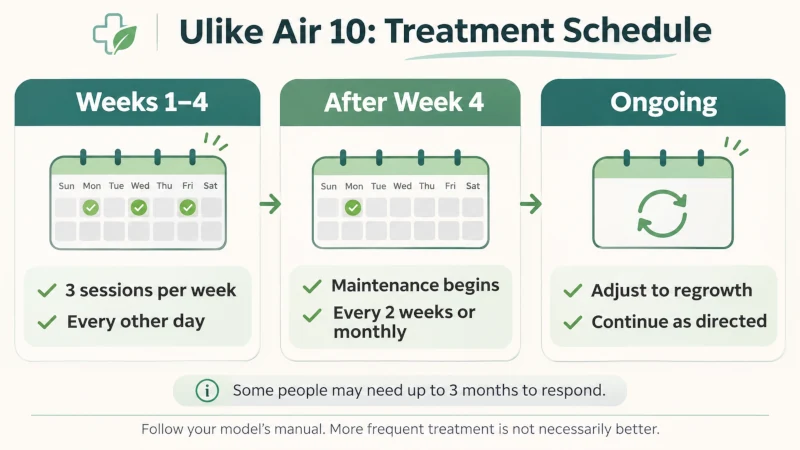
More is not better. The manual warns that repeated flashes on one spot can damage skin [Ulike, n.d.-a], and Ulike advises no more than three flashes per area in a session with 48 to 72 hours between sessions on the same area [Ulike, n.d.-b].
How to use a Ulike device safely
- Check that you qualify. Compare your skin and hair with the chart in your manual, and read the list of medicines and conditions further down.
- Shave first. Shave the area, then cleanse and dry it. Remove makeup, lotion and cream [Ulike, n.d.-a]. Don’t wax or pluck between sessions [Ulike, n.d.-b].
- Do a skin test. Flash one spot on the lowest mode and wait 24 hours. If the skin looks normal and you felt no intense heat, that mode is suitable [Ulike, n.d.-a]. This is a tolerance test for light, which is different from allergy patch testing.
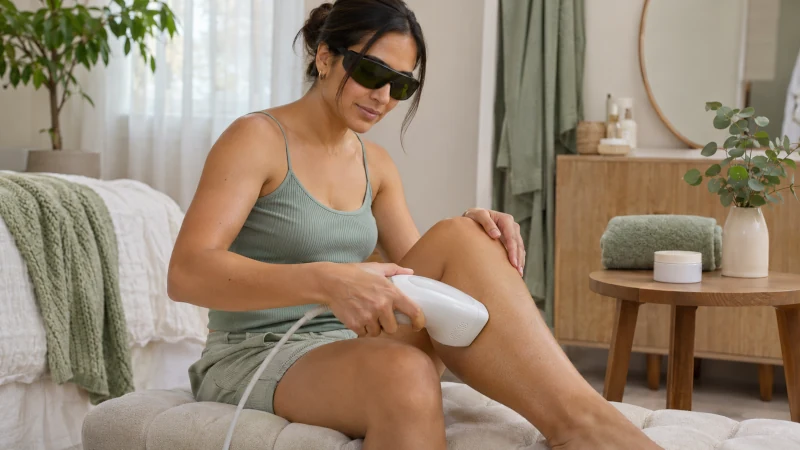
- Protect your eyes. Put on the goggles supplied, look away when you press the button, and never aim the window at your face above the cheekbones [Ulike, n.d.-a].
- Start low. Press the window flat against the skin and move up one level at a time, only while your skin stays comfortable [Ulike, n.d.-a].
- Look after the skin. Apply a plain lotion or cool gel. The manual suggests aloe vera for redness [Ulike, n.d.-a]; topical aloe gel has modest evidence for helping burns heal. Skip products containing alcohol or acids for now.
- Stay out of the sun. Keep treated skin out of direct sunlight for at least 48 hours [Ulike, n.d.-a] and use a broad-spectrum sunscreen of SPF 30 or higher [Mayo Clinic, 2026].
Side effects and risks
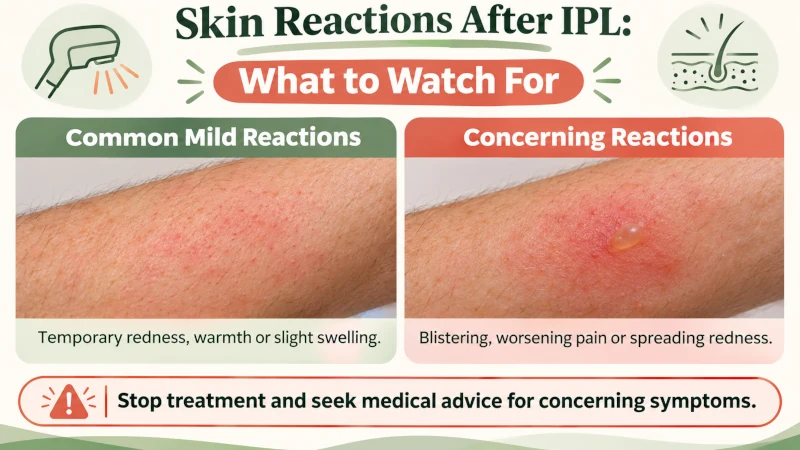
The usual reaction is redness, warmth and slight swelling. After clinic laser these typically last one to three days [AAD, n.d.]; in one home IPL trial, a quarter of participants had mild redness and swelling around the follicles [Cohen et al., 2022].
Less often, home devices have caused blistering, crusting and changes in skin colour [Thaysen-Petersen et al., 2012]. The manual also lists burns and scarring [Ulike, n.d.-a]. Lightened or darkened patches usually fade, but some are permanent [AAD, n.d.], and they are more likely in darker skin and after sun exposure [Mayo Clinic, 2026]. That is the reason for the no-tanning rule, and for the kind of daily sun protection that keeps dark spots from returning.
Cold sores can flare after light-based hair removal [AAD, n.d.]. If you get them, keep the device away from that area; the manual excludes skin affected by herpes simplex [Ulike, n.d.-a].
Hair that grows back thicker
In a small share of people, laser or IPL triggers more hair growth in or near the treated area. A meta-analysis covering 9,733 patients put the pooled rate at 3%, almost all of it on the face and neck; elsewhere on the body it was about 0.08% [Snast et al., 2021]. Those figures come largely from professional treatment, and the 2012 review of home devices found no reports of it [Thaysen-Petersen et al., 2012], so the true rate at home is unknown. It is still a reason to be cautious about the face and neck.
Eye safety
A 2023 systematic review found 20 people with eye injuries after IPL or diode laser hair removal, including damage to the iris that proved permanent. All were treated in clinics, most of them around the eyes, and many had no eye protection or had moved it. The authors found no cases from home devices but suspect under-reporting [Al muqarrab et al., 2023]. The rules that follow are simple: nothing above the cheekbones, goggles on, and never try to defeat the contact sensor to reach a curved area.
Who should not use it
The Air 10 manual tells these groups not to use the device [Ulike, n.d.-a]:
- Anyone pregnant or breastfeeding. The clinical sources reviewed here don’t address home IPL in pregnancy, so safety hasn’t been established. Waiting costs nothing.
- Anyone under 18.
- People taking medicines that make skin light-sensitive. The manual names certain antibiotics such as tetracycline, anti-inflammatory painkillers such as ibuprofen, and retinoids such as isotretinoin and tretinoin cream. Ask your pharmacist or doctor about anything you take regularly.
- People with a history of skin cancer or precancerous lesions.
- Anyone with a recent tan or sunburn.
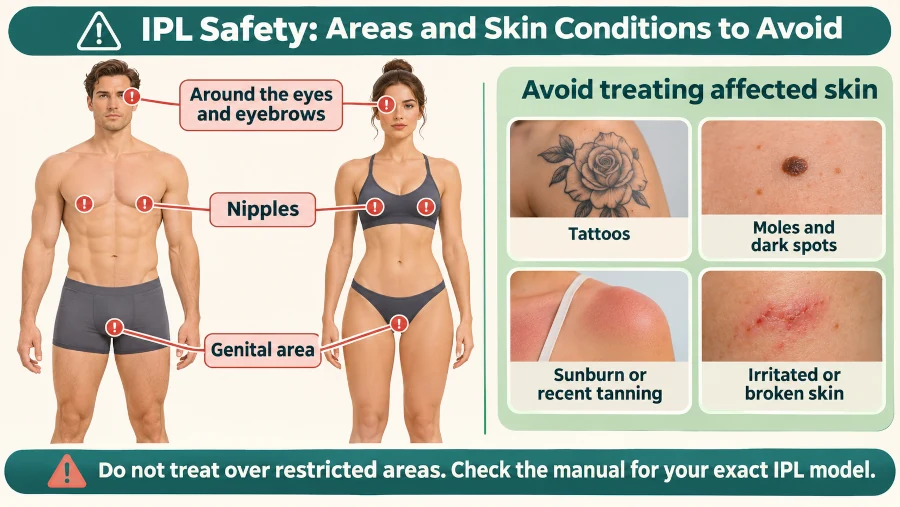
It also tells you not to flash over certain skin:
- Tattoos, permanent makeup, scars and burns.
- Moles, birthmarks, warts and other dark spots. Skin tags need their own treatment, such as laser skin tag removal by a professional.
- Active skin conditions, including psoriasis, vitiligo, acne, infections, open wounds and eczema or dermatitis.
- Eyebrows and anywhere around the eyes; genitals and nipples.
The manual additionally advises against use during menstruation [Ulike, n.d.-a].
Ulike vs. professional laser hair removal
| Ulike (home IPL) | Clinic laser | |
| Power | Lower energy by design [Cleveland Clinic, 2019] | Higher energy, chosen and adjusted by a trained operator |
| Who it suits | Dark hair on light to medium-brown skin | All skin tones with the right laser and an experienced operator [AAD, 2023] |
| Sessions | About 12 in the first month, then every two to four weeks [Ulike, n.d.-a] | Roughly 2 to 8, spaced weeks apart [AAD, n.d.] [Mayo Clinic, 2026] |
| How long results last | Needs periodic use to maintain [AAD, 2023] | Months to years; some regrowth and occasional maintenance [AAD, n.d.] |
| Cost | A one-time purchase; Cleveland Clinic put home devices at about $400 to $500 in 2019 [Cleveland Clinic, 2019] | A couple of hundred dollars per session, several sessions, in 2019 figures [Cleveland Clinic, 2019] |
| Supervision | None. You are the operator | A professional checks your skin, hair and medicines first |
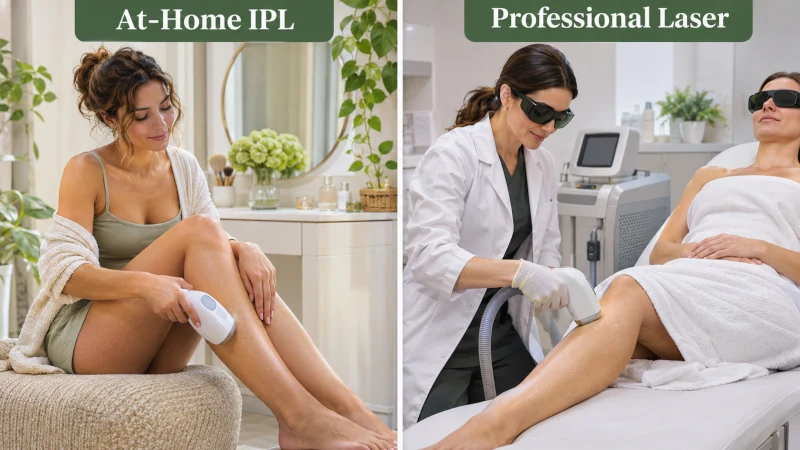
A Ulike makes most sense if you are a good colour match, want privacy, and will keep to a schedule for months. A clinic makes more sense if your skin is dark, your hair is light or hormonally driven, you want the face treated, or you would rather pay for fewer, stronger sessions. A dermatologist can tell you which group you are in before you spend money; the AAD notes that home devices are not for everyone [AAD, 2023].
When to stop and get medical help
Stop using the device and see a doctor or dermatologist if you notice:
- blisters, a burn, or crusting
- a light or dark patch that hasn’t faded after a few weeks
- spreading redness, pus or increasing pain, which can signal infection
- a cold sore outbreak in or near the treated area
- noticeably more hair in the treated area
Get same-day eye care if a flash reaches your eyes and you then have eye pain, sensitivity to light, or blurred vision [Al muqarrab et al., 2023].
Two situations call for a medical opinion before any hair removal: a mole or dark spot that has changed, and hair growth that is new, rapid or unusual for you.
| HEALTH DISCLAIMER: This article is for general education. It is not medical advice and does not replace an examination by a qualified healthcare professional. Light-based hair removal carries risks that depend on your skin, your health and the medicines you take. Read the manual for your specific device, and speak with a dermatologist or your doctor before use if you are pregnant or breastfeeding, have a skin condition, take prescription medicine, or are unsure whether the device suits your skin tone. |
Frequently Asked Questions
Is Ulike a laser?
No. Ulike devices use intense pulsed light, a broad-spectrum flash, where a laser uses a single wavelength [Ulike, n.d.-a]. Many home devices are sold as “laser” hair removal even though they are IPL.
Is Ulike hair removal permanent?
Plan on long-lasting reduction with upkeep. Ulike’s stated purpose is reduced regrowth measured up to 12 months after a course [Ulike, n.d.-a], and dermatologists say home devices need periodic use to keep results [AAD, 2023].
How soon will I see a difference?
Trials of other home IPL devices measured clear reductions at three and six months [Cohen et al., 2022]. Ulike’s manual says some people respond slowly and need up to three months of regular use [Ulike, n.d.-a].
Can men use Ulike on a beard?
Ulike permits use on the face below the cheekbones [Ulike, n.d.-b]. Bear in mind that thicker regrowth after light-based hair removal is reported mainly on the face and neck [Snast et al., 2021], so many men are better served by a clinic consultation for that area.
Does it hurt?
Most people feel warmth or a quick snap. In one small trial every participant reported mild burning or itching afterwards [Cohen et al., 2022]. If a flash is painful, the manual says to shave more closely and drop to a lower mode [Ulike, n.d.-a].
References
- Al muqarrab FJ, Alsuwaidan S, Al muqarrab Z, Alajlan A. Is it possible for light-based hair removal home devices to induce ocular damage? Systematic review. View source
- American Academy of Dermatology. 6 ways to remove unwanted hair. View source
- American Academy of Dermatology. Laser hair removal: FAQs. View source
- Cleveland Clinic. The pros and cons of at-home laser hair removal. View source
- Cohen M, Austin E, Masub N, Kurtti A, George C, Jagdeo J. Home-based devices in dermatology: a systematic review of safety and efficacy. View source
- Mayo Clinic. Laser hair removal. View source
- Snast I, Kaftory R, Lapidoth M, Levi A. Paradoxical hypertrichosis associated with laser and light therapy for hair removal: a systematic review and meta-analysis. View source
- Thaysen-Petersen D, Bjerring P, Dierickx C, Nash JF, Town G, Haedersdal M. A systematic review of light-based home-use devices for hair removal and considerations on human safety. View source
- U.S. Food and Drug Administration. View source
- U.S. Food and Drug Administration. View source
- Ulike. Air 10 IPL Hair Removal Device User Manual. View source
- Ulike. How to use. View source
- Ulike. Air 10 safety page. View source


