
The usual list of gastritis foods to avoid — alcohol, coffee, and spicy, acidic, fatty, and heavily processed foods — can take the edge off your symptoms, but it won’t fix what is actually inflaming your stomach. Most gastritis is driven by a bacterial infection or by anti-inflammatory painkillers, not by your dinner [NIDDK, 2024]. Changing how you eat makes a flare more bearable and gives the stomach lining a calmer place to heal. On its own, it is not a cure.
So treat the food list below as symptom management, not treatment. If your gastritis keeps coming back, the more useful question is what’s causing it — and that is something a doctor can test for in minutes.
What gastritis is, and why food usually isn’t the cause
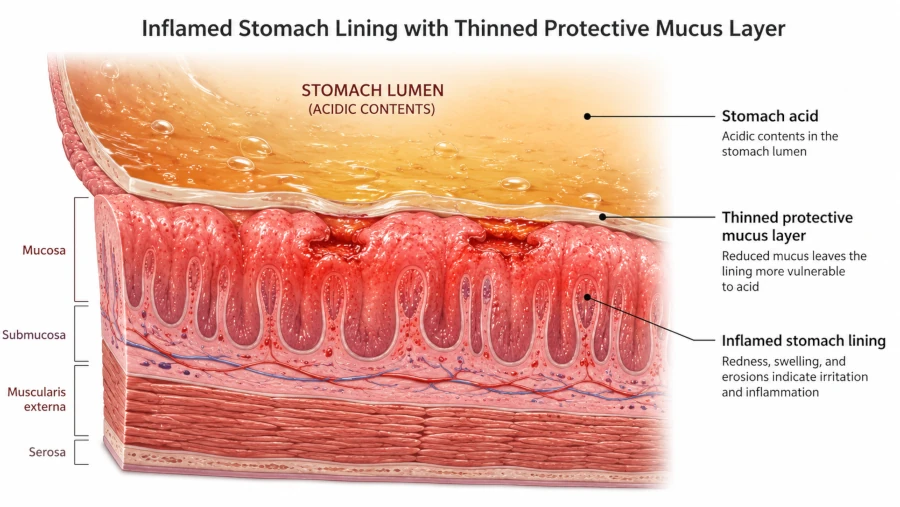
Gastritis means the lining of your stomach is inflamed. A layer of mucus normally shields that lining from your own stomach acid; when the mucus thins or breaks down, the exposed tissue gets irritated, and you feel it as burning, gnawing pain, nausea, bloating, or fullness after small meals [Cleveland Clinic, 2026].
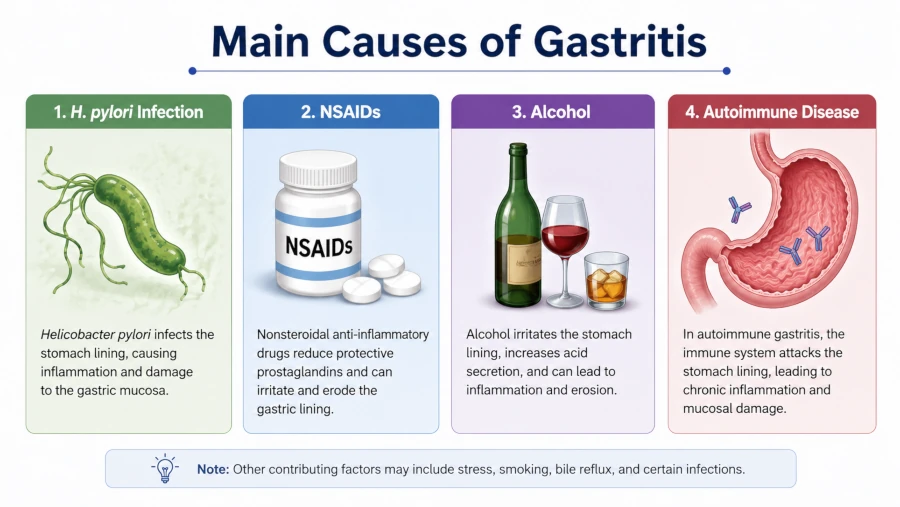
The causes that actually matter are mostly not dietary:
- Helicobacter pylori — a stomach bacterium that is the most common cause of gastritis worldwide. It is treated with antibiotics, not salad [Cleveland Clinic, 2026].
- NSAID painkillers such as aspirin, ibuprofen, and naproxen, which are among the most common causes of sudden (acute) gastritis when used regularly [Mayo Clinic, 2024].
- Heavy alcohol use, which can chemically erode the lining.
- Less common causes: bile reflux, autoimmune disease, severe illness or physical stress, and certain infections [NIDDK, 2024].
Where does food fit in? Mostly as a trigger. The right diet can calm symptoms and support healing, but it rarely starts gastritis and can’t clear an infection on its own. Smoking belongs on the irritant list too, since the nicotine and tar in tobacco reach the stomach and aggravate the lining. Keep that distinction in mind as you read the list below.
Gastritis foods to avoid
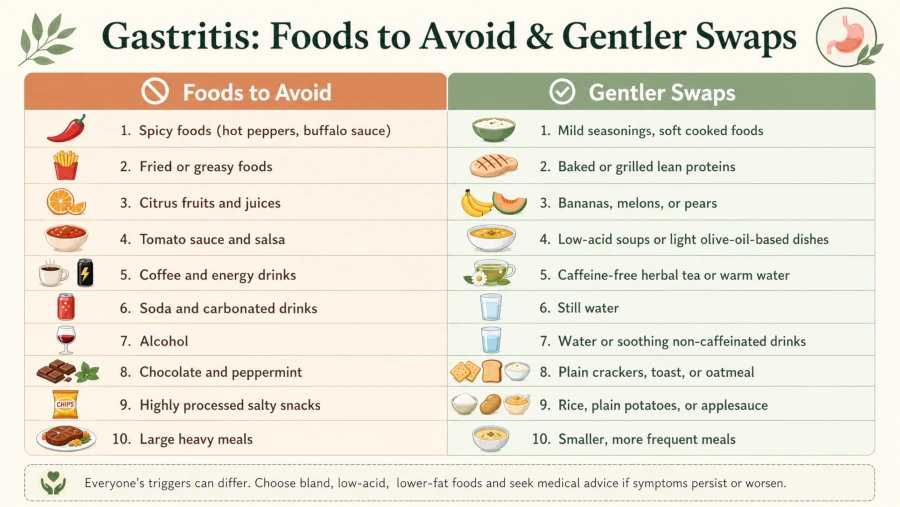
These are the foods and drinks most likely to irritate an inflamed stomach or push acid production higher. None of them is forbidden forever — the point is to ease off while you’re symptomatic, then reintroduce carefully.
Alcohol
Alcohol is the most direct dietary offender. It strips the protective mucus and can chemically burn the lining, which is why heavy drinking is a recognized cause of erosive gastritis rather than just a trigger [Cleveland Clinic, 2026]. Beer and wine pile their own acidity on top. During an active flare, the practical move is to stop completely until you have healed, then reintroduce cautiously, if at all.
Coffee and other caffeinated drinks
Coffee signals your stomach to make more acid. For a healthy gut that’s harmless; for an inflamed one it can mean more burning. Decaf is gentler but not neutral — it still nudges acid up, so cutting back tends to help more than simply switching to decaf [Canadian Digestive Health Foundation, 2025]. Strong tea, cola, and energy drinks belong in the same group.
Spicy seasonings
Chili, cayenne, and black or white pepper can sting a raw lining and set off pain in people who are sensitive. The evidence here is genuinely mixed: capsaicin doesn’t damage a healthy stomach, and plenty of people tolerate spice fine. This is one to judge by your own reaction rather than avoid on principle. If spicy meals reliably leave you sore, skip them while you’re flaring.
Acidic foods
Citrus fruit, tomatoes and tomato sauce, pineapple, and vinegary dressings are common triggers because their acidity adds to what your stomach already produces. Oranges, lemons, and grapefruit are the usual offenders during a flare [Healthline, 2024]. Pomegranate is another acidic fruit worth watching during symptoms, even though it is studied for other benefits when your stomach is calm.
Fried and fatty foods
High-fat meals sit in the stomach longer and slow its emptying, which drags symptoms out. Fried foods, fatty cuts of meat, full-fat dairy, and rich, creamy sauces are the usual culprits. The fat is the problem more than the food group — baked, grilled, steamed, or boiled versions of the same meal are far easier to handle.
Highly processed, salty, and pickled foods
Packaged snacks, processed meats, and instant meals combine refined ingredients, additives, and a lot of salt. Salt earns a specific warning: in people who carry H. pylori, diets high in salt and pickled foods are linked to a higher risk of stomach problems over time, so the Mayo Clinic suggests limiting both [Mayo Clinic, 2025].
Carbonated soft drinks
Fizzy drinks deliver acid, sugar, and gas in one glass. The carbonation bloats an already tender stomach, and the sugar and additives don’t earn their place either.
Sweets and sugary foods
Sugar-heavy foods show up again and again when people with gastritis report their triggers. In a 2020 cross-sectional study of 526 chronic-gastritis patients in Beijing, sweets were among the foods most consistently tied to stomach pain and bloating, and were the single dietary factor linked to every symptom measured in women [Li et al., 2020]. Association isn’t proof of cause, but the pattern is steady enough to take seriously.
One honest caveat about “trigger” foods
No two people with gastritis react to the same foods. Shellfish, onions, garlic, raw vegetables, or one specific fruit might bother you and not the next person. Rather than cutting out everything at once, keep a short food-and-symptom diary for a couple of weeks and let your own reactions narrow the list.
Quick reference: irritants and gentler swaps
| Food or drink | Why it can bother gastritis | Gentler swap |
| Alcohol | Strips protective mucus; can erode the lining | Water, herbal (non-mint) tea, diluted low-acid juice |
| Coffee and caffeine | Raises stomach acid; decaf still stimulates it | Smaller amounts, or caffeine-free drinks during a flare |
| Spicy seasonings | Can sting an inflamed lining in sensitive people | Mild herbs; add spice back as tolerance returns |
| Citrus and tomatoes | Extra acidity on top of stomach acid | Banana, ripe pear, melon, cooked apple |
| Fried and fatty foods | Slow stomach emptying; prolong symptoms | Baked, grilled, steamed, or boiled versions |
| Processed and salty foods | Additives and salt aggravate symptoms; salt tied to H. pylori risk | Fresh, home-cooked meals with less salt |
| Soft drinks | Acid, sugar, and gas in one glass | Still water; non-carbonated drinks |
| Sweets and sugar | Linked to more pain and bloating in studies | Whole fruit (non-citrus), smaller portions |
What to eat instead
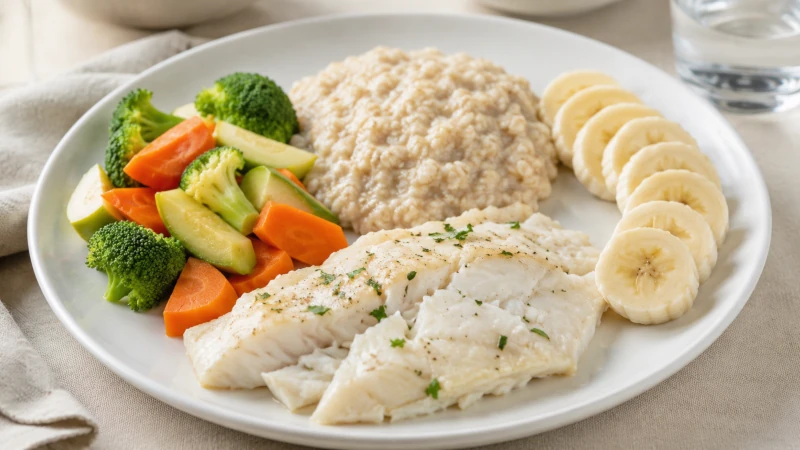
Easing off the irritants is only half the job. The other half is filling the plate with foods that are easy on the stomach: lower-acid, lower-fat, higher-fiber choices, cooked rather than raw while you are sore [NIDDK, 2024].
- Cooked vegetables such as carrots, squash, green beans, and spinach.
- Non-citrus fruit like bananas, ripe pears, melon, and gentle options such as papaya, which most people tolerate well.
- Lean protein: skinless chicken, turkey, fish, tofu, and eggs.
- Whole grains as tolerated, especially oats and brown rice.
- Low-fat dairy and probiotic foods like plain yogurt and kefir.
Probiotics deserve a measured note. Plain yogurt, kefir, and probiotic supplements have modest evidence as a helper alongside H. pylori treatment — in some trials they improve eradication rates and reduce antibiotic side effects [Mayo Clinic, 2024]. They don’t clear the infection on their own, so think of them as support, not a substitute for prescribed therapy.
How you eat matters as much as what you eat
Small habits move the needle. Smaller, more frequent meals, eating slowly, keeping mealtimes consistent, and not lying down right after eating all help a tender stomach. In that same 2020 study, irregular mealtimes and irregular portion sizes were among the habits most strongly associated with symptoms — sometimes more than any single food [Li et al., 2020].
When to stop self-treating and see a doctor
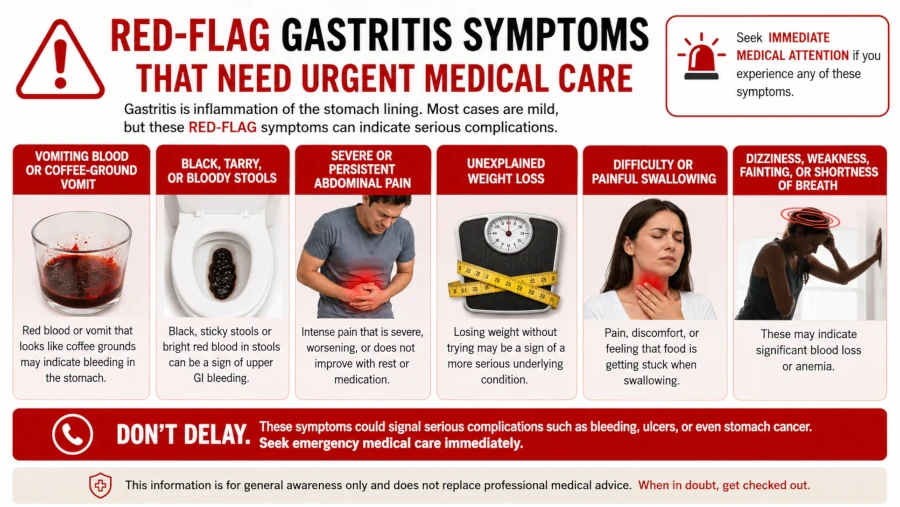
Some symptoms call for a clinic, not a recipe change. Get medical help promptly if you notice any of these:
- Vomiting blood, or vomit that looks like coffee grounds
- Black, tarry, or bloody stools
- Severe or constant pain in the upper abdomen
- Unexplained weight loss or a lasting loss of appetite
- Feeling lightheaded, unusually tired, or short of breath
Those last ones can point to slow bleeding and anemia. Together, these are red flags for bleeding in the stomach and need urgent care [NIDDK, 2024].
When self-care isn’t enough
If symptoms last more than about a week, keep returning, or get worse despite a careful diet, see a doctor. Diet cannot clear an H. pylori infection — that needs antibiotics plus an acid-reducing medication — and it won’t undo damage from regular NSAID use [Mayo Clinic, 2024]. A simple stool or breath test can check for the bacteria, and your doctor can review whether a painkiller you take regularly is part of the problem.
Who should be extra careful
- Pregnant or breastfeeding: don’t self-treat gastritis with herbal supplements. Some, such as high-dose licorice (glycyrrhizin), are not considered safe in pregnancy. Check with your provider first.
- On daily aspirin or NSAIDs for a heart or pain condition: don’t stop a prescribed medicine on your own — ask your doctor about alternatives or stomach-protecting options.
- Considering supplements (ginger, turmeric, licorice, probiotics): low-risk in food amounts, but concentrated forms can interact with blood thinners and other drugs and are no replacement for treatment.
Realistic expectations
Here’s the honest version. A gentler diet usually reduces day-to-day symptoms within a few days to a couple of weeks and gives the lining a better chance to recover. It does not, by itself, cure gastritis caused by infection, medication, or an autoimmune process. The good news: most gastritis improves quickly once the actual cause is treated [Cleveland Clinic, 2026].
| Health Disclaimer This article is for general education and is not medical advice. It should not replace diagnosis or treatment from a qualified healthcare professional. If you are pregnant, breastfeeding, take prescription medication, or have an ongoing health condition, talk to your doctor before changing your diet or starting any herbal or natural remedy. If you have severe symptoms or any sign of stomach bleeding, seek medical care right away. |
Frequently Asked Questions
Can I drink coffee again once my gastritis settles?
Often, yes. Once you have healed and stayed symptom-free for a while, many people tolerate a small amount of coffee. During an active flare, cut it out — including decaf, which still raises stomach acid.
Is milk good for gastritis?
Whole milk briefly buffers acid but can prompt more acid afterward, so it isn’t the soother it’s reputed to be. Low-fat or plain yogurt is a better choice than a glass of whole milk.
Are eggs okay to eat with gastritis?
Generally, yes. Eggs are a well-tolerated lean protein. Prepare them simply — poached, boiled, or lightly scrambled — without a lot of butter, oil, or pepper.
How long do I need to follow a gastritis diet?
Through the flare and until symptoms calm down, then reintroduce foods gradually. For most people it is temporary, not a permanent restriction, unless a specific food clearly remains a trigger.
Does spicy food cause gastritis?
No. Spicy food can worsen symptoms in some people, but it doesn’t cause gastritis. The usual causes are H. pylori infection and regular NSAID use.
Will diet alone cure H. pylori gastritis?
No. H. pylori gastritis needs antibiotics plus an acid-reducing medication. Diet supports comfort and healing but cannot eradicate the bacteria.
References
- National Institute of Diabetes and Digestive and Kidney Diseases (NIDDK). Gastritis & Gastropathy. → View source
- Mayo Clinic. Gastritis: Symptoms & causes. → View source
- Mayo Clinic. Gastritis: Diagnosis & treatment. → View source
- Cleveland Clinic. Gastritis: What It Is, Symptoms, Causes & Treatment. → View source
- Mayo Clinic. Helicobacter pylori (H. pylori) infection: Symptoms & causes. → View source
- Li Y, et al. Association of Symptoms with Eating Habits and Food Preferences in Chronic Gastritis Patients: A Cross-Sectional Study. Evid Based Complement Alternat Med. 2020. doi:10.1155/2020/5197201. → View source
- Canadian Digestive Health Foundation. How to Best Manage Gastritis with Diet. → View source
- Healthline. What to Eat and What to Avoid If You Have Gastritis. → View source
