
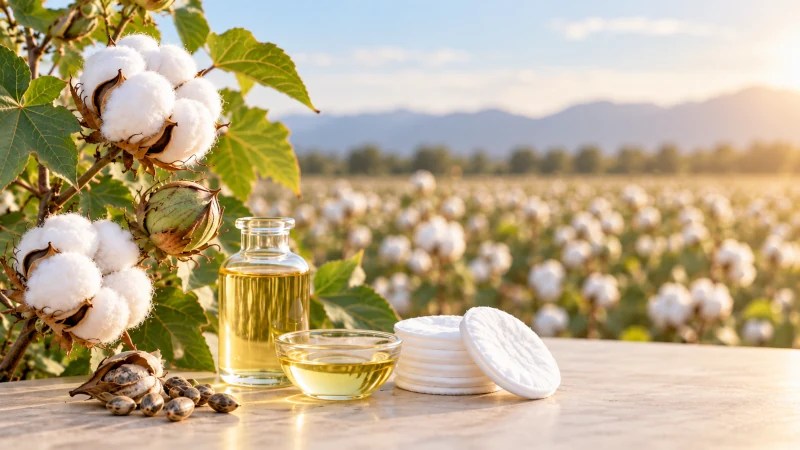
The cotton plant earns its place in a health article for two honest reasons, and it helps to keep them apart. Its fiber — the white fluff wrapped around the seeds — is almost pure cellulose, which is why absorbent cotton has dressed wounds and cleaned skin for well over a century. Its seeds press into an oil that, once refined, cooks and behaves like other polyunsaturated oils. Nearly everything else you’ll read about the cotton plant as a remedy is traditional use resting on thin or mixed evidence, and a few preparations made from the raw seed or root carry real warnings — particularly in pregnancy. This page sorts the useful from the doubtful and tells you where the safety lines are.
What the cotton plant is
Cotton is Gossypium, a genus in the mallow (Malvaceae) family — the same botanical family as hibiscus and okra [Britannica, 2025]. (You may see older sources, including the version of this article we rebuilt, call it “Mauvaceae.” That’s a misspelling of Malvaceae.)
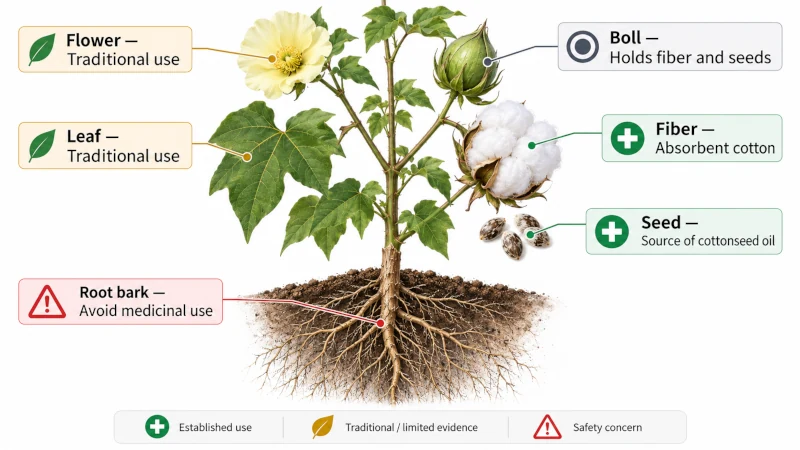
The plant is a shrub, usually grown as an annual crop, reaching roughly one to one and a half meters. Its leaves are lobed, and its showy flowers open cream to pale yellow, often with a darker spot at the base, before giving way to a seed capsule called a boll. When the boll splits, it reveals seeds wrapped in the fiber we spin into thread [Britannica, 2025]. That fiber is about 91% cellulose — one of the reasons it’s so absorbent and so gentle against skin [Wikipedia, Cotton].
Where it grows and what it looks like
Cotton is native to tropical and subtropical regions across the Americas, Africa, and India, and it’s now farmed in hot climates worldwide [Britannica, 2025]. The part with health uses isn’t one thing: the fiber, the seed, the seed oil, and — in traditional medicine — the leaves, flowers, and root bark have all been used differently, with very different evidence and safety behind each.
The two uses that genuinely hold up
Absorbent cotton for wounds and skin
This is the strongest, least controversial use, and it’s a physical property rather than a drug effect. Cotton fiber is hydrophilic — it pulls in water fast and holds a lot of it — because it’s mostly cellulose. That’s exactly what you want in a wound dressing or a swab: it wicks fluid away and keeps a surface clean and dry. Surgical cotton wool has been used this way since the 19th century [Wikipedia, Cotton]. Cotton fabric against the skin is also low-irritant and breathable, which is why it’s a sensible default for underwear and for anyone prone to reactions from synthetic fibers — though “hypoallergenic” is a tendency, not a guarantee.
If your interest is soothing or treating skin specifically, the plant fiber isn’t doing anything medicinal there — it’s a carrier. For what actually helps skin, our guide to herbal remedies for skin and what the evidence supports is a more useful starting point.
Refined cottonseed oil as a cooking oil
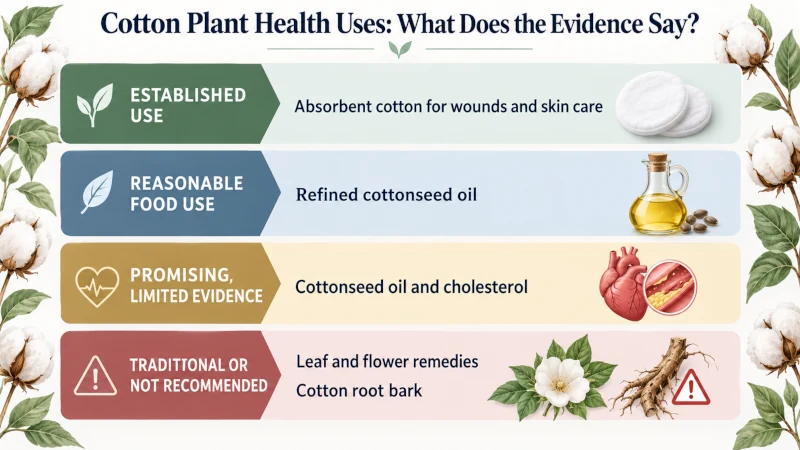
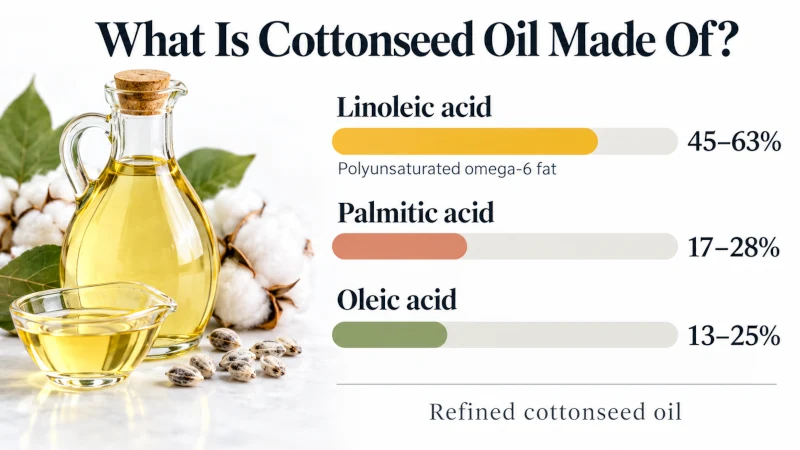
Cottonseed oil is pressed from the seeds and then refined for food use. Its fatty-acid profile is genuinely polyunsaturated-rich: roughly 45–63% linoleic acid (an essential omega-6 fat), 17–28% palmitic acid, and 13–25% oleic acid, plus small amounts of vitamin E (tocopherols, about 0.1%) and plant sterols (about 1%, mostly β-sitosterol) [Gutierrez & Komarnytsky, 2025].
One point matters more than any of those numbers: refining removes gossypol, a naturally occurring pigment in the raw seed that’s toxic in quantity [Gutierrez & Komarnytsky, 2025]. Commercial, refined cottonseed oil on a supermarket shelf is a normal edible oil. Raw cottonseed, crude unrefined oil, or home-pressed oil is a different and riskier thing — see the gossypol section below.
On skin, the same oil shows up in cosmetics as an emollient. A 2025 review found its linoleic-to-oleic ratio supports the skin barrier, and tolerance studies reported a 37–48% improvement in skin-surface hydration in infant applications [Gutierrez & Komarnytsky, 2025]. Reasonable as a moisturizer ingredient; not a treatment for any skin disease.
Cottonseed oil and cholesterol: promising but thin
You’ll see cottonseed oil promoted as cholesterol-lowering. There’s a real signal here, but the evidence is early, so match your expectations to it.
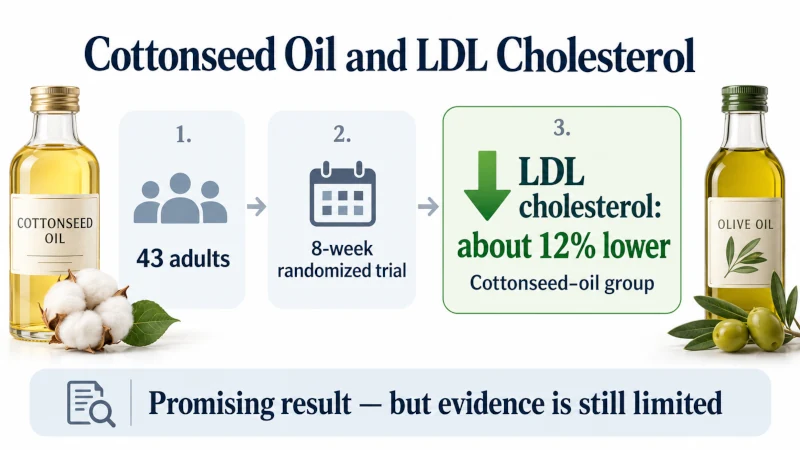
In an 8-week randomized trial, 43 adults with high cholesterol ate a diet enriched with either cottonseed oil or olive oil. The cottonseed-oil group saw LDL (“bad”) cholesterol fall about 12% and total cholesterol about 7%, meaningfully more than the olive-oil group [Prater et al., 2022]. A 2024 systematic review pooled the available trials and concluded cottonseed oil “may improve” lipid levels — while stressing the obvious limit: only two small, short randomized trials (58 people total) exist, both compared it only against olive oil, and larger studies are needed [Hart et al., 2024].
The plausible mechanism is its polyunsaturated fat and its plant sterols, which can modestly reduce cholesterol absorption. But the sterol amount in the oil is small (~1%), far below the ~2 grams a day used in dedicated cholesterol-lowering products [Gutierrez & Komarnytsky, 2025]. So the honest read: swapping cottonseed oil in for butter or lard, as part of an otherwise good diet, may help your numbers a little. It is not a treatment for high cholesterol. If you’re tracking your levels, here’s how checking your cholesterol at home actually works and where it falls short.
Traditional remedies: infusions, root bark, and folk uses
Older herbals credit the cotton plant with far more. These uses are traditional — meaning long-used, not well-tested — and some carry safety concerns that outweigh any benefit.
Leaf and flower infusions
Cotton leaves and flowers contain mucilage, which is soothing in the mouth and throat, and folk practice used a leaf-and-flower infusion for chest congestion, coughs, and irritated gut conditions like colitis. The soothing quality is real in the way any mucilage-rich tea is; a specific medicinal effect on bronchitis or colitis has not been established in clinical studies. If a nagging cough is why you’re here, the evidence-graded rundown of foods that help when you have bronchitis and of foods that support lung health will serve you better than a cotton infusion. Note too that green (unrefined) plant parts can contain gossypol, so drinking cotton-part infusions isn’t automatically safe — pregnant and breastfeeding people especially should avoid them.
Cotton root bark — a serious safety caution
Cotton root bark deserves a flag, not a recommendation. Historically it was used to stimulate uterine contractions — to induce labor, to bring on a delayed period (an “emmenagogue”), and, in some traditions, to end a pregnancy. Modern pharmacology backs the concern rather than the benefit: gossypol has documented abortifacient effects, and in animal studies it blocked implantation and the maintenance of pregnancy [Drugs.com, Gossypol]. This use has been abandoned in medicine because safer, controllable drugs exist. Do not use cotton root bark or cotton root-bark preparations, and never in pregnancy.
Gossypol: the safety issue almost no one mentions
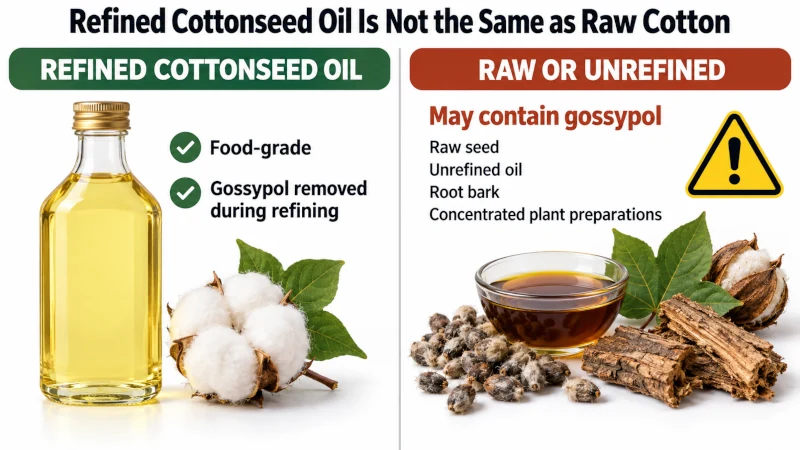
Gossypol is a yellow compound found throughout the cotton plant and concentrated in the seed. It’s the reason “cotton is edible” needs an asterisk. Refining strips it from commercial cottonseed oil, but it remains in raw seed, whole-seed products, unrefined oil, and root bark.
Two things make gossypol notable:
- Male fertility. Gossypol was studied for decades as a male contraceptive because it suppresses sperm production and movement. That’s not a benefit to court accidentally: follow-up found the effect doesn’t reliably reverse — in some men sperm counts never returned to normal after stopping [Drugs.com, Gossypol].
- Toxicity in quantity. Gossypol can cause low blood potassium (hypokalemia), and in animals free gossypol causes heart failure, liver damage, and anemia, with monogastric species (like pigs — and, relevantly, humans) far more vulnerable than cud-chewing animals that can detoxify it [Drugs.com, Gossypol]; [Merck Veterinary Manual].
None of this is a reason to fear a bottle of refined cottonseed oil or a cotton swab. It is the reason not to eat raw cottonseed, brew concentrated cotton-plant preparations, or press and consume your own unrefined cotton oil.
Side effects and who should avoid cotton-plant preparations
For refined cottonseed oil used as food, the main consideration is ordinary: it’s high in omega-6 and calorie-dense, so it fits a balanced diet in moderation, not in excess. For any gossypol-containing preparation (raw seed, unrefined oil, leaf/flower infusions, root bark), reported and expected effects include low potassium, digestive upset, and fertility suppression.
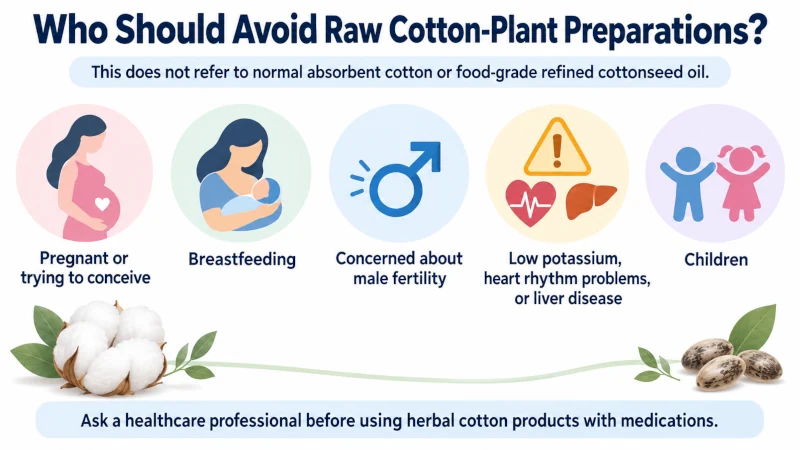
Avoid cotton-plant preparations (other than refined oil and cotton fiber) entirely if you are:
- Pregnant or trying to become pregnant — documented uterine-stimulant and abortifacient effects [Drugs.com, Gossypol]
- Breastfeeding — no safety data
- A man concerned about fertility — gossypol suppresses sperm, possibly irreversibly [Drugs.com, Gossypol]
- Someone with low potassium, heart rhythm problems, or liver disease
- Giving anything to a child
Medication and health-condition cautions
Because gossypol can lower potassium, combining gossypol-containing preparations with potassium-wasting diuretics or other drugs that drop potassium is a theoretical route to dangerous lows; this is an area with limited human data, which is itself a reason for caution rather than reassurance. Anyone on prescription medication — especially heart, blood-pressure, or diuretic medication — should talk to a pharmacist or doctor before using any cotton-plant supplement.
When to see a healthcare professional
- You’re using any cotton-plant preparation and develop muscle weakness, cramping, an irregular heartbeat, or unusual fatigue — possible signs of low potassium. Seek urgent care for fainting or a racing/irregular heartbeat.
- A cough or chest illness you were treating “naturally” lasts beyond three weeks, brings a high or persistent fever, produces bloody mucus, or makes it hard to breathe — get medical care rather than continuing self-treatment.
- Digestive symptoms you were self-treating (persistent diarrhea, blood in the stool, significant abdominal pain) don’t settle quickly.
- You’re pregnant, breastfeeding, trying to conceive, or on regular medication and are considering any herbal cotton product — check first.
| Health Disclaimer: This article is for education and general information only. It isn’t a substitute for professional medical advice, diagnosis, or treatment, and it doesn’t establish a doctor–patient relationship. Refined cottonseed oil sold as food and cotton fiber used externally are not the same as raw cotton-plant preparations, which can contain toxic gossypol. Do not use cotton root bark or other gossypol-containing preparations, and never use them in pregnancy. If you are pregnant, nursing, trying to conceive, taking medication, or managing a health condition, talk with a qualified healthcare professional before using any herbal or natural product. If you have symptoms that concern you, seek care. |
Frequently Asked Questions
Is cottonseed oil safe to eat?
Refined cottonseed oil sold for cooking is safe for most people — refining removes gossypol, the plant’s toxic compound [Gutierrez & Komarnytsky, 2025]. It’s high in omega-6 and calorie-dense, so use it in moderation like any oil. Raw cottonseed and crude, unrefined oil are not safe to consume freely.
Can the cotton plant lower cholesterol?
There’s an early, promising signal: in a small 8-week trial, cottonseed oil lowered LDL cholesterol about 12% versus olive oil [Prater et al., 2022]. But only two small trials exist, so it’s not a proven treatment — think “a possibly helpful oil swap,” not medicine [Hart et al., 2024].
Is cotton root bark safe to use?
No. It was historically used to trigger uterine contractions and end pregnancies, and gossypol has documented abortifacient effects [Drugs.com, Gossypol]. It’s not used in modern medicine and should be avoided, especially in pregnancy.
What is gossypol, and should I worry about it?
Gossypol is a natural compound in the cotton plant, concentrated in the seed. In quantity it can lower potassium and suppress male fertility, sometimes irreversibly [Drugs.com, Gossypol]. It’s removed from refined cottonseed oil, so a normal food bottle isn’t the concern — raw seed, unrefined oil, and root-bark preparations are.
Can I drink cotton leaf or flower tea for a cough?
Why is cotton used for wound dressings?
Because the fiber is about 91% cellulose, it’s extremely absorbent and low-irritant, so it wicks fluid and keeps a wound surface clean and dry [Wikipedia, Cotton]. That’s a physical property, not a drug effect.
References
- Encyclopædia Britannica. Cotton (fibre and plant). View source
- Wikipedia. Cotton. (tertiary; cellulose % and cotton-wool history only) View source
- Gutierrez J, Komarnytsky S. Cottonseed oil composition and its application to skin health and personal care. Front Pharmacol. 2025. DOI: 10.3389/fphar.2025.1559139 View source
- Prater MC, Scheurell AR, Paton CM, Cooper JA. Blood Lipid Responses to Diets Enriched with Cottonseed Oil Compared With Olive Oil in Adults with High Cholesterol in a Randomized Trial. J Nutr. 2022. PMID: 35511204; DOI: 10.1093/jn/nxac099 View source
- Hart TL, Petersen KS, Kris-Etherton PM. The effect of cottonseed oil on lipids/lipoproteins: a systematic review. Nutr Rev. 2024;82(8):1079–1086. DOI: 10.1093/nutrit/nuad109 View source
- Drugs.com. Gossypol (natural products monograph). View source
- Merck Veterinary Manual. Gossypol Poisoning in Animals. View source
- Ethnobotanical and antimicrobial activities of the Gossypium (Cotton) genus: A review. J Ethnopharmacol. 2021. PMID: 34216726. View source


