
No food cures bronchitis. If a page promises a food that will, it’s selling something. What food can do is make the miserable days a little easier — thinner mucus, a calmer cough, a throat that hurts less — while your body clears the infection on its own. That’s the honest way to think about the foods to eat when sick with bronchitis: comfort and support, not a cure.
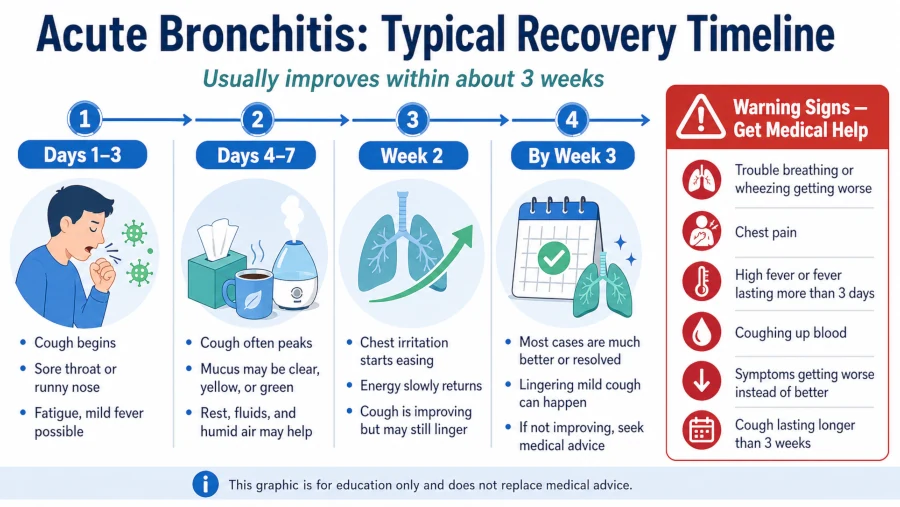
Most bronchitis is acute bronchitis — a “chest cold” that’s almost always caused by a virus and clears on its own, usually within about three weeks, though the cough can hang on longer. Because it’s viral, antibiotics don’t help it [CDC, 2026] [Cleveland Clinic, 2022]. So eating well while you’re sick has three realistic jobs: ease your symptoms, avoid making things worse, and give your immune system the fuel it needs to finish the job.
Foods to Eat When Sick With Bronchitis: honey
If you take one thing from this page, take honey. It’s the only food on the usual “bronchitis foods” lists with genuine clinical evidence behind it — and even that evidence is modest. A Cochrane review of honey for cough found that honey probably eases cough more than no treatment or a placebo, while rating the overall quality of the studies as low to moderate [Cochrane, 2018]. A separate meta-analysis of 14 randomized trials reported that honey improved cough symptoms compared with usual care, though the authors flagged a moderate risk of bias across the studies [Abuelgasim et al., BMJ Evidence-Based Medicine, 2021] [Mayo Clinic, 2024].
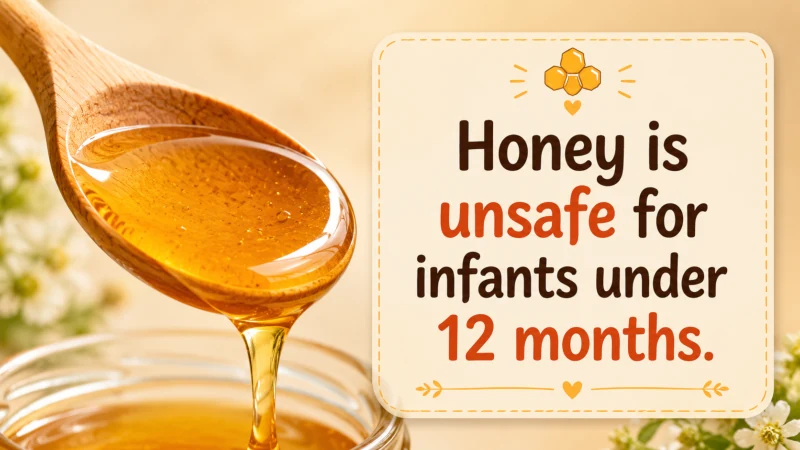
How to use it: a teaspoon or two on its own, or stirred into warm (not boiling) water or a caffeine-free tea, once or twice a day when your cough is bothering you. Warm and simple beats any pricey “medicinal” honey.
One firm rule: never give honey to a baby under 12 months old. It can cause infant botulism, a rare but serious illness [healthdirect, 2024]. If you have diabetes, remember honey is still sugar and will raise blood glucose, so count it. And skip it if you have a known honey or bee-pollen allergy.
Warm fluids and soft, soothing foods
This is the quiet workhorse of eating through a chest cold. Staying well hydrated helps thin mucus so it’s easier to cough up, and warm liquids are soothing when your chest and throat feel raw. Fluids and moist air are standard advice from public-health sources for exactly this reason [CDC, 2026] [MedlinePlus, 2025].
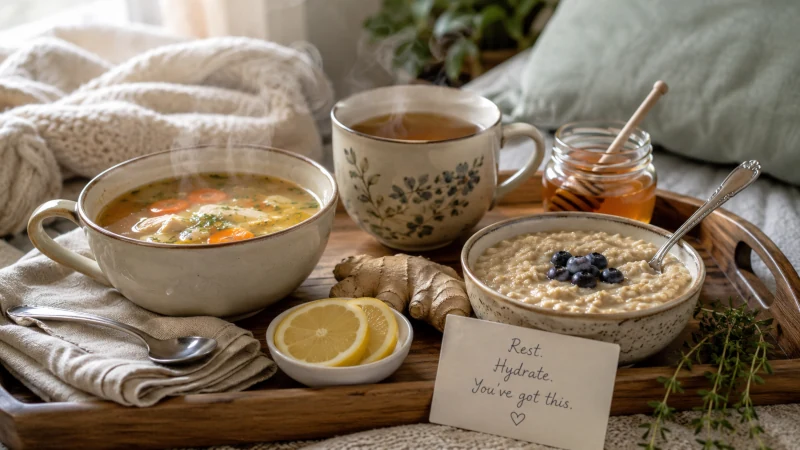
- Broths and soups — a classic chicken or vegetable soup delivers warmth, fluid and a little salt and protein when your appetite is low.
- Warm herbal teas and honey-water — ginger, chamomile or plain hot water with honey and lemon. The relief is mostly from warmth and hydration, which is fine — that’s real comfort.
- Soft, easy foods — oatmeal, stewed or well-cooked fruit, mashed vegetables. Traditional remedies like dates or figs simmered in milk are gentle and soothing; the evidence for them is traditional rather than clinical, but they’re low-risk and comforting.
Water counts too. If you have heart or kidney disease and have been told to limit fluids, check with your clinician before loading up.
Onion, garlic and other pungent foods: traditional, not proven
Older remedy lists lean hard on onion, garlic, radish, leek and watercress as “natural expectorants” or “natural antibiotics.” Here’s the careful version. These foods have a long history of traditional use, and garlic in particular does show antibacterial activity in the lab. But when researchers actually test it in people, the evidence thins out fast: a Cochrane review of garlic for the common cold found only one usable trial and concluded there’s insufficient evidence that garlic prevents or treats these infections [Cochrane, 2014].
The sensible takeaway: eat these foods because they’re nutritious and some people find the sharp, warming taste genuinely helps them feel clearer — not because they’ve been shown to shorten bronchitis. A few cautions worth knowing:
- Food is not a supplement. High-dose garlic or ginger capsules are a different thing from cooking with them, and in large amounts they can add to bleeding risk if you take blood thinners. Ask a pharmacist first.
- Reflux-prone? Raw onion, garlic and very spicy dishes can worsen heartburn, which can itself irritate a cough. Cook them if raw bothers you.
For a fuller, evidence-rated look at plant remedies for the airways, see this guide to herbs for the lungs and what the evidence actually shows.
Feed the airway lining: colorful produce, vitamin A and protein
The cells lining your bronchial tubes depend on adequate vitamin A to stay healthy and to keep working as a barrier against germs. A long-term shortfall of vitamin A is linked to a higher risk of respiratory disease and infection [NIH Office of Dietary Supplements, 2025]. That’s a real reason to eat vitamin-A and beta-carotene foods — carrots, sweet potato, leafy greens, apricots, mango, eggs and dairy — as part of a normal, varied diet.
What it is not is a reason to megadose. In well-nourished people there’s no evidence that piling on vitamin A treats a bout of bronchitis, and high-dose supplements carry real risks. In smokers and former smokers, high-dose beta-carotene supplements have actually increased the risk of lung cancer in studies [NIH Office of Dietary Supplements, 2025]. Get these nutrients from food, not high-dose pills. Rounding out meals with some protein — eggs, yogurt, beans, fish, poultry — also supports recovery when your appetite is coming back.
What to ease off while you recover
The original version of this article framed salt, alcohol and fat as a way to “cure bronchitis fast.” No food does that. But a couple of adjustments genuinely help you feel better and rest:
- Alcohol. It dehydrates you, disrupts sleep and adds stress your body doesn’t need while it’s fighting a virus. Ease off until you’re better [GoodRx, 2025].
- Very heavy, greasy or ultra-salty meals. There’s no evidence these “cause” bronchitis or that cutting them speeds a cure, but a lighter, mostly whole-food plate is easier to eat when you feel rough and supports overall recovery.
Notice the honest framing: these are comfort-and-recovery choices, not treatments. The heavy lifting is done by rest and time.
The self-care that matters more than any single food
Food is a supporting player. These are the moves that actually carry an acute chest cold to the finish line:
- Rest and fluids — the two most reliable things you can do [CDC, 2026].
- Moist air — a clean humidifier or a steamy bathroom can ease a tight, coughy chest [MedlinePlus, 2025].
- Honey for the cough — as above, for anyone over 12 months.
- Over-the-counter help, chosen with care — an expectorant containing guaifenesin can loosen mucus; a pharmacist can point you to the right product [MedlinePlus, 2025]. Do not give aspirin to anyone under 18.
- If you smoke, this is the moment to stop or cut down — nothing you eat will offset ongoing smoke exposure to inflamed airways.
And to say it plainly: for viral bronchitis, antibiotics won’t speed things up and can cause side effects of their own [CDC, 2026] [American Lung Association, 2024]. A clinician prescribes them only if they suspect something bacterial, like pneumonia or whooping cough.
How strong is the evidence, food by food?
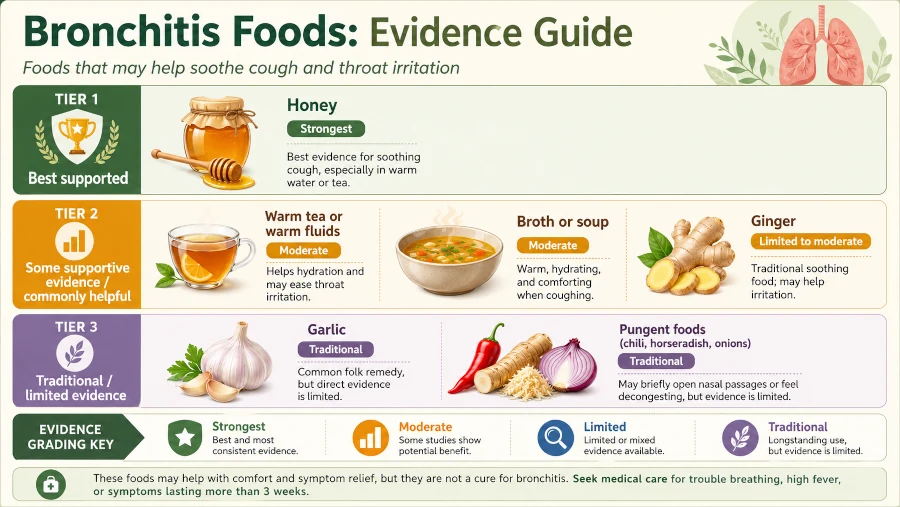
A quick, honest scorecard so you know what you’re actually getting from each item:
| Food or drink | Evidence strength | What it realistically does |
| Honey | Best available (still low–moderate quality) | Modestly eases cough; soothes the throat. Not for infants under 12 months. |
| Warm fluids, broths, soups | Supportive / standard advice | Hydration thins mucus; warmth soothes. Reliable comfort. |
| Vitamin A / beta-carotene foods | Established for the lining; not a treatment | Supports healthy airway tissue. Eat as food, not high-dose pills (risky for smokers). |
| Onion, garlic, radish, leek, watercress | Traditional / limited | Nutritious; some find them clearing. Not shown to shorten bronchitis. |
| Dates, figs, jujube, okra (demulcents) | Traditional | Soft and soothing; low-risk comfort foods. Minimal clinical data. |
Who should be extra careful
- Babies under 12 months — no honey, in any form (botulism risk) [healthdirect, 2024].
- Pregnant or breastfeeding — honey and normal foods are fine, but avoid high-dose vitamin A (retinol) supplements and be cautious with concentrated herbal products; check with your provider.
- Smokers and former smokers — avoid high-dose beta-carotene supplements [NIH Office of Dietary Supplements, 2025].
- People with diabetes — honey raises blood sugar; work it into your counts.
- People on blood thinners — high-dose garlic or ginger supplements (not normal food amounts) can add bleeding risk; ask a pharmacist.
- People with COPD, asthma, or heart, kidney or immune conditions — bronchitis can hit harder; call your clinician sooner rather than later.
Red flags: when it’s more than a chest cold
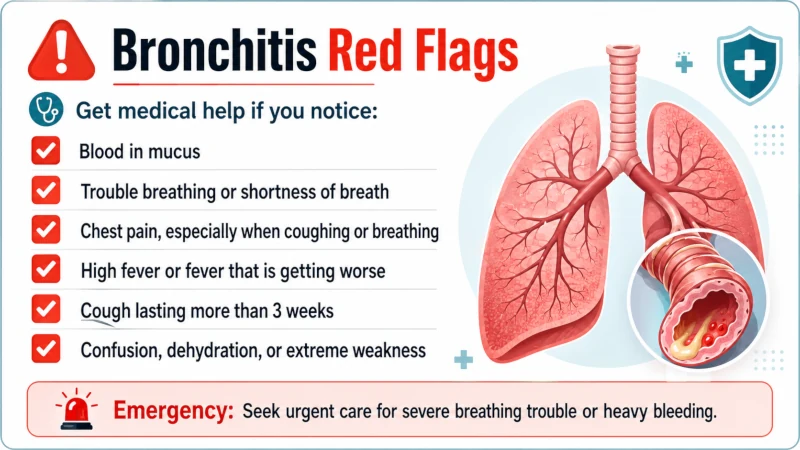
Food and rest are for a mild, self-limiting illness. Stop self-treating and get medical care if you notice any of the following [CDC, 2026]:
- A fever that lasts more than 5 days, or a temperature of 104°F (40°C) or higher
- Coughing up bloody mucus
- Shortness of breath or trouble breathing
- A cough or symptoms lasting more than 3 weeks
- Repeated bouts of bronchitis
- A baby under 3 months old with a fever of 100.4°F (38°C) or higher
Chest pain, confusion, bluish lips, or symptoms that suddenly get worse also warrant prompt care. A high fever with a productive cough and feeling very unwell can signal pneumonia rather than simple bronchitis [American Lung Association, 2024]. When in doubt, get checked — it’s what clinicians are there for.
| HEALTH DISCLAIMER: This article is for general education and information only. It is not medical advice and is not a substitute for diagnosis or treatment from a qualified healthcare professional. No food, drink, herb or supplement mentioned here cures, prevents or reverses bronchitis or any other disease. Talk to your doctor, pharmacist or a registered dietitian before making changes if you are pregnant or breastfeeding, are caring for an infant, have a chronic condition such as asthma, COPD, diabetes, or heart or kidney disease, or take regular medication. Seek prompt medical care for any of the red-flag symptoms listed above, and call emergency services for severe breathing difficulty, chest pain, or bluish lips. |
Frequently Asked Questions
Can food cure bronchitis?
No. Acute bronchitis is usually viral and gets better on its own. Food can ease symptoms and support recovery, but it doesn’t cure the illness or shorten it in any proven way.
Does honey really help a bronchitis cough?
Yes, modestly. Trials suggest honey eases cough better than no treatment or a placebo, though the evidence is low-to-moderate quality [Cochrane, 2018]. Use a teaspoon straight or in warm water — but never give honey to a child under 12 months.
What should I drink when I have bronchitis?
Plenty of fluids: water, warm herbal teas, honey-water, and broths or soups. Staying hydrated helps thin mucus so it’s easier to clear [CDC, 2026]. Ease off alcohol until you’re better.
Do onions and garlic actually clear mucus?
They’re traditional remedies with some lab activity, but human evidence is weak — a Cochrane review found insufficient evidence that garlic treats these infections [Cochrane, 2014]. Enjoy them as nutritious foods, not as a proven treatment.
How long should bronchitis last, and when should I worry?
Most acute bronchitis settles within about three weeks, though a lingering cough can last longer [MedlinePlus, 2025]. See a doctor for a fever over 5 days, coughing up blood, breathing trouble, symptoms beyond 3 weeks, or repeated bouts.
Do I need antibiotics?
Usually not. Because bronchitis is almost always viral, antibiotics don’t help and can cause side effects [CDC, 2026]. They’re reserved for cases a clinician judges to be bacterial.
References
- Centers for Disease Control and Prevention. Chest Cold (Acute Bronchitis) Basics. CDC, 2026. View source
- Cleveland Clinic. Bronchitis: Causes, Symptoms, Diagnosis & Treatment. Cleveland Clinic, 2022. View source
- American Lung Association. Bronchitis Symptoms, Diagnosis and Treatment. ALA, 2024. View source
- MedlinePlus (U.S. National Library of Medicine). Acute bronchitis — Medical Encyclopedia. 2025. View source
- Oduwole O, et al. Honey for acute cough in children (Cochrane Review). Cochrane Database of Systematic Reviews, 2018; DOI 10.1002/14651858.CD007094.pub5. View source
- Abuelgasim H, Albury C, Lee J. Effectiveness of honey for symptomatic relief in upper respiratory tract infections: a systematic review and meta-analysis. BMJ Evidence-Based Medicine, 2021;26(2):57–64; PMID 32817011; DOI 10.1136/bmjebm-2020-111336. View source
- Lissiman E, Bhasale AL, Cohen M. Garlic for the common cold (Cochrane Review). Cochrane Database of Systematic Reviews, 2014; DOI 10.1002/14651858.CD006206.pub4. View source
- National Institutes of Health, Office of Dietary Supplements. Vitamin A and Carotenoids — Consumer Fact Sheet. NIH ODS, 2025. View source
- healthdirect (Australian Government). Bronchitis — symptoms and treatment. 2024. View source
- Mayo Clinic. Honey: An effective cough remedy? 2024. View source
- GoodRx Health. How to Get Rid of Bronchitis With Self-Care. 2025 (physician-reviewed consumer source). View source
