
A cholesterol test at home gives you a fast lipid reading from a single finger-prick blood sample — useful for monitoring between doctor visits, but not a replacement for a full lab lipid panel ordered by your physician. Home kits have been sold in the United States since 1993, and the FDA requires cleared versions to deliver results comparable to lab tests when used correctly [FDA, 2024]. Those last three words are doing real work.
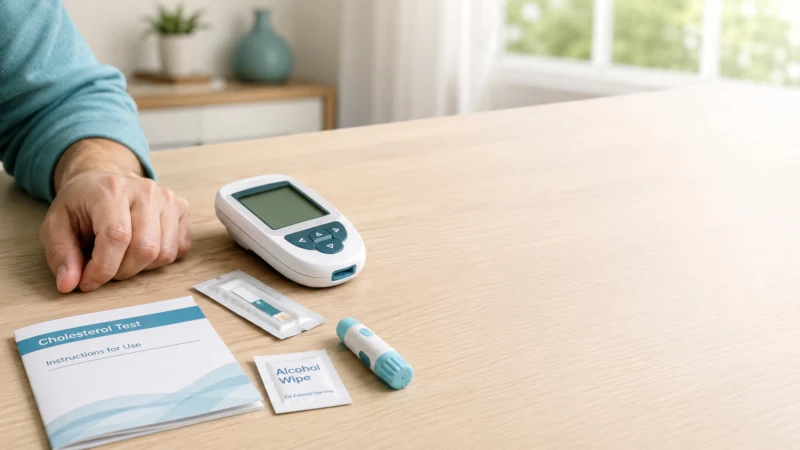
Accuracy depends on the brand, on how the strips have been stored, and on whether you follow the instructions. A 2017 evaluation of two point-of-care lipid meters found they agreed with lab values to within roughly 10% for total cholesterol, 12% for HDL, and 15% for triglycerides [Healthline, 2025]. A separate 2021 analysis of five different self-test devices found that one performed well while several others had poor accuracy — enough that the researchers called for better regulation of the category [Healthline, 2025]. So the honest answer is: a good kit, used correctly, can be helpful. A bad kit, or a good kit used carelessly, is worse than no number at all.
Here is what these tests measure, the difference between the two main types, how to read your numbers, and the situations where a home reading is not enough.
What a cholesterol test at home actually measures
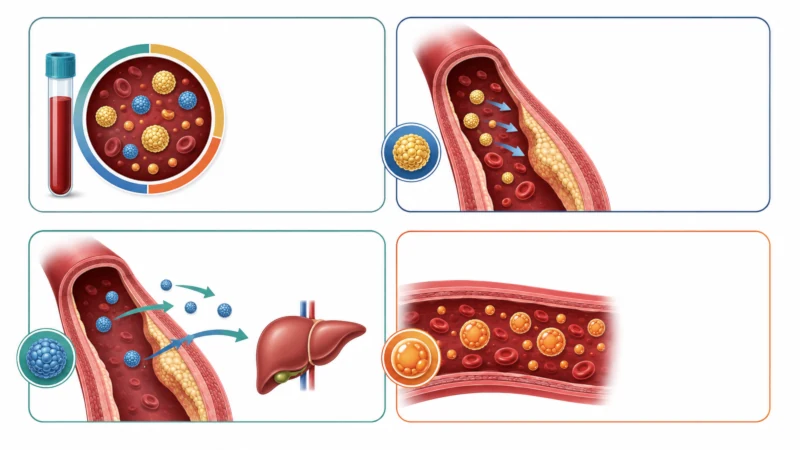
Cholesterol is a waxy, fat-like substance the body needs to build cell membranes and make certain hormones [NHLBI, 2024]. The trouble starts when there is too much of the wrong kind in the bloodstream. A full lipid panel measures four numbers:
- Total cholesterol — the sum of all cholesterol carriers in the blood.
- LDL (low-density lipoprotein) — often called the “bad” cholesterol because it carries cholesterol to the artery walls, where it can build up as plaque.
- HDL (high-density lipoprotein) — the “good” cholesterol that carries cholesterol back to the liver to be cleared.
- Triglycerides — a separate type of blood fat that also raises cardiovascular risk when elevated.
Most instant-read home strips measure total cholesterol only. Better kits also measure HDL and triglycerides, then calculate LDL using the Friedewald formula rather than measuring it directly [Mayo Clinic, 2023]. The strips work because they contain enzymes — cholesterol esterase, cholesterol oxidase, and cholesterol peroxidase — that react with cholesterol in your blood and produce a color change the meter can read [NIST, 2025].
The two kinds of at-home cholesterol tests
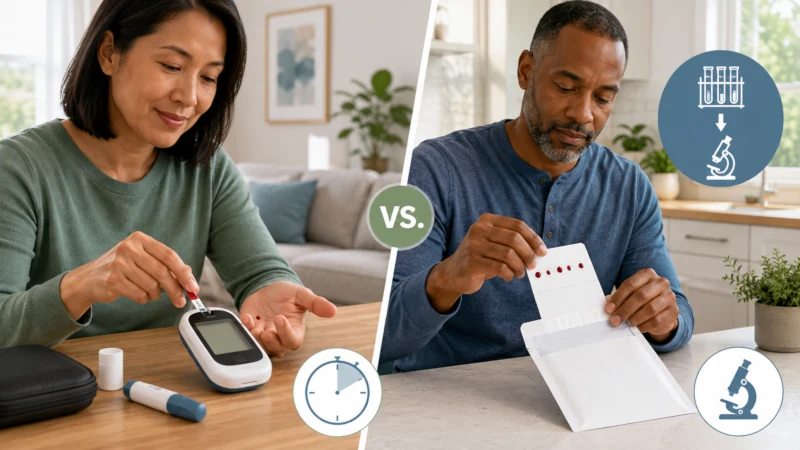
Finger-prick instant-read kits
These are the ones you can buy at a pharmacy or on Amazon for roughly $20 to $100. You prick a finger with the included lancet, apply a drop of blood to the test pad or strip, and either match the resulting color against a chart or insert the strip into a handheld meter. Results appear in two to fifteen minutes. CardioChek, Curo, and Mission are common FDA-cleared brands [FDA, 2024]. The cheaper paper-strip versions usually report only total cholesterol; meter-based versions can deliver a full lipid profile.
Mail-in lab kits
These cost roughly $40 to $100 and work in two steps. You collect a finger-prick blood sample at home using the supplies provided, then ship it in a pre-paid envelope to a CLIA-certified laboratory, which runs the same lipid panel a doctor would order. Results come back through a secure portal in three to five days. Brands include Everlywell, LetsGetChecked, and Quest Direct. One important caveat: mail-in kits themselves are not FDA-approved, because lab-developed tests don’t require FDA clearance. What matters is whether the lab is CLIA-certified and CAP-accredited — those federal standards govern lab quality.
How accurate are home cholesterol tests?
The FDA standard for any cleared home cholesterol test is that, when used correctly, it should be about as accurate as a lab test [FDA, 2024]. In real-world testing, the picture is more mixed.
A 2017 study of two point-of-care lipid meters found agreement with lab values within 10% for total cholesterol, 12% for HDL, and 15% for triglycerides [Healthline, 2025]. A 2021 analysis of five different consumer self-test meters told a less encouraging story: the Roche Accutrend Plus performed well, but several other products had what the authors described as poor accuracy and poor diagnostic ability, and the team called for better regulation of the category [Healthline, 2025].
The practical takeaway: choose an FDA-cleared meter, check that the strips are not expired, and treat any single home reading as a ballpark rather than a definitive number. Mail-in kits, which are processed in a real laboratory, are generally only as accurate as the sample you provide — sloppy collection at home leads to a sloppy reading at the lab.
How to use a cholesterol test at home correctly
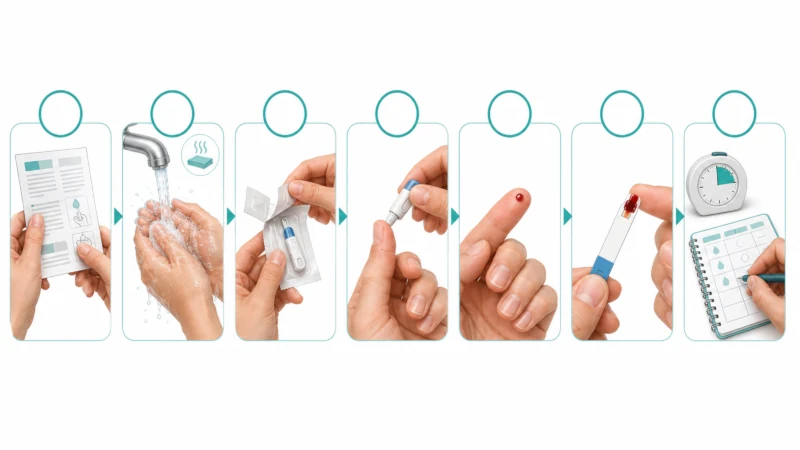
User error is the biggest single cause of inaccurate home readings. The steps below apply to instant-read kits; mail-in kits use much of the same technique but pause at sample collection.
- Read the kit instructions first. Different brands have different requirements — some need fasting, some do not; some use a meter, others use a color chart.
- Fast if instructed. Most kits that measure triglycerides ask for nine to twelve hours of water-only fasting beforehand. Tests that report only total cholesterol may not require fasting.
- Warm your hands. Wash with warm water and rub them together to bring blood to the fingertips. A pinched, cold fingertip produces a thin sample.
- Use a new lancet and the strips that came with the kit. Never reuse lancets or strips, and never mix strips from one brand with a meter from another.
- Apply enough blood to fill the pad. Underfilling is the most common reason for an artificially low reading. Hold the finger downward; let a large drop form before touching it to the strip.
- Wait the specified time. Reading too soon or too late changes the result. Set a timer.
- Record the result with the date. A single number tells you little. A trend over several months tells you something.
Understanding your numbers
Cholesterol is measured in milligrams per deciliter of blood (mg/dL) in the United States. The reference ranges below come from the CDC and NHLBI for adults aged 20 and older [CDC, 2025]; children, pregnant patients, and people with established heart disease have different targets.
| Measure | Range (mg/dL) | Interpretation |
| Total cholesterol | Less than 200 | Desirable |
| 200–239 | Borderline high | |
| 240 or higher | High | |
| LDL (“bad”) | Less than 100 | Optimal |
| 100–129 | Near optimal | |
| 130–159 | Borderline high | |
| 160–189 | High | |
| 190 or higher | Very high | |
| HDL (“good”) | Less than 40 (men) / 50 (women) | Low — higher cardiovascular risk |
| 60 or higher | Protective | |
| Triglycerides | Less than 150 | Normal |
| 150–199 | Borderline high | |
| 200–499 | High | |
| 500 or higher | Very high |
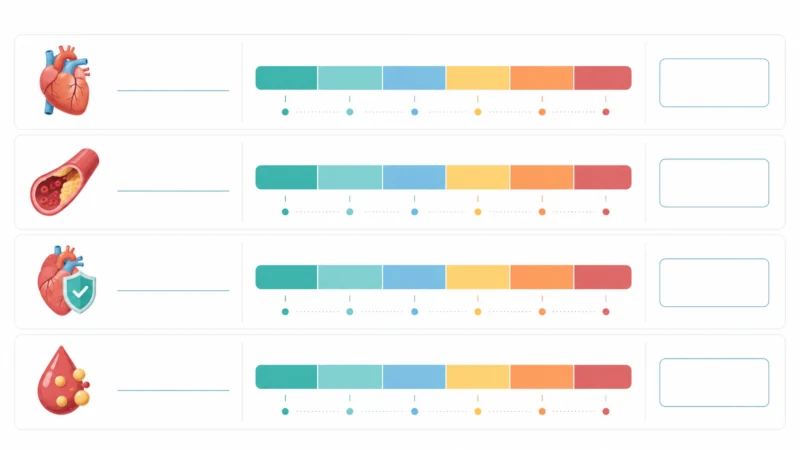
Roughly 86 million American adults have total cholesterol above 200, and nearly 25 million have it above 240 [CDC, 2025], so a borderline or high reading is common and rarely cause for panic — but it does deserve a real lab confirmation and a conversation with your doctor. If your triglycerides come back elevated, lifestyle changes are usually the first step; the article how to lower triglycerides naturally covers what the evidence actually supports.
Who benefits from home testing — and who shouldn’t rely on it
Home testing may be useful if you:
- Already know your baseline cholesterol from a recent lab panel and want to check progress between annual visits.
- Are making active lifestyle changes — diet, exercise, weight loss — and want a rough trend signal.
- Are on a stable statin dose, with your doctor’s awareness, and want a between-visit check (not a replacement for prescribed lab monitoring).
A home test is not the right tool if you:
- Have never had a full lipid panel before. A home test may report only total cholesterol; you need LDL and HDL numbers to assess your real risk.
- Have a family history of high cholesterol or early heart disease. Inherited cholesterol problems like familial hypercholesterolemia need proper diagnosis and ongoing specialist care.
- Have diabetes, established heart disease, kidney disease, or other chronic conditions. Cholesterol targets and monitoring frequency are tighter for you, and your doctor needs the lab versions.
- Are pregnant. Cholesterol naturally rises during pregnancy; reference ranges do not apply.
- Are under 19. Pediatric screening follows separate guidance.
- Are weighing starting, stopping, or changing a statin. Medication decisions belong with your healthcare provider, not a home reading.
Common mistakes that ruin home test results
Most bad readings come from one of the following:
- Using expired strips or strips stored in heat or humidity.
- Reusing strips or lancets.
- Squeezing the finger hard to force out blood, which dilutes the sample with tissue fluid and pulls the reading lower.
- Underfilling the test pad — easily the single most common cause of an inaccurate result.
- Reading the result before or after the specified time.
- Not fasting when the kit specifically requires it (this affects triglyceride readings most).
- Mixing strips and meters from different brands.
When to talk to a healthcare provider
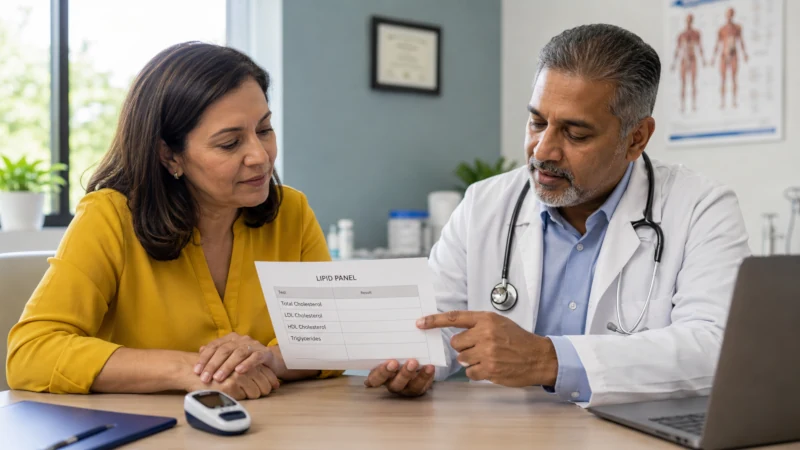
A home cholesterol kit is a monitoring tool, not a diagnostic one. Make an appointment with your doctor, or call ahead to a healthcare professional, if any of the following apply:
- Your home reading is borderline high or high. Confirm it with a proper lab lipid panel before drawing any conclusions.
- You haven’t had a lab lipid panel in the last four to six years. The CDC’s recommended screening interval for healthy adults is every four to six years — more often if you have risk factors.
- You have a new family history of heart disease, stroke, or high cholesterol. Risk assessment should be redone with your doctor.
- You’re considering cholesterol-lowering supplements. Red yeast rice, niacin, plant sterols, and others can interact with statins and other medications; see the guide on supplements that help lower cholesterol for what the evidence supports.
- Your home result is much higher or much lower than your last lab result. Either the home reading is off, or something has changed. Don’t act on it alone.
Call 911 immediately — do not test at home — if you have:
- Chest pain, pressure, squeezing, or fullness lasting more than a few minutes.
- Pain spreading to one or both arms, the back, neck, jaw, or stomach.
- Shortness of breath, with or without chest discomfort.
- Sudden weakness or numbness on one side of the body.
- Sudden trouble speaking, slurred speech, or sudden confusion.
- Sudden severe headache with no known cause.
These are red-flag symptoms of heart attack or stroke. High cholesterol is a major modifiable risk factor for both, and acting fast on symptoms saves brain and heart tissue — read more about how to recognize and respond to warning signs and natural recovery support for a stroke alongside emergency care.
On the diet side, the foods you eat day to day matter more than any single cholesterol number. Building meals around a heart-healthy foods list and limiting foods high in saturated fat gives lifestyle changes a real chance to move LDL in the right direction. People with diabetes have additional cardiovascular risk and may benefit from reviewing diabetic-friendly foods that help control blood sugar, since glucose and lipid control are closely linked.
| Health Disclaimer: This article is for general educational and informational purposes only. It is not a substitute for professional medical advice, diagnosis, or treatment. A home cholesterol test is a monitoring tool, not a diagnostic one. Do not use a home test result to start, stop, or change any medication, and do not delay seeking medical care because of a home reading. Always discuss your cholesterol numbers with your doctor or another qualified healthcare professional. If you have chest pain, shortness of breath, sudden weakness on one side of the body, slurred speech, or other symptoms of a heart attack or stroke, call 911 — do not test at home first. |
Frequently Asked Questions
Do I need to fast before a home cholesterol test?
It depends on the kit and on what you want to measure. Most kits that report triglycerides ask for nine to twelve hours of water-only fasting beforehand, because food raises triglycerides sharply for hours after a meal. Kits that report only total cholesterol often do not require fasting. Read the specific instructions for the kit you’re using — fasting requirements vary.
Are home cholesterol tests covered by insurance, FSA, or HSA?
Insurance generally does not cover over-the-counter tests bought at a pharmacy or online. Many FSA and HSA accounts do reimburse these kits when paid out of pocket — check your plan’s eligible-items list. A doctor-ordered lab lipid panel, by contrast, is usually fully or partially covered.
How often should I test cholesterol at home?
There is no formal at-home testing schedule, because home tests aren’t part of clinical guidelines. The CDC recommends a clinical lipid panel every four to six years for healthy adults aged 20 and older, more often if you have risk factors [CDC, 2025]. If you’re using a home kit to track lifestyle changes, every two to three months is plenty — daily or weekly testing is not useful and increases the chance of confusing yourself with normal variation.
What if my home result is much higher than my last lab result?
First, repeat the home test on a different day with fresh technique to rule out a one-off error. If the second reading is still off, see your doctor and ask for a fasting lipid panel. Don’t assume the home reading is right and the lab reading was wrong — or the other way around. Confirm with the lab before changing anything.
Can a home kit replace my doctor’s lipid panel?
No. Home kits are useful for monitoring and trend-spotting, not for diagnosis, medication decisions, or risk assessment. Your healthcare team considers cholesterol alongside blood pressure, weight, smoking status, family history, blood sugar, kidney function, and other markers — none of which a home strip can measure [AHA, 2026].
References
- Healthline. (2025). Lipid panel cholesterol test: Ranges, procedure, and results. Reference for 2017 and 2021 point-of-care lipid-meter accuracy studies. → View source
- Centers for Disease Control and Prevention (CDC). (2025). About cholesterol. National Center for Chronic Disease Prevention and Health Promotion, Division for Heart Disease and Stroke Prevention. → View source
- Centers for Disease Control and Prevention (CDC). (2025). High cholesterol facts. National Center for Chronic Disease Prevention and Health Promotion. → View source
- Centers for Disease Control and Prevention (CDC). (2025). Treat and manage high cholesterol. → View source
- National Heart, Lung, and Blood Institute (NHLBI). (2024). What is blood cholesterol? National Institutes of Health. → View source
- American Heart Association (AHA). (2026). How to get your cholesterol tested. Reviewed March 18, 2026. → View source
- U.S. Food and Drug Administration (FDA). (2024). Home use tests: Cholesterol. → View source
- U.S. Food and Drug Administration (FDA). (2024). Home use tests: Glossary. → View source
- Mayo Clinic. (2023). Cholesterol test kits: Are they accurate? Expert answer. → View source
- National Institute of Standards and Technology (NIST). (2025). How do you measure cholesterol in blood tests? → View source
