
Let’s clear one thing up first: no food scrubs your lungs clean. Your lungs already do that themselves, with tiny hair-like cilia and a layer of mucus that trap particles and sweep them out every minute of the day. What food can do is quieter and, over years, more meaningful — a diet built around colorful plants is consistently tied to better lung function and a lower risk of chronic lung disease.
So when people search for foods for lung health, the genuinely useful answer isn’t a cleanse. It’s a short list of foods worth eating often, an honest read on how strong the evidence is behind each one, and a couple of things worth cutting back. That’s what you’ll get here.
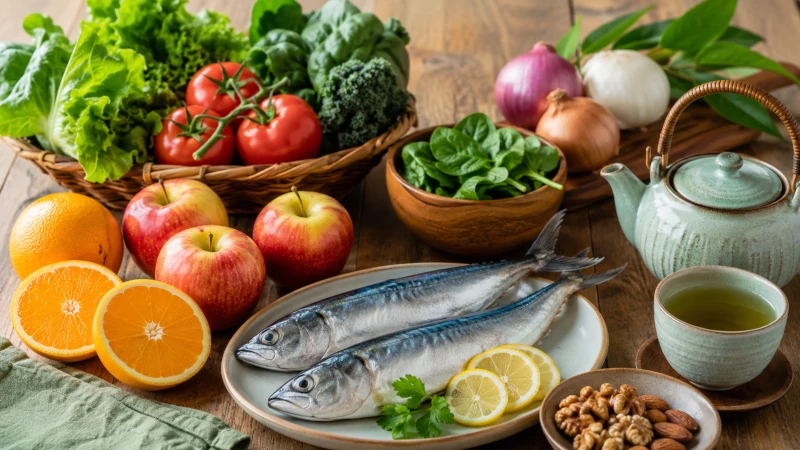
The bigger picture: it’s the whole diet, not one superfood
The strongest finding in this whole area isn’t any single food. It’s the pattern. In a 2022 systematic review that pooled eight studies and roughly a quarter of a million people, higher fruit and vegetable intake was linked to a significantly lower risk of COPD in the general population [Nutrition Reviews, 2022].
Two things to keep in mind as you read. Most of this research is observational — it follows people who already eat a certain way, which can show a strong, consistent link but can’t fully prove the food itself is the cause. And the effects are real but gradual; they’re about protecting lung function over decades, not unblocking your chest this week. With that framing, here are the seven foods that hold up best.
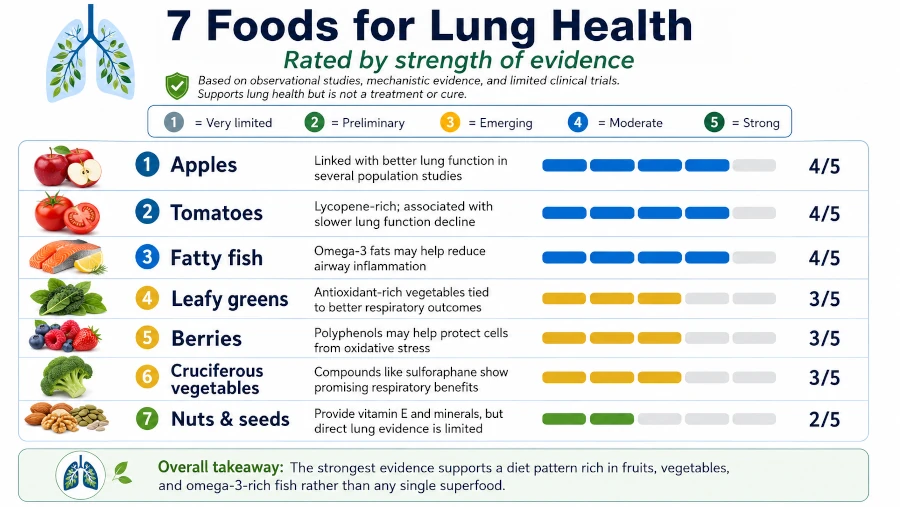
The 7 foods — and how good the evidence really is
| Food | Key compounds | How strong is the lung evidence? |
| Apples | Flavonoids, quercetin | Moderate — repeatedly linked to better lung function in long-term cohorts |
| Tomatoes | Lycopene, vitamin C | Moderate — tied to slower lung-function decline, especially in ex-smokers |
| Leafy greens & cruciferous veg | Sulforaphane, folate, vitamin K | Mixed — promising biology, but human trials are underwhelming |
| Citrus & vitamin C foods | Vitamin C, flavonoids | Moderate for diet; weak for supplements |
| Oily fish | Omega-3 (EPA/DHA) | Moderate — observational link to slower decline and lower COPD risk |
| Onions & garlic | Quercetin, organosulfurs | Weak/mixed — nutritious, but direct lung evidence is thin |
| Green tea | Catechins (polyphenols) | Early — observational signal, not yet confirmed in trials |
1. Apples
If one food keeps showing up in the lung research, it’s the apple. In a long-running study of 2,500 Welsh men, those eating five or more apples a week had meaningfully higher lung function — on the order of 138 mL more FEV1 — than people who ate none, and the link held after accounting for smoking and other factors [Caerphilly cohort, Thorax]. More recently, a European study that tracked the same adults for a decade found apple intake was associated with a slower decline in lung function, an effect that stood out particularly in ex-smokers [Garcia-Larsen et al., 2017].
The leading suspects are flavonoids, plant antioxidants concentrated in the skin. The practical takeaway is easy: a whole apple, skin on, most days. Fresh fruit carried the signal in these studies — apple juice and processed products didn’t.
2. Tomatoes
Tomatoes earned the most striking single result in this field. In that same European decade-long study, former smokers who ate a diet high in tomatoes and fruit showed roughly 80 mL less decline in lung function over ten years — a difference the researchers suggested might reflect nutrients helping repair some smoking-related damage [Garcia-Larsen et al., 2017]. The benefit showed up for fresh tomatoes and fruit, not for processed forms like tomato sauce.
Lycopene, the pigment that makes tomatoes red, is the likely active ingredient. Two fresh tomatoes a day was the high-intake mark in the study. This won’t undo years of smoking — the single best thing any smoker can do for their lungs is still to stop — but it’s a reason to keep tomatoes in regular rotation, especially after quitting.
3. Leafy greens and cruciferous vegetables
This is the group where the lab story outruns the human one, and it’s worth being honest about that. Broccoli, cabbage, kale, watercress and radishes contain sulforaphane, a compound that switches on the body’s Nrf2 pathway — a kind of internal antioxidant defense system. In one study, broccoli-sprout intake raised antioxidant enzyme activity in the cells of people’s airways [Riedl et al., 2009], which is biologically encouraging.
But when researchers tested concentrated sulforaphane in actual patients, the payoff didn’t materialize. A clinical study using broccoli-sprout supplementation in healthy adults found no protection against airway inflammation and no boost in antioxidant genes [proof-of-concept study, 2016], and a trial in people with COPD likewise came up short. So eat your greens — they’re nutrient-dense, fiber-rich, and part of every lung-protective dietary pattern — but as everyday food, not as a treatment. Watercress and radishes fit here too, adding the same family of compounds.
4. Citrus and other vitamin C–rich foods
Oranges, peppers, kiwi and strawberries deliver vitamin C, an antioxidant the lungs draw on to handle the oxidative stress of pollution, smoke and infection. In the long-term cohort studies above, vitamin C intake from food tracked with a slower decline in lung capacity [Garcia-Larsen et al., 2017].
One honest caveat keeps this in perspective: when vitamin C is tested as a pill for asthma, it underwhelms. A Cochrane review concluded there isn’t enough evidence to recommend vitamin C for managing asthma or exercise-induced breathing problems [Cochrane, 2013]. The food, eaten as part of a varied diet, is where the signal lives — not the supplement. Oranges are an easy daily option; a single red bell pepper actually outpaces an orange on vitamin C.
5. Oily fish
Salmon, mackerel, sardines and herring are the richest food sources of long-chain omega-3 fats (EPA and DHA), which calm inflammation — and inflammation drives much of the damage in chronic lung disease. Studies measuring omega-3 levels in the blood have linked higher amounts to slower lung-function decline and lower odds of developing COPD [pooled cohort analysis, 2023]. A large analysis across two big US cohorts similarly tied higher fish intake to lower COPD risk.
The usual general-health target — two servings of oily fish a week — is a sensible aim. Worth noting: fish-oil supplements have produced more mixed results than fish itself, another reminder that whole food tends to outperform the extracted pill.
6. Onions and garlic
Onions and garlic are nutritious, anti-inflammatory, and a flavorful way to make vegetables more appealing — all good reasons to cook with them. The direct lung evidence, though, is thinner than older “remedy” articles imply. One large Dutch cohort did find the highest onion intake associated with a lower risk of lung cancer [Netherlands Cohort Study, 1994], but a 2022 systematic review found no overall association between allium vegetables or garlic supplements and cancer risk [Wan et al., 2022].
So enjoy them, and lean on raw or lightly cooked for the most active compounds — but think of onions and garlic as part of a vegetable-rich plate rather than a stand-alone fix for asthma or bronchitis. If you want to read more, see our guide to the health benefits of onions. Notably, garlic supplements don’t carry the same evidence as the food.
7. Green tea
Green tea is the newest and least settled entry, included because the early signal is interesting rather than proven. Its polyphenols (catechins) are potent antioxidants, and people who drink green tea more often have shown a lower prevalence of COPD in cross-sectional data, with one prospective cohort linking it to lower COPD incidence over several years [Nutrition Reviews, 2022].
That’s an association, not a verdict — no one has run the trial that would confirm cause. But unsweetened green tea is a low-risk, pleasant habit, and a better default than the sugary drinks it might replace.
The foods worth cutting back
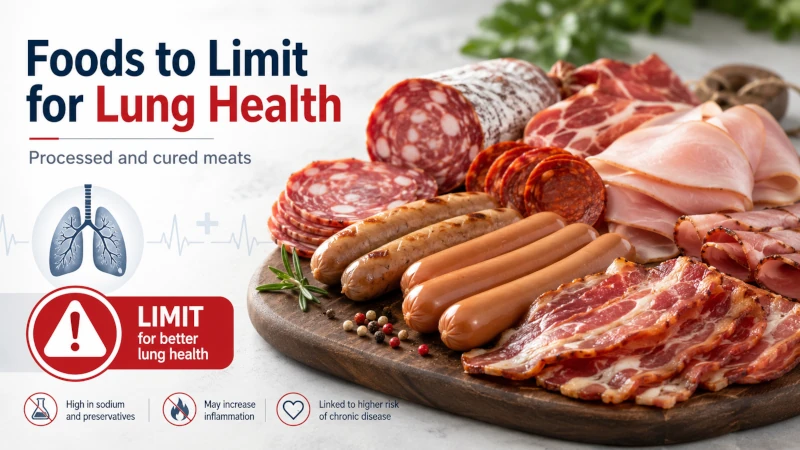
What you reduce matters as much as what you add. Processed and cured meats — bacon, ham, sausages, deli slices — have been repeatedly linked to worse lung function and higher COPD risk in observational studies, likely tied to the nitrites used to cure them. Highly processed, sugar-heavy diets tend to track with more airway inflammation too. None of this means a slice of ham will hurt your lungs tonight; it means the everyday pattern is what counts.
One supplement to skip — especially if you smoke
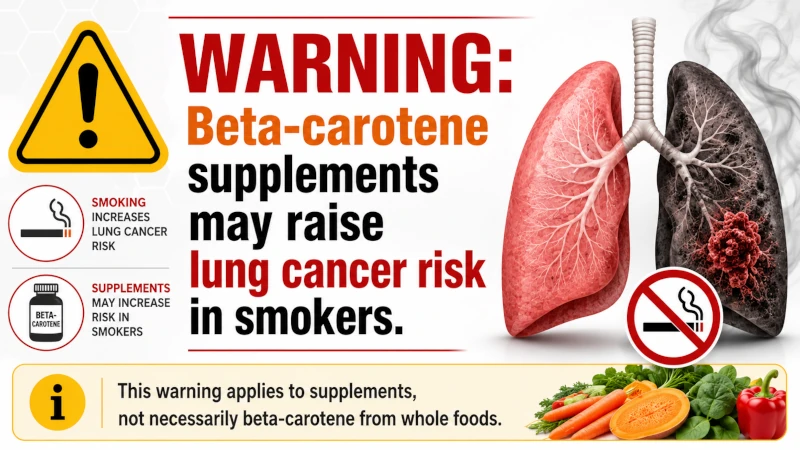
Here’s the correction worth reading twice, because plenty of “lung food” articles get it backwards. Beta-carotene from food — the orange pigment in carrots, sweet potatoes and squash — is part of a healthy diet. But beta-carotene in high-dose supplement form is a different story. Two large trials, ATBC and CARET, were stopped because the supplement was harming the people it aimed to protect: the ATBC study found about an 18% excess in lung cancer cases in the beta-carotene group, and CARET found 28% more lung cancer cases. The National Cancer Institute summarizes the evidence plainly — pharmacological doses of beta-carotene increase lung cancer risk in heavy smokers [NCI, PDQ].
The takeaway: get carotenoids from your plate, not from a high-dose pill — and if you smoke or recently quit, avoid beta-carotene supplements specifically. For more on choosing supplements wisely, see our supplement reviews.
Who should take extra care
- Grapefruit affects how the body processes a long list of medications, including some statins and blood-pressure drugs. If you take prescription medication, check before making grapefruit a daily habit. (Oranges and most other citrus don’t carry the same risk.)
- Leafy greens are high in vitamin K, which can interfere with warfarin (a blood thinner). You don’t have to avoid greens — but keep your intake steady rather than swinging, and tell your prescriber.
- Kidney disease can make the high potassium in some fruits and vegetables a problem; follow your care team’s guidance.
- Allergies to fish, specific fruits, or others always override any general advice here.
When food isn’t enough: signs to see a professional
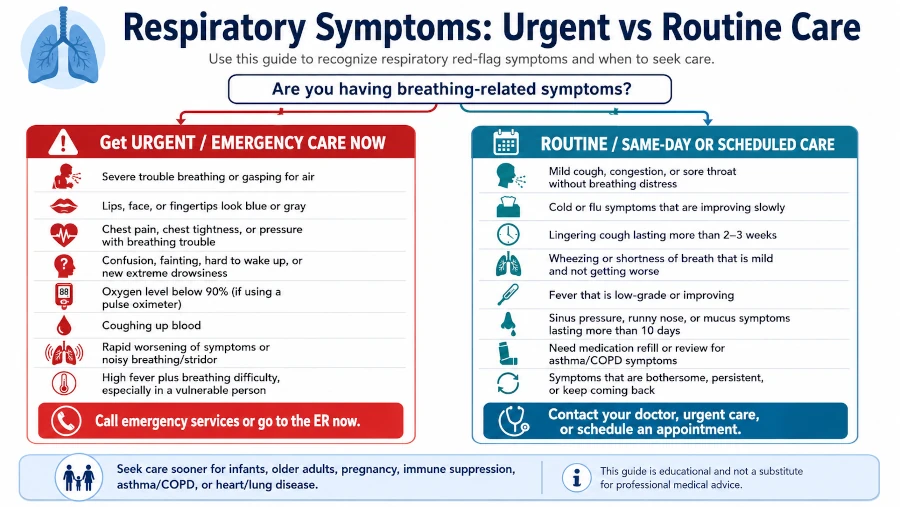
Diet supports healthy lungs over the long run. It does not treat a respiratory emergency or replace prescribed care. Get urgent medical help for sudden or severe shortness of breath, chest pain or tightness, lips or fingertips turning blue, coughing up blood, or a high fever with difficulty breathing. An asthma attack that isn’t responding to a rescue inhaler is an emergency.
Make a regular (non-urgent) appointment if you have a cough lasting more than three weeks, breathlessness that’s new or getting worse, repeated chest infections, or wheezing you can’t explain. And if you smoke, no food on this list comes close to the benefit of stopping — that’s the single most powerful thing you can do for your lungs. Our respiratory health guides cover these conditions in more depth.
| Health Disclaimer: This article is for general education only and is not medical advice, diagnosis, or treatment. Foods and supplements can interact with medications and health conditions, and individual needs vary. Talk with a qualified healthcare professional — such as your doctor, a registered dietitian, or a pharmacist — before making significant changes to your diet or supplement routine, especially if you have a lung condition, are pregnant or breastfeeding, take prescription medication, or are managing a chronic illness. If you have symptoms of a medical emergency, call your local emergency number. Reliance on any information here is at your own risk. |
Frequently Asked Questions
Can certain foods really clean or detox my lungs?
No. Your lungs clear themselves through cilia and mucus, and your liver and kidneys handle detoxification. Food can’t speed that up. What a plant-rich diet can do is support long-term lung function and lower the risk of chronic lung disease — a slower, more durable benefit than any “cleanse.”
What’s the single best food for my lungs?
There isn’t one, and that’s the honest answer. The most consistent research points to apples and tomatoes for slowing lung-function decline, but the real driver is an overall diet high in fruits and vegetables rather than any single hero food.
I’m a smoker — will these foods protect me?
They may help, but only at the margins. Diet showed measurable benefits for ex-smokers in particular, hinting at some repair after quitting. But no food offsets the harm of continuing to smoke, and smokers should specifically avoid high-dose beta-carotene supplements, which raised lung cancer risk in major trials. Quitting is the priority; food supports what comes after.
Are supplements a good shortcut if I don’t eat well?
Usually not, and sometimes the reverse. Across vitamin C, fish oil, sulforaphane and garlic, the whole food consistently outperforms the extracted supplement — and high-dose beta-carotene supplements actively raised lung cancer risk in smokers. Aim to get these compounds from food first.
Does cooking destroy the benefits?
It depends. Fresh fruit and tomatoes carried the strongest signals in studies, and processed versions didn’t — so whole, fresh forms are best for those. For onions, garlic and cruciferous vegetables, raw or light cooking preserves more of the active compounds.
How long until I notice a difference?
This isn’t a quick fix. The benefits in the research played out over years and decades of steady eating, measured as slower decline in lung capacity — not as something you’ll feel in a week.
References
- Scoditti E, et al. Nutrition as a modifiable factor in the onset and progression of pulmonary function impairment in COPD: a systematic review. Nutrition Reviews, 2022;80(6):1434–1444. View source
- Garcia-Larsen V, et al. Dietary antioxidants and 10-year lung function decline in adults from the ECRHS survey (ALEC Study). European Respiratory Journal, 2017;50(6):1602286. View source
- Cook DG, et al. Diet, lung function, and lung function decline in a cohort of 2,512 middle-aged men (Caerphilly). Thorax. View source
- Riedl MA, Saxon A, Diaz-Sanchez D. Oral sulforaphane increases Phase II antioxidant enzymes in the human upper airway. Clinical Immunology, 2009;130:244–251. View source
- Duran CG, et al. Sulforaphane (broccoli sprout) and neutrophilic airway inflammation: a proof-of-concept clinical study. View source
- Milan SJ, et al. Vitamin C for asthma and exercise-induced bronchoconstriction. Cochrane Database of Systematic Reviews, 2013. View source
- Circulating omega-3 fatty acids, lung-function decline, and airway obstruction (pooled cohorts). 2023. View source
- Dorant E, et al. Allium vegetable consumption, garlic supplement use, and risk of lung carcinoma in the Netherlands Cohort Study. Cancer Research, 1994;54:6148–6153. View source
- Wan Q, et al. Allium vegetables, garlic supplements, and risk of cancer: a systematic review and meta-analysis. 2022. View source
- National Cancer Institute. Lung Cancer Prevention (PDQ®) — Health Professional Version (ATBC and CARET beta-carotene findings). View source
