
Dry eye syndrome happens when your tears can’t keep the front of your eye properly moist and protected. Either your eyes don’t make enough tears, or the tears you make evaporate too quickly or don’t work as they should [NEI, 2025]. The result is often a burning, gritty, tired, or irritated feeling, sometimes with redness, light sensitivity, or vision that blurs and clears. It is common: the National Eye Institute estimates that nearly 16.4 million Americans have dry eye [NEI, 2025].
Simple steps often help, and when symptoms keep returning, an optometrist or ophthalmologist can find what is driving them. This guide explains why dry eyes happen, what actually helps, and which symptoms need prompt care rather than home treatment. For related topics, browse our Eye & Vision health guides.
You may also see the terms dry eye disease and keratoconjunctivitis sicca. They describe the same condition [AAO PPP, 2024].
Dry eye syndrome at a glance
- What it is: a problem with the amount or quality of the tear film that protects the eye surface.
- Common symptoms: burning, a gritty feeling, redness, light sensitivity, blur that comes and goes, and, surprisingly, watery eyes.
- First steps: artificial tears, warm compresses, screen breaks, and less drying air.
- If it lingers: an eye exam can match treatment to the cause.
- Urgent signs: eye pain, sudden vision change, injury, chemical exposure, or a painful red eye.
How healthy tears protect your eyes
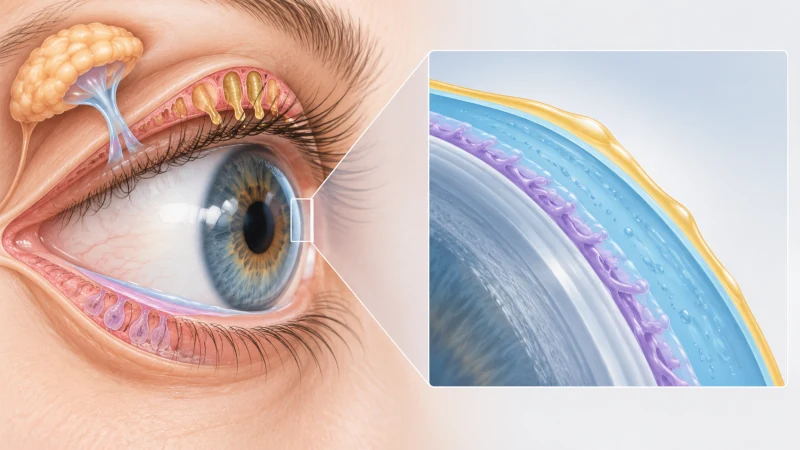
Each blink spreads a thin film of tears across the eye, keeping the surface smooth and clear for comfort and sharp vision [AAO]. The film has three layers [AAO]:
- An oily outer layer that slows evaporation. It comes from tiny glands along the eyelid edges called meibomian glands.
- A watery middle layer, made by the lacrimal (tear) glands, which forms most of what we think of as tears and washes away particles.
- A mucus inner layer, made by the conjunctiva, which helps tears spread and stick to the eye.
So dry eye is about tear quality as much as quantity. You can make plenty of watery tears and still have dry eye if the oily layer is thin and the tears evaporate too soon.
The two main types of dry eye
Eye doctors group dry eye into two broad types. Knowing which is involved helps explain why treatments differ, and many people have features of both [TFOS DEWS II].
Not enough tears (aqueous-deficient dry eye)
The tear glands don’t produce enough of the watery layer. Production tends to fall with age, and some autoimmune conditions affect the glands directly. About 10% of people with this type have an underlying condition called Sjögren’s syndrome [AAO PPP, 2024].
Tears that evaporate too fast (evaporative dry eye)
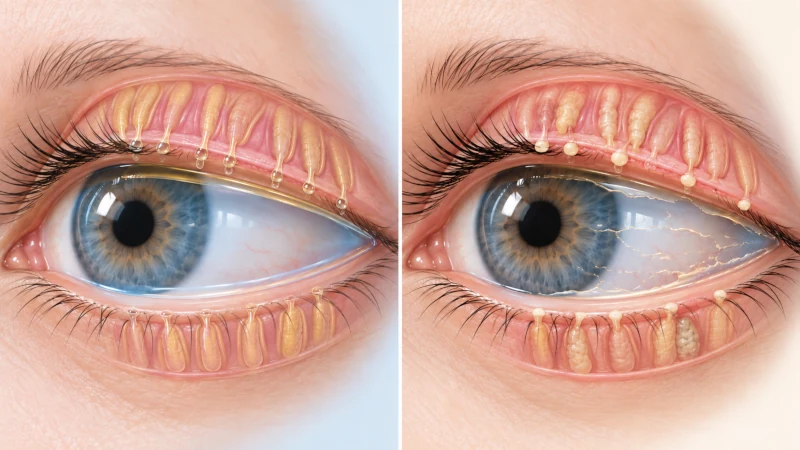
Here the eye may make enough tears, but they don’t last. Usually the eyelid oil glands are blocked or their oil has thickened, so too little oil reaches the tear film and tears evaporate faster. Doctors call this meibomian gland dysfunction (MGD), the leading cause of evaporative dry eye [TFOS DEWS II]. Warm compresses and eyelid care target this type, while tear-conserving options such as punctal plugs suit eyes that make too few tears.
Dry eye symptoms: what it feels like
Common dry eye symptoms include [NEI, 2025] [AAO]:
- Dryness, stinging, or burning
- A scratchy or gritty feeling, as if something is in the eye
- Redness or irritation, often worse in wind or smoke
- Sensitivity to light
- Blurred vision, especially while reading, that comes and goes
- Strings of mucus in or around the eyes
- Discomfort when wearing contact lenses
- Tired, achy eyes after screen use [AAO, 2024]
- Excess tearing
Why do dry eyes water?
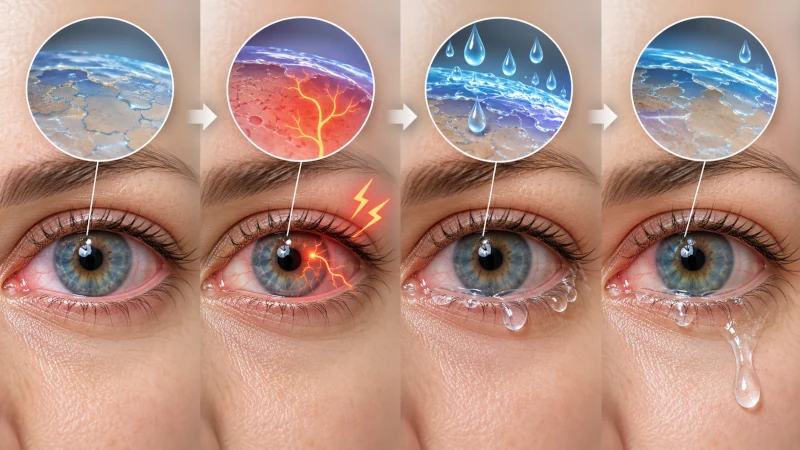
It sounds contradictory, but when dryness irritates the eye surface, your eyes respond by making more tears [AAO]. That flood of reflex tears doesn’t correct the underlying imbalance in the tear film, so the eye can water and still feel dry. Watery eyes don’t rule out dry eye.
Occasional dryness or dry eye disease?
Dry, tired eyes after a long flight or a windy day usually settle once the trigger is gone. Dry eye disease is different: symptoms keep returning, you reach for drops often, or discomfort interferes with reading, driving, or work. Ophthalmology guidance describes it as a condition that is rarely cured outright and usually needs long-term management [AAO PPP, 2024].
What causes dry eye? Common contributors and risk factors
Dry eye usually has more than one contributor:
- Age. Tear production tends to decline, and dry eye is more likely after 50 [AAO] [NEI, 2025].
- Sex and hormones. It is more common in women, especially after menopause [AAO].
- Screens and reading, which reduce blinking [AAO].
- Environment. Smoke, wind, dry climates, air conditioning, and dry indoor air [NEI, 2025] [AAO].
- Contact lenses, especially long-term wear [AAO].
- Eyelid problems, including blepharitis (inflamed eyelids), oil-gland dysfunction, and lids that turn inward or outward [AAO].
- Certain medicines, such as diuretics, beta-blockers, antihistamines, sleeping pills, some anxiety and antidepressant medicines, and heartburn medicines [AAO].
- Health conditions, including rheumatoid arthritis, Sjögren’s syndrome, thyroid disease, and lupus [AAO].
- Eye surgery. Symptoms are common for a few months after refractive (such as LASIK) and cataract surgery and often ease, though about one-third of people still have them after three months [AAO PPP, 2024].
If you suspect a medicine, don’t stop or change it on your own. Tell the prescribing clinician or pharmacist; sometimes another option is available [NEI, 2025]. Vitamin A deficiency can also damage the eye surface, but it is uncommon in the United States (see the nutrition section).
Why screens make dry eyes feel worse
Screens don’t damage the tear glands; the issue is blinking. People normally blink about 15 times a minute, but that can drop to roughly 5 to 7 blinks during device use [AAO, 2024], giving the tear film more time to evaporate. Long screen sessions won’t cause permanent eye damage, though they can leave eyes dry and uncomfortable [AAO, 2024], and this discomfort isn’t caused by blue light [AAO, Digital Devices]. Our guide to digital eye strain explains how blinking, close focus, glare, screen position, and dry air work together.
How an eye doctor diagnoses dry eye
Symptoms alone can’t show which type of dry eye you have, and allergies, infection, or eyelid inflammation can feel similar. A clinical eye exam is the gold standard, and no single test is enough on its own [AAO PPP, 2024].
An optometrist or ophthalmologist will ask about symptoms, medicines, health conditions, and screen and contact-lens habits, then examine your eyelids, eye surface, and blinking [AAO]. They may check how many tears you produce, how quickly your tears dry up, and the structure of your eyelids [NEI, 2025]. These checks are painless. If Sjögren’s syndrome is suspected, blood tests may be recommended [AAO PPP, 2024].
Dry eye relief at home: what actually helps
Most home measures improve comfort by adding moisture or reducing evaporation. They don’t correct an underlying cause such as an autoimmune condition, so persistent symptoms still deserve an exam.
Lubricating eye drops (artificial tears)
Artificial tears, which act like your own tears, are the most common treatment for mild dry eye and are sold without a prescription, along with lubricating gels and ointments [NEI, 2025]. Brands differ, so it can help to try a few [AAO]. Thicker drops or ointment at bedtime can ease morning scratchiness, though they may blur vision briefly [AAO].
If you use artificial tears more than six times a day or are allergic to preservatives, the American Academy of Ophthalmology advises preservative-free drops, because preserved drops can irritate with frequent use [AAO]. Wash your hands, don’t let the bottle tip touch anything, stop if you notice pain, discharge, or vision change, and check FDA recall notices, since several over-the-counter drops have been recalled for contamination [FDA, 2026].
“Get the red out” drops are not a dry eye treatment
Most redness-relief drops contain a decongestant that temporarily shrinks surface blood vessels. When it wears off, eyes can look redder than before, and this rebound redness can become persistent [AAO, Redness Drops]. The American Academy of Ophthalmology suggests trying preservative-free lubricating drops first and using redness relievers only occasionally, for no more than 72 hours. People with narrow-angle glaucoma should not use decongestant drops [AAO, Redness Drops].
Warm compresses and eyelid care
For eyelid inflammation or blocked oil glands, eye doctors often recommend warm compresses, gentle lid massage, and eyelid cleansers [AAO]. A clean washcloth soaked in warm (not hot) water and held over closed lids for several minutes is a common approach. This supports oil flow but won’t cure every type of dry eye. If an eyelid is very swollen or the eye is red and painful, see a clinician instead.
Blink more and take screen breaks

Blink fully and often, and try the “20-20-20” rule: every 20 minutes, look about 20 feet away for 20 seconds [AOA]. Placing your monitor slightly below eye level and scheduling regular breaks also help [AAO guideline summary].
Make the air around you less drying
- Use a humidifier, especially when indoor heating dries the air [NEI, 2025] [AAO].
- Avoid smoke and aim fans, car vents, and air conditioning away from your face [NEI, 2025] [AAO guideline summary].
- Limit hair-dryer use and very warm rooms [AAO].
- Wear wraparound sunglasses outdoors to block wind [NEI, 2025] [AAO].
Contact lenses, sleep, and hydration
If lenses become painful or you need drops constantly to tolerate them, ask your eye care professional whether your lens type, wearing schedule, or care routine is contributing. Remove lenses and seek prompt care if an eye becomes red and painful [MedlinePlus, 2025]. The National Eye Institute also lists enough sleep and drinking plenty of water among helpful habits [NEI, 2025]. Hydration is sensible, but routine dry eye isn’t usually caused by dehydration, and extra water is not a cure.
What not to put in your eyes
Anything placed in the eye must be sterile because the eye bypasses some of the body’s natural defenses. The FDA warns against unapproved eye products and notes that honey can cause burning [FDA, 2026]. Skip homemade saline or drops, essential oils, castor oil, herbal teas or extracts, breast milk, and other non-sterile liquids. Our guide to herbs for eye health explains why homemade herbal eye washes aren’t safe.
Medical treatments for persistent dry eye
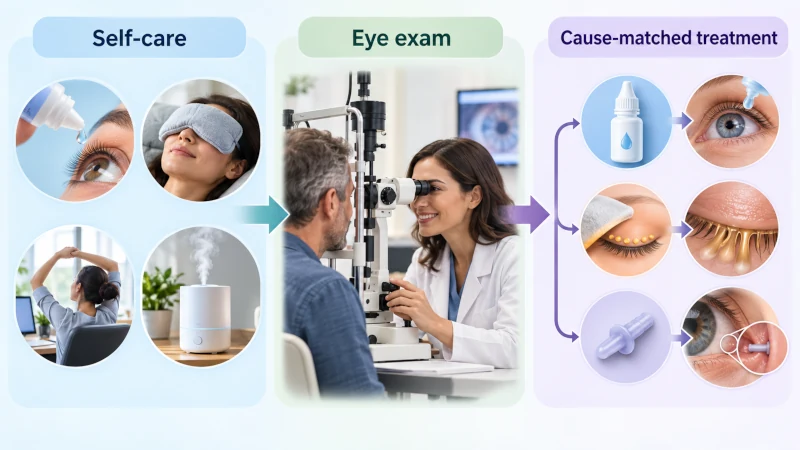
When self-care isn’t enough, treatment depends on the type, cause, and severity of dry eye [NEI, 2025]. Prescription and procedural options can improve symptoms but rarely cure dry eye, so long-term treatment is typical [AAO PPP, 2024].
Prescription eye drops and other medicines
Doctors may prescribe cyclosporine or lifitegrast, eye drops that help the eyes make more of their own tears [NEI, 2025]. Other FDA-approved options include a short-term steroid drop (loteprednol), a nasal spray (varenicline), and perfluorohexyloctane drops [AAO PPP, 2024]. In 2025 the FDA approved acoltremon drops, which increased tear production in trials; stinging or burning on application was the most common side effect [FDA, 2025]. None has proved better than the others head-to-head [AAO PPP, 2024], so the choice depends on your dry eye type, health, cost, and tolerance.
Punctal plugs
If tears drain away too quickly, tiny removable silicone or gel plugs placed in the tear-drainage openings help natural tears stay on the eye longer [NEI, 2025] [AAO]. Less often, the ducts are closed permanently [AAO].
Treating eyelid and oil-gland problems
For blepharitis or MGD, treatment may combine prescription drops or ointments with compresses, lid massage, and cleansers [AAO]. Some clinics offer in-office procedures, such as devices that apply heat and pressure to the eyelids or intense pulsed light. A 2024 overview of systematic reviews found some supporting evidence, but its certainty was generally low [Systematic review overview, 2024].
Treating the underlying cause
Managing a contributing health condition or medicine may help [NEI, 2025], and uncommonly, surgery can tighten loose lower lids that let tears drain too fast [NEI, 2025]. Planning LASIK or cataract surgery? Tell your surgeon about dry eye first; treating it beforehand can reduce the chance of worse symptoms afterward [AAO PPP, 2024].
Omega-3s, fish oil, and dry eye: what the evidence shows
Fish oil is one of the most popular “natural” dry eye remedies. The National Eye Institute lists low omega-3 intake as a risk factor [NEI, 2025], and several small studies suggested supplements might help [NCCIH, 2024].
The largest trial was disappointing. In the NIH-funded DREAM study, 535 people with moderate-to-severe dry eye took 3,000 mg of fish-derived omega-3s or an olive oil placebo daily for a year, and the omega-3 group did no better [DREAM Study, 2018] [NCCIH, 2024]. An extension found no difference after a second year [NCCIH, 2024]. A 2019 Cochrane review of 34 trials (over 4,300 people) called the evidence uncertain and inconsistent: compared with placebo, omega-3s may have little to no effect on symptoms, though some clinical signs improved [Cochrane, 2019].
Bottom line: omega-3 supplements are not an established dry eye treatment. Eating fish as part of a healthy diet is reasonable. If you’re considering a supplement, ask your eye doctor or pharmacist first; side effects are usually mild (bad taste, heartburn, nausea, diarrhea), and cod liver oil also contains vitamins A and D, which can be harmful in excess [NCCIH, 2024].
Nutrition and vitamin A: what matters and what doesn’t
A varied diet supports eye health, and vitamin A helps the conjunctiva and cornea function normally [NIH ODS, 2025]. Severe, prolonged deficiency causes xerophthalmia, which begins with night blindness and can progress to corneal damage and blindness; worldwide, it is a leading cause of preventable childhood blindness [NIH ODS, 2025]. Foamy patches on the white of the eye, called Bitot’s spots, are one sign.
In the United States, fewer than 1% of people have low vitamin A levels [NIH ODS, 2025]. Risk is higher with fat-absorption problems such as cystic fibrosis, Crohn’s disease, ulcerative colitis, or celiac disease [NIH ODS, 2025]. If you have dry eyes plus poor vision in dim light, a malabsorption condition, or a very restricted diet, ask your clinician whether to check your vitamin A status.
Treating a documented deficiency under supervision is very different from taking extra vitamin A “just in case.” Carrots and supplements won’t treat typical dry eye in a well-nourished person, and high doses can harm: the adult upper limit for preformed vitamin A is 3,000 mcg RAE (10,000 IU) a day, and high doses in pregnancy can cause birth defects [NIH ODS, 2025]. See our guide to vitamin A benefits, food sources, and safe intake.
Conditions that can look like dry eye
Red, irritated, or watery eyes aren’t always dry eye:
- Eye allergies, where itching stands out and symptoms flare with pollen, pets, or dust [AAO, Bloodshot Eyes].
- Conjunctivitis (pink eye), often with discharge. Our guide to natural remedies for red eyes covers safe comfort measures and warning signs.
- Blepharitis, which often overlaps with dry eye [AAO].
- Corneal injury or a foreign body, typically with persistent pain, light sensitivity, and redness [MedlinePlus, 2025].
- Uveitis or glaucoma, which can also cause red eyes [AAO, Redness Drops].
If one eye waters constantly, our guide to dry tear ducts explains how drainage problems differ from dry eye.
When to see an eye doctor
Make an appointment with an optometrist or ophthalmologist if:
- Discomfort or redness lasts more than a week despite home care [AAO, Bloodshot Eyes]
- You need artificial tears many times a day
- Dry eye interferes with reading, driving, or work [NEI, 2025]
- Contact lenses have become painful [AAO]
- You also have trouble seeing in dim light [NIH ODS, 2025]
- You have other possible autoimmune symptoms, such as persistent dry mouth or joint pain
- You’re planning LASIK or cataract surgery [AAO PPP, 2024]
Untreated severe dry eye can sometimes damage the cornea [NEI, 2025], so ongoing symptoms deserve attention.
Red flags: symptoms that need prompt medical attention
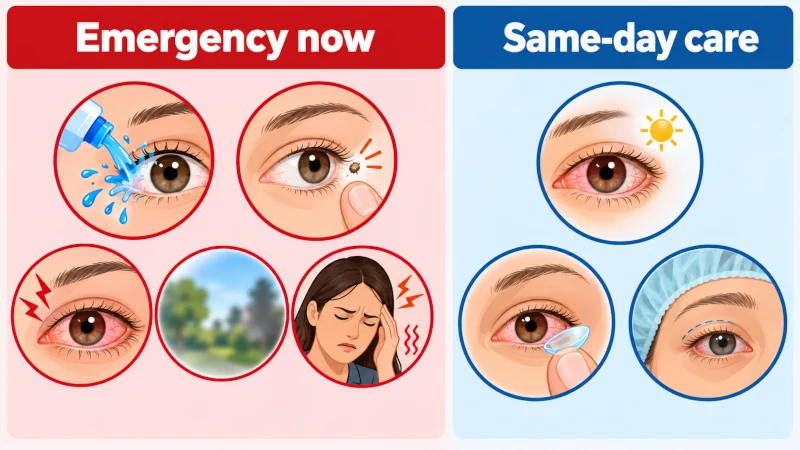
| Don’t assume these are “just dry eye” Get emergency care right away if: A chemical gets in your eye. Flush with a gentle stream of clean, cool tap water for at least 15 minutes, then seek help immediately [MedlinePlus, 2025].Something has scratched, cut, or entered the eye, or an object is stuck in it. Don’t try to remove an embedded object [MedlinePlus, 2025].Your eye is painful and red [MedlinePlus, 2025].Eye pain comes with nausea or headache [MedlinePlus, 2025].You notice a sudden change in vision, such as blurred or double vision [MedlinePlus, 2025]. Contact a clinician the same day if: Pain, light sensitivity, or redness persists after something got in your eye [MedlinePlus, 2025].You wear contacts and an eye becomes red or painful. Remove the lenses [MedlinePlus, 2025].You develop pain, worse vision, or increasing redness after eye surgery. Call your surgeon’s office. Mild dryness that eases with blinking or drops doesn’t need an emergency visit. |
| Health Disclaimer: This article is for general education only and is not a substitute for professional medical advice, diagnosis, or treatment. Dry, red, watery, or blurry eyes can have many causes, and only an eye examination can identify yours. Do not start, stop, or change any prescription medicine, eye drop, or supplement based on this article; discuss suspected medication side effects with the prescribing clinician. Never put homemade or non-sterile substances in your eyes. Seek urgent care for eye pain, a sudden change in vision, an eye injury, chemical exposure, or a painful red eye. |
Frequently Asked Questions
Can dry eye syndrome cause blurry vision?
Yes. Because a smooth tear film is important for clear vision, dry eye can cause blurring, often while reading, that may come and go [AAO]. Blur that does not clear, or any sudden change in vision, needs prompt evaluation rather than home care [MedlinePlus, 2025].
Why do my eyes water if they are dry?
Irritation from dryness can trigger a burst of reflex tears [AAO]. Those tears don’t fix the underlying problem with the tear film, so eyes can water and still feel dry.
Can dry eye syndrome go away?
Short-lived dryness from a clear trigger, such as a long flight, often settles once the trigger is gone. Ongoing dry eye disease is usually a long-term condition that can be managed well but is rarely cured outright [AAO PPP, 2024]. Addressing contributors such as screen habits, eyelid problems, or a medication can make a big difference.
What is the best treatment for dry eyes?
There isn’t one best treatment for everyone. Artificial tears are the usual first step for mild dry eye [NEI, 2025]. Persistent symptoms call for an exam so treatment can match the cause, whether that means eyelid care for blocked oil glands, prescription drops, or punctal plugs.
Can screen time cause dry eyes?
Screen use can bring on or worsen dry eye symptoms, mainly because people blink much less while looking at screens [AAO, 2024]. It won’t cause permanent eye damage. Regular breaks and deliberate blinking help.
Does drinking more water help dry eyes?
Staying hydrated is part of general healthy-eye advice [NEI, 2025], but routine dry eye is rarely caused by dehydration. Drinking extra water alone isn’t likely to resolve it.
References
- National Eye Institute. “Dry Eye.” View source
- American Academy of Ophthalmology. “What Is Dry Eye?” EyeSmart. View source
- American Academy of Ophthalmology Preferred Practice Pattern Cornea/External Disease Panel (Amescua G, et al.). “Dry Eye Syndrome Preferred Practice Pattern.” Ophthalmology. 2024;131(4):P1–P49. View source
- American Academy of Ophthalmology. “Computers, Digital Devices, and Eye Strain.” View source
- American Academy of Ophthalmology. “Digital Devices and Your Eyes.” View source
- American Academy of Ophthalmology. “Redness-Relieving Eye Drops.” View source
- American Academy of Ophthalmology. “Home Remedies for Bloodshot Eyes.” View source
- U.S. Food and Drug Administration. “What You Should Know about Eye Drops.” View source
- U.S. Food and Drug Administration. “Drug Trials Snapshot: TRYPTYR (acoltremon).” View source
- MedlinePlus Medical Encyclopedia. “Eye Emergencies.” View source
- NIH Office of Dietary Supplements. “Vitamin A and Carotenoids: Fact Sheet for Health Professionals.” View source
- National Center for Complementary and Integrative Health. “Omega-3 Supplements: What You Need To Know.” View source
- Dry Eye Assessment and Management Study Research Group; Asbell PA, Maguire MG, Pistilli M, et al. “n-3 Fatty Acid Supplementation for the Treatment of Dry Eye Disease.” N Engl J Med. 2018;378(18):1681–1690. View source
- Downie LE, Ng SM, Lindsley KB, Akpek EK. “Omega-3 and Omega-6 Polyunsaturated Fatty Acids for Dry Eye Disease.” Cochrane Database Syst Rev. 2019;12:CD011016. View source
- Tear Film & Ocular Surface Society. “TFOS DEWS II Patient Summary.” View source
- American Optometric Association. “Computer Vision Syndrome (Digital Eye Strain).” View source
- Medscape. “Diagnosis and Management of Dry Eye Disease: AAO Guideline Summary.” View source
- “Interventions for Dry Eye: An Overview of Systematic Reviews.” PubMed Central, 2024. View source


