
The calaguala plant is a tropical fern, and its extract is one of the few herbal remedies with real clinical trials behind it. The catch is what those trials studied. Nearly all of the research is about protecting skin from sunlight and easing a few sun-related skin conditions. It is not a proven cure for psoriasis, arthritis, or “impure blood,” whatever older herbal books say.
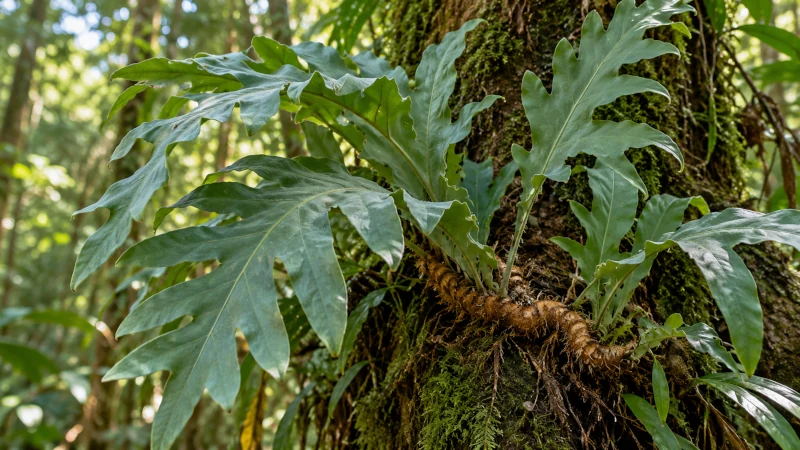
On supplement shelves, calaguala usually goes by its botanical name, Polypodium leucotomos, sold as Polypodium leucotomos extract. Here is what the studies found, what they didn’t, how people take it, and who should skip it.
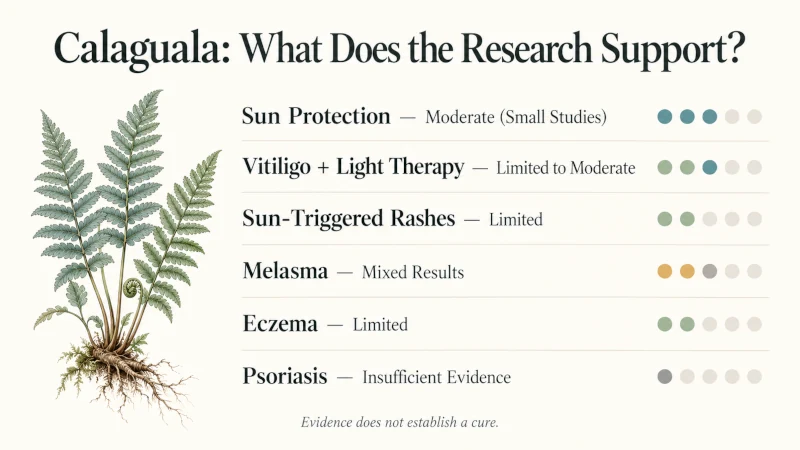
| Use | What the evidence shows | Strength |
| Sun protection, alongside sunscreen | Small controlled trials: less sunburn and less UV damage in skin | Moderate, but small studies |
| Sun-triggered rash (polymorphous light eruption) | Fewer or delayed rashes in open, uncontrolled studies | Limited |
| Vitiligo, with light therapy | More repigmentation in some small trials, mainly face and neck | Limited to moderate |
| Melasma | One trial positive, one not | Mixed |
| Eczema in children | Missed its main goal; fewer days on antihistamines | Limited |
| Psoriasis | Long traditional use; little modern trial data | Insufficient |
| Sweating, uric acid, “blood purifying,” arthritis | No human studies found | None |
What is the calaguala plant?
Calaguala is a common name for Polypodium leucotomos, a fern in the Polypodiaceae family that botanists now usually classify as Phlebodium aureum. It also goes by golden polypody [Drugs.com, 2026]. Water-based extracts of the plant are called anapsos, and in Central and South America the fern has a long history as a folk remedy for psoriasis and atopic dermatitis [Segars et al., 2021].
A standardized extract has been used in Spain since the 1970s, and it has been sold in the United States as a dietary supplement since 2006 [Drugs.com, 2026].
One name, several ferns
“Calaguala” has never pointed to just one plant. In 1805 the Spanish botanist Hipólito Ruiz wrote about three different fern roots shipped from Peru to Spain under that single name [Pereira, via Henriette’s Herbal]. The muddle continues today: markets across Mexico and Central America sell several Phlebodium species as calaguala [Arnold, University of Vermont, 2019], and a Guatemalan herbarium study found the true calahualas are often confused with lookalike ferns from other genera [Jiménez Barrios & Cano de Paz, USAC].
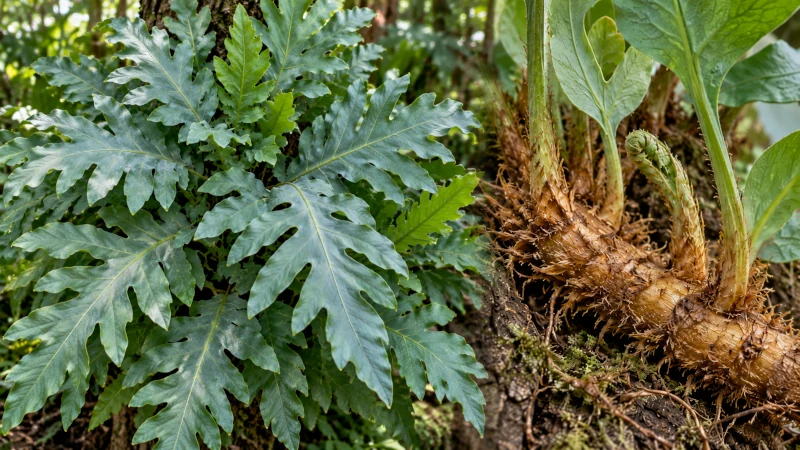
This matters for you. The clinical studies below used specific, standardized extracts, most often the one sold as Fernblock or Heliocare [Segars et al., 2021]. A 2018 systematic review found good evidence for that formulation and very little for others [Prado et al., 2018]. Dried root from a market stall, or a generic “calaguala powder,” is a different product, and the trial results don’t automatically carry over to it.
Calaguala plant benefits: what the research actually supports
Researchers think the extract works mainly as an antioxidant. It is rich in polyphenols such as caffeic and ferulic acid, which neutralize the reactive molecules ultraviolet light creates in skin, and it dampens some inflammatory signals [Segars et al., 2021]. That lines up with where the evidence is strongest: sun damage.
Sun protection: the strongest evidence
In a double-blind trial, 40 healthy adults took 240 mg of the extract or a placebo twice a day for 60 days. Blood and safety checks didn’t change [Nestor et al., 2015], and the placebo group was about six times more likely to get at least one sunburn during the study [Segars et al., 2021]. In a separate study, 22 people took 480 mg in the two hours before controlled UVB exposure. Their skin reddened less, and biopsies showed fewer markers of DNA damage and inflammation [Segars et al., 2021].
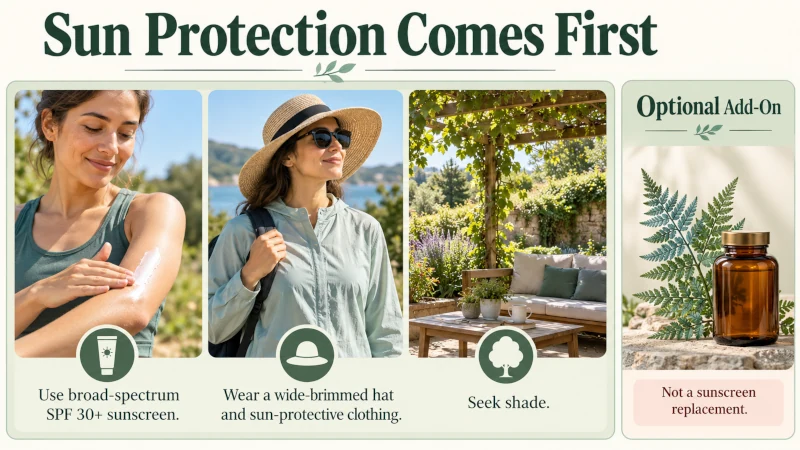
These are small studies of short-term effects. None shows that calaguala lowers your real-world risk of skin cancer. It is not a substitute for sunscreen, and supplement guidance says to keep using sunscreen and other sun protection while taking it [WebMD]. At most, treat it as an add-on. If sun-related dark spots are your main worry, our guide to vitamins for age spots and what actually fades them covers topical options with stronger evidence.
Sun-triggered rashes (polymorphous light eruption)
Polymorphous light eruption is an itchy rash that flares after sun exposure. In a study of 35 people with long-standing cases, researchers triggered rashes with artificial UV light, gave the extract for two weeks, then tried again. Thirty percent no longer reacted to UVA and 28% no longer reacted to UVB; the rest needed more exposures before a rash appeared [Tanew et al., 2012]. The authors are upfront about the limits: no placebo group, no blinding, and a small number of patients.
Vitiligo, alongside light therapy
Vitiligo causes patches of skin to lose their color, and narrowband UVB light therapy is a standard treatment. In a double-blind trial of 50 patients, adding 250 mg of the extract three times a day to light therapy for about six months produced more repigmentation on the head and neck: 44% versus 27% with placebo. That gap fell just short of statistical significance, and gains on the trunk, limbs, hands, and feet were small [Middelkamp-Hup et al., 2007]. A later trial in 44 adults taking 480 mg twice daily with light therapy reported clearer improvement on the head, neck, and limbs [Drugs.com, 2026].

Every one of these trials paired the extract with light therapy. None tested calaguala on its own for vitiligo [Segars et al., 2021], and light therapy belongs under a dermatologist’s supervision.
Melasma: mixed results
For melasma, the brown facial patches that mostly affect women, results disagree. A systematic review found two placebo-controlled trials: one reported better severity and quality-of-life scores, the other found no meaningful difference [Drugs.com, 2026]. A later pilot trial in 33 Asian women, who used the extract alongside standard treatment, found lower severity scores than placebo after 12 weeks, though instrument readings of skin pigment didn’t differ significantly [Drugs.com, 2026]. Promising, but unsettled.
Eczema in children
In a six-month trial of 105 children and teens with moderate atopic dermatitis, the extract didn’t meet its main goal: it did not reduce steroid cream use compared with placebo. Children taking it did use antihistamines on fewer days, and side effects were similar in both groups [Ramírez-Bosca et al., 2012] [Drugs.com, 2026]. That is a modest secondary finding, not a reason to change a child’s eczema plan.
Psoriasis: the oldest claim, the thinnest modern evidence
Psoriasis is the condition calaguala is best known for, which makes the evidence gap striking. Traditional use is well documented [Segars et al., 2021] and early reports described benefit [Berman et al., 2016], but modern controlled trials are scarce, and current summaries describe the psoriasis evidence as limited [WebMD]. If you’re still working out whether scalp flaking is psoriasis at all, start with our guide to scalp psoriasis vs. dandruff. For a broader look at plant remedies, see herbs for skin issues and what the evidence supports.
Traditional claims that haven’t been tested
Older herbal references, including the source an earlier version of this page relied on, describe calaguala as a sweat-inducing (sudorific) remedy, a diuretic that clears uric acid, and a “blood purifier” for rheumatism and autoimmune disease. We looked for human studies of those uses and found none. A Spanish public-health review classed it as a medicine of low therapeutic usefulness, and a lactation-safety database that summarizes the literature concludes there isn’t enough evidence that it works for the uses claimed [e-lactancia, 2025].
Laboratory and animal work on immune effects does exist [Segars et al., 2021], but it hasn’t been tested in trials for rheumatoid arthritis or lupus. If you live with an autoimmune joint condition, your prescribed treatment and an evidence-based rheumatoid arthritis diet have far better support. Don’t trade either for calaguala.
How calaguala is taken
Most people take capsules of standardized extract. In studies, oral doses have ranged from 120 mg to 1,080 mg a day [Winkelmann et al., 2015], and 240 mg once or twice daily is common in sun-protection research [Nestor et al., 2015] [Drugs.com, 2026]. Those are research doses, not a recommendation. Follow the product label and check with your clinician.
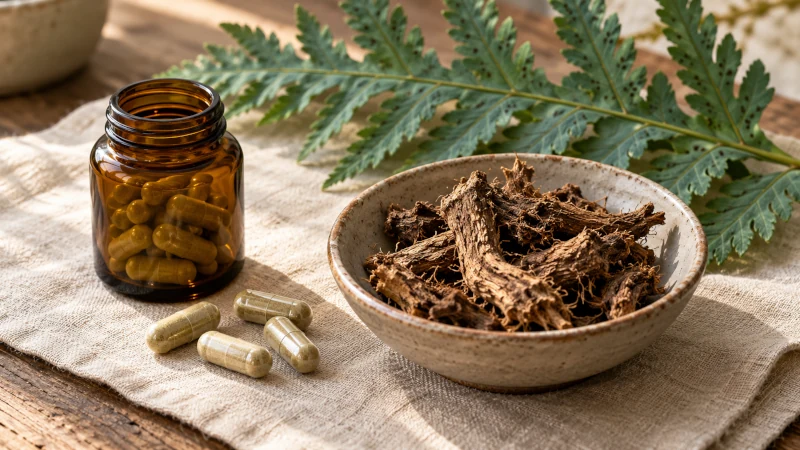
Boiling the ground root into a decoction is the traditional method, but it hasn’t been studied, so nobody knows how strong a cup is or whether it delivers what the capsules do. For that reason we’ve removed the decoction recipe that appeared in earlier versions of this article. The FDA doesn’t review these supplements for safety or effectiveness, and plant content can vary between batches and brands [WebMD], so if you use one, choose a product with independent third-party testing.
Side effects, interactions, and safety
Side effects
The extract appears well tolerated in studies. A review of 19 human studies spanning four decades found side effects in about 2% of participants (16 of 1,016), mostly mild stomach complaints and itching [Winkelmann et al., 2015], and a 2025 systematic review described its safety profile as encouraging [Zundell et al., 2025]. Most trials lasted weeks to months, so long-term safety is less well known.
Allergic reactions are possible. Stop taking it and get help right away if you develop hives, swelling of the face, lips, or throat, wheezing, or trouble breathing [WebMD].

Medication interactions
Here the sources disagree. A professional natural-products database lists no well-documented interactions [Drugs.com, 2026]. A consumer drug reference advises caution with immune-suppressing medicines such as cyclosporine, methotrexate, and tacrolimus, and during phototherapy, because the extract affects immune and light-related responses [WebMD]. A lactation database adds a theoretical concern that it could intensify sedatives, blood pressure medicines, or heart medicines [e-lactancia, 2025]. None of these interactions is proven. If you take any of those drugs, ask your prescriber or pharmacist before starting.
Pregnancy and breastfeeding
There isn’t enough safety information for pregnancy, and one professional reference advises avoiding the extract during pregnancy and breastfeeding [Drugs.com, 2026]. Another source sees breastfeeding differently: e-lactancia rates calaguala as compatible and considers topical use safe, while noting there are no published data on whether it passes into breast milk [e-lactancia, 2025]. The cautious choice is to skip oral calaguala while pregnant or nursing unless your clinician advises otherwise.
Who should avoid it or check first
- Anyone allergic to Polypodium leucotomos, calaguala, or another ingredient in the product [WebMD]
- People who are pregnant or breastfeeding (see above)
- People taking immunosuppressants, or anyone having light therapy, unless their doctor approves [WebMD]
- Children, except under medical supervision; pediatric research is limited to the eczema trial above
- Anyone planning to use it instead of sunscreen or a prescribed treatment
When to see a doctor
Calaguala is a supplement, not a diagnosis. See a doctor or dermatologist if:
- A mole or spot is asymmetric, has an irregular border or uneven color, is larger than a pea, or is changing, or you notice a new growth or a sore that doesn’t heal [CDC]
- You have psoriasis and develop joint pain, stiffness, or swelling; early treatment of psoriatic arthritis helps prevent lasting joint damage [Mayo Clinic]
- New pale patches appear, a rash keeps spreading, or skin symptoms don’t improve with standard care
Get emergency care for signs of a severe allergic reaction, such as swelling of the lips, tongue, or throat, or difficulty breathing [WebMD].
A note on tepezcohuite
Earlier versions of this page grouped calaguala with tepezcohuite (Mimosa tenuiflora), a Mexican tree whose bark is applied to burns and wounds. It is an unrelated plant. Laboratory work suggests compounds in the bark can stimulate skin cells involved in wound repair [Zippel et al., laboratory study], and a small randomized trial of 41 patients has tested a tepezcohuite hydrogel on venous leg ulcers [Int Wound J, 2012]. That is early-stage evidence. Deep burns, infected wounds, and leg ulcers need medical care, not home treatment.
| HEALTH DISCLAIMER: This article is for general education and is not medical advice. It doesn’t replace diagnosis or treatment from a qualified healthcare professional. Calaguala (Polypodium leucotomos) extract is a dietary supplement that the FDA has not reviewed for safety or effectiveness, and products vary. Don’t use it in place of sunscreen or prescribed treatment for psoriasis, vitiligo, eczema, melasma, or any autoimmune condition. Talk with your doctor or pharmacist before using it if you are pregnant or breastfeeding, giving it to a child, taking immune-suppressing or other prescription medicines, having light therapy, or managing a chronic condition. Seek prompt care for a changing mole, a sore that won’t heal, or joint pain with psoriasis, and emergency care for signs of a severe allergic reaction. |
Frequently Asked Questions
Is calaguala the same as Polypodium leucotomos?
Usually. In supplements, calaguala means Polypodium leucotomos (Phlebodium aureum) extract [Drugs.com, 2026]. In traditional markets the name covers several related ferns [Arnold, University of Vermont, 2019], so loose dried root may not be the same species that was studied.
Can calaguala replace sunscreen?
No. Studies show modest extra protection when it is taken on top of standard sun protection, and supplement guidance says to keep using sunscreen [WebMD].
Does calaguala cure psoriasis?
No. Despite its traditional reputation, modern evidence for psoriasis is limited [WebMD]. Psoriasis needs a treatment plan from a clinician.
Is calaguala tea as good as capsules?
Nobody knows. The trials used standardized extracts [Segars et al., 2021]. Home decoctions haven’t been studied, so their strength and effects are unknown.
How long does calaguala take to work?
It depends on the use. Sun-protection studies measured effects from a dose taken hours before exposure up to two months of daily use [Segars et al., 2021]; vitiligo trials ran about six months [Middelkamp-Hup et al., 2007].
References
- Segars K, McCarver V, Miller RA. Dermatologic applications of Polypodium leucotomos: a literature review. View source
- Winkelmann RR, Del Rosso J, Rigel DS. Polypodium leucotomos extract: a status report on clinical efficacy and safety. View source
- Nestor MS, Berman B, Swenson N. Safety and efficacy of oral Polypodium leucotomos extract in healthy adult subjects. View source
- Drugs.com. Polypodium leucotomos (Natural Products, Professional). Wolters Kluwer Health; View source
- Vermeulen M (writer); Johnston B (reviewer). Polypodium leucotomos: uses, side effects, and more. WebMD. View source
- APILAM. Calaguala. e-lactancia.org; View source
- Ramírez-Bosca A, Zapater P, Betlloch I, et al. Polypodium leucotomos extract in atopic dermatitis: View source
- Tanew A, Radakovic S, Gonzalez S, Venturini M, Calzavara-Pinton P. Oral administration of a hydrophilic extract of Polypodium leucotomos for the prevention of polymorphic light eruption. View source
- Middelkamp-Hup MA, Bos JD, Rius-Diaz F, Gonzalez S, Westerhof W. Treatment of vitiligo vulgaris with narrow-band UVB and oral Polypodium leucotomos extract: a randomized double-blind placebo-controlled study. J Eur Acad Dermatol Venereol. View source
- Berman B, Ellis C, Elmets C. Polypodium leucotomos—an overview of basic investigative findings. J Drugs Dermatol. View source
- Prado G, Teplitz R, Winkelmann R, Del Rosso J, Rigel D. View source
- Pereira J. Filices (ferns). In: The Elements of Materia Medica. View source
- Arnold B. Se llama calaguala: examining the ethnobotanical history and phylogeny of Phlebodium. View source
- Jiménez Barrios JB, Cano de Paz IM. Caracterización morfológica y análisis de la distribución de calahualas (Polypodiaceae: Phlebodium spp.) y otros helechos semejantes de uso medicinal en Guatemala. Ciencia y Conservación (USAC). View source
- Centers for Disease Control and Prevention. Symptoms of skin cancer. View source
- Mayo Clinic. Psoriatic arthritis: symptoms and causes. View source
- Zippel J, Deters A, Hensel A. Arabinogalactans from Mimosa tenuiflora (Willd.) Poiret bark as active principles for wound-healing properties. University of Münster research record. View source
- A randomised comparative trial on the use of a hydrogel with tepescohuite extract (Mimosa tenuiflora cortex extract-2G) in the treatment of venous leg ulcers. View source
- Zundell MP, Katz A, Shah M, Burshtein J, Rigel D, Zakria D. The utility of oral Polypodium leucotomos extract for dermatologic diseases: a systematic review. J Drugs Dermatol. View source


