
Short answer: both, but the “remedy” half comes with a catch. The star anise plant (Illicium verum) produces the rust-brown, star-shaped pods you know from pho, chai, and mulled wine, and as a kitchen spice it has a long record of safe use. As a medicine, the case is much thinner. The evidence for its digestive benefits is mostly traditional and lab-based, and star anise tea has a documented safety problem serious enough that the U.S. Food and Drug Administration told the public not to drink it [FDA, 2003].
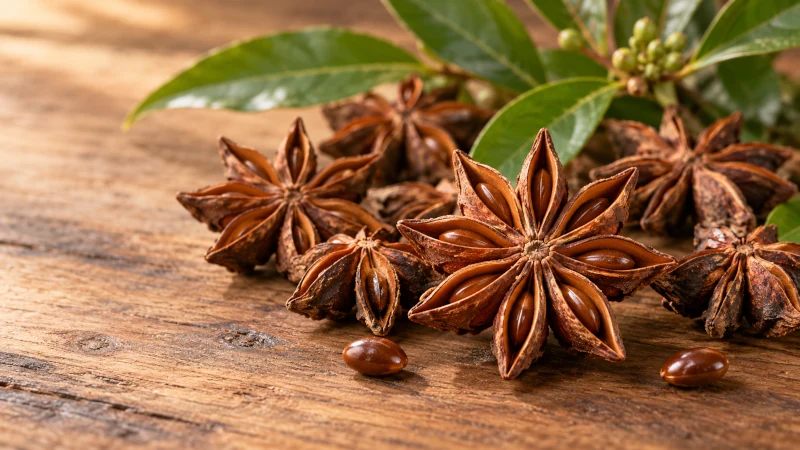
The trouble usually isn’t the spice itself. It’s a look-alike: Japanese star anise, a toxic relative that is hard to tell apart once dried. Here’s what the star anise plant is, what it may and may not do for you, and how to enjoy it without the risk.
| Key points Chinese star anise is considered safe as a food spice in the U.S. [FDA, 2003]Its reputation for easing gas and fighting flu rests mostly on tradition and lab studies, not human trials.Never give star anise tea to a baby. Infants have had seizures after drinking it [Ize-Ludlow et al., 2004].Japanese star anise (Illicium anisatum) is toxic and looks nearly the same. Buy only food-grade spice. |
What is the star anise plant?
Star anise is the dried fruit of Illicium verum, an evergreen tree native to southern China (Guangxi) and northern Vietnam [Kew POWO, 2026]. Older herbal references place it in the magnolia family; current botanical classification puts it in Schisandraceae [Kew POWO, 2026; Sharafan et al., 2022].
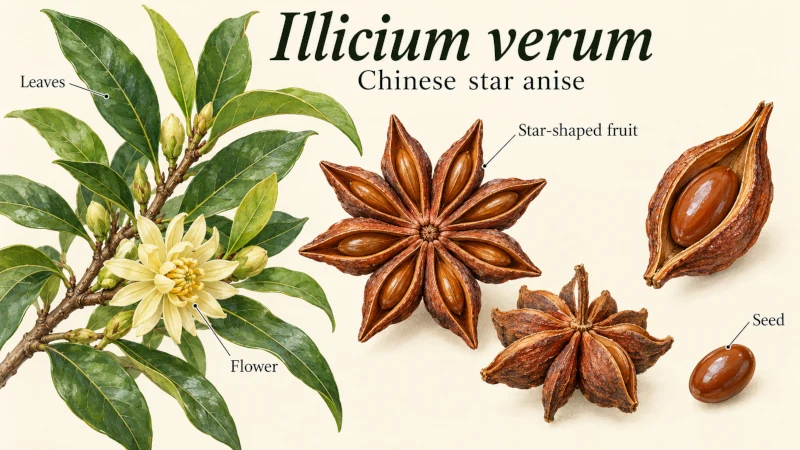
The tree grows roughly 8 to 15 meters tall, with white-to-light-gray bark and leathery, lance-shaped leaves about 6 to 12 cm long. Its flowers are white-yellow or greenish. The fruit is the famous part: a ring of boat-shaped follicles, often eight, each holding a single glossy brown seed [Sharafan et al., 2022; AHPA, 2017]. Most commercial star anise comes from China, with smaller production in other parts of Asia, Morocco, and southern Europe [Sharafan et al., 2022].
| Star anise plant: quick facts | |
| Scientific name | Illicium verum Hook.f. |
| Other names | Star anise, Chinese star anise; badiane or anis de la Chine (French); anís estrellado (Spanish); ba jiao hui xiang (Chinese) |
| Family | Schisandraceae (formerly Illiciaceae; older texts list Magnoliaceae) |
| Native range | Southern China (Guangxi) to northern Vietnam |
| Part used | The dried fruit (pod and seeds) |
| Main aroma compound | trans-anethole, about 72–92% of the essential oil [Sharafan et al., 2022] |
Despite the name, it isn’t related to common anise (Pimpinella anisum), a small herb in the carrot family. The two taste alike because both are rich in anethole, the same compound that flavors fennel seeds [Sharafan et al., 2022].
Star anise benefits: what the evidence actually shows
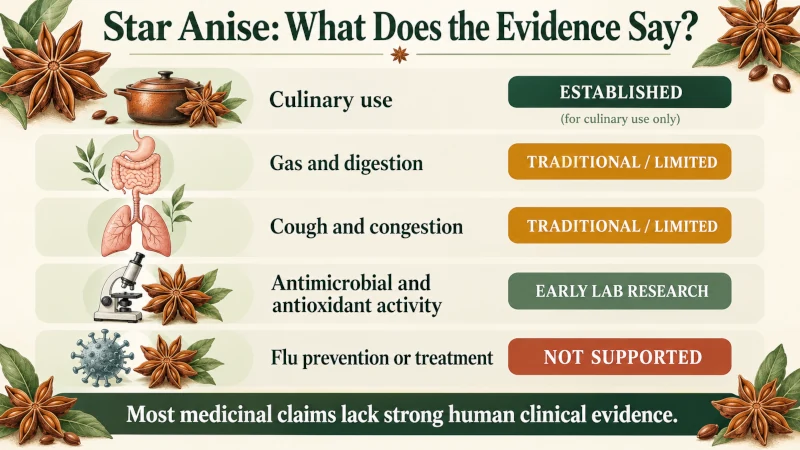
Most claims about star anise benefits trace back to three things: centuries of traditional use, the plant’s chemistry, and test-tube or animal studies. Very little comes from controlled trials in people. That doesn’t make the traditional uses wrong. It means the honest label for most of them is “plausible, not proven.”
| Claim | What the evidence looks like | Strength |
| Flavoring food | Long culinary history; FDA considers Chinese star anise generally recognized as safe (GRAS) [FDA, 2003] | Established |
| Gas, bloating, indigestion | Traditional carminative; described by European regulators as having limited use as a stomachic [EMA, 2000]; no good human trials of star anise alone | Traditional / limited |
| Cough and congestion | Fruit and oil listed in the European Pharmacopoeia with expectorant and spasmolytic effects [Sharafan et al., 2022] | Traditional / limited |
| Antibacterial, antifungal, antioxidant, anti-inflammatory | Lab and animal studies of extracts and oil [Sharafan et al., 2022; Patra et al., 2020] | Early (lab/animal only) |
| Flu prevention or treatment | A source of shikimic acid, used to make oseltamivir (Tamiflu) [Patra et al., 2020]; no clinical trials of the spice for flu found | Not supported |
Digestion, gas, and cramping
This is the use with the deepest roots. Traditional Chinese medicine has used the fruit for abdominal pain, colic, and vomiting, and Chinese herbals from the early 1500s describe it as a carminative, a herb taken to relieve gas [Sharafan et al., 2022]. A European Medicines Agency summary describes the fruit as having a limited role as a stomachic and notes that its essential oil stimulates gut movement and helps counter gas [EMA, 2000]. It sits alongside caraway, fennel, and coriander in our list of digestive herbs.
What’s missing is good human research on star anise by itself; current drug references describe its digestive benefits as poorly studied [WebMD, 2025]. If you want a herb with stronger evidence, peppermint oil and ginger have more behind them, as our guide to herbs for stomach issues explains. And if gas is your main complaint, the foods that cause flatulence are usually a better place to start than any remedy.
Coughs and congestion
Both the fruit and its essential oil appear in the European Pharmacopoeia and are described as expectorant and spasmolytic, meaning they may loosen mucus and relax smooth muscle [Sharafan et al., 2022]. That’s why star anise oil shows up in some cough products. This is pharmacopoeial and traditional knowledge, not proof from modern trials.
Antimicrobial and antioxidant activity
Star anise extracts and oil have shown activity against several bacteria and fungi, plus antioxidant and anti-inflammatory effects, in laboratory and animal work [Sharafan et al., 2022; Patra et al., 2020]. Those findings explain its use in cosmetics and oral-care products. They don’t tell us what a pod simmered in your soup does inside your body.
The Tamiflu connection
Star anise is a commercial source of shikimic acid, a starting material for the flu drug oseltamivir (Tamiflu) [Patra et al., 2020; Wangdi et al., 2024]. Online, that fact gets stretched into “star anise fights the flu.” It doesn’t follow. Turning shikimic acid into oseltamivir takes industrial chemistry, and we found no clinical trials showing that eating star anise or drinking the tea prevents or treats influenza. If you have flu symptoms, talk to a clinician about proven treatment.
The safety warning: star anise tea and Japanese star anise
On September 10, 2003, the FDA advised the public not to drink “teas” brewed from star anise. About 40 people, including roughly 15 infants, had become ill over the previous two years, with effects ranging from seizures to vomiting, jitteriness, and rapid eye movements [FDA, 2003]. The agency’s concern was contamination: commonly sold Chinese star anise may contain Japanese star anise, which FDA described as long recognized as toxic and suitable only for decoration. FDA called the advisory an interim measure. We found no later FDA notice withdrawing it.
What happened to the babies
The first U.S. reports came from Miami Children’s Hospital. Doctors there described seven infants, aged 2 to 12 weeks, who developed seizures, jitteriness, irritability, vomiting, abnormal eye movements, and muscle jerks after being given home-brewed star anise tea, usually for colic. Doses ranged from one to six stars boiled in water. All recovered fully within about 48 hours of stopping the tea [Ize-Ludlow et al., 2004; Pediatric Neurology Briefs, 2004]. The authors found evidence that Chinese star anise had been contaminated with the Japanese species and concluded that star anise tea should no longer be given to infants [Ize-Ludlow et al., 2004]. Similar infant cases have been reported from France, Spain, and Switzerland [AHPA, 2017].
It isn’t only contamination
Japanese star anise contains anisatin, a potent nerve toxin. Chinese star anise isn’t entirely free of related compounds: neurotropic sesquiterpenes, including veranisatins, have been isolated from its fruit as well [EMA, 2000]. They are far less potent, and normal cooking amounts aren’t the worry. But neurological symptoms have been reported when people brew large amounts or boil the pods for long periods [Wangdi et al., 2024], and the Miami researchers attributed their cases to an overdose of Chinese star anise, contamination with the Japanese species, or both [Pediatric Neurology Briefs, 2004].
Adults aren’t immune. A 2024 case series from Bhutan described two adults who developed vomiting, cramps, and dizziness, and in one case a seizure, after drinking strong home-brewed star anise tea. One man had brewed five pods as a remedy for his diabetes. Both recovered with supportive care within about a day [Wangdi et al., 2024]. The authors suspected a related local species may have been involved, which is itself the lesson: “star anise” gathered or bought outside the food spice trade isn’t always Illicium verum.
How to tell Chinese star anise from Japanese star anise
Often, you can’t, at least not reliably by eye. When it issued its advisory, FDA said it needed to develop ways to tell the two apart [FDA, 2003], and the American Herbal Products Association notes that physical differences between the whole fruits are minor and may be inconclusive, especially in mixtures, broken pieces, or powder [AHPA, 2017].
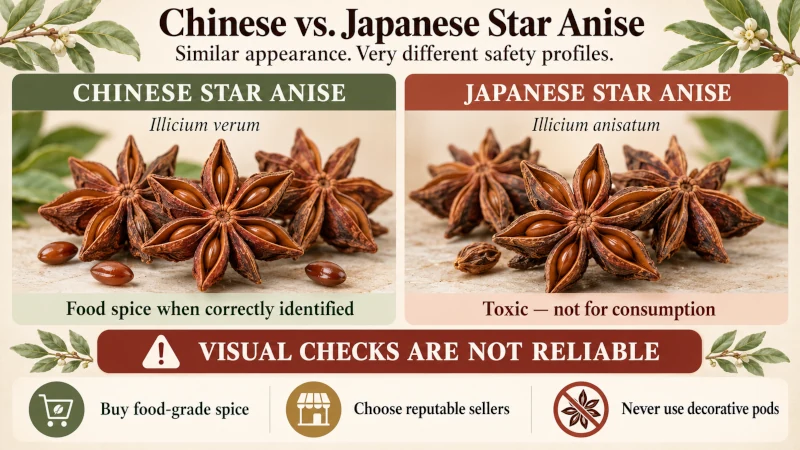
Classic pharmacy references describe true star anise as smelling and tasting sweet and anise-like, a trait that helps distinguish it from the Japanese fruit [AHPA, 2017]. That’s a useful check, not a guarantee. Your real protection is where your star anise comes from:
- Buy star anise sold as a food spice from a grocer or spice company you trust.
- Never cook with star anise sold as decoration, potpourri, or craft material, and never forage it.
- Be wary of loose “star anise” sold for brewing home remedies from unknown sources.
- If a pod doesn’t smell and taste distinctly sweet and anise-like, throw it out.
How to use the star anise plant safely
In cooking
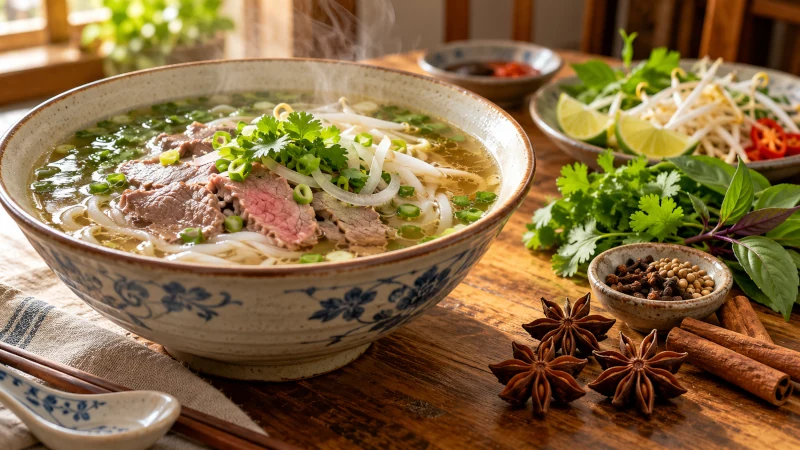
This is where star anise shines and where the risk is lowest. A whole pod or two will flavor a pot of broth, a braise, poached fruit, or spiced tea, and ground star anise is strong enough that a pinch goes a long way. Fish the pods out before serving. Biting into one is unpleasant, and a whole pod is a choking hazard for small children.
As a tea
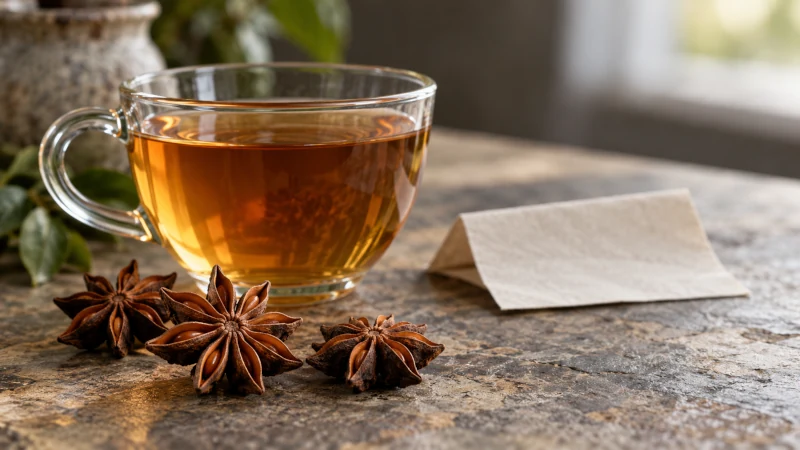
If you’re a healthy adult and still want star anise tea, keep it modest and occasional. A European Medicines Agency summary from 2000 lists a typical amount for a cup of tea at 0.5 to 1 gram of dried fruit, with an average daily total of about 3 grams [EMA, 2000]. Pods vary in size, so a kitchen scale beats counting stars. Steep rather than boiling it hard for a long time, since prolonged boiling concentrates the problem compounds [Wangdi et al., 2024].
Keep that figure in context: it predates FDA’s 2003 advisory against star anise teas [FDA, 2003]. The safest choice is to enjoy star anise as a spice and skip the medicinal tea entirely. Never give it to an infant or child.
Supplements and essential oil
Capsules, extracts, and essential oil are far more concentrated than the spice. The oil can irritate and sensitize skin, and contact allergy to its main compound, anethole, has been reported from toothpaste and from bakers handling the oil [Sharafan et al., 2022]. Don’t swallow star anise essential oil. We don’t give a supplement dose here because we couldn’t find one supported by good human evidence.
Side effects, interactions, and who should avoid it
Possible side effects
- Nausea, vomiting, or upset stomach [WebMD, 2025]
- Allergic reactions, which can be serious [WebMD, 2025]
- Rashes on the skin or lips, especially from toothpaste or mouthwash containing star anise or anethole [WebMD, 2025; Sharafan et al., 2022]
- Seizures and other nervous-system effects, mainly with tea, high doses, contaminated products, or in infants and young children [WebMD, 2025; FDA, 2003]
Medication interactions
How star anise interacts with medicines isn’t well understood, and the research is incomplete [WebMD, 2025]. Cooking amounts are unlikely to matter. If you take prescription medicine, especially for seizures, check with your pharmacist before using star anise tea, extracts, or supplements.
Who should avoid medicinal star anise
- Infants and young children. No star anise tea or remedies [Ize-Ludlow et al., 2004; WebMD, 2025].
- Pregnant or breastfeeding people. Its effects on pregnancy and whether it passes into breast milk are unknown [WebMD, 2025]. Stick to food amounts.
- People with seizure disorders, liver problems, or kidney problems. Talk to your clinician first [WebMD, 2025].
- People allergic to anethole, anise, or fennel. Allergies to birch, celery, carrot, or mugwort may also raise the risk [WebMD, 2025].
When to get medical help
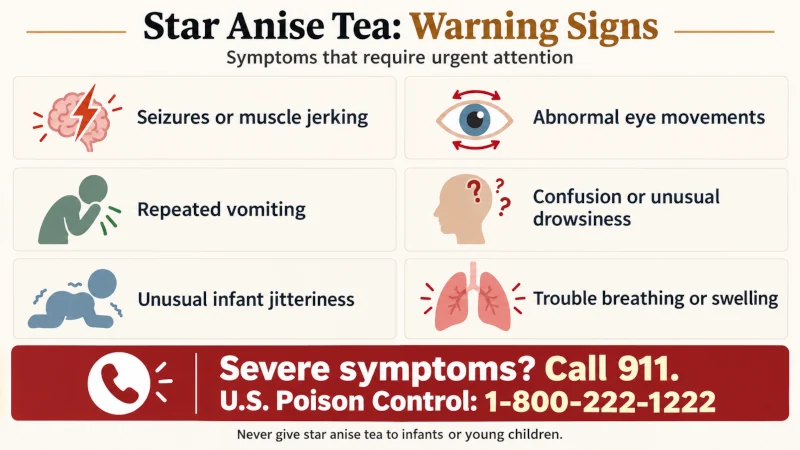
Call 911 or Poison Control at 1-800-222-1222 right away [WebMD, 2025] if anyone, especially a baby, shows any of these after drinking star anise tea or eating a large amount:
- A seizure, muscle twitching, or jerking movements
- Unusual jitteriness, irritability, or inconsolable crying in an infant
- Rapid or abnormal eye movements
- Repeated vomiting
- Confusion, dizziness, or unusual drowsiness
- Swelling of the face, lips, or throat, or trouble breathing
Bring the package or leftover pods if you can. Diagnosis relies mostly on the history, there is no specific antidote, and treatment focuses on supportive care and controlling seizures [Wangdi et al., 2024]. For a colicky baby, ask your pediatrician about safe options instead of herbal teas.
| HEALTH DISCLAIMER: This article is for general education and is not medical advice, diagnosis, or treatment. Star anise is safe for most people in normal cooking amounts, but star anise tea, extracts, and essential oil carry real risks, and the plant can be confused with toxic Japanese star anise. Never give star anise tea or products to an infant or young child. If you are pregnant or breastfeeding, take prescription medication, or have a seizure disorder, liver or kidney disease, or plant allergies, talk to your doctor or pharmacist before using star anise medicinally. If you suspect poisoning, call 911 or Poison Control (1-800-222-1222) right away. |
Frequently Asked Questions
Is star anise safe to eat?
Yes, as a cooking spice. FDA considers Chinese star anise (Illicium verum) generally recognized as safe for food [FDA, 2003]. The caution applies to strong teas, concentrated products, and anything that might be Japanese star anise.
Can I give star anise tea to my baby for colic?
No. Infants given home-brewed star anise tea have developed seizures, vomiting, and abnormal eye movements, and the doctors who reported those cases concluded it should no longer be given to infants [Ize-Ludlow et al., 2004]. Ask your pediatrician about colic instead.
Is star anise the same as anise?
No. Star anise comes from an Asian evergreen tree; anise (Pimpinella anisum) is a small herb in the carrot family. They taste similar because both contain anethole [Sharafan et al., 2022].
Does star anise help with the flu?
There’s no good evidence it does. Star anise supplies shikimic acid, a raw material for making the drug oseltamivir (Tamiflu) [Patra et al., 2020], but the spice itself hasn’t been shown to prevent or treat flu in people.
How can I tell if my star anise is the toxic Japanese kind?
Usually not by looking; even experts rely on lab tests [AHPA, 2017]. True star anise should smell and taste sweet and anise-like. Buy food-grade spice from a reputable seller and never use decorative pods in food.
Is star anise safe during pregnancy?
Cooking amounts are a normal part of many diets, but the safety of medicinal amounts in pregnancy and breastfeeding is unknown [WebMD, 2025]. Skip star anise teas and supplements unless your clinician says otherwise.
References
- U.S. Food and Drug Administration. “FDA Issues Advisory on ‘Teas’: Teas Made from Star Anise Were Associated With Illnesses Including Seizures.” Center for Food Safety and Applied Nutrition 2003 Enforcement Story. View source
- Ize-Ludlow D, Ragone S, Bruck IS, Bernstein JN, Duchowny M, Garcia Peña BM. Neurotoxicities in infants seen with the consumption of star anise tea. View source
- Pediatric Neurology Briefs. Neurotoxicity of star anise tea. Pediatric Neurology Briefs. View source
- Sharafan M, Jafernik K, Ekiert H, Kubica P, Kocjan R, Blicharska E, Szopa A. Illicium verum (star anise) and trans-anethole as valuable raw materials for medicinal and cosmetic applications. Molecules. View source
- Patra JK, Das G, Bose S, Banerjee S, Vishnuprasad CN, Rodriguez-Torres MDP, Shin HS. Star anise (Illicium verum): chemical compounds, antiviral properties, and clinical relevance. View source
- European Agency for the Evaluation of Medicinal Products, Committee for Veterinary Medicinal Products. View source
- Royal Botanic Gardens, Kew. Illicium verum Hook.f. Plants of the World Online. View source
- American Herbal Products Association. Illicium verum (fruit). AHPA Botanical Identity References Compendium. View source
- Wangdi S, Wangdi J, Wangchuk N. Case series: star anise toxicity presenting to the emergency department in Eastern Regional Referral Hospital in Bhutan. View source
- McIntyre C (writer), Johnston B (medical reviewer). Star Anise: Uses, Side Effects, and More. WebMD. View source


