
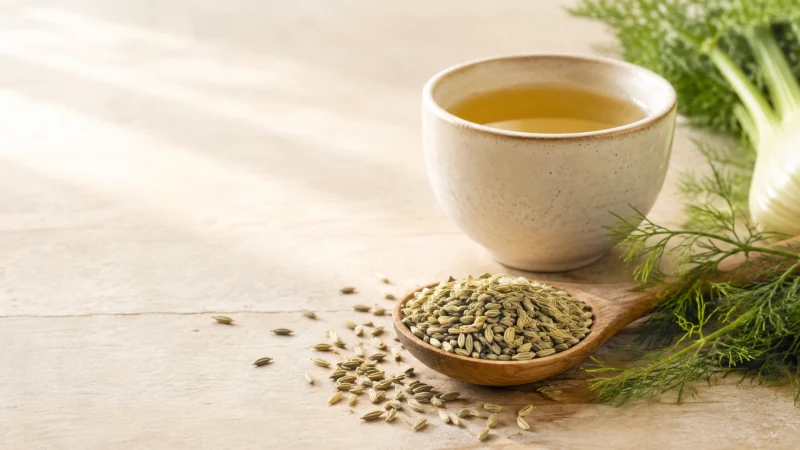
If you’ve ever chewed a pinch of fennel seeds after a heavy meal, you already know their most reliable job: settling the stomach. That’s also where the science is steadiest. The broader list of fennel seeds benefits runs from well supported (calming digestion, decent nutrition, easing period cramps) to genuinely promising-but-limited (milk supply) to early lab work that gets oversold online. This guide sorts them out — and, just as important, tells you when fennel is worth a pass.
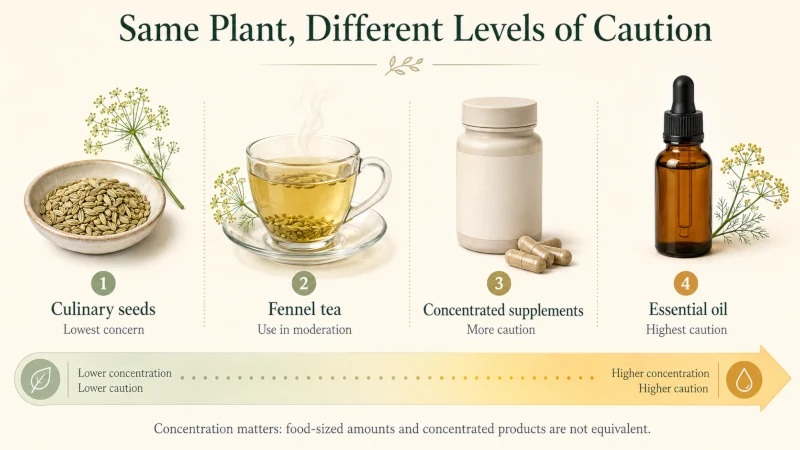
One idea to carry through the whole piece: the fennel on your dinner plate and the concentrated fennel in a supplement capsule or essential oil are not the same thing. Most of fennel’s charm is safe in food-sized amounts. Most of its risks show up when it’s concentrated.
What fennel seeds actually are
Fennel (Foeniculum vulgare) is a feathery Mediterranean plant in the carrot family. The “seeds” are really its dried fruits, and they carry an aromatic oil dominated by a compound called anethole — the same molecule that gives fennel, anise, and licorice their sweet, faintly licorice-like taste. Anethole also behaves a little like the hormone estrogen in the body, which matters later when we get to safety [LactMed, NIH, 2024].
People have used fennel for digestion and, traditionally, for everything from coughs to boosting milk supply [WebMD, 2022]. Tradition is a good place to start looking — but it isn’t proof, so here’s what holds up.
Fennel seeds benefits: what the evidence shows
Easing digestion, gas, and bloating
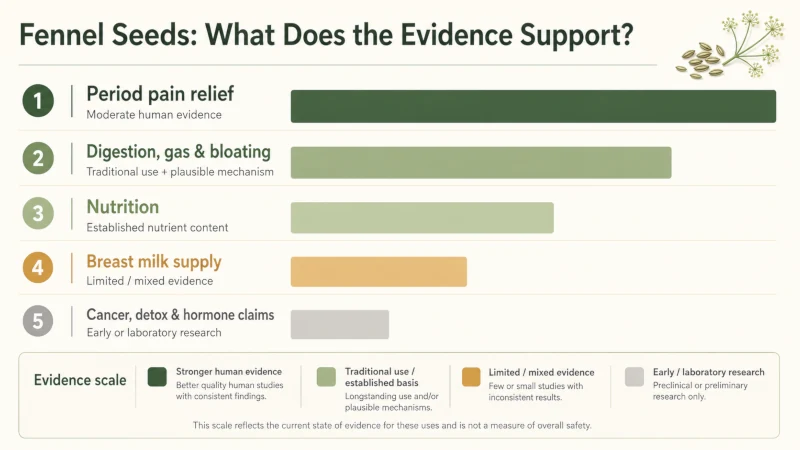
This is fennel’s home turf. It has a long track record as a “carminative” — a remedy for gas, bloating, and cramping — and the leading explanation is that fennel and anethole help relax the smooth muscle of the digestive tract, which can quiet spasms and let trapped gas move along [WebMD, 2022]. For everyday, mild discomfort after eating, a cup of fennel tea or a few chewed seeds is a low-risk thing to try. Its close relatives caraway and anise are used the same way, for the same reasons.
What the evidence doesn’t support is treating fennel as a fix for a diagnosed digestive condition. If you have persistent reflux, IBS, or ongoing pain, fennel is a comfort measure, not a treatment — and recurring symptoms deserve a real workup.
Period pain (primary dysmenorrhea) — the strongest evidence
This is where fennel has the most human data behind it. A 2020 review that pooled randomized controlled trials found fennel relieved primary period pain about as well as the standard over-the-counter anti-inflammatory drugs people usually reach for, and clearly better than a placebo [Lee et al., Nutrients, 2020]. The likely mechanism is the same smooth-muscle relaxing effect that helps the gut, applied to the uterus.
The honest caveat: the authors flagged that many of the underlying studies were small or not high quality, so “as good as ibuprofen” should be read as encouraging rather than settled. Still, for someone looking for an option alongside or instead of NSAIDs, fennel is one of the better-studied herbal choices for cramps. If your periods are severe, worsening, or disabling, that’s a conversation for your doctor rather than a tea.
Breastfeeding and milk supply — popular, but the evidence is thin
Fennel is one of the oldest “galactagogues” — foods or herbs believed to increase breast milk — and it shows up in many nursing teas. Here’s the careful version: two small studies reported increases in things like milk volume, fat content, or infant weight gain, but better-controlled research has not found a rise in prolactin, the main milk-making hormone, and the overall quality of evidence is low. In one U.S. survey of nursing mothers who tried fennel, most weren’t sure it helped [LactMed, NIH, 2024].
There’s also a real safety footnote here. Two newborns developed concerning symptoms (poor feeding, low muscle tone, lethargy) after their mothers drank large amounts of an herbal tea containing fennel and anise; both recovered quickly once the tea stopped [LactMed, NIH, 2024]. The takeaway isn’t panic — it’s moderation, and a check-in with a lactation consultant or doctor before leaning on any galactagogue. The more-studied herbal option, fenugreek, has similarly mixed results, which tells you something about how modest these effects tend to be. No herb replaces the basics: frequent, effective milk removal and good breastfeeding support.
What’s actually in them (nutrition)
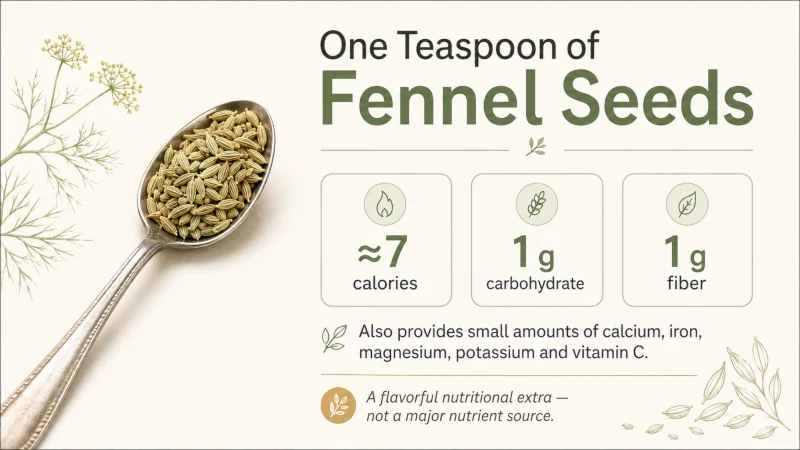
Fennel seeds are a flavoring, not a food group, so you’re eating small amounts. Even so, a teaspoon brings fiber and a range of minerals for almost no calories — about 7 calories, 1 gram of carbohydrate, and 1 gram of fiber per teaspoon, plus vitamin C, calcium, iron, magnesium, and potassium [WebMD, 2022]. That’s a nice bonus on top of flavor, not a reason to eat them by the spoonful.
Early and lab-stage research (and what not to conclude)
You’ll see bold claims online about fennel and cancer, “detox,” blood pressure, and hormones. Most of that traces back to test-tube and animal studies. For example, in laboratory work, anethole has shown activity against certain breast and liver cancer cells — interesting, but it hasn’t advanced beyond cell studies and comes nowhere near meaning fennel prevents or treats cancer in people [WebMD, 2022]. Researchers have also tested fennel for menopausal symptoms, with early and inconsistent results from small trials [systematic review of RCTs, 2021]. Treat all of this as “worth watching,” not “proven.”
How to use fennel seeds
For the benefits that actually hold up, simple is best:
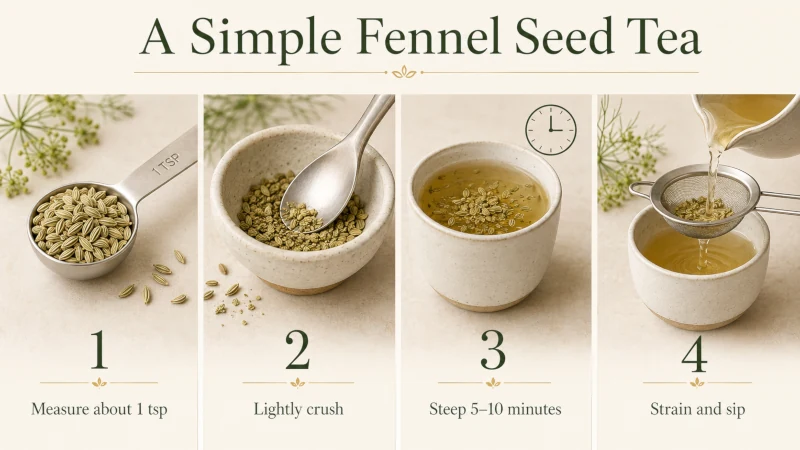
- After-meal tea or chew. Steep about a teaspoon of lightly crushed seeds in a cup of hot water for 5–10 minutes, or simply chew a small pinch. This is the traditional approach for gas and bloating.
- In cooking. Add them to soups, breads, roasted vegetables, sauces, and curries. Culinary amounts are the safest way to enjoy fennel.
- For cramps. If you’re trying fennel for period pain, tea or a standardized supplement taken around your period is how it’s usually studied — but read the safety section first, especially if you might be pregnant.
A deliberate note on what’s not here: this guide gives no internal dosing for fennel essential oil. Concentrated fennel oil is potent and is the form tied to the clearest risks below. Flavoring your food is one thing; swallowing drops of essential oil is another, and it isn’t something to do casually.
Safety, side effects, and who should avoid fennel
In food amounts, fennel is well tolerated for most adults, and fennel oil is “generally recognized as safe” (GRAS) for use in food by the U.S. Food and Drug Administration [LactMed, NIH, 2024]. The cautions below are mainly about concentrated preparations, higher doses, and specific groups.
Common side effects. Fennel can trigger allergic reactions affecting the skin or airways, and it can cause photosensitivity (easier sunburn). Because it’s in the carrot family, people allergic to carrot, celery, or related plants may react to it too [LactMed, NIH, 2024]. Large amounts can also cause stomach upset.
The estragole question — infants, pregnancy, and concentrated products. Fennel naturally contains estragole, a compound that is genotoxic and carcinogenic; European regulators advise keeping exposure to it as low as practically achievable [European Medicines Agency, 2023]. In a 2025 assessment, European food-safety scientists could not establish a safe level of estragole in fennel seed preparations and concluded these preparations may pose a health risk, particularly for babies, young children, and breastfed infants or fetuses when a nursing or pregnant person consumes them; preparations from which estragole has been removed were not flagged [European Food Safety Authority, 2025].
Occasional culinary fennel is not the concern here — regular use of concentrated fennel-seed products, and giving fennel preparations to infants, is. Talk to your pediatrician before giving any fennel product to a baby, and to your doctor before using fennel supplements while pregnant. One laboratory study found fennel essential oil harmed rat embryos, another reason to skip concentrated fennel in pregnancy [WebMD, 2022].
Epilepsy and essential oil. There’s a published case of a woman with well-controlled epilepsy who had a seizure after eating cakes made with fennel essential oil; the authors concluded fennel essential oil can trigger seizures and should probably be avoided by people with epilepsy [Skalli & Bencheikh, Epileptic Disorders, 2011]. This is a single report, and it’s about concentrated oil — but if you have a seizure disorder, it’s a good reason to avoid fennel essential oil.
Hormone-sensitive conditions. Because anethole acts somewhat like estrogen, it’s sensible for anyone with a hormone-sensitive condition to check with a doctor before using concentrated fennel [LactMed, NIH, 2024].
Medication interactions. In concentrated amounts, fennel’s active compounds can interfere with some medications [WebMD, 2022]. If you take prescription drugs — especially hormone therapies or anything with a narrow safety margin — run fennel supplements past your doctor or pharmacist first.
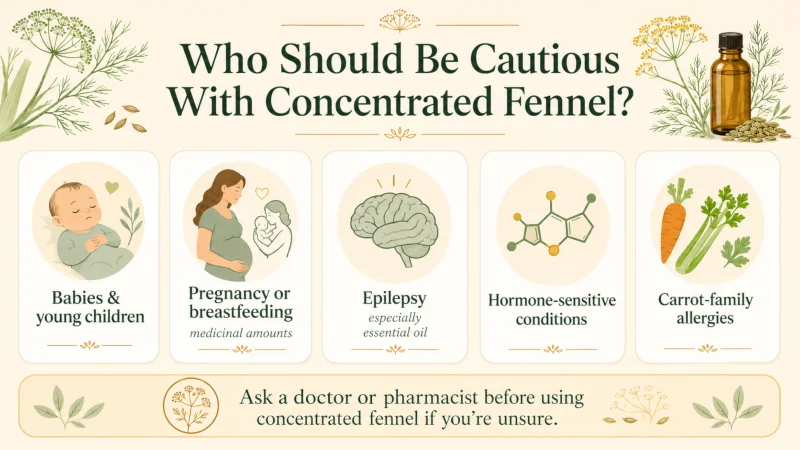
Who should be cautious or avoid concentrated fennel: infants and young children; people who are pregnant or breastfeeding (for medicinal/concentrated amounts); people with epilepsy (essential oil); people with hormone-sensitive conditions; and anyone allergic to plants in the carrot family.
When to see a doctor
Fennel is for mild, everyday discomfort. Get medical care if you have any of these instead of self-treating:
- Severe, persistent, or worsening abdominal pain, or pain with fever, vomiting, or blood
- Period pain that stops you from functioning, changes suddenly, or isn’t helped by usual measures
- Any allergic reaction — hives, swelling, or trouble breathing (trouble breathing or throat swelling is a 911 emergency)
- Symptoms in a baby who has been given fennel products
For non-emergencies, primary care or urgent care is the right first stop; call 911 for anything that looks like a severe allergic reaction or another emergency.
| Health Disclaimer: This article is for general education and is not medical advice. It can’t replace a diagnosis or a care plan from a professional who knows your history. Fennel seeds can interact with medications and aren’t right for everyone — including some people who are pregnant, breastfeeding, caring for an infant, or living with epilepsy or a hormone-sensitive condition. Talk with your doctor, pharmacist, or another qualified healthcare professional before starting fennel supplements or essential oil, especially if you take medication or have a health condition. If you think you’re having a medical emergency, call 911. |
Frequently Asked Questions
Are fennel seeds good for bloating and gas?
This is fennel’s most reliable use. It’s traditionally taken as a tea or chewed after meals to ease gas, bloating, and cramping, and the likely reason is that it helps relax the muscles of the digestive tract [WebMD, 2022]. For occasional discomfort it’s a reasonable, low-risk thing to try; ongoing symptoms should be checked by a doctor.
Do fennel seeds actually help with period cramps?
The evidence here is fennel’s strongest. A 2020 review of randomized trials found it eased primary period pain about as well as common over-the-counter anti-inflammatories and better than placebo, though many of the studies were small or lower quality [Lee et al., Nutrients, 2020]. Severe or worsening periods deserve a medical evaluation.
Can fennel increase breast milk supply?
Maybe modestly, but the evidence is weak and mixed. A couple of small studies suggested improvements in milk volume or infant weight gain, while better-controlled work found no rise in the main milk hormone [LactMed, NIH, 2024]. Because heavy maternal use of fennel-containing teas has been linked to symptoms in a few newborns, use moderation and check with a lactation consultant or doctor first.
Is fennel safe during pregnancy?
Culinary amounts in food are generally considered fine, but concentrated fennel supplements and essential oil are best avoided in pregnancy. Regulators have flagged the estragole in fennel-seed preparations as a possible risk to a fetus [European Food Safety Authority, 2025], and a lab study found fennel essential oil harmed rat embryos [WebMD, 2022]. Ask your doctor before using any fennel product beyond seasoning.
Is it safe to give fennel tea to a baby?
This is one to clear with your pediatrician first. European food-safety scientists could not establish a safe level of estragole in fennel-seed preparations and named babies and young children as a vulnerable group [European Food Safety Authority, 2025]. Don’t give fennel products to an infant on your own.
What’s the difference between eating fennel and using fennel essential oil?
A big one. Food-sized amounts of fennel are well tolerated for most people, but the essential oil is highly concentrated and carries the clearest risks — including a reported seizure in someone with epilepsy after eating food made with fennel oil [Skalli & Bencheikh, Epileptic Disorders, 2011]. Enjoy fennel as a food or tea; treat the essential oil with real caution.
References
- Drugs and Lactation Database (LactMed). Fennel. National Institute of Child Health and Human Development; updated Nov 15, 2024. View source
- European Medicines Agency (HMPC). Public statement on the use of herbal medicinal products containing estragole (Rev. 1; updated 2023). View source
- European Food Safety Authority. Have your say — estragole in fennel seed preparations. July 16, 2025. View source
- Lee HW, Ang L, Lee MS, Alimoradi Z, Kim E. Fennel for Reducing Pain in Primary Dysmenorrhea: A Systematic Review and Meta-Analysis of Randomized Controlled Trials. Nutrients. 2020;12(11):3438. DOI 10.3390/nu12113438; PMID 33182553. View source
- WebMD. Health Benefits of Fennel Seeds (medically reviewed by Dany Paul Baby, MD, Sept 18, 2022). View source
- Skalli S, Bencheikh RS. Epileptic seizure induced by fennel essential oil. Epileptic Disord. 2011;13(3):345–347. DOI 10.1684/epd.2011.0451. View source
- Kwon CY, et al. Fennel (Foeniculum vulgare Miller) for the management of menopausal women’s health: a systematic review and meta-analysis. 2021. View source
