
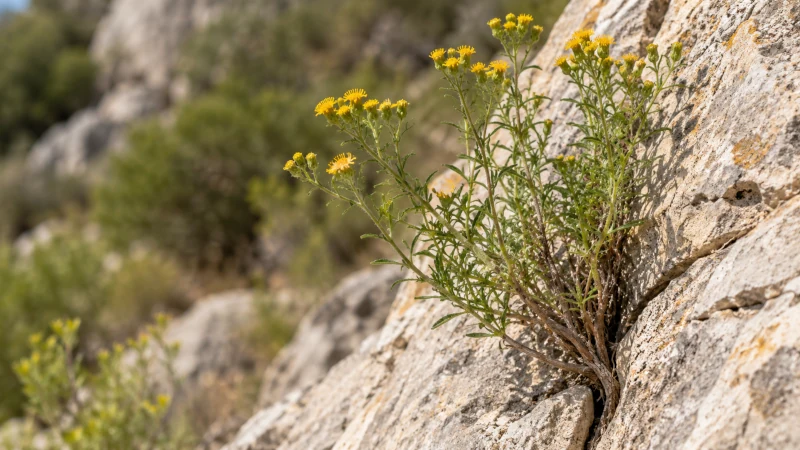
Rock’s tea plant (Jasonia glutinosa) is a small, sticky mountain herb from Spain whose dried flowering tops make a bitter, camphor-scented tea, most often sipped after a heavy meal. Does it actually help digestion? Maybe. Lab and animal studies show that rock tea extracts relax intestinal muscle and calm gut inflammation, but nobody has tested it in people yet [Valero et al., 2025]. So enjoy the rock’s tea plant as a caffeine-free after-dinner drink, and don’t rely on it as a treatment.
What is the rock’s tea plant?
Rock tea grows where little else does: wedged into cracks in limestone cliffs across the western Mediterranean, mostly in eastern Spain, with populations in southern France and Morocco [Valero et al., 2025]. It belongs to the daisy family (Asteraceae). A woody base sends up sticky, aromatic stems about 30–50 cm tall, topped with clusters of small golden-yellow flower heads. The leafy stems and flowers are gathered as the plant starts to bloom and dried for tea [Valero et al., 2025].
In Spain it has a long list of names, including té de roca, té de Aragón, té de peña and té de piedra, and in Catalan it is te roquer [MITECO, n.d.]. It is popular enough that some Spanish restaurants serve it iced or as ice cream, and it goes into regional herbal liqueurs [MITECO, n.d.].
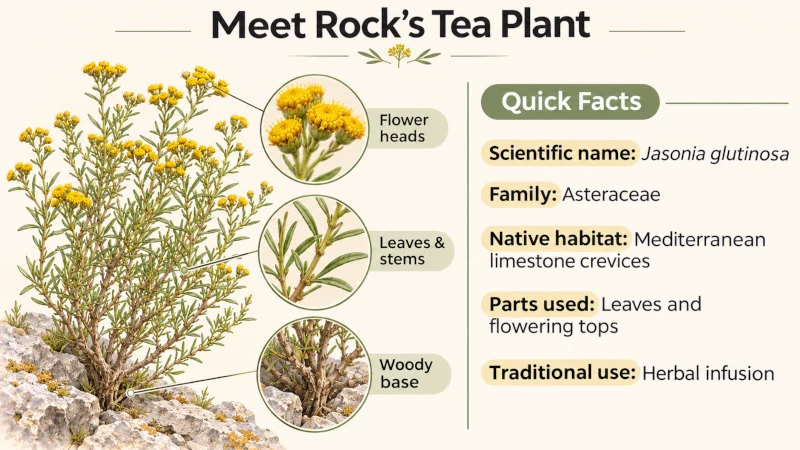
| Quick facts | |
| Scientific name | Jasonia glutinosa (L.) DC.; also listed as Chiliadenus glutinosus |
| Family | Asteraceae (daisy family) |
| Common names | Rock tea, rock’s tea; té de roca, té de Aragón (Spanish); te roquer (Catalan) |
| Where it grows | Limestone crevices in the western Mediterranean |
| Parts used | Leaves and flowering tops |
| Taste | Bitter, with a camphor-like aroma |
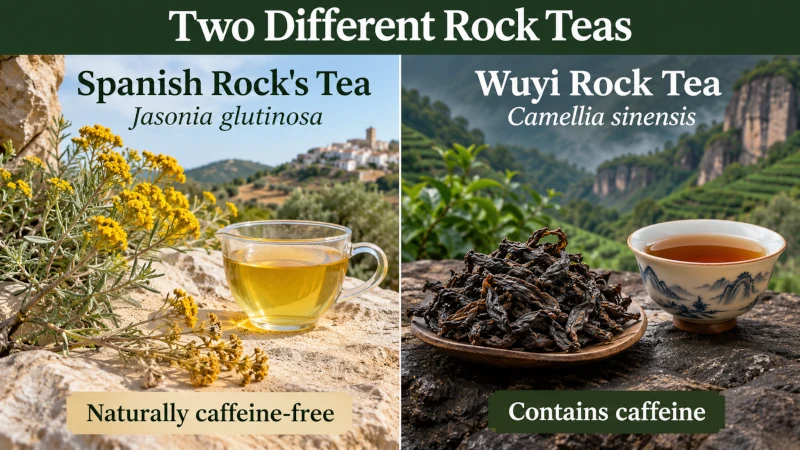
Not the same as Wuyi rock tea
Search for “rock tea” and you will also find Wuyi rock tea (yancha), a roasted oolong from China’s Fujian province [Liu et al., 2021]. Wuyi rock tea is made from the true tea plant, Camellia sinensis, and it contains caffeine [J Agric Food Chem, 2014]. The two share a nickname and nothing else. Everything here is about Jasonia glutinosa.
Is rock’s tea caffeine-free?
Yes. Rock’s tea is a daisy-family herb, not true tea, and it contains no caffeine (called theine when it occurs in tea) [e-lactancia, 2019]. That makes it a sensible after-dinner cup if coffee or black tea keeps you awake. If you want something aimed specifically at winding down, our guide to nervine tea covers herbs that have been studied for that.
Don’t expect a lift from it, either. Some herbal sources call it gently stimulating, but no study has measured that. Spanish folk tradition can’t agree: some people use it as a stimulant, others for headaches, nerves and as a mild tranquilizer [MITECO, n.d.].
What’s in rock’s tea?
The plant’s chemistry is well mapped. Camphor dominates its essential oil, making up about a quarter of the oil in one analysis, alongside borneol and nerolidol [MITECO, n.d.; Valero et al., 2025]. The tea also carries polyphenols, mainly caffeoylquinic acids and flavonoids such as quercetin galactoside, plus several sesquiterpene compounds, some of them first identified in this species [Valero et al., 2025]. It contains tannins too [e-lactancia, 2019].
Researchers point to the polyphenols as the likeliest reason for the anti-inflammatory effects described below [Valero et al., 2020].
Rock’s tea plant benefits: what the research shows
All of the research so far has been done in cells, isolated tissue, mice, rats, fish or worms, most of it by researchers at universities in Zaragoza. A 2025 review of the whole literature found no human clinical trials and said they are needed to confirm any of these effects [Valero et al., 2025]. So read the findings below as reasons the traditional uses are plausible, not proof that they work for you.
| Claimed benefit | What was actually studied | Strength of evidence |
| Digestive cramps | Rat intestine tissue; mice | Preliminary (lab and animal only) |
| Gut inflammation | Mice with chemically induced colitis | Preliminary (animal only) |
| Diarrhea | Traditional use; tannin content; gut transit in mice | Traditional, with indirect support |
| Blood pressure | Isolated rat aorta | Very early (lab only); folk use conflicting |
| Antioxidant / brain health | Test-tube assays; worms | Very early |
| Colds, kidneys, weight loss, mood | Folk records only | Traditional; untested |
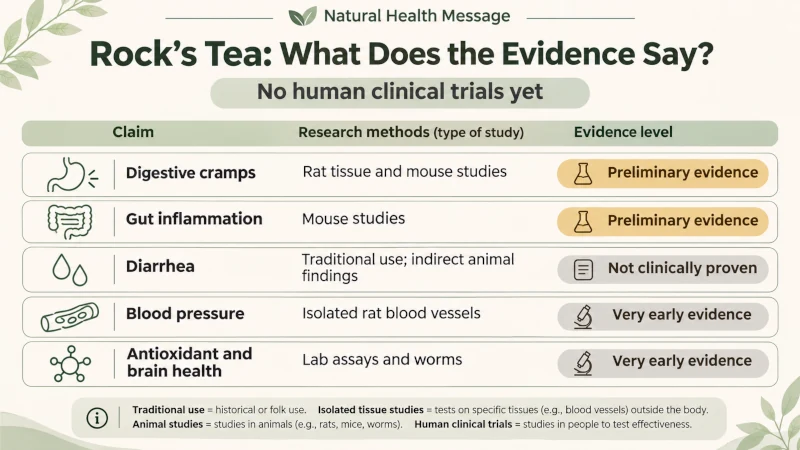
Stomach cramps and heavy digestion
This is the best-supported use, though “best” is relative. In a 2016 study, rock tea extract relaxed strips of rat small intestine and blocked their contractions in a way that resembled verapamil, a calcium-channel-blocking drug [Castro et al., 2016]. In healthy mice it didn’t change how quickly food moved through the gut. In mice with induced colitis, though, it brought an abnormally fast transit back toward normal [Castro et al., 2016].
That fits the traditional after-meal use for cramping and a heavy, slow stomach. It doesn’t tell us what a cup of tea does in a human gut. If you want herbs with real human trials behind them, peppermint oil and ginger have far more evidence; see our guide to herbs for stomach issues.
Gut inflammation
In mice with chemically induced colitis, an ethanol extract of rock tea given by mouth for 20 days (5–50 mg per kg of body weight) reduced disease scores, prevented colon damage, lowered inflammatory markers such as IL-6 and COX-2, and helped preserve the tight junctions that keep the gut lining sealed [Valero et al., 2020]. The authors reported it worked better than sulfasalazine, the comparison drug, in that model.
It’s a striking result. Still, a lab extract made with ethanol is not a home infusion, and mice are not people. If you have Crohn’s disease or ulcerative colitis, rock tea is not a substitute for your treatment.
Diarrhea
Rock tea is a traditional Spanish remedy for diarrhea, and it contains tannins, the astringent compounds usually credited with that effect. The antidiarrheal effect itself hasn’t been scientifically proven [e-lactancia, 2019], and Spanish folk records disagree on whether it helps diarrhea or constipation [MITECO, n.d.]. For an ordinary bout, fluids matter far more than any herb; our guide to foods that help with diarrhea covers rehydration and what to eat.
Blood pressure
Some Spanish communities drink rock tea to lower blood pressure, while others believe it raises it [MITECO, n.d.]. In isolated rat aorta, the extract relaxed the vessel by blocking L-type calcium channels, reaching about 75% relaxation at the highest concentration tested [Valero et al., 2015]. Those concentrations were in the milligrams-per-milliliter range, thousands of times higher than verapamil, the drug used for comparison [Valero et al., 2025]. There is no evidence that drinking the tea lowers blood pressure in people.
Antioxidant and brain-health claims
Rock tea extracts neutralize free radicals in test-tube assays [Valero et al., 2025]. In the tiny worm C. elegans, an extract improved survival under oxidative stress, modestly extended lifespan and reduced paralysis in a worm model of Alzheimer’s-type protein buildup [Les et al., 2021]. These are early screening results. They show nothing about memory, mood or aging in humans.
Traditional uses no one has tested
Spanish folk records list rock tea for colds, bronchitis and asthma; kidney stones and kidney pain; weight loss; headaches and low mood; and, as a soaked cloth or ointment, for bruises and wounds [MITECO, n.d.; Valero et al., 2025]. They’re interesting as cultural history. None has been studied in people.
How to make rock’s tea
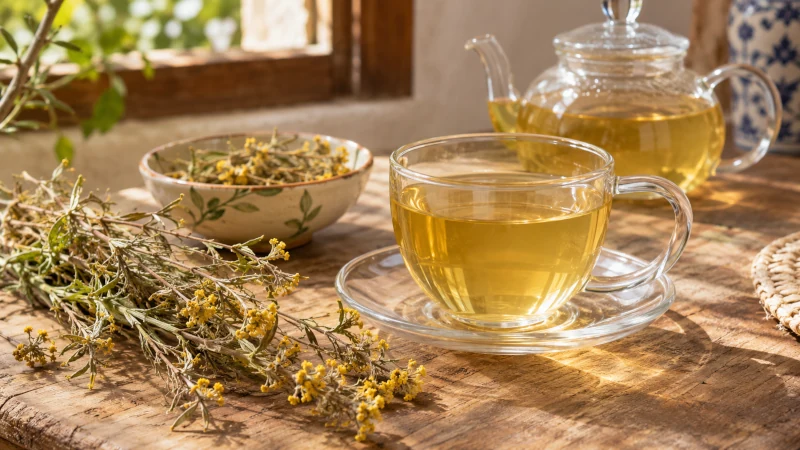
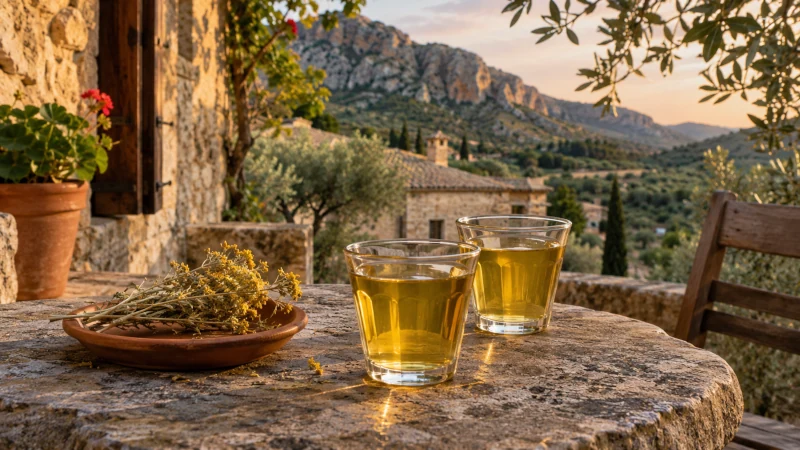
The traditional method is simple and deliberately light. In Spain, fresh or dried flowering tops are infused or simmered in water for about two minutes, and the brew is kept weak rather than strong [MITECO, n.d.]. It comes out yellow and darkens if left standing for a few hours [MITECO, n.d.]. Most people drink it after a meal; it’s also good chilled over ice.
There is no tested dose. Packaged rock tea sold in Spain comes with brewing directions, so follow those. Stick to the tea itself: the concentrated extracts used in lab studies have not been safety-tested for home use [Valero et al., 2025].
If you pick it wild, cut the flowering stems instead of pulling up the plant. It regrows from its woody base, some populations have been overharvested, and collection is regulated in Spain’s Valencian Community [MITECO, n.d.]. For better-studied alternatives, see our overview of herbs for the digestive system.
Side effects, interactions, and who should avoid it
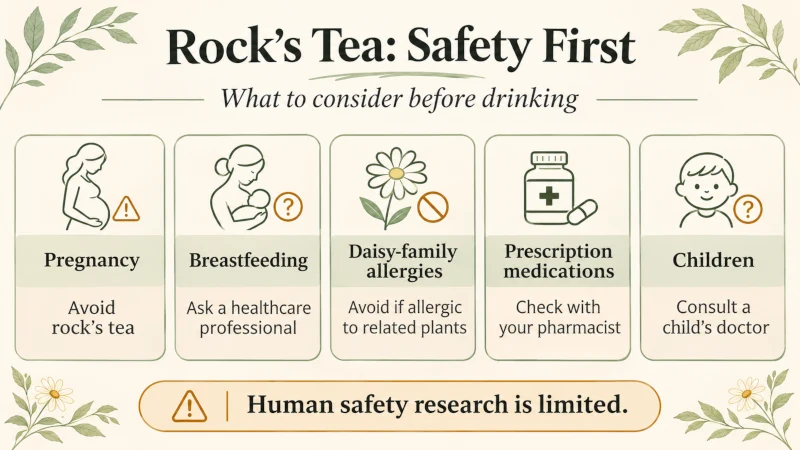
Rock tea has been drunk in Spain for generations without reported harm, and reviewers consider it generally safe on that basis [Valero et al., 2025]. What’s missing is formal testing: there are no toxicity studies in humans. The side effects that have been described are digestive and mild [e-lactancia, 2019].
Pregnancy: avoid it. The 2025 review advises against it because toxicity studies are lacking [Valero et al., 2025]. A Spanish government record of traditional plant knowledge lists it as contraindicated in pregnancy and notes an old belief that it can cause miscarriage [MITECO, n.d.]. That belief has never been tested, and it is reason enough to skip it.
Breastfeeding: sources disagree. The same review says to avoid it while breastfeeding, for the same reason [Valero et al., 2025]. e-lactancia, a breastfeeding-safety database, rates moderate use as probably compatible, while noting there are no data on whether it passes into breast milk [e-lactancia, 2019]. If you’re nursing, ask your doctor or lactation consultant, and keep it to an occasional cup.
Daisy-family allergy. Rock tea belongs to the same family as chamomile, ragweed, chrysanthemums, marigolds and daisies. People allergic to those plants are more likely to react to their relatives [NCCIH, n.d.], and the 2025 review advises people with this allergy to avoid rock tea [Valero et al., 2025]. The same caution applies to mugwort tea.
Medications. No interaction studies exist. Lab studies show rock tea blocks the same calcium channels as some blood pressure and heart-rhythm drugs [Valero et al., 2015; Castro et al., 2016], so check with a pharmacist if you take one of those. This is a precaution based on how the extract behaves in the lab, not a documented interaction.
Children. There is no research in children. Ask your child’s doctor before offering it.
When to see a doctor instead
Rock tea is for mild, occasional after-meal discomfort. See a doctor if indigestion keeps coming back or doesn’t improve, and get care right away if you have any of these [NIDDK, Indigestion]:
- pain in your chest, jaw, neck or arm
- trouble swallowing, or painful swallowing
- frequent or bloody vomiting
- severe, constant belly pain, or bloating that won’t go away
- black, tarry stools
- shortness of breath
- weight loss you can’t explain, or loss of appetite
- yellowing of your skin or eyes
With diarrhea, contact a doctor if it lasts more than two days, you have six or more loose stools a day, a high fever, severe belly or rectal pain, stools with blood or pus, or signs of dehydration such as extreme thirst, dark urine, urinating less, or feeling dizzy [NIDDK, Diarrhea]. If you’re pregnant, over 65, taking antibiotics or have a weakened immune system, stay in touch with your doctor from the start [NIDDK, Diarrhea].
| HEALTH DISCLAIMER: This article is for general information and education. It is not medical advice and does not replace diagnosis or treatment from a qualified healthcare professional. Rock tea has not been tested in human clinical trials. Do not use it in place of prescribed treatment. Talk to your doctor or pharmacist before trying it if you are pregnant, breastfeeding, allergic to daisy-family plants, giving it to a child, or taking prescription medication. |
Frequently Asked Questions
Does rock’s tea have caffeine?
No. Rock’s tea (Jasonia glutinosa) is a daisy-family herb, not true tea, and it contains no caffeine [e-lactancia, 2019]. Wuyi rock tea is a different, caffeinated drink made from the tea plant [J Agric Food Chem, 2014].
Can I drink rock tea every day?
Many people in Spain drink it regularly after meals, and no harm has been reported from that traditional use [Valero et al., 2025]. There are no long-term human safety studies, though, so keep it moderate, and stop if it upsets your stomach.
Does rock tea help with diarrhea?
It’s a traditional remedy and contains astringent tannins, but its antidiarrheal effect hasn’t been proven [e-lactancia, 2019]. Focus on fluids, and see a doctor if diarrhea lasts more than two days or comes with blood, high fever or dehydration [NIDDK, Diarrhea].
Is rock tea safe during pregnancy or breastfeeding?
Avoid it during pregnancy [Valero et al., 2025; MITECO, n.d.]. For breastfeeding, sources disagree: one review says avoid it, while e-lactancia rates moderate use as probably compatible [Valero et al., 2025; e-lactancia, 2019]. Ask your doctor or lactation consultant.
What does rock tea taste like?
Bitter and aromatic, with a camphor-like scent [Valero et al., 2025]. Spaniards often drink it hot after meals, but it also works iced [MITECO, n.d.].
References
- Valero MS, Gómez-Rincón C, López V, Les F. Jasonia glutinosa (L.) DC.: back in our pantries? A review of its pharmacological activity and mechanisms of action. View source
- Castro M, Ramón Giménez M, Les F, Trejo L, Plaza MÁ, López V, Murillo MD, Valero MS. Spasmolytic effect of Jasonia glutinosa on rodent intestine. View source
- Valero MS, González M, Ramón-Gimenez M, et al. Jasonia glutinosa (L.) DC., a traditional herbal medicine, reduces inflammation, oxidative stress and protects the intestinal barrier in a murine model of colitis. View source
- Valero MS, Oliván-Viguera A, Garrido I, et al. Rock Tea extract (Jasonia glutinosa) relaxes rat aortic smooth muscle by inhibition of L-type Ca2+ channels. View source
- Les F, Valero MS, Moliner C, Weinkove D, López V, Gómez-Rincón C. Jasonia glutinosa (L.) DC., a traditional herbal tea, exerts antioxidant and neuroprotective properties in different in vitro and in vivo systems. View source
- Morales R, Muñoz Centeno LM, Tardío J, Aceituno-Mata L, Pardo de Santayana M. Chiliadenus glutinosus (L.) Fourr. In: Inventario Español de los Conocimientos Tradicionales relativos a la Biodiversidad. View source
- e-lactancia (APILAM). Rock’s tea. View source
- National Center for Complementary and Integrative Health (NCCIH). Chamomile. View source
- National Institute of Diabetes and Digestive and Kidney Diseases (NIDDK). Symptoms & causes of diarrhea. View source
- NIDDK. Symptoms & causes of indigestion. View source
- Liu X, Liu Y, Li P, et al. Chemical characterization of Wuyi rock tea with different roasting degrees and their discrimination based on volatile profiles. View source
- Simultaneous determination of caffeine and some selected polyphenols in Wuyi Rock tea by high-performance liquid chromatography. View source


